
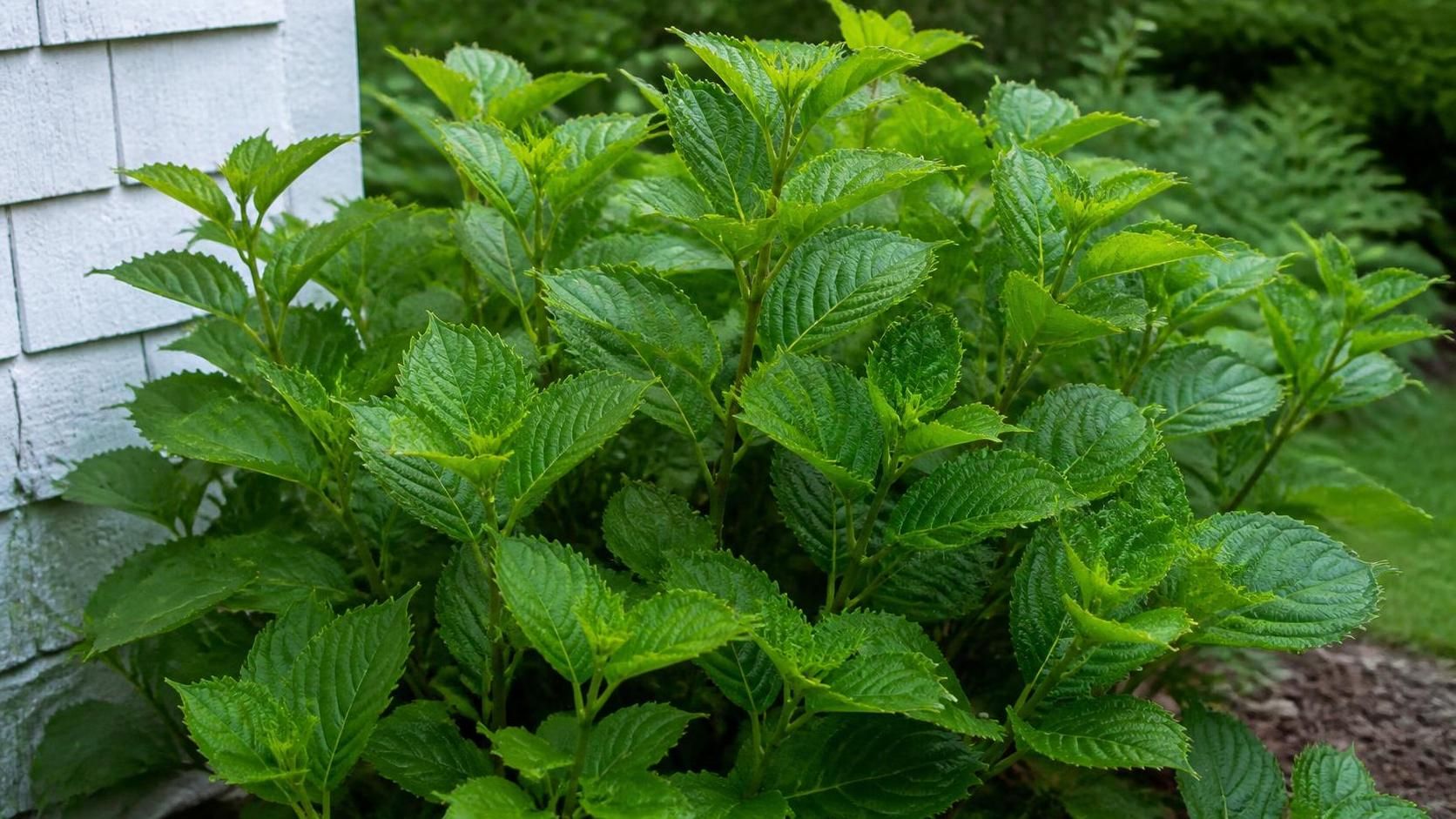
A hydrangea that grows plenty of leaves but never flowers has either lost its flower buds or never made them. Lost buds usually trace back to pruning at the wrong time, winter cold, a late frost, or browsing animals. Buds that never formed usually point to too much shade, too much nitrogen, or a plant that is still young. Your first step is to find out whether your hydrangea flowers on old wood or new wood, because that decides which of these causes are even possible.
Few plants are as puzzling as a hydrangea that looks wonderful and still refuses to bloom. The leaves are broad, the stems are strong, and nothing seems wrong. That is actually the most useful clue you have. Healthy foliage tells you the plant is growing vigorously, but flowering can be affected separately. The problem is narrower than that: something happened to the flower buds, and buds have their own calendar and their own weak spots.
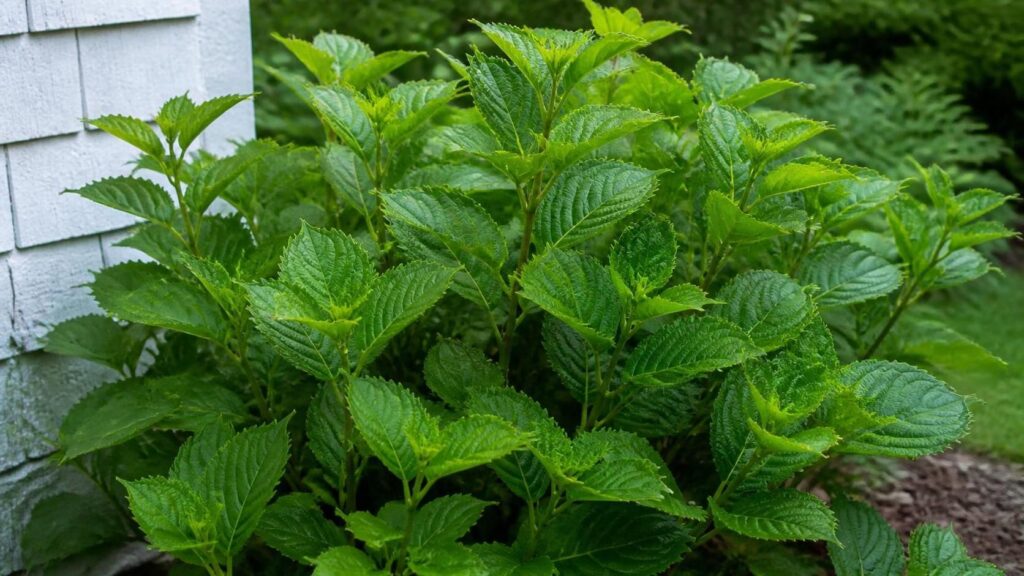
First, work out which kind of hydrangea you have
Hydrangeas do not all flower the same way. Some build next year’s flower buds in summer and carry them through winter on bare stems. Others make their buds in spring, on stems that grew this season. A mistake that wipes out the flowers on one type can leave the other untouched.
There is a simple way to sort yours out. According to Ask Extension, a hydrangea that flowers only in mid to late summer is probably a smooth or panicle type, while one that flowers in spring or early summer is likely a bigleaf or oakleaf. If you are still unsure, the plant tag or the shape of the flower head will usually settle it.
| Type | Where flower buds form | Most common reasons for no flowers | Safer pruning window |
|---|---|---|---|
| Bigleaf (Hydrangea macrophylla) | Mostly old wood; reblooming cultivars can also flower on new growth | Pruning at the wrong time, winter or late-spring cold, browsing | Dead wood in spring; shape after flowering only when appropriate for the cultivar |
| Oakleaf (H. quercifolia) | Old wood | Pruning at the wrong time, browsing, too much shade | Right after flowering |
| Smooth (H. arborescens) | New wood | Shade, browsing in the growing season, excess nitrogen, a young plant | Autumn through early spring |
| Panicle (H. paniculata) | New wood | Too much shade, excess nitrogen, a young plant | Very early spring |
The pruning guidance in the table follows Ask Extension and Penn State Extension. Exact timing shifts with climate, so treat it as a starting point rather than a rule.
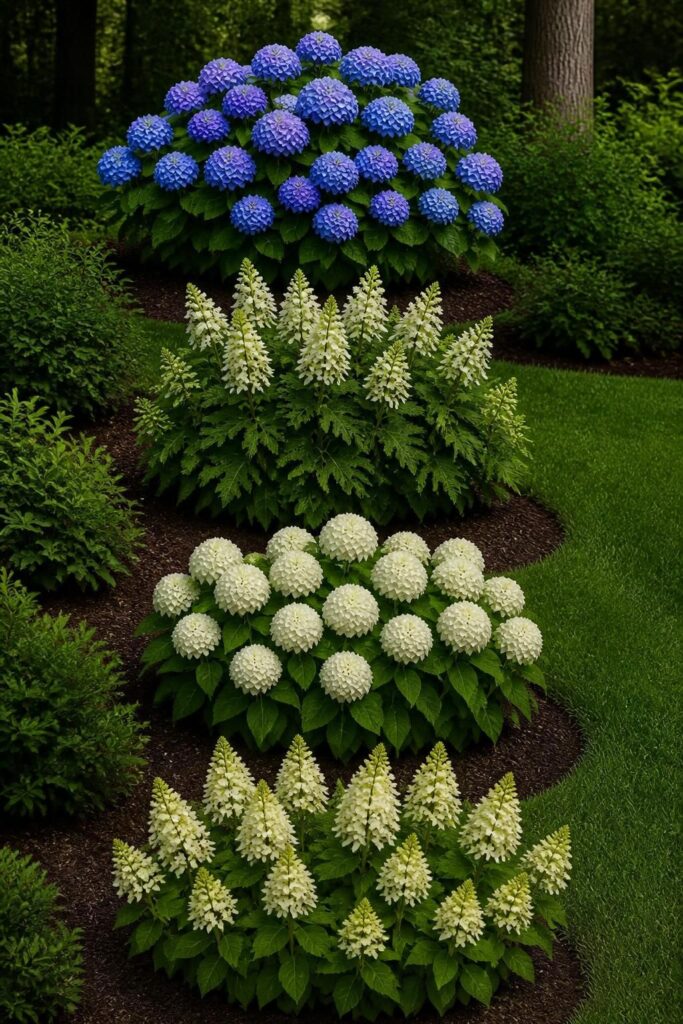
Were the buds lost, or did they never form?
These are two different problems that look identical from the outside. Lost buds are about timing and damage: a pruning cut, a freeze, a hungry deer. Buds that never formed are about conditions: too little light, too much feeding, or a plant that has not settled in. The clues below help you tell them apart.
| What you notice | Points toward | How to check |
|---|---|---|
| It flowered before, then stopped after a hard winter or a spring freeze | Cold damage to buds | Look for dead stem tips, and for flowers only low on the plant |
| You cut it back in autumn, winter, or early spring | Buds pruned off (old-wood types) | Check whether stems were shortened and confirm the type |
| Stem tips look chewed, torn, or missing | Deer or rabbit browsing | Inspect the stem ends for ragged tips and look for tracks or droppings |
| Long, floppy stems leaning toward the light | Too much shade | Watch where the sun falls through the day, and note any trees that have grown since planting |
| Deep green, very lush growth, with a fertilized lawn or feeding routine nearby | Excess nitrogen | Review what has been applied nearby, then get a soil test |
| Planted recently | Still establishing | Check when it went in; a plant in its first season is often putting energy into roots and stems |
Several causes can overlap. A shaded bigleaf that was also pruned in March and hit by a late frost has three strikes against it, and fixing only one will not bring flowers back.
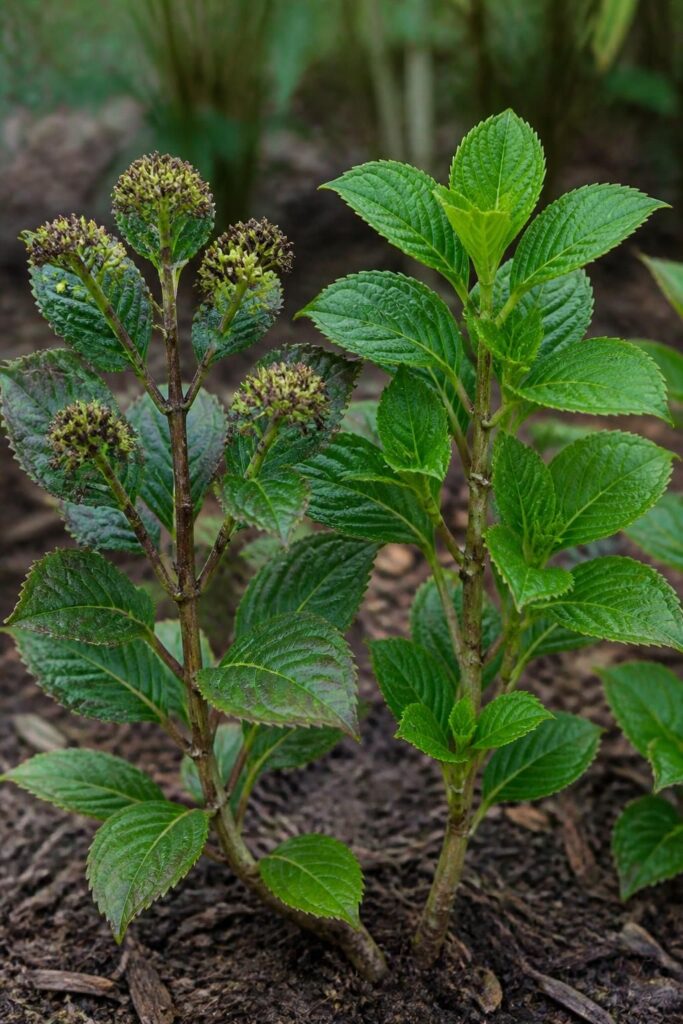
The causes, one at a time
Pruning at the wrong time
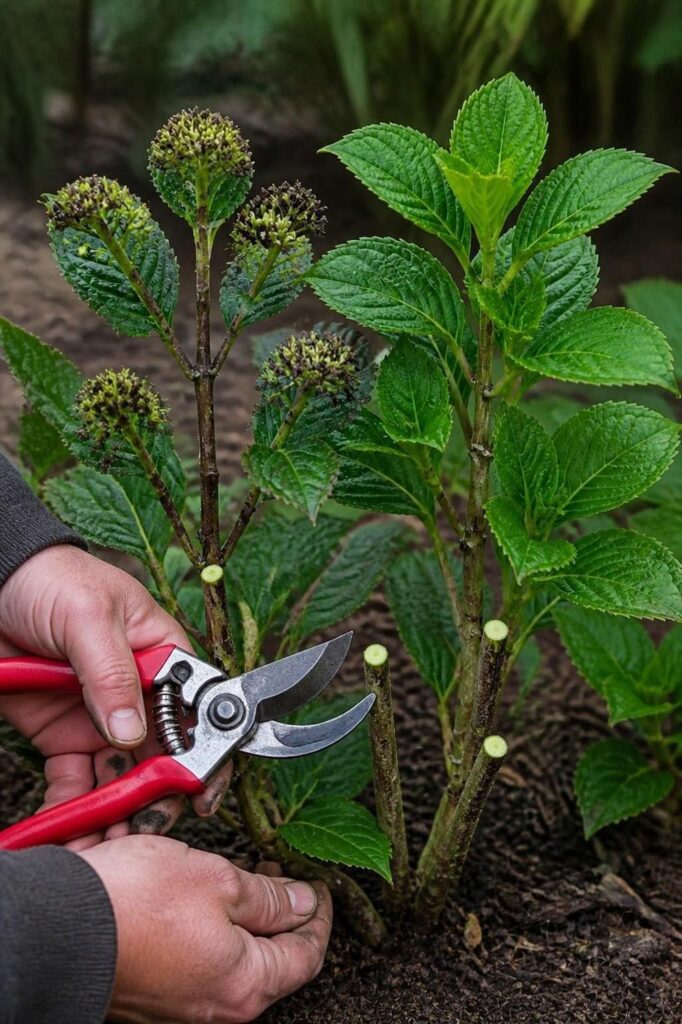
On old-wood types, flower buds develop on the stems during the summer before they open. Reblooming bigleaf cultivars are an important exception because they can also form flowers on new growth. UMass Extension lists improper pruning among the most common reasons bigleaf hydrangeas do not bloom. Penn State Extension puts it plainly: cut one of these back between autumn and early spring and you have removed the coming year’s flowers.
The reason the plant still looks so good is that the cut triggers fresh leafy growth. Nothing is wrong with its health. The flowers simply were not there to open.
If this was your mistake, Ask Extension suggests letting the plant recover and flower the following season before you prune it again. If you are not sure whether stems are alive, wait until the plant leafs out in spring, when living and dead wood are easy to tell apart.
Winter cold and late frost
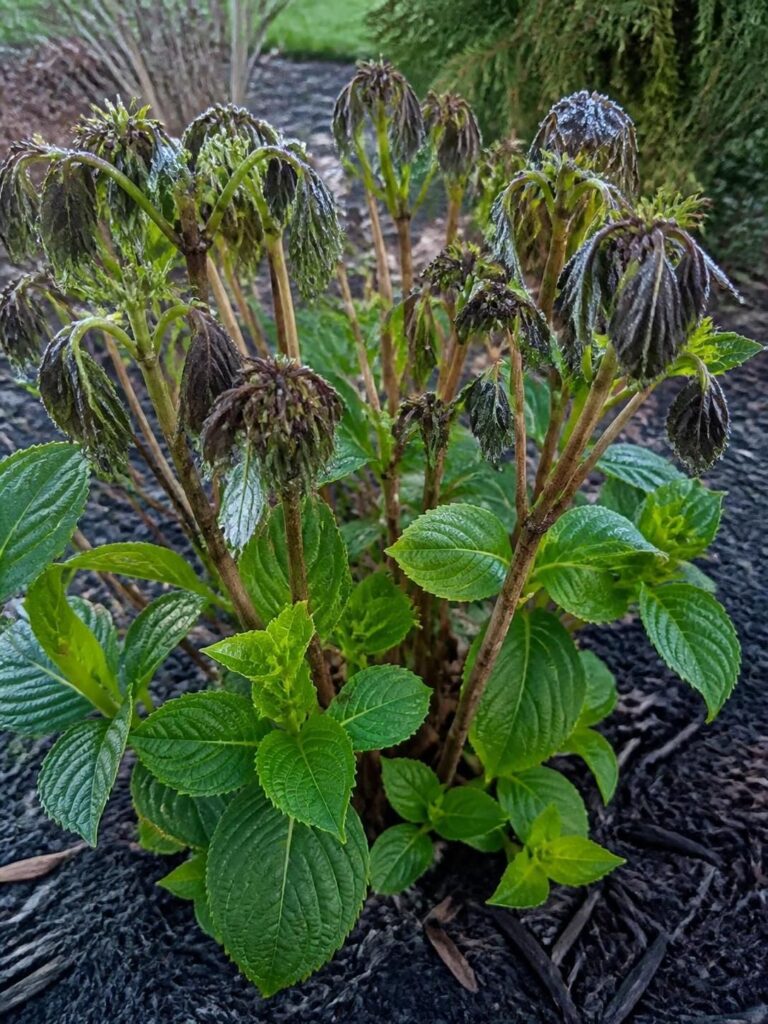
Flower buds are tougher than they look, but not as tough as leaf buds. Ask Extension notes that exposed branches can leaf out normally even when their flower buds died. A useful clue is a plant that flowers only low down, where snow cover or mulch gave some protection, and not higher up on the exposed stems.
Timing matters too. A freeze is most damaging after a mild spell has pushed the plant into active growth. UMass Extension describes bigleaf hydrangeas as hardy to Zone 6 and in need of protection in Zone 5, with low temperatures, swings in temperature, and late freezes all able to harm the buds. Penn State Extension adds that even a moderately severe winter can damage bigleaf flower buds.
If a plant came as a holiday gift, it may be a florist’s hydrangea. Penn State explains that these are often not hardy outdoors in colder areas, so the roots may survive while the tops freeze each year.
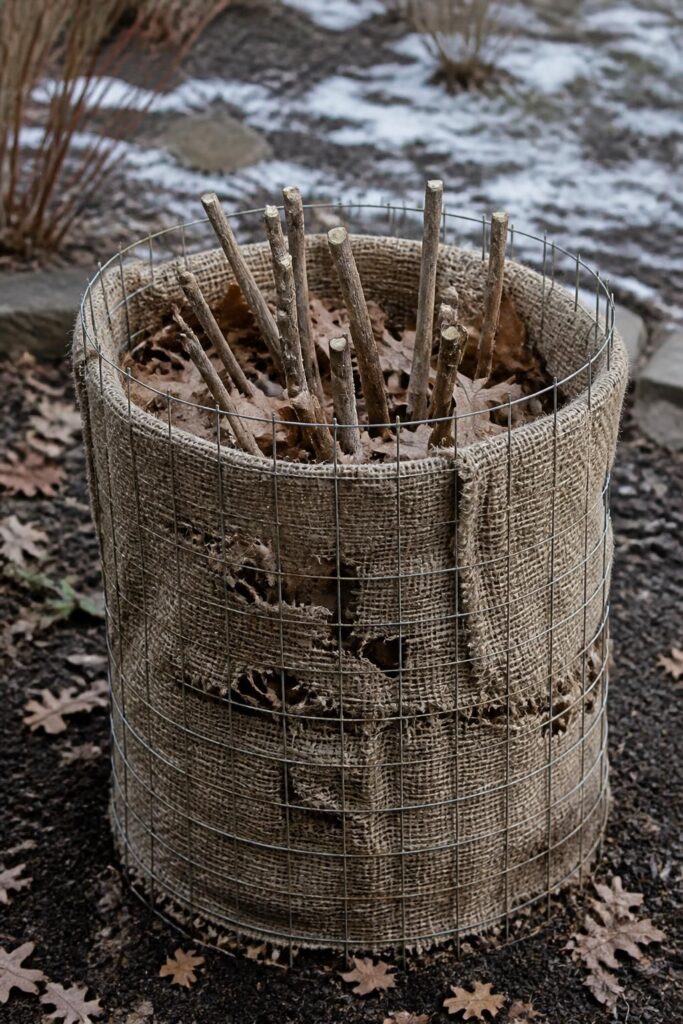
What helps: cover plants with a sheet or blanket when a late freeze is forecast, weighing the edges down. For winter, UMass describes a cylinder of burlap or chicken wire on stakes, filled with leaves or straw. It also admits that in very harsh years plants may still die back or skip flowering, so protection improves your odds but does not guarantee blooms.
Deer and rabbits
Browsing is easy to overlook. According to Ask Extension, winter browsing removes the flower buds on bigleaf and oakleaf hydrangeas, while browsing in the growing season strips the buds from smooth and panicle types. If stem tips look ragged or are simply gone, suspect an animal and protect the plant with a physical barrier.
Too much shade
Hydrangeas are known as shade plants, which is why this one is so common. UMass Extension says bigleaf hydrangea does best with morning sun and light shade in the afternoon. Too much shade reduces flowering, but strong afternoon sun stresses the plant. Panicle types are the exception, since Ask Extension notes that they prefer more sun than other hydrangeas.
Check the light again if the plant used to flower. A tree or shrub nearby may have grown since planting and quietly cut the sun, as an Ask Extension response points out. If you move a shaded plant, early spring is the better time to do it.
Too much nitrogen, including from the lawn
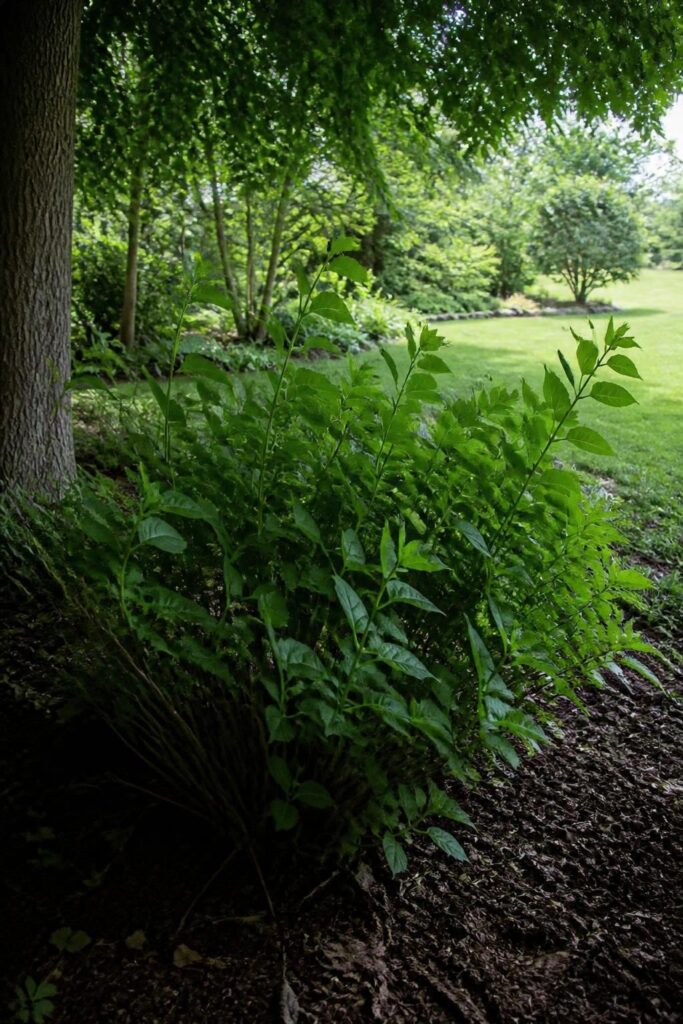
Nitrogen builds leaves and stems. Too much of it gives you deep green foliage and few flowers. UMass Extension points out that the source may not be your feeding at all: fertilizer from elsewhere in the yard can wash into the soil around the plant. Ask Extension names lawn fertilizer as a typical culprit.
Do “bloom booster” fertilizers help?
This is where advice disagrees. Many pages tell you to switch to a high-phosphorus product, and UMass mentions that higher-phosphorus fertilizers encourage bloom growth. But North Dakota State University Extension says most garden soils already contain enough phosphorus, and that there is no reason to add more unless a soil test shows a shortage. In one Ask Extension case, a gardener with a leafy, flowerless hydrangea had very high phosphorus on the soil test, and the expert suspected over-fertilizing rather than too little.
The practical answer is to test first. Your local extension service can tell you what the soil actually contains, and it will know your region’s rules, since some areas restrict phosphorus fertilizer. Test before adding phosphorus rather than using a bloom booster by default. Whatever you apply, follow the product label.
A young plant, a dry spell, or a cool summer
New plants spend their first season on roots and stems, and UMass Extension says they may flower less during that time. Some plants take longer than one season, and it varies with the variety and the site.
Water and weather play a part as well. UMass notes that drought stress can reduce flowering even when the leaves look fine, that overwatering can also hurt, that cooler summers can reduce or delay bloom, and that a severe drought can affect flowers in later years.
What to do now
- Identify the type, using bloom timing, the plant tag, or the flower shape.
- Put the pruners away. If it is an old-wood type, remove only clearly dead wood once the plant has leafed out.
- Track the sun through a whole day and look closely at the stem tips for animal damage.
- Hold off on fertilizer until you have a soil test. Keep lawn feed away from the root zone.
- Plan winter protection for old-wood types in colder areas, and keep a sheet handy for late frosts.
What not to do
- Do not prune an old-wood hydrangea between autumn and early spring.
- Do not pile on extra fertilizer to force flowers. More feeding can mean more leaves and fewer blooms.
- Do not add aluminum sulfate hoping for flowers. Penn State Extension says it is unnecessary in soils that already have plenty of aluminum and may damage roots. Soil pH mainly affects flower color in color-changing bigleaf hydrangeas; changing it is not a general fix for a plant that refuses to bloom.
- Do not dig the plant up in the middle of summer. Early spring is the gentler time to move a shaded hydrangea.
Will it bloom this year?
If the buds were pruned off, frozen, or eaten, no action now will produce flowers this season. The plant will grow on and can flower the following year if the cause is dealt with. If the cause was shade or too much nitrogen, the fix pays off over the next season or two, though no one can promise a date. And even with ideal care, UMass Extension admits that some years a bigleaf will not bloom because of the winter or spring weather.
If your site keeps beating your hydrangea
Sometimes the plant is simply the wrong match for the climate. UMass suggests panicle hydrangeas as a more dependable choice for gardeners who want flowers every year, with the trade-off that they are not a substitute for anyone who wants blue or lacecap flowers. Penn State recommends smooth hydrangeas such as ‘Annabelle’, which can be cut back anytime from autumn to spring.
Reblooming bigleaf series, which flower on both old and new wood, are another route, and Penn State names the Endless Summer and Let’s Dance collections. Just keep expectations modest: UMass warns that repeat-blooming cultivars can still disappoint.
Quick questions
Why does my hydrangea have leaves but no flowers year after year?
A repeating pattern usually points to a standing condition rather than one bad season: shade, nitrogen from feeding or the lawn, or an old-wood type in a climate too cold for its buds. Work through the clue table above, and consider a new-wood type if the site cannot change.
Will cutting it back make it flower?
Not on an old-wood type. Cutting back removes the stems that carry the buds. On smooth and panicle types, a late-winter or early-spring cut is safe, but it will not fix shade or heavy feeding.
My plant is healthy and the type is right. What else could it be?
Look at its age, the summer’s weather, and last winter. A young plant, a dry summer, or a cold snap that missed the foliage can all explain a flowerless year without anything being permanently wrong.