Common Lettuce Growing Problems: How to Identify, Diagnose, and Fix Them
If your lettuce is struggling, you’re not alone, and it is rarely one big mistake. Lettuce is a cool-season crop with shallow roots, so it reacts fast to warm soil, uneven water, and a bed that stays soggy. Those three sit behind many of the problems below, with pests and diseases often moving in afterwards.
Short answer: a struggling lettuce plant is very often suffering from heat or uneven water, with crowding making either one worse. Check the plant’s age first, then the base of the stem, then the heart and the undersides of the leaves, before you change your watering or spray anything.
This page is the quick-diagnosis hub. Find your symptom in the table, confirm it with the check in the third column, and follow the link in the last column when a full guide exists.
| What you see | Most likely cause | How to confirm | First move | Go deeper |
|---|---|---|---|---|
| Seed sown, nothing up | Soil too warm for germination, or seedbed dried out | Soil thermometer; check moisture just under the surface | Cool and shade the bed, keep the surface evenly damp | See “Seeds and seedlings” below |
| Seedling folds over at the soil line | Damping-off | Pinched, tan or brown stem; soil already wet | Stop watering; discard affected seedlings and the mix | See “Seeds and seedlings” below |
| Seedlings missing, ragged or uprooted | Slugs, snails or birds | Silver slime trails; torn leaves; check at dusk | Cover with row cover; hand-pick slugs after dark | See “Seeds and seedlings” below |
| Young plants sit and do nothing | Warm soil, crowding, or roots that can’t get steady moisture | Pull one up and look at the roots | Thin plants, even out watering, feed lightly | Why lettuce isn’t growing |
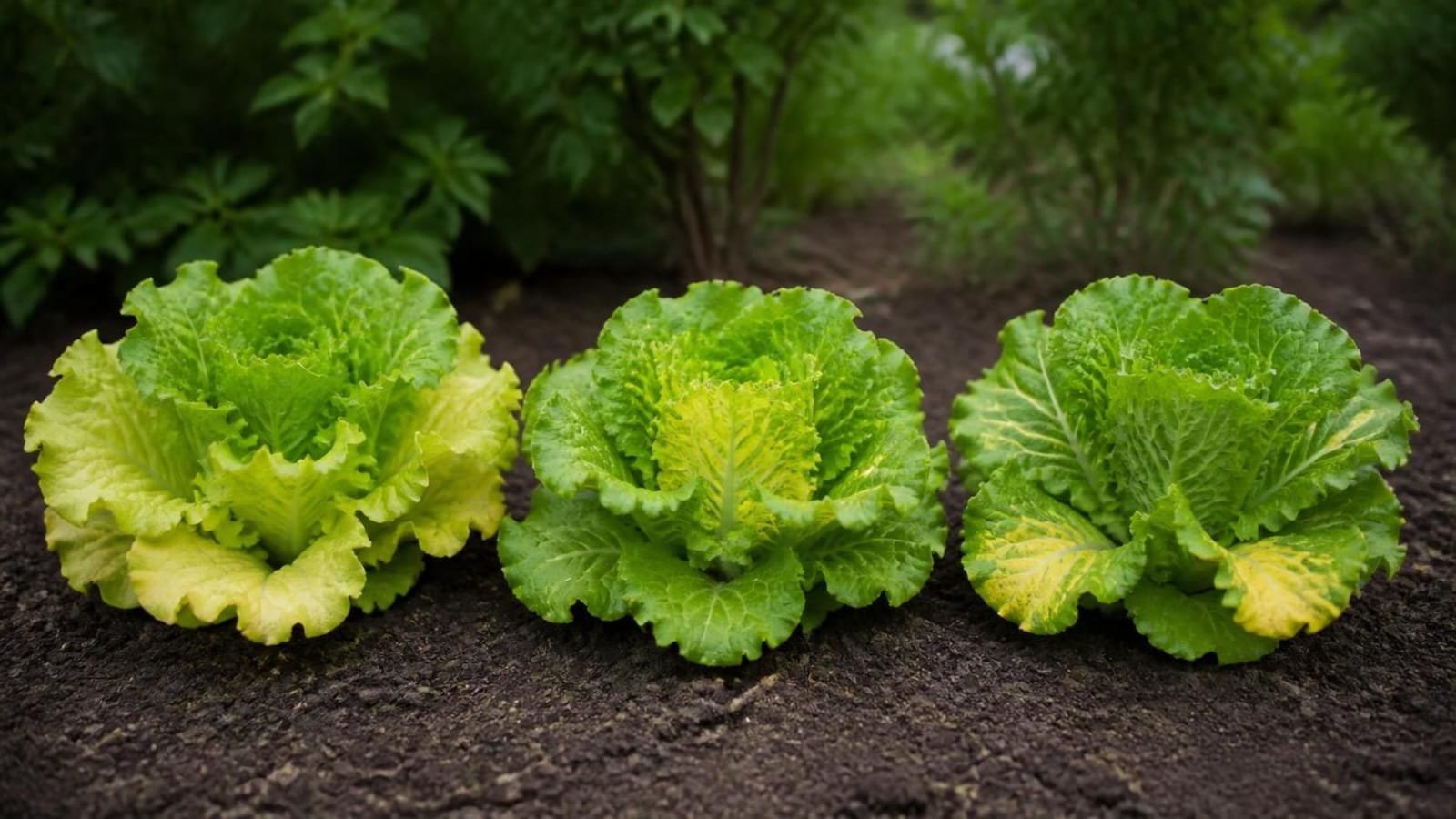
| Pale or yellow older leaves | Hungry or waterlogged roots | Is the soil soggy? Is there fuzz on the underside? | Fix drainage first, then feed lightly | Yellow lettuce leaves |
| Yellow angular patches, fuzzy white underside | Downy mildew | Turn the leaf over; patches stop at the veins | Keep leaves dry, thin plants, remove bad leaves | See “Reading the leaf” below |
| Brown edges on inner leaves | Tipburn | Split the head or open the heart | Even watering, moderate feeding, shade in heat | See “Reading the leaf” below |
| Droops by day, recovers by evening | Heat or a dry top few inches | Check moisture at knuckle depth | Water at the soil, shade the afternoon sun | Wilting lettuce |
| Outer leaves collapse, white cotton at the base | Lettuce drop (white mold) | Base of the plant: mold and small black lumps | Pull and bag the plant; rotate the bed | See “Reading the leaf” below |
| Green variety turns red or purple | Plant stress (sun, heat, nutrients) | Check the seed packet; consider a soil test | Shade and steady moisture while you investigate | Lettuce turning red or purple |
| Tall center stem, bitter taste | Bolting | Stem stretching, leaves loosening apart | Replace the plants; resow for cooler weather | Lettuce bolting |
| Bitter leaves, no stalk yet | Heat or water stress, or old leaves | Taste a young inner leaf against an outer one | Harvest young, shade, water evenly | Why lettuce is bitter |
| Curled, stunted leaves with small insects | Aphids, sometimes with a virus | Peel back the heart leaves; check undersides | Wash off with water, use row cover | See “Reading the leaf” below |
A three-minute check before you change anything
Most wrong turns happen because the fix was chosen before the plant was examined. This order rules out the most possibilities fastest.
- Note the age. Seeds, seedlings, young plants and nearly grown heads fail for different reasons.
- Look at the base. A pinched brown stem, white cottony mold or small black lumps point to a problem at the soil line.
- Pull one plant. Fine white roots mean the trouble is above ground. Short, brown or slimy roots mean water or soil trouble.
- Turn the leaves over and open the heart. That is where fuzz, insects and inner brown edges hide.
Seeds and seedlings
Seeds that never come up
The usual reaction is to sow again and water more. Check the soil temperature first. University of Delaware Extension puts the best germination range at 60 to 68°F and explains that hot soil can push lettuce seed into thermal dormancy, so it won’t sprout until things cool. Measure the soil itself, not just the air. If it is warm, shade and water the bed beforehand and sow in the cool of the evening. Keep the surface evenly damp until you see green, because tiny shallow-sown seed stalls when the top half-inch dries out.
Seedlings that flop or vanish
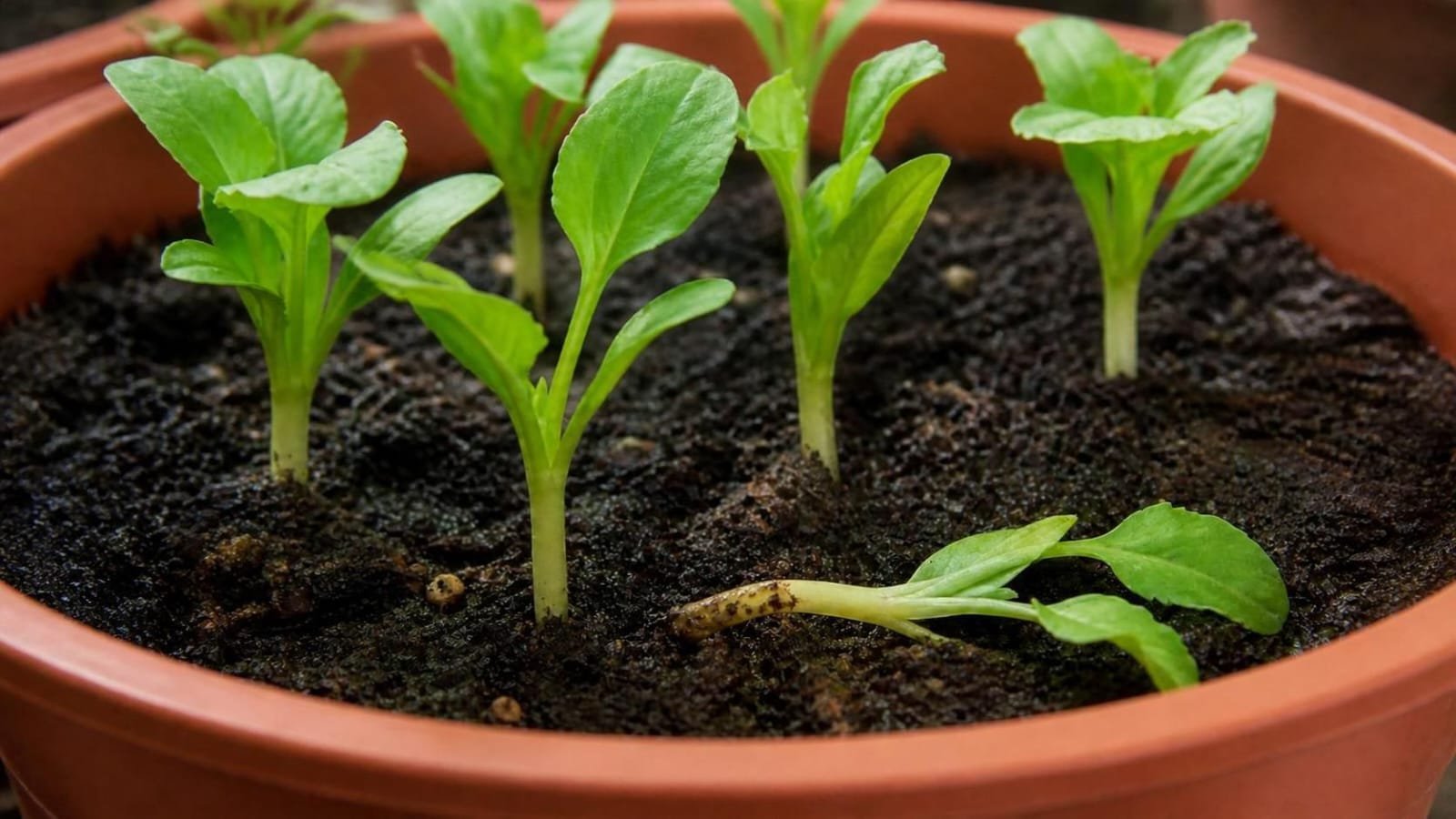
When a seedling droops, almost everyone reaches for the watering can. Fair enough, a drooping seedling looks thirsty. In a pot or tray, though, drooping together with soil that is already wet usually means the roots are failing, and more water finishes the job. Push a finger in to the second knuckle before you water.
The usual culprit is damping-off, caused by common soil-borne fungi and water molds. University of Minnesota Extension notes that low light, overwatering, too much fertilizer salt and cool soil all make it worse. Look at the stem at the soil line for a tan or brown, pinched, collapsed stem. The University of Wisconsin plant disease clinic is blunt that affected seedlings cannot be saved, so prevention is the work: fresh seed-starting mix instead of garden soil, clean containers, drainage holes, and some airflow.
If the stems are firm but leaves are chewed, look for silver slime trails, which mean slugs or snails working at night. Torn leaves or uprooted seedlings can also be birds, and a light row cover will tell you quickly.
Young plants that stop growing
A plant that has stopped growing is usually dealing with warm soil, a crowded bed, or roots that cannot get steady moisture. Let’s be honest, lettuce seed is tiny and nobody sows it as thinly as the packet asks. Crowded plants compete for water and light and hold humid air around their leaves, so thin early and eat the thinnings. Pale older leaves on a slow plant often point to nitrogen shortage, which University of Maryland Extension says is common early in the season. Feed lightly, since too much nitrogen can aggravate tipburn and aphids. The full walk-through on why your lettuce is not growing covers soil, light and spacing.
Reading the leaf
The diseases home gardeners meet most often on lettuce are damping-off in seedlings, downy mildew, lettuce drop (also called white mold), bacterial leaf spot, and viruses spread by aphids. Several look alike at first glance, and some leaf symptoms are not diseases at all, so read the leaf before treating anything.
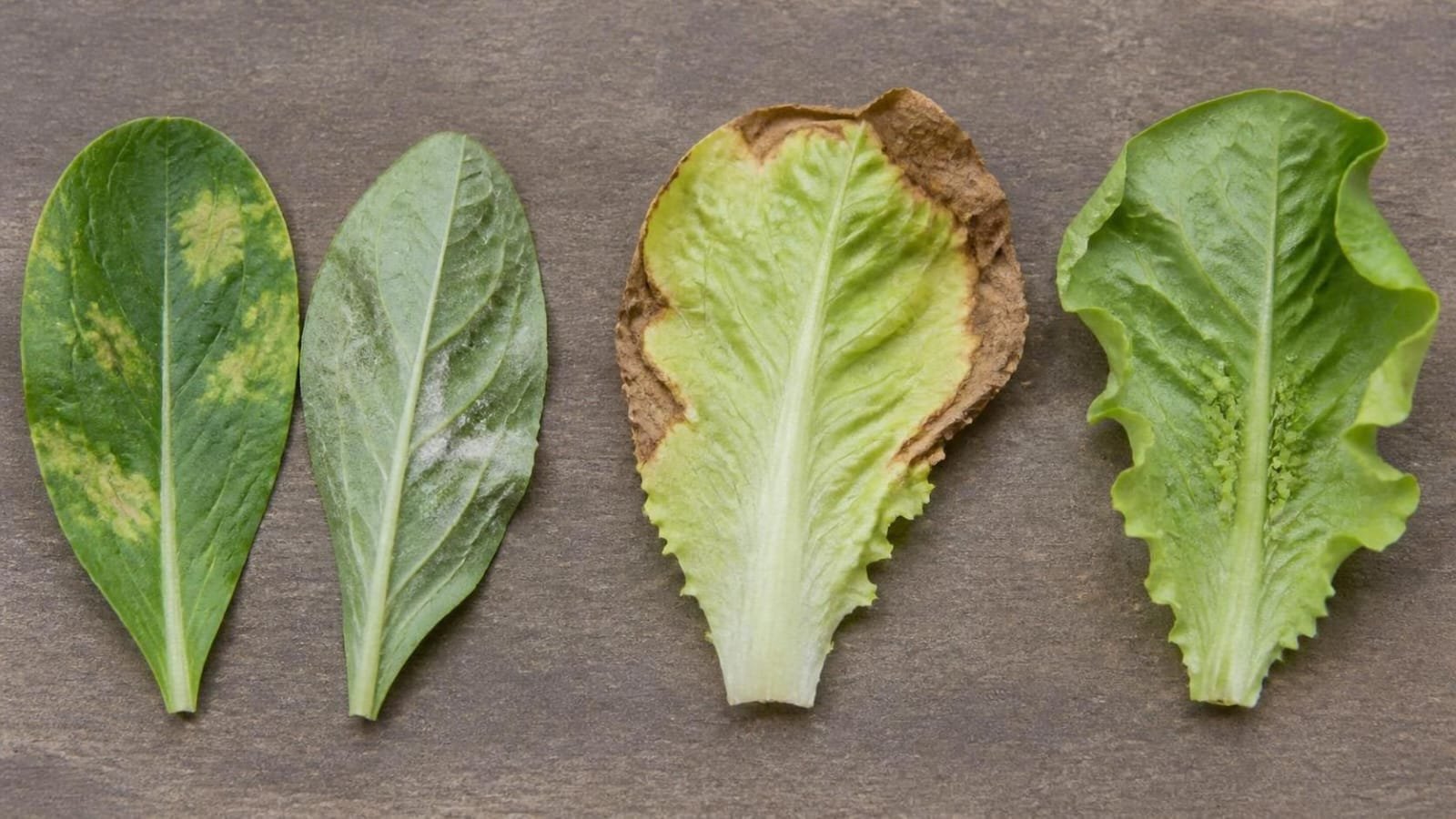
Downy mildew
Turn the leaf over. Downy mildew shows pale green to yellow patches on top, often angular because the veins hem them in, with a fuzzy whitish growth directly underneath, according to the Royal Horticultural Society. It starts on older outer leaves and likes cool, damp weather. Keep foliage dry by watering the soil in the morning, thin crowded plants, keep weeds down and remove bad leaves. The RHS notes that no chemical controls are available to UK gardeners for it. Approved products differ elsewhere, so check your local Extension office and the label. Yellowing with nothing underneath is a different problem, covered in yellow lettuce leaves.
Tipburn
Brown edges on the inner leaves are usually tipburn. The soil normally has plenty of calcium. The young leaves at the heart simply cannot receive enough of it while growing fast, and UC Integrated Pest Management links it to high fertility and high temperatures. It often can’t be seen from outside, so split a head to check. Agriculture Victoria reports that calcium sprays on the leaves do not effectively reduce it and does not recommend them. Aim for steady watering, moderate feeding, a less susceptible variety and shade in the hottest weeks. Discard any leaf that turns slimy.
Wilting and lettuce drop
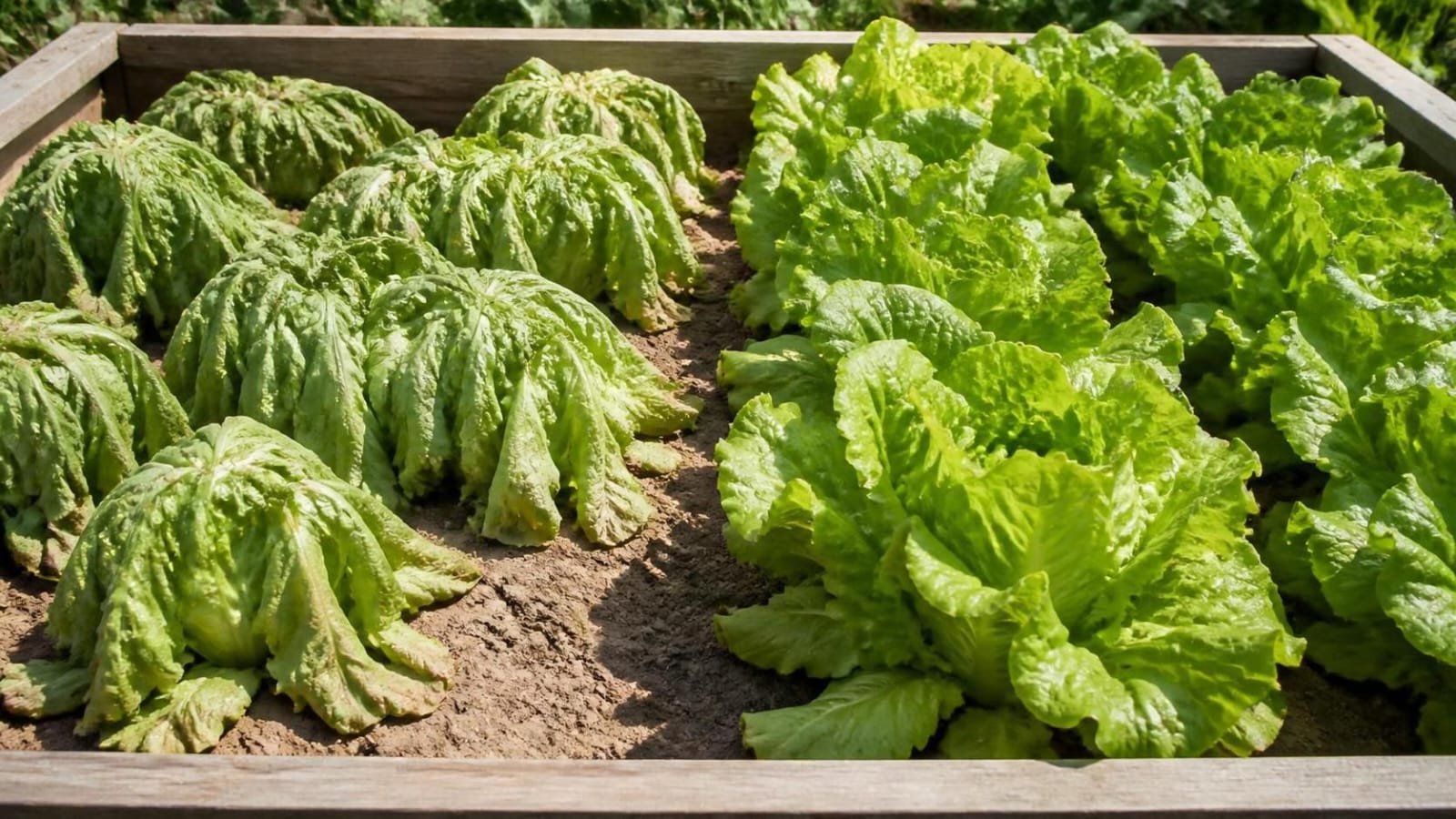
Lettuce that droops at three in the afternoon and perks up by evening is stressed by heat or a dry top few inches, and water fixes it. Lettuce that stays down after watering, or whose outer leaves collapse one by one, needs a look at the base. University of Minnesota Extension describes lettuce drop as outer leaves wilting, tan water-soaked leaf bases, and white cottony mold with small hard black lumps at the base. Pull and bag the plant, keep it out of the compost, and rotate lettuce to another bed. See wilting lettuce for the watering side.
A Kentucky case shows why rotation matters. Researchers at the University of Kentucky report that the fungus behind lettuce drop can survive 8 to 10 years in soil, and that growers with a history of it have reported losses as high as 60 percent. In high-tunnel trials in 2022 and 2023, they found that mid-March, the most common planting time, was when the fungus was most active and disease was worst. Earlier and later plantings fared better. Some cultivars labeled resistant turned out extremely susceptible, and a few thought to be susceptible were resistant. That was commercial work in high tunnels, so treat it as a clue for your own bed, not a rule. If lettuce drop has hit once, shifting your planting date and changing the bed are both worth a try.
Red or purple leaves
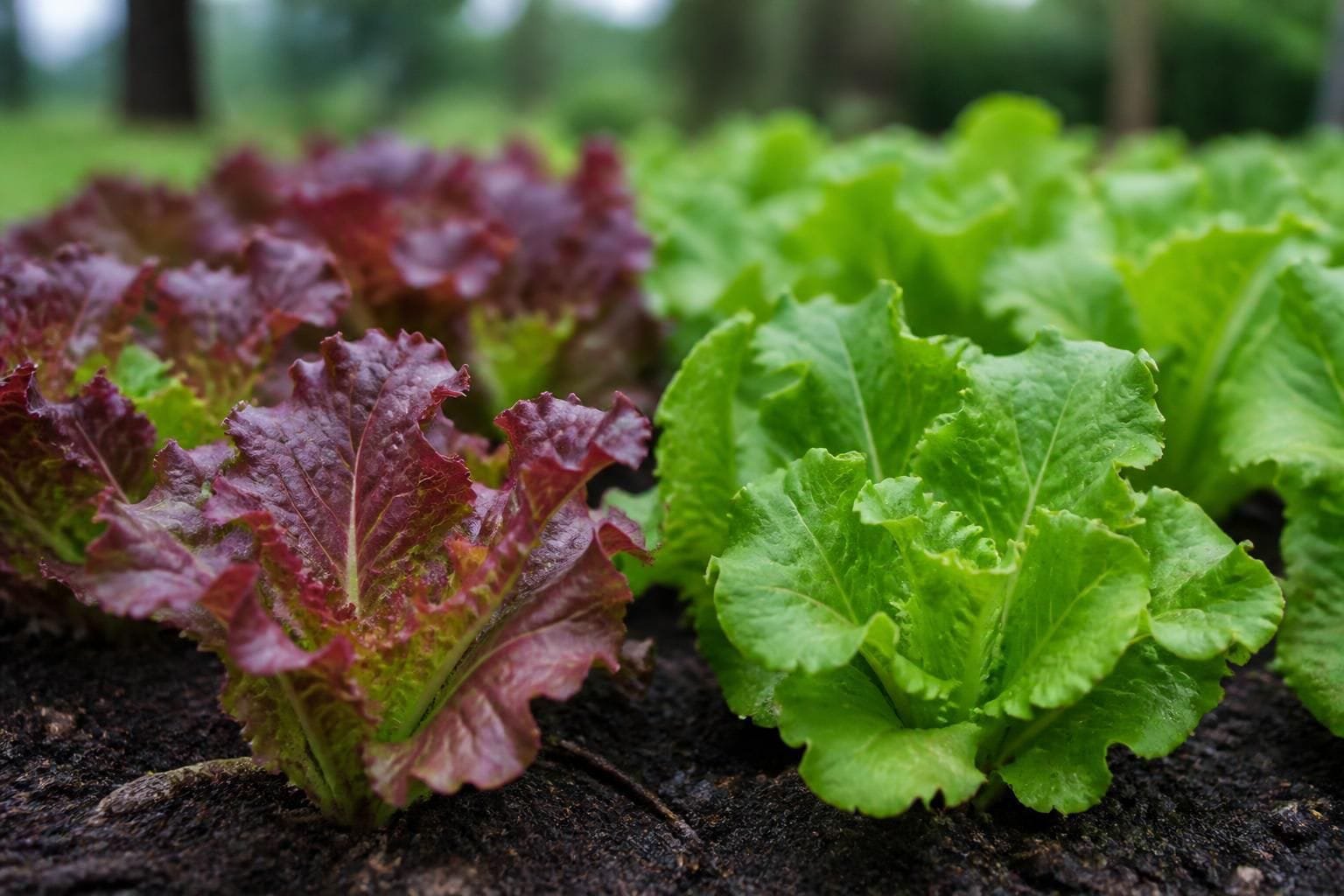
A red variety is supposed to be red. If a green variety turns reddish or purple, treat it as a stress signal. Strong sun, heat and low nutrient availability, phosphorus especially, are the causes most often named, and I can’t tell you which you have from a description. A soil test settles the nutrient question, and lettuce turning red or purple covers the rest.
Aphids, slugs and holes
Silver slime trails and ragged holes mean slugs or snails. Small round holes like shot pellets suggest flea beetles. Curled, stunted leaves with insects clustered on undersides or deep in the heart mean aphids. Big colonies stunt plants, and some species carry lettuce viruses. UC Integrated Pest Management also notes that some aphids feed deep in the center, so peel back the heart leaves. A firm jet of water and a row cover are the gentle first moves. If you spray, insecticidal soap works only on contact, and Cornell Cooperative Extension is clear that household dish soap is not the same product. Follow the label for rate and timing. Mottled or distorted leaves can mean a virus, which is hard to confirm by eye, so a local Extension office is the reliable next step.
Bolting and bitterness
People tend to react to a bolting row by watering harder or snapping off the flower stalk. Neither brings it back. Purdue Extension states that once flowering starts it cannot be reversed, so replace the plants or resow for fall. Don’t take a bolted row personally. It happens to every grower sooner or later.
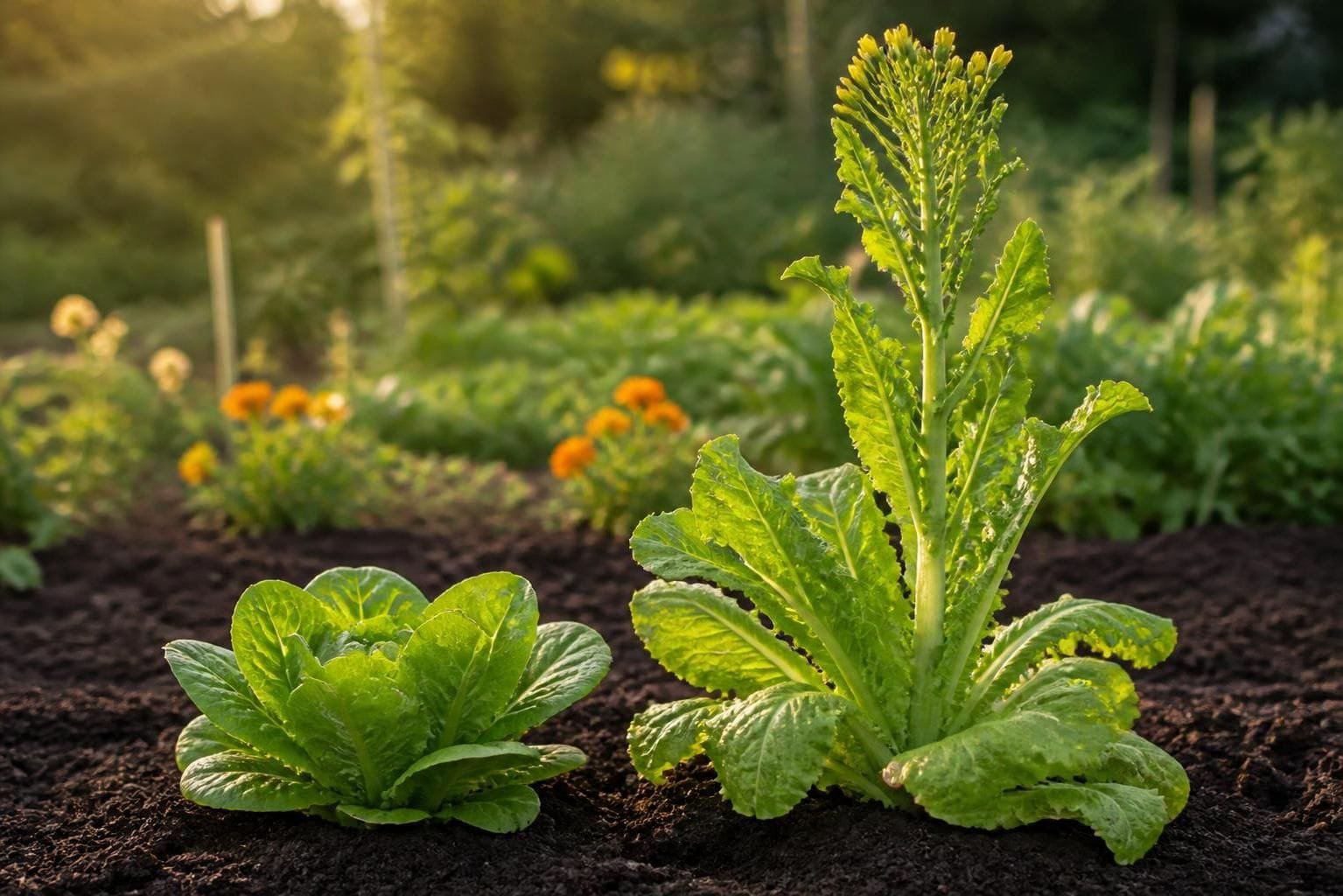
The cause is partly daylight and partly heat. Fine Gardening describes USDA experiments in which total day length, more than temperature, set when plants bolted, though high temperatures can speed things up later in growth. Bitter compounds sit at low levels until bolting, then rise. Not every bitter plant has bolted, though. Heat stress, dry soil and old leaves can all taste bitter before any stalk appears. Check the center: a stretching stem with leaves loosening apart means bolting has begun. See lettuce bolting and why lettuce turns bitter for both cases.
Here is a real case worth knowing. Emmalea Ernest, a University of Delaware extension specialist, tested 43 lettuce varieties in 2012 with two spring and two fall planting dates. One fall planting was inside the recommended window, and even so, 83 percent of the varieties fully or partially bolted. Yet nearly all of them produced marketable heads when transplanted on March 30. Same plants, different season. That is why heat-tolerant varieties help but are not heat-proof, and why timing usually matters more than the seed packet. It is one state’s result, so ask local growers what holds up in your climate. Sowing small batches every couple of weeks, giving afternoon shade, and harvesting young do more for the odds than any single variety.
Getting lettuce to grow back
Cut it, don’t pull it. Leaf lettuce, and to a lesser extent romaine and butterhead, will regrow if you cut about an inch above the soil and leave the crown, the growing point at the base, untouched. Gardening Know How warns that cutting into or below the crown will probably kill the plant, and says most varieties regrow in about two weeks.
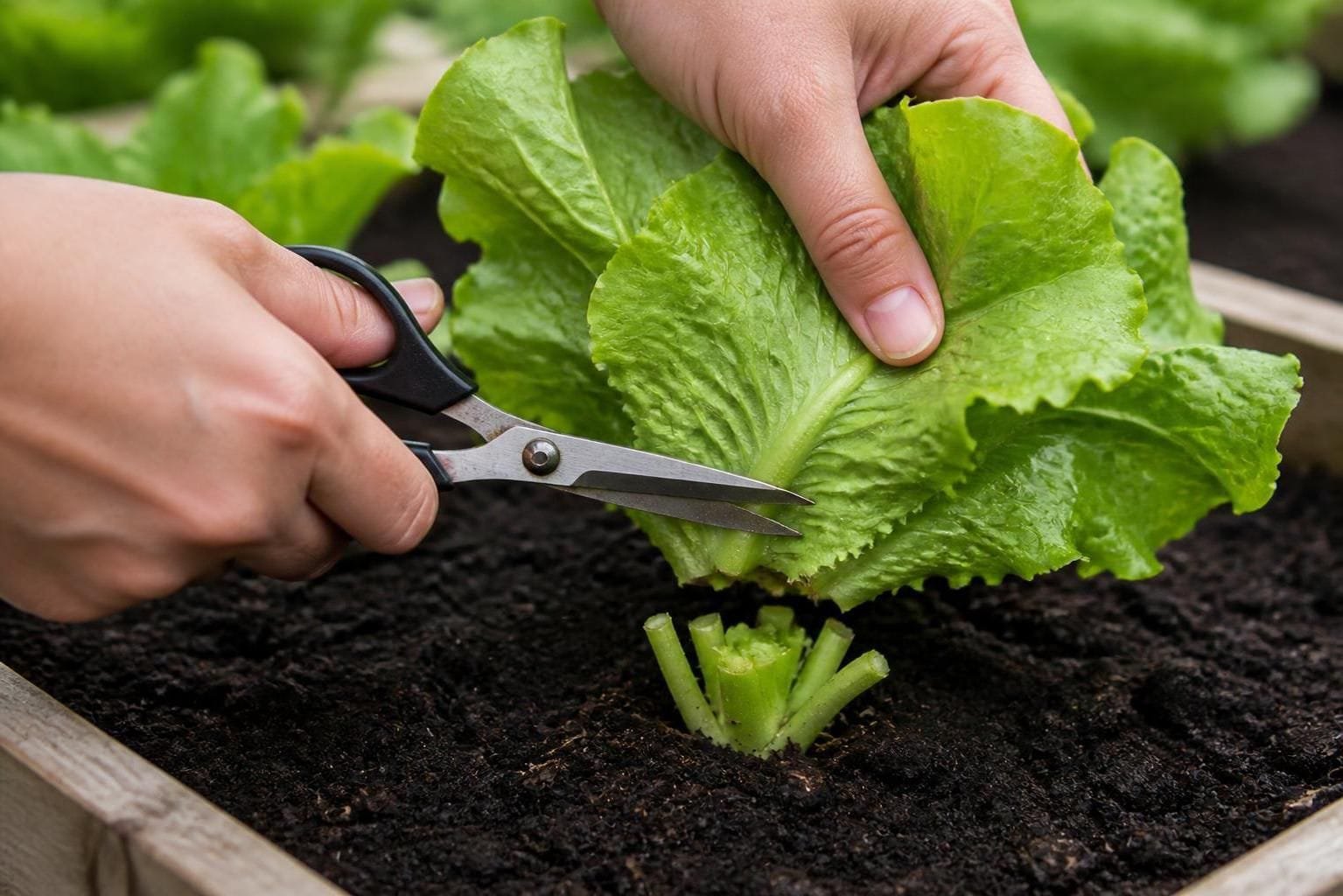
Trust me on this one, the crown is the one part you can’t afford to nick. Water after cutting, then leave the plant alone. Head-forming types give one modest second harvest at best, and even leaf types slow down and eventually bolt or turn bitter, so stagger your sowings. This applies to plants growing in a bed or container.
Prevention that covers most problems
- Sow when soil is cool, and use small, regular batches rather than one big sowing.
- Give plants room and thin early, so air moves and leaves dry quickly.
- Water the soil, in the morning, and keep moisture even instead of cycling between dry and soggy.
- Use fresh mix and clean containers for seedlings, and good drainage everywhere.
- Rotate lettuce to a different bed, and clear plant debris and weeds.
- Choose heat-tolerant or tipburn-resistant varieties where those are your problems, and shade the afternoon sun in warm weather.
Mistakes that make it worse
- Watering a drooping seedling before checking whether the soil is already wet.
- Spraying calcium on tip-burned leaves and expecting the next ones to be clean.
- Composting lettuce that has white cottony mold at the base. Bag it instead.
- Mixing household dish soap as an aphid spray in place of a labeled insecticidal soap.
- Replanting lettuce into the bed where lettuce drop has just struck.