
Creeping juniper (Juniperus horizontalis) is a low, spreading evergreen native to northern North America. Most garden forms stay under a foot tall and spread several feet wide. Give it full sun and well-drained soil. Pick a variety that fits your space, and most of the work happens at planting time.
You see creeping juniper on slopes, banks, and rock walls all the time. It’s easy to like. It’s also easy to get wrong. Pick the right variety, plant it in the right spot, and you’re most of the way there.
What creeping juniper is
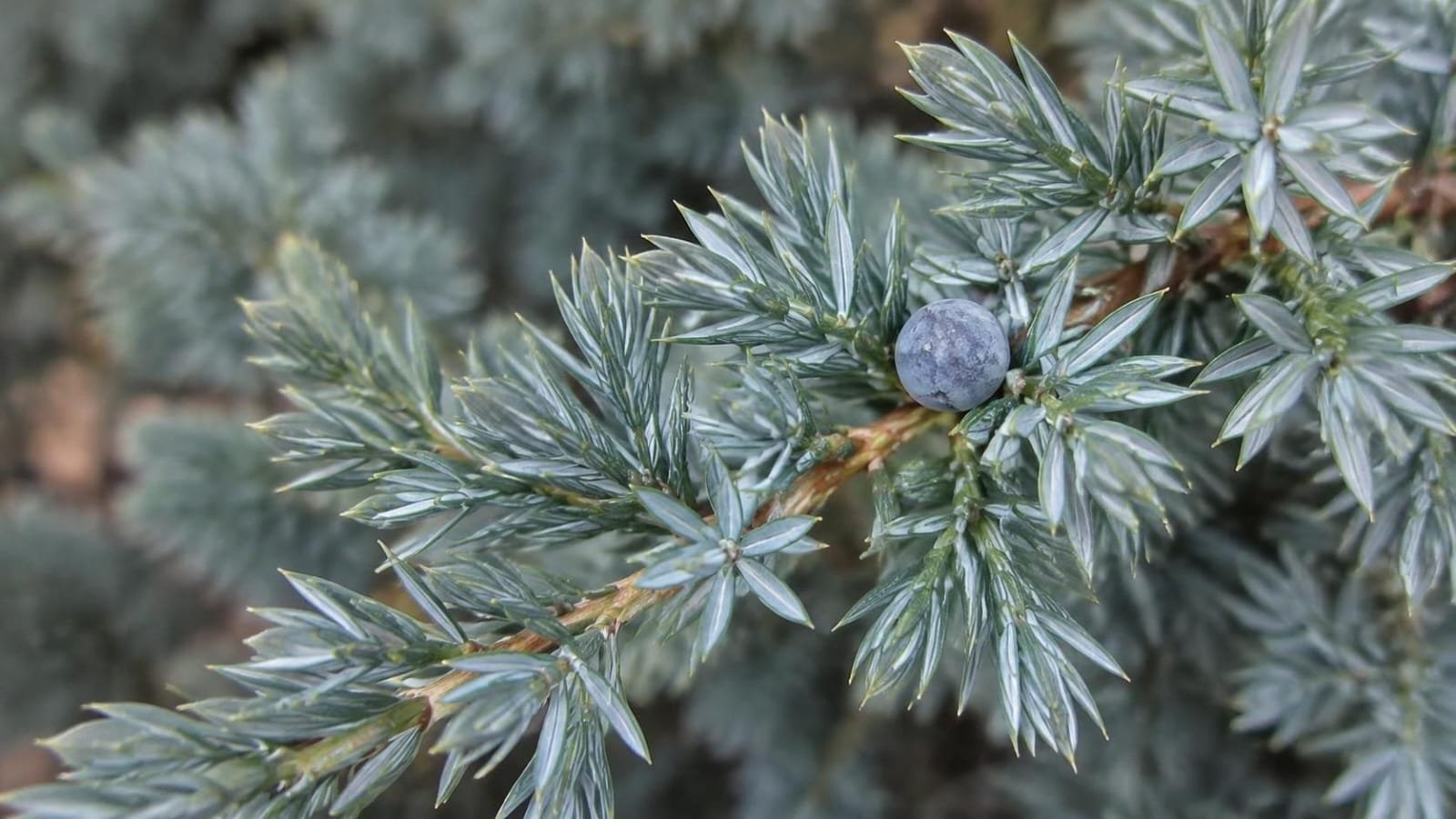
The species name is a clue. Horizontalis refers to the flat, trailing growth. The NC State Extension profile says the branches spread much farther than they grow upward. The foliage is scale-like and green to blue-green. It often turns purplish in winter. Females make small, blue, berry-like cones.
The plant handles cold winters and hot, dry summers. That toughness is part of why it’s so common in landscapes.
Creeping juniper varieties to know
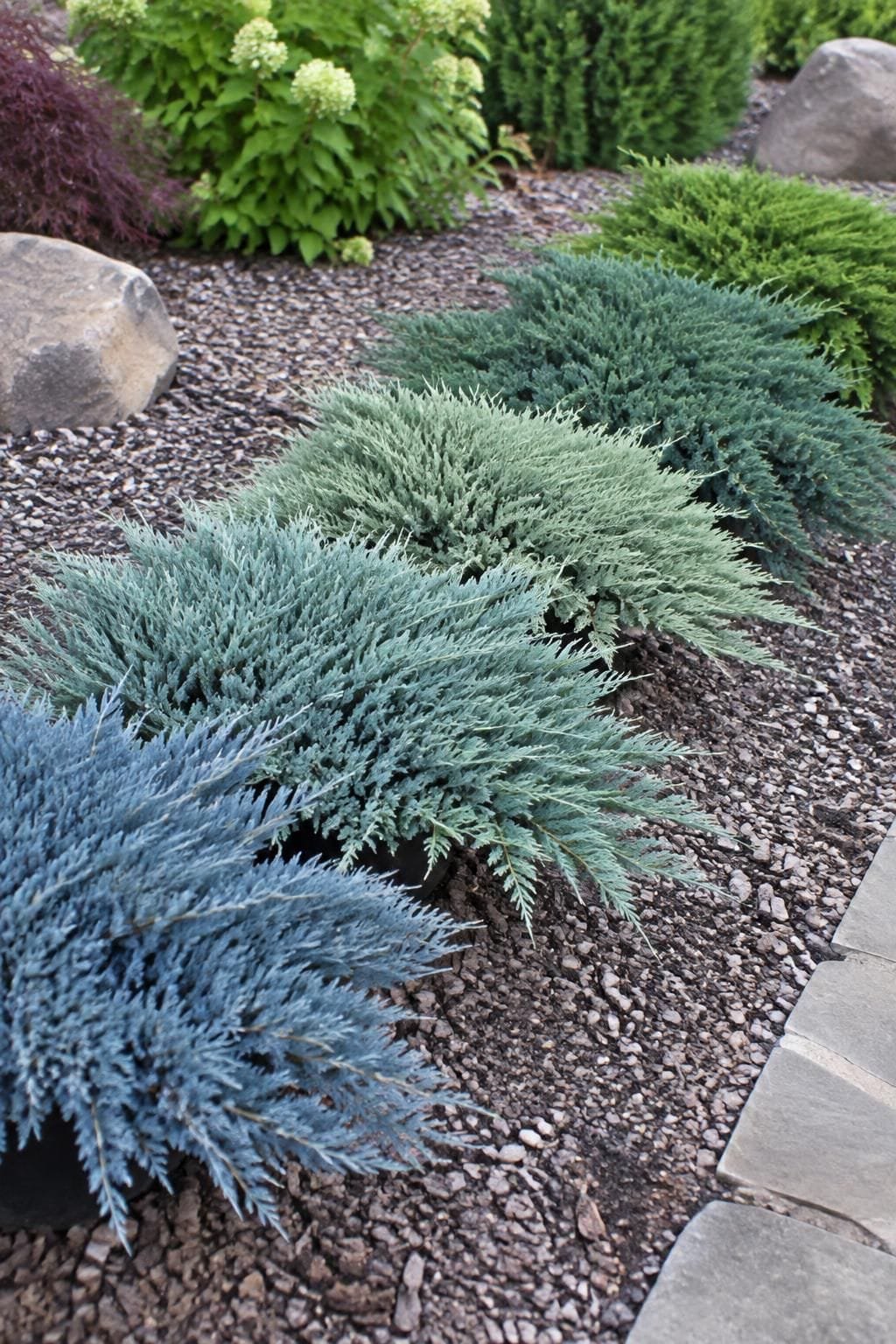
Virginia Tech Extension counts more than 60 cultivars. Most stay under a foot tall and have a bluish cast. A few are taller. Here are some popular ones:
- Bar Harbor has bluish-green foliage that often turns purplish in winter.
- Blue Rug has silver-blue foliage and a dense, trailing habit. It gets its own guide: the Blue Rug juniper guide.
- Plumosa, also sold as Andorra, makes a flat mound about 2 feet tall and at least 5 feet wide. It turns purplish in winter.
- Youngstown makes a silver-gray mound that turns purple in winter. It spreads about 6 feet.
- Maiden Gold is a slow dwarf with gold-variegated foliage. It stays about 4 inches tall and spreads about 4 feet.
Check two things before you buy. Color changes with the seasons, so see the plant in winter if you can. Size varies a lot, so read the tag. Ask the nursery for the mature width, too.
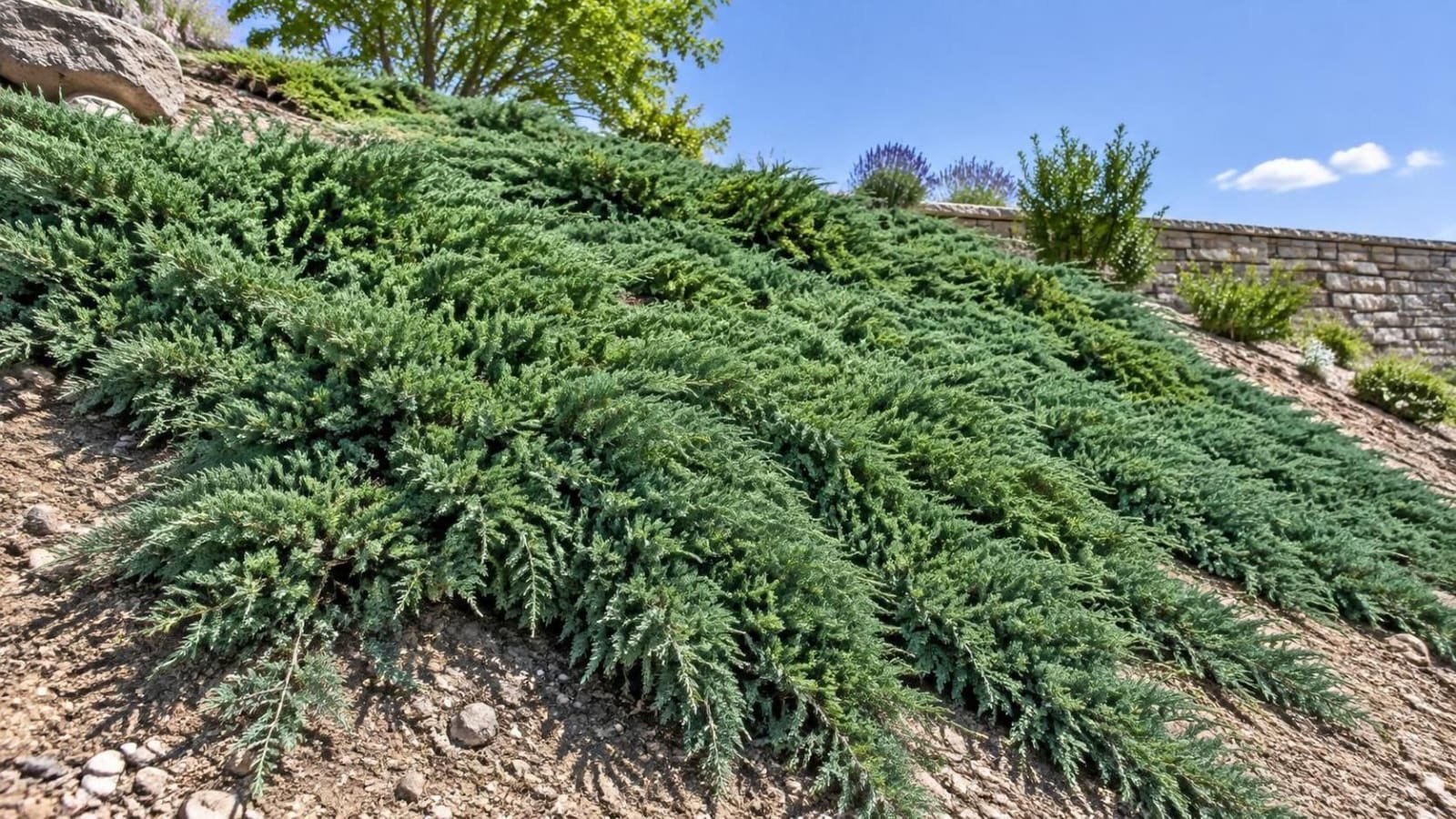
Creeping juniper ground cover on slopes
Slopes are where this plant earns its keep. The trailing branches hold soil in place, and it handles dry banks well. It also works on rock walls and in rock gardens, where the branches spill over stone.
Plan the width first. The plant is wider than it is tall, so spread matters most. Measure your space, then pick a variety that fits. A low form works on a narrow bank. A 2-foot mound needs a wider bed.
How to plant creeping juniper
Pick a sunny spot. The NC State Extension profile calls for full sun: six or more hours of direct light a day. It suggests 6 to 12 feet apart for the species. Low forms can go closer, but plan for the mature spread so they don’t crowd.
Drainage matters most. The plant handles sand, rocky ground, and most other soils, as long as water moves through. Acid to slightly alkaline soil works well. Skip low spots where water pools.
Weeds are the main care issue for low forms. Short plants leave gaps, and weed seeds find them. Mulch between plants and pull weeds by hand until the cover fills in.
Growth and care after planting
Give the planting a few seasons to look finished. Growth is steady rather than instant.
Shade is the main thing to avoid. Creeping juniper needs full sun. When trees grow over it, the plant thins out and browns at the tips. Thin areas also invite weeds.
Water new plants through their first season. After that, it handles dry spells well and mostly lives on rain, except in long droughts.
Feed lightly. Junipers need some fertilizer, but heavy feeding pushes growth faster than a low form can hold. Follow the label.
Prune only when you have to. The easiest way to avoid pruning is to pick a variety that fits the space. If you do trim, go light.
Pests and diseases to watch
Lots of insects feed on creeping juniper. Aphids, bagworms, caterpillars, scale, spider mites, tip mites, and webworms all show up.
Watch for needle blight and Phomopsis blight. Creeping juniper also shares a rust fungus with apple trees. The fungus forms cedar apples on juniper twigs and dark leaf spots on apples. If you grow apples nearby, keep an eye on both plants.
Wet soil is the bigger threat. Root rot can kill a whole group of junipers. The pathogen can stay in the soil, so don’t replant another juniper in the same spot.
Creeping juniper or another juniper?
If you need an upright, narrow form instead, look at Blue Arrow Juniper or the Taylor Juniper for a taller column. For a compact shrub rather than a ground cover, Blue Star Juniper is worth a look.
Moonglow Juniper has its own sizing and care notes. The Juniperus Virginiana guide covers the upright eastern species. It’s a different plant from this one, so read both before you choose.
Frequently asked questions
Is Blue Rug the same as creeping juniper?
Blue Rug is one cultivar of the creeping juniper species. The species has dozens of varieties. Blue Rug is among the most planted, but its details apply to that cultivar only.
How fast does creeping juniper spread?
It depends on the variety and the site. Low forms stay under a foot tall. Larger forms can spread 6 feet or more. Plan for the mature width from the start, and give the cover several seasons to fill in.
Can creeping juniper grow in shade?
Not well. It needs full sun. In shade it thins out, loses color, and browns at the tips. If your site is shady, look for a different ground cover.
How long does creeping juniper live?
The UGA Extension notes that in urban and suburban Georgia, creeping junipers often stay productive for about 20 years. Shade, poor drainage, and crowding can cut that short. Wild plants often live longer.
Should I fertilize creeping juniper?
A light feeding is usually enough. Heavy doses push growth past the plant’s shape. Follow the label.
Why are the tips turning brown?
Start with the site. Shade, wet soil, and pests can all cause tip browning. Check light and drainage first. If browning spreads in patches, look for root rot or pests. A purplish tint in winter is normal, though.
A simple plan works best. Pick the variety, measure the width, and give it sun and good drainage.
2 thoughts on “Creeping Juniper: Varieties, Planting, Growth, and Care”