Blue Star juniper is one of the most common junipers in the nursery trade. Nurseries also list it as juniper Blue Star or blue star juniper shrub, so you’ll see several names on the same bench. The plant is easy to like. It’s also easy to misuse, usually by planting it where wet soil or too much shade works against it.
Blue Star juniper (Juniperus squamata ‘Blue Star’) is a dwarf, slow-growing evergreen with blue-gray needles. Most sources put it at 1 to 3 feet tall and 1 to 4 feet wide. It grows about 2 to 4 inches a year. It needs full sun or light shade, well-drained soil, and very little pruning. It suits rock gardens, foundation plantings, borders, and containers.
What Blue Star juniper is
Blue Star belongs to the species Juniperus squamata, which is also called flaky juniper or singleseed juniper. The cultivar started as a witch’s broom on ‘Meyeri’ in the Netherlands. The American Conifer Society says it was introduced to the trade in 1965, while the NC State Extension profile gives 1964. Either way, it has been in cultivation for more than half a century.
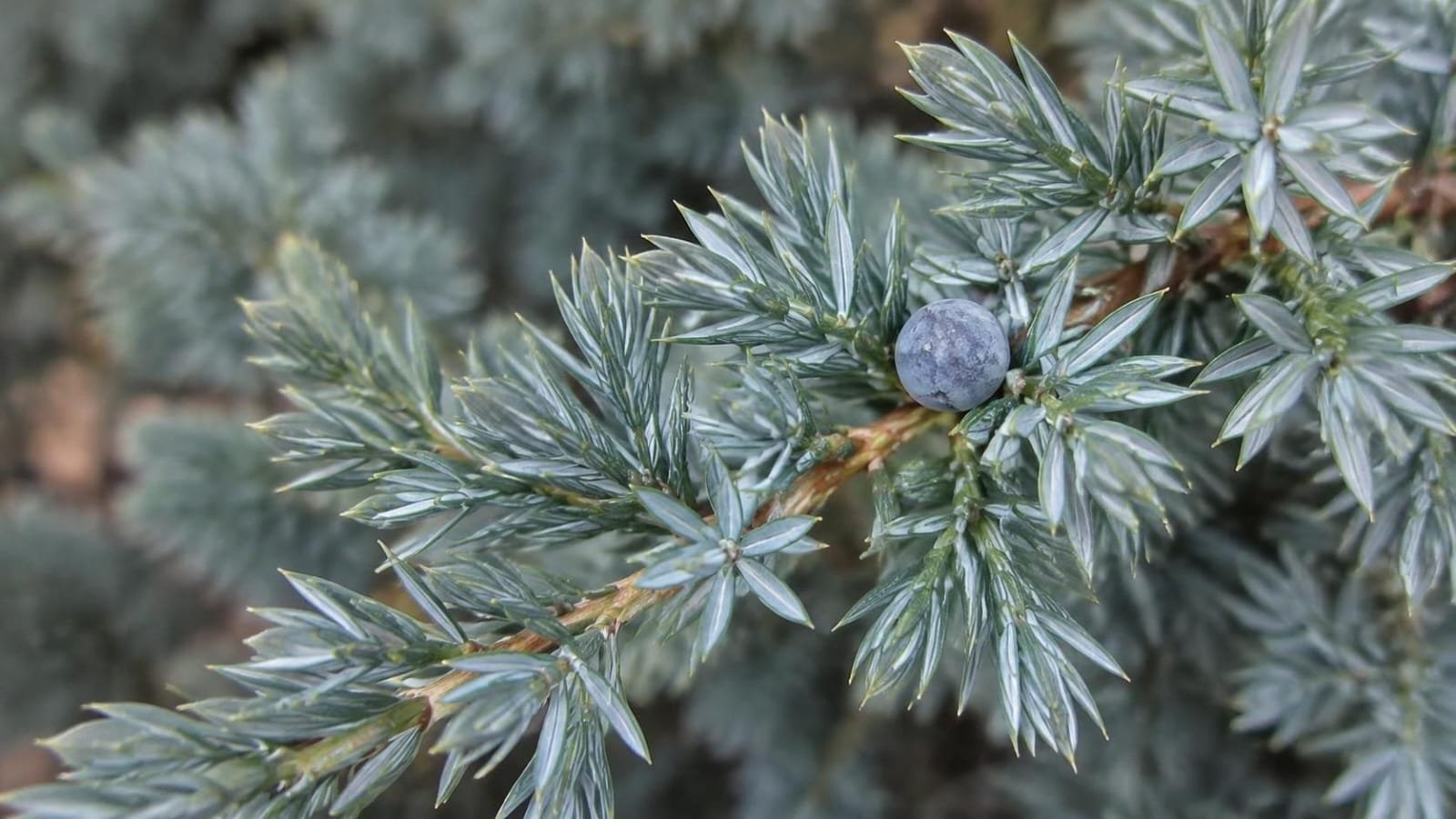
Its common name comes from the cone. Each female cone holds a single seed. Here are the traits that help you confirm the plant on the bench:
- Needles, not scales. The leaves are sharp, awl-shaped needles in whorls of three.
- A blue-gray color that holds through the year, with silvery new growth in spring.
- Dense, layered branching that forms a rounded mound.
- Bluish, berry-like cones on female plants, each with one seed.
- No flowers. The plant is grown for its foliage and shape.
Nurseries sell it in several pot sizes. Pick a plant that looks dense and even in the pot.
How big Blue Star juniper gets and how fast it grows
Sources agree that Blue Star is small and slow. They disagree on the numbers. The RHS profile gives a maximum height of 4 to 20 inches and a spread of about 1.5 to 3 feet. It lists a time to maturity of 10 to 20 years. The Conifer Society expects a 10-year-old plant to measure about 20 inches tall and 28 inches wide, growing 2 to 3 inches a year.
Nursery listings often run a little larger. Many list 1 to 2 feet tall and 2 to 3 feet wide. Some list 2 to 4 inches of growth a year, while others say 3 to 6. For planning, treat 1 to 3 feet tall and 2 to 4 feet wide as the working range.
Compare those numbers with the plant in front of you. Ask the grower how long the plant has been growing. That tells you more about its future size than the pot size does.
The slow pace is a feature, not a flaw. You won’t need to shear it every spring. Give it a few seasons to settle in, and it will look like a mature plant in time, though not overnight.
Growth also depends on the site. Full sun and good drainage give the plant its best habit. Wet soil works against it, and it grows even more slowly in weak light.
Landscape uses for Blue Star juniper
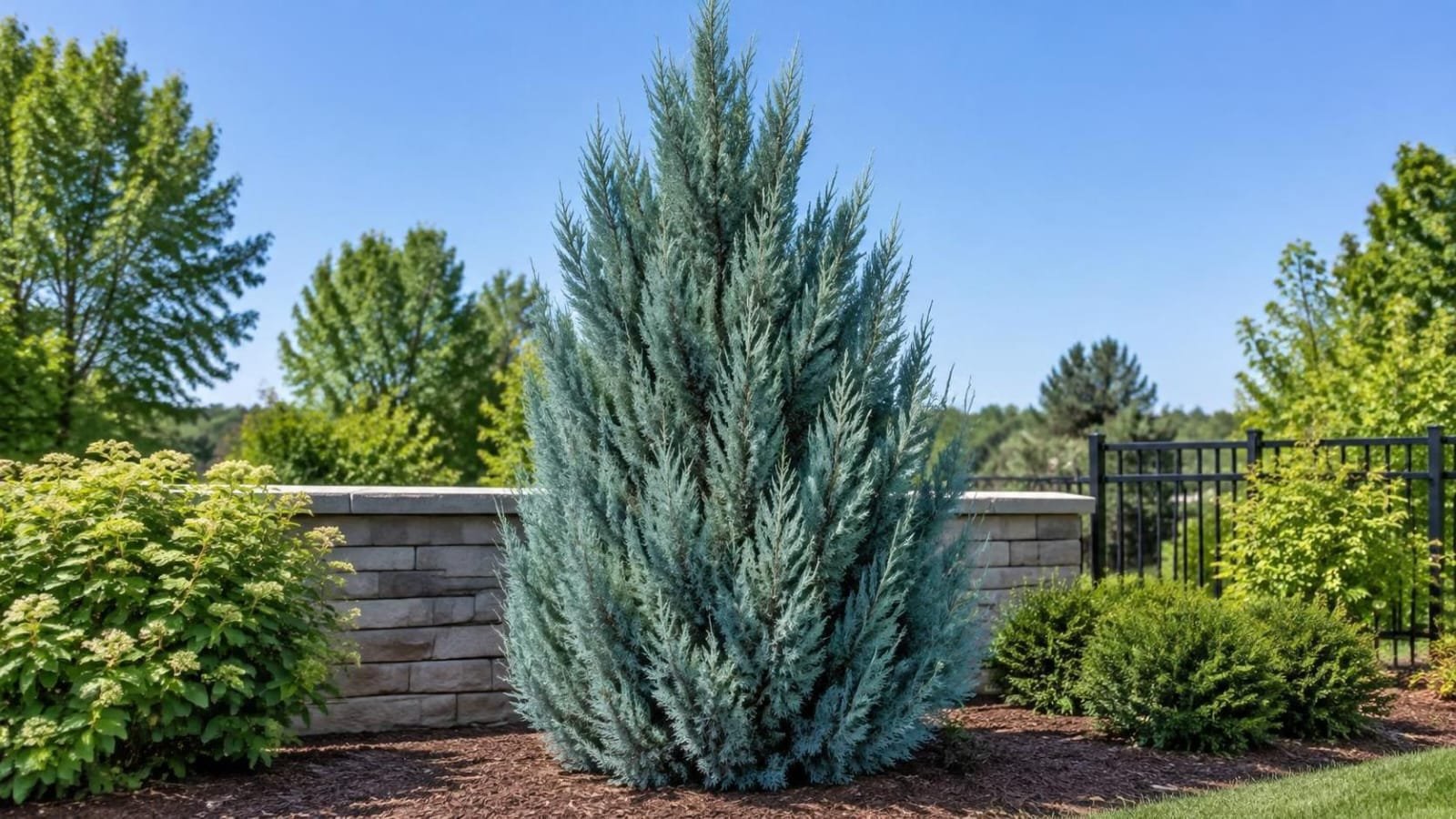
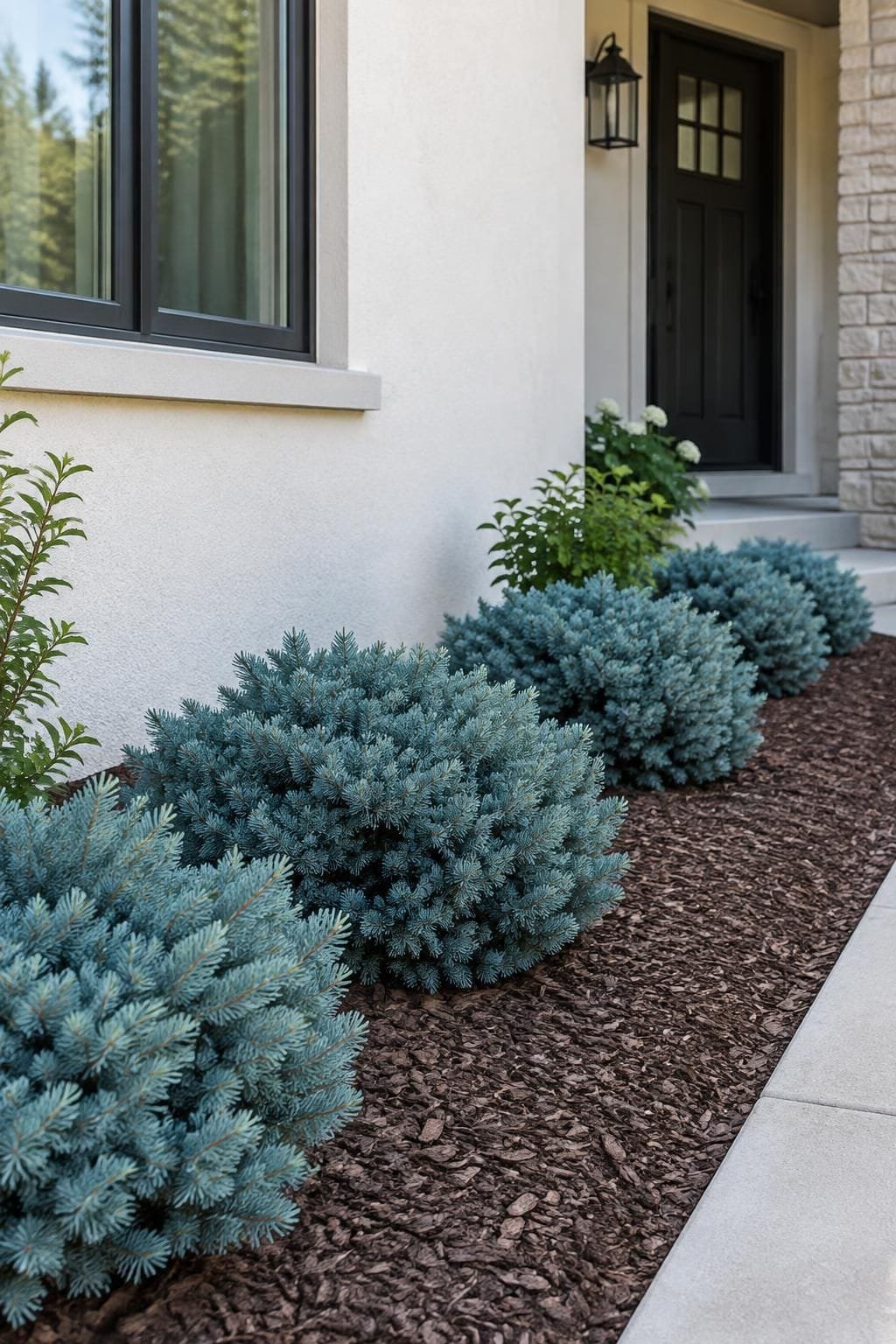
Blue Star works best as a low, rounded accent. Its main uses are foundation planting, rock gardens, borders, and specimen plants. Each suits the plant’s size and habit. Put it at the front of a bed, beside a step, or between larger shrubs.
Keep it a foot or more from walls and foundations, so air can move around the plant and it has room to grow.
Blue Star also looks good beside a patio, along a walk, or at the corner of a bed. Its blue-gray color contrasts well with gold or bright green plants. Try it with ornamental grasses or low perennials that handle the same dry, sunny conditions. Keep it away from heavy foot traffic, though, since the needles can irritate skin.
Rock gardens and dry, sunny banks are a strong match. The plant handles poor, sandy, and dry soil well, and it stays compact among stones. Mass plantings can work too. A row of Blue Star along a walk gives a steady color line through the seasons.
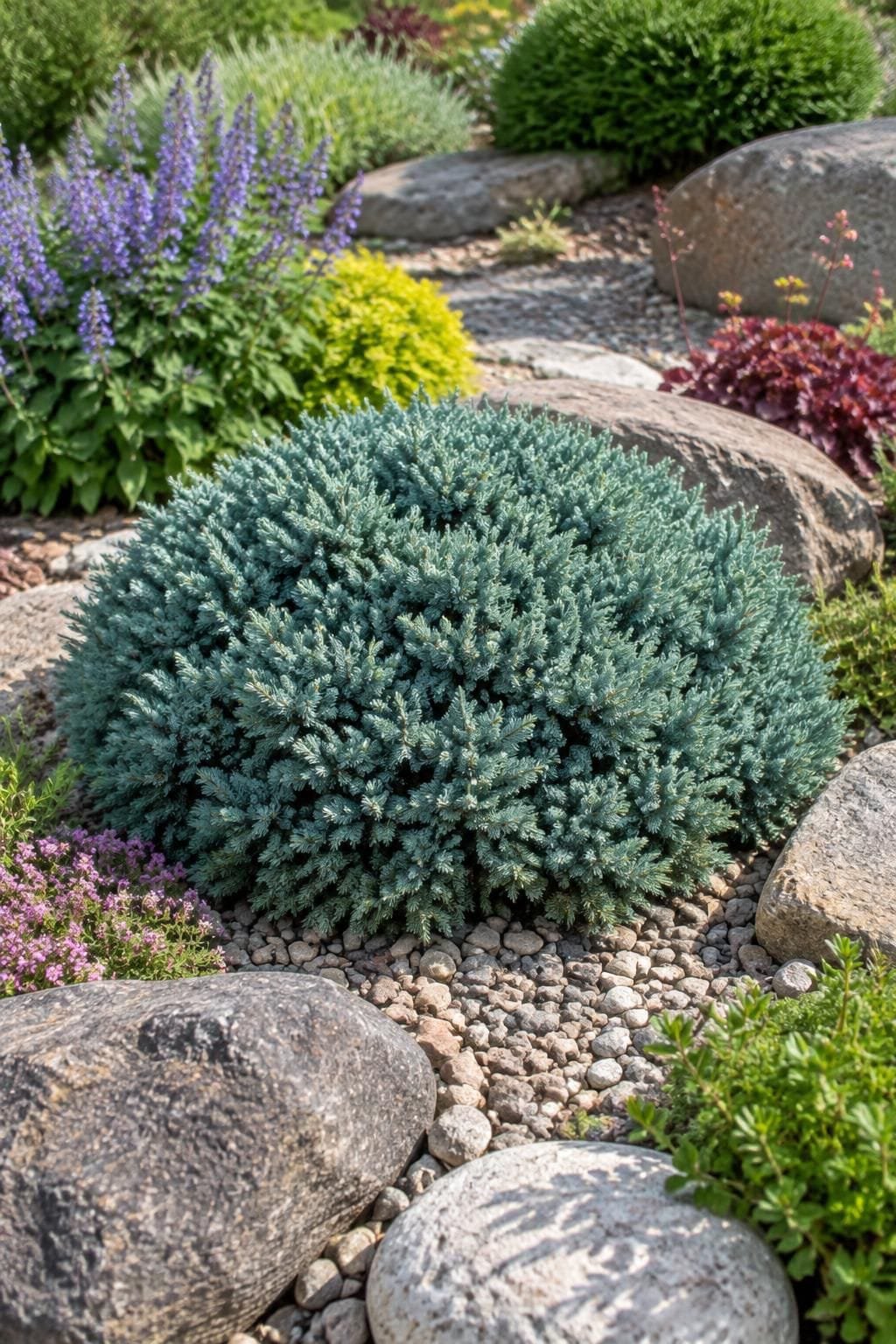
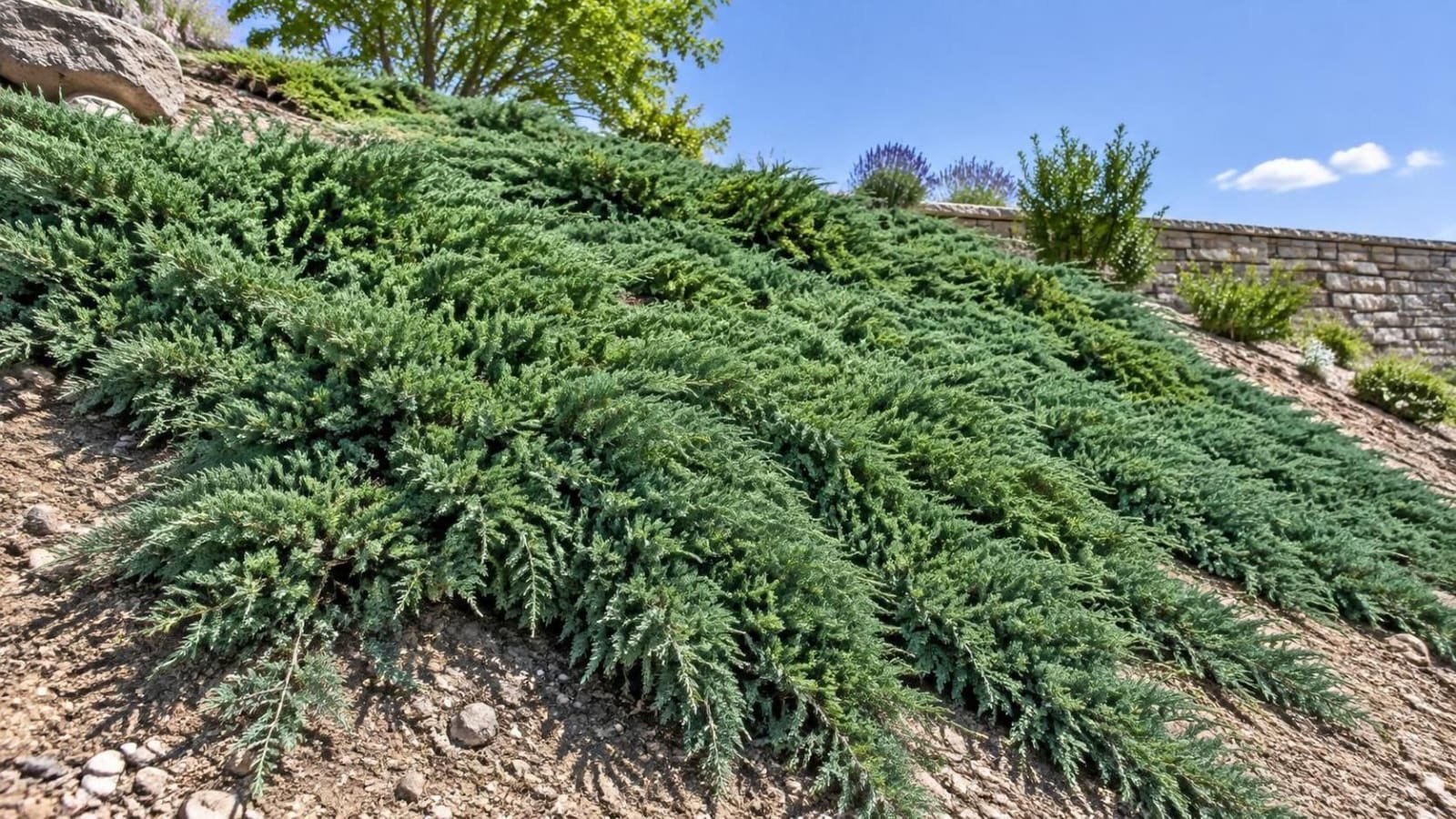
Some profiles list Blue Star as a ground cover. A young plant massed in a bed can knit together, but it is a mounded shrub first. If you need a true spreading cover, look at the Blue Rug juniper planting guide and the creeping juniper varieties guide. Those plants do that job better.
If you need height, the Moonglow juniper size and care guide and the Taylor juniper growth rate guide are taller options. For narrow upright shapes, compare the Blue Point juniper size and care guide, the Blue Arrow juniper growth rate guide, and the Spartan juniper size and care guide before you choose.
Planting Blue Star juniper
Pick a site with full sun. Some profiles list full sun and partial shade. Full sun keeps the blue color strong and the mound dense. Aim for six or more hours of direct light a day.
Soil drainage matters more than soil type. Blue Star handles sand, loam, clay, and chalk, and it tolerates acid, neutral, and alkaline soil. Profiles say it grows in dry and sandy soils but does not tolerate wet soil. Wet ground is the main risk for this plant.
Plant it at the same depth it grew in the pot. Space plants about their mature width, which is roughly 2 to 4 feet for most sites. A slight mound and a layer of gravel mulch help in heavy soil. Keep mulch away from the stem itself. Check the soil with your finger before you water. Water when the top inch feels dry, not on a fixed schedule.
Spring and early fall are the best planting windows. The soil is cool and moist, so roots can settle before summer heat or hard frost arrives.
Dig the hole about twice as wide as the root ball and no deeper than the pot. Loosen any circling roots with your fingers. Backfill with the native soil, press it gently, and water well so no air pockets remain. The top of the root ball should sit level with, or just above, the surrounding ground.
For a blue star juniper plant in a container, use a pot with drainage holes and a gritty mix. Containers dry out faster than ground soil, so check them often in summer, but don’t let the mix stay soggy.
Before you buy
Check the soil first. Blue Star tolerates sand, clay, and poor ground, but it does not tolerate wet soil. If your yard stays soggy after rain, plant on a slight mound or choose another site.
Also read the tag for the cultivar name. Several flaky junipers look alike, and only the Blue Star cultivar has the tight, silvery-blue habit this guide describes.
Care after planting
Blue Star needs little care once it settles in. These are the steps that matter most:
- Water new plants evenly through the first season. After that, the plant handles dry spells well, since it is drought resistant.
- Avoid overwatering. Wet roots are the bigger risk.
- Skip heavy pruning. Remove dead or damaged branches as you see them.
- Trim lightly in late spring, after new growth appears, if you want to shape the mound.
- Feed lightly in early spring, if growth looks weak. Heavy feeding isn’t needed.
- Mulch in colder zones to protect the roots through winter.
Blue Star is hardy across much of the United States. Most sources list zones 4 through 8, and some extend the range into zone 9.
Winter can be hard on evergreens in exposed spots. Cold, dry wind and heavy snow are the main risks. A site sheltered from wind usually gives the plant an easier first winter. Mulch the root zone before the ground freezes, and knock heavy snow off the mound when it piles up.
Pests and diseases to watch
The NC State Extension profile says Blue Star has no serious insect or disease problems. Still, watch for aphids, bagworms, twig borers, webworms, scale, and spider mites. In wet springs, twig blight can show up. Root rot and cedar-apple rust are also possible.
Likely pests include aphids, scale, red spider mites, and caterpillars. Disease concerns include Phytophthora root rot, canker, and honey fungus. Brown patches in the plant often trace back to wet soil or one of these problems, so check the drainage before you treat the foliage.
Check the plant every few weeks during spring and early summer. Look under the needles and at the base of the branches for scale and small caterpillars. Early spotting makes treatment simpler and less costly. A quick note in a garden journal also helps you spot patterns from year to year.
The foliage can irritate skin and is harmful if eaten. Wear gloves when you handle or prune it.
Frequently asked questions
Is Blue Star juniper a ground cover?
Usually, no. It is a low, mounded shrub. Some catalogs list it as a ground cover, and a young planting can spread into a mat. Spreading ground covers like Blue Rug and Creeping Juniper do that job better.
How fast does Blue Star juniper grow?
Slowly. Most sources give 2 to 4 inches a year, and some say up to 6. Expect several seasons before it fills its space.
Is Blue Star juniper deer resistant?
Extension profiles list it as deer resistant. No plant is deer proof, though, especially during a hard winter when browse is scarce.
Can Blue Star juniper grow in shade?
It tolerates partial shade. For the best blue color and a dense mound, give it full sun.
Why is my Blue Star juniper turning brown?
Start with drainage. Wet soil and root rot are the most common causes. Next, check for pests on the needles and stems. If the browning spreads in patches, a local extension office can test a sample for disease.
Is Blue Star juniper safe around children and pets?
Keep plants away from children and pets who chew on foliage. It is listed as harmful if eaten. Wear gloves when you prune or plant it.
Does Blue Star juniper flower?
No. It is non-flowering. The female plants produce small, bluish cones, and each cone holds one seed. Those cones are a useful way to tell the plant apart from other junipers on the bench.
Can I grow Blue Star juniper indoors?
No. It is an outdoor conifer. It needs cold winters and full sun, and it won’t do well in a bright window indoors.
When is the best time to plant Blue Star juniper?
Spring or early fall works well. Avoid planting in the middle of summer, when heat and dry soil stress new roots.