
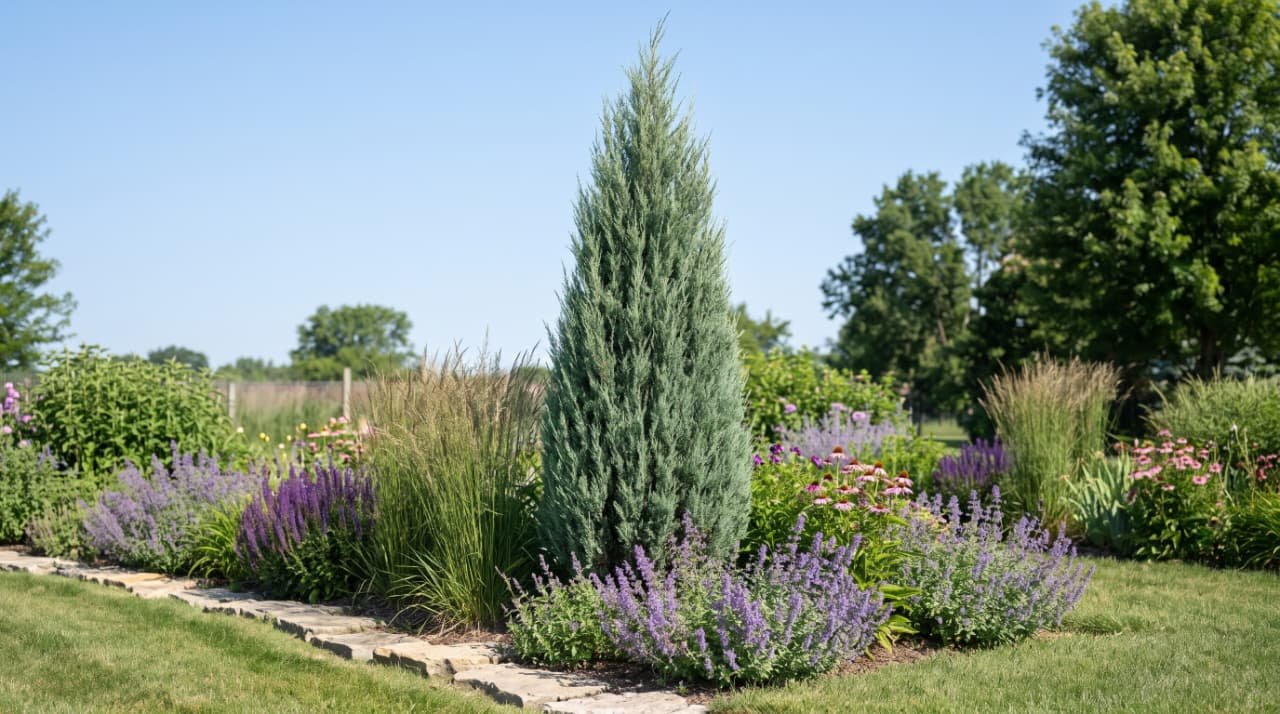
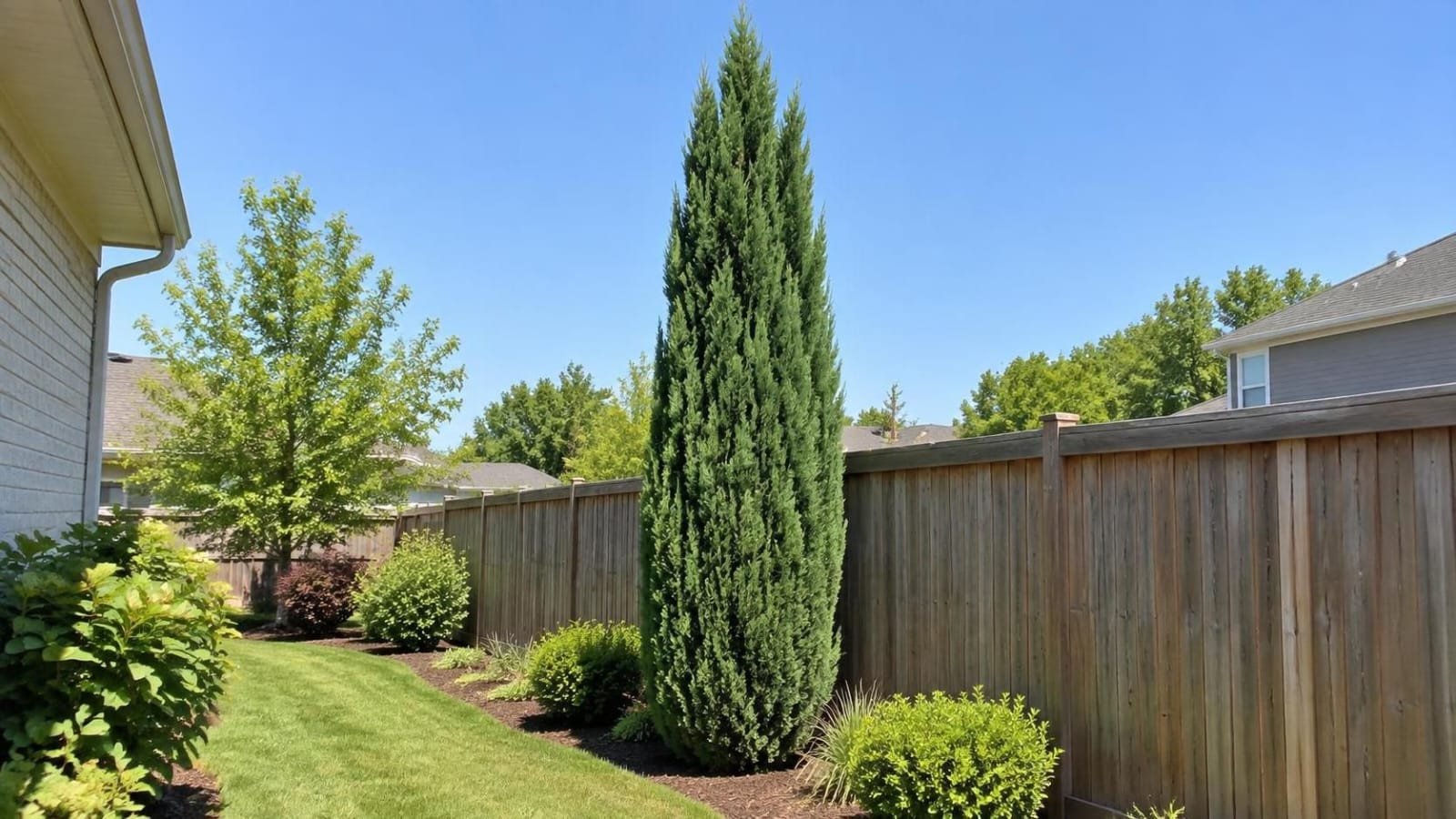
Medora juniper usually reaches 10 to 15 feet tall, with a spread of about 3 to 5 feet. It is a narrow, columnar cultivar of the Rocky Mountain juniper, Juniperus scopulorum, with blue-green foliage. Its narrow form is what makes it useful in tight spaces, but the width and growth rate vary by source, so the details below are worth checking against the tag.
Where Medora came from
Medora is a selection from the Badlands of western North Dakota. North Dakota State University records its introduction in 1954, while another reference lists 1956. NDSU describes it as the most popular Rocky Mountain juniper cultivar in that region for decades. Its listed hardiness is USDA zones 3 to 7, with Cornell also giving zone 3 as the cold limit, and that cold tolerance makes it especially useful in northern landscapes. Santa Fe Botanical Garden also describes it as very heat tolerant, so it can suit some warmer regions when the site is right.
The botanical name matters. Medora is a Rocky Mountain juniper, not a Chinese juniper or an eastern redcedar. If you are sorting out that group, our Rocky Mountain juniper identification guide explains how the species looks in the wild.
How tall and wide it gets
Most sources put Medora at 10 to 15 feet tall. Width is where they differ. Oregon State University gives 5 feet, Cornell Woody Plants Database gives 3 feet, and a Montana plant guide also gives 3 feet. One reference lists a spread anywhere from 3 to 15 feet, which is far wider than the others, so it is worth asking the nursery which figure applies to the plant you are buying.
For planning, use the wider end of the common range, about 4 to 5 feet. A 3-foot gap may be too narrow for a mature plant. Allowing 4 to 5 feet gives it room to develop without crowding nearby structures or paths.
How fast it grows
The growth rate is disputed. Several nurseries describe Medora as slow growing, a Montana plant guide reports 1 to 6 inches a year, and another reference classifies its growth as moderate. So the plant is generally described as slow, but not in every reference. Plan for a gradual climb rather than a fast fill.
A young plant bought at 3 or 4 feet will take years to reach its full height. Ask the nursery how old it is, since age tells you more about its future size than its current height does. A small plant can also look thin for a long time, so if you need a screen within a year or two, a faster shrub is the better choice.
Where a narrow column fits
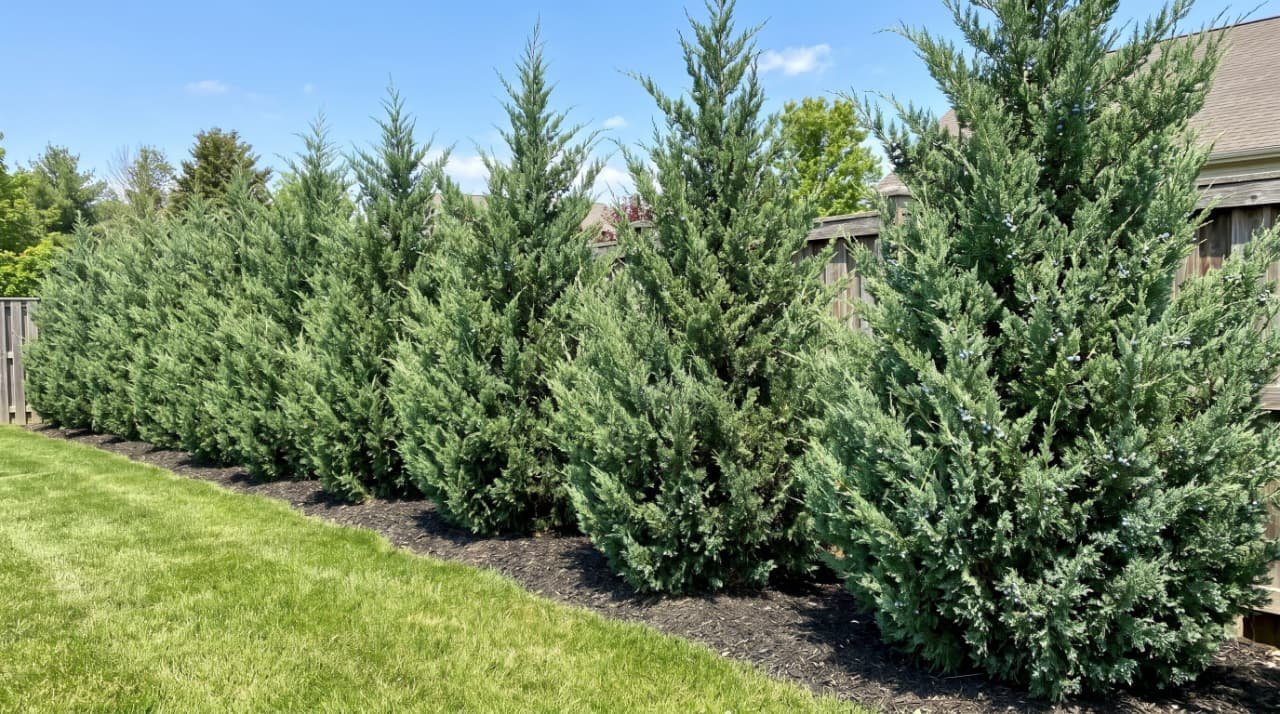
Medora works best as a vertical accent. Its narrow outline frames a doorway, anchors a corner of a bed, or breaks up a line of wider shrubs. It also holds its blue-green color through winter, which keeps a border from going flat in the cold months. One plant reads as a deliberate accent. Two or three set closely in a row start to read as a hedge, which is a different job and needs more planning.
It looks good against ornamental grasses and perennials, where the foliage provides a steady backdrop. For screens and windbreaks, the same plant can work, but dense screening is covered in our Star Power juniper guide. Medora is the better pick for a single tall, slim accent rather than a wall of foliage.
Soil, drainage, and shaping
The plant is described as preferring moist, well-drained loam, while tolerating sandy soils. Reference data also lists clay loam and silt loam, so Medora adapts to several textures. Drainage matters more than texture. Standing water hurts any juniper, and a bed that stays wet after rain needs to be raised or graded before planting.
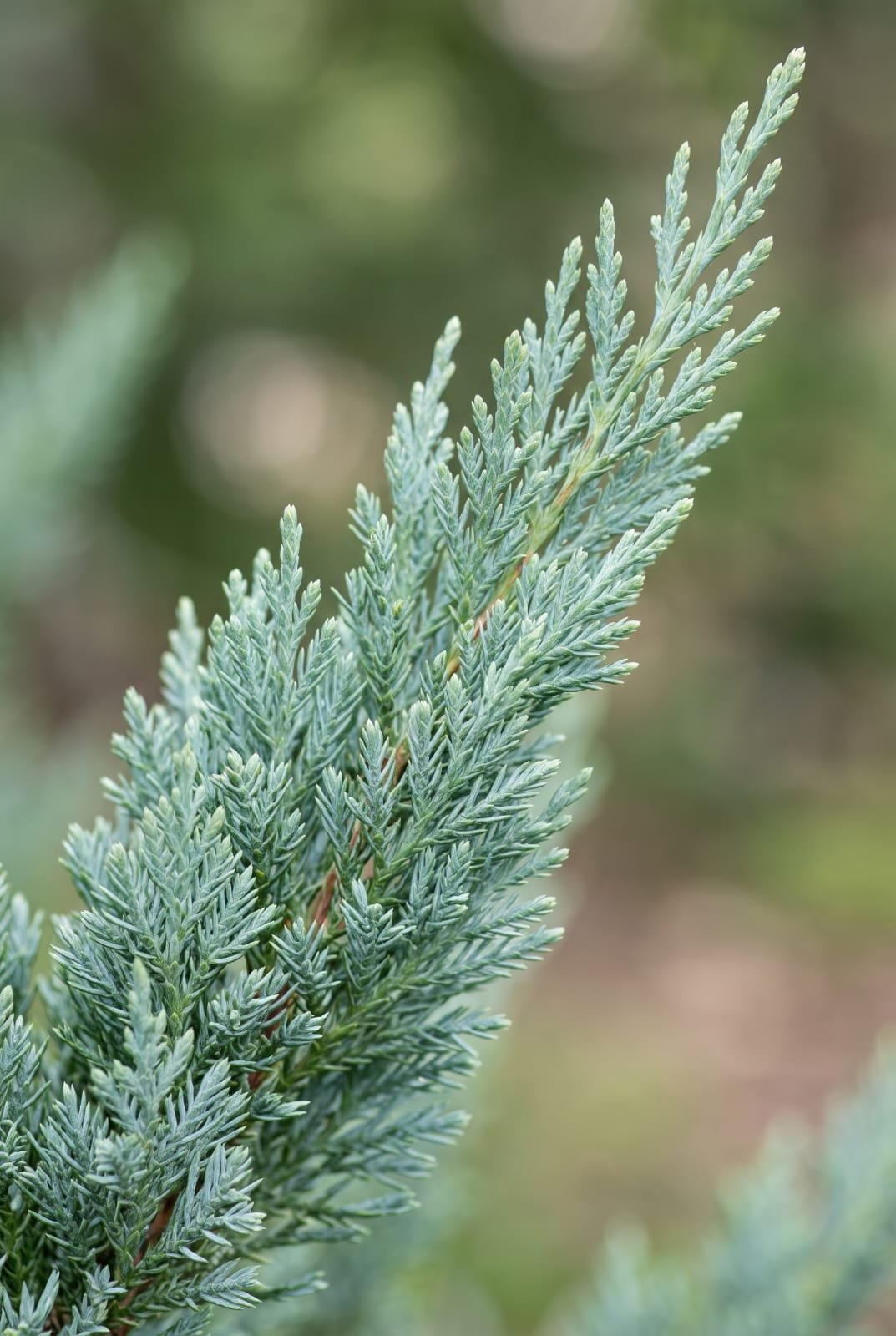
Medora needs little shaping. If you want a sharper column, tip-prune the green outer growth. The University of Georgia Extension notes that junipers do not tolerate heavy pruning, because they do not produce new growth from old wood, so avoid cutting into bare, older stems.
Care, pests, and diseases
Plant Medora in full sun. Sources describe it as drought tolerant once established, though the first season needs regular water. If the tips brown after a dry spell, check the soil before you water again, since established junipers can suffer from too much water as well as too little. When you do water an established plant, soak the root zone and let the top of the soil dry before the next session.
The plant is susceptible to twig blights, which tend to follow poor drainage, shade, and wet conditions. Separately, it can serve as an alternate host for cedar-apple rust. That fungus needs both junipers and plants in the rose family to complete its life cycle, so the rust is a different problem from blight.
Deer resistance is not guaranteed. Some landscape references describe Medora as deer tolerant, while another guide lists deer damage as a tough-site concern. Protect young plants if deer regularly browse in your yard, and check the plant for browsing damage each season.
Medora compared with Wichita Blue
Both Medora and Wichita Blue are cultivars of Rocky Mountain juniper, but their mature shapes differ noticeably. One reference puts Wichita Blue at about 18 feet tall and 6 to 8 feet wide, with a looser, broader habit. Medora stays narrower and more upright. If you need a tall, slim accent, Medora fits better. If you need more width or a more open shape, the Wichita Blue juniper size guide covers that plant.
Planting Medora
The University of Georgia Extension recommends setting the top of the root ball level with the soil surface, then watering thoroughly after planting and at least twice a week for the first month. Adjust that schedule for rainfall, soil drainage, and moisture around the root ball. Avoid planting junipers in shade, since they become thin and more prone to disease there. Choose a sunny spot with room for the mature outline before the planting hole is dug. Once the plant is in, mulch the surface lightly to hold moisture through the first summer.
Wildlife and windbreaks
Reference data describes the plant as often used in shelterbelts and windbreaks, and as useful cover and a food source for wildlife. That makes Medora a practical choice for a yard that also supports birds, although its fruit is a dark blue, berry-like cone. Botanically, juniper “berries” are fleshy seed cones.
Choosing Medora for your space
Start with the width. If the gap is 4 to 5 feet or more, you have room for the mature outline, and that is the easiest decision you will make. Next, check the botanical name and the zone on the tag. If the site is exposed or windy, a local extension office can tell you how the plant performs in your area.
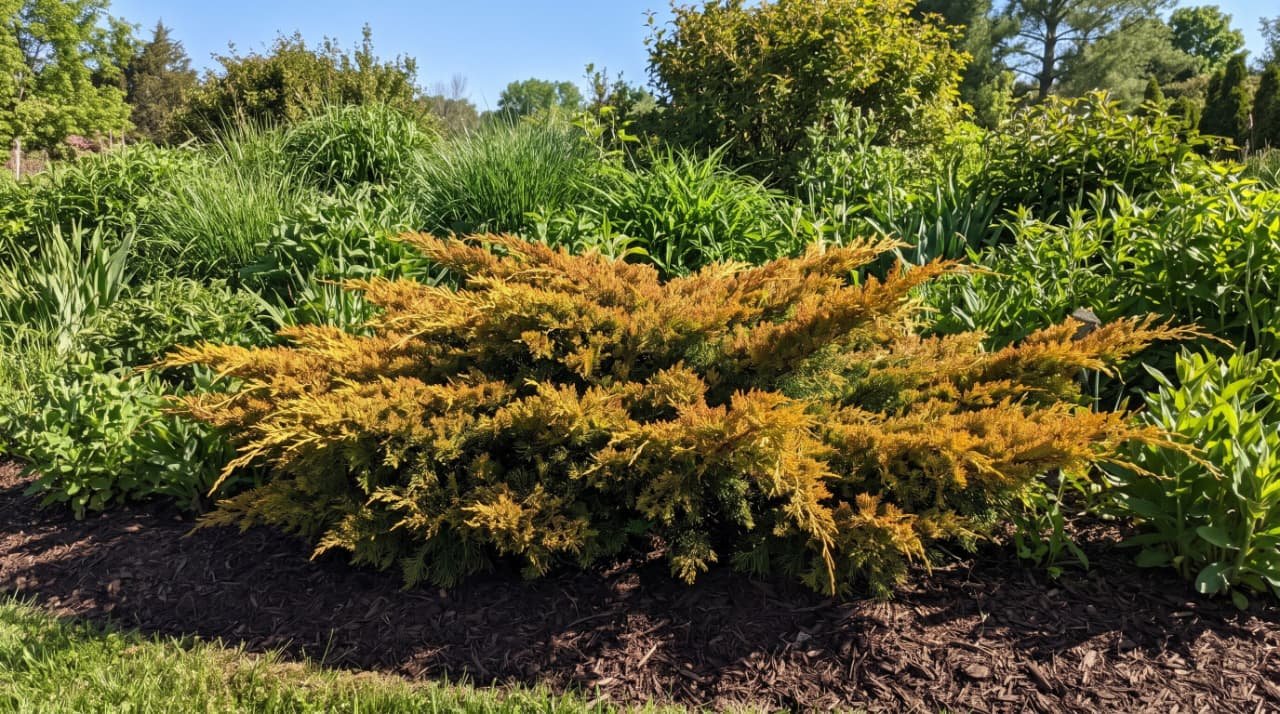
If you are comparing it with the spreading Hetz plant, our Hetz juniper guide explains how the columnar and spreading forms differ. For a golden contrast in the same bed, our Old Gold juniper guide covers a plant that pairs well with blue-green foliage. For a native eastern option, our Juniperus virginiana varieties guide is a good next read.
Before you buy
Confirm that the tag reads Juniperus scopulorum ‘Medora’. Oregon State University and Santa Fe Botanical Garden both describe Medora as a male clone that does not produce berries. North Dakota State University’s general description lists dark blue, berry-like cones, which likely reflects the species or the wider group rather than this clone. If fruiting matters to you, confirm with the nursery.
Ask for the mature height and width of that plant, and whether the figure describes the plant in its pot or at maturity. Then measure the space at the mature width, not the width of the pot. Keep the tag or receipt so you can check the name later if the plant arrives under another label, and so you have a record of the size you were told at purchase. A healthy juniper should have even color and no large dead patches inside the outline.
3 thoughts on “Medora Juniper: Size, Growth, and Landscape Uses”