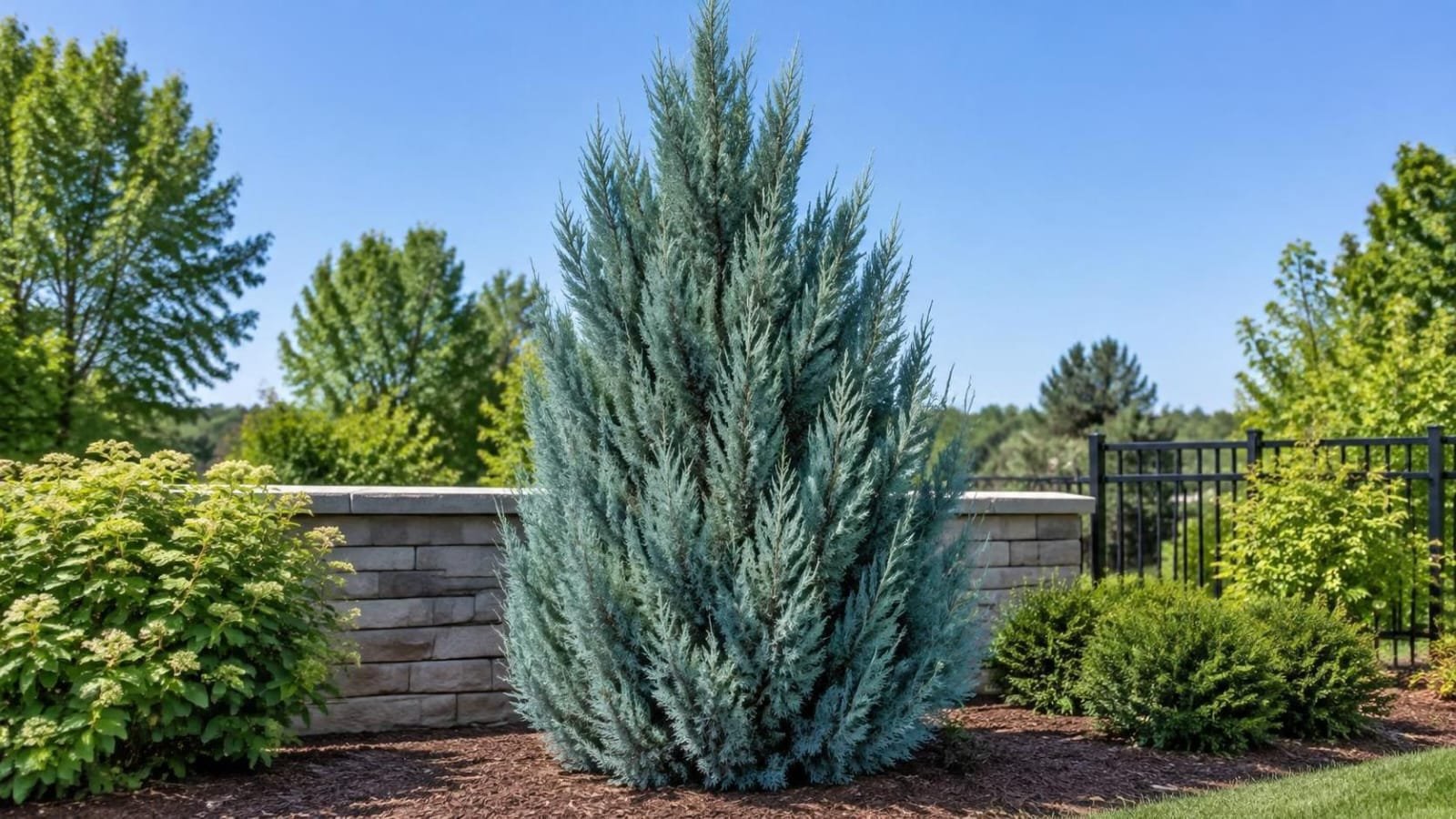
Juniperus virginiana is eastern redcedar, a native evergreen. It usually grows 40 to 50 feet tall. Its shape runs from narrow columns to broad pyramids. It grows fast, takes full sun, and tolerates dry soil. Because birds spread its seed, plant it with care near open land.
Juniperus virginiana, or eastern redcedar, is one of the most common conifers in the eastern U.S. You’ll see it along fence lines and at farm edges. Often, nobody planted it. Its familiarity hides a lot of variety, though. Cultivars range from silver columns to dark green pyramids.
How to identify Juniperus virginiana
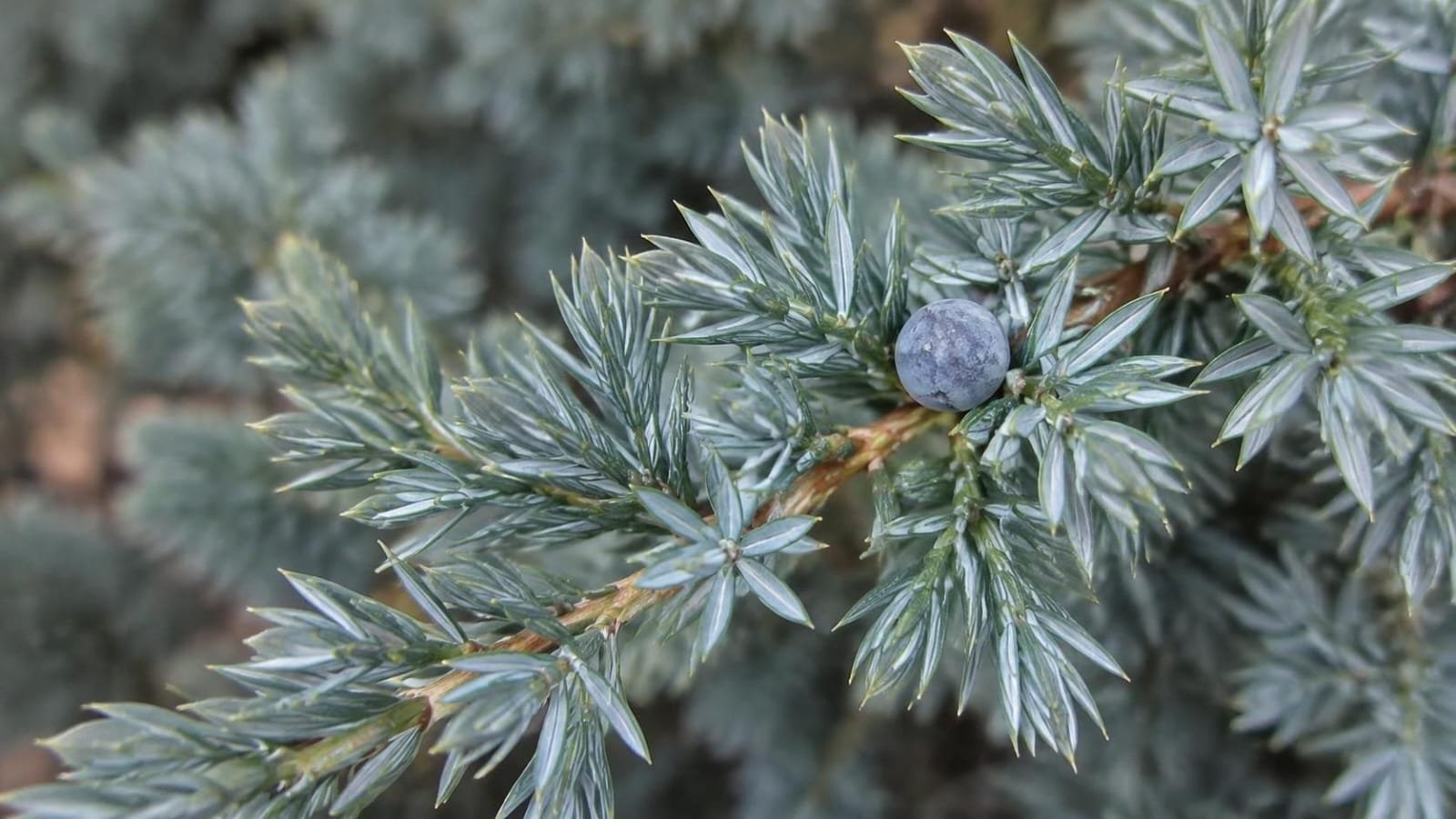
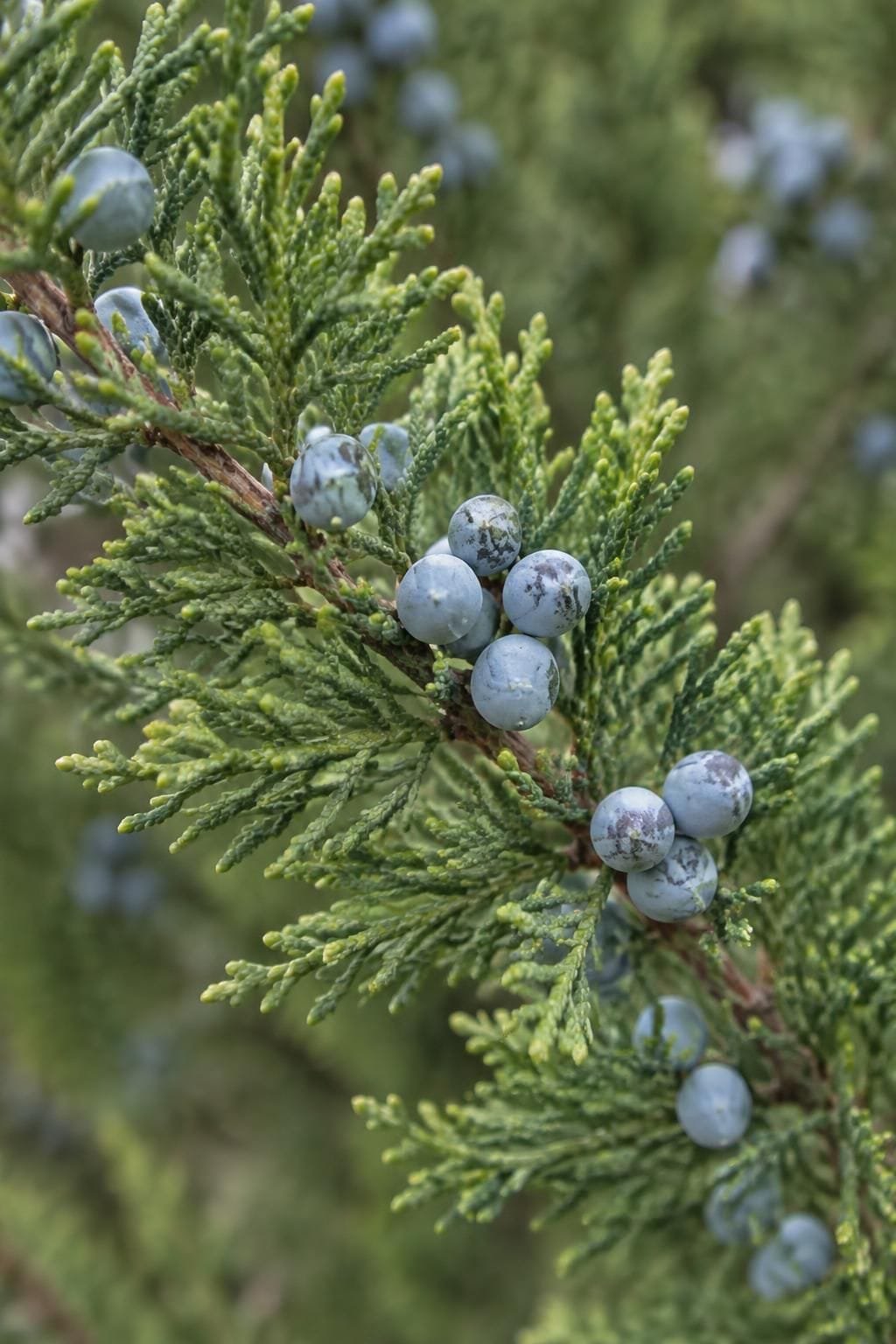
Start with the leaves. Young growth has sharp, awl-shaped needles. Mature branches carry tiny, scale-like leaves. The Oklahoma State Extension profile covers these leaf forms and bark in detail. Look for these signs:
- Scale-like leaves on mature branches and awl-shaped leaves on young growth.
- Reddish-brown bark that shreds into long, thin strips.
- Blue to silver-gray cones that look like berries. Only female trees produce them.
- A distinct, aromatic smell when you crush the foliage.
- Brown cones at the branch tips on male trees in late winter.
Eastern redcedar isn’t a true cedar. It’s a juniper, in the cypress family.
Juniperus virginiana varieties to know
The species varies a lot in size, shape, and foliage color. Virginia Tech Extension notes that growers have selected for these traits. Here are the cultivars you’ll see most:
- ‘Glauca’ is a narrow, columnar tree with silvery blue foliage, most noticeable in spring.
- ‘Blue Arrow’ is a columnar small tree with bright blue foliage. The Blue Arrow Juniper guide covers its size and growth.
- ‘Skyrocket’ has silver-blue foliage and a narrow columnar form. The Skyrocket Juniper guide covers planting details.
- ‘Taylor’ is a narrow, conical to columnar tree with blue-green foliage. The Taylor Juniper guide covers its needs.
- ‘Gray Owl’ is a wide, low shrub, about 4 feet tall and 8 feet wide, with silver-gray foliage.
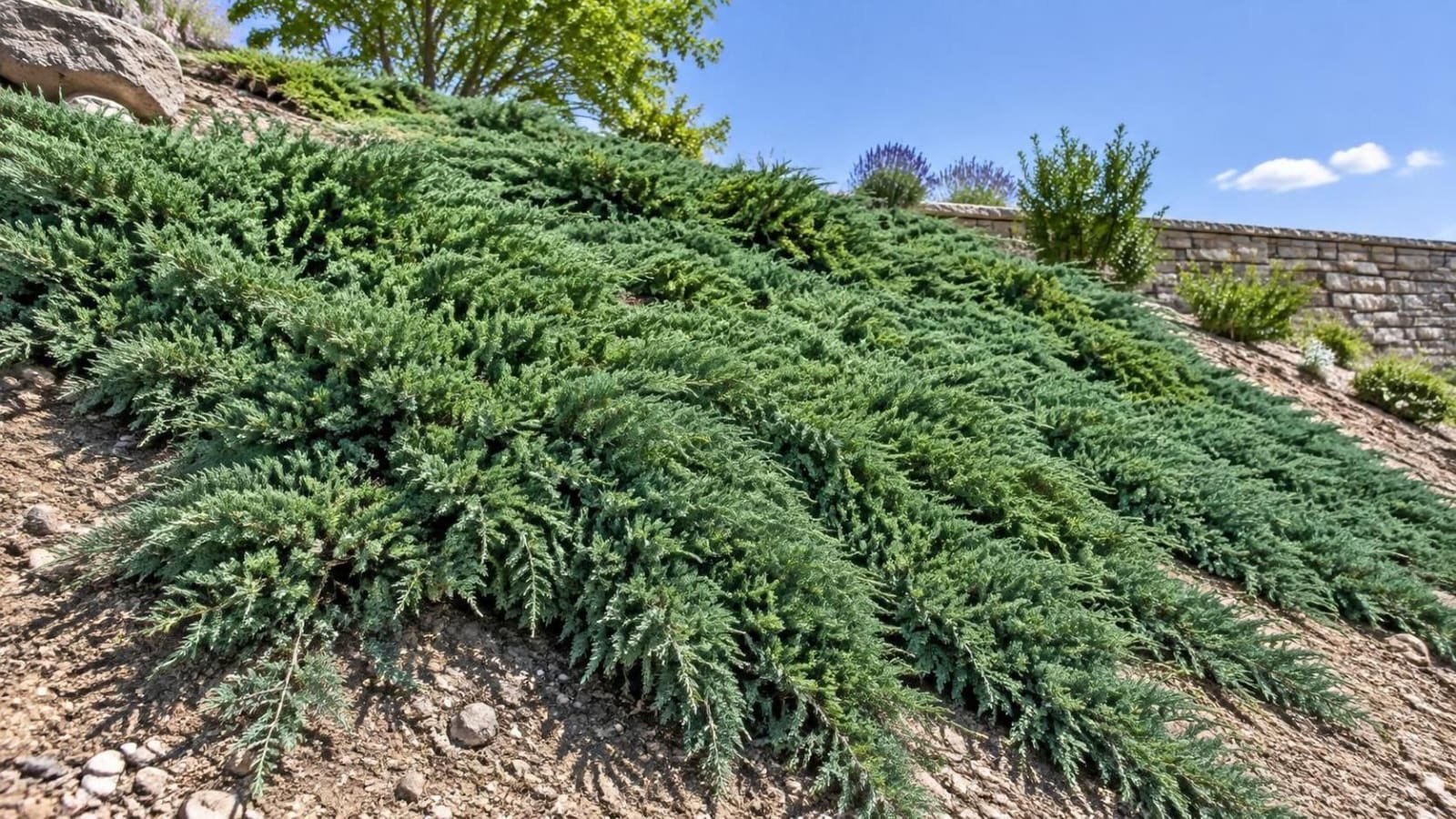
Not every upright juniper is eastern redcedar. Blue Point Juniper and Spartan Juniper have their own guides. So compare them before you choose. For ground cover, look at Creeping Juniper. Blue Rug is a popular cultivar of that species.
How big it gets and how fast
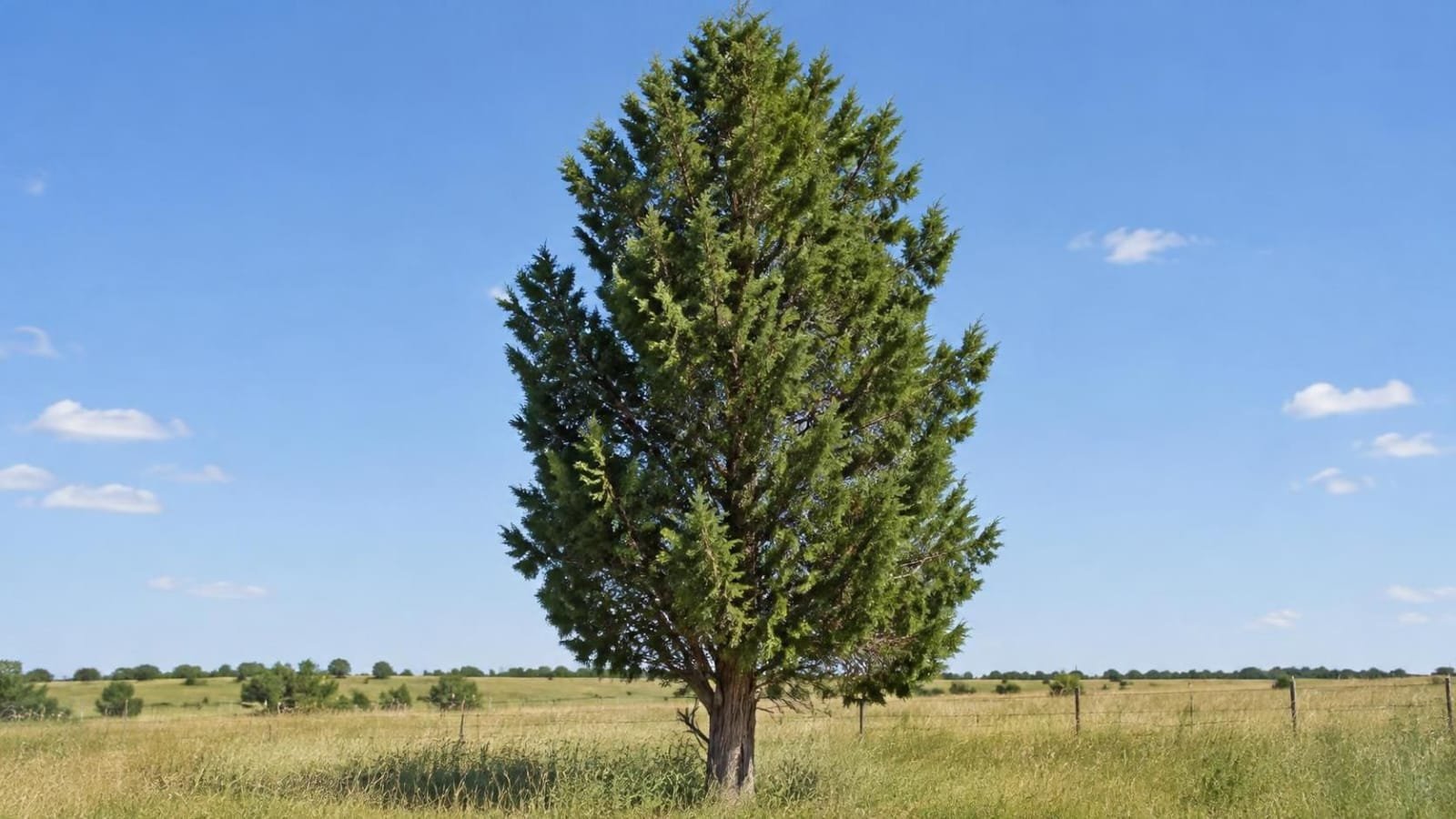
Plan for 40 to 50 feet for the species. Cultivars range much smaller. Spread is usually 10 to 20 feet, so give it room. The UF/IFAS profile rates growth as fast and says it adapts to many sites. Wild trees can reach about 60 feet.
Planting and care for eastern redcedar
Plant it in full sun or partial shade. It grows in clay, sand, or loam, and in acid or alkaline soil. The site just has to drain. It does poorly in soil that stays wet. Over-watering slows growth. Water it until it’s established, then let rain do most of the work.
Buy small plants. The root system is coarse, so big trees are hard to move. A young eastern red cedar sapling establishes more easily.
Pruning is easy because the tree tolerates it well. Don’t cut into wood that has no foliage.
Ice is a problem. If ice coats the tree for several days, expect dieback. Removing it is usually impractical.
Invasive in some regions
Location matters a lot. Across much of its eastern range, it’s native and rarely a problem. In the Plains, it has spread into grasslands, helped by fire suppression. The University of Nebraska Extension publication explains that cedar windbreaks can seed nearby grassland. Think twice before planting one next to native prairie.
Pests and diseases
Most problems stay minor when the tree gets full sun. Watch for bagworms, juniper scale, juniper webworm, and mites. Twig blights also show up. Prune out dead tips when you see them.
Cedar-apple rust is the main disease concern. The fungus does little harm to redcedar, but apple, crabapple, and hawthorn trees take the damage. Virginia Tech advises against planting redcedar near apple trees. The UF/IFAS profile suggests a few hundred yards of separation where possible.
Frequently asked questions
Is eastern redcedar a true cedar?
No. It’s a juniper. True cedars belong to a different genus, Cedrus.
Is eastern redcedar invasive?
It depends on the region. In much of the East, it’s native and not a major problem. In the Plains, it can take over grassland, so check local guidance before planting.
How much space does it need?
Plan for 10 to 20 feet of spread. For a narrow spot, try ‘Glauca’. It’s columnar and reaches 15 to 20 feet tall.
Does it need much care?
No. Water it until it’s established, then leave it alone. Prune only to shape it.
Can I plant it near apple trees?
Avoid it. The rust fungus alternates between the two, and apple trees take the bigger hit.