
Hollywood juniper size at maturity is usually about 15 feet tall in a home landscape, with a spread of roughly 8 to 10 feet. That is the figure the most careful sources agree on. You will also find listings that say 8 feet and others that say 30, which is enough to make anyone hesitate before digging a hole. Below, I’ll explain where those numbers come from and how to plan a space that still works when the plant is fully grown.
What the most reliable sources agree on
The University of North Florida botanical garden describes its Hollywood juniper as a small tree that grows to about 15 feet. A tree inventory prepared for a Los Angeles environmental review recorded two of these junipers at 15 and 17 feet tall, each with a spread of about 8 feet. Measured trees carry more weight than catalog copy, because someone measured them in place. Those trees grew in a city setting, where soil, water, and room differ from a rural garden, so the figures show a realistic range rather than a guarantee.
Nursery descriptions cluster around the same range. Watters Garden Center lists a 15-foot by 8-foot plant, and one Hicks Nurseries entry gives 15 feet tall and 10 feet wide. Another Hicks entry for the same plant lists only 8 feet tall, which is the first hint that the numbers are not as settled as they look.
Why the listings disagree
Start with the name, because a naming mix-up alone can distort a height figure. Both Juniperus chinensis ‘Torulosa’ and ‘Kaizuka’ appear in the trade for this plant. Monrovia uses ‘Torulosa,’ Trees.com calls it ‘Kaizuka,’ and Sutherland’s lists ‘Torulosa’ with ‘Kaizuka’ in brackets. Sutherland’s also gives the largest figure in this group, 20 to 30 feet. If the two names describe different plants in some catalogs, a height range from one nursery may not describe the plant sold by another. Check the botanical name on the tag, not only the common name. If the tag names a different species entirely, our Rocky Mountain juniper identification guide explains how to tell them apart.
The second cause is simpler. A catalog is selling a plant, and a height figure may describe a shrub grown for years in good soil, a young plant in its pot, or the size a grower expects in a warm region. A Czech nursery, Havlis, lists the plant at 2 to 3.5 meters, which is roughly 6.5 to 11.5 feet. That is lower than most North American figures. None of the listings reviewed explained which conditions their number assumed, so treat any single figure as a starting point rather than a promise.
What a mature tree looks like in a real yard
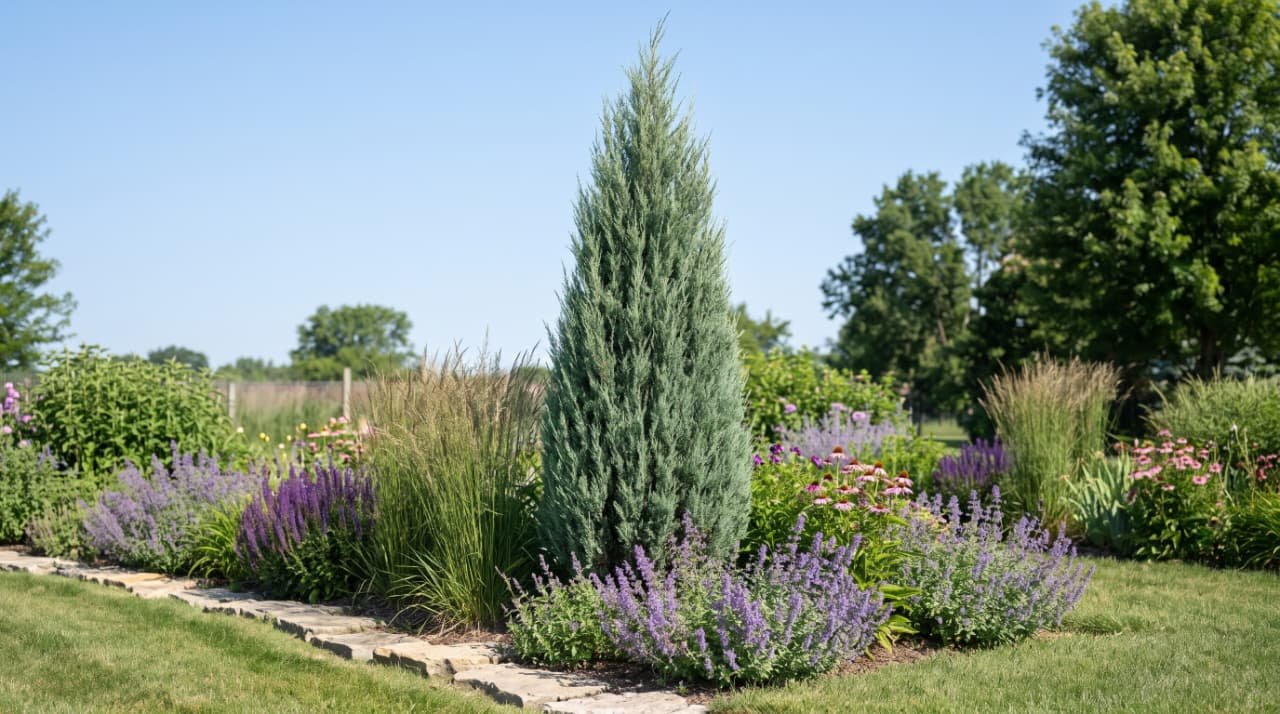
At 15 feet, this plant is a small tree rather than a shrub, which is how the University of North Florida describes it. Its open, irregular habit makes it harder to judge from a photo, too. The branches twist and tuft rather than forming a solid mass, so a picture shows less of the plant’s volume than you would see standing next to it.
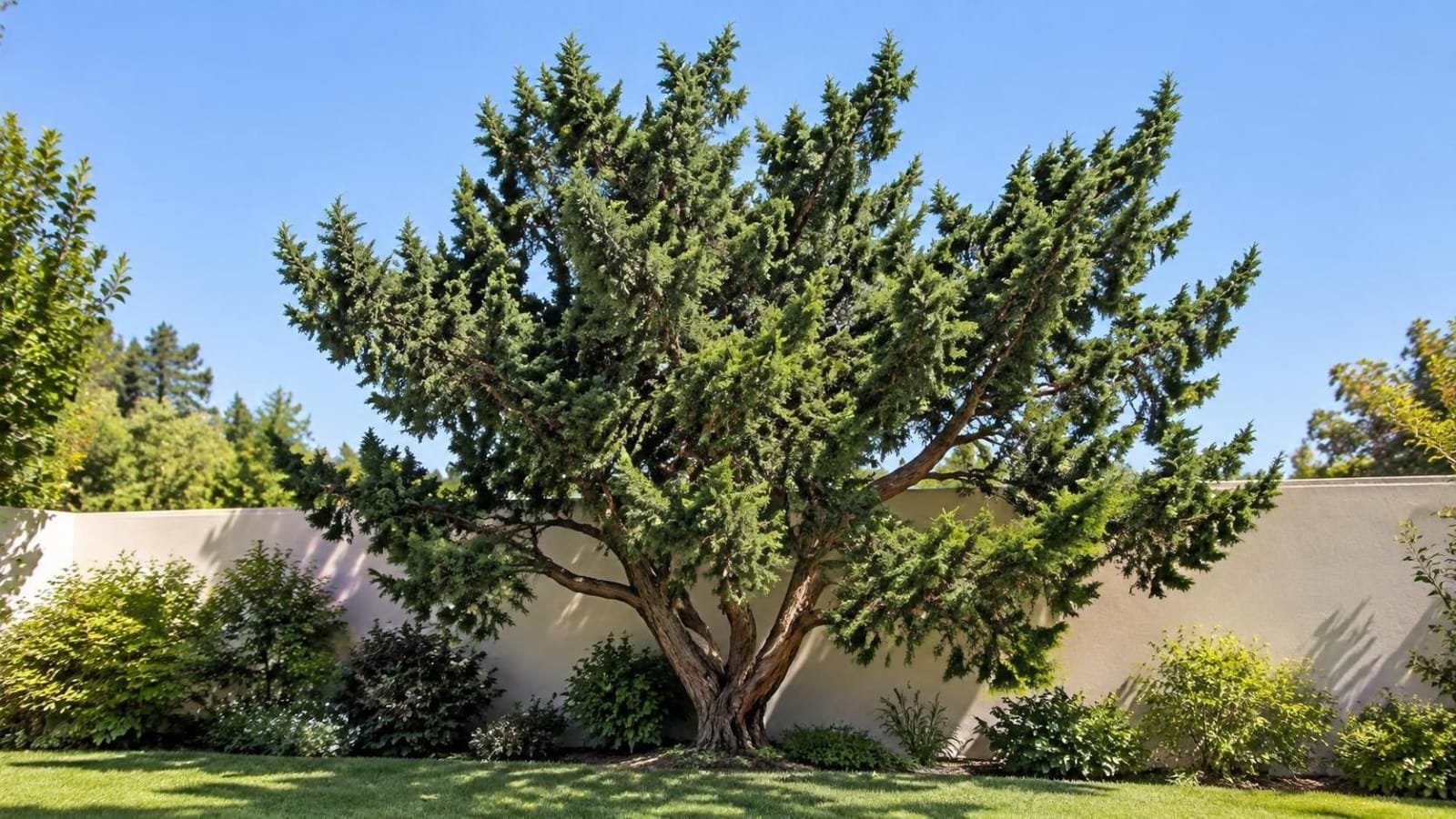
Here’s the practical takeaway. Bring a tape measure to the spot and mark a circle about 8 to 10 feet across to represent the expected spread. Then picture a tree about 15 feet tall rising from its center, with the twisted outline filling that space. A plant at that size fills a corner far more than a young plant in a pot suggests.
How fast it gets there
Growth rate is as inconsistent as height. Monrovia describes the plant as fast growing, one Trees.com listing calls it slow, and a 15-gallon listing from Lichtenfels says to expect one to two feet of growth a year. These statements can all be partly right, depending on the plant’s age, soil, and sun. Fast growth in the early years may slow as the plant fills out, although the sources reviewed don’t measure that change directly.
For planning, a young plant won’t look like the size you picture. Nursery stock also varies, and the sources reviewed list containers of 3 to 5 gallons as well as balled-and-burlapped plants of 5 to 7 feet. The plant you bring home may already be several feet tall, or still well short of its mature height, so check the label against the mature figures above. A small nursery pot can take several years to reach its mature height, so the space you choose today has to be the space the plant will need later, not the space it occupies on planting day. If you are comparing junipers with different growth habits, our Juniperus virginiana guide lays out the differences.
Plan the width before the height
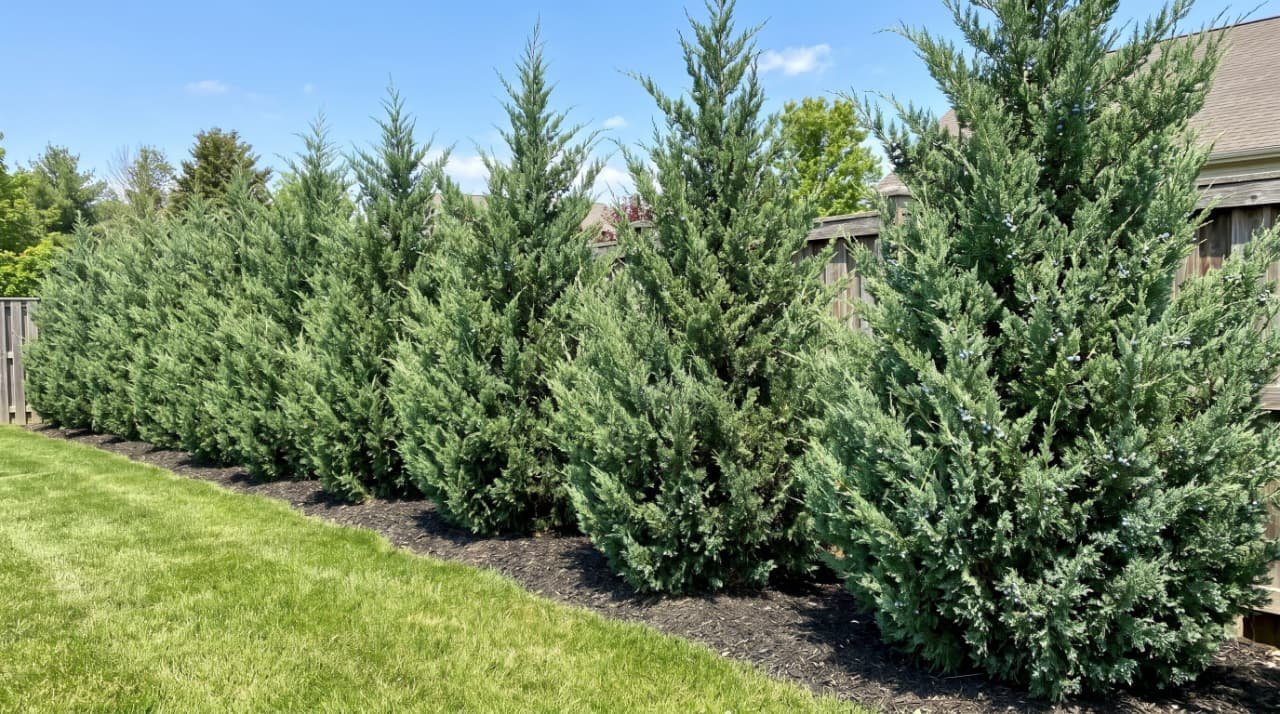
Height gets most of the attention, but width is usually what crowds a border. The sources that give a spread agree on roughly 8 to 10 feet, and that figure should drive the layout. One nursery suggests spacing these plants about four feet apart when you want to extend a row, which produces a continuous line rather than separate specimens. If you want each twisted form to stand on its own, give it room to show its shape. For a compact juniper that stays low, see our Blue Star juniper guide.
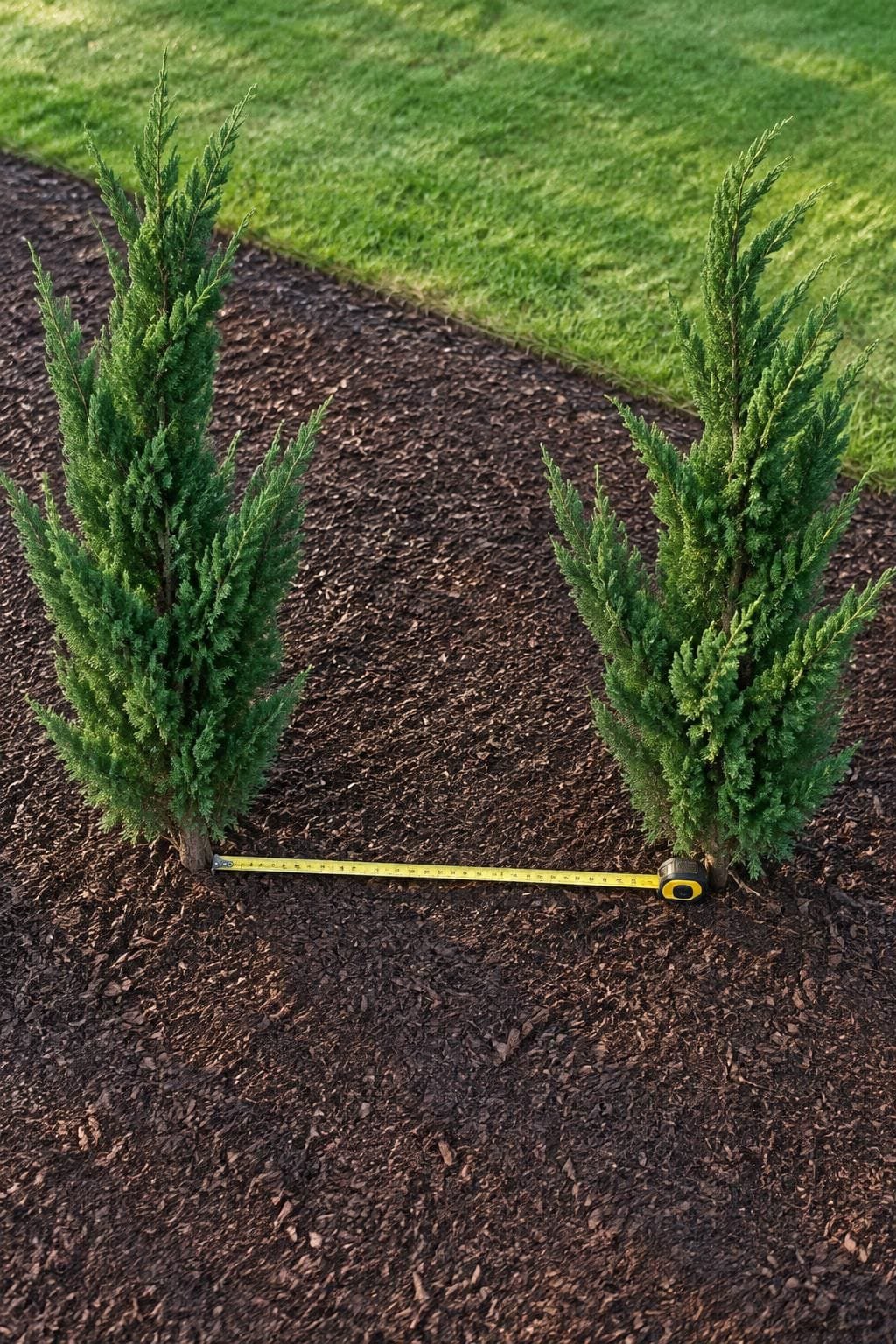
A quick test helps. Half of an 8-to-10-foot spread is 4 to 5 feet, so measure from the center of the planned spot to the nearest wall, walkway, or fence. If that distance is less than 4 to 5 feet, the plant will eventually press against whatever is there, and you will be pruning it to keep it in place.
Where size becomes a problem
Pruning doesn’t change the mature size. It only controls shape and spread from year to year. Trees.com says this plant does best left unpruned, while Iselin Nursery notes that it responds well to creative pruning, and both can be true for different gardens. Light shaping keeps the twisted form. Cutting deep into older wood is the mistake to avoid, because many junipers don’t produce new growth from bare stems, and the result can be a permanent gap.
Size problems usually start at the edges. A plant that grows into a walkway gets clipped back, and each clip changes the natural outline a little more. The better fix is to choose the spot with that edge in mind from the start. If a site is too tight for a plant this size, a low spreader such as the creeping juniper may suit it better.
Making the numbers work for your yard
Start with the space, then match the plant. Measure the distance from the planned trunk position to the nearest hard surface, and compare it with half the expected spread. If you have less than about 8 feet across in total, expect to prune every year to hold the plant there, which is a different job from enjoying its natural form.
Next, read the tag. Look for the botanical name, and if the nursery gives a mature height and spread for that exact cultivar, use those figures over general ones. Ask whether the number describes the plant in its pot or at full maturity, and ask the nursery which cultivar it is selling, since the same tree may be sold under either name. Then confirm the figure with a local extension office, because climate can change how large many junipers grow. The listings reviewed cite hardiness zones from 4 to 9, so the same plant can behave differently across that range. If you need ground cover rather than a tall specimen, our Blue Rug juniper guide covers planting for that purpose.
Before you dig, measure the space at its full spread, not the width of the pot. Then stand the tape against the spot and see whether the plant’s future outline still fits.
One thought on “Hollywood Juniper Size: How Big It Gets and Why the Numbers Disagree”