
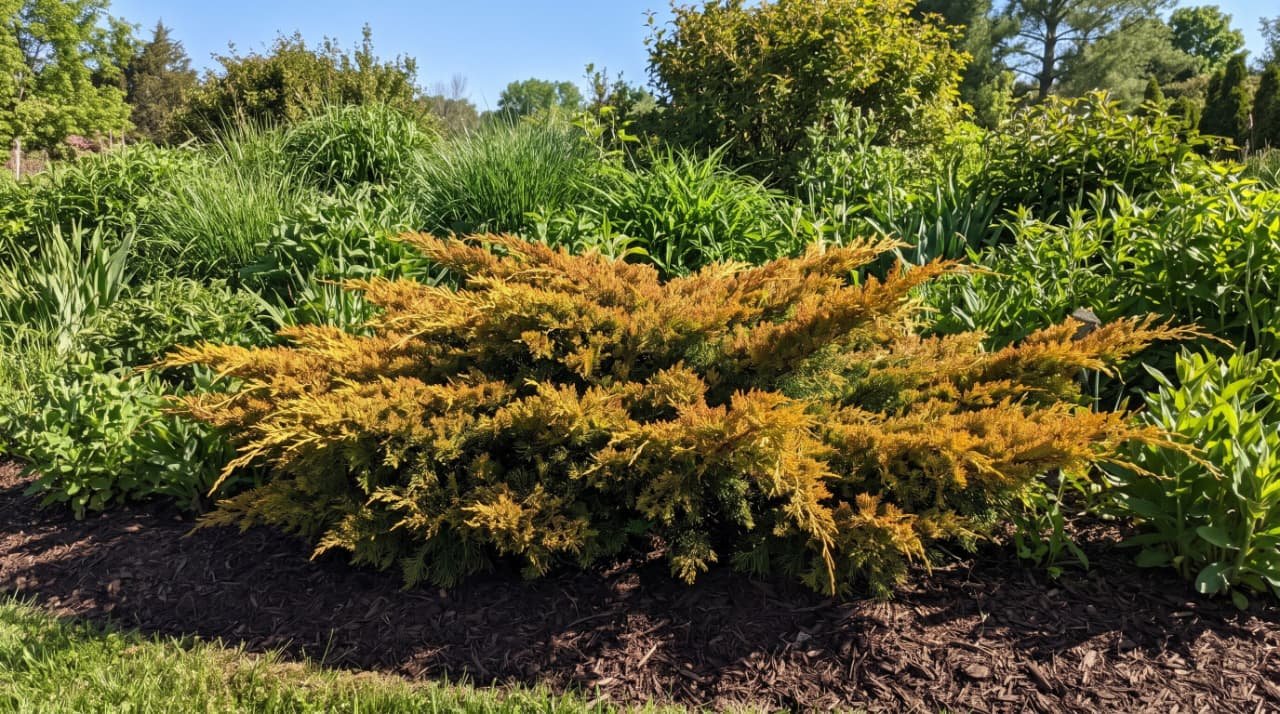
Old Gold juniper is a low, spreading shrub, Juniperus × media ‘Old Gold’, valued for foliage that stays bronze-gold through the year. Most listings give it a height of 2 to 4 feet and a spread of 3 to 6 feet. Some reference data goes up to about 8 feet wide, so the plant is always wider than it is tall. That habit makes it a good fit for a border edge, a foreground planting, or a groundcover, and it stays useful in the bed long after the first season. It is not a column, and it should not be mistaken for the narrow golden plant most people picture when they hear ‘gold juniper.’
What kind of juniper it is
Old Gold is a Pfitzer-type hybrid cultivar, not a common juniper and not a Rocky Mountain juniper. One UK supplier describes it as a sport, a naturally occurring mutation of the golden cultivar ‘Pfitzeriana Aurea’, which explains why its color is so distinctive. Its name appears in trade listings as Juniperus × media, and some sellers list it under Juniperus chinensis. That mix-up matters, since the botanical name determines the size and hardiness you should expect. Check the tag before you plan the bed.
The RHS describes it as a compact, bushy shrub with ascending branches, and it lists this name as a synonym of another accepted name, which is one more reason to check the tag. The Pfitzer group also includes the spreading ‘Hetzii’ we covered earlier, so if you are comparing those two, our Hetz juniper guide explains how their forms differ.
Color through the year
The color is the reason to plant it. The foliage is described as a bronze-gold that holds through winter, and new growth tends to appear as bright golden lace. Sun is what sets the intensity. Several sources say the best color comes in full sun, and a shaded plant will show less of it.
Some references describe the winter foliage differently, with one calling it lime green in fall and winter. Expect the color to shift with the seasons and with the site, and judge the plant by its summer and early spring color rather than a single photo.
How big Old Gold juniper gets and how fast
The sizes listed for Old Gold vary more than most. US nursery listings give about 3 to 4 feet tall and 4 to 6 feet wide at maturity, while a UK supplier gives a maximum of about 3 feet high and up to 8 feet wide. The Royal Horticultural Society lists 1.5 to 3 feet tall and 5 to 8 feet wide, and notes that it can take 20 to 50 years to reach full size. Those numbers agree on one point: the plant spreads more than it rises.
Most sources describe the growth as slow. One listing expects the plant to live about 30 years under good conditions. A plant bought at 2 feet will need several seasons before it fills a border, so plan the bed for the mature width rather than the size on planting day.
Where it works in the landscape
A low, wide shape is where this plant earns its place. It fills a border edge, sits in front of taller shrubs, and forms a broad mass where a groundcover is wanted. It tends to fill out to the ground, which means it does not need low plants in front to hide bare stems.
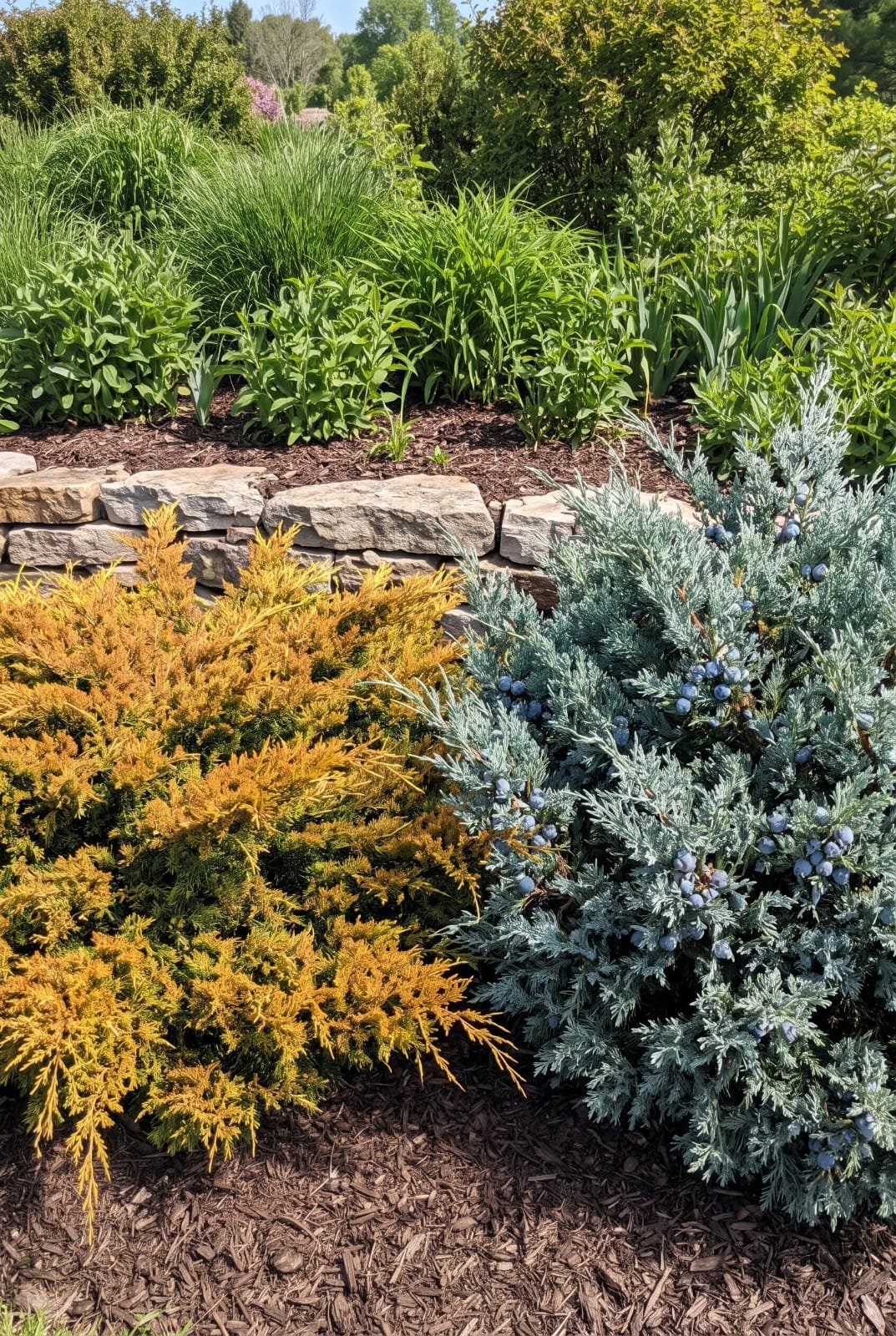
Color contrast is its strongest use. The gold stands out against blue-gray foliage, and the Scott Arboretum describes it pairing well with the blue tones of an eastern redcedar cultivar. Our Gray Owl juniper guide covers that blue-gray partner in more detail.
How it differs from Gold Cone
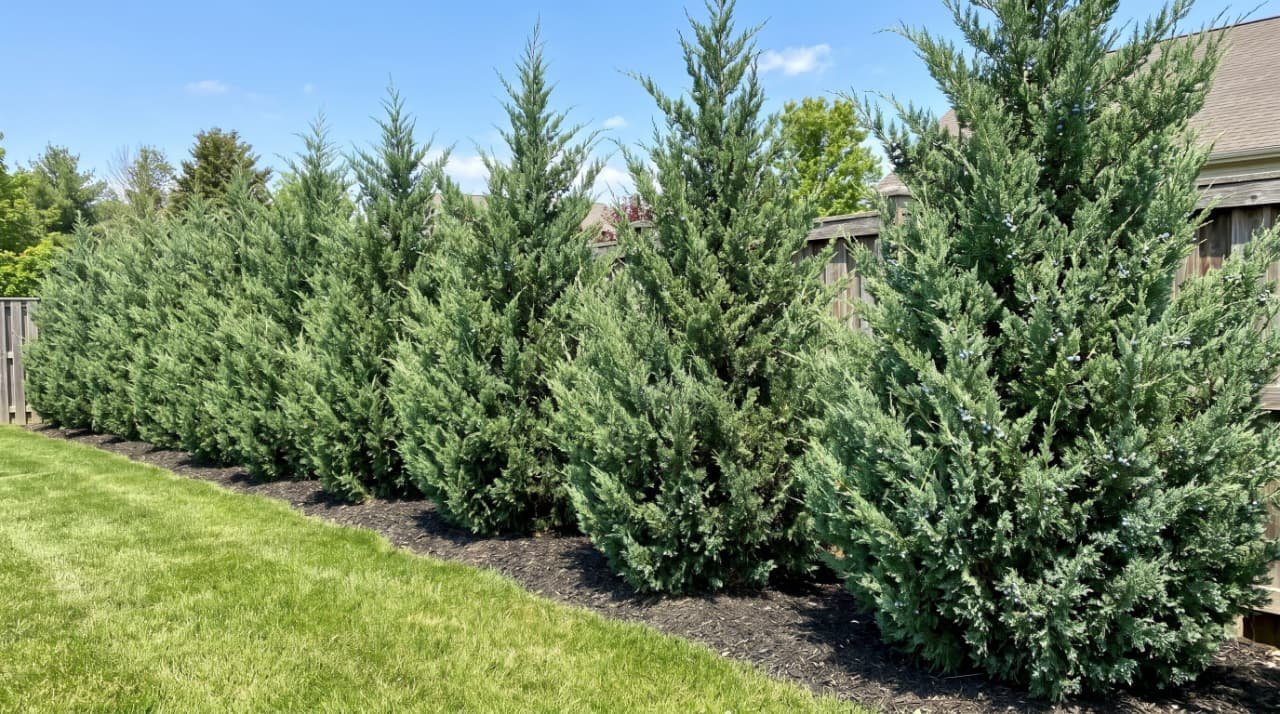
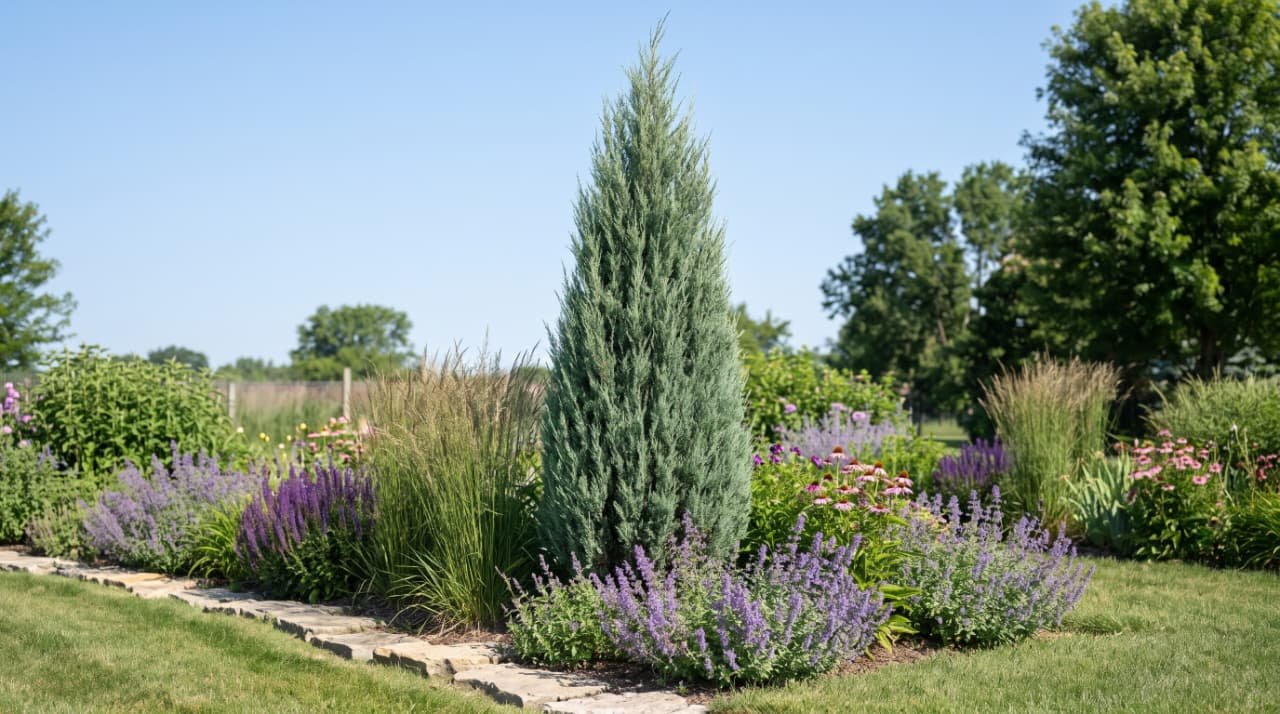
Old Gold and Gold Cone are both golden junipers, and they are easy to mix up in a catalog. The difference is in the shape. Gold Cone is a narrow, upright column, usually 3 to 5 feet tall and 1 to 2 feet wide. Old Gold is a low spreader that is wider than it is tall. Choose Gold Cone for a vertical accent and Old Gold for a horizontal mass or border.
If you need the column, read our Gold Cone juniper guide before you order. For a low, mounding plant in a different color, our Blue Star juniper guide covers a compact shrub.
Pruning, care, and pests
Old Gold responds well to trimming and can be kept at a range of heights and shapes. A light trim in late winter or early spring, before new growth starts, is a common way to keep it tidy. Avoid cutting deeply into bare wood, since junipers do not regrow reliably from it.
Plant in full sun, and water regularly through the first season. Once established, the plant is drought tolerant and needs little maintenance. One nursery notes that it tolerates clay soil, and another lists it as deer resistant. Treat both as useful tendencies, and check the soil drainage before planting, since standing water hurts any juniper.
If you want a wider groundcover with a different texture, our creeping juniper guide covers that option.
Planting in the bed
Set the plant at the same depth it grew in its pot, with the top of the root ball level with the soil. Check that the root ball is moist before planting, since a dry ball is slow to recover. Give it room to spread along the edge, since the shape is the point of the plant. Mulch lightly to keep the root zone cool, and keep the mulch a few inches from the stem.
Water thoroughly after planting, then keep the soil evenly moist through the first season. Old Gold is drought tolerant once established, but a new root system needs steady moisture to reach beyond its root ball.
Winter sites and cold weather
Old Gold holds its bronze tone through the cold months in full sun. In windy or exposed sites, the foliage can dry out during cold spells when the ground is frozen. Water deeply in late fall if the weather has been dry, and avoid leaving the root zone bare in winter.
Container use
The sources reviewed focus on planting in the ground, as a border or groundcover. Container culture is possible, but none of the references in this article describe it in detail, so treat a pot as a trial rather than a guaranteed result. If you do grow it in a container, use a pot with drainage holes and water when the top of the mix dries.
Common mistakes
The most common mistake is planting Old Gold in shade and expecting the gold to show. The second is treating it as a column. It spreads, and a plant placed too close to a path will need repeated trimming to stay clear. The third is planting in heavy, wet clay without improving drainage. One nursery lists clay tolerance, but standing water is still hard on any juniper.
Who it suits
Old Gold suits gardeners who want a low, colorful shape that holds its tone through the year. It works well for a garden that needs a foreground plant, a steady gold accent beside green perennials, or a groundcover on a gentle slope. It is less suited to a narrow walk, a tight corner, or a plant that needs to stand upright. If your site is shaded for most of the day, look for a plant that tolerates shade and skip the gold for that spot.
Before you buy
Confirm the botanical name, since the same plant appears under several names. Ask for the mature height and width of that specific cultivar, and whether the figure describes the plant in its pot or at maturity. Then measure the bed at the mature spread, not the pot width.
Keep the tag, and ask the nursery how the color looks in winter at their location, since the same cultivar can color differently in a cold climate and a mild one. Color varies with climate, and a nursery in your region will know how the plant behaves there.
One thought on “Old Gold Juniper: Bronze-Gold Color, Spread, and Low-Border Use”