
Most listings sold as Hetz juniper mean the narrow, columnar plant, Juniperus chinensis ‘Hetzii Columnaris’. Most nurseries list it at 12 to 15 feet tall and 4 to 6 feet wide, but one university reference says it can reach about 25 feet over time. The same name also appears on a spreading shrub, Juniperus × pfitzeriana ‘Hetzii’, and older references list that shrub under several synonyms. Check the botanical name on the tag before you plan the space.
Two plants, several names
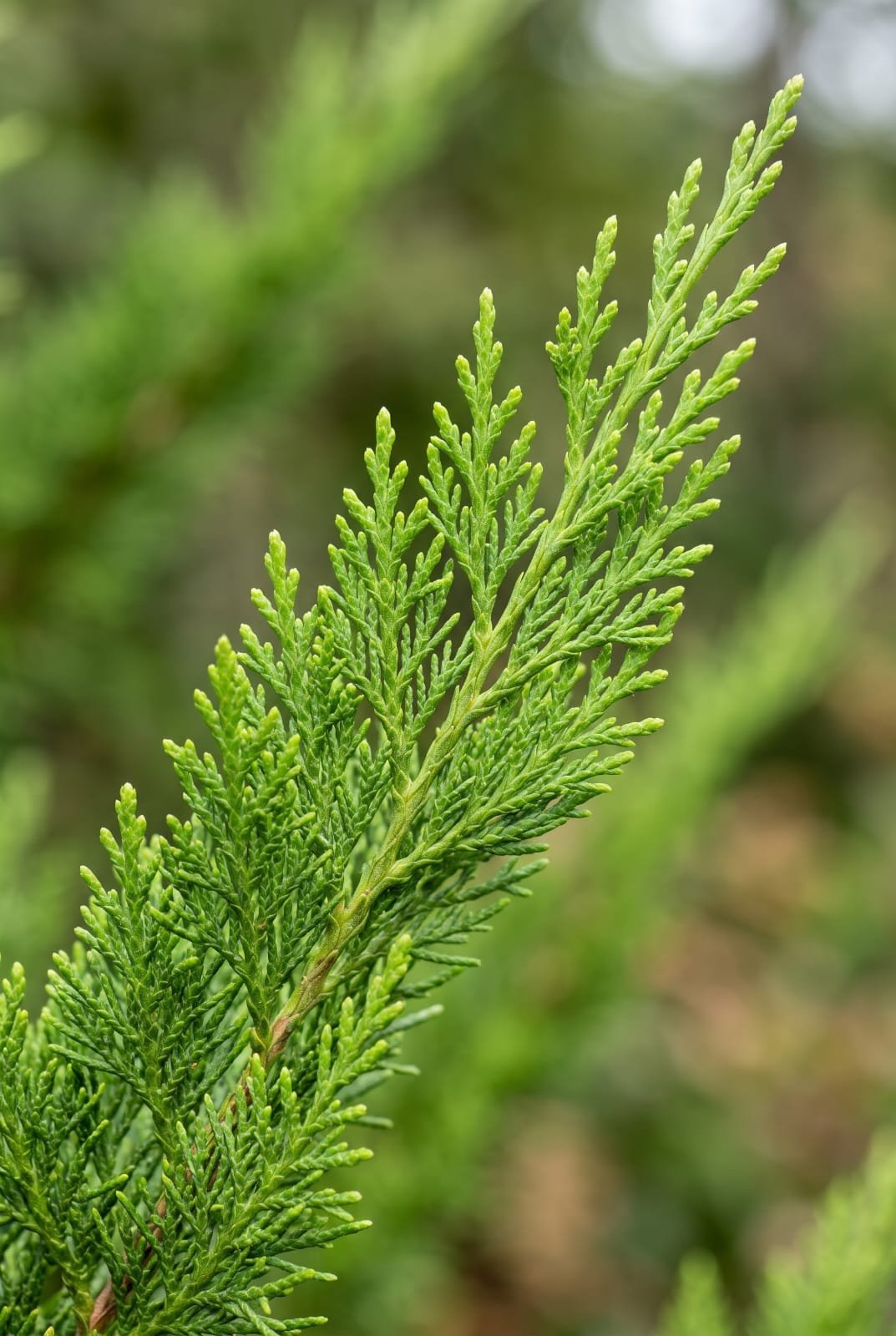
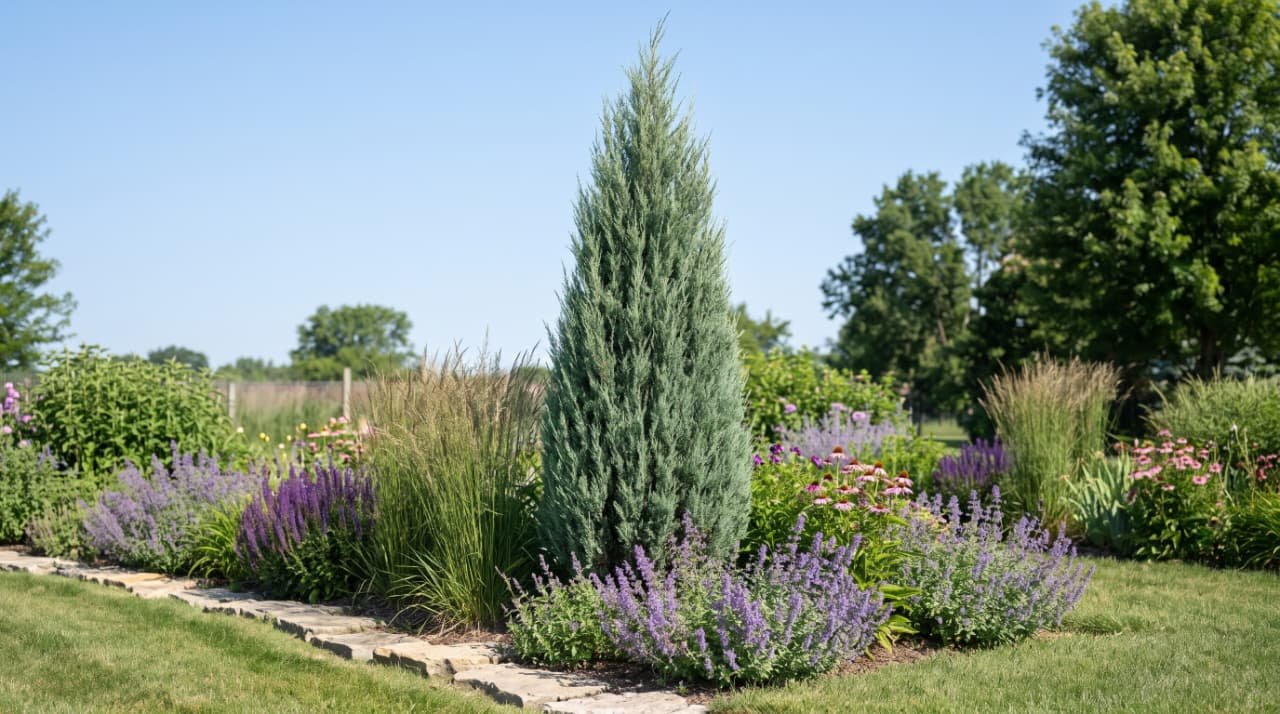
The columnar plant is the one most garden centers mean when they say Hetz juniper. It grows upright in a pyramid that narrows toward the top, with bright green foliage that stays green through the year. One nursery source notes that this columnar selection is not the original ‘Hetzii’ seedling, and that the two names became tangled over time.
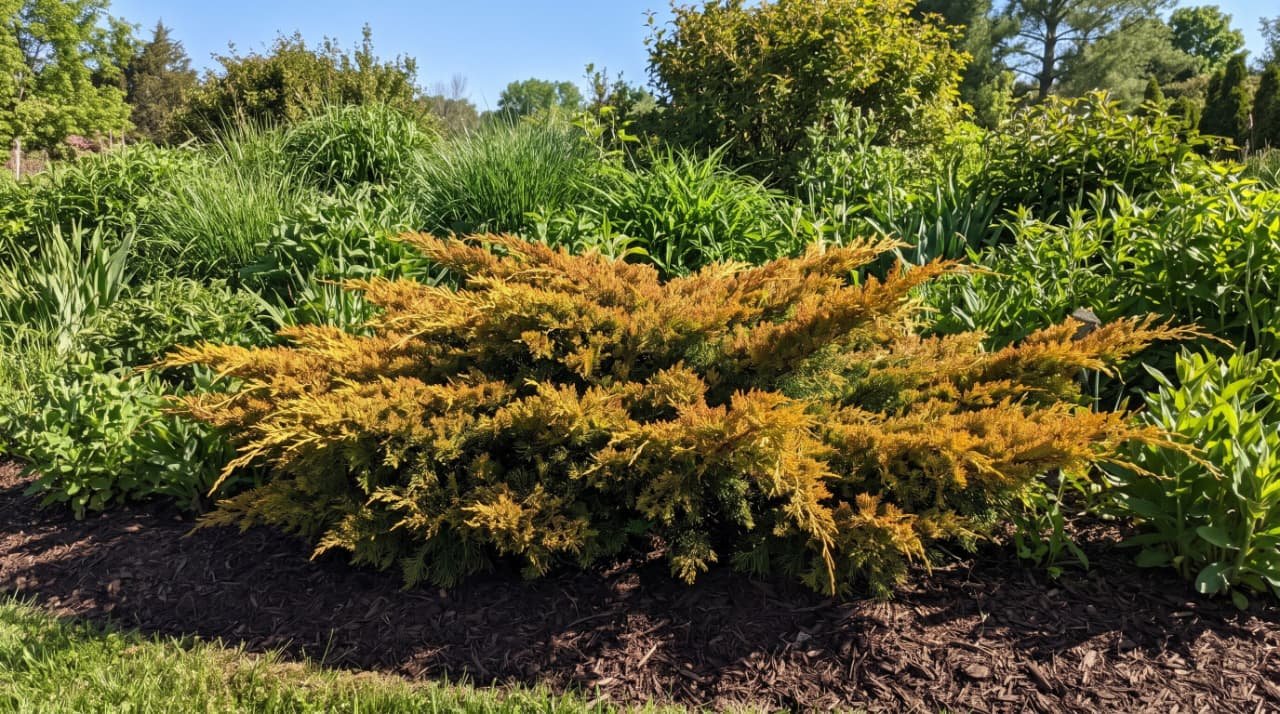
The spreading plant was selected from a seedling at a Pennsylvania nursery in 1920. The American Conifer Society describes it as a hybrid of Juniperus sabina and J. chinensis, with vase-shaped branches and gray-blue foliage. The Royal Horticultural Society lists Juniperus virginiana ‘Hetzii’ as a synonym of the same plant. That explains why a European nursery sells a shrub under that name and describes it as broad and vase-like, rather than as a separate eastern redcedar.
If you’re confused by the names, you’re not alone. The Conifer Society also notes that the spreading form is sometimes listed in error as a virginiana or a chinensis. If your tag says virginiana, check the synonym list before you assume it is a native redcedar. Our Juniperus virginiana varieties guide explains how the true native species differs.
| Feature | Hetzii Columnaris | Hetzii (spreading) |
|---|---|---|
| Botanical name | Juniperus chinensis ‘Hetzii Columnaris’ | Juniperus × pfitzeriana ‘Hetzii’, with older synonyms including J. virginiana ‘Hetzii’ |
| Habit | Narrow, upright, pyramidal | Spreading, with vase-shaped branches |
| Size in most listings | 12 to 15 feet tall, 4 to 6 feet wide | About 4.5 feet tall and 6 feet wide after ten years |
| Largest reported size | A university reference says it can reach about 25 feet | Some reference data lists 15 feet tall and wide |
| Foliage | Bright green, year-round | Gray-blue and prickly |
| Best use | Narrow spaces, screens, vertical accents | Low, wide beds and slopes |
How tall and wide the Hetz columnar form gets
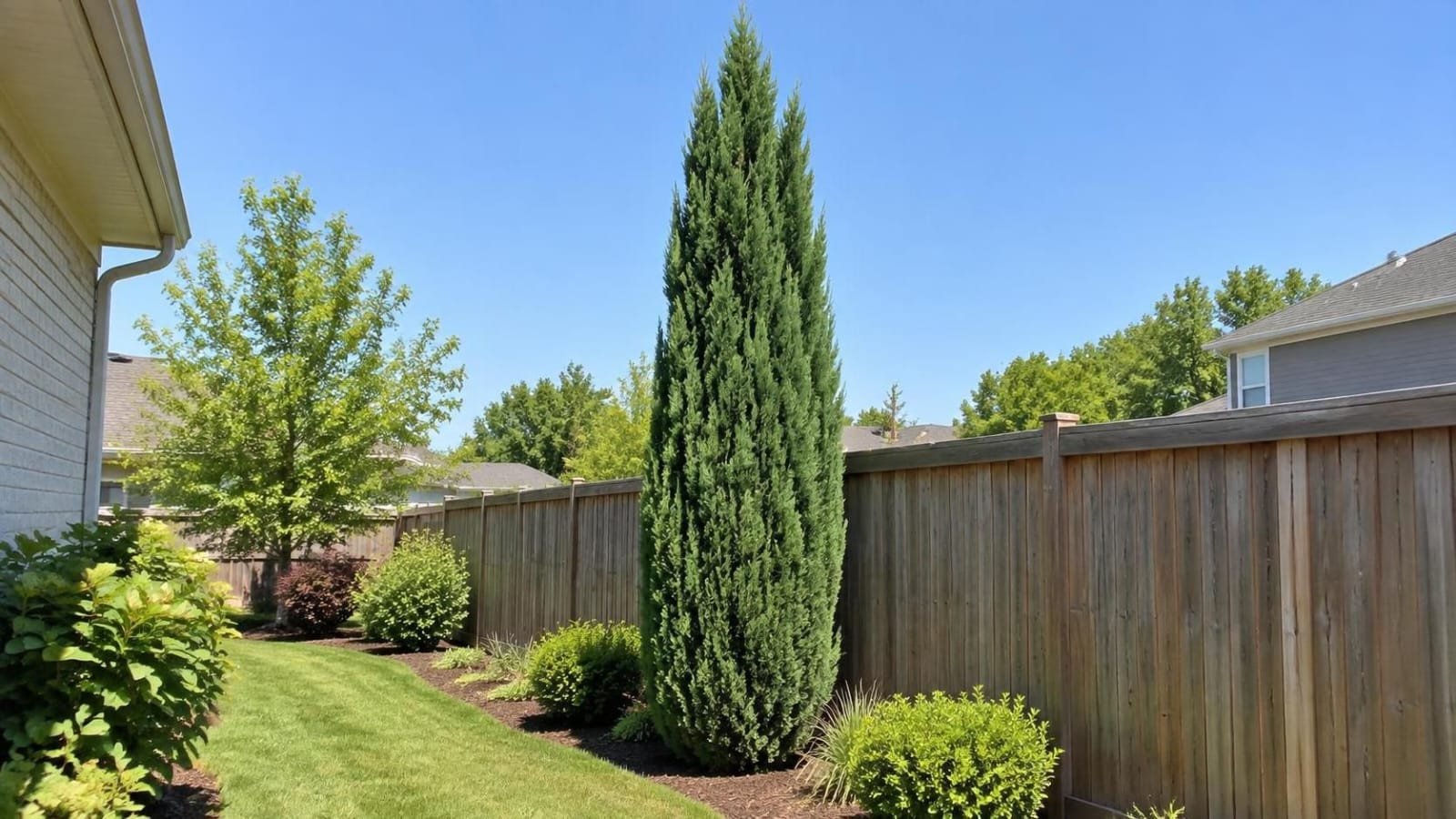
For the columnar plant, the usual nursery figure is 12 to 15 feet tall and 4 to 6 feet wide. Some list a slightly narrower or wider spread, from about 4 to 8 feet. A university reference from Cornell gives the same 10 to 15 foot range for a mature plant, and adds that the columnar form can reach about 25 feet tall. If the planting has to hold its outline for decades, plan around that upper figure.
Width is the number that shapes the planting. A column that is 5 feet wide at maturity fits a narrow side yard or a space by the front door far better than a broad shrub does. Keep it at least a few feet from walls and walks so that its lower branches have room to fill in.
How fast each form grows
Growth rates are reported differently from one source to another. One Lichtenfels listing gives 12 to 24 inches a year for the columnar plant, a Dallas nursery gives about one foot a year, and other sources simply call it moderate. Those figures are plausible for a young plant in good conditions, but they are not measured over the same period. Assume a conservative rate when you plan.
The spreading form grows more slowly in the Conifer Society’s account, at about 6 to 8 inches a year, which is why its size after ten years is modest. The Clemson Extension describes the older ‘Hetzii’ as a fast grower that reaches about 15 feet tall and wide, so the spreading form can still get large in the right site. Ask what age the size refers to, and whether it describes a young plant in its pot or a mature one.
Nursery size changes the starting point. A plant that already stands 6 to 7 feet tall will look finished much sooner than a small plant in a 1-gallon pot. Ask the nursery how old the plant is, since that tells you how much growing it still has to do.
Spacing for a row
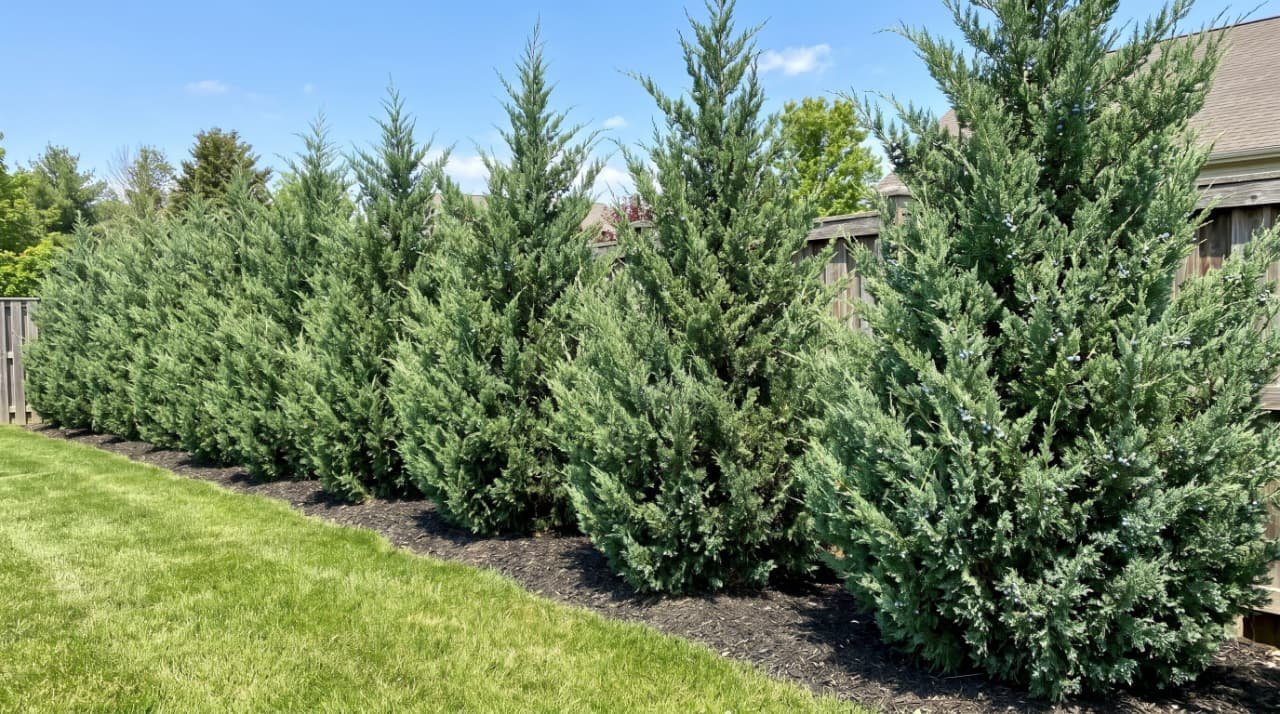
When you plant columns in a row, spacing decides how quickly the row reads as one line. One supplier says 3 feet apart creates a screen quickly, and a zigzag pattern at the same spacing fills in faster still. Another gives 3 to 5 feet for a privacy screen or windbreak. A Lichtenfels listing suggests 5 to 6 feet for a formal hedge or an informal screen.
Closer spacing gives a finished look sooner, but it also crowds the plants sooner. If you plan to shear the row into a formal hedge, expect more maintenance than a loose screen needs. For a privacy screen built from a different cultivar, our Star Power juniper guide covers that use, and our Medora juniper guide covers landscape uses where a formal look is the goal.
Foliage, zones, and deer
Nursery descriptions commonly mention bright green needles that stay green all year, so the columnar plant still shows color in winter when deciduous plants are bare. One listing says this juniper often lives 20 to 30 years or longer when it has room to spread and good drainage, which makes it a long-term choice.
Hardiness ranges for the columnar form mostly run from zone 4 to 9, although a few give 3 to 7. The spreading form lists a similar range in its reference data. Plant either one in full sun. Both tolerate drought once established, though the first season needs regular watering. Pruning is minimal. If you want to tidy the outline, trim lightly in late winter or early spring, and remove any damaged branches as they appear.
Deer tend to browse the columnar form lightly, according to one nursery, so it is a reasonable choice in a yard with deer pressure. Read that as a tendency, and protect young plants if deer are heavy in your area. Check hardiness on the tag for the exact plant you are buying, since the general range may not match it.
Choosing between them
A narrow space that needs height calls for the columnar form. Room to spread and a low, wide shape point to the spreading plant instead. Our Gray Owl juniper guide covers another spreading plant that suits slopes and wide beds, and it is a useful comparison if the spreading form doesn’t fit the space.
For a narrow space with a different shape, our Wichita Blue juniper size guide covers another narrow, upright option. After you buy, our Sea Green juniper planting guide walks through digging, backfilling, and first-season watering, and those steps apply here too.
Before you buy
Photos can mislead. One listing notes that many product photos show mature plants, while younger plants are still growing toward that shape, so the plant you receive will look smaller and thinner for a while. Confirm the botanical name with the nursery. If you want the column, the name should read Juniperus chinensis ‘Hetzii Columnaris’. If it reads pfitzeriana or lists a synonym, you are getting the spreading plant.
Ask for the mature height and width for that exact plant, and whether the figure describes the plant in its pot or at maturity. Then measure the space at the mature width, not the width of the pot. Keep the tag or receipt, since it carries the name you will need if the plant arrives under a different label. A column that fits a 5-foot gap today will fit in ten years only if you planned for its full width from the start.
2 thoughts on “Hetz Juniper: Which Plant It Is and How Big It Gets”