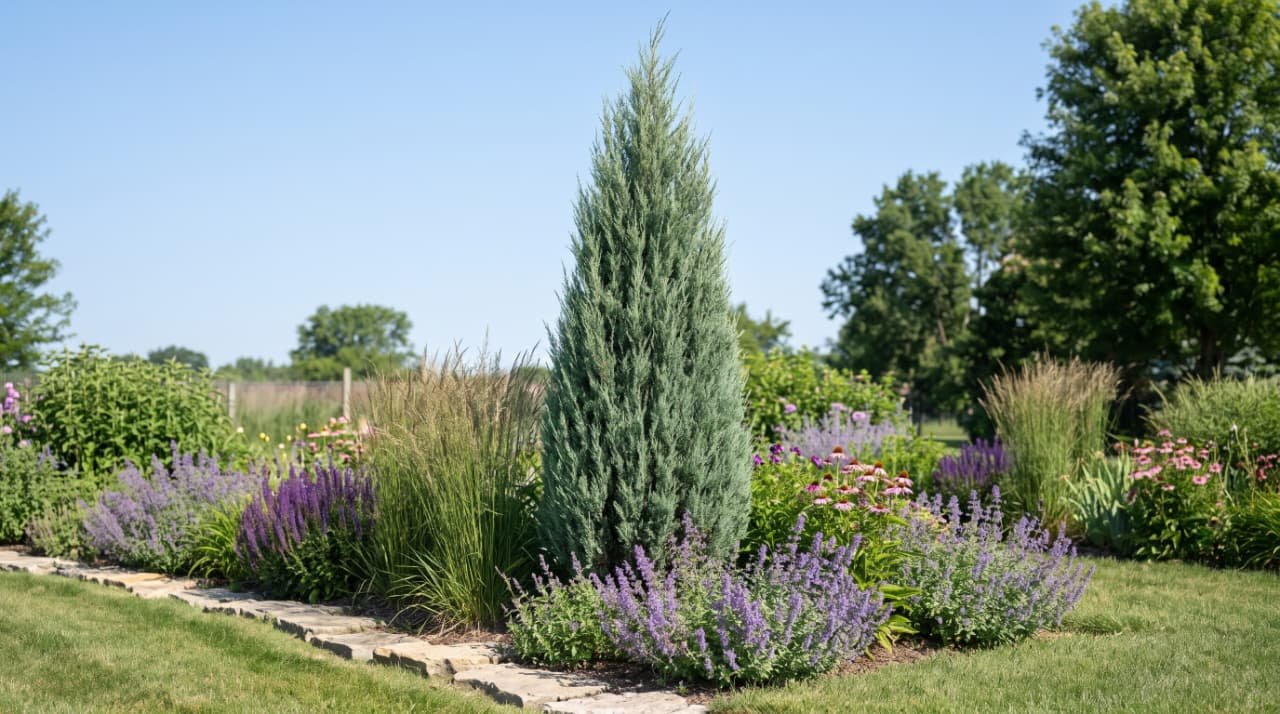
Pencil Point juniper is a narrow, columnar cultivar of the common juniper, Juniperus communis. Most references give it a height of 2 to 6 feet and a spread of about 1 to 1.5 feet, which makes it a very narrow column suited to tight spaces. Its blue-green needles often take on copper-bronze tones in fall and winter. It works best where a plant needs height without width, such as an entry, a container, or a small bed.
Name and species
The trade name ‘Pencil Point’ is applied to the cultivar known in botanical references as Juniperus communis ‘Compressa’. The Missouri Botanical Garden plant finder notes that ‘Compressa’ is sometimes called pencil point juniper. Some sellers also use a different cultivar name for similar plants, so check the botanical name on the tag, not the trade name alone.
Because it belongs to the common juniper species, Pencil Point is not a Rocky Mountain juniper or a Chinese juniper. That matters when you compare it with narrow options like Medora, which is a different species. Our Rocky Mountain juniper identification guide explains how those groups differ.
How tall and wide Pencil Point juniper gets
Most references put Pencil Point at 2 to 6 feet tall and 1 to 1.5 feet wide. Some nursery listings go higher, with 5 to 6 feet and even 6 to 8 feet, and one lists a maximum of 10 feet. The taller figures may describe older plants or a different selection, so use the lower range for planning unless the tag says otherwise.
The width is the number that matters most. If you have ever tried to squeeze a shrub between a porch and a walkway, you already know why. A plant that is about a foot wide fits a narrow walk, a corner of a porch, or a container without crowding its neighbors. Plan for the height, but treat the width as fixed.
Growth rate and timeline
Sources are split between slow and medium growth. One nursery listing gives 3 to 6 inches a year, and another calls it medium. A young plant from a 1-gallon pot will take several seasons to reach its mature height, so expect a gradual column rather than a quick fill. Growth speed also depends on the site, and a sunny, well-drained spot generally establishes faster than a shaded or wet one.
A plant this narrow rarely needs shaping. Several listings describe it as needing little or no trimming to keep its shape, which keeps the work low once the plant settles in.
Winter color and sun
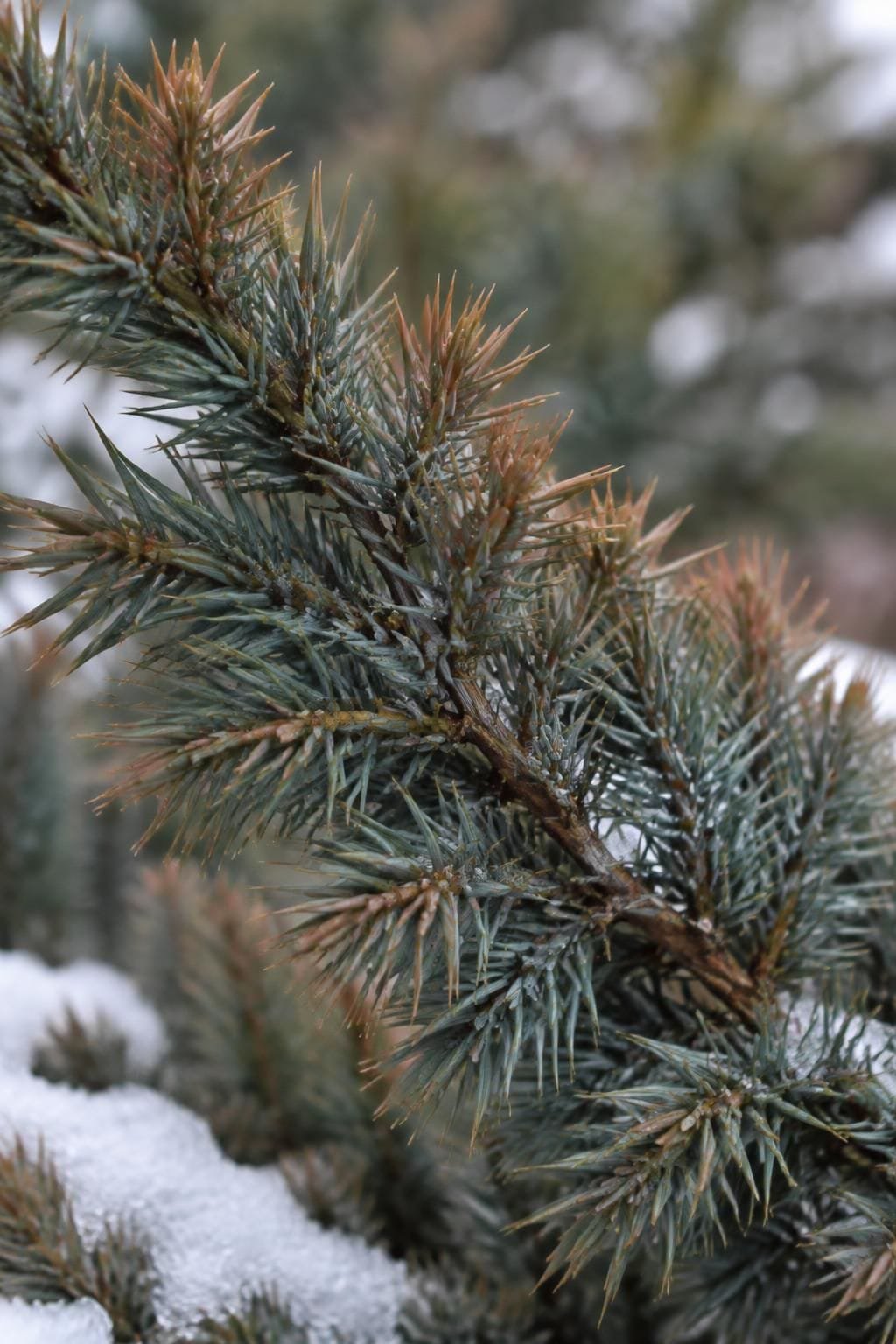
Pencil Point is grown for its blue-green foliage, which takes on copper-bronze tones in cold weather. That winter shift is part of the plant’s appeal, and it shows best in full sun. Plant it where it gets direct light most of the day, since shade is likely to reduce both the blue-green color and the winter bronze.
The plant is listed as drought tolerant once established, and it tolerates a range of soils from dry to moist. Good drainage still matters, because standing water is hard on any juniper, especially in a container.
Hardiness
Most references list Pencil Point as hardy from USDA zone 3 to zone 6, with some listings extending to zone 7 or as far as zone 2. Check the zone on the tag, since the hardiness range you need depends on your winters. Plants near the edge of their zone may brown in harsh winters, so a sheltered spot helps.
Where it works best
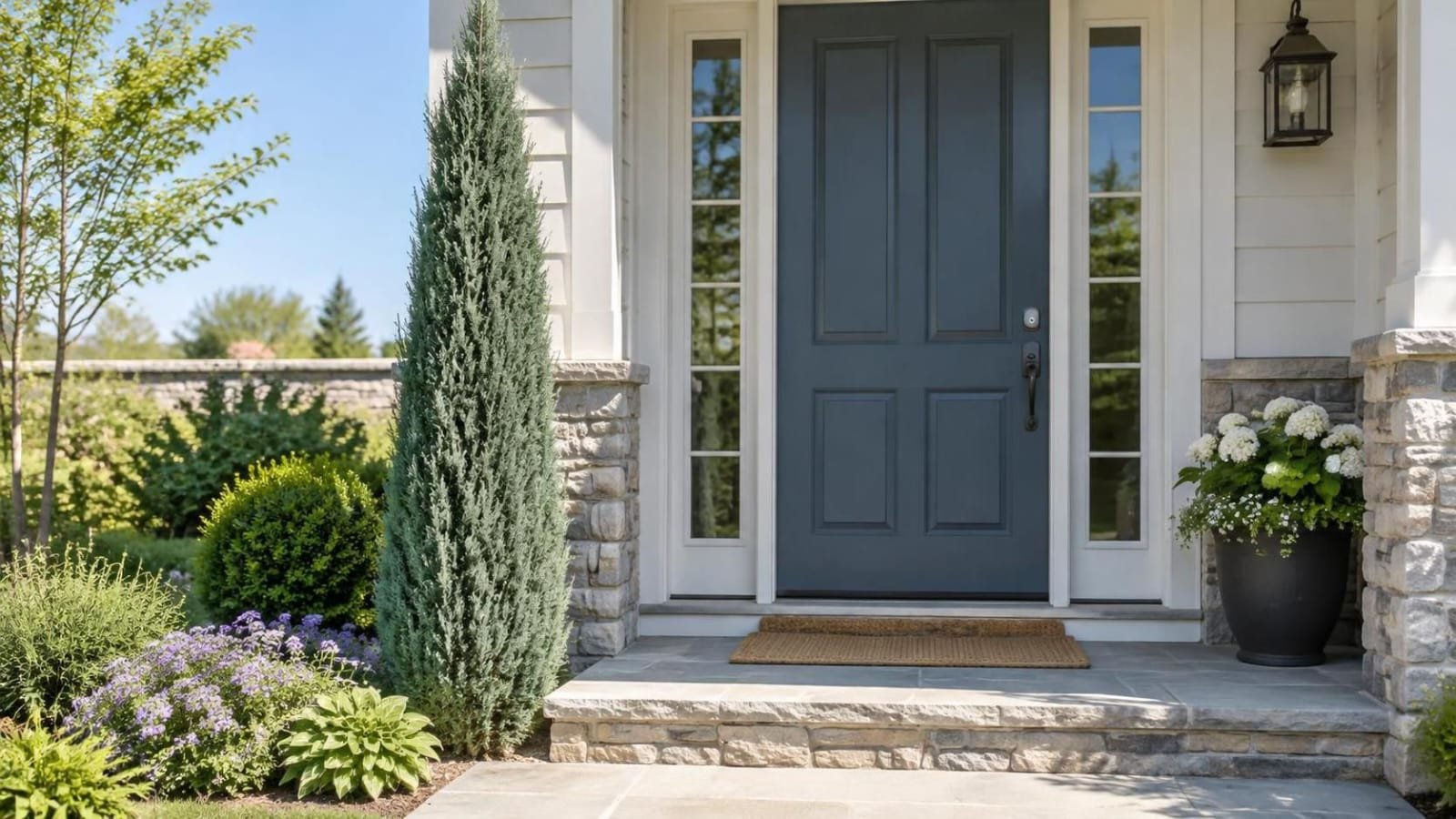
Pencil Point is at its best where space is tight. It works as a vertical accent beside a door, a column at the corner of a foundation, or a single plant in a pot on a patio. One supplier suggests about 10 inches apart for a solid hedge, so a short row reads as a formal column line in a small formal garden.
It also suits a collection of dwarf conifers, where a narrow form adds height without taking up floor space. In a container, it needs regular water in summer, and the pot should have drainage holes and enough volume for the root ball to grow over several years.
Pencil Point and Gold Cone
Pencil Point and Gold Cone are both common junipers, but they serve different jobs. Pencil Point is the slimmer, blue-green column for tight spots, while Gold Cone is valued for its golden spring color. Our Gold Cone juniper guide covers that plant’s seasonal color in detail.
For a taller narrow accent from a different species, our Medora juniper guide covers a slow, columnar Rocky Mountain cultivar. If you need a low, mounding plant rather than a column, our Blue Star juniper guide is the better fit.
Planting and care
Plant in full sun with good drainage, at the same depth the plant grew in its pot. Check the root ball before planting, since a root ball that has dried out takes longer to recover. Water regularly through the first season, then let the top of the soil dry between sessions. Avoid heavy fertilizing, since slow-growing junipers do not need it. For the digging and backfilling steps that apply to any juniper, our Sea Green juniper planting guide covers the full sequence.
Mulch the surface lightly to keep the root zone cool and moist. Keep mulch a few inches from the stem, since wet bark invites rot.
Life span and what to expect over time
One listing expects Pencil Point to live about 30 years under good conditions. That is a long-term plant, so choose its spot with the mature column in mind rather than the size of the pot on the day you buy it.
Expect a narrow, dense column that holds its shape from the ground up. Lower branches on a very narrow plant can thin slightly with age, especially in shade, so keep the base in sun and avoid crowding it with taller plants that cast shadow on its lower half.
Wildlife and use around the home
The female plants bear berry-like cones that songbirds and thrushes eat, and the dense column gives shelter to small birds and beneficial insects. That makes it a useful choice beside a patio or a window where you want some wildlife activity without a large plant.
A narrow column also suits a front door, where a narrow column frames the entry without blocking the walk. Keep it a few feet from the door so people can pass comfortably as it grows.
Common mistakes
The most common problem is planting a narrow column too close to a path or wall because the pot looked small. A second mistake is planting in deep shade, where the blue-green color fades and the column thins over time. A third is watering a container as often as a bed, which can dry the root ball in summer and leave it soggy in spring.
Before you buy
Check the botanical name on the tag, and ask which size the plant is in its pot. Trade names for this plant vary, so the botanical name tells you more than the common name. A 1-gallon plant will look sparse for a season or two, while a larger container gives you more height on the first day. Ask the nursery for the mature height and width of that exact plant, and whether the figure describes the plant in its pot or at maturity.
Because the column is so narrow, measure the bed or corner at its full width, then add a few inches so the plant is not pressed against a wall or step. Keep the tag or receipt, since trade names vary and the botanical name is what matters when you need to confirm the plant later. If the nursery cannot give you a botanical name, ask for a different plant with a clear label.