
Gold Cone juniper is a narrow, upright evergreen that usually stays 3 to 5 feet tall and 1 to 2 feet wide. Its new growth comes in gold in spring, softens to yellow-green in summer, and turns blue-green in winter. Full sun gives the strongest color. The plant is sold under the name Juniperus communis ‘Gold Cone’, so it is a cultivar of the common juniper rather than a Chinese type, and that matters when you compare it with other golden junipers.
Name and species
Most nursery listings use Juniperus communis ‘Gold Cone’, which places it in the common juniper group rather than the Chinese juniper group. That affects the size and hardiness you should expect, so check the botanical name on the tag before comparing it with other plants labeled ‘Gold’.
Gold Cone juniper color through the seasons
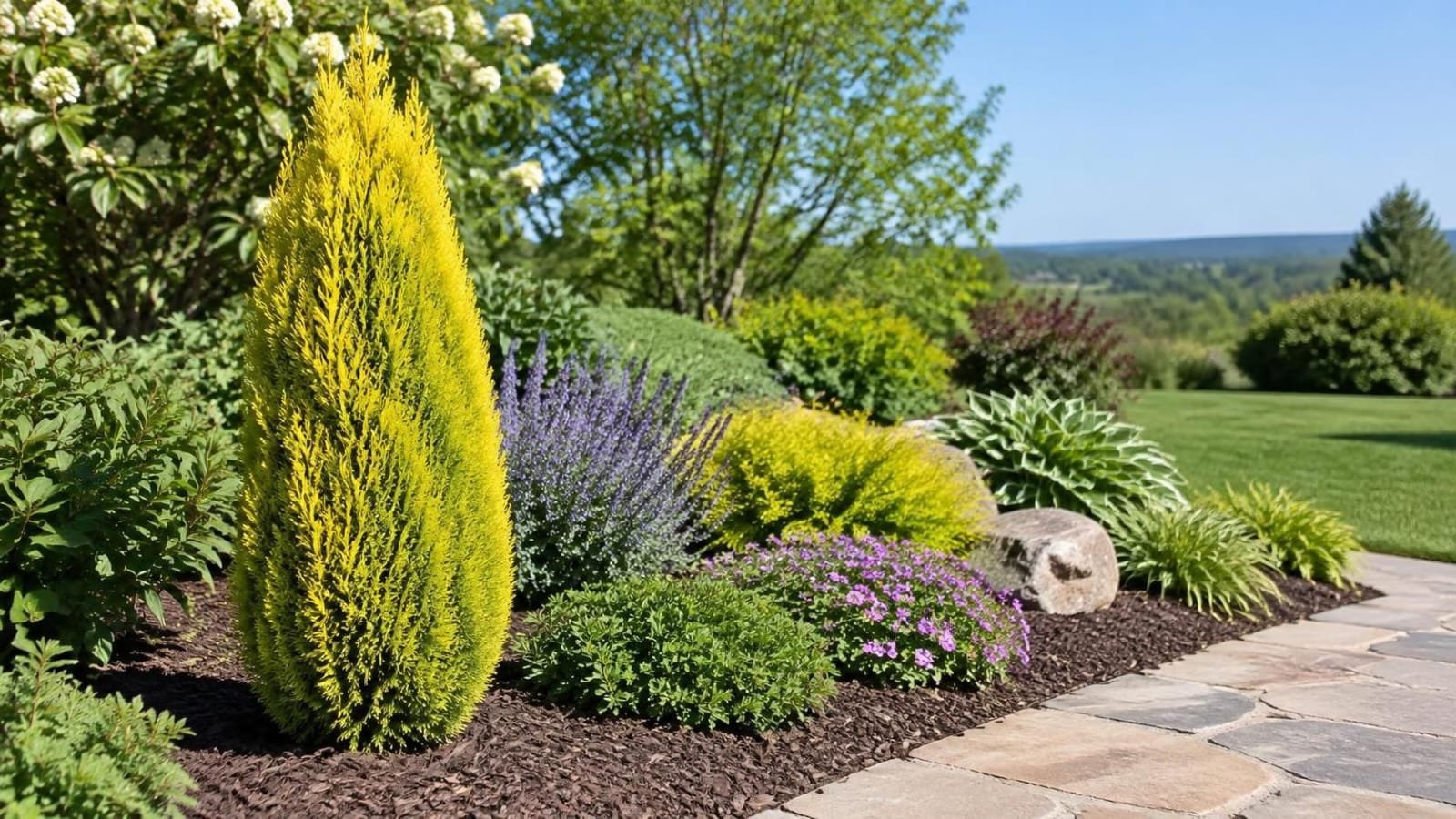
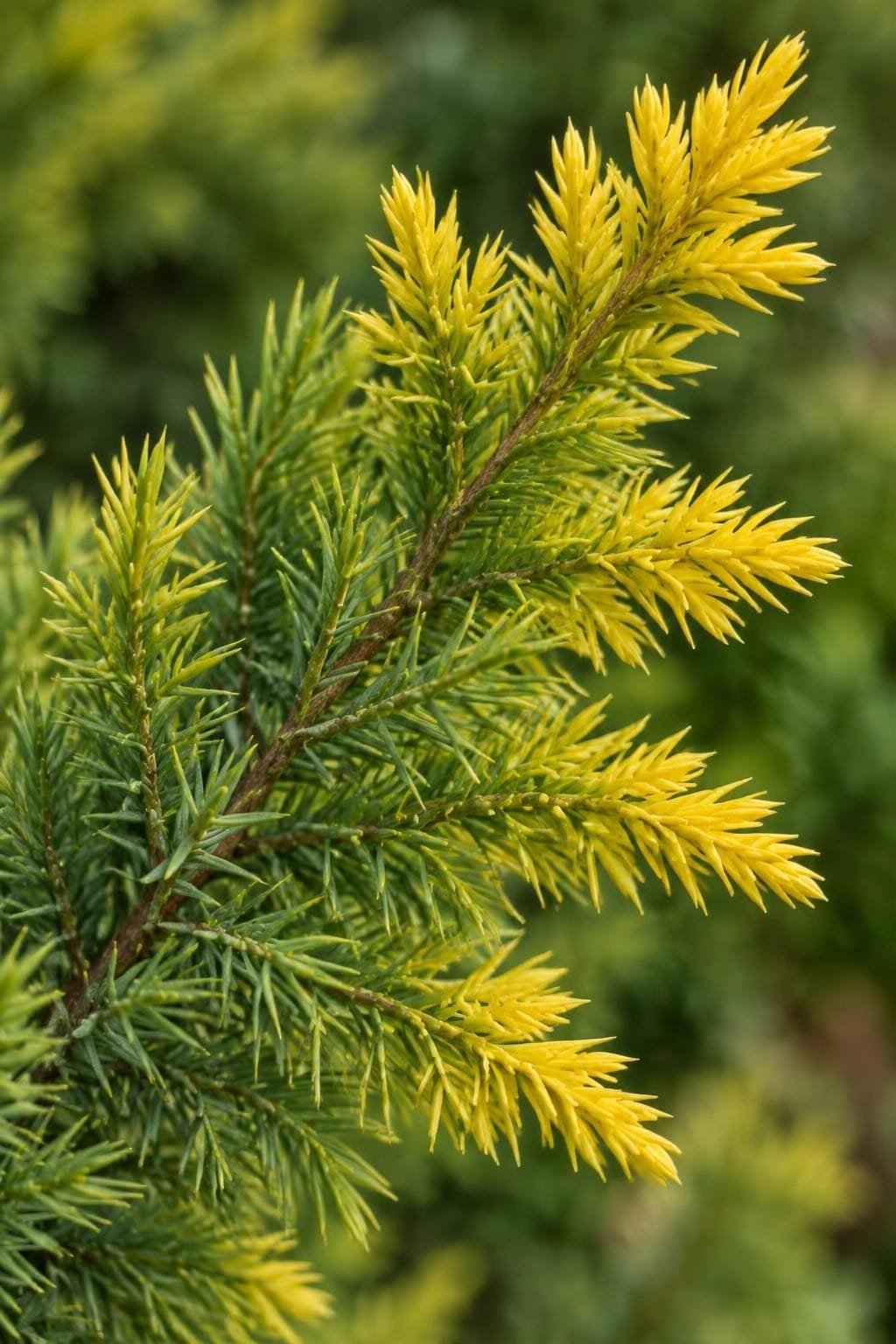
The color is the main reason people buy this plant. Spring growth is bright gold, summer foliage fades to yellow-green, and winter color is a blue-green. Those shifts are normal, so a plant photographed in May will look different in January.
Sun controls how strong the color stays. One nursery notes that the best color occurs in full sun, and partial shade can reduce the intensity of the gold, although the sources reviewed do not quantify that effect. If you want the gold to stand out, put the plant where it gets direct light for most of the day.
How tall and wide it gets
Most listings put the plant at 3 to 5 feet tall and 1 to 2 feet wide. A few go higher. One nursery lists 5 to 7 feet in its mature size, and another listing gives 6 to 8 feet, although that page mixes in text about other plants, so treat it with caution. Plan around the 3 to 5 foot range, and check the tag for the exact cultivar you are buying.
Growth is described as slow, with some listings giving 3 to 5 inches a year. That pace means a plant bought at 3 feet will take several seasons to reach its mature height, while the narrow width stays close to the 1 to 2 foot range for longer.
Sun, soil, and hardiness
Plant it in full sun for the best color and the most compact, dense form. It tolerates partial shade, though the color is less intense there. Soil needs are modest. Listings describe it as tolerant of many soils, from dry to average to moist, as long as the site drains well.
Most listings give USDA zones 4 to 7, though one lists 5 to 8. Check the zone on the tag, since the winter blue-green color depends on the plant surviving cold weather without browning.
Care and pruning
This juniper is low maintenance. Pruning is optional, but one nursery recommends light shaping in late winter, before new growth starts. Avoid cutting into bare wood, because the plant won’t fill back in from those sections.
Water regularly during the first season, then let the top of the soil dry between waterings. Drought tolerance improves once the plant is established, but a dry root zone in the first summer will slow its growth.
Deer and pests
One nursery lists the plant as low browse for deer, which makes it a reasonable choice for a yard with occasional deer pressure. Protect young plants if deer are heavy in your area, since low browse is not the same as deer resistant.
Where Gold Cone works best
For a low hedge, one listing suggests planting 1 to 2 feet apart, which creates a dense golden line along an edge. It works as a vertical accent in tight spaces, along an entryway, or in a mixed border where the gold color can break up green foliage. Its narrow outline also suits a foundation bed where a wide plant would crowd the house. In a container, it can work for a patio, but the root ball will need regular water.
Choosing between Gold Cone and other narrow junipers
If you want a blue-gray column instead of a gold one, our Medora juniper guide covers a narrow Rocky Mountain cultivar with a more formal outline. For a taller, broader column, the Wichita Blue juniper size guide explains how it differs. If you need a low, mounding plant rather than a column, our Blue Star juniper guide is the better fit.
For the planting steps that apply to any juniper, our Sea Green juniper planting guide covers digging, backfilling, and watering through the first season. If you are weighing a taller, spreading or columnar form, our Hetz juniper guide explains the differences.
Shape over time
It keeps its column with very little work. Listings describe it as needing little or no pruning, and one notes that it fills out to the ground, so it does not need shorter plants in front to hide bare lower stems. That makes it a practical choice for an edge where the base should look full.
What to expect in the first year
The first season is about root establishment, not height. A new plant may look almost unchanged for several months, then put on a flush of new growth. Keep the soil evenly moist during that first summer, and avoid fertilizing heavily, since fast growth from feeding does little for a slow-growing juniper.
Expect some browning or thinning on older interior growth as the plant fills out. That is normal in dense conifers, and it does not mean the plant is failing. If large sections of foliage turn brown, check the soil moisture and drainage before adding more water.
Winter color and cold sites
Winter is when the blue-green shift is most visible, and it is also when exposure matters. Plants in windy, exposed sites can dry out during cold spells, especially if the ground is frozen and they cannot draw water. Water deeply in late fall if the weather has been dry, and mulch lightly to protect the root zone.
Growing it in a container
It can grow in a pot, and one supplier lists it as suitable for container culture. A container limits root space, so the plant will be smaller and slower than one in the ground. Use a pot with drainage holes, a well-draining mix, and a size that gives the root ball room to grow over several years.
Container plants dry out faster than planted ones, especially in summer. Check the soil every few days during hot weather, and water when the top inch feels dry. Raise the pot slightly off hard surfaces so water can drain freely.
Common mistakes
Three mistakes account for most disappointments with this plant. The first is buying it for the color without checking the sun. A shaded plant shows less of its gold color. The second is planting too close to a walk or wall, since the narrow form still broadens slowly with age. The third is assuming a small nursery pot will look like the photo on the tag from day one.
This is not a plant for a shaded foundation or a damp, poorly drained corner. If the site is dark, wet, or both, choose a plant that tolerates those conditions, and save it for a sunny spot where the color can do its job.
Before you buy
Confirm the name on the tag, then match the size to the space. Container size changes the starting point. One supplier sells the plant in 1-gallon pots at 1 to 2 feet and 3-gallon pots at 3 to 4 feet, so a larger pot gives you more height on day one, though it costs more.
Photos usually show the plant at its best color, which is spring gold. Ask the nursery what the plant looks like in winter, since that blue-green shift is a real part of the plant’s character. Keep the tag, and plant in full sun if you want the gold to show.
One thought on “Gold Cone Juniper: Color Through the Seasons, Size, and Care”