
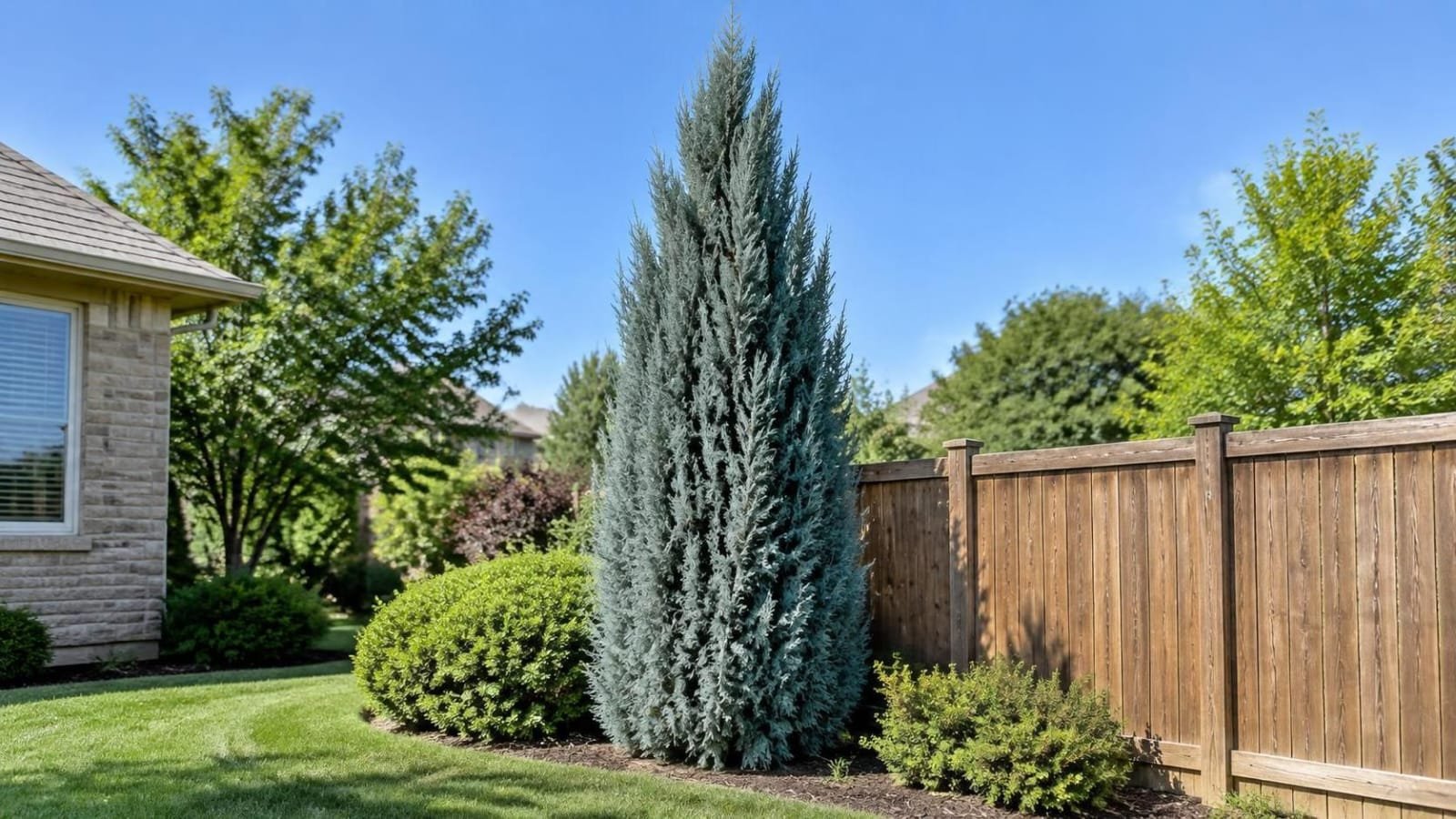
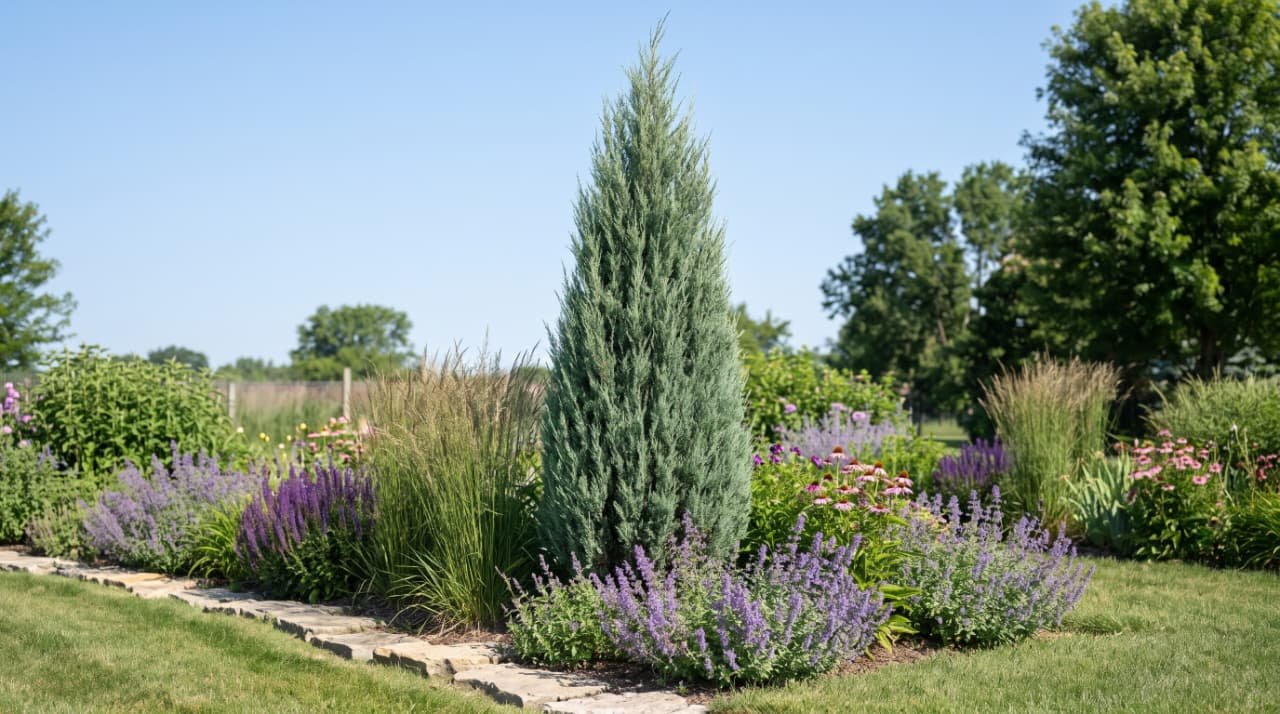
Wichita Blue juniper size is most often given as 10 to 15 feet tall and 4 to 6 feet wide, which makes it a narrow, upright tree rather than a broad shrub. That range is the one most nursery listings share, and it matches the figures from a university plant database. A few sources go higher, up to 18 feet tall and 8 feet wide, and growth rate figures vary even more. Here’s how those numbers fit together and what they mean for the space you have.
Start with what kind of juniper this is
Wichita Blue is a cultivar of Rocky Mountain juniper, Juniperus scopulorum, not the Chinese juniper that many gardeners picture when they hear “juniper” and “blue” together. That matters for size. A University of Florida fact sheet describes the species as reaching 30 to 40 feet, while the cultivar is sold as a much smaller tree. The plant you buy is the cultivar, so its own listed size matters more than the species figure.
If your tag reads a different species entirely, our Rocky Mountain juniper identification guide explains how to tell the two apart before you go further.
What the height sources agree on
Most of the sources reviewed fall into a narrow band. The University of Connecticut plant database describes the ‘Wichita Blue’ selection as 10 to 15 feet tall and about 5 feet wide. Purdue’s arboretum lists an ultimate height of 15 feet and a spread of 6 feet, and a Colorado State University table gives 12 by 6 feet. Nursery listings cluster in the same range.
The outliers deserve a closer look. Oregon State University’s landscape plant database gives 18 feet tall, describing a broader and looser pyramid, with a spread of 6 to 8 feet. Some trade pages also list 15 to 25 feet, and the sources don’t explain the difference. If you see a figure above 15 feet, ask the seller which plant the number describes.
Why the width figures differ
Width is the number most likely to surprise a buyer. Trade listings give 4 to 6 feet, while the broader university entry gives 6 to 8 feet. The sources don’t say why, but plants grown at different ages, in different soils, or in different climates can fill out differently, so the spread you see on a tag may not match a plant grown elsewhere. Trees.com advises spacing plants at least as far apart as their mature width, which it puts at 6 to 8 feet.
For a working plan, use 6 feet as the spread. Some listings go wider, so if the site allows, plan for 8 feet and let the extra room be a safety margin. If your space is narrower than that, a single plant will press against its neighbors or the nearest wall within a few years, and clipping it to fit changes the tidy column the plant is known for. A narrow gap between a plant and a path also means brushing against the foliage every time someone walks past, which is worth considering before you plant.
How fast it grows
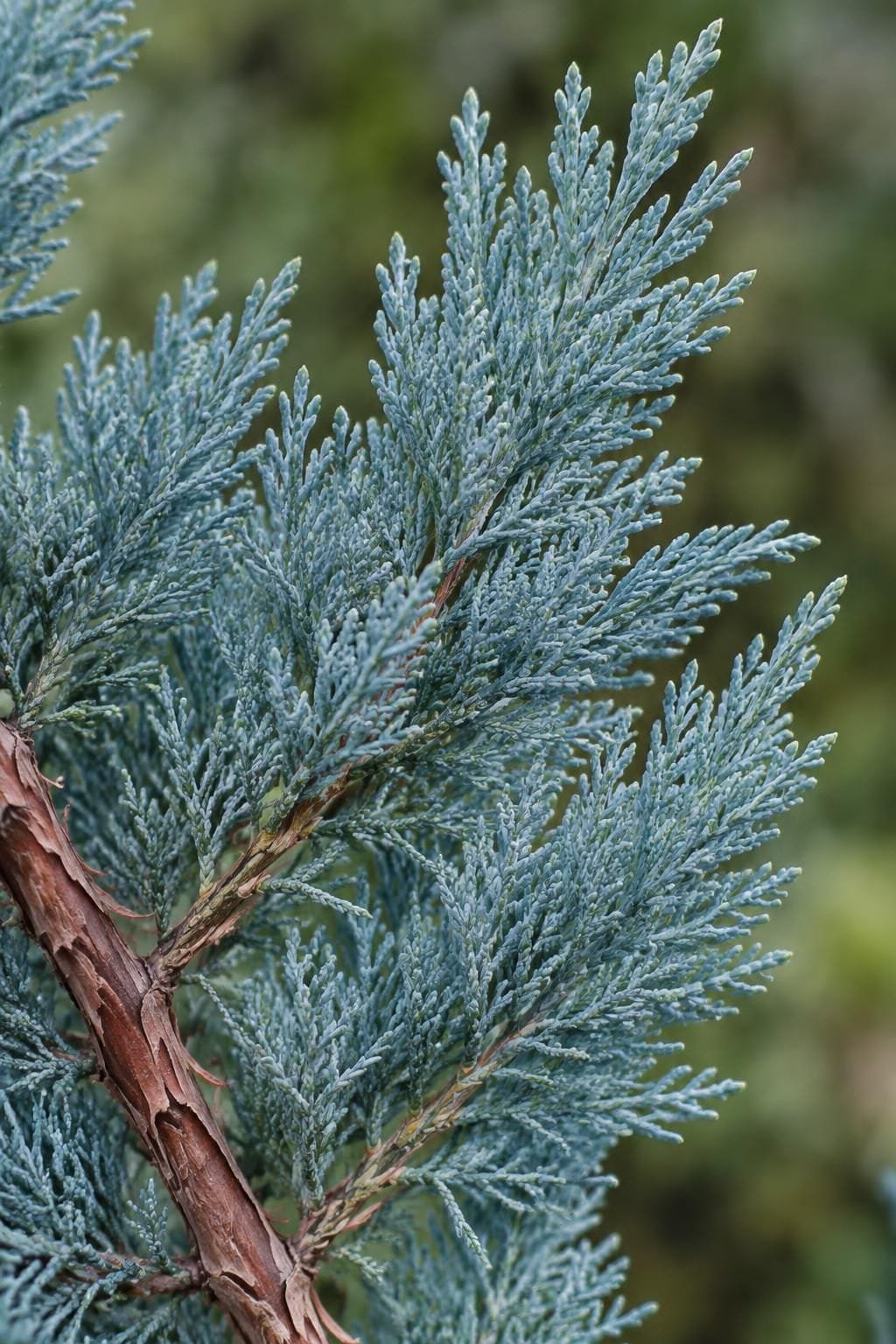
Growth rate is where the sources disagree most. Trade listings describe moderate growth, but their numbers run from about 6 to 12 inches a year, to one listing that says up to 8 inches, to another that says 12 to 18 inches a year under ideal conditions. Another trade listing suggests nearly a foot a year until maturity.
The species itself is slow growing, and Provender Nurseries describes this cultivar as slower than the species. These statements can both be true: the cultivar is slower than the wild type, and its growth depends on site, sun, and care. None of the sources reviewed measured growth over several years, so treat any single rate as a rough guide, not a schedule.
Nursery size changes the timeline. A 15-gallon plant sold at 6 to 7 feet tall, as one nursery lists it, is already a tree of useful height. A smaller plant in a 1- or 2-gallon pot will need several seasons before it looks like the photo on the tag.
Here is a rough timeline using the sources’ own numbers. A plant that starts at 6 feet and grows 6 to 12 inches a year would need about 9 to 18 years to reach 15 feet. That range is wide because the growth figures are wide, and it is a reason to choose a spot that can handle a tree that matures slowly or quickly.
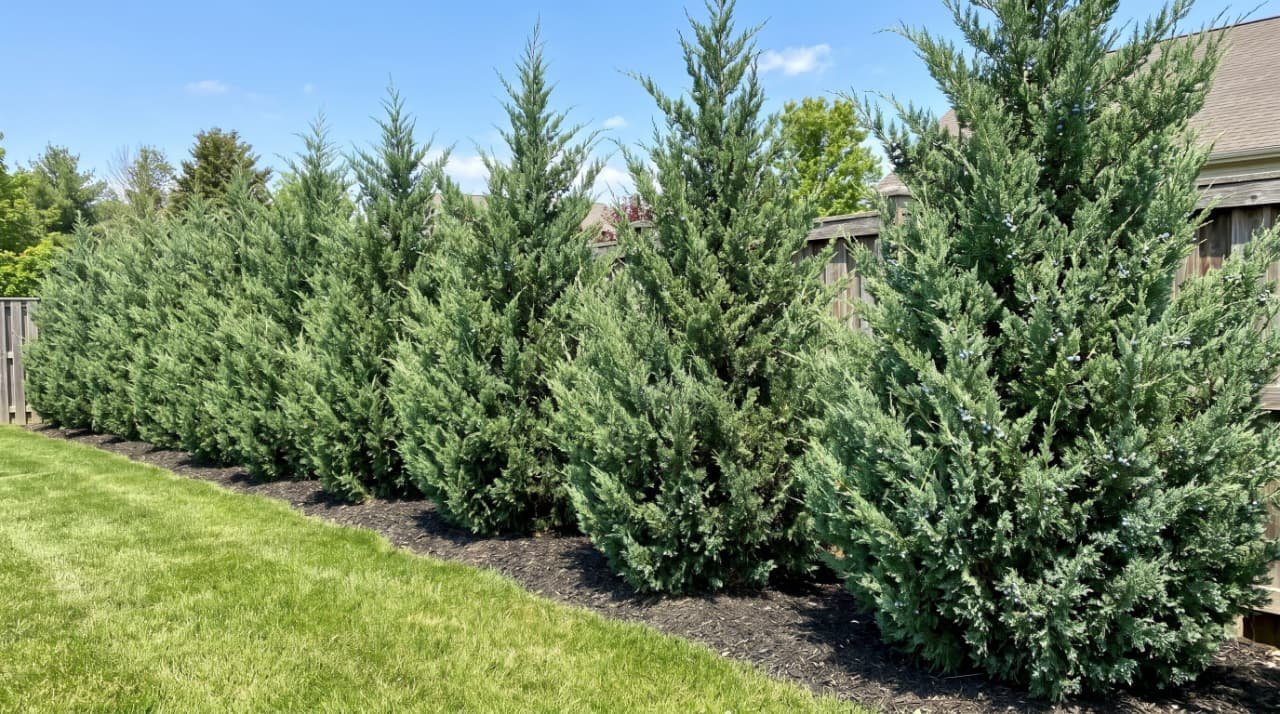
Several trade listings promote this plant for windbreaks and privacy hedges. That use depends on a spacing you can hold. A row planted at 6-foot spacing will form a continuous screen sooner than a row planted farther apart, but it will also need room on both sides to reach its full width.
Zone listings also differ. Trade pages give 3 to 7 for the cultivar, while a university fact sheet gives 4A to 9A for the species. Those figures come from different sources, and the species and cultivar may not match, so check the zone on the label of the plant you are buying.
Berries, and whether the plant is male or female
The sources also disagree about whether this plant produces berries. A university listing and Provender Nurseries describe the cultivar as male, and male junipers produce pollen rather than the blue berries that songbirds feed on. Trees.com, by contrast, describes birds feeding on its berries. Both claims can’t be complete. If berries matter to you, ask the nursery whether the plant is sold as male or female, since the answer changes how the plant looks and feeds wildlife in late summer. If you are weighing this cultivar against other native junipers, our Juniperus virginiana guide compares a different native species with its own shape and size.
Where the size becomes a problem
Its narrow habit is what most sources highlight. It fits along a fence or in a border better than a broad juniper, and two trade listings say it keeps its upright shape with little or no pruning. That is useful, but it doesn’t remove the height. A 15-foot tree can reach eaves, windows, and overhead lines. One trade listing says the plant is short enough to stay clear of power lines, but check the mature height against the actual line before you plant.
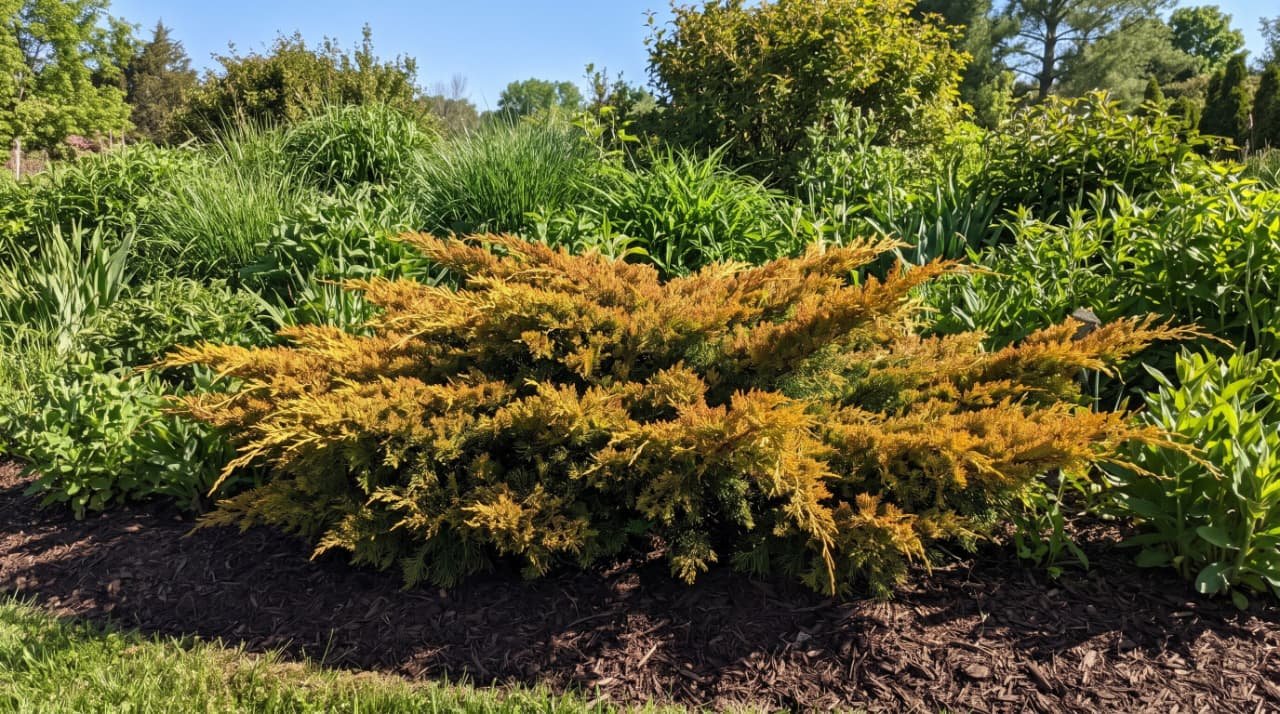
If the spot is too tight for a tree of this height, a low-growing juniper may suit the site better. Our Blue Star juniper guide covers a smaller option, and for a spreading ground cover see our creeping juniper guide. If you want a warm contrast beside the blue foliage, our Old Gold juniper guide covers a golden option.
Check these before you dig
Measure the space at a 6-foot spread, then compare it with the mature height on the tag. Look for the species name, Juniperus scopulorum, and the cultivar name ‘Wichita Blue’ rather than a general “blue juniper” label. Ask the nursery for the mature height and width of the plant they are selling, and whether the figure describes the plant in its pot or at maturity. Then confirm the figures with a local extension office, since climate can change how large many junipers grow. Public gardens are another good check. The Purdue Arboretum keeps this cultivar in its collection, and a mature planting in your own region will tell you more about its real size than any catalog figure.
The plant is an upright evergreen with strong blue color, and its height is the part to plan around. Decide where it can grow to its full height before you choose the spot, and treat the width as the figure that decides whether a planting works in a few years.
2 thoughts on “Wichita Blue Juniper Size: How Tall and Wide It Grows, and How Fast”