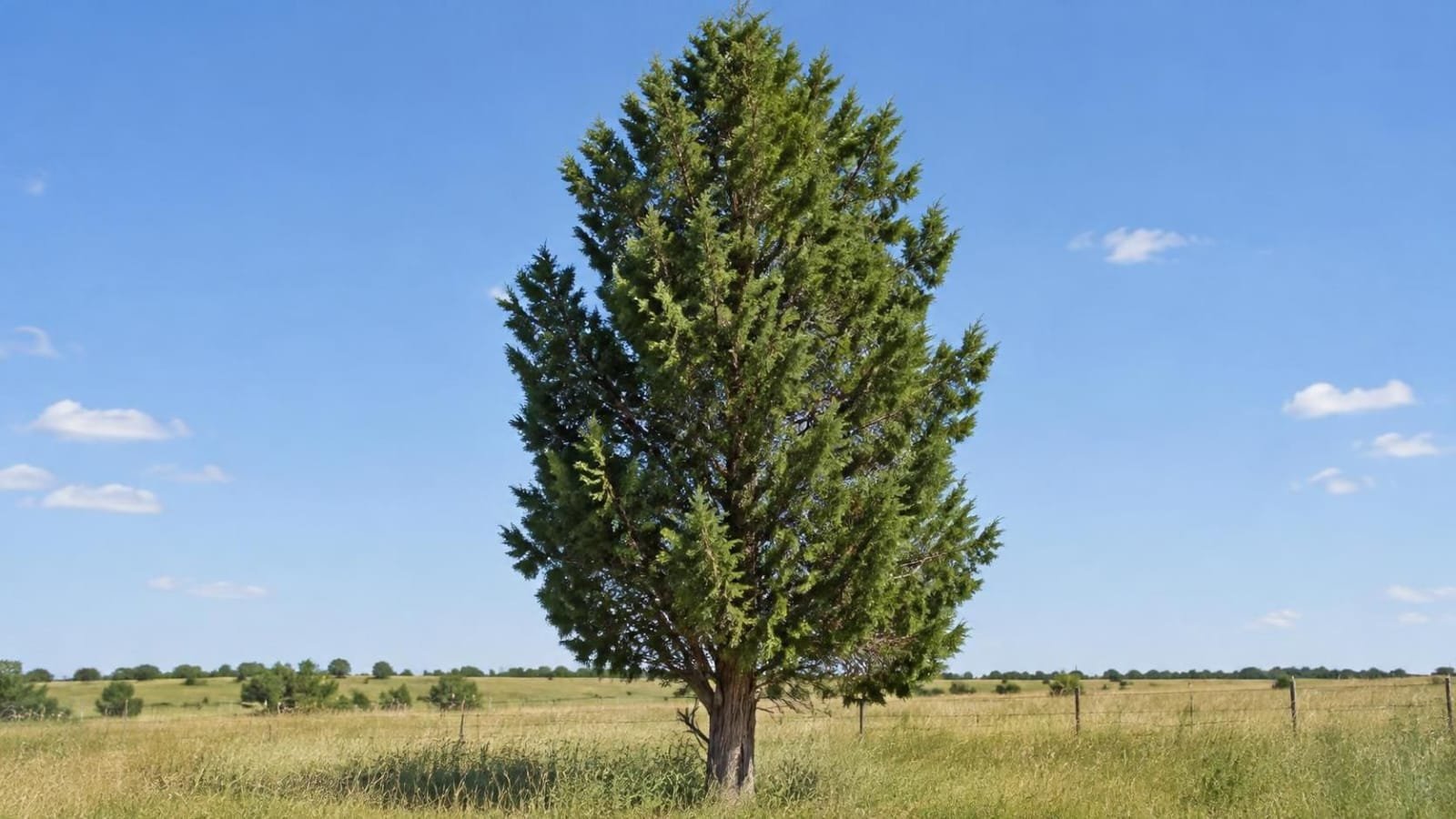
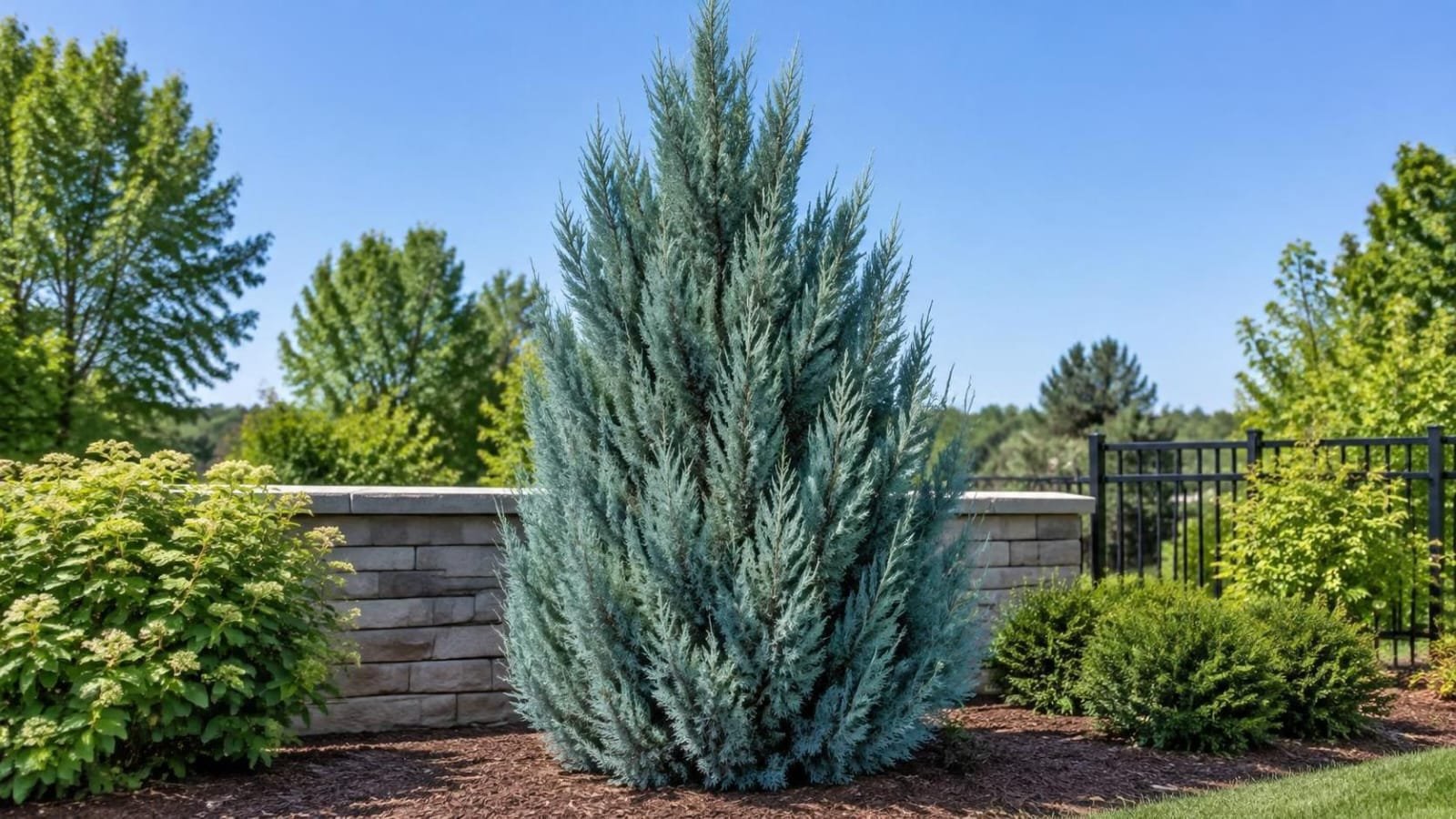
Skyrocket is one of the best-known narrow junipers. People plant it for a tall, slim line in tight spots. It’s also easy to misjudge. The width tends to creep up, and the growth rate depends a lot on the site.
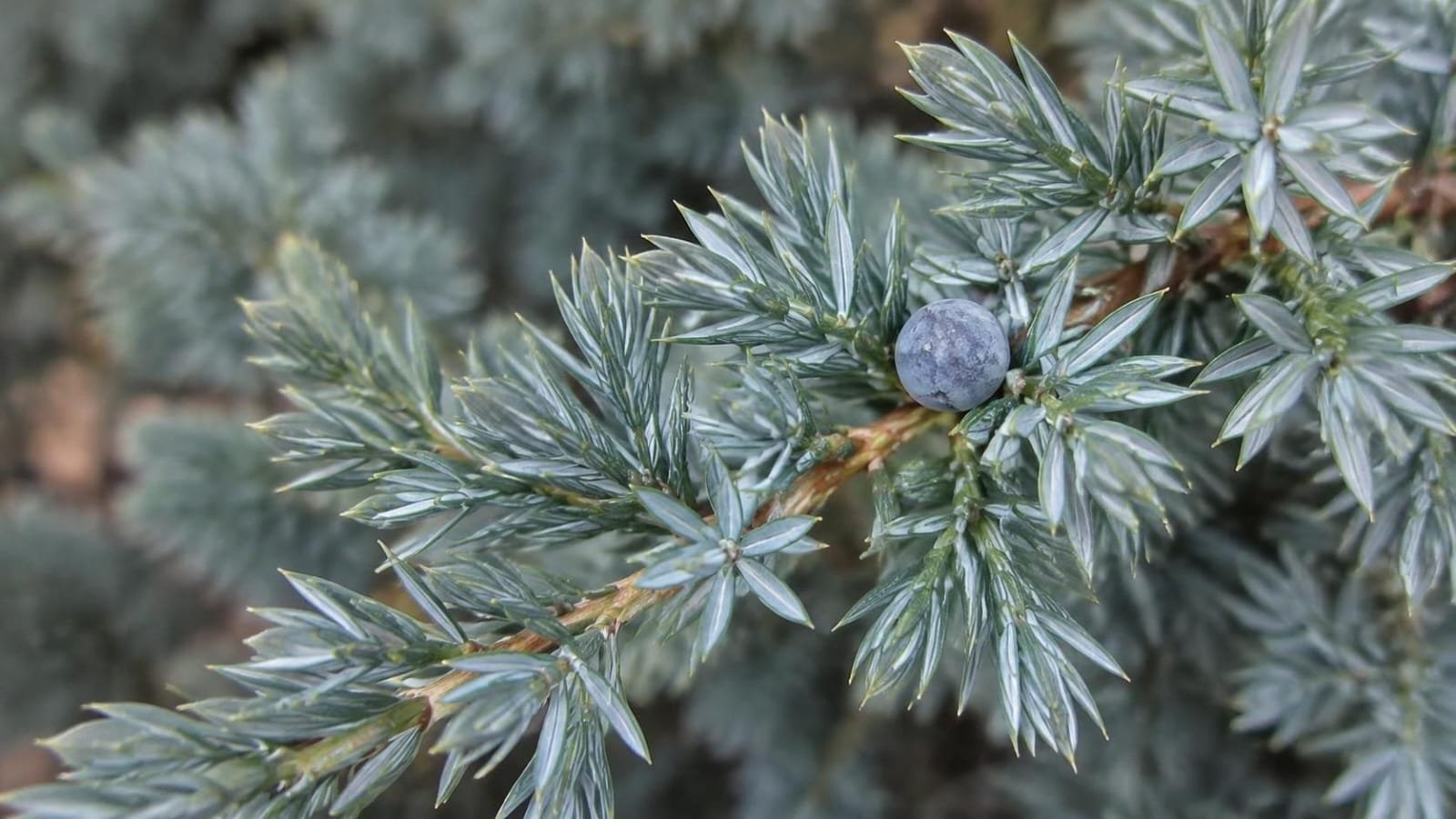
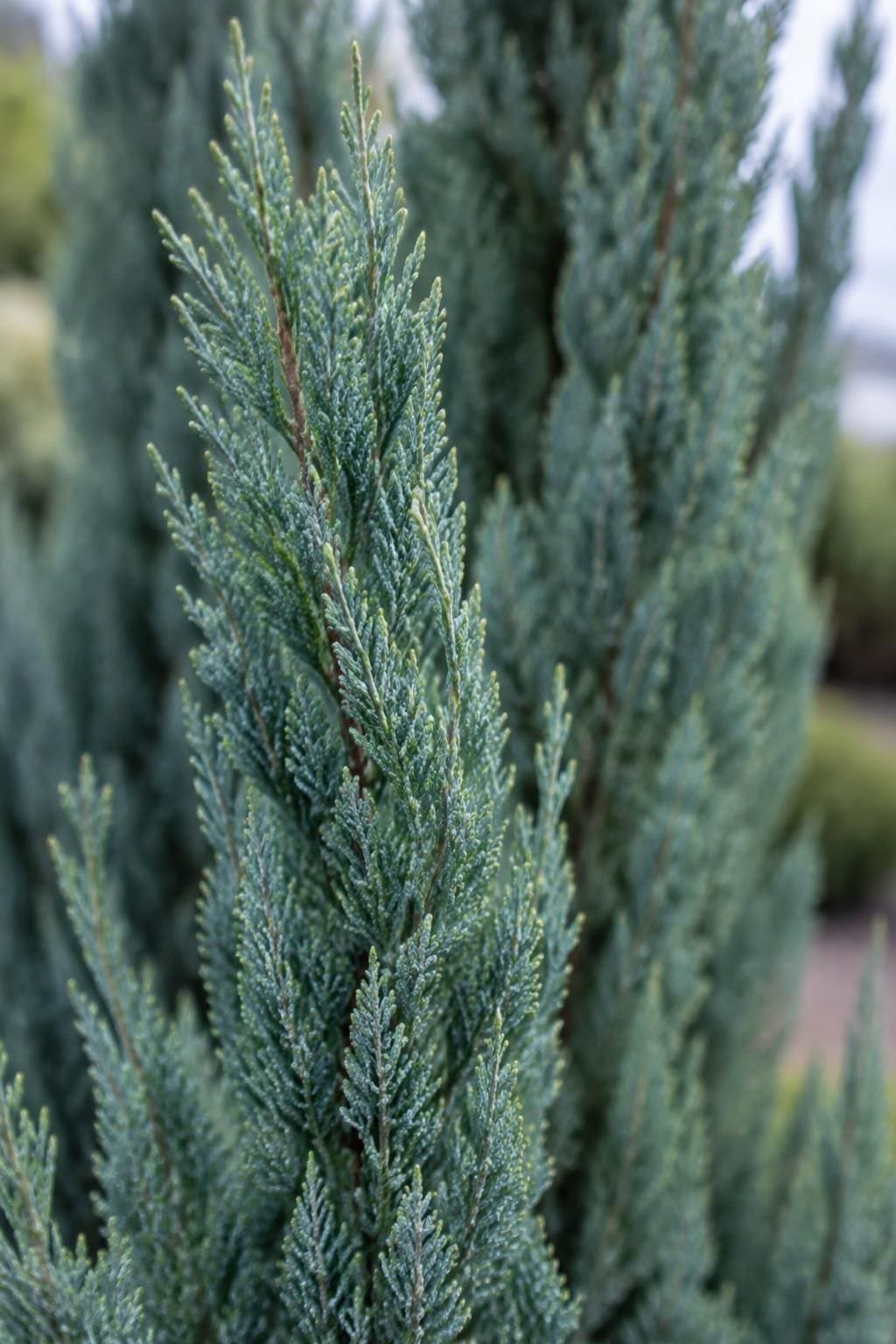
Skyrocket juniper (Juniperus scopulorum ‘Skyrocket’) is a very narrow, columnar evergreen with blue-green foliage. Most listings give 15 to 20 feet tall and 2 to 4 feet wide. Growth is listed as moderate to fast. It needs full sun and well-drained soil, and it doesn’t tolerate wet roots.
What Skyrocket juniper is
Skyrocket is a cultivar of Rocky Mountain juniper. The American Conifer Society profile describes it as a conical, blue-green form and classes it as a large grower, with more than 12 feet of height after ten years.
Skyrocket is often confused with its cousins, and nurseries don’t always agree on the species. Some list it with eastern redcedar instead. Compare traits on the tag, not just the name. The Blue Arrow juniper growth rate guide shows how closely these narrow forms can look on the bench.
How tall and wide Skyrocket gets
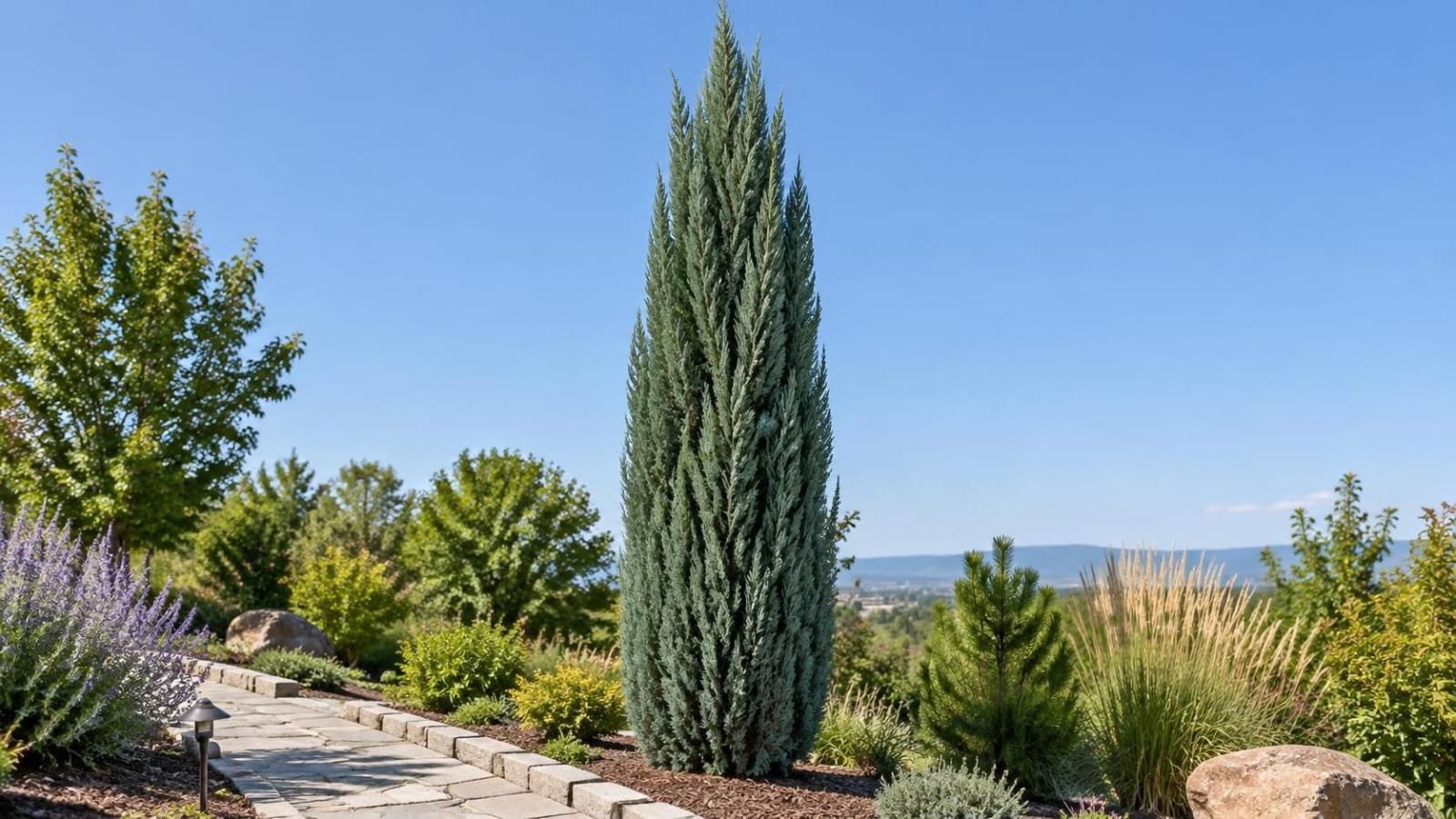
Most nursery listings give a Skyrocket juniper tree 15 to 20 feet tall and 2 to 4 feet wide. That’s a good fit for a narrow bed, a walkway, or a spot beside a door.
The catch is that the width isn’t fixed. Some growers report plants widening over time. Check the mature width on the tag, and plan a little extra room.
Skyrocket juniper growth rate: how fast it grows
Growth rate is one of the most disputed traits. The Conifer Society lists it above 12 inches a year. Some nurseries list 6 to 12 inches, and others call it moderate. Sun, water, and soil all affect the pace.
Drainage matters more than fertilizer when you want steady growth. The NC State Extension profile notes that Rocky Mountain juniper does poorly in wet soil. Skyrocket junipers in soggy ground will stall, no matter how much you feed them.
Expect steady height gain for several years, then a column that keeps widening slowly. If you need a screen within one season, buy a taller starter plant.
Where Skyrocket fits in the landscape
Skyrocket works best as a vertical accent, a narrow screen, or a formal line along a fence. It suits tight spaces where a broad shrub would crowd the path.
For a broader pyramid with silvery foliage, the Moonglow juniper size and care guide covers a different shape. For a taller, narrow eastern redcedar column, the Taylor juniper growth rate guide is a useful comparison.
Spartan is another narrow choice, but it’s a Chinese juniper with its own growth pattern. The Spartan juniper size and care guide covers that plant. For the species overview, the Juniperus virginiana varieties guide is the best place to start.
Planting Skyrocket juniper
Pick a site with full sun. Skyrocket needs direct light to keep its blue color and dense form. Partial shade will thin it out over time.
Soil drainage matters most. If your yard holds water after rain, raise the bed or choose a higher spot. Sandy and alkaline soils are fine for this juniper, as long as they drain well.
Plant at the same depth it grew in the pot. For a row, space plants about their mature width, roughly 2 to 4 feet, and water them in well. Keep the soil evenly moist through the first season, then let rain do most of the work.
Before you buy
Check the mature width on the tag, not only the height. Plan a little extra room, because the width can creep up over time.
Look for healthy, even color and a full base. Ask the nursery how old the plant is and how long it has been in its container.
Caring for Skyrocket juniper
Skyrocket needs little pruning. The NDSU Extension publication notes that Rocky Mountain juniper is very drought tolerant once established, so once it’s established, rain covers most of its needs.
Prune lightly in late spring, after new growth hardens, to keep the outline tidy. Avoid cutting into bare wood, because it may not regrow.
Feed lightly, if at all. Heavy feeding pushes growth faster than the narrow shape can hold. Ice and heavy snow can split the column, so knock snow off as it builds up.
Pests and diseases to watch
Rocky Mountain juniper has few serious insect pests in most gardens. Blights, rust, and root rot cause more trouble. The Clemson disease and pest factsheet covers how to identify tip blights and rust, and it’s worth a read before you spray anything.
Tip blight shows up most in wet springs. Prune out dead tips, and water the soil rather than the foliage.
Cedar-apple rust needs both junipers and apple, crabapple, or hawthorn trees. If you have those trees nearby, watch for orange galls in spring. The NDSU publication notes that rust rarely causes serious damage to this juniper, so one rough year usually isn’t a crisis.
Frequently asked questions
How tall does Skyrocket juniper get?
Most listings show 15 to 20 feet. Plan for the taller number when you choose a spot.
Is Skyrocket juniper fast growing?
Sources disagree. Some call it fast, and others call it moderate. Sun, water, and drainage make the biggest difference.
Can Skyrocket juniper work as a windbreak?
It’s better as a screen or accent. Its narrow form gives less coverage than a broader plant, so a row of several columns works better for wind.
Why is my Skyrocket juniper turning brown?
Start with drainage. Then check the tips for blight and the branches for rust galls. Browning on inner branches can also come from shade or poor air movement.