
Blue Point is a common upright juniper at garden centers. Homeowners like the tidy teardrop shape and blue-green color. Size is where most buyers get surprised. Sources disagree on how big it gets. That gap matters for spacing, screens, and foundation plantings.
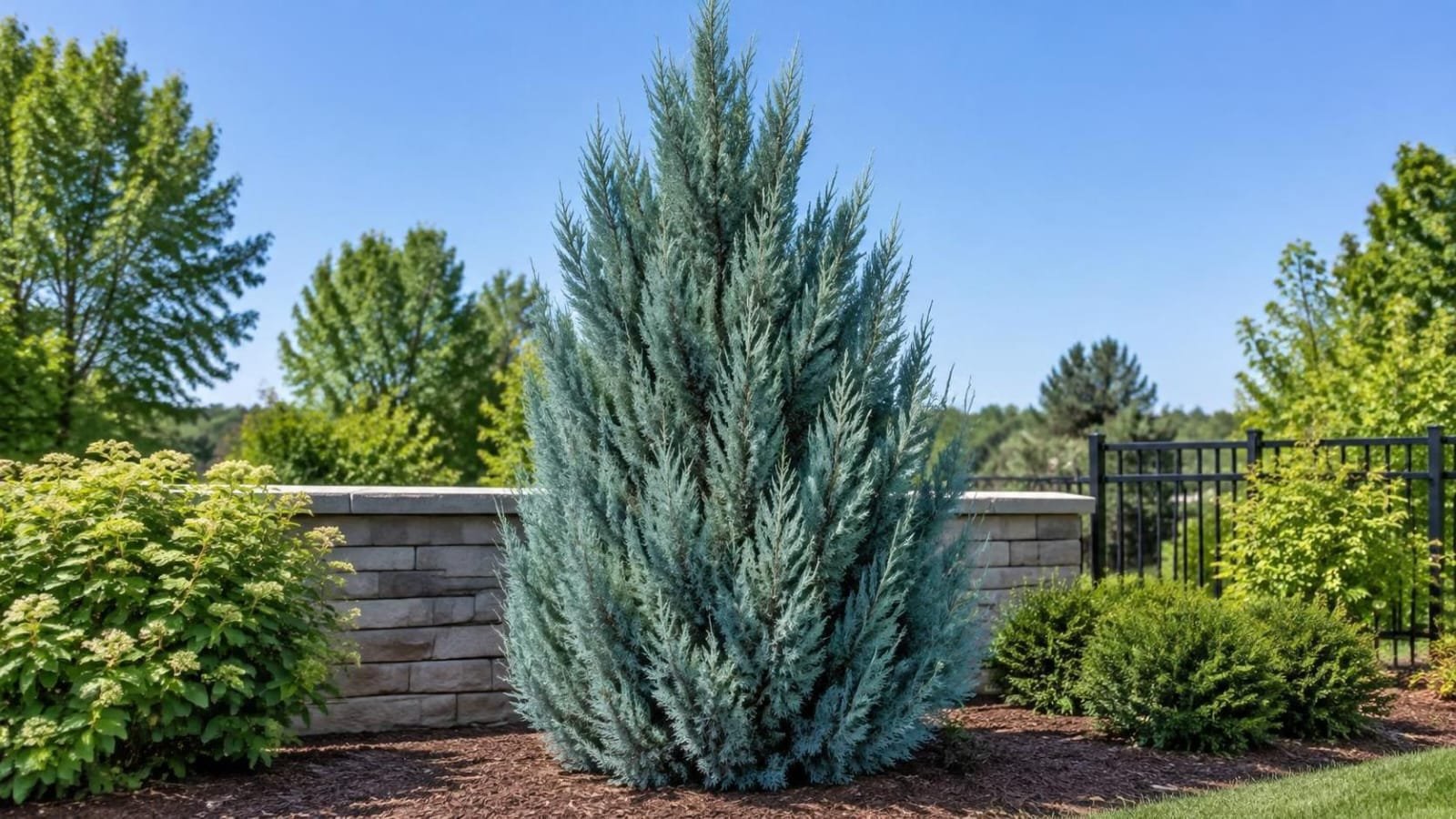
Blue Point juniper (Juniperus chinensis ‘Blue Point’) is a narrow, teardrop-shaped evergreen with blue-green foliage. Mature size depends on the source. The American Conifer Society expects about 4.5 feet after ten years, while many nursery listings show 8 to 14 feet at maturity. Plan for the larger number. It needs full sun and well-drained soil, and it is hardy in zones 4 to 9.
What Blue Point juniper is
Blue Point is a cultivar of Chinese juniper, Juniperus chinensis. The species is large in its native range. The NC State Extension describes it as a bushy conical tree that can reach 50 to 60 feet, and it notes that cultivars range from groundcovers to tall trees. That is why the name on the tag matters.
Blue Point started as a seedling selection, and the species itself comes from eastern Asia. The American Conifer Society says it was selected and introduced in the early 1970s by Monrovia Nursery in Visalia, California. The plant is common in the trade, so you’ll see it in many yards.
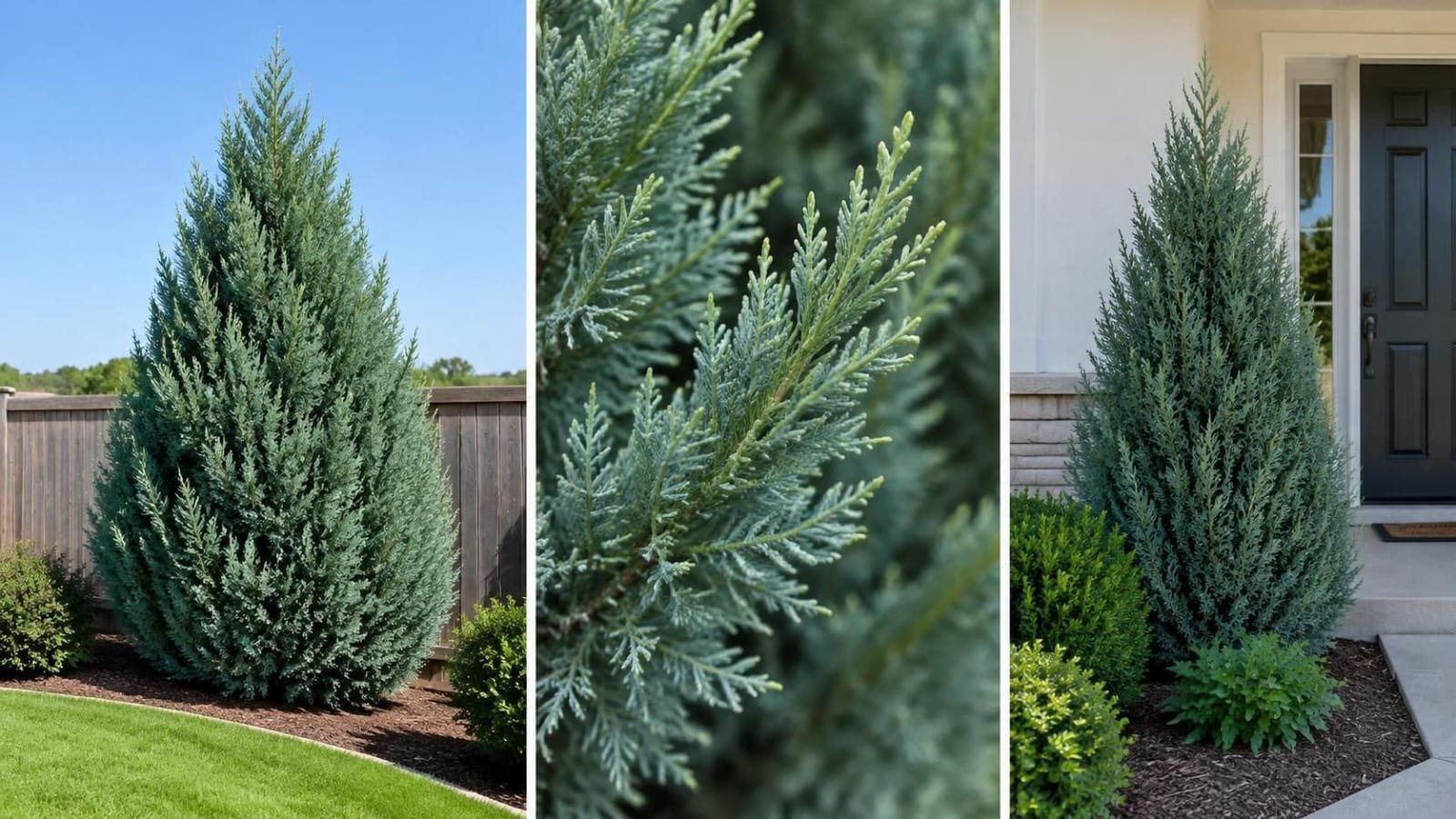
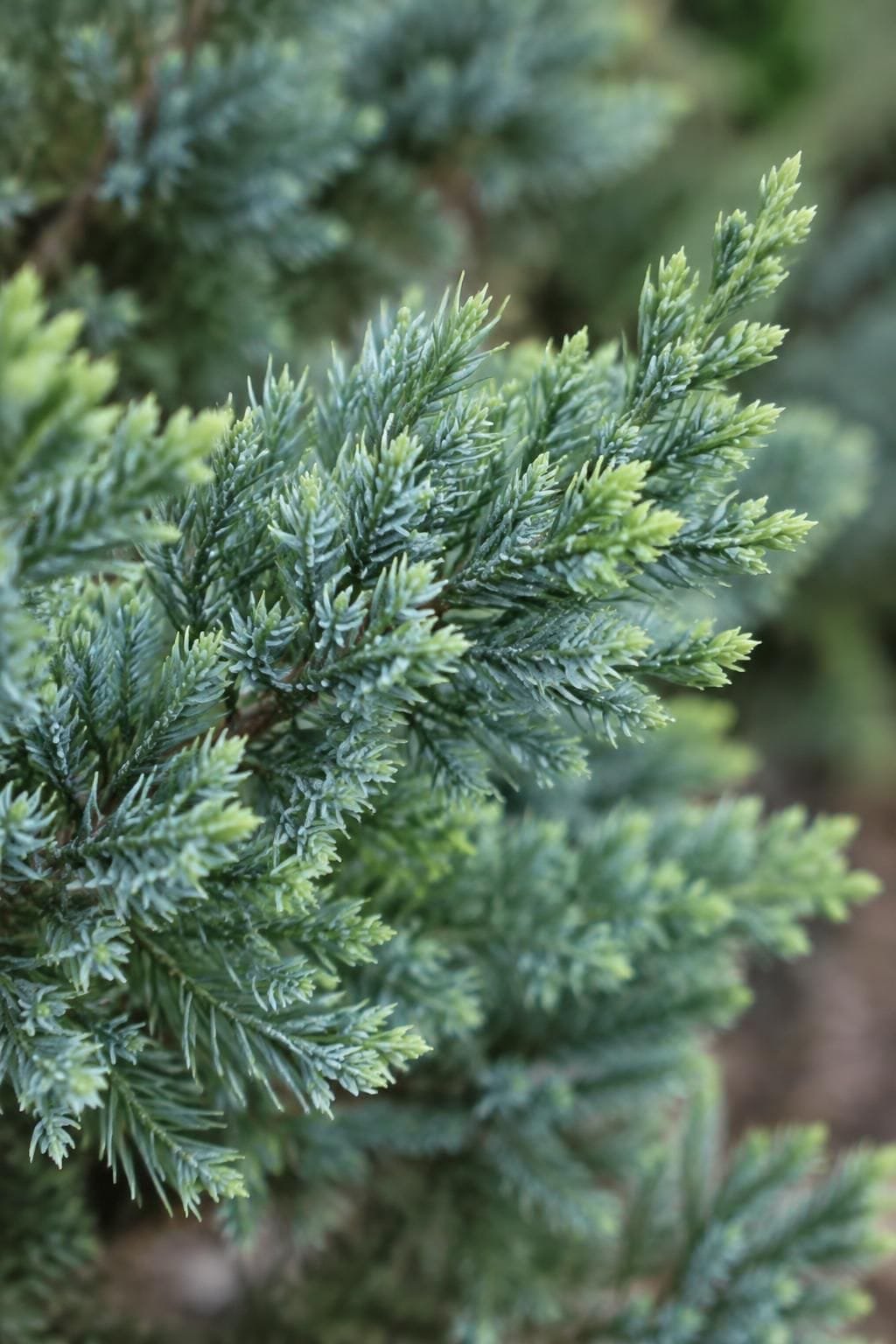
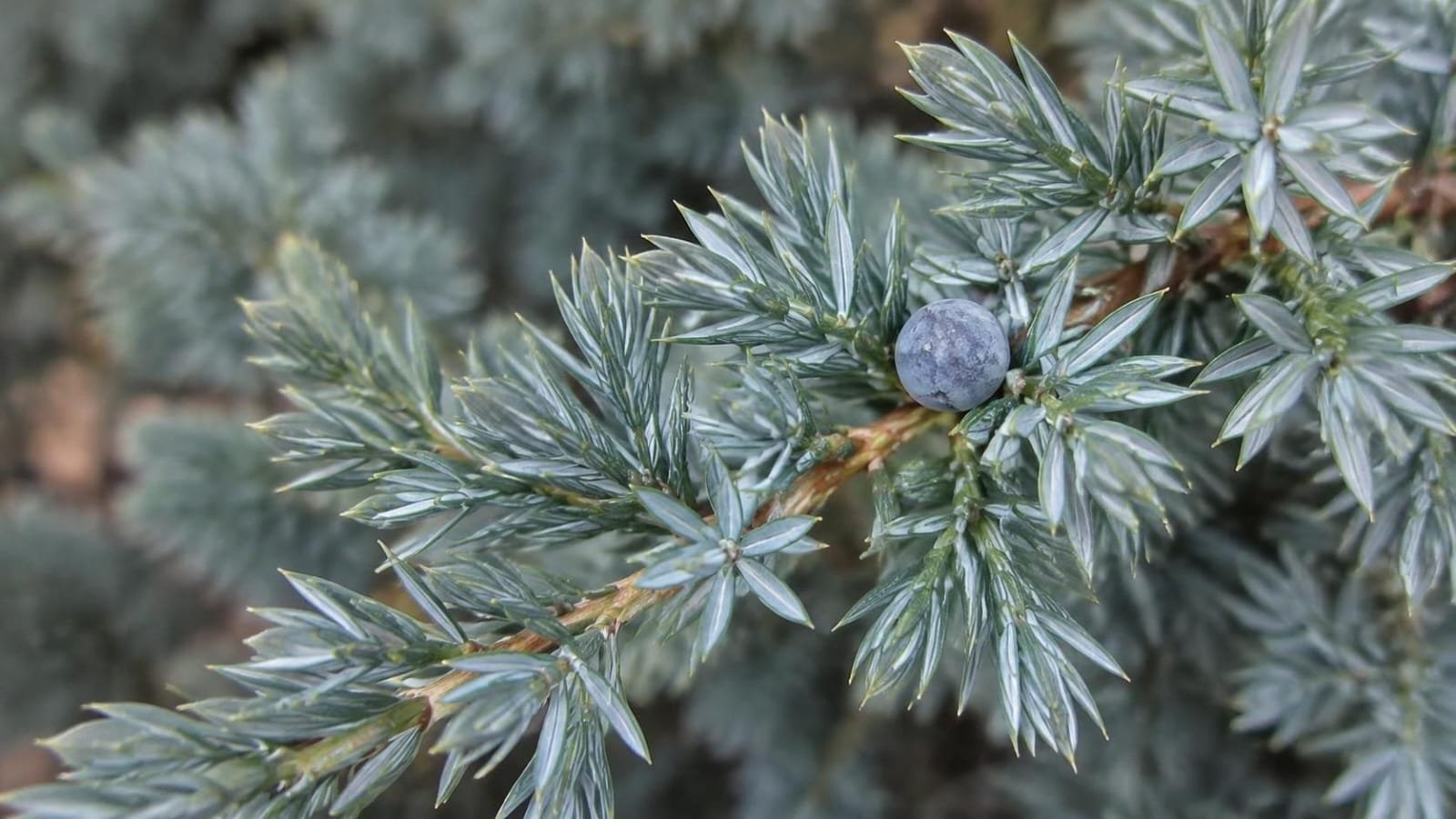
Blue Point is easy to spot once you know the traits. Young growth is dense and prickly. Mature growth has scale-like sprays. Color runs from blue-green to blue-gray, depending on the plant and season. Females make small, bluish, berry-like cones. The tight, upright form narrows toward the top, giving the teardrop look.
How big Blue Point juniper gets
Size is the hard part, and the sources do not agree. The table compares the main numbers. Use it to choose which figure to plan around.
| Source type | Mature height | Mature width | Growth note |
|---|---|---|---|
| Cultivar profile, after 10 years | About 4.5 feet | About 3 feet | 4 to 6 inches a year |
| Extension factsheet | About 12 feet | Not listed | Not listed |
| Garden-center listings | 8 to 12 feet | 6 to 8 feet | Slow |
| Large-nursery listings | 12 to 14 feet | 6 to 8 feet | Moderate |
| Small-form nursery listing | 2 to 3 feet | 2 to 3 feet | Slow to moderate |
Read the table as a range, not a promise. The ten-year profile describes a young plant. The extension and nursery figures describe a plant near mature size, which is much taller. Check the tag and the source before you set spacing.
For planning, aim for 10 to 14 feet tall and 6 to 8 feet wide. Give the plant room to reach that size. Plan the planting bed before you buy, so you know how much space is really available. If you have less room, choose a smaller cultivar or a different juniper.
How fast Blue Point juniper grows
Growth rate is also a point of disagreement. The American Conifer Society estimates 4 to 6 inches a year for a young plant. Nursery listings call the growth moderate in most cases, and some call it slow. NC State Extension lists the species at a medium rate.
Expect a few inches to about a foot a year. Growth slows as the plant fills out. The first few years look modest, and then the change shows from one season to the next. A young plant in a small pot can look sparse for a while. That’s normal, so don’t mistake slow early growth for a problem.
Several things affect speed. Full sun and good drainage support steady growth. Wet soil slows the plant down, and heavy feeding pushes growth faster than the shape can hold.
Landscape uses for Blue Point juniper
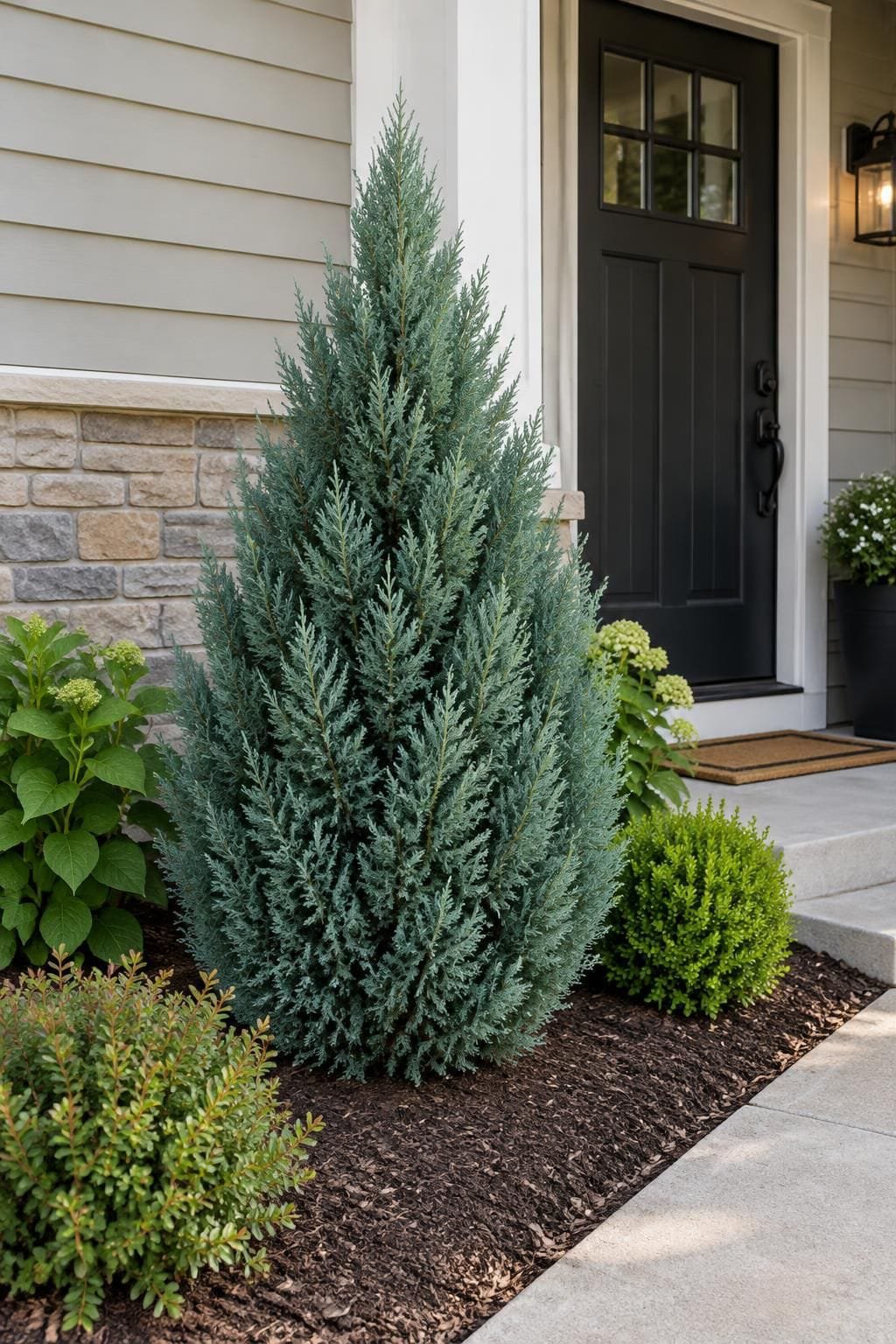
Blue Point works best as a vertical accent. It fits beside a door, in a corner of a foundation planting, or on either side of a walkway. On a lawn, the blue-green color stands out against grass, so it works well as a specimen.
Blue Point also works in a large container on a patio. The pot needs drainage holes and enough room for the root system, and the plant will need repotting as it fills the container.
It also works as a screen or hedge. Nursery listings describe Blue Point for privacy screens and windbreaks, and the Clemson Extension factsheet on large junipers covers how large junipers serve those roles. Space plants at about their mature width so the screen closes without crowding.
For another upright option, compare the Spartan Juniper guide. It is a Chinese juniper too, but it grows taller and narrower. The Blue Arrow Juniper guide and the Skyrocket Juniper guide are also narrow upright options worth comparing, and each has its own guide.
For a taller accent with a different look, see the Moonglow Juniper guide and the Taylor Juniper guide. For a low border or rock garden plant, the Blue Star Juniper guide is a better fit than Blue Point.
Planting Blue Point juniper
Pick a site with full sun. NC State Extension lists full sun as the best light and says the species accepts partial shade. Shaded plants grow thinner. Aim for six or more hours of direct light a day.
Drainage matters more than soil type. Blue Point handles acid to alkaline soil, as long as the ground stays moderately moist and drains well. It also tolerates rocky ground once established. Avoid low spots and heavy clay that stays wet. Raised beds and gentle slopes shed extra water.
Plant at the same depth the plant grew in its pot. Space plants about their mature width. For a hedge, that usually means 6 to 8 feet apart. Tighter spacing fills in faster but crowds as the plants widen.
Water new plants through the first season. Water deeply, then let the top few inches of soil dry before you water again. Avoid overhead watering in summer. Wet foliage invites fungal problems.
Before you buy
Read the tag for the expected width, not only the height. Compare the plant with a photo of a mature specimen. Look for dense, even color and no brown tips inside the plant.
Ask whether the plant was grown in the ground or in a container. A root-bound plant takes longer to settle, so check the roots when you can.
Care after planting
Blue Point needs little pruning. Junipers don’t tolerate severe cuts, and they shouldn’t be cut back into needle-less wood. Shape lightly in spring, and remove dead or damaged branches as you see them.
If you want a tighter outline, trim only the new growth. Avoid cutting into old, bare wood, because it may not regrow.
Feed lightly, if at all. Established junipers in the ground rarely need fertilizer. If growth looks weak, use a light, balanced feed in early spring.
Winter wind can burn the foliage on exposed sites. Choose a sheltered spot when you can, and water well before the ground freezes. Mulch the root zone two to three inches deep, and keep the mulch a few inches off the trunk.
Pests and diseases to watch
Blue Point shares the common juniper problems. It is susceptible to cedar-apple rust. The fungus needs both junipers and apple, crabapple, or hawthorn trees to finish its life cycle. Galls can reach about 2 inches and release orange spore horns in wet spring weather.
Blight is the next concern. Phomopsis tip blight kills new growth and turns branch tips reddish-brown. Phytophthora root rot follows wet, poorly drained soil. The Clemson disease and pest guide covers both diseases in detail. Both are easier to prevent than to treat.
Insects to watch for include bagworms, spruce spider mites, juniper scale, and twig borers. Check the plant every few weeks in spring and summer, especially on the undersides of the sprays. Watch closely after a wet spring, because blight and rust tend to show up most when conditions stay warm and damp.
Several Chinese juniper cultivars are listed as resistant to Phomopsis and cedar rusts, including Keteleeri and Pfitzeriana. Blue Point is not on that list, so don’t assume it resists these diseases.
Frequently asked questions
How big does Blue Point juniper get?
Plan for 10 to 14 feet tall and 6 to 8 feet wide. Some ten-year profiles show a much smaller plant, but mature listings and extension figures are larger.
Is Blue Point juniper a dwarf?
Some sources classify it as a dwarf. In most landscapes it grows into a tall, narrow shrub or small tree, so plan for full size. If you need a true dwarf for a small bed, choose a smaller cultivar.
How fast does Blue Point juniper grow?
Most listings call the growth moderate. Expect a few inches to about a foot a year, slowing as the plant fills out.
Does Blue Point juniper need full sun?
Full sun is the target. It accepts partial shade, but the plant gets thinner and less dense in shade.
Is Blue Point juniper deer resistant?
Nursery listings call it deer resistant. Extension profiles say Chinese junipers are seldom damaged by deer. No plant is deer proof, especially in a hard winter.
Can Blue Point juniper be used as a hedge?
Yes, if you space it for its mature width and give it room to grow. It holds its shape with light trimming, so you rarely need heavy shearing.
Can I grow Blue Point juniper in a container?
Yes. Many nurseries sell it as a container plant. Use a large pot with drainage holes and a gritty mix, and expect to repot as the root system fills the container.
Why is my Blue Point juniper turning brown?
Start with the tips. Check for Phomopsis blight, galls, and pests. Then check drainage. Browning on inner branches can also come from shade or poor air movement. If the browning spreads, a local extension office can test a sample.
One thought on “Blue Point Juniper: Size, Growth Rate, Care, and Landscape Uses”