
Yellow zucchini usually comes down to one of four things: it got too big, it never got pollinated, it has blossom end rot, or a virus. Check the size, the flower end, and the leaves, and you’ll usually know which one.
If your zucchini is turning yellow, pick it up before you change anything about watering or feeding. Look at three things: the size, the shape, and the flower end. A big, firm zucchini with dull yellow skin is probably just overripe. A small one that yellows near the blossom end and then shrivels usually didn’t get pollinated. A dark, water-soaked spot at that same end is more likely blossom end rot. And if the leaves look mottled and the fruit is lumpy or twisted, think virus. Each one has a different fix, so figure out which you have first.
Is the zucchini simply overripe?
Most of us grab the watering can or the fertilizer first. Size is the faster clue. Zucchini tastes best around 6 to 8 inches long. Past that, it starts to change. North Carolina State Extension says the seeds get bigger and firmer as squash matures, and quality drops with them. Past about eight to ten inches, the fruit usually gets tough and makes more seeds.
On a lot of varieties, an older fruit loses its shine and starts to look dull or yellowish. So a big yellow one is usually just old.
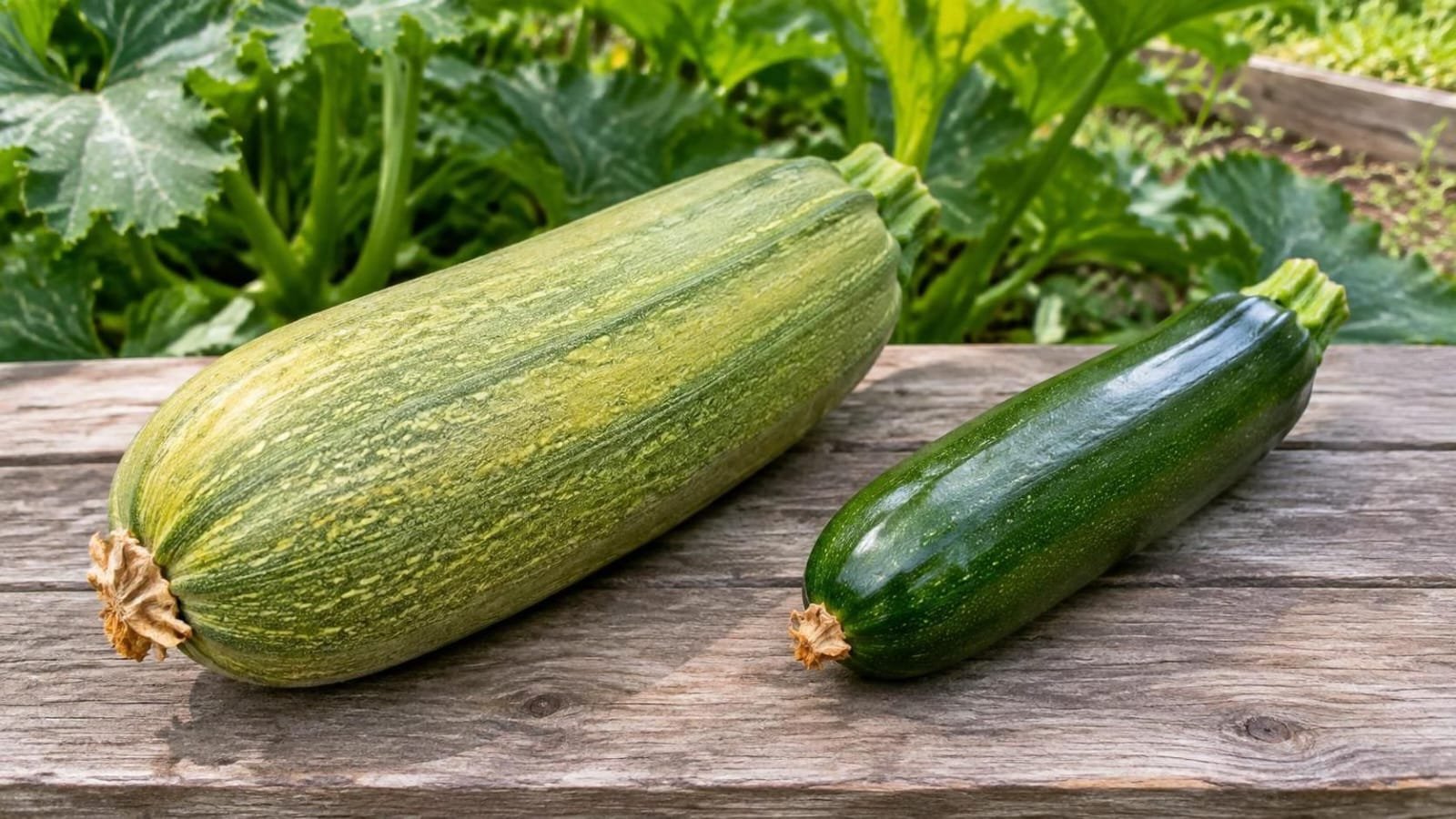
Some zucchini are yellow to begin with. Check the seed packet. If it’s a yellow variety and you picked it at the right size, the color is just the variety.
Leaving a big fruit on the vine costs you more than flavor. Extension specialists have noted that seeds developing in an oversized fruit can slow or stop the plant from setting new fruit. So pick early and often. Check the plants every day or two during peak season. If you miss one, shred it into bread or muffins.
Why does a small zucchini turn yellow and drop?
Zucchini makes male and female flowers on the same plant. Only the female flowers can turn into fruit. You can tell them apart by the base. A female flower has a tiny zucchini sitting right behind the petals. A male flower sits on a plain, skinny stem. Bees usually move pollen from one to the other. When that doesn’t happen, the young fruit quits growing.
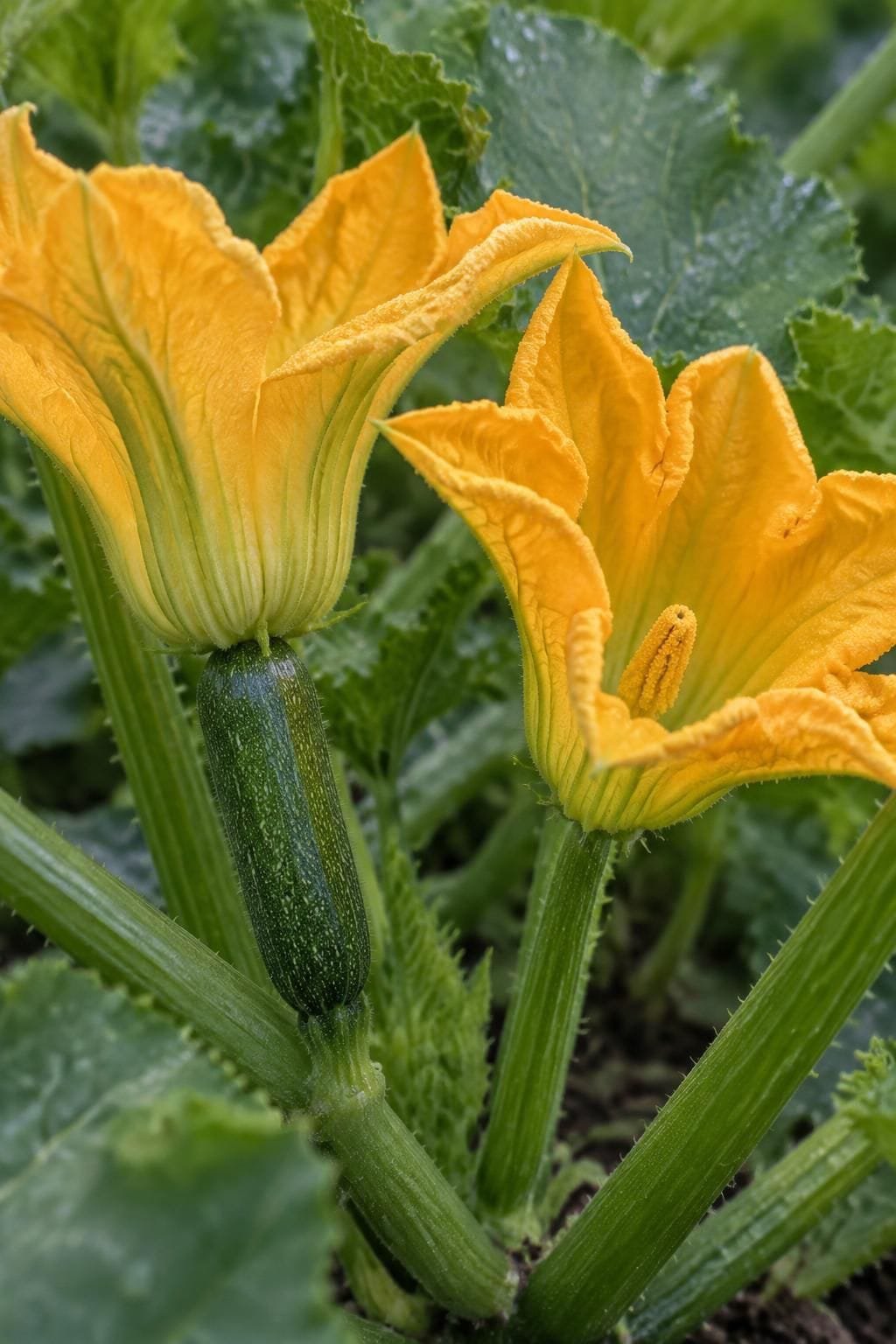
An unpollinated fruit usually stays small, may start rotting at the blossom end, then turns yellow and drops off. Washington State University Extension describes this pattern. Purdue Extension gives a simple test: if the male flowers drop, that’s normal. If the female flowers are dropping, something is blocking pollination.
Most people blame the weather or the soil first. Heat can be part of it, though. Ask Extension explains that pollen dies off fast once temps climb above about 85°F. A hot spell can cut fruit set, even with bees around. Early in the season, plants often make a lot of males and few females. Later it can flip. If your plant only makes male flowers, check out zucchini that only produces male flowers.
Hand-pollinating is easy and it works. Go out early in the morning. Pick a male flower, peel back the petals, and dab the pollen into the center of an open female flower. One male can cover several females. Our guide to hand-pollinating zucchini has the full steps, and male vs female zucchini flowers shows you how to tell them apart.
Yellow zucchini with blossom end rot
Blossom end rot is easy to mistake for plain yellowing, since it starts small. On a young fruit, look for a water-soaked spot on the far end, opposite the stem. It looks a bit like a bruise. NC State Extension describes that starting spot, which can spread and break down the tissue. That yellowing you spotted might be the early stage of the same problem.
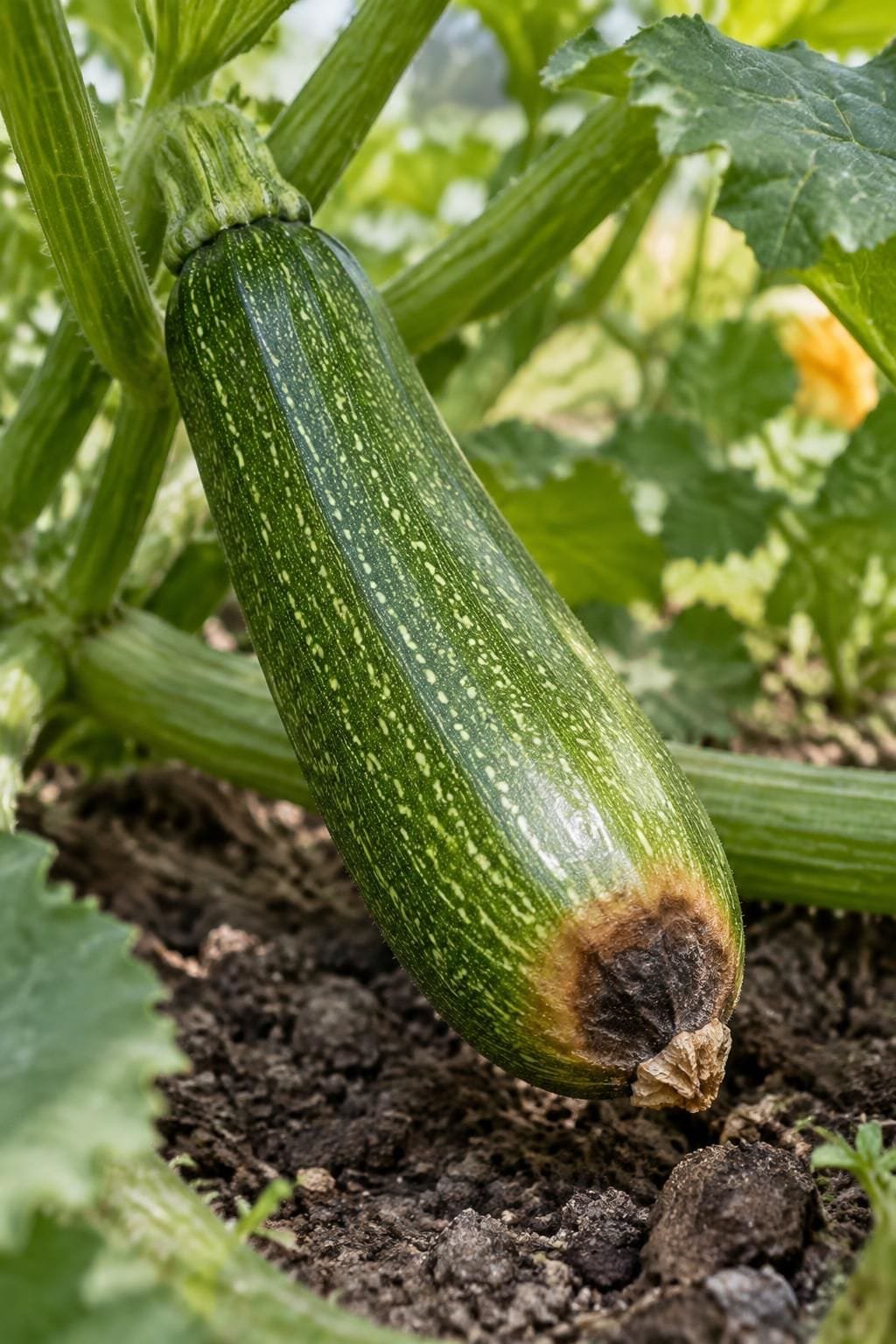
It’s not a disease, despite the name. University of Idaho Extension calls it a physiological disorder tied to calcium, not a pathogen. In Idaho, inconsistent irrigation is the most common cause.
Here’s what surprises a lot of people: the soil often has plenty of calcium. The problem is getting it to the fruit. Drought, soggy soil that damages roots, and heavy nitrogen all get in the way. Nitrogen pushes leafy growth, and those leaves compete with the fruit for calcium. So dumping on more fertilizer or calcium usually doesn’t help.
Start with the watering. Keep the soil evenly moist. Don’t let it swing from soaked to bone dry, and don’t drown the roots either. Hold off on heavy nitrogen while you sort this out. Pull off the damaged fruit. Ask Extension notes that once the cause is fixed, the healthy fruit may still have time to ripen. Not sure if your soil is short on calcium or the pH is off? A soil test through your local extension office will tell you. More on this disorder is in our guide to zucchini fruits rotting at the blossom end.
Yellow mottled leaves and misshapen zucchini
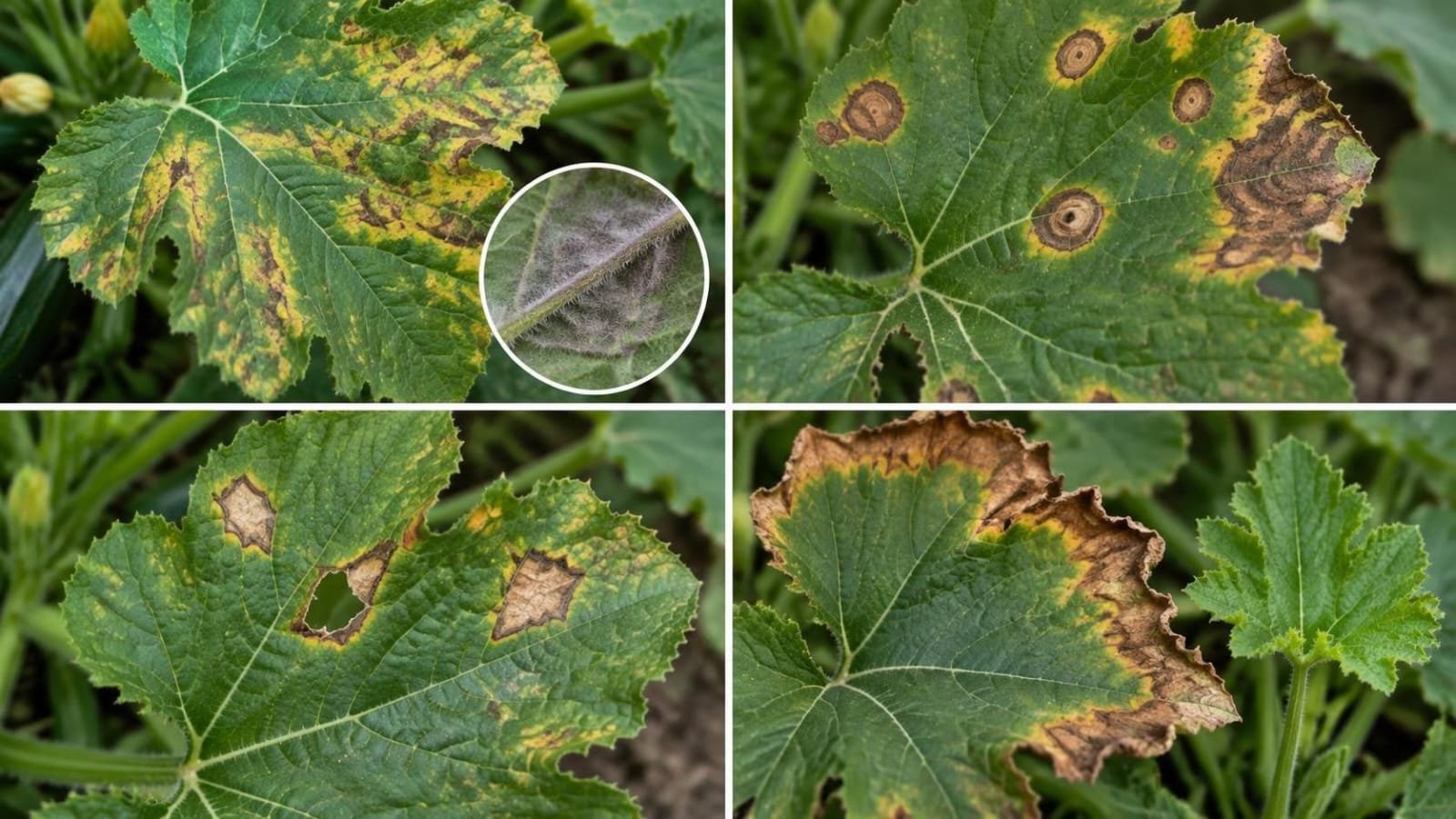
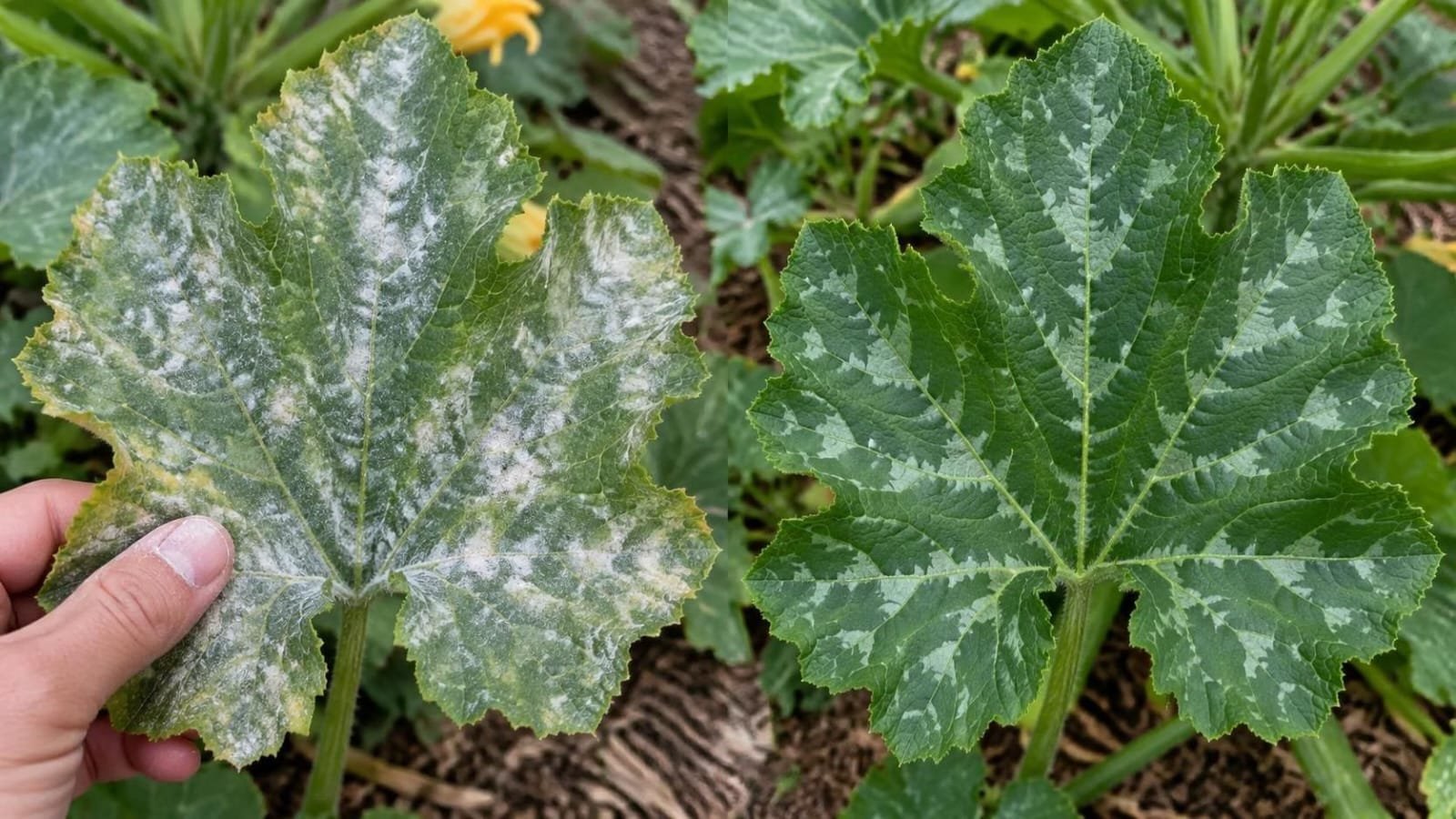
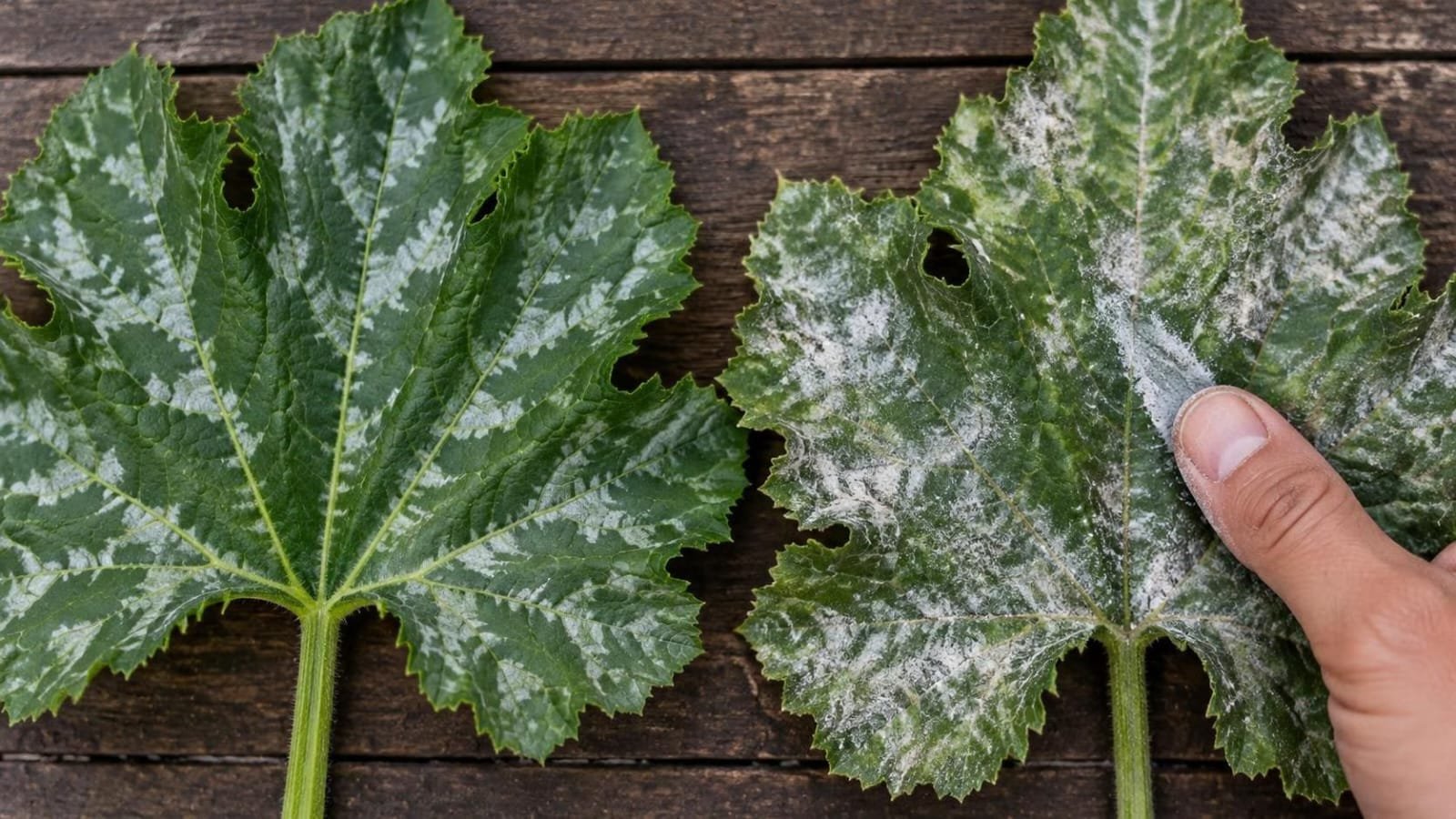
Mottled leaves with lumpy or twisted fruit can mean a virus, often spread by aphids. The leaf symptoms and the control steps are explained in Why Are My Zucchini Leaves Turning Yellow.
Yellow zucchini causes at a glance
Seeing more than one symptom? This table is a quick way to sort them out. Think of it as a starting point.
| What you see | Most likely cause | Clue to check |
|---|---|---|
| Large, firm fruit with a dull or yellowish skin | Overripe fruit | Longer than about 8 to 10 inches, tough skin, firm seeds |
| Small fruit that yellows near the flower end, then shrivels | Poor pollination | Withered flower at the tip, few bees, a recent hot spell, or only male flowers on the plant |
| Water-soaked, then darkening spot at the blossom end | Blossom end rot | Spot on the end opposite the stem, and watering that has swung between very wet and very dry |
| Mottled leaves with lumpy or twisted fruit | Virus, often spread by aphids | Mottling pattern on the leaves, aphids on new growth, misshapen fruit |
Can yellow zucchini recover?
Yellow fruit won’t turn green again, so don’t wait on it. A shriveled fruit from poor pollination won’t come back. A firm, unrotted fruit that just got too big is fine for bread or muffins, though. Once pollination improves, the plant will set new fruit from fresh flowers. Blossom end rot is similar. The damaged spot stays damaged. But once watering evens out, the healthy fruit can usually keep going.
Where a description runs out
A description or even a good photo can’t settle every case. Blossom end rot and early heat or insect damage can look alike. A virus can mimic a nutrient problem or mildew. And a plant can have two problems at once. When you’re stuck, send a sample to your county extension office instead of guessing. That’s especially smart before you spend money on a treatment.
Next time you spot a yellow zucchini, go in order. Measure the fruit. Check the flower end. Then look at the leaves. Doing it in that order keeps you from fixing the wrong problem.
One thought on “Why Is My Zucchini Turning Yellow? The Usual Causes and How to Tell Them Apart”