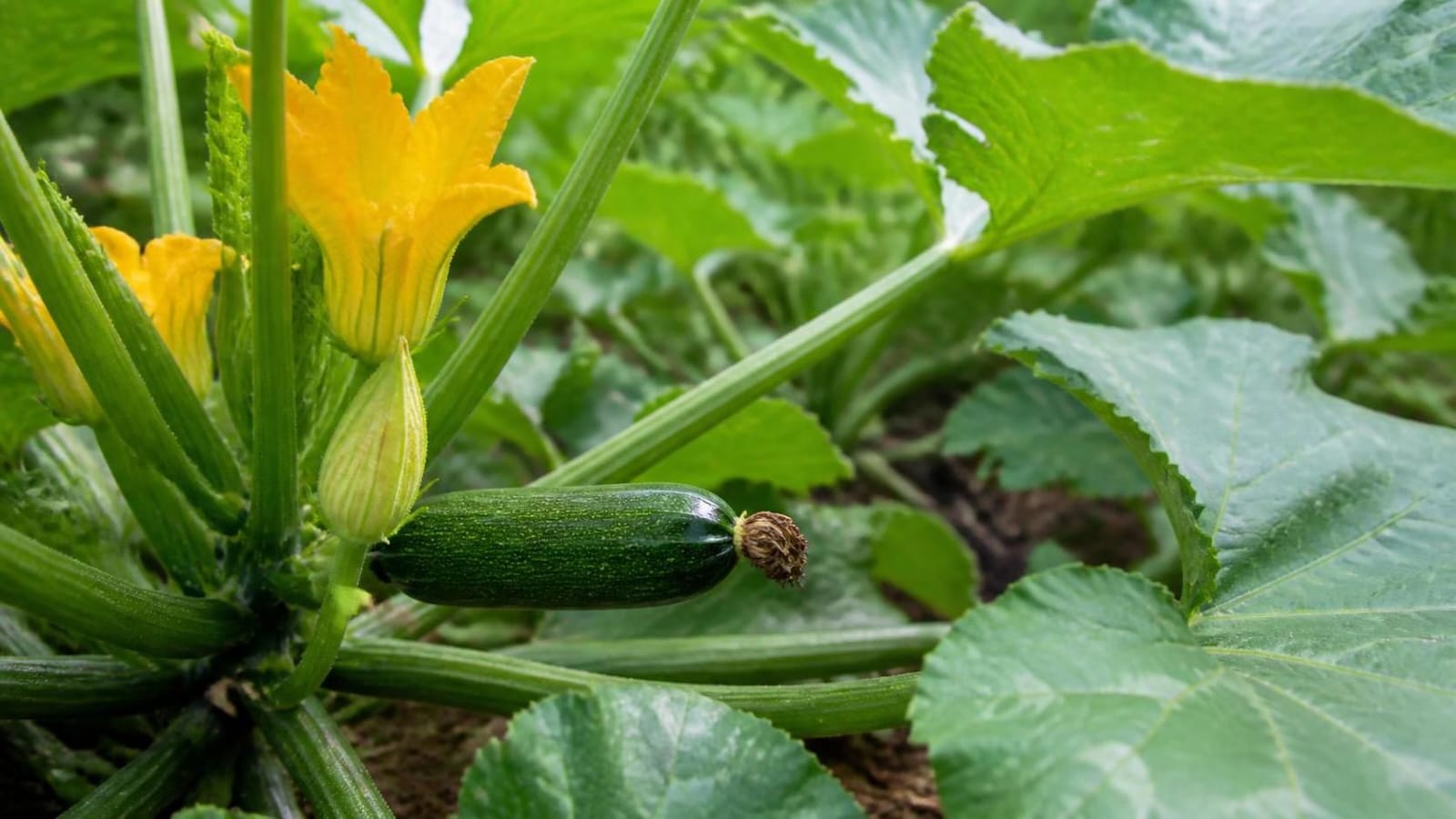
Quick answer: Baby zucchini that rot from the tip while the flowers look normal often point to one of three causes: poor pollination, blossom end rot, or Choanephora wet rot. Look at the rotted end. A yellow, shriveled tip is more typical of poor pollination, a dry, dark, sunken patch suggests blossom end rot, and a wet, fuzzy tip suggests fungal rot. Appearance alone does not always confirm the cause, so compare the symptoms carefully. Hand-pollinate in the morning, water evenly, and remove affected fruit.
The plant is green, the yellow flowers keep opening, and small zucchini are forming right on schedule. Then the tiny fruits darken at the tip and rot before they ever reach a usable size.
Because the plant itself looks fine, it is easy to blame the soil or a disease. In practice the three usual causes look similar at first glance, and each calls for a different fix. This guide shows how to tell them apart before you change anything.
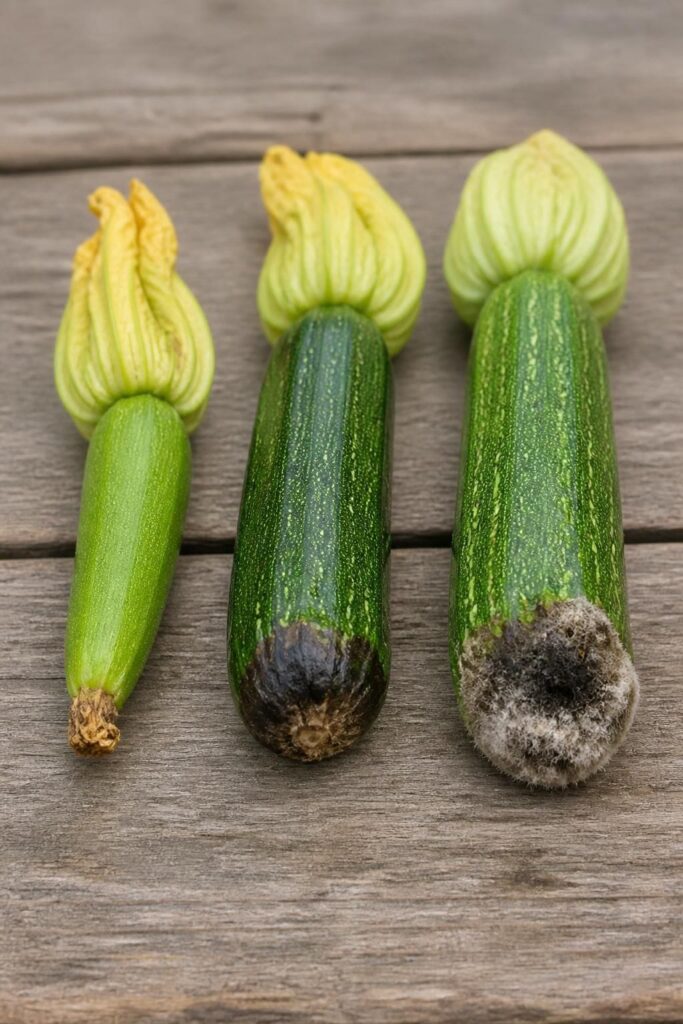
Look at the rotted end before you decide
Compare the affected fruit with the table below. Check the tip itself, not only the overall color of the fruit.
| What you see at the blossom end | Likely cause | How to confirm |
|---|---|---|
| The tiny fruit yellows, shrivels and dies soon after the flower fades | Poor pollination | No sunken lesion and no mold. The fruit simply stops growing. Common on the first fruit set of the season. |
| A dark, sunken, dry and leathery patch on a fruit that is otherwise firm | Blossom end rot | The spot may spread until the whole bottom of the fruit is dark and shrunken. Think back to recent dry spells or uneven watering. |
| A soft, wet, mushy tip with fuzzy gray or purplish-black growth, often starting on the old flower | Choanephora wet rot | Fuzzy growth is the giveaway. It follows warm, humid or rainy weather. |
| Soft water-soaked fruit lesions that spread, white fungal growth, or a plant that is collapsing | A more serious rot such as Phytophthora blight | Take a photo and ask your local extension office, since the plant itself is affected. |
Appearance alone cannot always settle it, and two causes can occur together. University of Maryland Extension lists blossom end rot and Choanephora rot as the two common fruit problems of garden squash, which is why the fuzzy growth test is worth doing first.
Cause 1: Poor pollination
For squash fruit to develop, pollinators must carry pollen from the male flowers to the female flowers. Iowa State University Extension explains that when a female flower is not pollinated properly, the fruit begins to grow and then shrivels and dies. It adds that bees are less active in rainy weather, so a wet spell can cause exactly this.
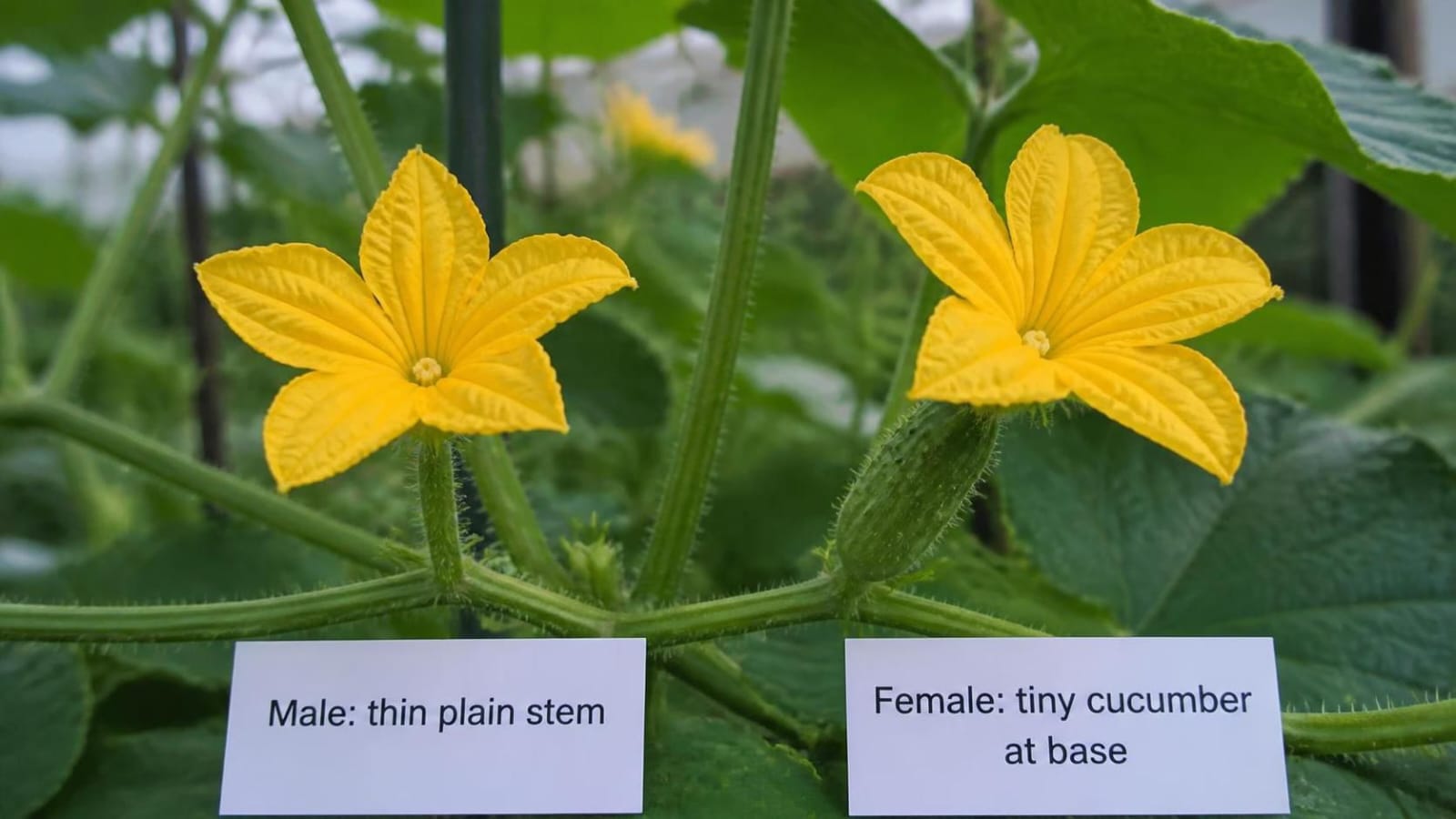
Timing matters too. Male flowers usually open first, and female flowers can follow a week or more later. Female flowers are recognizable by the tiny fruit at their base. Cucumbers follow the same flowering pattern, and this guide to cucumber plants with many male flowers and few female flowers looks at it from the cucumber side.
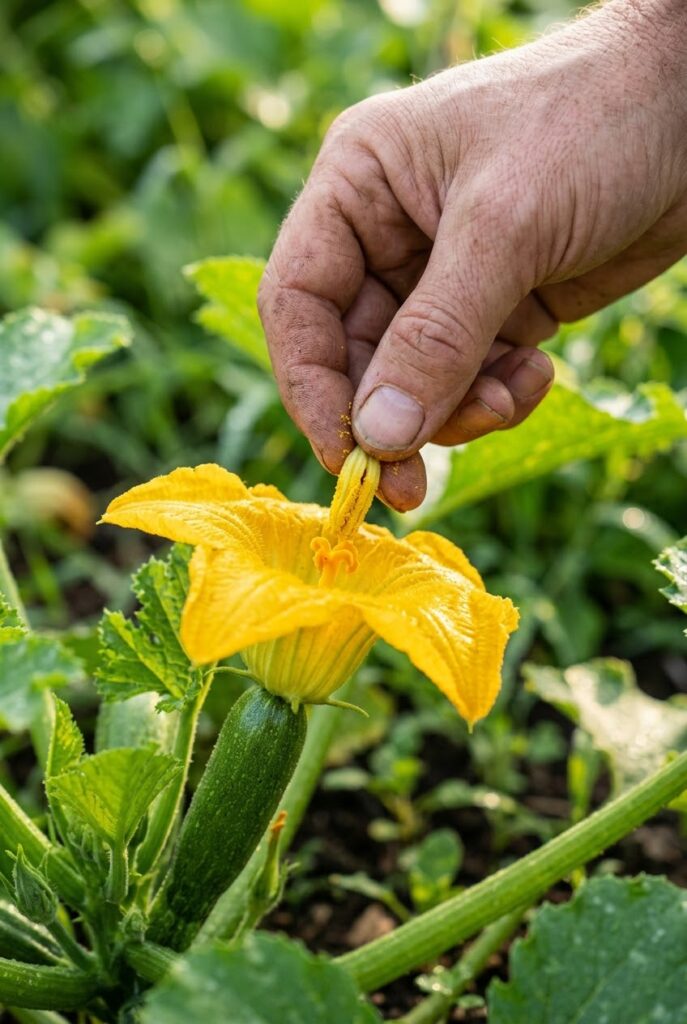
How to hand-pollinate
- Go out early in the morning. Squash flowers open early and last only one day, as UNH Extension notes.
- Pick a fully open male flower. It has a straight, thin stem with no swelling behind the bloom. Remove its petals.
- Touch the pollen to the female flower. Dab or roll it onto the stigma in the center of an open female flower. A small, soft paintbrush also works.
Cause 2: Blossom end rot
Blossom end rot is a physiological disorder, not an infection. It develops when the growing fruit does not receive enough calcium. That is often because water stress interferes with how calcium reaches the fruit, so the soil itself may contain plenty. Iowa State Extension points to fluctuating soil moisture from overwatering or drought, heavy nitrogen fertilizer and root damage from cultivation as conditions that favor it, and notes that adding calcium to the soil is generally ineffective. The Oregon State University Pacific Northwest Plant Disease Handbook adds that drought, salty soil and high temperatures promote it, especially when drought stress hits suddenly.
In practice, steady moisture is the fix that works for most gardeners. Water at the base on a regular schedule, and mulch to hold moisture between waterings. Get a soil test before adding any calcium, and amend the soil only if the results show a real shortage, following the test recommendations. Remove affected fruit, since it will not recover and takes resources from healthy ones.
Cause 3: Choanephora wet rot
This fungal disease is most common on summer squash in wet conditions. University of Minnesota Extension describes it infecting flowers or fruit during prolonged wet periods and leaving infected fruit mushy, brown and covered in fuzzy black growth. The same source points out that rotting of small summer squash fruit is often poor pollination instead, especially in the first round of fruit, so check for the fuzzy growth before assuming a disease.
Because the fungus tends to infect individual fruit, remove infected ones immediately. University of Maryland Extension also advises removing blossoms that stick to young fruit and discarding infected blossoms and fruit, since old flowers are where the fuzzy growth first appears. UMD adds that the fungus overwinters on dead plants and in the soil, so clear plant debris at season’s end.
What not to do
- Do not add calcium or fertilizer by guesswork. Blossom end rot is mostly about water movement, and heavy nitrogen can make it worse.
- Do not treat every rotting tip as a fungus. If there is no fuzzy growth and the fruit simply shriveled, pollination is the likelier cause.
- Do not water overhead in humid weather. Wet flowers and foliage favor Choanephora rot.
- Do not leave rotted fruit on the plant. It will not recover, and infected fruit can spread fungal rot.
Preventing it next season
- Water evenly. Aim for steady moisture through the fruiting period instead of cycles of drought and soaking. Oregon State’s handbook suggests controlled watering and mulching for home gardeners.
- Give the early flush a hand. The first fruit set is the most likely to fail from poor pollination, so hand-pollinate in the morning while the first female flowers are open.
- Keep flowers and fruit dry. Water at the base and space plants so air can dry the flowers and fruit quickly.
- Test your soil. A test shows whether calcium or pH is a real issue, so you only fix what needs fixing.
- Remove spent blossoms stuck to young fruit. This is where wet rot tends to begin.
- Clear the bed at the end of the season. Choanephora overwinters on dead plants and in soil.
Common questions
Why do my first zucchini fruits rot?
The first fruit set is often the one that fails. Male flowers often open well before females, so pollen and receptive flowers may not overlap, and extension sources describe poor pollination as a common reason small first-round fruit rot. Blossom end rot or wet rot can also be involved, so check the tip before deciding.
Is blossom end rot caused by too little calcium in the soil?
Not usually. It is a shortage of calcium inside the fruit, and Iowa State Extension notes that in most cases there is no need to apply calcium to the soil. Uneven moisture is the more common trigger. A soil test can confirm whether anything is truly lacking.
How can I tell blossom end rot from poor pollination?
Look for a lesion. Blossom end rot leaves a dark, dry, sunken patch on a fruit that kept growing, while failed pollination produces a tiny fruit that yellows and shrivels with no distinct sunken spot.
Does fuzzy rot spread to other fruit?
It can. Choanephora tends to infect individual fruit, so remove infected fruit and flowers right away and keep foliage dry.