
Male and female zucchini flowers look almost identical from a distance. Same yellow, same trumpet shape. Then you notice that one sits on a thin stalk, while the other has a tiny zucchini behind it. That one detail tells you which flower gives pollen and which one gives fruit.
The one-second test
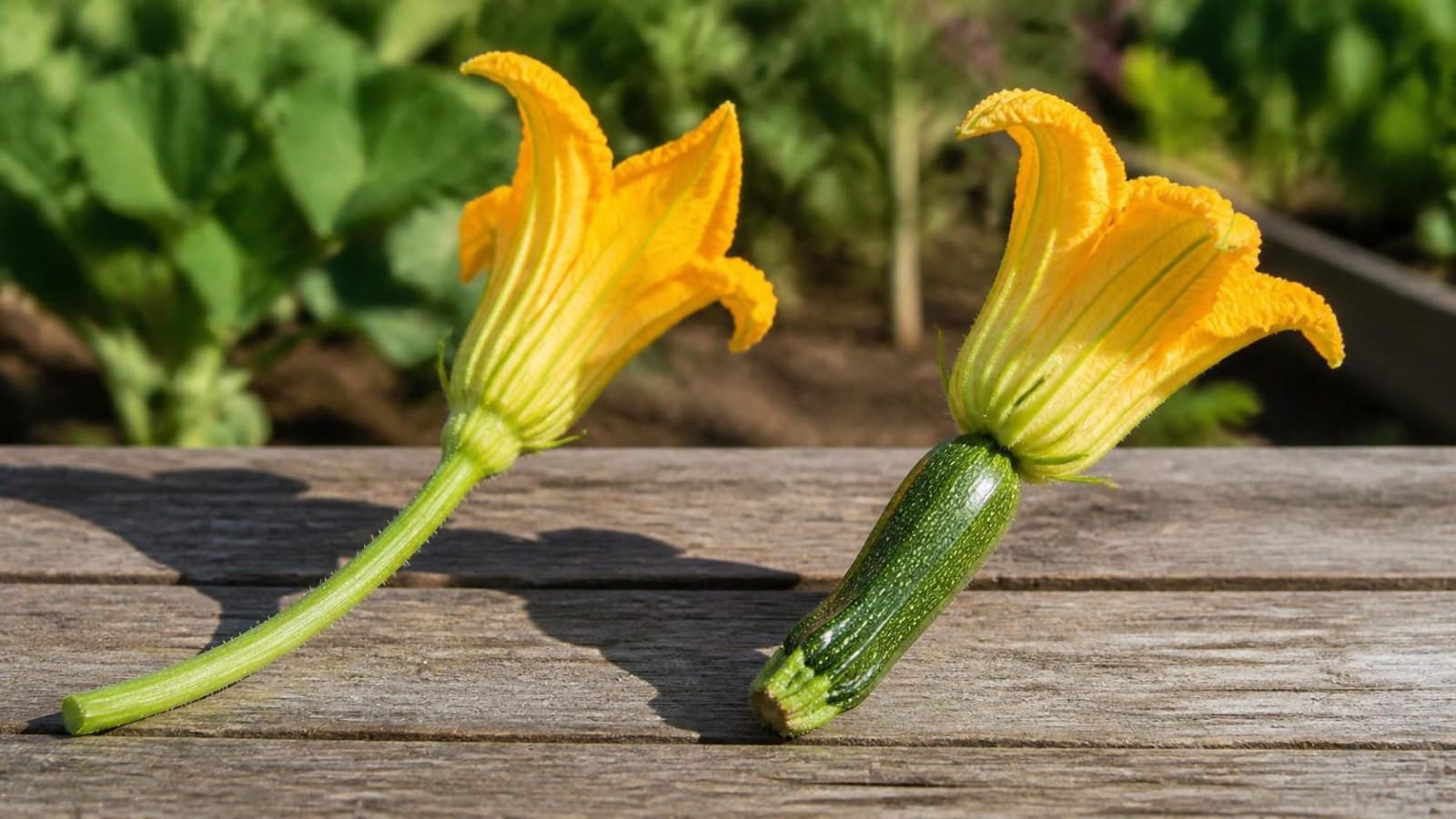
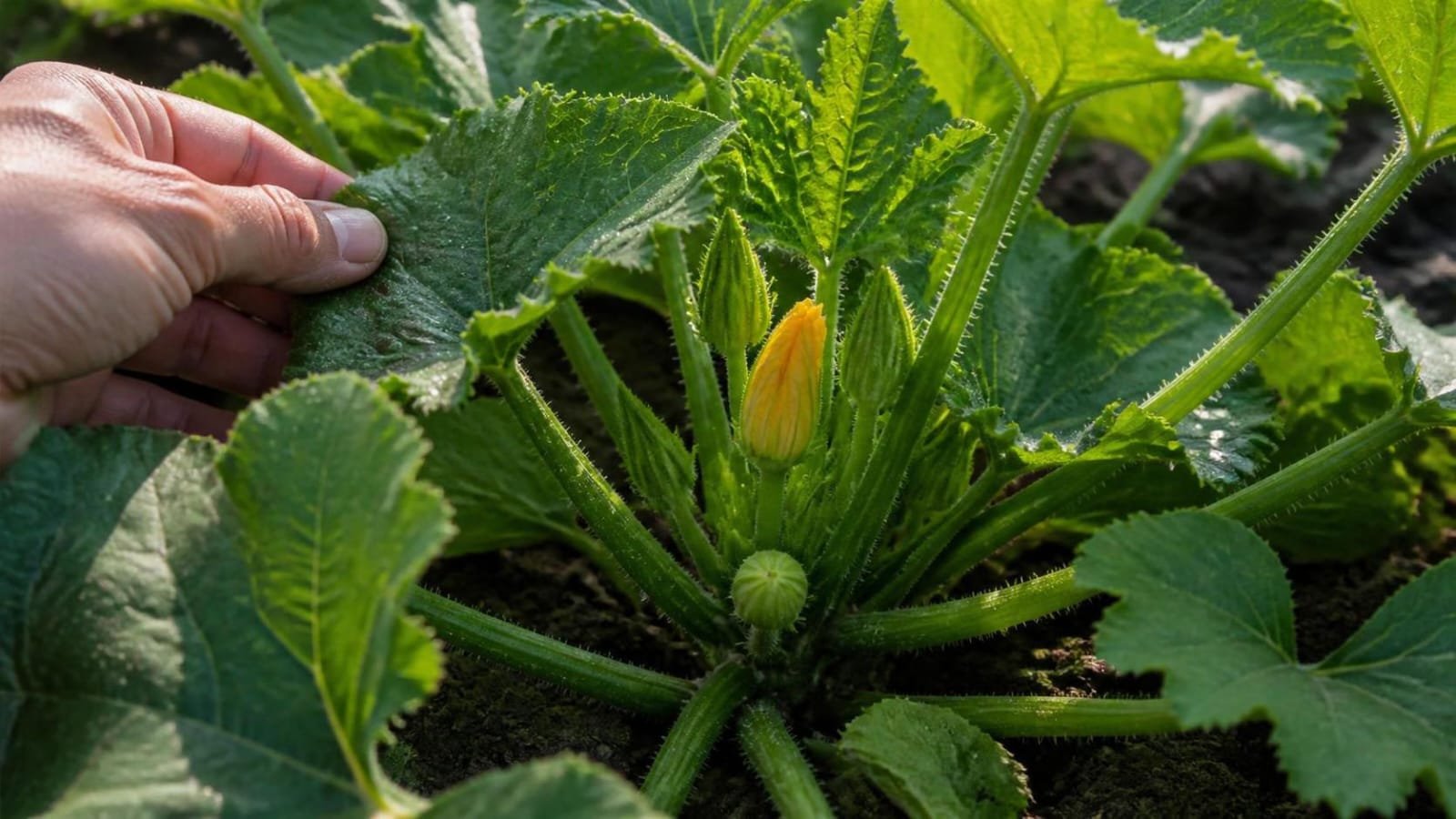
Look at what sits directly behind the petals. A long, slim stalk with nothing swollen on it is a male flower. A short stem with a miniature zucchini at its base is a female flower.
That’s the whole trick. The rest of this guide is about why it works and what to do once you can read your plant.
Check behind the petals first
Most people lean in and stare at the center of the bloom. Look the other way instead. Turn the flower a little and check where it joins the plant.
A female flower comes with a baby zucchini attached. That swelling is the ovary. If pollination goes well, it grows into the zucchini you’ll slice for dinner. A male flower has no ovary, so it just sits on a slender stalk. Purdue Extension describes it the same way: female flowers look as if they have a miniature fruit just below the petals, while male flowers have only a slender stalk.
Wondering how to tell male from female zucchini flowers in a few seconds? This is the most dependable check. It works on a cloudy morning and on a half-closed bloom, even on a variety you’ve never grown.
Male and female zucchini flowers at a glance
Here’s the male vs female zucchini flower comparison in one place. Keep it handy for the first few mornings.
| What you check | Male flower | Female flower |
|---|---|---|
| Stem | Long and slender | Short |
| Base of the flower | Plain, no swelling | A tiny zucchini (the ovary) |
| Inside the bloom | A central column dusted with yellow pollen | A lobed, knobby stigma and no pollen column |
| Where you often find it | Scattered along the vine on long stalks | Often nearer the center of the plant |
| How many you see | Usually more, especially early | Fewer, and they appear later |
| Its job | Supplies the pollen | Receives pollen and grows the fruit |
| After it fades | Drops off, which is normal | Fruit keeps growing if pollinated, shrivels if not |
Not every row will match on every plant. Variety, weather and plant age shift the details. The stem and the base are the two clues you can rely on.
When the outside isn’t clear, look inside
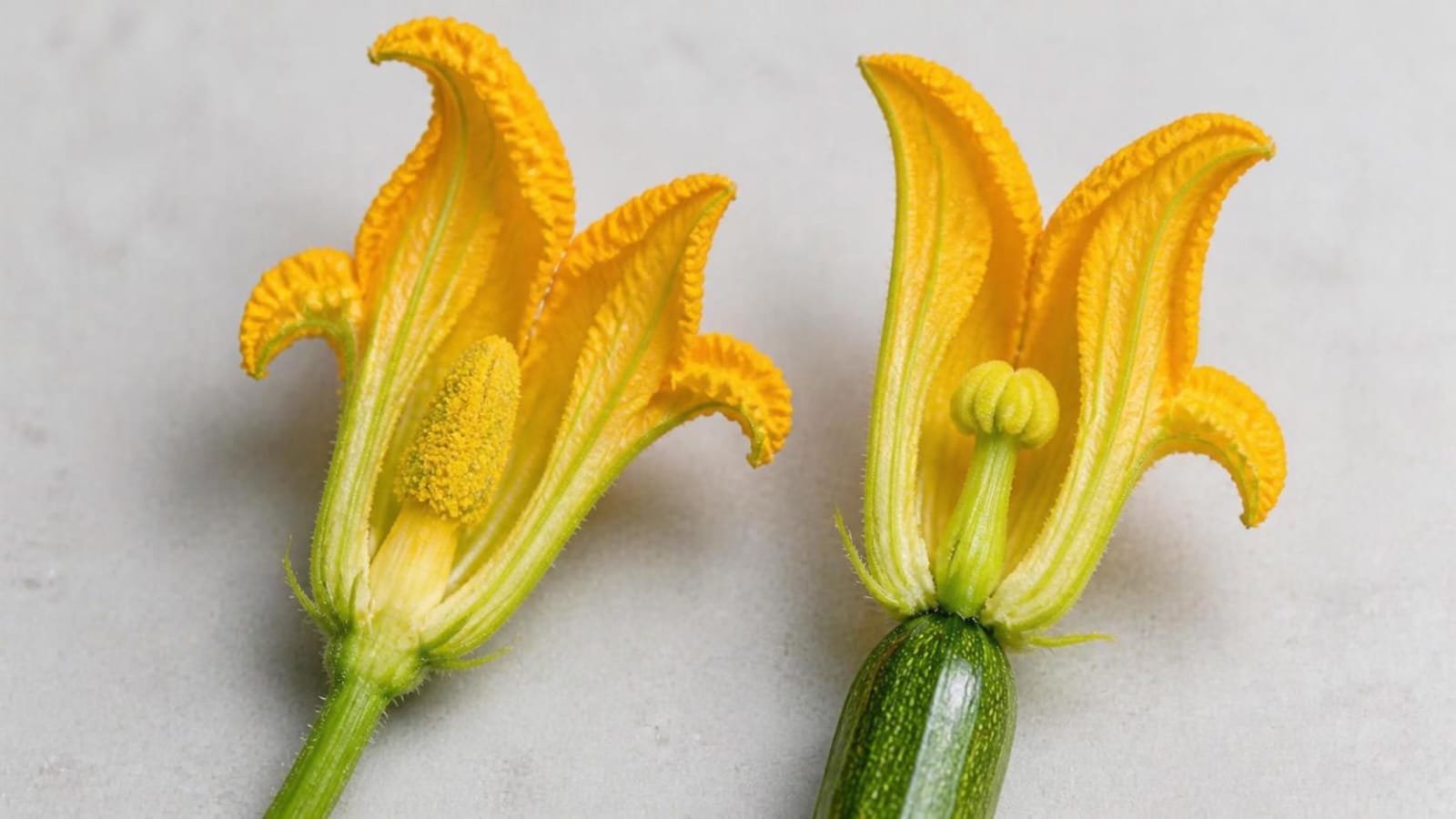
Sometimes an insect has chewed the bloom, or a leaf hides the base. Then wait for the flower to open fully and look at the center.
A male flower has one column in the middle, covered in yellow pollen. Touch it lightly and your finger turns yellow. A female flower has no column. You’ll see a small cluster of rounded, lobed tips instead. That’s the stigma, the part that catches pollen. Remember it, because it’s your target if you ever help with pollination.
Spotting them before they open
You don’t have to wait for the petals. A female bud already shows a small swelling at its base. So a tight bud on a short stem with a little bulge behind it is a female. A male bud is slimmer, long and narrow, on a long stalk, with no bulge.
This helps in the evening. See a female bud ready to open? Then you know to look for a male with pollen at first light, instead of finding out after the flower has closed.
Why you see males first
If your plant has just started flowering and every bloom is male, relax. Zucchini is monoecious, which means one plant carries both male and female flowers, and it starts with the males and adds the females later. Iowa State Extension notes that several male flowers usually open before any female ones. Early in the season, there are often several times more males than females.
Why? One explanation is that males cost the plant less energy, so it makes plenty of them early. That also gets pollinators used to visiting before the females show up. Whatever the full reason, the pattern is reliable. It’s also why the first flowers often drop without making any fruit.
Heat can stretch the wait. The same Iowa State article says high temperatures favor male flowers and delay female ones. Some hybrids show a female or two first, and those drop if no male is open nearby.
Still all male after several weeks? You’re not the first to hit that wall. This article on zucchini plants with only male flowers explains what to check. No flowers of either kind? Start with why a zucchini plant is not flowering instead.
A five-minute walk at first light
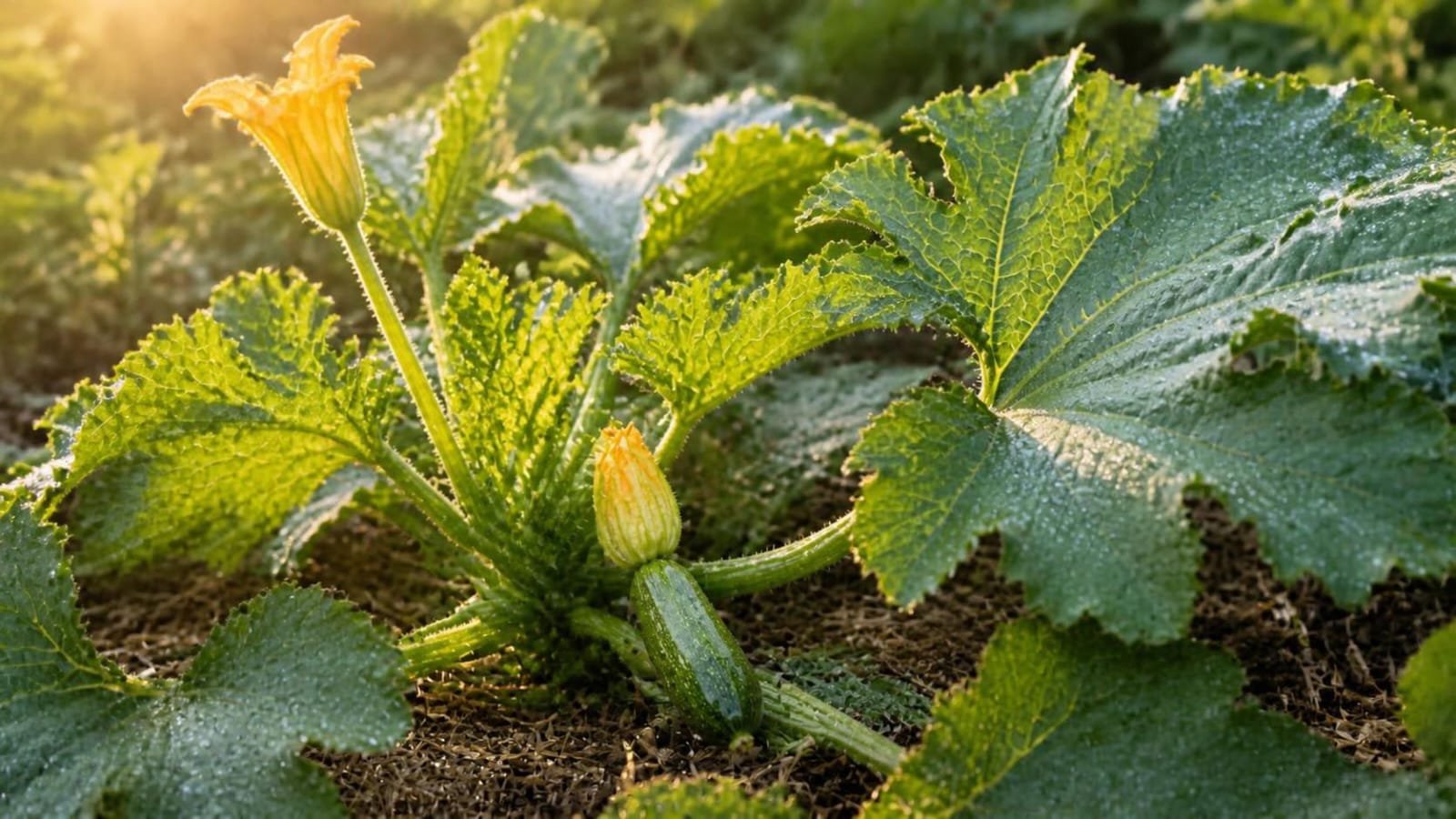
Zucchini flowers open early in the morning and last only one day. So the best time to learn your plant is just after sunrise. Try this:
- Go out before the day warms up. The blooms are open and easy to read.
- Find the swellings first. Every flower with a tiny zucchini behind it is female. Note how many you have.
- Count the long stalks. These are your males. Is at least one fully open, with visible pollen?
- Match them up. If a female is open and a male with pollen is nearby, bees may handle the rest. If not, you can step in.
- Come back at midday. Closed or wilting flowers mean that day’s window has passed.
A quick look after lunch is why many gardeners think they have no female flowers. They were there. They’d just finished for the day.
What to do once you can spot female zucchini flowers
Once you can tell the two apart, the plant starts to make sense. These are the three situations that come up most often.
Females are open, but bees seem scarce. Take a freshly opened male and peel back the petals. Brush its pollen onto the stigma of the female, in the morning, while both flowers are open. The full routine is in this guide on how to hand-pollinate zucchini.
The tiny fruit behind a female flower yellows or goes soft. That can be a pollination miss, but it can also be something else. Rain, a cold snap, few bees, or no open male nearby when the female opens can all cause a miss, and so can spraying insecticide while the flowers are open. The patterns look different. This guide to zucchini rotting at the blossom end despite normal flowers helps you sort them out.
You have more males than you need. Once females are opening, you can pick the extra male blossoms in the morning for the kitchen. Always leave a few on the plant so pollen is there every day.
Mix-ups worth avoiding
- Treating a female flower as a problem. A female with a small swelling is exactly what you want. She’s the one flower that needs your attention that day.
- Judging by color or size. Both kinds are yellow-orange. The male is often the showier one, so size can mislead you. Trust the base and the stem.
- Assuming other squash work differently. Pumpkins, yellow squash, pattypan and winter squash follow the same rule, so what you learn here carries over. Cucumbers and melons are less predictable, since some varieties are almost all female or carry flowers with both parts. Planning next season’s bed? Our guide on how to grow zucchini covers the spacing, sun and watering that keep flowering on track.
Common questions about male and female zucchini flowers
Can a male zucchini flower turn into a female one?
No. Once a flower has formed, it stays male or female. What changes is the plant, which starts making female flowers after the early run of males.
Why do the male flowers keep falling off?
They’ve done their job. Purdue Extension notes that early male flowers dropping after they shed pollen is normal. The next flush should include both kinds.
Is it a problem that I see more males than females?
Not at all. Plants usually make more males, especially early on. What matters is that a male with pollen is open when a female opens.
Can you eat male and female zucchini flowers?
Yes, both are edible. Most cooks pick the male flowers, since the females are the ones that grow into fruit. Take them in the morning while they are open, and leave a few males on the plant for pollination.
Does a female flower always turn into a zucchini?
In most varieties, only if pollen reaches it. Without pollen, the tiny fruit stops growing and the flower aborts. A few parthenocarpic varieties set fruit without pollination, so check your seed packet if yours never seem to need help. Spotting the female is half the job. Getting pollen to her is the other half.
Take your coffee out tomorrow morning and turn over a few blooms. In a day or two, you’ll spot the stems and swellings without thinking about it.
2 thoughts on “Male vs Female Zucchini Flowers: How to Tell the Difference”