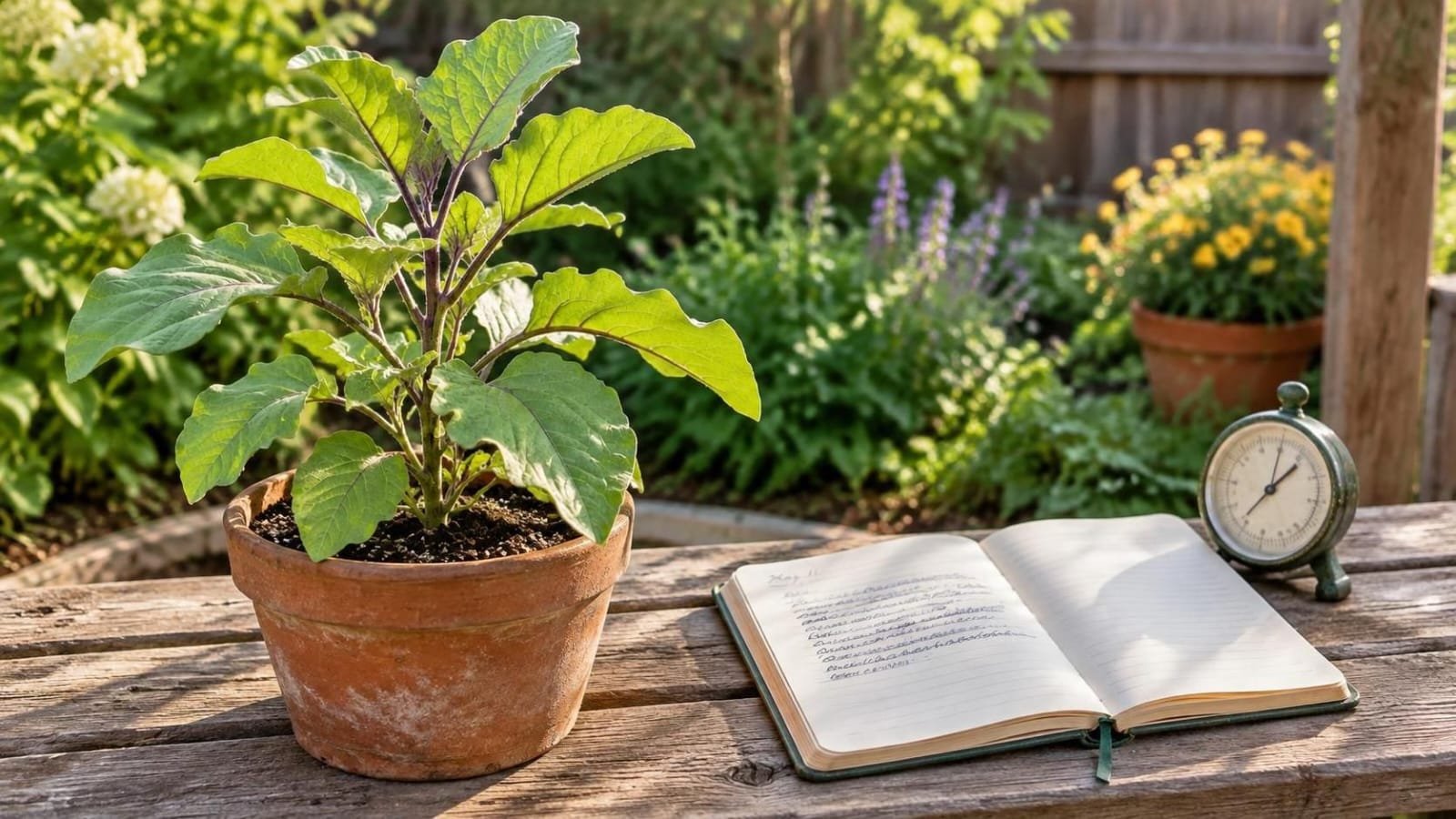
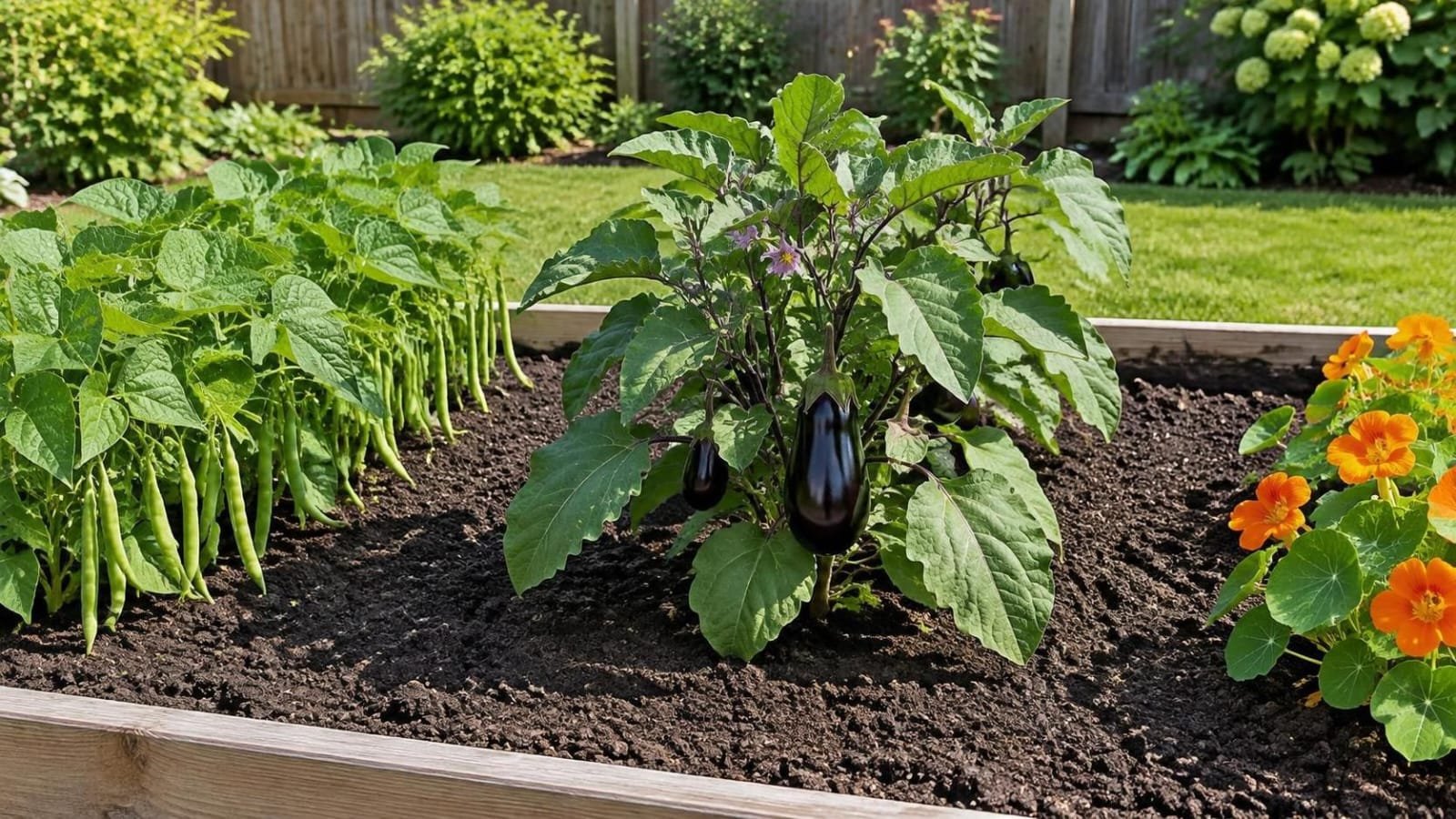
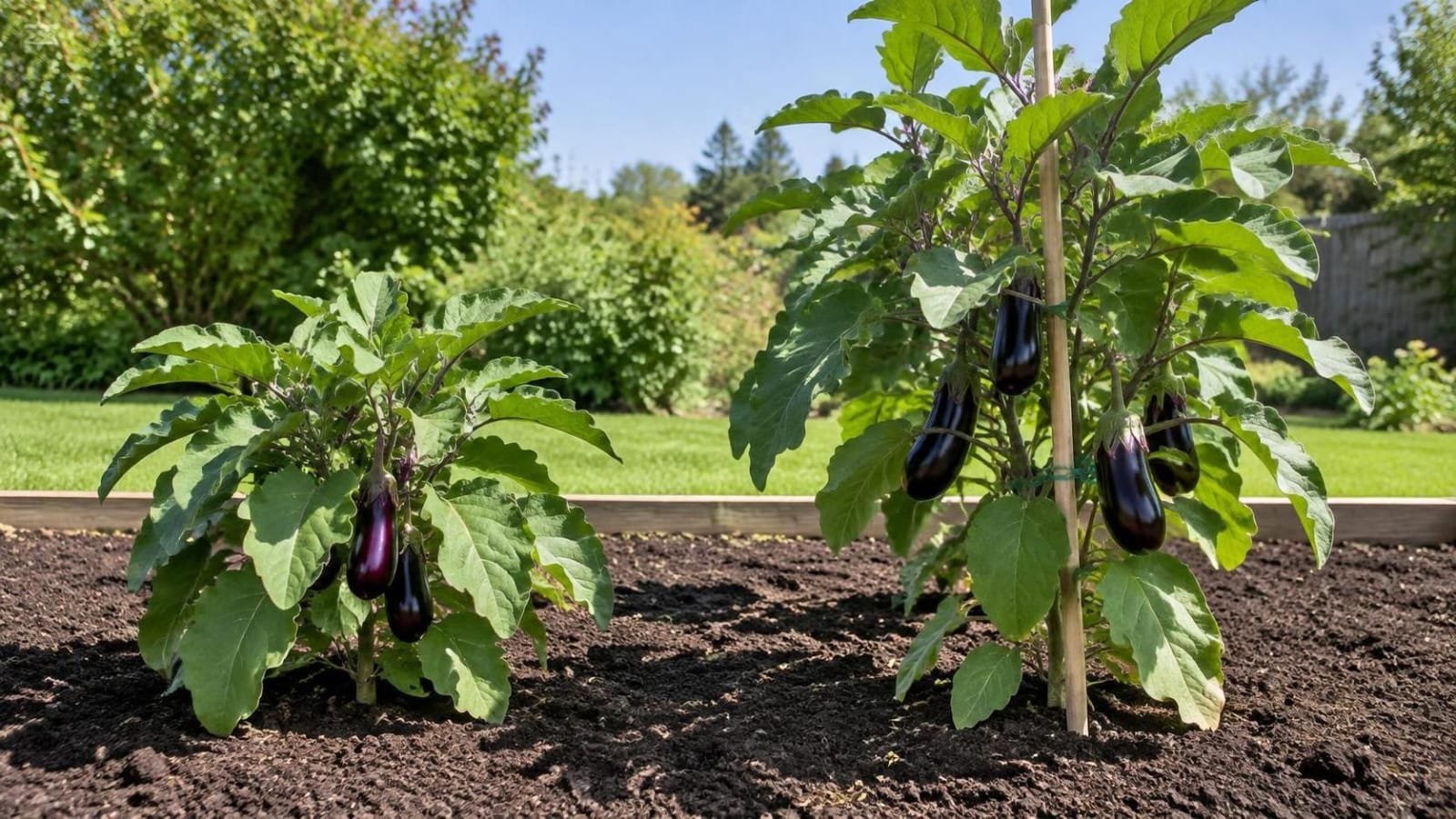
Healthy eggplant leaves are large, oval, and dark green, with a slightly fuzzy surface and a sturdy central vein. Most leaf changes come from a short list of causes: water, light, nutrients, temperature, pests, and disease. Learn what normal looks like first. Then look at the pattern across the plant, the age of the leaves, and when the change started.
Leaves are the plant’s food factory, so they tell you a lot. They also change color and shape for many reasons, and not all of those reasons are serious. This guide shows what a healthy leaf looks like, how to read changes, and how to care for the foliage.
What does a healthy eggplant leaf look like?
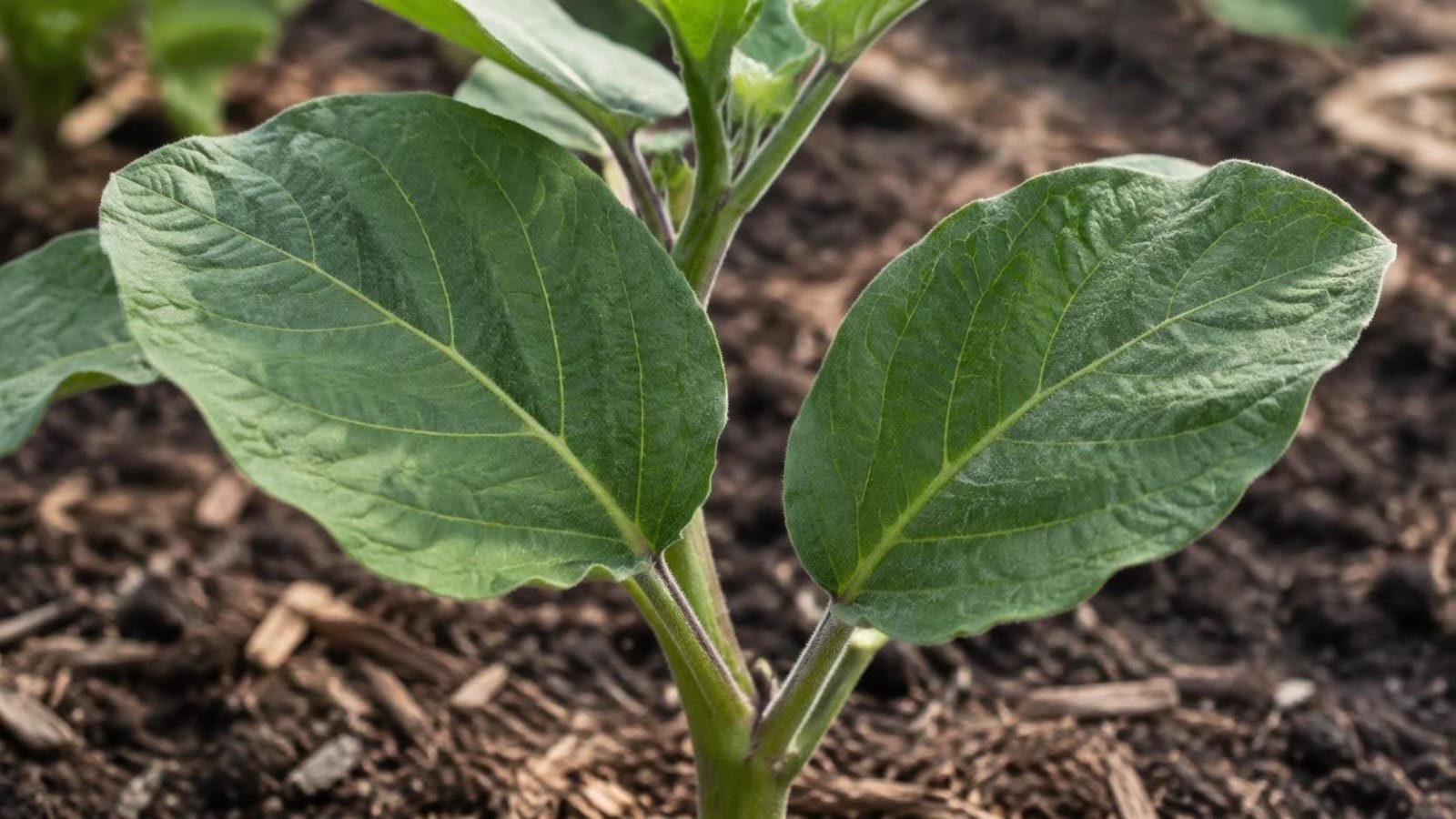
A healthy eggplant leaf is broad and oval, with smooth to slightly wavy edges. It’s a rich, even green, and the surface feels slightly fuzzy. The leaves carry fine star-shaped hairs. Many relatives in the nightshade family have them too, so treat the hairs as a helpful clue rather than proof. The main vein runs down the center, with side veins branching outward.
On a healthy plant, the lower and middle leaves are the largest. New leaves at the top look smaller and firm. Expect some older leaves to yellow and drop as the plant grows. A few old leaves at the base are normal.
How do you read changes in the leaves?
Look at three things: where the change is, how it looks, and how fast it spread. Changes on old leaves at the base often mean normal aging or nutrient movement within the plant. Changes on new growth at the top often point to a current problem. Common causes are water, temperature, or a pest feeding on fresh tissue.
Also look at the whole plant. A problem on one side or one branch suggests a local cause, like shade, a pest, or a damaged root. A problem across the whole plant suggests a general cause, like water, heat, or cold.
What does normal aging look like?
Older leaves at the base of the plant often yellow and dry, especially as the plant sets heavy fruit. This is usually normal, and you can remove the leaves that are fully yellow. Keep the healthy leaves, since they feed the plant until the end of the season.
If the yellowing spreads up the plant, or new leaves yellow early, look for a cause. The most common culprits are water, nutrients, and root health. Why Are My Eggplant Leaves Turning Yellow? walks through those causes one by one.
How does water show up in the leaves?
Both too little and too much water change the leaves. Dry plants wilt in the afternoon and often recover at night. Waterlogged plants can look wilted even when the soil is wet, because the roots can’t take up water. The leaves may turn pale or yellow.
Check the soil before deciding. How Often Should You Water Eggplant? covers the schedule. If the plant keeps wilting, Why Is My Eggplant Plant Wilting? covers the likely causes.
How does light affect leaf color and shape?
Light shapes leaf color and size. A plant short on light grows thin stems and pale leaves. Leaves in strong, direct sun can scorch in extreme heat, showing bleached or brown patches. How Much Sun Does Eggplant Need? covers light needs and how to protect plants from heat.
Light problems often show up on the leaves that get the most direct sun, while shaded leaves look normal. If brown patches appear, Why Are My Eggplant Leaves Turning Brown? covers the likely causes.
What do nutrient changes look like?
Nutrient problems often show as color changes that follow a pattern. Older leaves may fade when the plant lacks nitrogen. A plant with too much nitrogen looks dark and lush, but it sets less fruit. The pattern matters more than any single leaf.
Don’t assume the soil is short on nutrients just because the leaves look pale. Test the soil first. How and When to Fertilize Eggplant explains testing and feeding. Best Soil for Eggplant: pH, Mix, and Amendments covers the soil side.
What does temperature damage look like?
Eggplant is sensitive to cold. Chilling injury can make leaves look water-soaked and soft, and then turn dark. Heat stress can cause wilting in the afternoon and leaf scorch on the most exposed foliage. University of Minnesota Extension lists discolored leaves and their likely causes in its diagnostic guide. It’s useful when you can’t tell what you’re seeing.
Why are eggplant leaves turning purple?
Purple color comes from anthocyanin, a pigment the plant makes in response to conditions. Cool temperatures and strong light both increase it. Michigan State University Extension explains that these conditions can make leaves purple even on a healthy plant. A phosphorus shortage can also cause purpling, especially on lower leaves.
Research on eggplant supports the phosphorus link. A Brazilian study found that phosphorus deficiency increased anthocyanin in eggplant fruit. That is a fruit result, but it shows the pigment responds to phosphorus in this crop.
Some purple color is normal for certain varieties, especially in stems and veins. To tell the difference, check the usual color of your variety. Note which leaves are purple, and watch whether the color follows the weather. If the purple shows up on lower leaves after a cold spell, the cause is often temperature. If it appears with stunted growth, check the roots and the phosphorus supply.
What is a quick way to match a leaf symptom to its likely cause?
The table below gives a starting point. Each cause is only a possibility, so check the plant, the soil, and the weather before you act.
| Leaf appearance | Possible causes | Where to look next |
|---|---|---|
| Older leaves turning yellow | Normal aging, nitrogen shortage, or water stress | Why Are My Eggplant Leaves Turning Yellow? |
| Leaves curling | Heat, pests, or environmental stress | Why Are My Eggplant Leaves Curling? |
| Brown patches | Sunscald on exposed leaves, disease, or water stress | Why Are My Eggplant Leaves Turning Brown? |
| White powdery coating | Powdery mildew, a fungal disease | White Spots or White Leaves on Eggplant |
| Small holes in leaves | Chewing insects | Holes in Eggplant Leaves |
| Purple coloration | Cool temperatures, strong light, natural pigment in some varieties, or low phosphorus | Check the sections above on purple leaves |
| Wilting despite moist soil | Root stress or a disease in the root zone | Why Is My Eggplant Plant Wilting? |
Swipe sideways to see every column.
How do you tell pests and diseases apart from other causes?
Pests leave signs on the leaves. You might see chewed holes, stippling, sticky residue, or small insects on the underside. Holes in Eggplant Leaves covers chewing damage in more detail. Diseases often show as spots, lesions, or fuzzy growth. Patterns vary: some start on older leaves, and others start on new growth, so don’t rely on the pattern alone. White patches are covered in White Spots or White Leaves on Eggplant. For the disease side, Eggplant Diseases: Symptoms, Identification, and Treatment is the main reference.
When the cause is unclear, compare the symptoms with the diagnostic guide from University of Minnesota Extension. It matches leaf symptoms to likely causes. Use it to narrow the list, and send a sample to your local extension office when in doubt.
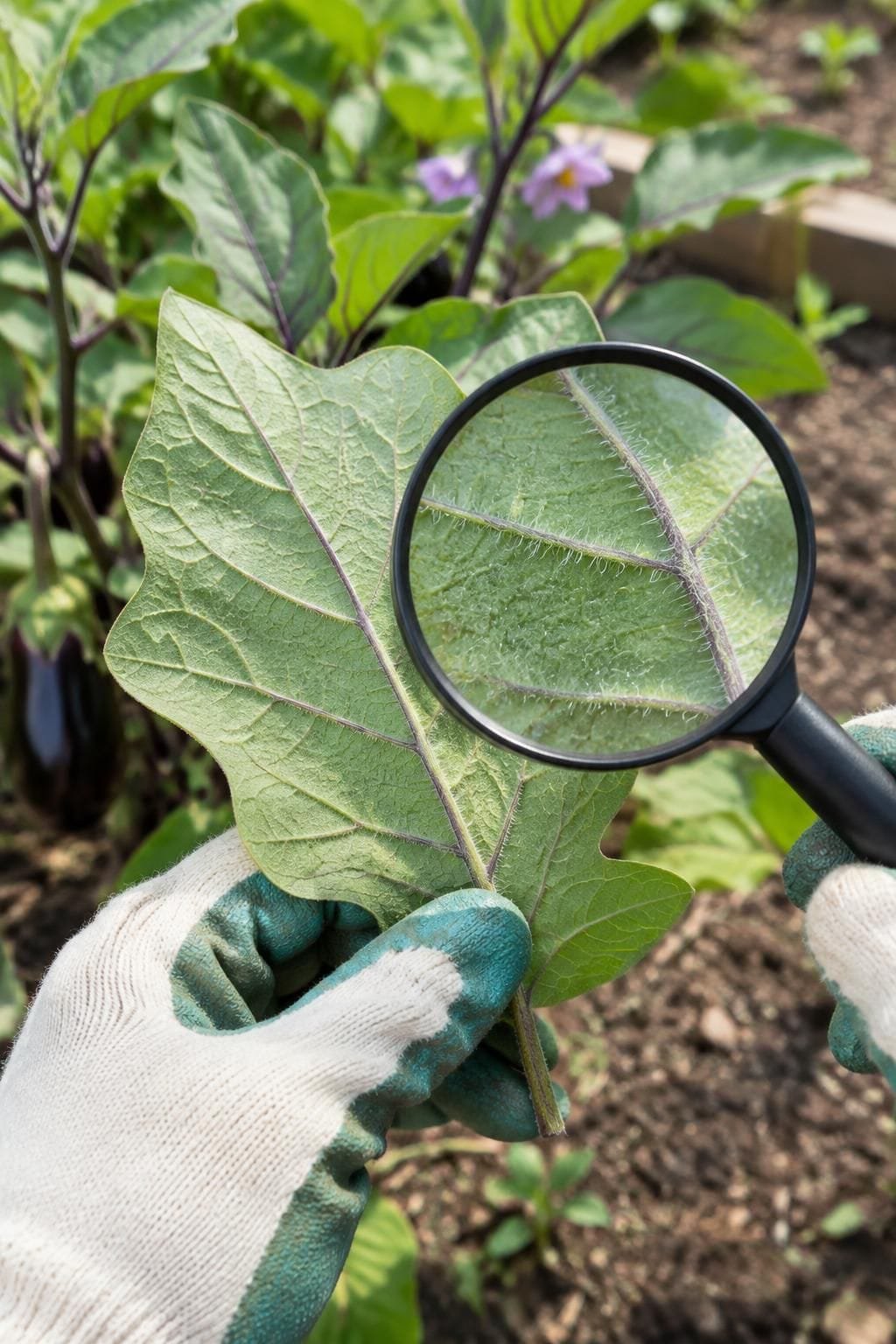
When should you act on a leaf problem?
Act when a problem spreads, when new growth is affected, or when the plant stops flowering or setting fruit. A few yellow lower leaves in late season aren’t a reason to panic. A change that spreads up the plant over a week or two deserves a closer look.
Take photos over time. A dated photo each week makes changes easy to compare. It also gives an extension agent a clear picture if you need help.
Where should you go next for a specific symptom?
Use the table above to match the symptom, then open the article for that symptom. Each one has its own causes and fixes.
How do you care for leaves through the season?
Keep the soil evenly moist, feed according to a soil test or the label, and give the plant full sun. Keep the foliage dry where you can by watering at the base. Remove leaves that are clearly dead or diseased, and leave the healthy ones in place.
Good airflow helps leaves dry faster after rain. Give plants room, and avoid crowding them against walls or fences. Tidy the bed in fall, and remove plant debris so it doesn’t carry problems into the next season.
When are leaves a sign of a bigger problem?
Leaves are one sign among many. If the whole plant is stunted, the roots may be damaged. If the fruit shows problems alongside the leaves, the cause may affect the whole plant. Look at the roots, the stem, and the fruit before you decide on a treatment.
For the full growing guide, How to Grow Eggplant: Planting, Growing, and Care ties leaf care to planting, watering, and harvest. Eggplant Growth Stages: Seed to Harvest shows what healthy growth should look like at each stage.