
Eggplant leaves usually turn yellow for a few common reasons. The usual ones are normal aging, a nitrogen shortage, too much or too little water, cold stress, and disease or insects. Start with the pattern. Yellow on the oldest leaves first points to nutrients or normal aging. Yellow that starts on one side of the plant, or on new growth, points to a disease, a pest, or a root problem.
Yellow leaves are a common worry with eggplant. Most of the time, the cause is easy to find. Look at where the yellow starts, how it spreads, and what the soil and weather have been doing. This guide walks through the common causes in order of how often they happen, and what to check first.
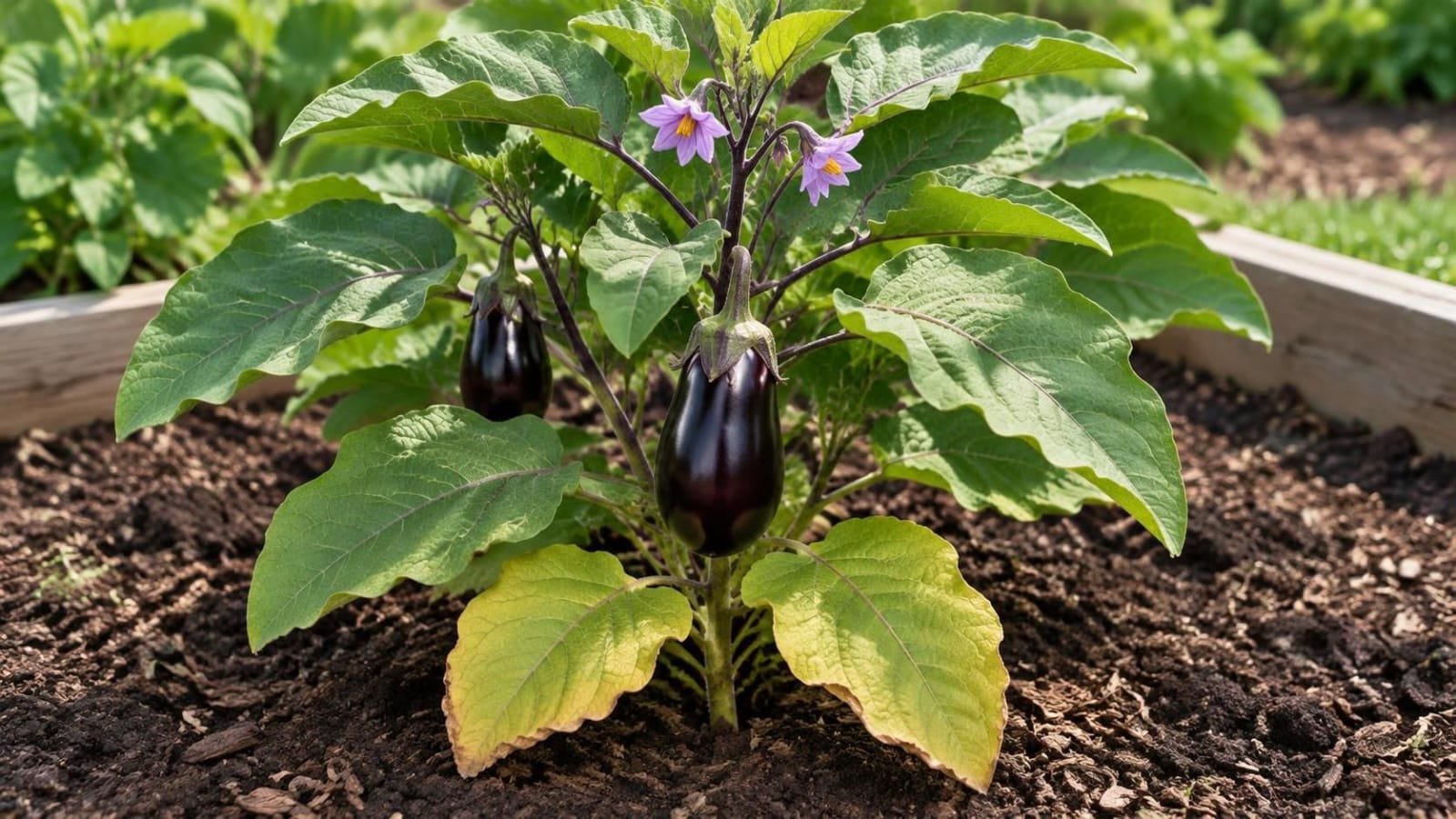
Are the lowest leaves yellowing first?
That’s the most common pattern, and it often means the plant is moving nutrients from old leaves to new growth. A few yellow lower leaves late in the season are usually normal. If only the oldest leaves are yellow and the new growth looks healthy, leave the plant alone. Remove the fully yellow leaves.
If the yellow climbs up the plant, or new leaves yellow early, the cause is more likely a nutrient shortage, a water problem, or a disease. Look for those signs before you change anything else.
Could nitrogen be the cause?
Nitrogen moves within the plant. When it’s short, the plant pulls it out of older leaves and sends it to new growth. The older leaves turn pale green, then uniformly yellow, and the yellow moves upward as the shortage continues. Growth slows, and the plant may flower and set less fruit.
Confirm before you feed. Test the soil, and follow the recommendation. How and When to Fertilize Eggplant covers feeding timing and how to avoid too much nitrogen. Best Soil for Eggplant: pH, Mix, and Amendments covers the soil side. Very high pH can also make new leaves yellow between the veins. The plant can’t take up iron or manganese well, even when those nutrients are in the soil.
Could the watering be wrong?
Yes. Both too much and too little water cause yellow leaves. Overwatered soil fills the air spaces around the roots, and the roots can’t take up water or oxygen. The lower leaves often yellow first, and the plant can look wilted even though the soil is wet.
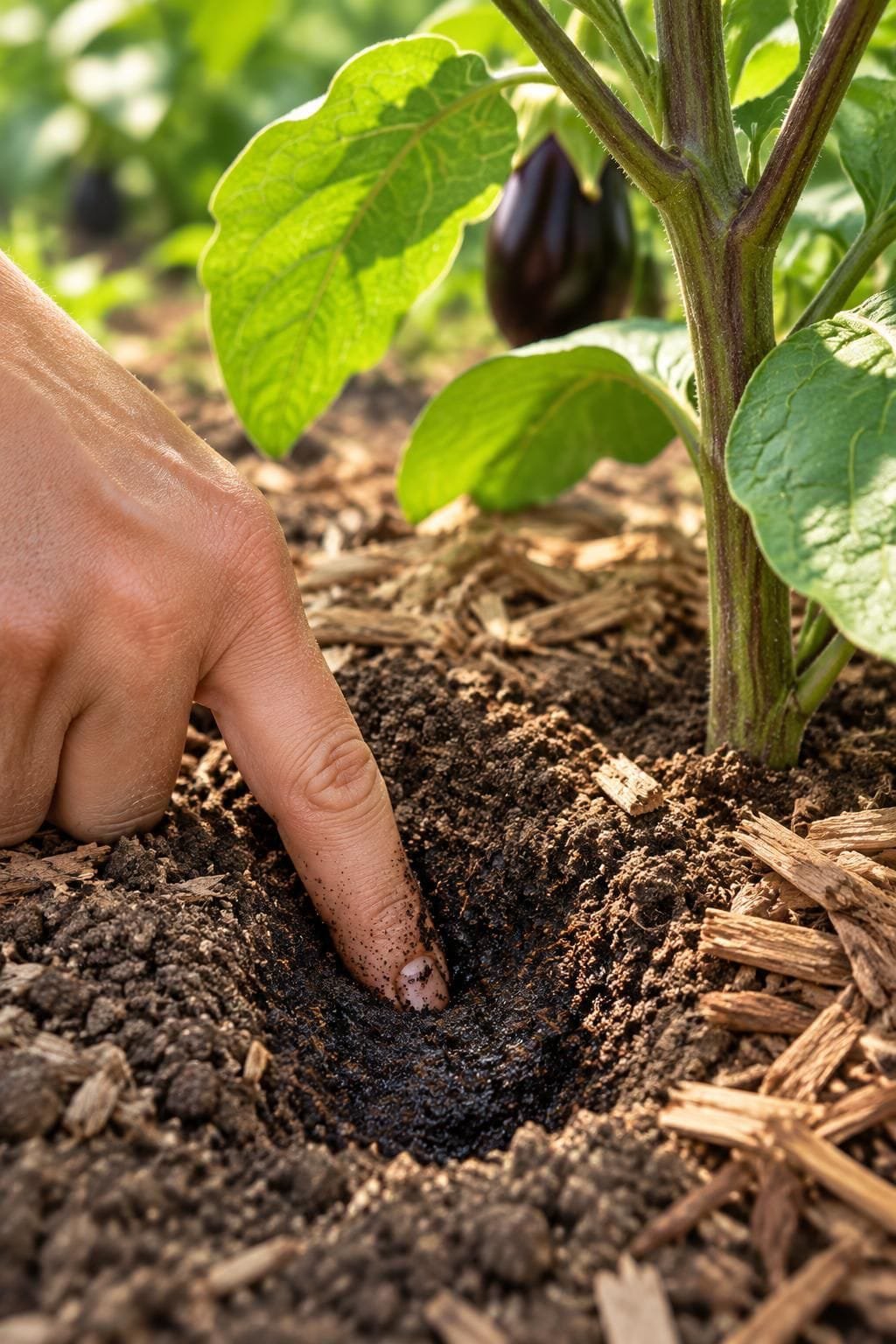
Underwatered plants often yellow and dry at the leaf edges, and they wilt in the afternoon. A simple check helps. Push a finger into the soil. If it feels wet and cool, wait. If it feels dry, water. How Often Should You Water Eggplant? covers the schedule, and Epic Gardening describes the same soil touch test.
Can cold cause yellow leaves?
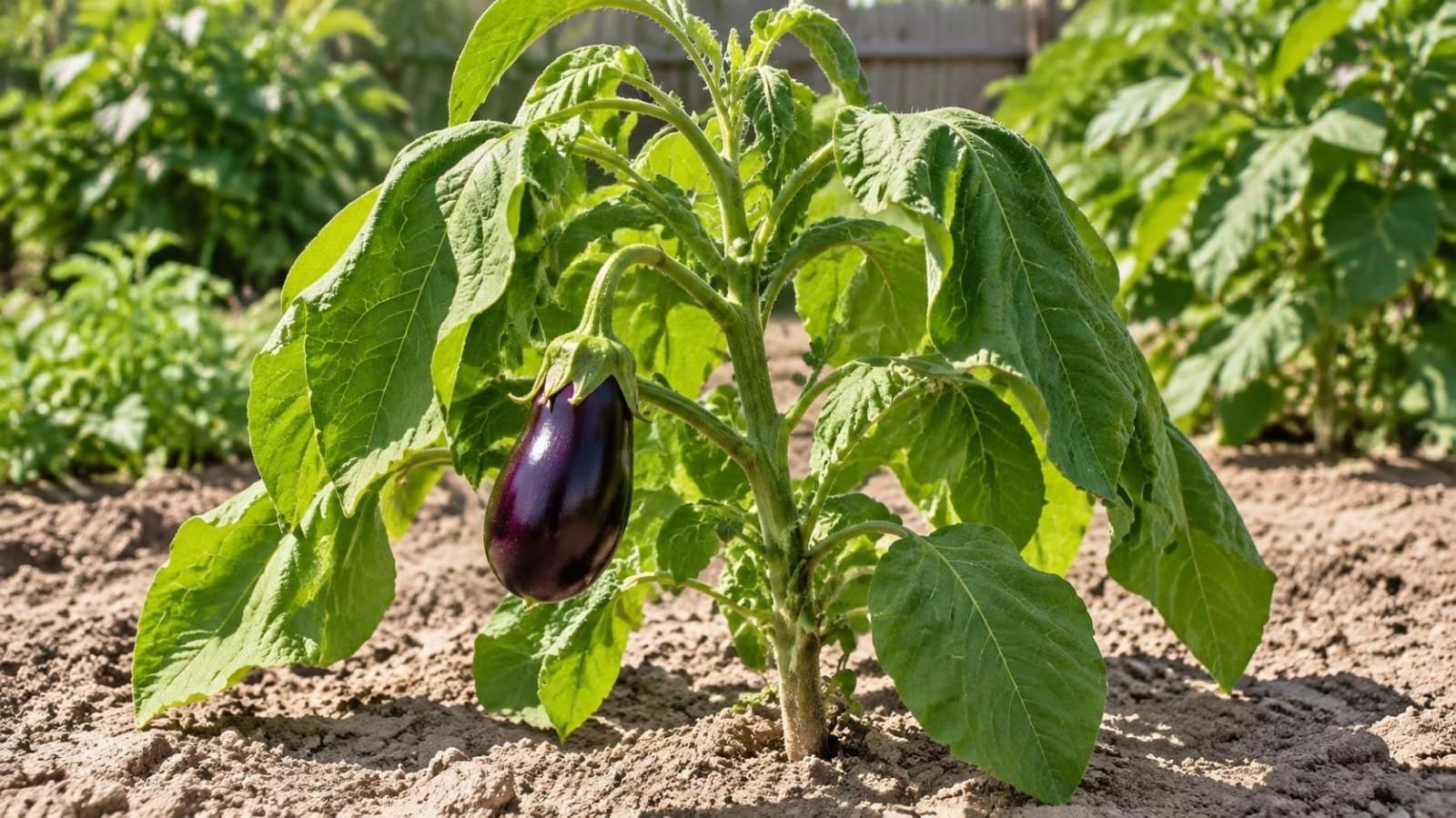
Yes, and cold injury can look worse than it is at first. University of Minnesota Extension describes chilling injury on eggplant leaves as water-soaked and soft, then turning black. Eggplant is more sensitive to cold than tomatoes and peppers, so a cold snap can damage leaves before any frost forms.
Cold, wet soil also slows root uptake, which can yellow the leaves even when the plant has enough nutrients. Wait for warmer nights before you add fertilizer to a plant that looks cold-stressed.
Could a disease cause yellowing?
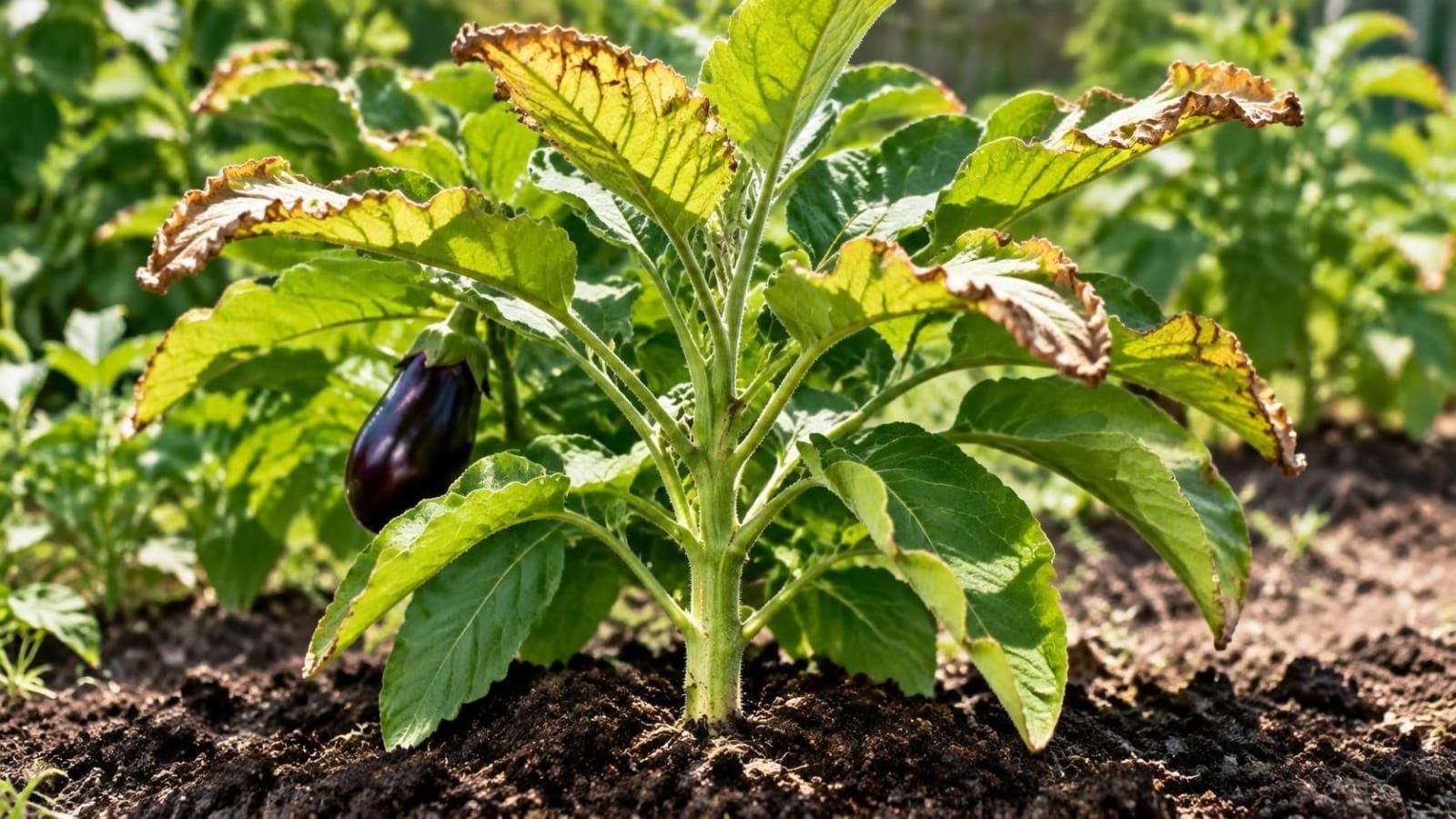
Yes. Some diseases turn leaves yellow, and the pattern helps tell them apart. Verticillium wilt, in the same diagnostic guide, starts as yellow leaf edges and tips, often on one side of the plant. The lower leaves wilt first, and the stem may show tan veins in a cut near the soil line. Virus infections cause yellow and light green mottling and misshapen leaves.
If the pattern looks like a disease, check the full range of options in Eggplant Diseases: Symptoms, Identification, and Treatment. Brown or wilted leaves can point to a related problem covered in Why Are My Eggplant Leaves Turning Brown? and Why Is My Eggplant Plant Wilting?.
Could insects cause yellow leaves?
Yes, some sap-feeding insects leave leaves wrinkled and tinged yellow. The same guide describes potato leafhopper damage as wrinkled, yellowish leaves. The insect is active from June through August. Spider mites leave a russet look on the undersides of leaves, often with fine webbing in heavy infestations.
Check the undersides of the leaves before you decide. If the same leaves are also curling, compare the symptoms with why eggplant leaves curl. Insects and their damage are easy to miss if you only look at the top of the leaf. Eggplant Leaves: Identification, Problems, and Care explains how to read leaf changes in general.
Does light or temperature play a role?
Light can change leaf color too. A plant short on light grows thin and pale, and the leaves may look yellowish-green. How Much Sun Does Eggplant Need? covers light needs and how to check the site.
Very hot spells can also stress leaves, and stressed leaves can yellow or bleach. If the yellow appears after a heat wave, give the plant shade in the hottest hours and water consistently.
What should you check first?
Start with the pattern. Which leaves are yellow? Is the yellow on one side or the whole plant? Does it spread up? Then check the soil moisture with a finger. Look at the undersides of the leaves for insects. Check the stem near the soil line for disease. Finally, think about recent weather and feeding.
Change one thing at a time. If you adjust water and fertilizer together, you won’t know which one helped. Give the plant a week or two to respond, and watch the new growth. Healthy new leaves are the best sign that the fix is working.
When should you remove yellow leaves?
Remove leaves that are fully yellow, dry, or damaged, especially at the base of the plant. Leave leaves that are still partly green, since they still feed the plant. Clean removal also helps airflow around the lower stem.
Don’t strip the plant. Removing too many leaves at once cuts the plant’s energy and can slow fruit set. Keep the healthy foliage that supports the fruit you want.
When is yellowing a sign of a bigger problem?
Yellowing that spreads across the whole plant, or that comes with wilting, stunting, or stem damage, needs more attention. Check the roots, the stem, and the fruit. A disease in the stem or roots can cause symptoms that look like a simple nutrient problem at first.
For the full growing guide, How to Grow Eggplant: Planting, Growing, and Care ties watering, feeding, and light together. Eggplant Growth Stages: Seed to Harvest shows what healthy growth looks like at each stage.
One thought on “Why Are My Eggplant Leaves Turning Yellow?”