
How often should you water eggplant? Most plants need about 1 to 1.5 inches of water a week, including rain. Give it in one or two deep soakings rather than daily sprinkles. Check the soil before each watering. In the ground, water when the top 2 inches feel dry. In a pot, check more often, because containers dry out fast in hot weather.
Watering is one of the easiest things to get wrong with eggplant. Too little water stresses the plant, and too much can cause root problems. This guide covers how much water to give, how often to water in each setting, and how to spot an imbalance.
How much water does eggplant need each week?
University of Georgia Cooperative Extension estimates that eggplant needs 1 to 1.5 inches of moisture per week on average. UVM Extension advises 1 to 2 inches per week, applied deeply but not often. Some home-gardening sites, such as Tiny Garden Habit, give 2 inches as a standard, so you’ll see different numbers. Use the 1 to 2 inch range as your starting point, and adjust for your conditions.
Weather changes the number. Cornell Cooperative Extension estimates that a crop covering about 80 percent of the ground loses about 1.1 inches of water a week in typical conditions. In a hot, sunny July, that loss can reach 1.5 inches or more. Rain counts toward that total, so subtract rainfall from what the plant needs before you turn on the hose.
Should you water deeply or lightly?
Deep watering is the better habit. A long soak moves water into the root zone, where it stays longer and encourages roots to grow deeper. Light daily sprinkles wet only the top inch or two of soil, where the heat evaporates water fastest. That leaves the roots thirsty even when the surface looks wet.
Aim to wet the soil several inches down, then let the top layer dry slightly before the next watering. This pattern keeps the root zone moist without leaving the soil soggy.
How often should you water in each setting?
The setting changes the schedule more than any other factor. The table below compares the usual pattern for four common ways of growing eggplant. Use it as a starting point, then check the soil on your own plants.
These intervals are general guidance. Use them as a starting point, and let the finger test decide.
| Growing setting | How often to check | Typical weekly amount | Why it differs |
|---|---|---|---|
| In-ground garden bed | Every 2 to 3 days in hot weather, less often in cool weather | About 1 to 1.5 inches, including rain | Soil holds moisture longer, but roots reach deeper, so deep soakings matter most |
| Raised bed | Every 1 to 2 days in hot weather | About 1 to 1.5 inches, adjusted for drainage | The bed drains and warms faster, so moisture drops more quickly than in the ground |
| Large container (5 gallons or more) | Daily in hot weather, every 2 to 3 days in mild weather | Usually more than in the ground during heat, watered until it drains from the base | Small soil volume dries quickly, and roots can’t reach far for water |
| Small container (under 5 gallons) | Daily in hot or windy weather | Frequent watering, with drainage checked each time | Very little soil holds water, so the plant can dry out in a day |
Swipe sideways to see every column.
Containers need the most attention. How to Grow Eggplant in Containers and Pots covers pot choice. The same watering rules apply to any container. For watering and drainage in elevated beds, see How to Grow Eggplant in Raised Beds.
How does soil type change watering?
Sandy soil drains quickly and needs more frequent watering, with smaller amounts each time. Clay soil holds water longer, so it needs less frequent watering. Water it slowly, so the soil can absorb the water instead of running off the surface.
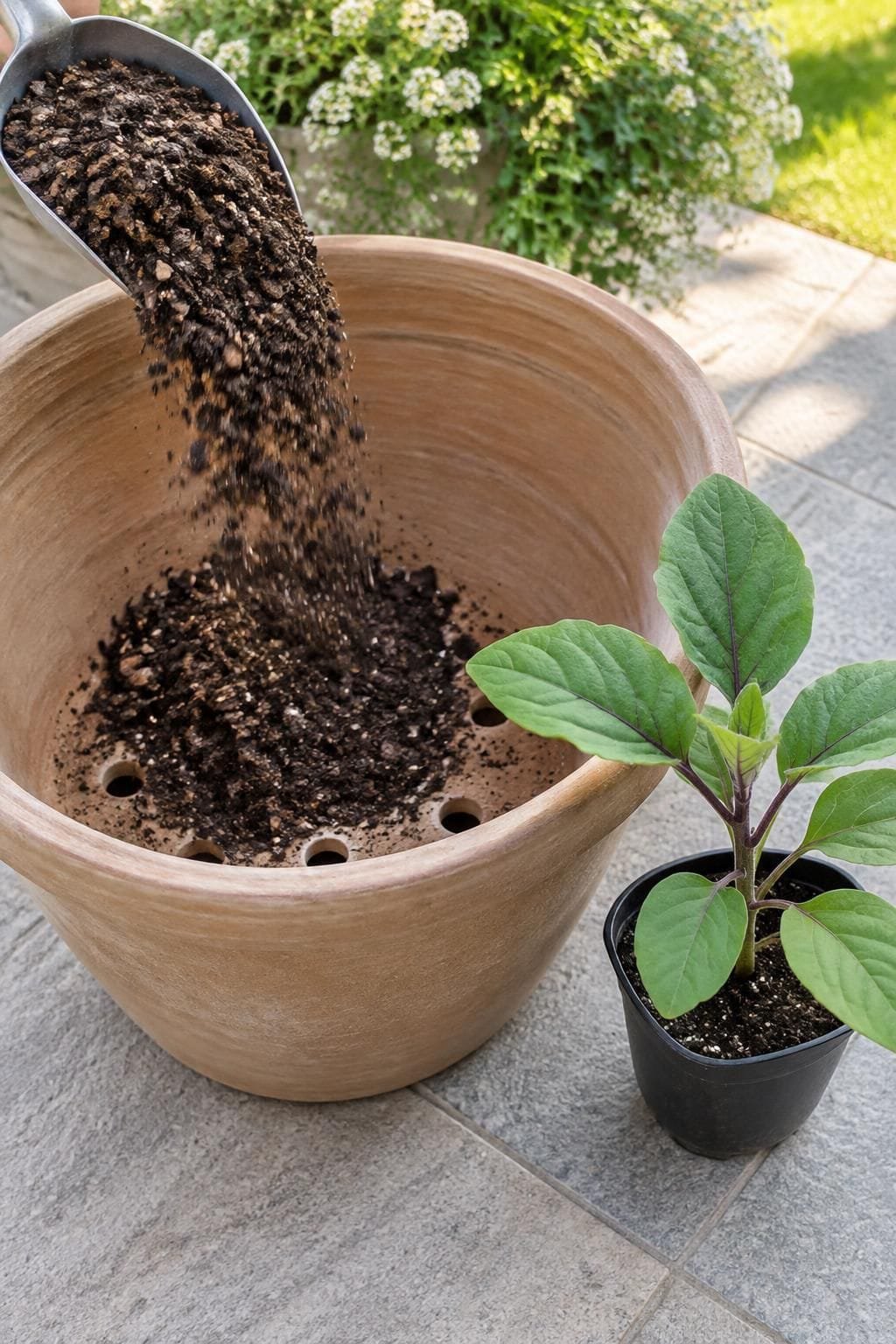
Soil mix matters as much as soil type. Best Soil for Eggplant: pH, Mix, and Amendments covers the mix itself. Think of drainage and water-holding capacity as the two things to balance when you choose a mix.
Which growth stages need the most water?
University of Nebraska–Lincoln Extension lists transplanting, flowering, and fruit development as the critical periods for eggplant irrigation. Water stress during those stages can reduce yield, so those are the times to keep the soil steadily moist.
Seedlings and new transplants need steady moisture while their roots establish. Keep the soil evenly damp, not soggy. How to Repot Eggplant Seedlings covers seedlings. Eggplant Growth Stages: Seed to Harvest shows how water needs shift through the season.
How do you check whether the soil is dry?
The finger test works well. Push a finger about 2 inches into the soil. If it feels dry, water. If it feels cool and damp, wait. A moisture meter can help, especially in deeper beds. Place the probe at root depth, not just at the surface, or the reading will mislead you.
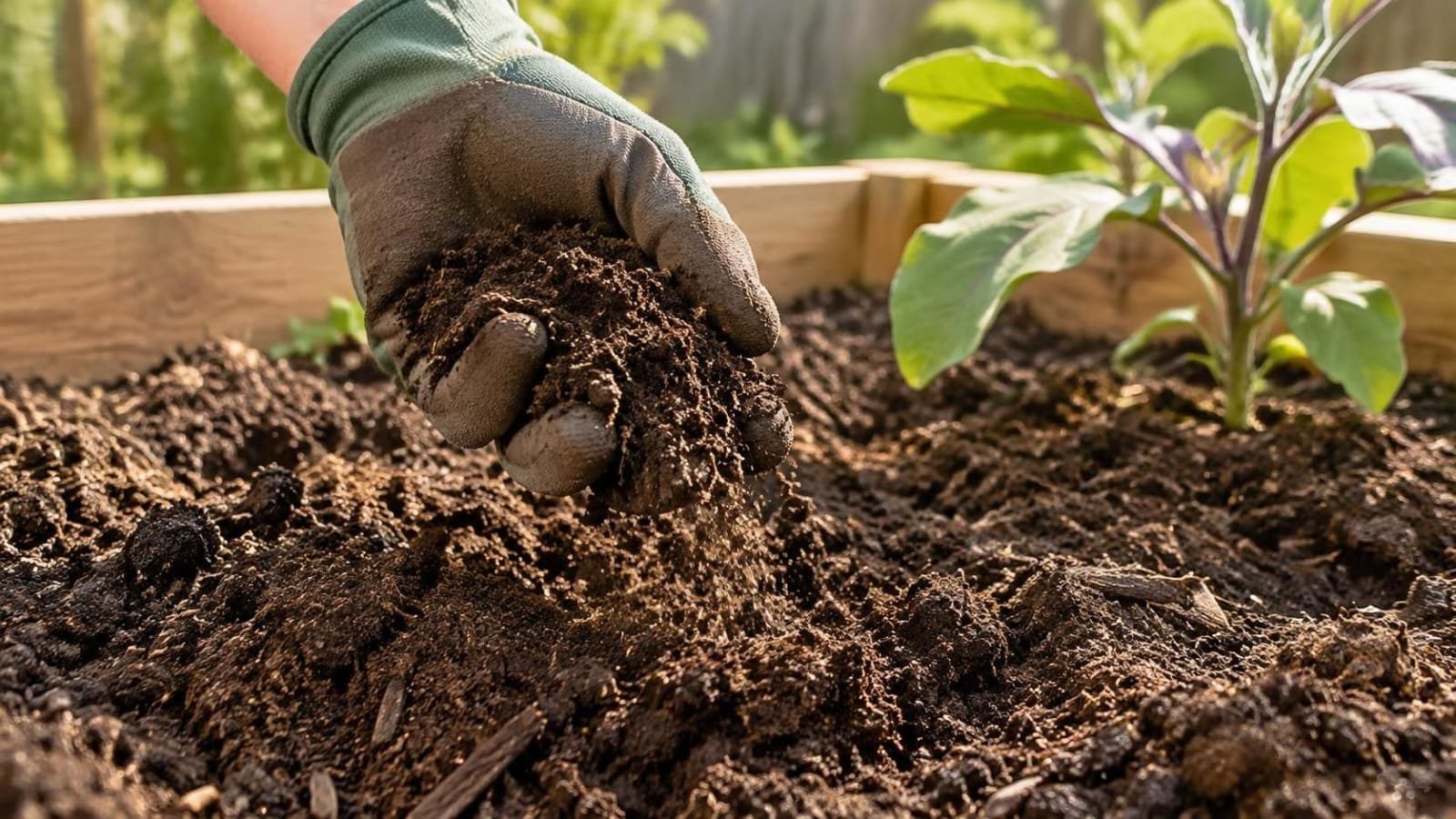
Water early in the morning when you can. Morning watering reduces evaporation during the day, and it gives the leaves time to dry before evening. Water the soil at the base of the plant rather than spraying the foliage, since wet leaves can invite disease.
What are the signs of too little water?
Wilting that doesn’t recover by the next morning is the clearest sign. Leaves may curl or look dull, and the soil pulls away from the edges of a container. In hot weather, a plant may wilt in the afternoon and recover at night. That’s normal. A plant that stays limp needs water right away.
Water stress also shows up in the fruit. Stressed plants can drop flowers and produce smaller fruit. Checking the soil weekly, and more often during heat, helps you catch the problem before it affects the harvest.
What are the signs of too much water?
Overwatering causes its own set of problems. The soil stays soggy for days, leaves yellow, and the plant may wilt even when the soil is wet. Roots without enough air can rot, and they stop taking up water and nutrients. The plant then looks thirsty while it is actually drowning.
Too much water can also reduce flowering and fruit set. UVM Extension notes that too little and too much water both lower blossom and fruit production. The goal is a steady middle ground, not more water.
How do you adjust for weather and season?
Hot, windy days raise water needs sharply. Mulch helps. Organic mulch slows evaporation, keeps the soil cooler, and reduces weeds that compete for water. Keep the mulch a few inches from the stem. Mulch pressed against the base holds moisture where the stem needs air.
In cool, cloudy weather, plants use less water, and you can stretch the time between waterings. Always check the soil first, since the forecast alone doesn’t tell you what the roots are receiving.
Can you water less without losing yield?
Sometimes, yes. The University of Georgia’s research horticulturist Juan Carlos Díaz-Pérez suggests eggplant producers consider cutting irrigation. It saves water and money without necessarily hurting yield. Reducing water can make sense for a home garden too, if the soil and plants show no stress.
Cutting water is a judgment call. Watch the plants for a few weeks. Lower the amount only if they stay healthy, flower well, and set fruit. Stop reducing water during flowering and fruit development, since those are the most sensitive periods.
Does fertilizer change watering needs?
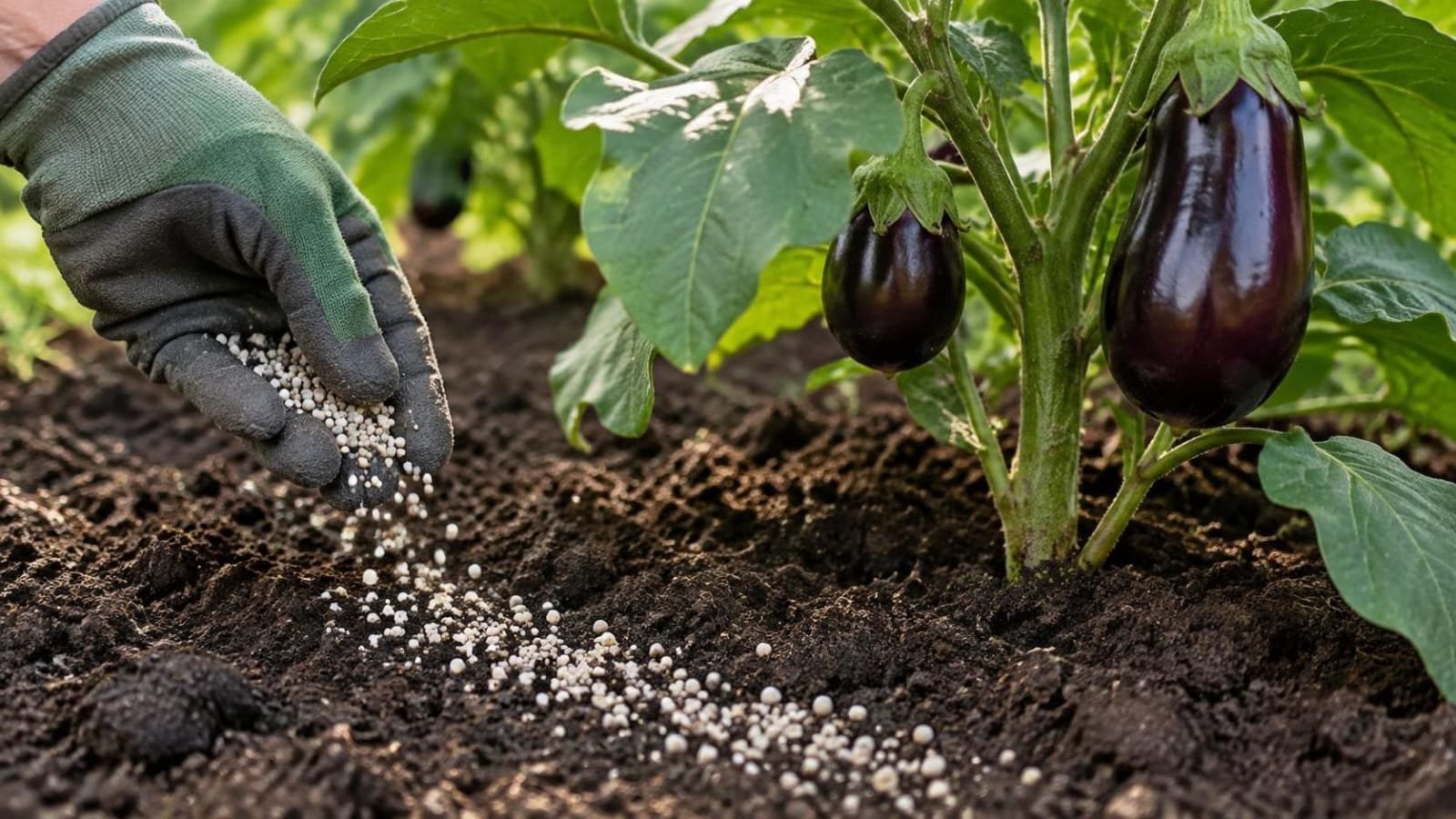
Yes, indirectly. A plant that’s short on nutrients can look stressed even when the soil is wet. How and When to Fertilize Eggplant covers feeding schedules. Follow the product label for rates, and check that the soil stays evenly moist after each feeding.
Spacing and sun exposure also affect how fast the soil dries. Plants in full sun and tight spacing dry the soil faster than plants with room to spread. How Much Sun Does Eggplant Need? explains light needs, and How Far Apart to Plant Eggplant covers spacing.
What’s a simple watering routine for eggplant?
Start with 1 to 1.5 inches per week, including rain. Check the soil with your finger or a meter before each watering. Water deeply, in the morning when you can, and mulch to slow evaporation. Adjust for heat, containers, and soil type. Then watch the leaves and flowers for stress. Change the routine if the plant tells you something different.
For the full season, How to Grow Eggplant: Planting, Growing, and Care connects watering to planting, care, and harvest.
One thought on “How Often Should You Water Eggplant?”