How far apart to plant eggplant? For most standard types, space plants 18 to 24 inches apart within the row, with 30 to 36 inches between rows. Compact and dwarf types can sit closer, and large, sprawling types need more room. Raised beds often use 18 to 24 inches in every direction. Spacing controls airflow, sunlight, and how easily you can reach the fruit.
Spacing is one of the decisions people make once and live with all season. Plant too tightly and the plants shade each other and hold moisture in the middle. Plant too widely and you waste space that could hold more harvest. This guide covers the common ranges, why they differ, and how to adjust for your variety and setup.
What spacing do extension guides recommend?
University of Missouri Extension recommends 18 to 36 inches between plants, with rows 4 to 5 feet apart in the field. The same guide describes twin rows on raised beds. Plants sit 18 to 36 inches apart, and the beds are 3 to 4 feet apart on center. University of Illinois Extension recommends 18 to 24 inches apart in the row, or 24 inches apart in every direction in raised beds.
Utah State University Extension recommends 18 to 24 inches within the row, with 3 to 4 feet between rows. University of Arkansas Extension gives 18 to 20 inches within the row and 30 to 36 inches between rows for home gardens. The numbers overlap, and that’s the point. The right choice depends on your variety and your system.
Why do the numbers differ?
Three factors drive most of the difference. The first is plant size. A tall, vigorous globe type with wide leaves needs more room than a compact or dwarf type. The second is the growing system. Field rows need wider walkways for equipment. A raised bed lets you reach plants from the edges. The third is climate. Warm, humid regions need wider spacing so air can move between plants and the leaves dry quickly after rain.
The variety labels also vary. a UC Agriculture and Natural Resources seed listing shows many eggplant varieties at 18 inches apart. Some Japanese types suggest 12 inches on a supported trellis. Read the plant size on your seed packet, and choose the spacing that matches that plant. A plant tag that lists height and spread gives you the two numbers you need to plan the row.
How far apart should you plant in a raised bed?
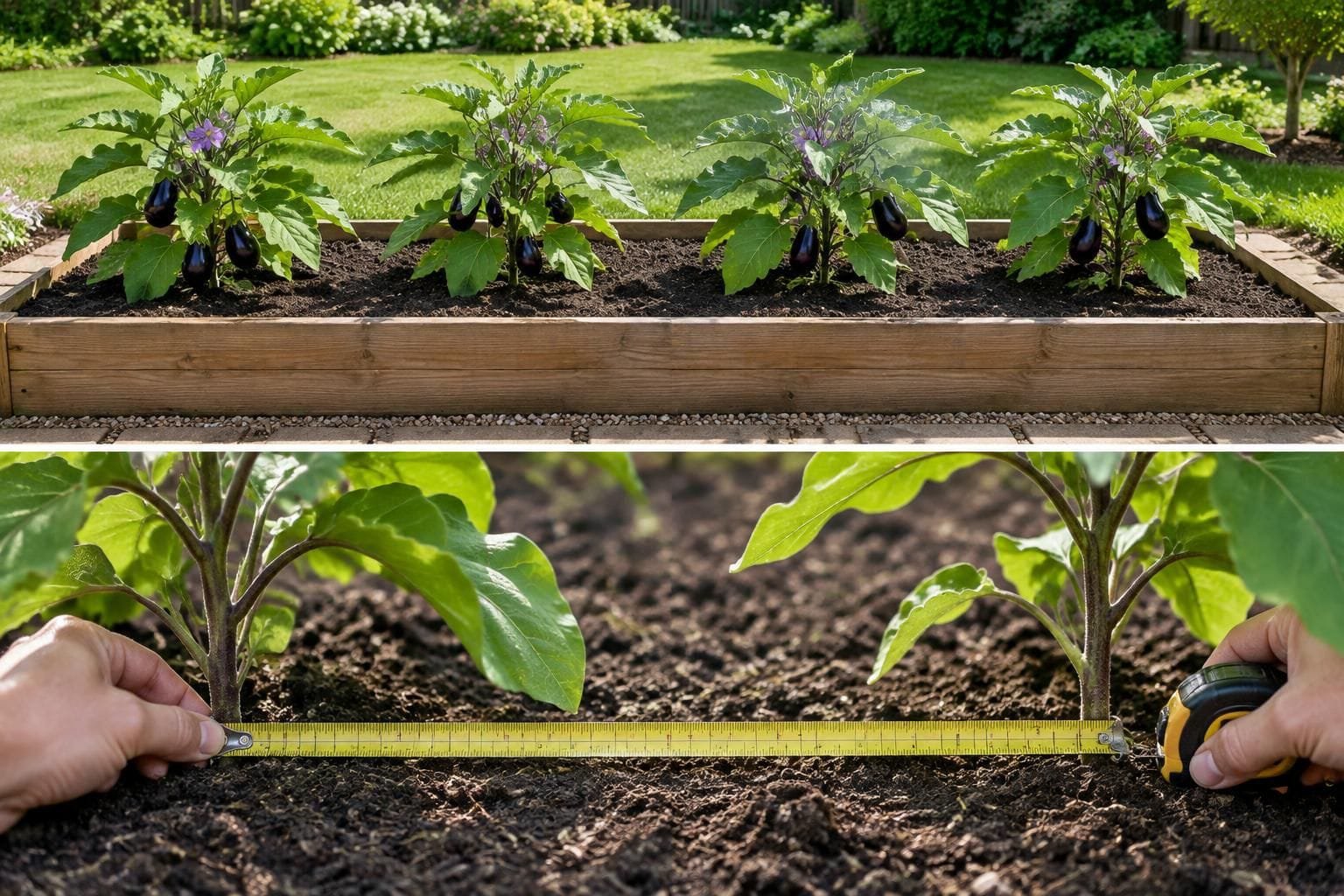
Raised beds reduce the walking space you need, so you can plant more densely without crowding the root zone. Many guides use 18 to 24 inches in every direction for standard types. That layout lets you reach every plant from the edge. How to Grow Eggplant in Raised Beds covers bed size, depth, and fill.
A square-foot layout works on the same principle. Gardener’s Path suggests 16 to 18 inches between plants on all sides for square-foot gardens. Larger types may need a wider grid than that, so check the label before you lay out the bed.
Does spacing affect airflow and disease?
Yes. Dense plants trap humidity under the leaves, and wet, still air makes leaf diseases more likely. Enough room lets air move between plants, and the leaves dry faster after rain or watering. Good spacing won’t stop disease on its own, but it removes one of the easiest conditions for it to develop.
Airflow also helps the plant stay upright. A plant with space and sunlight develops a sturdier stem, which matters when fruit gets heavy. Plan for the plant’s mature width, not the size of the seedling you buy in spring.
How does spacing affect fruit and harvest?
Light reaches more leaves when plants have room, and more leaves mean more energy for fruit. Crowded plants compete for light, and the lower leaves often shade out. The fruit may set later, or stay smaller, than fruit from a well-spaced plant.
Spacing also affects how easily you can harvest. Branches get brittle under heavy fruit. A tight layout makes it easy to snap one while reaching in. A wider gap between plants gives you room to move.
How should you space tall or sprawling types?
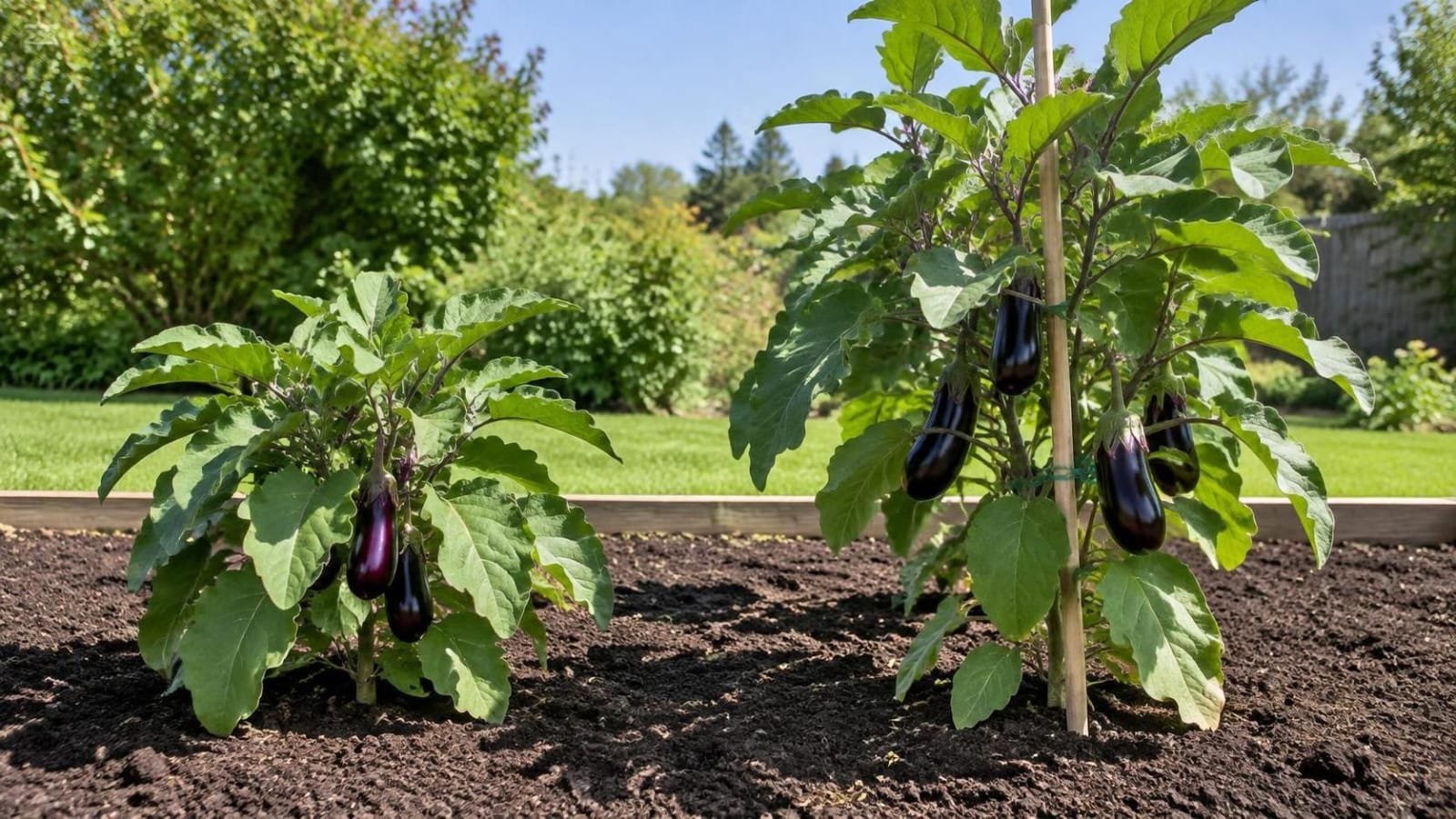
Tall types grow large enough to need support, and that support takes up room. Plan the stake or trellis before you plant, so you don’t disturb roots later. Do Eggplants Need a Cage or Support? covers when and how to support the plant.
Large plants also need more room on each side. Allow extra space in the row for types that can reach several feet tall or spread widely. How Tall and How Deep Do Eggplant Plants Grow? covers plant height and root depth in more detail.
What about compact and dwarf types?
Compact types suit small beds and containers. They can sit closer than standard types, but the packet or plant tag is the best guide to how close is safe. Types of Eggplant: 15+ Varieties to Grow compares the main groups and their habits.
Even a compact type needs air between plants. Tight spacing saves room, but it can cost yield and invite disease. Don’t push compact plants closer than the label allows.
How do containers change spacing?
In a container, you’re really choosing one plant per pot, not spacing plants in a bed. Choose the container size first, then decide how many plants it can hold. How to Grow Eggplant in Containers and Pots covers pot size, and the same logic applies to a large planter with two plants.
How does spacing work in a greenhouse?
A greenhouse limits space in a different way. Plants need airflow and access, but they also share a limited floor area. Keep plants far enough apart for air to move between them. Make sure you can reach each plant from an aisle. How to Grow Eggplant in a Greenhouse covers the protected setup.
How do you adjust spacing for your garden?
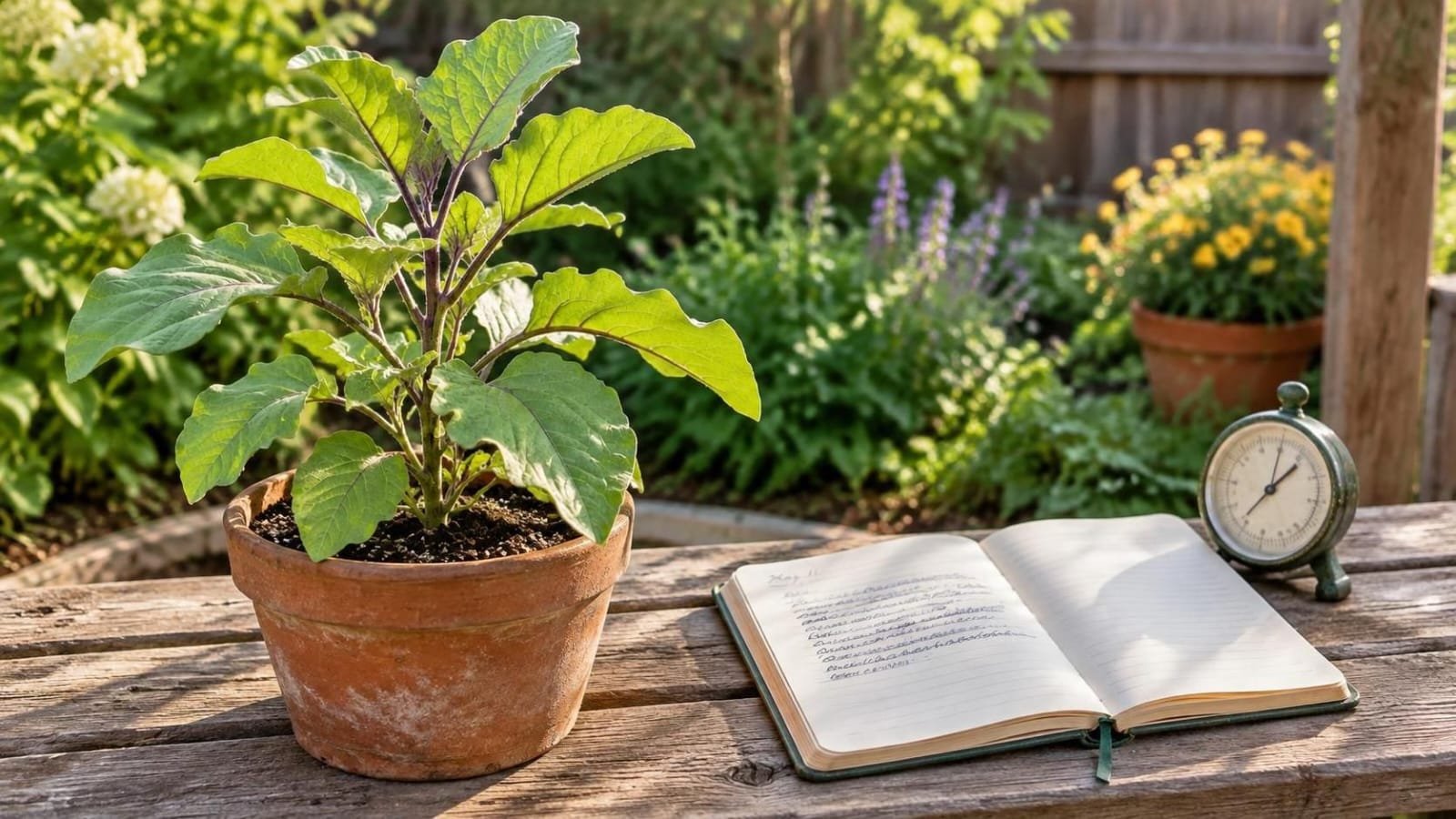
Start with the middle of the range for your type, 18 to 24 inches within the row and 30 to 36 inches between rows. Then adjust for your setup. Use wider spacing for tall types and open fields, and tighter spacing for compact types in raised beds. Check the plants at midseason. If the middle of a plant stays damp, or the leaves overlap, you planted too close. Keep a short note on what worked, since soil and climate change the result from one garden to the next.
Watering and sun also shape the layout. A plant in full sun dries the soil faster, and a crowded plant competes for water. How Much Sun Does Eggplant Need? covers light, and How Often Should You Water Eggplant? covers the watering schedule.
How do you measure spacing in the row?
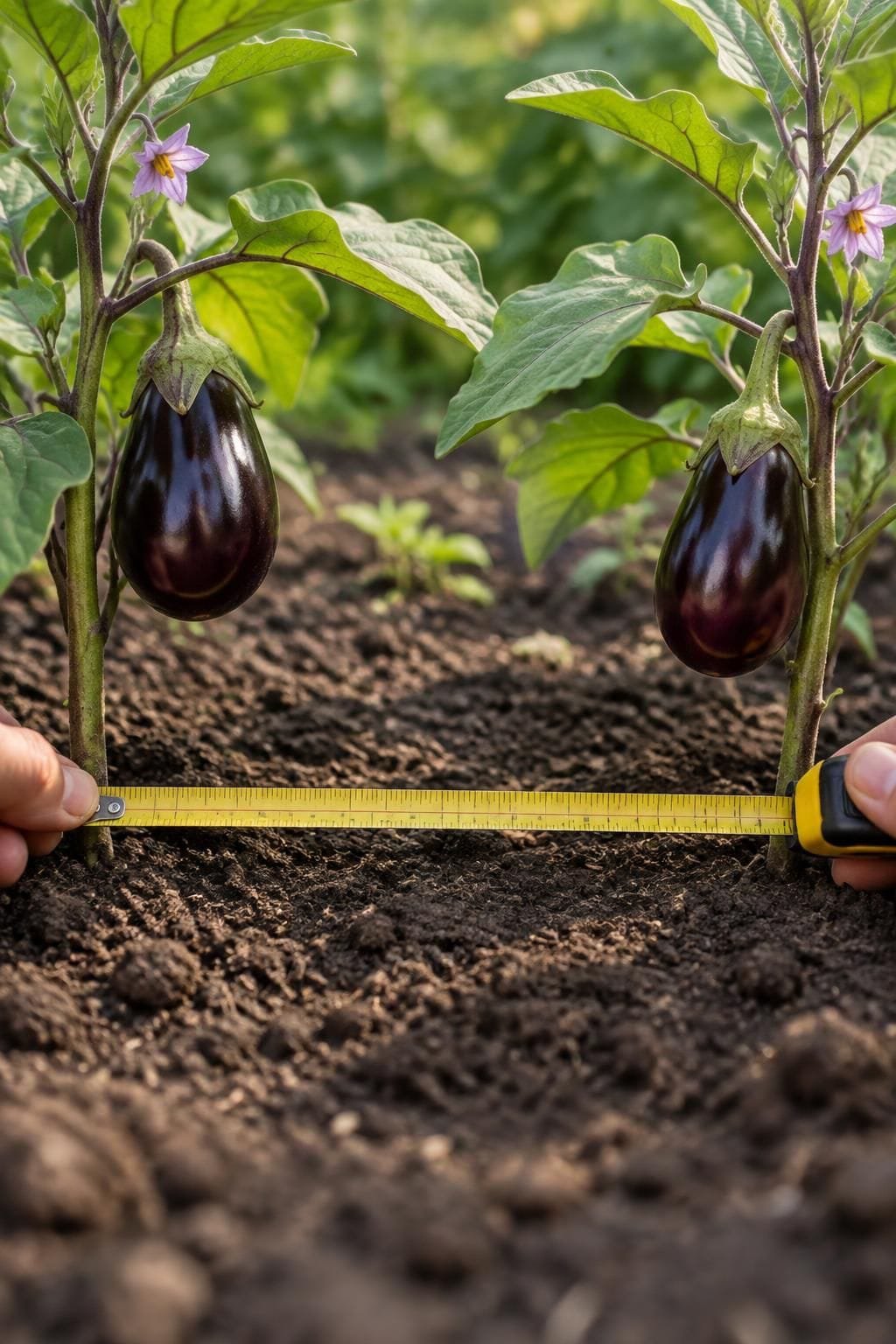
Measure from the center of one plant to the center of the next, not from edge to edge. Gardeners often measure edge to edge by mistake, and that leaves the plants closer than the label intends. An 18-inch spacing means 18 inches from stem to stem. Use a tape or a marked stick. Set the plants on the soil before you dig, so you can see the layout.
Think about the plant’s mature width as well as the planting spot. A seedling looks small in spring, but by midsummer the leaves can span much of the space. Measure the plant’s expected spread on the tag, and place it accordingly.
What happens if you plant too close?
Crowded plants shade each other and compete for water and nutrients. The lower leaves yellow sooner. The air stays humid in the middle of the plant, and the stems grow thin reaching for light. The problem is worst in humid weather, when wet foliage stays wet longer. You may also find it hard to reach the fruit, which means some goes unpicked.
You can’t easily fix crowding after planting. Removing a healthy plant to make room costs a season of growth. Set the spacing right at the start.
What does a sample layout look like?
Take a standard 4-foot by 8-foot raised bed and space plants 24 inches apart in every direction. Two plants fit across the 4-foot width, centered 12 and 36 inches from one edge. Four plants fit along the 8-foot length, at 12, 36, 60, and 84 inches. That gives eight plants, with a clear 12-inch margin around the edge for reaching in.
The same bed at 18 inches could hold ten plants. The extra plants compete for the same light and water. For a first season, eight well-spaced plants usually give you a better harvest than ten crowded ones.
Can companion plants share the same spacing?
Companion planting can share the bed, but it doesn’t remove the need for space. Plants that share a bed still compete for light and water. Eggplant Companion Plants: What to Plant With (and Avoid) covers pairing choices.
For the full growing guide, How to Grow Eggplant: Planting, Growing, and Care connects spacing to planting and harvest.