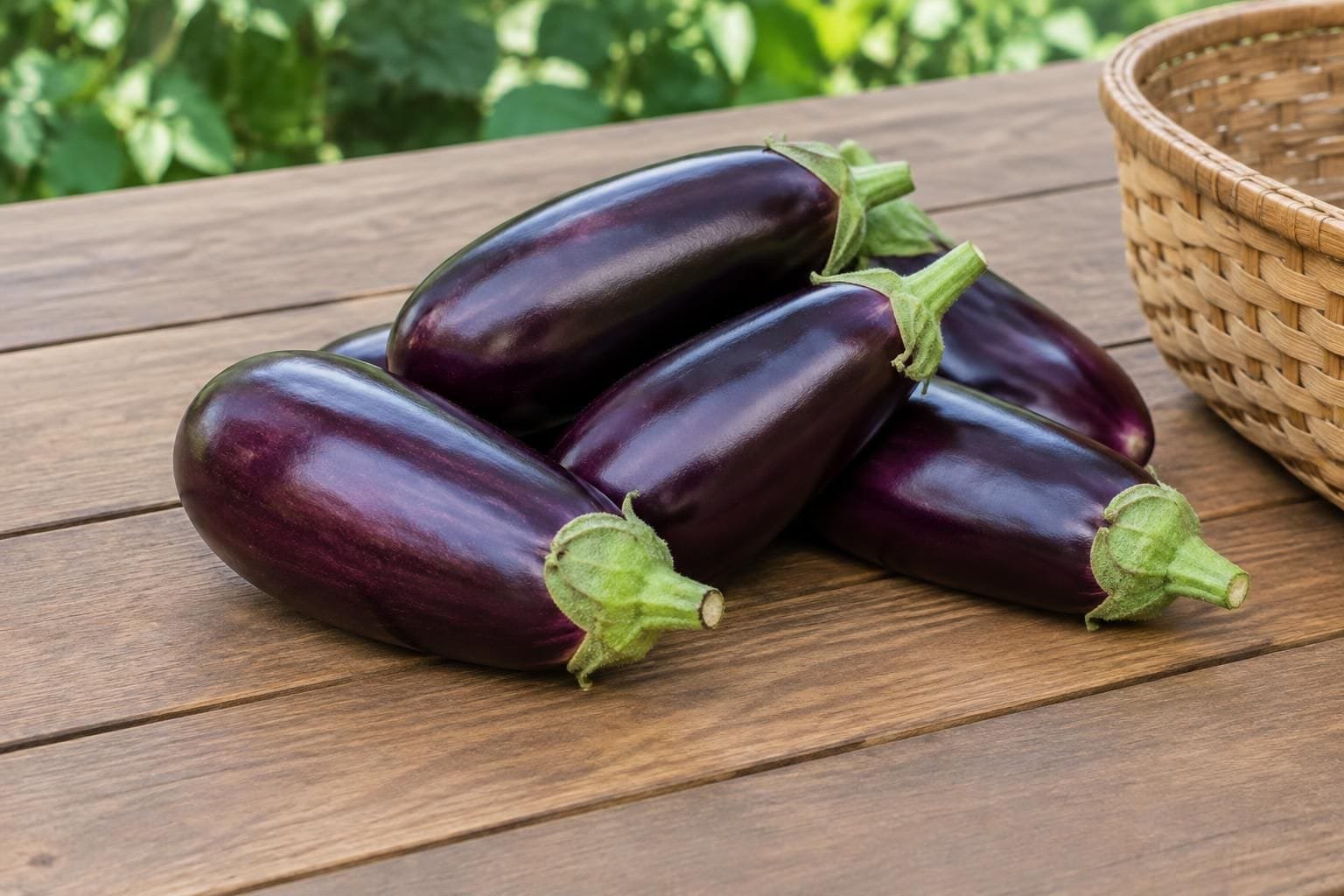
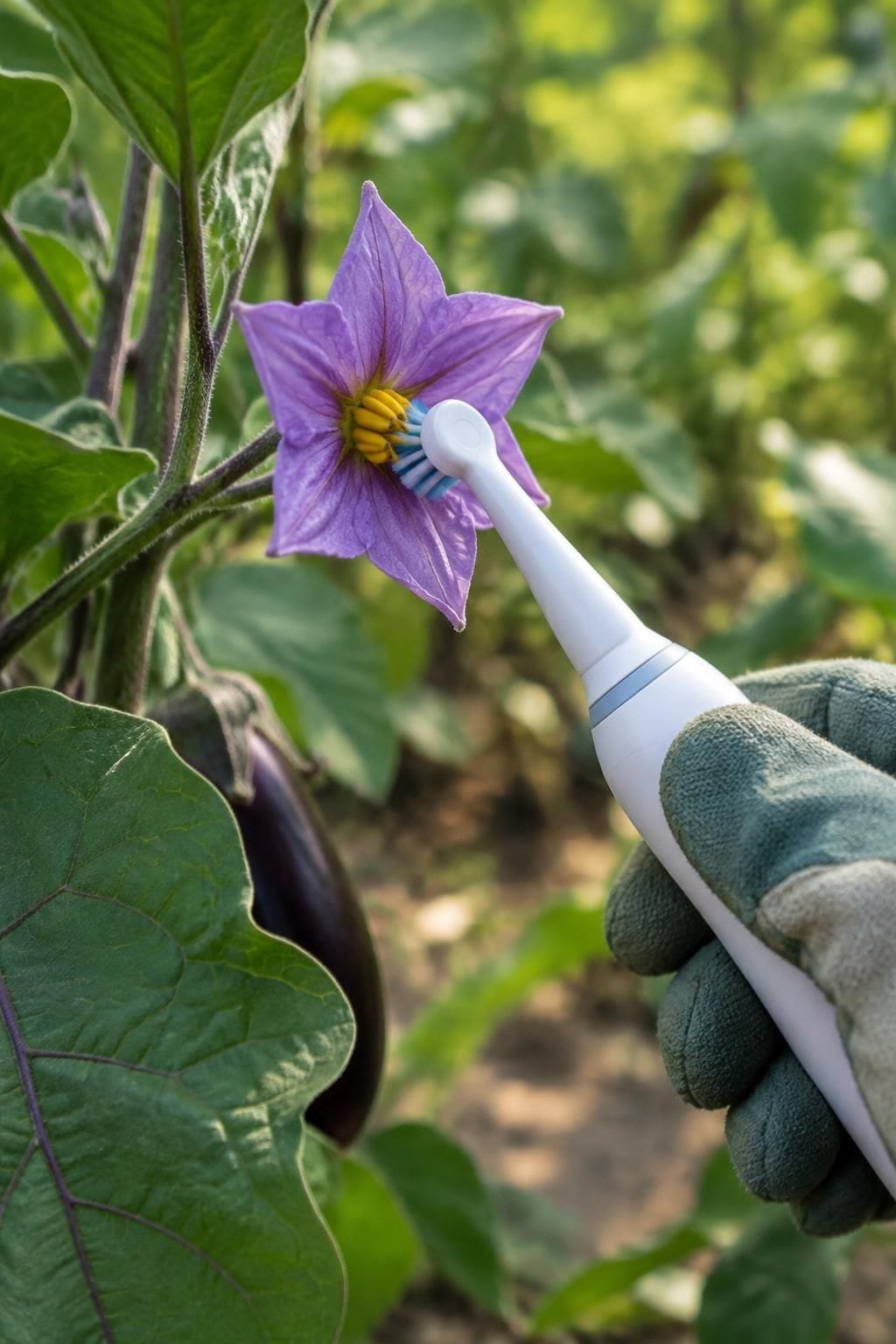
Are eggplants self-pollinating? Mostly, yes. Each flower has both male and female parts, so it can set fruit on its own. But eggplant pollen sits inside the anthers and needs vibration to come loose. Bumblebees and other buzz-pollinating bees do this well, which is why they improve fruit set. If bees are scarce, hand pollinate in the morning with a vibrating electric toothbrush held against the back of the flower for about a second.
Many gardeners see healthy flowers that never turn into fruit, and they assume the plant is at fault. Often, the flowers just need help moving pollen. This guide explains how eggplant pollination works, when hand pollination makes sense, and how to do it without damaging the plant.
How does eggplant pollination work?
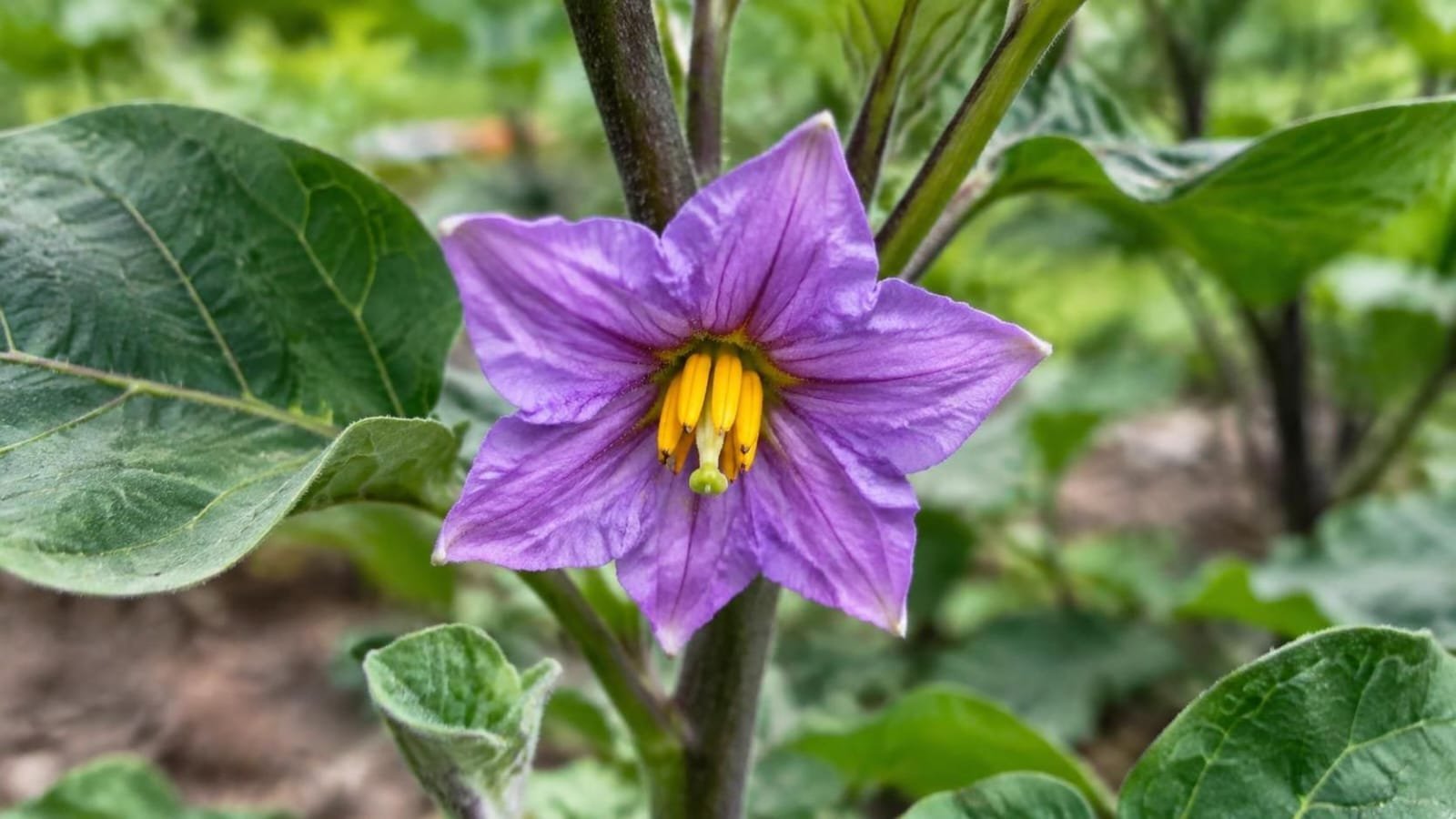
An eggplant flower holds both the male and female parts in the same bloom. The pollen sits in hollow anthers with small pores at the tip, so it doesn’t fall out on its own. Montana State University Extension describes this as buzz pollination. Bees vibrate their flight muscles on the flower, which shakes pollen out through the pores and onto the stigma.
Wind and rain can also shake the flowers, but they don’t always move enough pollen. That’s why a still, humid day can leave flowers unpollinated even on a healthy plant.
Do bees really help eggplant set fruit?
Yes. A 2022 study in Arthropod-Plant Interactions tested eggplants in open fields in northeastern Brazil. The authors found that plants visited by a vibrating bee, Xylocopa, set more fruit than plants that were left to self-pollinate or cross-pollinate on their own. Non-vibrating visitors also helped with fruit quantity and quality, and hand cross-pollination produced larger fruit than spontaneous self-pollination.
The takeaway is that eggplant doesn’t need bees to set fruit, but bees make the process more reliable. In a garden with few pollinators, that difference can matter.
When should you hand pollinate eggplant?
Hand pollinate when flowers open but fruit doesn’t follow. This can happen in a greenhouse, under row covers, or in a season with few bees. It also helps when the weather is very still or very humid, since the pollen doesn’t move well in those conditions.
Don’t wait for every flower to fail before you act. A few minutes each morning is enough to pollinate the open blooms on a plant.
How do you hand pollinate eggplant?
The simplest method is a vibrating electric toothbrush. Touch the back of the flower, behind the petals, for about one second. Repeat on the open flowers, and move from plant to plant. Do this in the morning, when the flowers are fully open and the pollen is most available.
If you don’t have a toothbrush, gently tap the top of each flower or shake the flower stem. The goal is to move pollen from the anthers to the stigma. Avoid crushing the flowers. Some growers use a small brush to move pollen directly between flowers, which works well in a greenhouse.
Does hand pollination change fruit quality?
Hand pollination helps the fruit set. The Brazilian study found no effect of pollination treatment on the fruit’s chemical properties, but hand cross-pollination produced larger fruit than spontaneous self-pollination. The main observed differences were in fruit set and size.
Why do flowers drop even after pollination?
Pollination is only one factor. Flowers can also drop from heat, cold, drought, or stress. Why Are My Eggplant Flowers Falling Off? covers those causes in detail. If the plant has flowers but no fruit for weeks, Why Is My Eggplant Not Flowering or Fruiting? covers the broader picture.
Light matters too. Eggplant needs full sun for good flowering, and How Much Sun Does Eggplant Need? explains how to check your site.
How many eggplants can one plant produce?
Good pollination matters for total yield. How Many Eggplants Per Plant, and Do They Keep Producing? covers how many fruit to expect and how long the plant keeps producing.
For the full growing cycle, How to Grow Eggplant: Planting, Growing, and Care connects pollination to planting, care, and harvest.