Good eggplant companions include legumes such as bush beans and peas, which add nitrogen to the soil, and flowers that draw pollinators. Plant spinach and lettuce where the eggplant can shade them in summer. Keep eggplant away from other nightshades in the same spot, since tomatoes, peppers, and potatoes share diseases and pests. Many companion claims come from gardening blogs and aren’t backed by trials, so treat them as ideas to test in your own garden.
Companion planting is popular with eggplant growers, and the list of recommended partners is long. Some pairings make good sense. Others are based on folklore or on a single anecdote. This guide sorts the common advice by how well it holds up, and explains how to plan a bed that avoids the real risks.
What does companion planting actually do?
Companion planting covers several different ideas, and the evidence differs for each. Some pairings share space efficiently. Some attract beneficial insects or pollinators. Some are said to repel pests or confuse them. Some are supposed to improve soil. Each idea needs its own check, and the ideas don’t all work the same way.
HGTV reports, citing research, that companion planting may not raise yields, but it can produce larger, healthier plants with less damage from flea beetles and Colorado potato beetles. That’s a modest claim, and it’s a good way to set expectations.
Why do nightshades need careful planning?
University of Nebraska–Lincoln Extension notes that eggplant is closely related to sweet pepper, tomato, and potato. That relationship matters for companion planting. Plants in the same family share many diseases and pests, so growing them side by side can help a problem move from one plant to the next.
The practical rule is simple: avoid putting eggplant right next to tomatoes, peppers, or potatoes if you’ve had trouble with disease. Spacing them apart, or moving them to a different bed for several years, reduces the risk. The companion planting idea doesn’t fix this, because shared diseases still travel between nightshades.
Which companions have the best support?
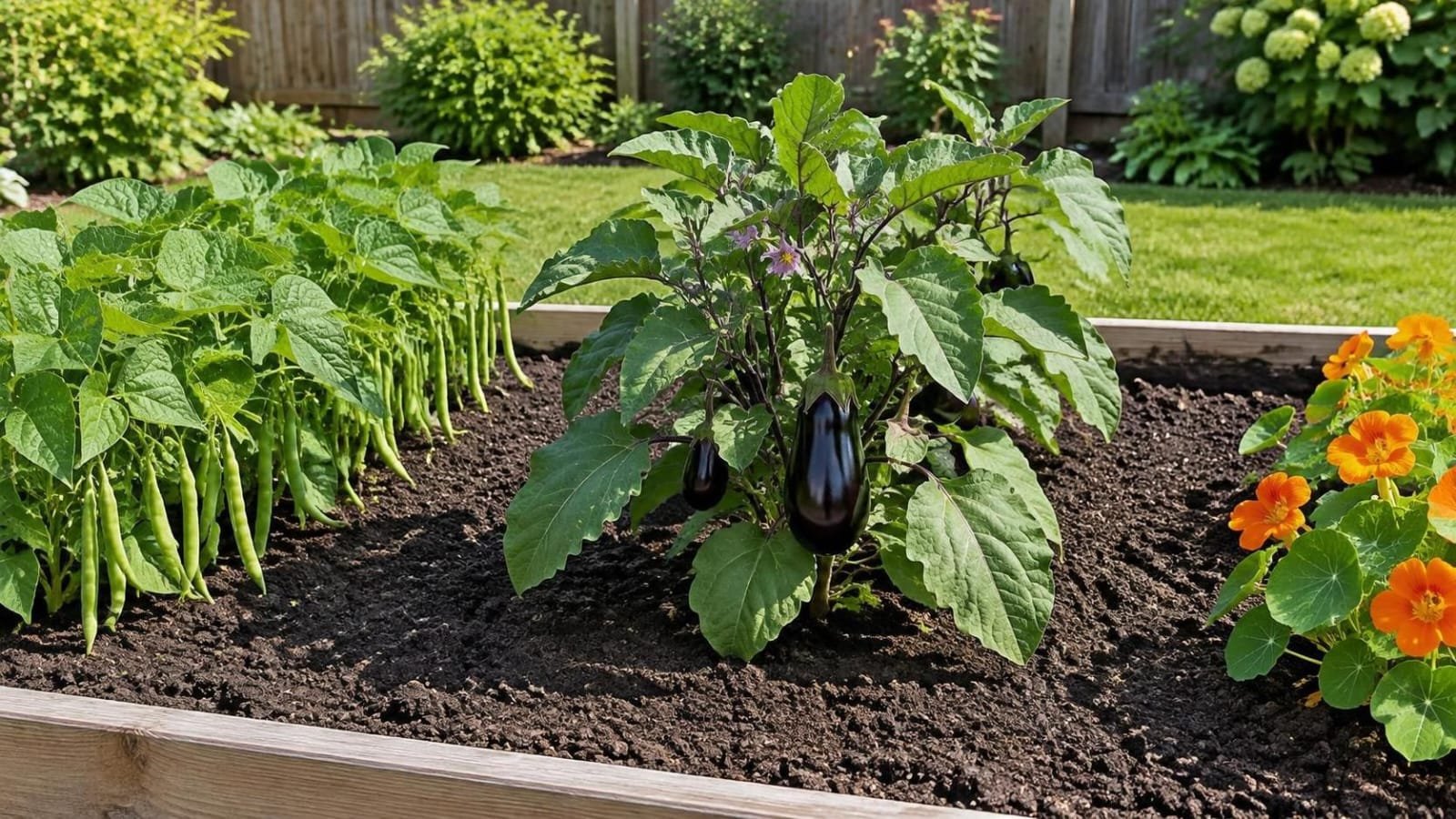
Legumes are the most straightforward partners. Bush beans and peas are legumes that fix nitrogen with the help of soil bacteria, and some of that nitrogen becomes available to nearby plants as the roots and residue break down. The amount that reaches the eggplant varies, so don’t count on beans to replace a feeding plan. How and When to Fertilize Eggplant covers feeding directly.
Pollinator flowers are another well-supported idea. Washington State University Extension notes that eggplant pollination and fruit set are enhanced by bee activity. Planting flowers that attract bees nearby can help. Marigolds, nasturtiums, and other pollinator-friendly flowers are common choices, though the strength of their effect depends on your local insects.
Which companions are supported mainly by folklore?
Many pest-repelling claims are weaker. Herbs such as basil, thyme, and catnip are often said to deter beetles, and marigolds are said to repel many insects. Those claims are common in garden writing, but trial results vary, and many come from anecdotes. Plant them for pollinators, fragrance, or a tidy edge, and don’t rely on them to control pests.
Hot peppers are a special case. Some blogs say peppers protect eggplant from soil diseases. Peppers are a nightshade, though, and they share many of the same problems, so the planting may carry disease rather than prevent it. Check your own history before you plant them together.
Which plants are commonly advised against?
Fennel is the plant most often named as a bad neighbor for eggplant. Some sources say fennel releases compounds that inhibit other plants. The evidence for that effect is mixed, but many gardeners keep fennel away from the rest of the bed as a precaution, and that costs little.
Tall plants can be a problem for shade. Tomatoes and corn grow tall enough to shade eggplant when they’re planted on the south side. Put taller plants on the north side of the bed, or keep them far enough away that they don’t block morning or midday sun. How Much Sun Does Eggplant Need? covers light needs in detail.
What do the most common companions look like?
The table below sorts common companions by the kind of benefit they’re said to offer and how well that claim is supported. Use it as a planning tool, and treat the support column as an honest guide rather than a promise.
| Companion | Commonly cited benefit | How well supported | Practical note |
|---|---|---|---|
| Bush beans or peas | Nitrogen fixation for nearby plants | Well supported in principle; the amount varies | Keep them spaced so they don’t crowd the eggplant |
| Pollinator flowers (marigold, nasturtium) | Attracts bees and beneficial insects | Supported in general; strength depends on local insects | Plant near, not in, the eggplant row |
| Spinach or lettuce | Summer shade from the eggplant | Mostly practical reasoning | Works best where eggplant shades cool-season greens |
| Basil or thyme | Said to deter beetles | Mostly anecdotal | Plant for fragrance and pollinators |
| Hot peppers | Said to protect against soil disease | Weak and mixed; shares nightshade problems | Consider spacing or rotation instead |
| Tomatoes or potatoes | Shared growing needs | Good growing match, but shared diseases | Avoid close planting if disease is a concern |
| Fennel | Advised against | Mixed evidence | Keep it in its own spot as a precaution |
Swipe sideways to see every column.
The table shows that the strongest benefits are practical ones. Nitrogen from legumes, shade from taller crops, and pollination from nearby flowers all have mechanisms you can see. Pest-repelling claims deserve more skepticism.
How do you plan a companion bed?
Start with the eggplant’s needs. It needs full sun, steady moisture, fertile soil, and room. For keeping moisture consistent with neighboring crops, see How Often Should You Water Eggplant?. Choose companions that fit those needs. A companion that needs shade or wet feet may struggle next to a plant that needs full sun and good drainage. Best Soil for Eggplant: pH, Mix, and Amendments covers the soil side of that match.
Next, plan the layout. Place tall companions on the north side, leave walking room between plants, and keep companions from crowding the eggplant’s root zone. How Far Apart to Plant Eggplant covers spacing ranges, and the same layout principles apply here.
Can you grow companions in containers and raised beds?
Yes. A large container can hold one eggplant and a small companion such as basil or a compact flower, provided each plant has enough root room. How to Grow Eggplant in Containers and Pots covers pot size. A raised bed makes it easier to plan companion blocks, since you can see each plant’s footprint. How to Grow Eggplant in Raised Beds covers bed setup.
How do you test companion ideas in your own garden?
Companion claims are easy to repeat and hard to verify, so test them yourself. Plant one bed with a companion and one without, using the same variety and soil. Keep notes on flower count, fruit set, pest damage, and plant size. Repeat the test for at least two seasons before you change your plan.
Keep the test simple. One variable at a time gives you a clear answer. If the companion bed looks better, keep it. If the difference is small, the companion is still a nice choice for color or pollinators, but it doesn’t need to be part of your pest plan.
What’s a good starting companion plan?
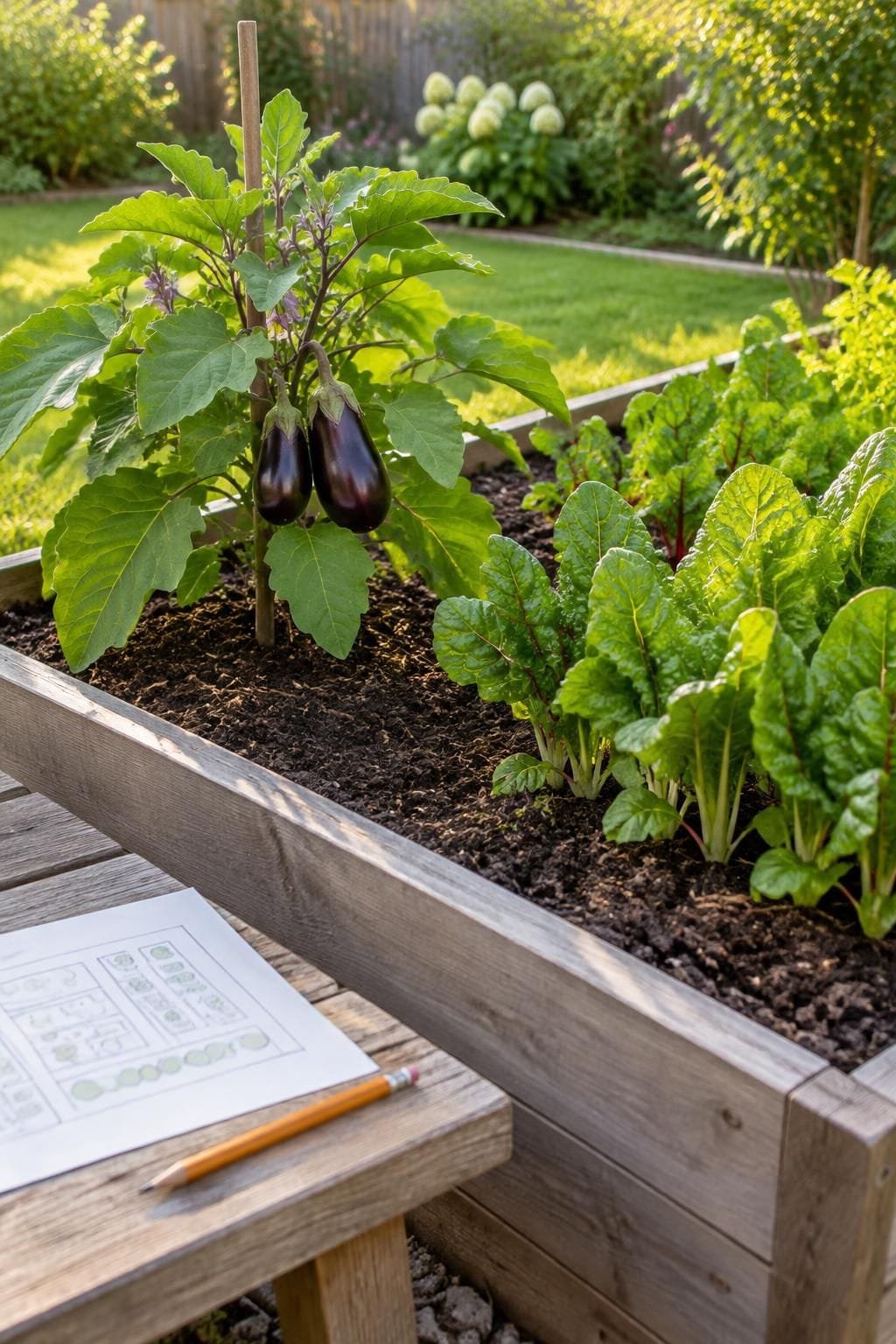
For a first season, plant eggplant with bush beans nearby for nitrogen, a few pollinator flowers at the edge of the bed, and a row of greens on the north side where they won’t be shaded. Keep tomatoes, peppers, and potatoes in another part of the yard, and move the eggplant to a different bed for several years before you return it to its first spot.
That plan uses the ideas with the strongest support and avoids the rest. For the whole growing guide, How to Grow Eggplant: Planting, Growing, and Care connects companion choices to planting, care, and harvest. Types of Eggplant: 15+ Varieties to Grow covers the varieties that fit a small or shared bed.