
What is the best soil for eggplant? Well-drained, fertile loam with plenty of organic matter. Test the pH first. University guides give a range from about 5.5 to 7.5, and most recommend staying between 6.0 and 6.8. Avoid heavy clay and unamended sand. Mix in compost before planting, and let the soil test decide whether lime or sulfur is needed.
Soil is the foundation for everything else you do with eggplant. It holds the water, the nutrients, and the air the roots need. The right soil gives the plant a steady start. The wrong soil causes problems that fertilizer and water can’t fix. This guide covers texture, pH, organic matter, drainage, and how to amend a bed or a container.
What kind of soil does eggplant need?
Texas AgriLife Extension describes eggplant soil as well-drained, fertile sandy loam. It also says more organic matter is better. Alabama Cooperative Extension System advises adding organic matter to create a well-drained bed. It warns against planting in unamended sandy or heavy clay soil.
Loam is the target. It holds water and drains freely, and it gives roots room to spread. Pure sand drains too fast and dries out between waterings. Heavy clay holds too much water, and roots can suffocate in wet, compacted soil.
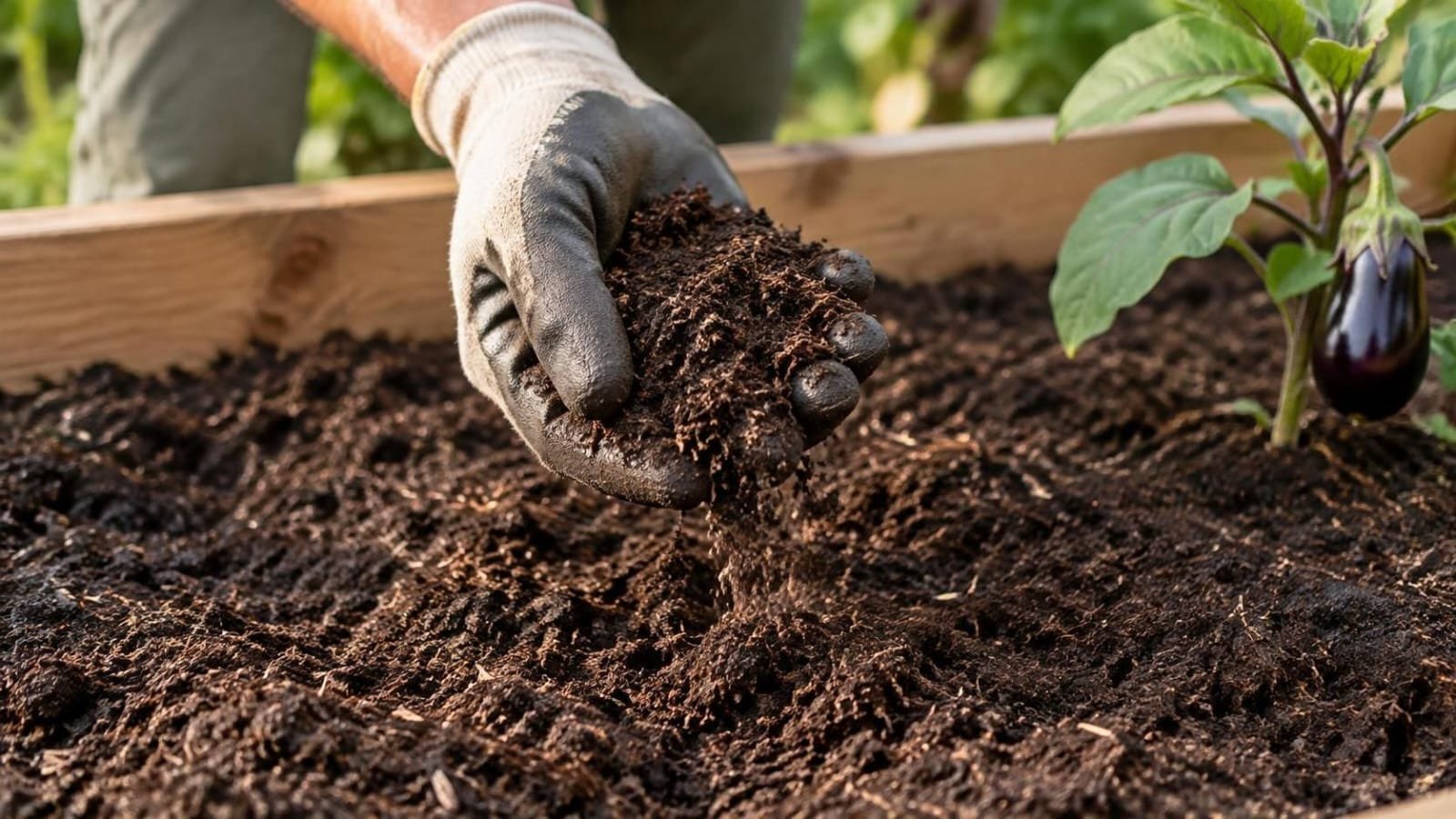
What soil pH does eggplant need?
Soil pH controls how available nutrients are to the plant. Most nutrients are easiest to reach in a moderate range, and extreme pH can lock some of them up. The pH isn’t the only factor, but it’s one you can measure and adjust.
The recommended ranges vary by source. University of Georgia Extension says the pH should be between 6.0 and 7.0 for best growth. University of California Integrated Pest Management gives 6.0 to 6.5. Garden.org gives about 5.5 to 6.0 for eggplant and peppers. Utah State University Extension gives 6.5 to 7.5 for eggplant in its region. The overlap is wide, and most guides fall between 6.0 and 6.8.
Test the soil before you adjust anything. Lime raises pH in acid soil, and sulfur lowers it in alkaline soil. Lime is slow to act, so apply it in the season before planting, when the lab report calls for it. Your extension agent can tell you how much to use for your soil.
How do you test your soil?
A soil test tells you pH, nutrient levels, and sometimes organic matter. West Virginia University Extension recommends testing the soil. Ask your local extension agent to help you read the report for your crop. Take several samples from across the bed, mix them, and send a subsample to the lab.
Retest on a regular schedule, and after you add a large amount of amendment. Some guides suggest checking pH yearly, while others suggest every few years. A single test is a snapshot, and gardens change as you add compost, fertilizer, and lime. How and When to Fertilize Eggplant covers how the test feeds into a feeding plan.
Why does organic matter matter so much?
Organic matter improves nearly every soil property. It adds structure, which helps sandy soil hold water and helps clay soil drain. It supports the soil life that cycles nutrients. Compost and well-rotted manure are the most common choices for home gardens.
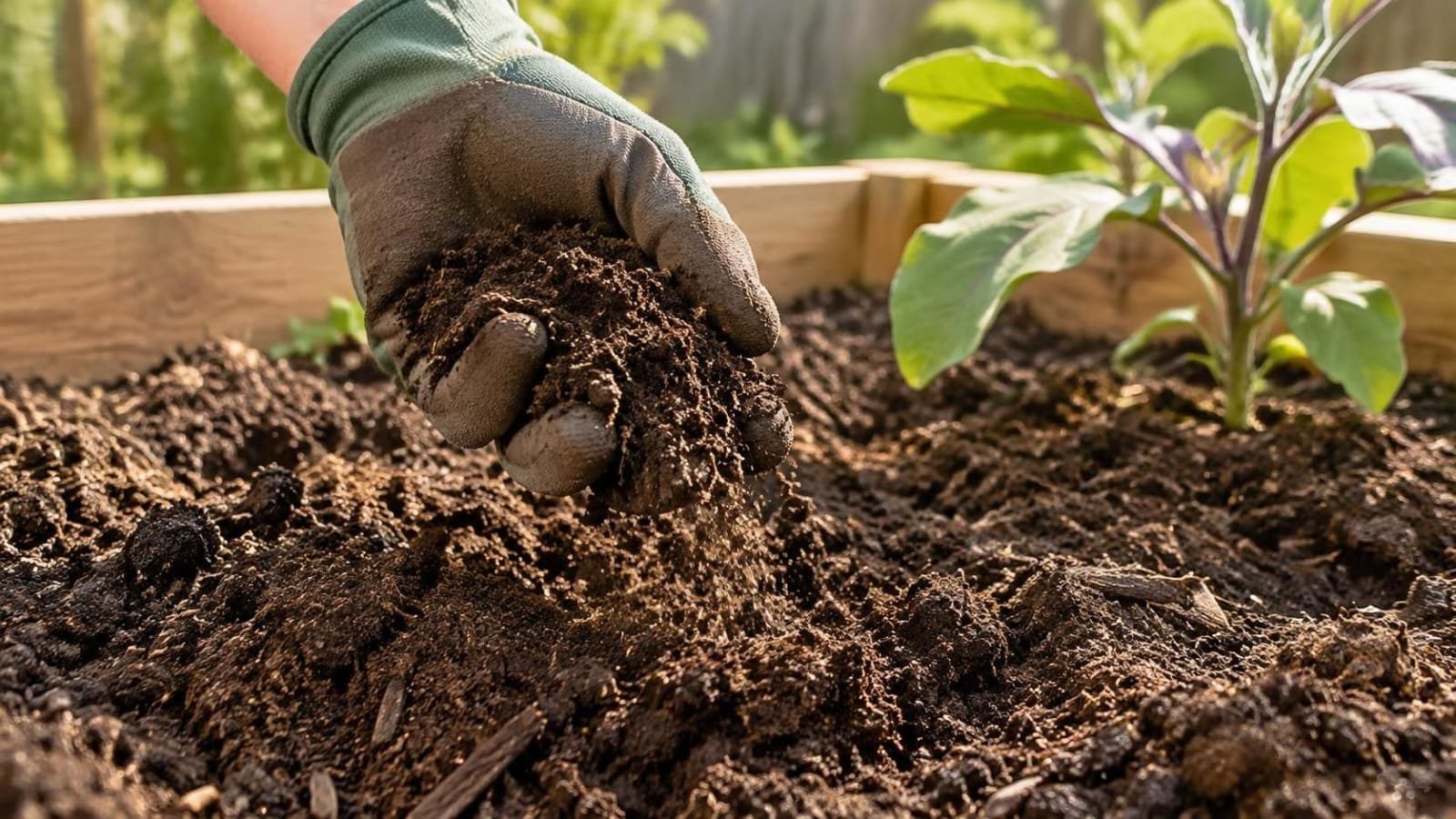
Work the compost into the top 6 to 8 inches of soil before planting, as the University of Georgia Extension recommends for home beds. Mix it evenly. Compost that hasn’t finished breaking down can tie up nitrogen temporarily, so use finished compost. Organic matter is a long-term investment, and it improves each season you add it.
How do you fix heavy clay?
Heavy clay is the most common soil problem for eggplant. It holds water, warms slowly in spring, and drains poorly after rain. Adding organic matter helps over time, but the fix usually takes several seasons.
If the drainage is very poor, a raised bed is a practical option. How to Grow Eggplant in Raised Beds covers bed setup and the fill mix. You can also grow eggplant in large containers if the bed site stays wet.
How do you improve sandy soil?
Sandy soil drains too fast and holds few nutrients. Compost is the most useful amendment, because it improves water holding and adds nutrients. Mulch also helps slow evaporation. Water and feeding need more attention in sand, so check the soil often.
Sand is not a problem you can fix in one season. Keep adding organic matter each year, and watch how the bed holds water. How Often Should You Water Eggplant? covers how sandy soil changes the watering schedule.
What makes a good container mix?
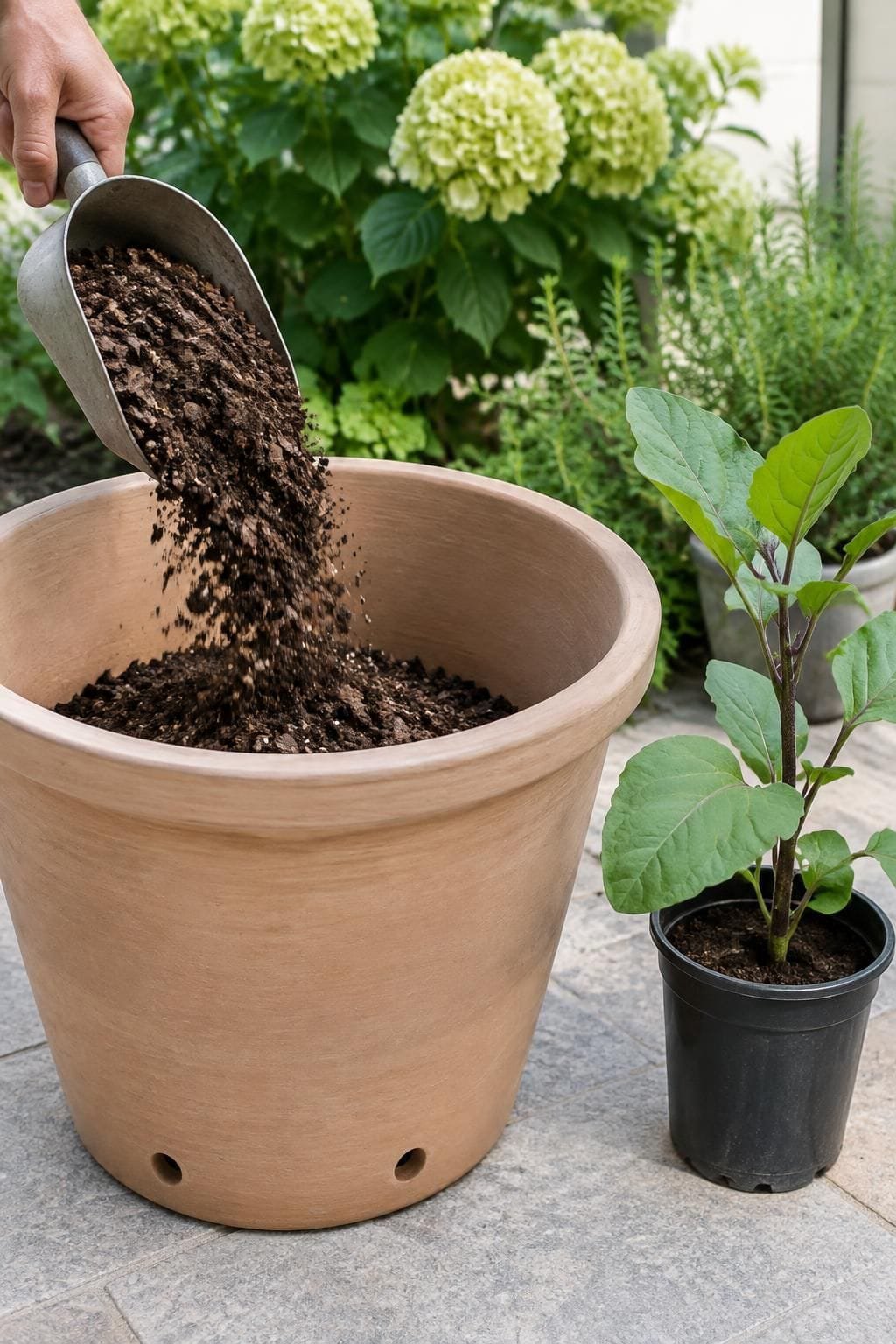
A container needs a mix, not garden soil. Garden soil packs down in pots, drains poorly, and can carry disease. A good container mix is light and well-drained, and it holds enough moisture between waterings. Many growers use a commercial potting mix, sometimes blended with compost.
How to Grow Eggplant in Containers and Pots covers pot size and container choice. The mix matters most in the first weeks, when the root system is still small.
Should you add lime, sulfur, or both?
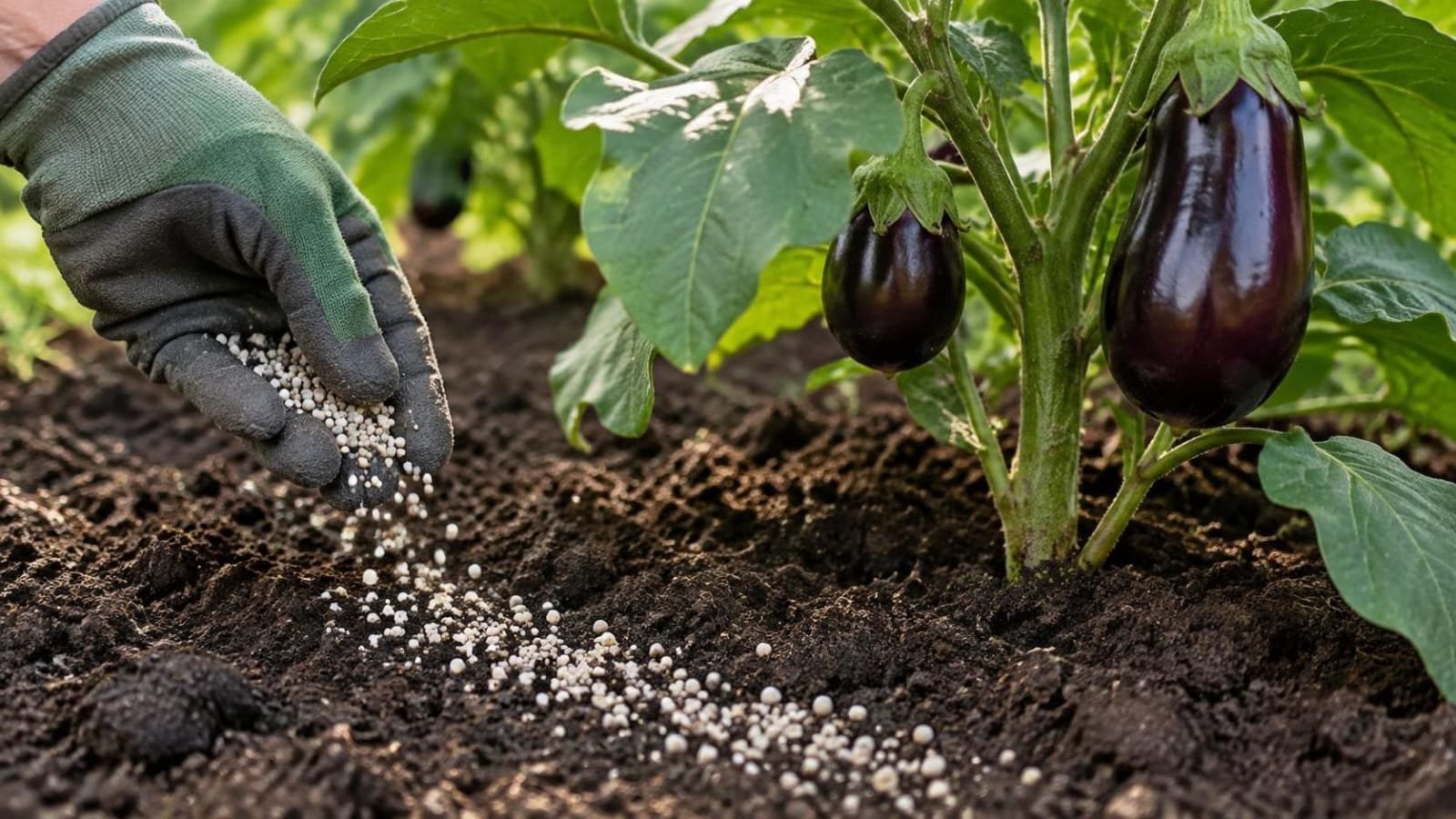
Only if the soil test calls for it. Lime raises pH in acid soil and also supplies calcium. Sulfur lowers pH in alkaline soil. Adding either without a test can push the soil out of range and create new problems. Make changes slowly, and retest after a season.
Pelleted or powdered amendments act at different speeds, so read the product label and follow the lab’s recommendation. The label is the best guide to rates.
Does soil affect companion planting and spacing?
Yes. Soil shapes how plants share a bed. Companions that need different moisture or pH will struggle together. Eggplant Companion Plants: What to Plant With (and Avoid) covers pairing choices. How Far Apart to Plant Eggplant covers spacing, since roots and leaves both need room.
How do you prepare the bed before planting?
Start with the soil test, then loosen the bed to the full depth of the root zone. Add compost and any amendments the test calls for, mix them in, and rake the surface level. Water the bed a day or two before planting so the soil settles and holds moisture.
Keep the bed free of weeds before you plant. Weeds compete for nutrients and water, and removing them now is easier than fighting them later. For the full growing guide, How to Grow Eggplant: Planting, Growing, and Care connects soil to planting, care, and harvest.
One thought on “Best Soil for Eggplant: pH, Mix, and Amendments”