
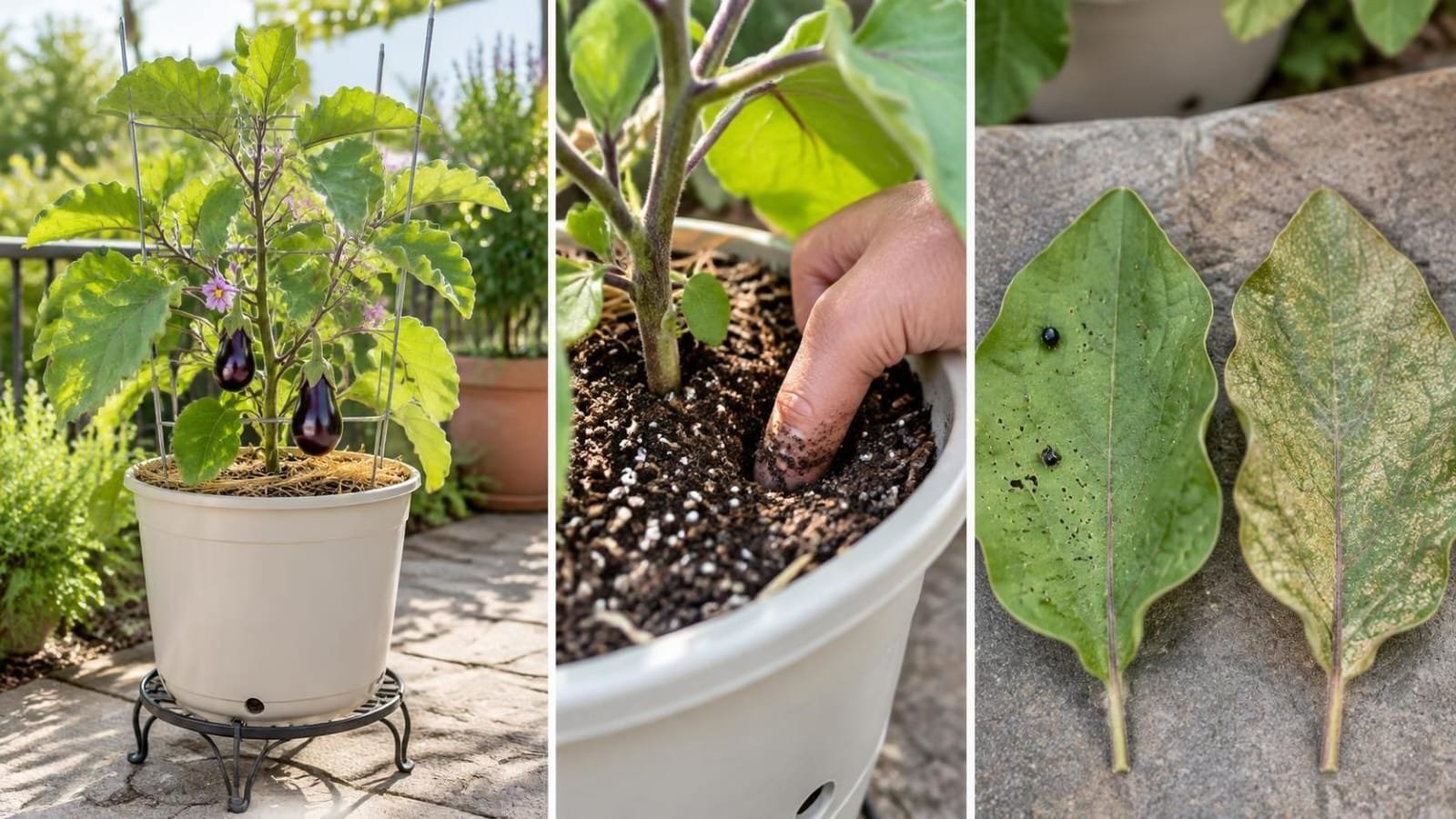
Give each eggplant its own pot of at least 5 gallons, with drainage holes, filled with a lightweight soilless potting mix. Set it in full sun once nights stay above 50°F, put a cage or stake in on planting day, check the mix with your finger before every watering, and feed it on a regular schedule, because a pot holds only what you put in it.
In the ground, a late watering is usually forgiven. In a pot, the root zone is only as big as the pot, so the margin is thin. Most of what follows is about widening that margin. If you want the whole-plant picture across beds and containers, our main guide to how to grow eggplant covers it, and this article stays with the pot.
Buy the Pot Before You Buy the Plant
Most of us shop for the pot last, after the plant is already in the cart. Do it the other way around. North Carolina A&T Extension sets the floor for eggplant at five gallons, and Penn State Extension describes a pot about 14 inches wide that is at least as tall as it is wide. A standard 5-gallon bucket with holes drilled in the bottom sits right on that line.
Bigger is easier. More mix holds more water, so the pot swings less between soaked and bone dry on a hot afternoon. Some garden sites will tell you a compact variety can live in a 2-gallon pot. Fair enough, it can be done with small-fruited types, but you would be watering far more often, so treat it as the outer edge of what works.
Plant one eggplant per pot. A few popular guides squeeze three into a 20-inch tub, yet the extension guides reviewed for this article all set one plant per container, and three plants will drain one pot’s water supply quickly in midsummer.
Material changes how the pot behaves. The table below sums up what the extension guides say, and the choice mostly comes down to your climate.
| Pot type | Summer behavior | Best fit |
|---|---|---|
| Light-colored plastic | Stays cooler, holds moisture longer | Hot summers, or anyone who sometimes forgets to water |
| Dark plastic | Holds extra heat, which can damage roots in summer | Cool regions in spring, when warm roots help; some growers repaint or shade it later |
| Terracotta or unglazed clay | Porous, so it dries out faster | Gardeners who check pots daily; the weight also helps in wind |
| Glazed ceramic | Nonporous, holds water longer | A stable, attractive pot; make sure it has real drainage holes |
The one thing every source agrees on is drainage. Without holes in the bottom, roots sit in water and run out of oxygen, and no amount of good care repairs that.
Resist the Shovel: What Goes Inside
Garden soil looks like the obvious fill. In a pot it packs down, drains poorly, and starves roots of air. Penn State recommends a soilless mix built from materials such as composted bark, coir, perlite or vermiculite, and says you can blend in finished compost for up to half the volume. Mixes that are mostly peat tend to compress as the season goes on, so lean toward a bark-and-perlite blend when you have the choice.
Start each season with fresh mix. Texas A&M AgriLife Extension advises against reusing last year’s mix unless it has been properly composted, because it can carry disease into the next crop. That matters more for eggplant than for most vegetables, since verticillium wilt, a soilborne disease, is the most common eggplant disease in home gardens.
Choose a Plant the Pot Can Carry
Compact, small-fruited types are the easy route. A University of Nebraska–Lincoln guide lists Ichiban, Hansel and Fairy Tale among the cultivars adapted to container growing. Larger classics such as Black Beauty also work in a 5-gallon pot; they just grow taller and need a cage. Our guide to eggplant varieties and types has the longer list if you want to compare.
Planting Day: Wait for Warm Nights, Then Support Early
The urge is to put the plant out the moment the garden center has it. Hold off. University of Minnesota Extension says eggplants set out before overnight lows stay above 50°F can suffer from the chill and may never recover enough to bear fruit. Extension growers also tend to plant eggplant about a week after tomatoes. For timing in your own climate, see when to plant eggplant.
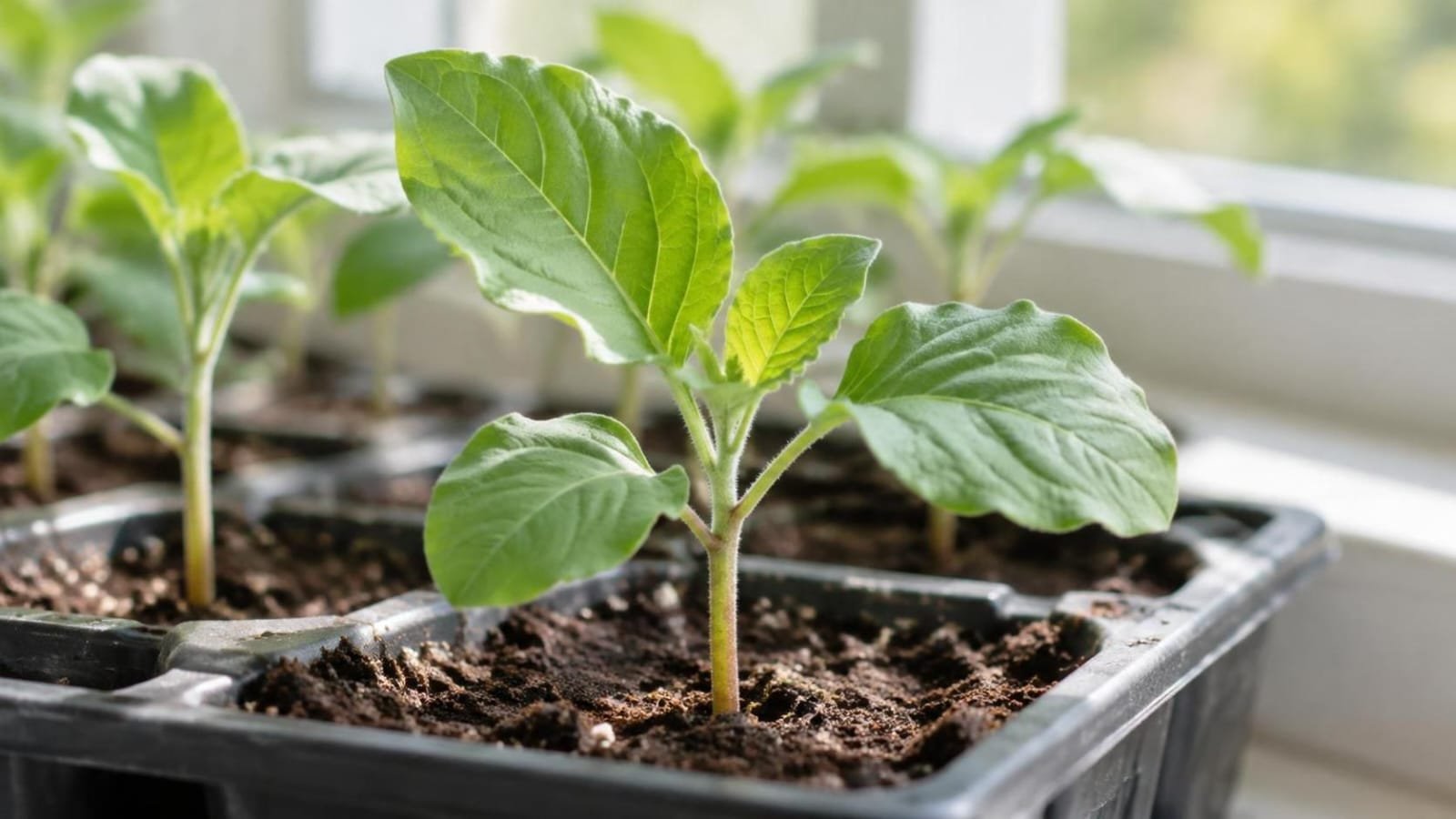
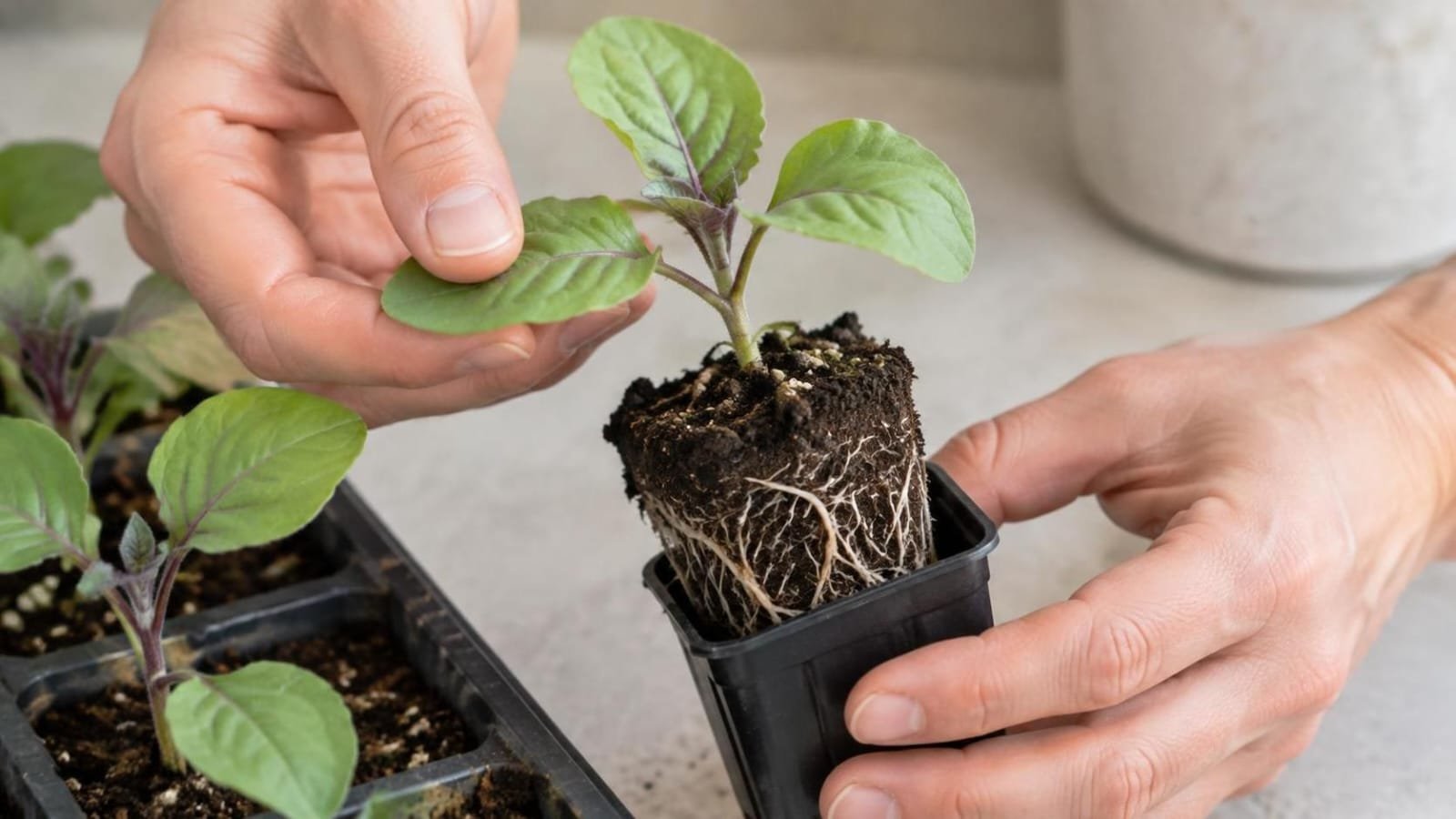
If you grow your own plants, the early stages are covered in how to grow eggplant from seed, and the step-up from seedling cells is in when and how to repot eggplant seedlings. What follows is only the move into the final pot.
- Wet the mix thoroughly before planting, so you are not planting into dry pockets.
- Set the plant so the stem meets the mix at the same level it did in its nursery pot.
- Push a cage or stake in now. Waiting until the plant needs support means driving it through roots.
- Water until it runs out of the bottom, then put the pot where it gets full sun.
That last point deserves a moment. The Nebraska guide notes that eggplant in partial shade yields less and ripens later, so give the pot the sunniest spot you have.
Watering Without a Calendar
The usual move is the watering can, every morning, same amount, rain or shine. Here’s the thing: a schedule ignores the weather, and a pot responds to the weather within hours. Extension guides put container watering at once a day or more in hot summers, and far less in a cool, cloudy week.
So check first. Push a finger two inches into the mix. If the tip is dry, water. If it is damp, wait. When you do water, keep going until it drains from the bottom holes, because a light sprinkle wets only the top inch and teaches roots to stay shallow. Water at the base and try to keep the leaves dry, since wet foliage invites disease.
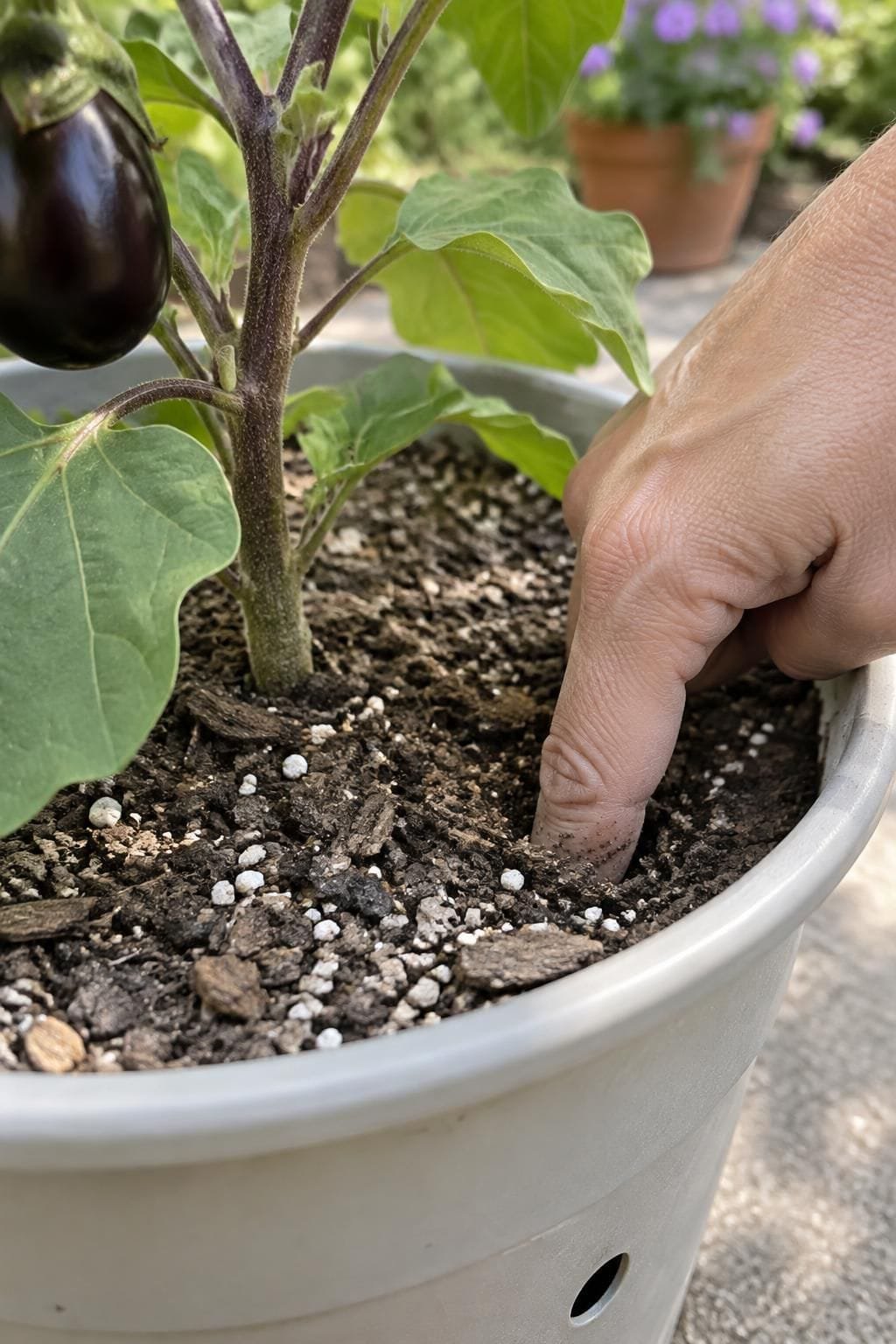
Consistency matters as much as quantity. Arkansas Extension attributes bitter eggplant fruit to plant stress and slow growth during hot, dry weather, which is exactly what a pot that keeps drying out produces. A light layer of mulch on top of the mix slows evaporation.
One trap: yellowing lower leaves can mean too much water or too little food, and the two look alike at a glance. Look at the mix. If it is soggy and the pot drains slowly, ease off. If the mix dries quickly and the plant is pale, feed it.
Feeding a Plant That Lives on What You Give It
Most potting mixes come with a starter charge of fertilizer that does not last long. North Carolina A&T puts it at roughly two weeks, after which it suggests a regular water-soluble feed with equal parts nitrogen, phosphorus and potassium, then a switch to a higher-potassium formula once the plant flowers. A slow-release fertilizer mixed in at planting, topped up with a soluble feed, is another common approach. Recommended frequency runs from every couple of weeks to weekly depending on the product, so follow the label on whatever you buy, and check local rules if you are choosing anything beyond plain fertilizer.
Resist the instinct to push nitrogen. Too much produces a big, leafy plant that is slow to set fruit, a point we return to below.
Fertilizer salts also build up in a pot with nowhere to go. Texas A&M suggests flushing the mix about once a week with plain water until it drains freely from the bottom, and lists scorched leaf edges as a sign of high salts. A white crust on the rim or the mix surface is another hint.
The Plant Looks Fine but the Flowers Keep Dropping
Eggplant is not shy about telling you it is unhappy. It simply drops the flowers. University of Minnesota Extension links poor flowering to drought, daytime temperatures above 90°F, and nights below 60°F or above 70°F. Fruit can also develop white sunscald patches in hot, dry weather when there is not enough leaf cover to shade them.
In containers, heat is worth a second look. A pot sitting on sun-baked concrete or against a south-facing wall can run much hotter than the air temperature suggests. Lifting it onto a stand or giving it afternoon shade during a heat wave is reasonable horticultural guidance, though it is not something the extension guides here tested directly.
To narrow the cause, check these in order:
- Recent night and day temperatures. A cool snap or heat wave in the past week is the most common culprit.
- Hours of direct sun. A plant that has crept into shade as the season moved on will flower less.
- Leaf color and growth. Very dark, lush foliage with few buds points to excess nitrogen.
- Watering history. If the mix has been drying out completely between waterings, stress alone can explain it.
Be honest about the limits here. Heat stress, a chilled plant and a thirsty one can look nearly identical on the stem, and you may find two causes at once. If you cannot sort it out, your local Extension office can look at photos and help.
Pests That Find Pots Anyway
Fresh mix keeps soilborne problems down, but insects fly in. A common situation, described in an Arkansas Extension question-and-answer: a gardener transplants eggplants and finds the leaves gone the next day. The answer given was flea beetles, which the guide says can defoliate a young transplant in 12 hours or less.
Flea beetles leave many tiny, round holes, like a shotgun pattern. Young plants are the most vulnerable, so many extension guides suggest covering them with floating row cover until they are large enough to tolerate some damage. If you decide to spray, read the product label and check which products are approved where you live, since the rules differ by country and region.
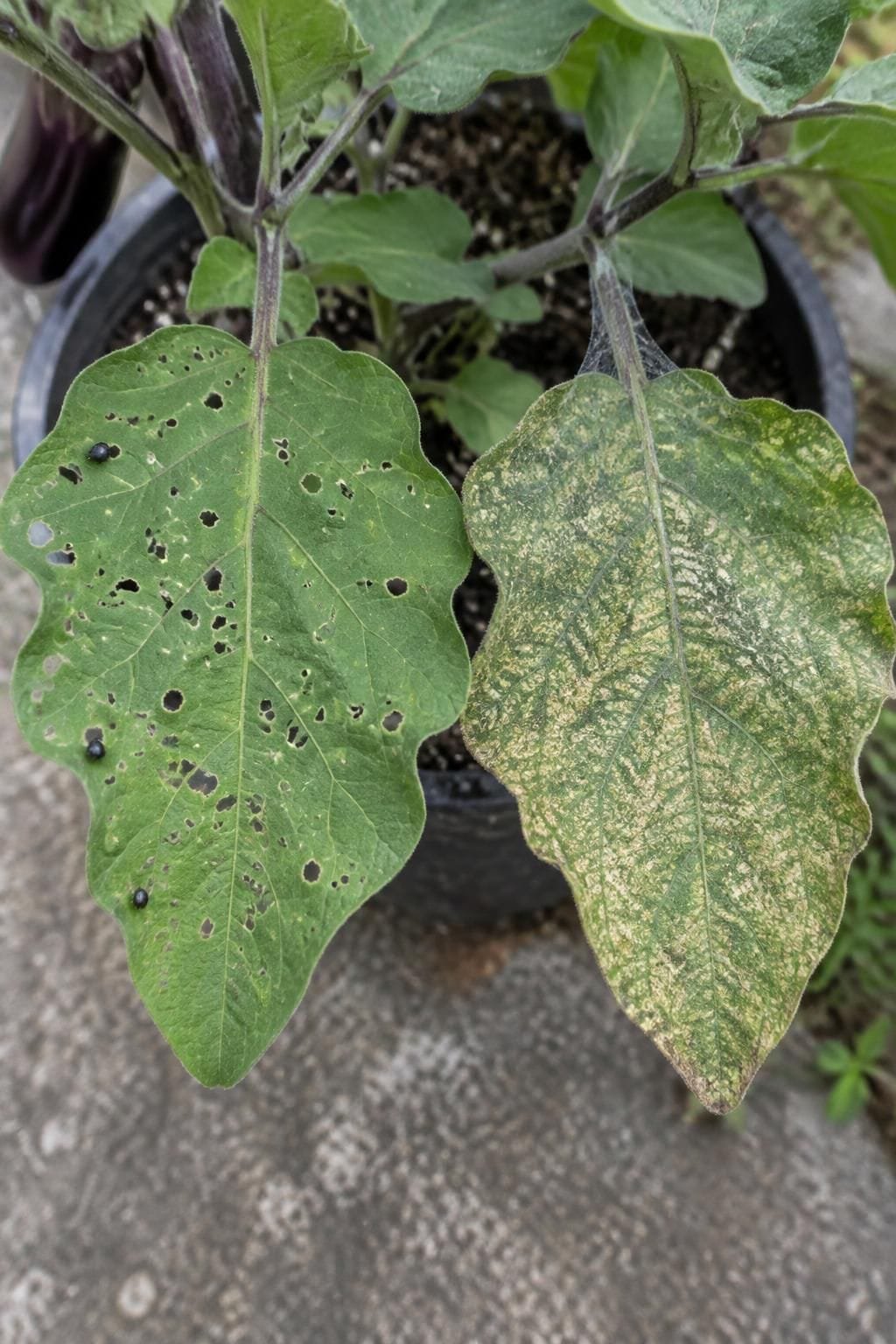
Spider mites are the other regular visitor in hot, dry spells. They give leaves a bleached or bronzed, stippled look rather than clean holes. Flip a leaf over and look at the underside before you decide anything. Large chewed areas and defoliation point toward Colorado potato beetles instead.
Harvest Without Wrecking the Plant
Pick when the skin is shiny and the fruit feels firm. University of Georgia Extension advises cutting the fruit with a sharp knife or pruners rather than twisting it off, since twisting can limit later production. Once the skin turns dull and the seeds darken, the fruit is past its best. Regular picking encourages the plant to keep setting more.
Quick Answers
Can eggplant grow in a 3-gallon pot?
It can with compact varieties, but extension guides set the working minimum at 5 gallons for standard types, and a smaller pot will need much closer watching.
Can I grow it indoors in a container?
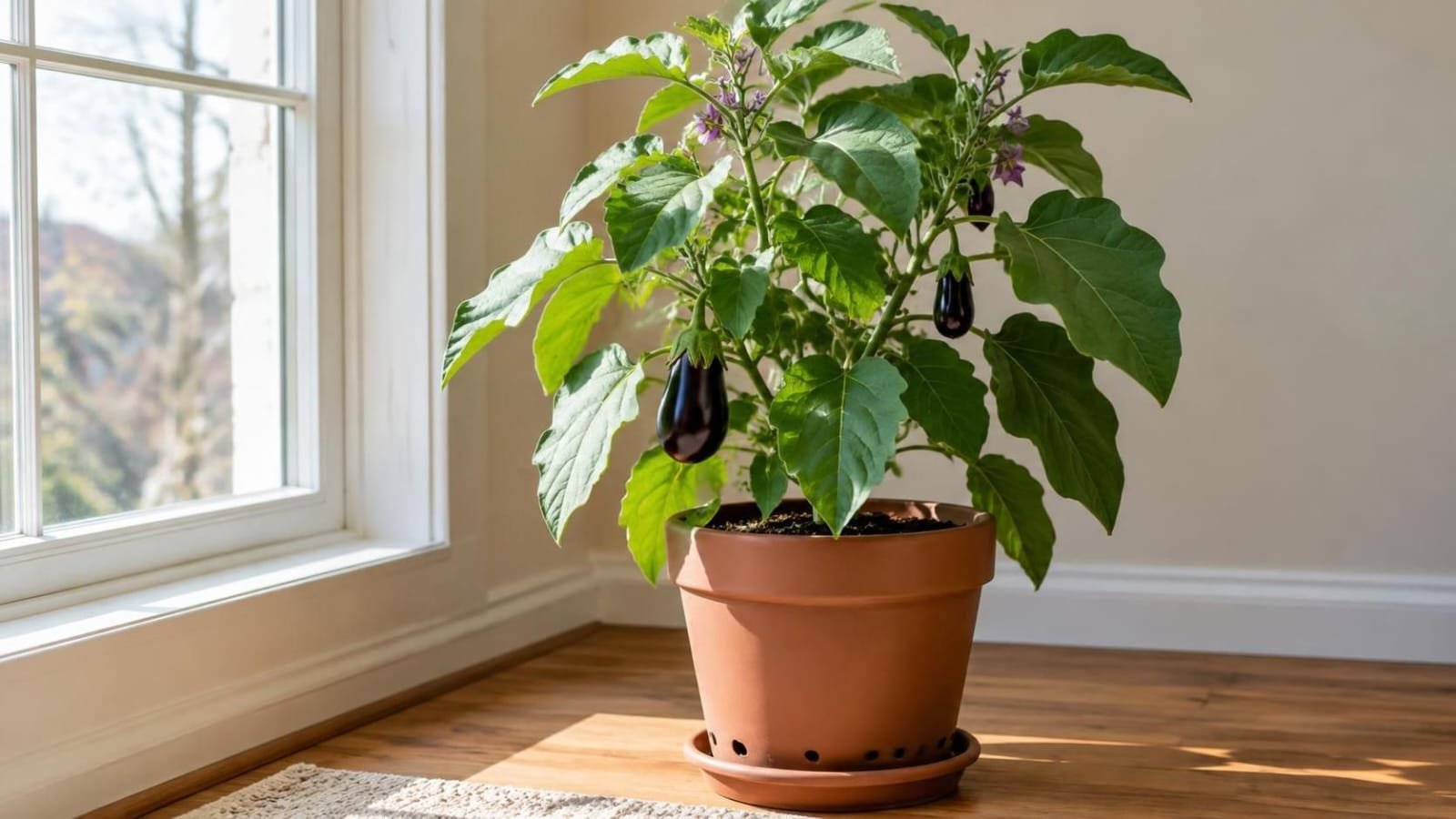
Only with strong light and warmth. The details are in our guide to growing eggplant indoors.
Can I reuse last year’s mix?
Only if it has been properly composted. Otherwise start fresh.
One thought on “How to Grow Eggplant in Containers and Pots”