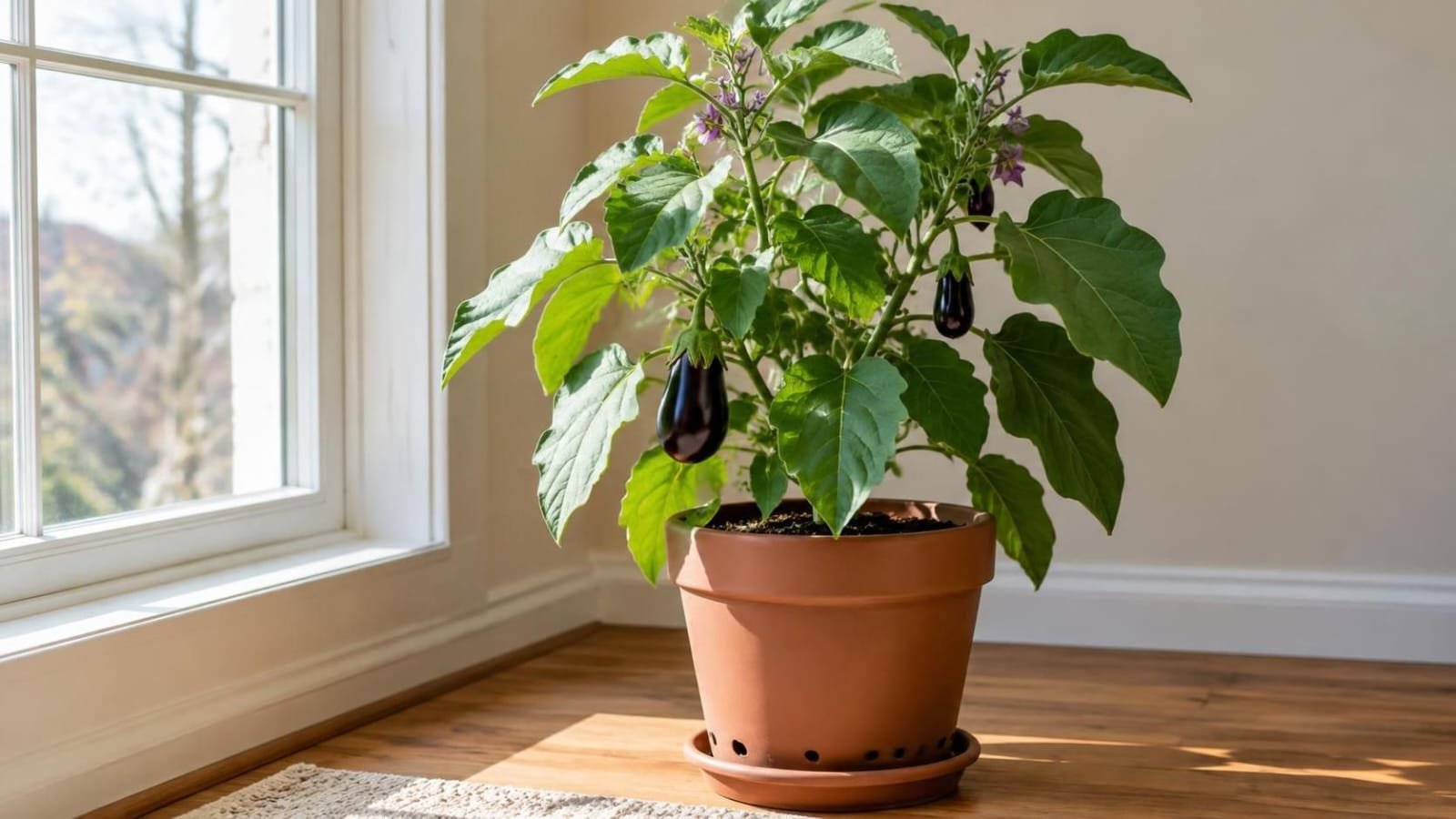
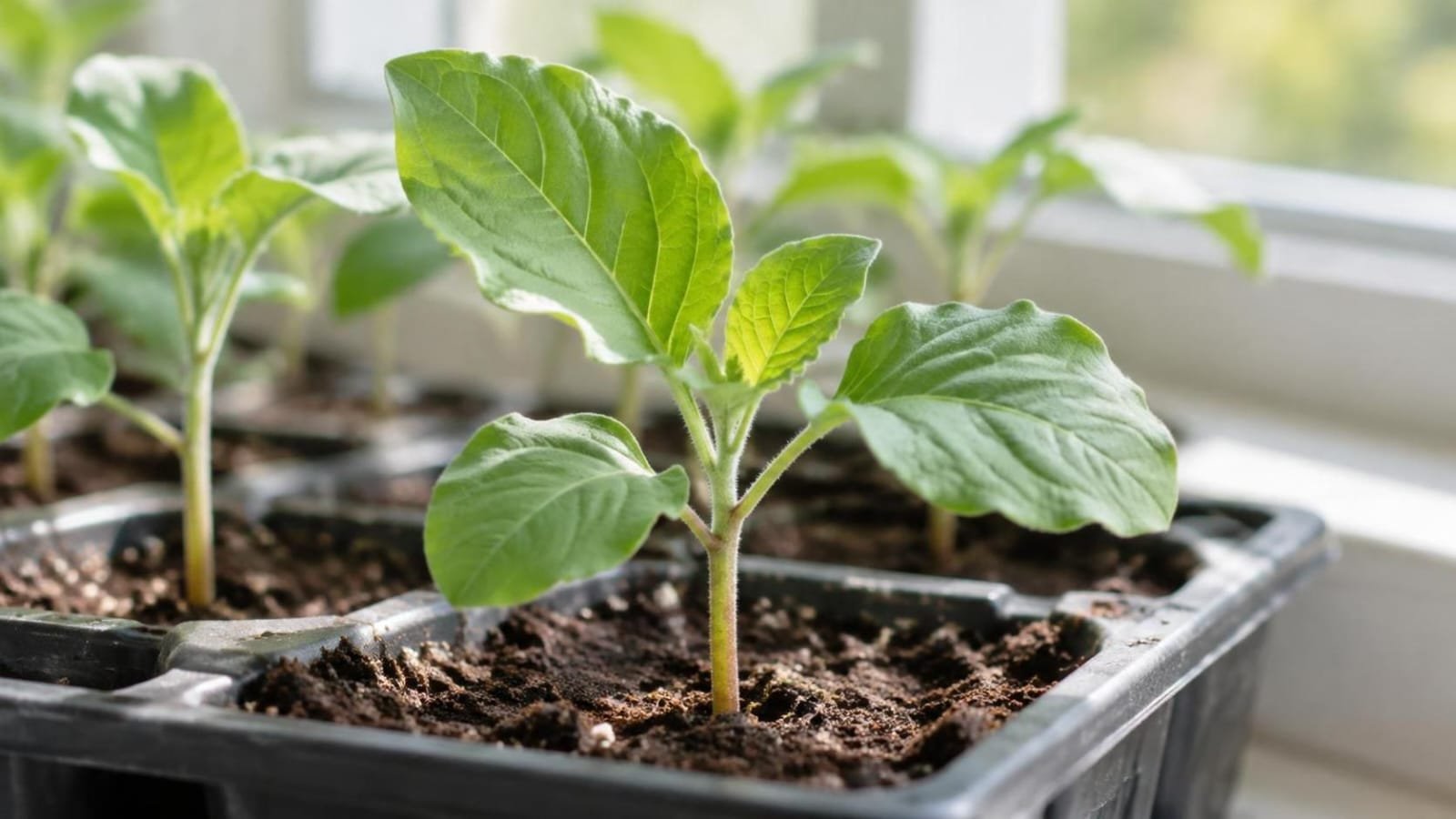
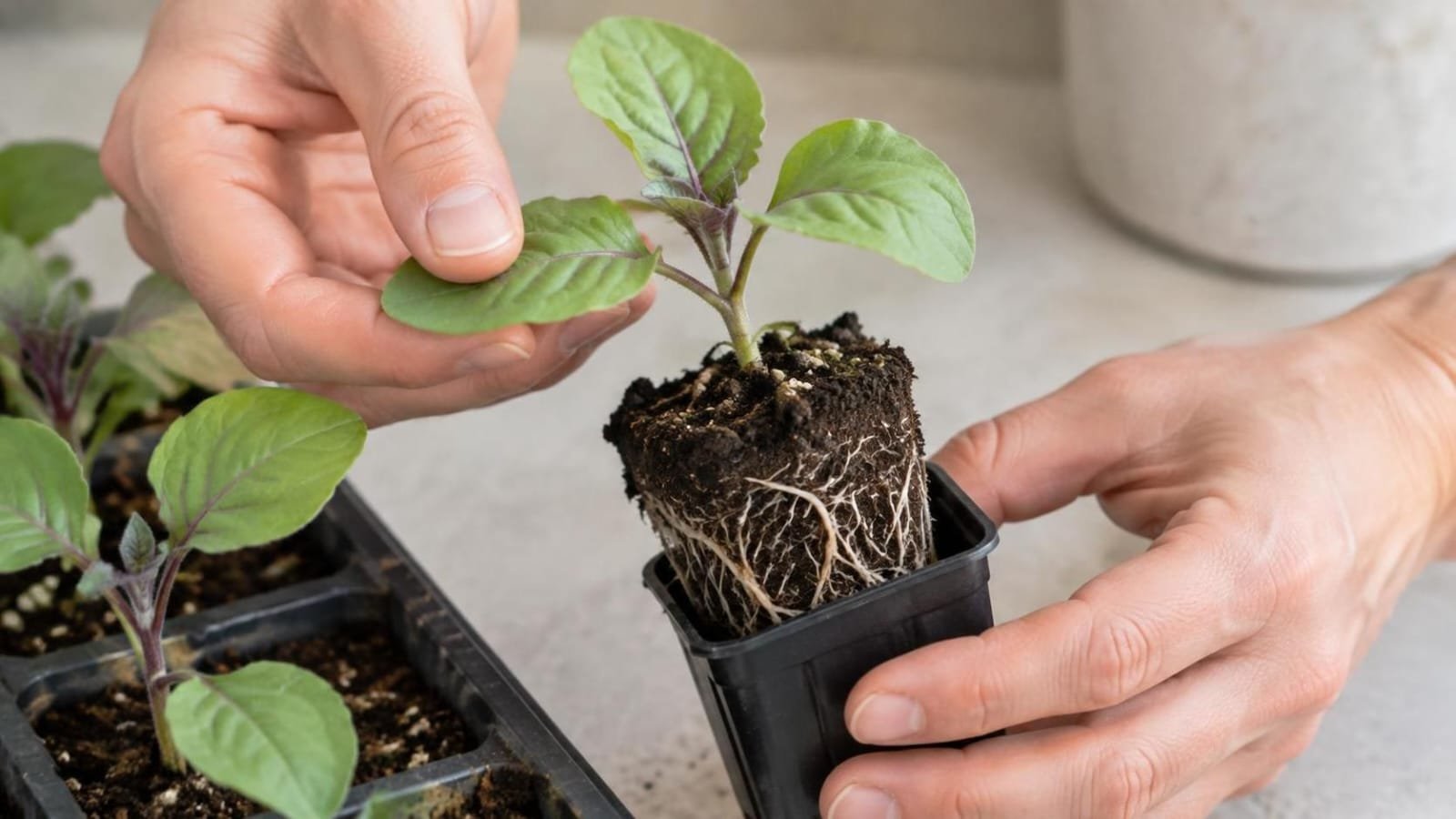
Start eggplant seed indoors about six to eight weeks before you plan to transplant. Sow it about 1/8 to 1/4 inch deep in a fine, sterile seed-starting mix, and keep the cells warm, around 80 to 90°F, until the seed sprouts, which usually takes about a week. Then give the seedlings bright light and cooler nights, pot them up as they grow, and ease them outdoors over one to two weeks before planting.
Many gardeners buy eggplant transplants and never think about the seed. That’s a fine choice. Starting from seed, though, opens up varieties that rarely appear on a garden center shelf, and it lets you control the seedlings from the first day. The cost is effort at the start, because eggplant is a warm-season plant with a long season, and the seed needs steady heat before anything visible happens.
Why start from seed
Seed offers more choice than any nursery display. Heirloom types, Asian and Italian groups, and small-batch varieties are often easier to find as seed than as plants. A packet also costs far less than a tray of transplants, which matters when you want to try several types side by side.
The trade-off is time. You’ll spend several weeks managing small seedlings before the weather is ready for them, and they need a warm spot and daily attention. If you can provide that, you end up with plants you chose and raised yourself from the first cell.
Choosing and storing seed
Buy fresh seed from a reliable supplier, and check for a packed-for or sell-by date when the company lists one. Eggplant seed stays viable for several years when kept cool and dry, but germination falls as the seed ages. Older seed can still sprout, just less reliably, so sow a little extra and thin the cells later.
Store leftover seed in a sealed container in a cool, dry place. A kitchen cabinet away from the stove works better than a garage, where temperatures swing from hot to cold. Label every packet with the variety and year, since young seedlings of different eggplant types can look very alike.
Timing the sowing
Work backward from the date you hope to set plants outside. University of Missouri Extension’s high tunnel guide puts transplanting about six to eight weeks after sowing, which gives you a practical starting window for the calendar.
The exact date depends on your last frost and the weather that follows it. When to Plant Eggplant works through that calendar, so this article only asks you to keep the timeline in mind while you plan. Sow too early and the seedlings outgrow their cells while they wait for warm weather. Sow too late and they reach the garden small and slow to start.
How deep should you sow eggplant seed?
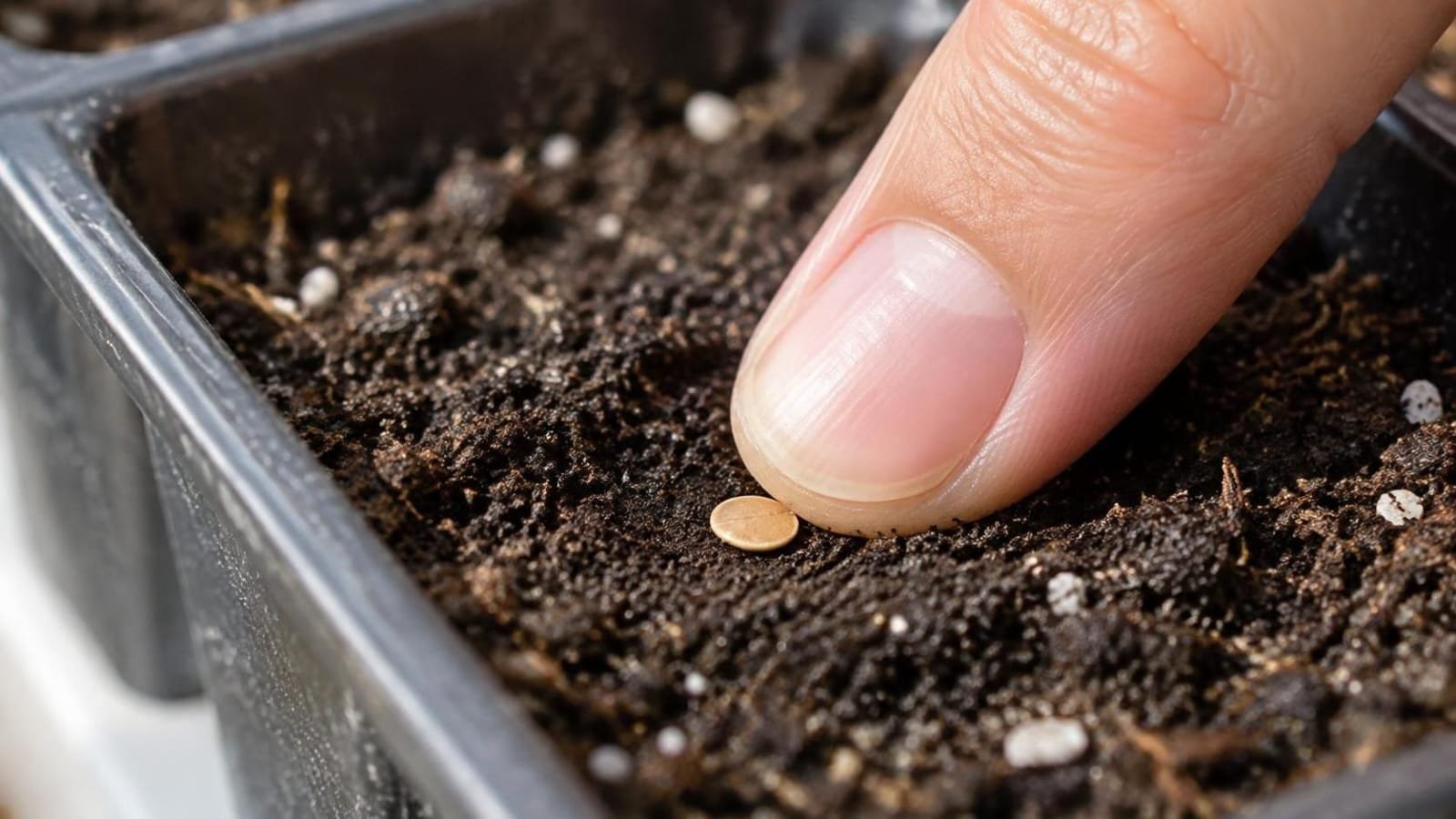
Eggplant seed is small, and it needs to sit shallow. Texas AgriLife Extension recommends sowing at one eighth to one quarter inch deep. Make a small dimple in the mix, drop the seed in, and cover it lightly.
Fill the cells with a fine, sterile seed-starting mix rather than garden soil. Garden soil packs down in small cells, drains badly, and can carry disease into the tray. Moisten the mix before you fill the cells, so the water spreads evenly through the medium. Press one or two seeds into each cell and label it right away.
Sowing two seeds per cell is a common habit, since not every seed sprouts. Once the strongest seedling has a few true leaves, thin the cell by snipping the weaker one at the soil line. Pulling it out can disturb the roots of the seedling you keep.
What eggplant seed needs to germinate
Germination is where many first attempts stall. A peer-reviewed study on eggplant seed found that germination can be erratic or completely inhibited at low temperatures. The same study found that priming, a controlled soak before sowing, improved germination in cool conditions. That points to the main job at this stage, which is warmth.
Keep the cells around 80 to 90°F, which a seedling heat mat supplies well. At that range the first sprouts usually appear within about a week, and cooler conditions stretch the wait out considerably. Cover the tray with a clear dome or a loose plastic bag to hold humidity, and check it every day.
Keep the mix moist, never soggy. Waterlogged seed can rot before it sprouts, and wet surfaces invite fungal problems. Once the first sprouts show, lift the cover a little so the air doesn’t stay saturated around the tray.
Priming is an option for growers who want to push germination in cool weather, but it needs care. The study used controlled solutions and set timings, so check the method carefully before copying a soak from a forum post.
Light and warmth after emergence
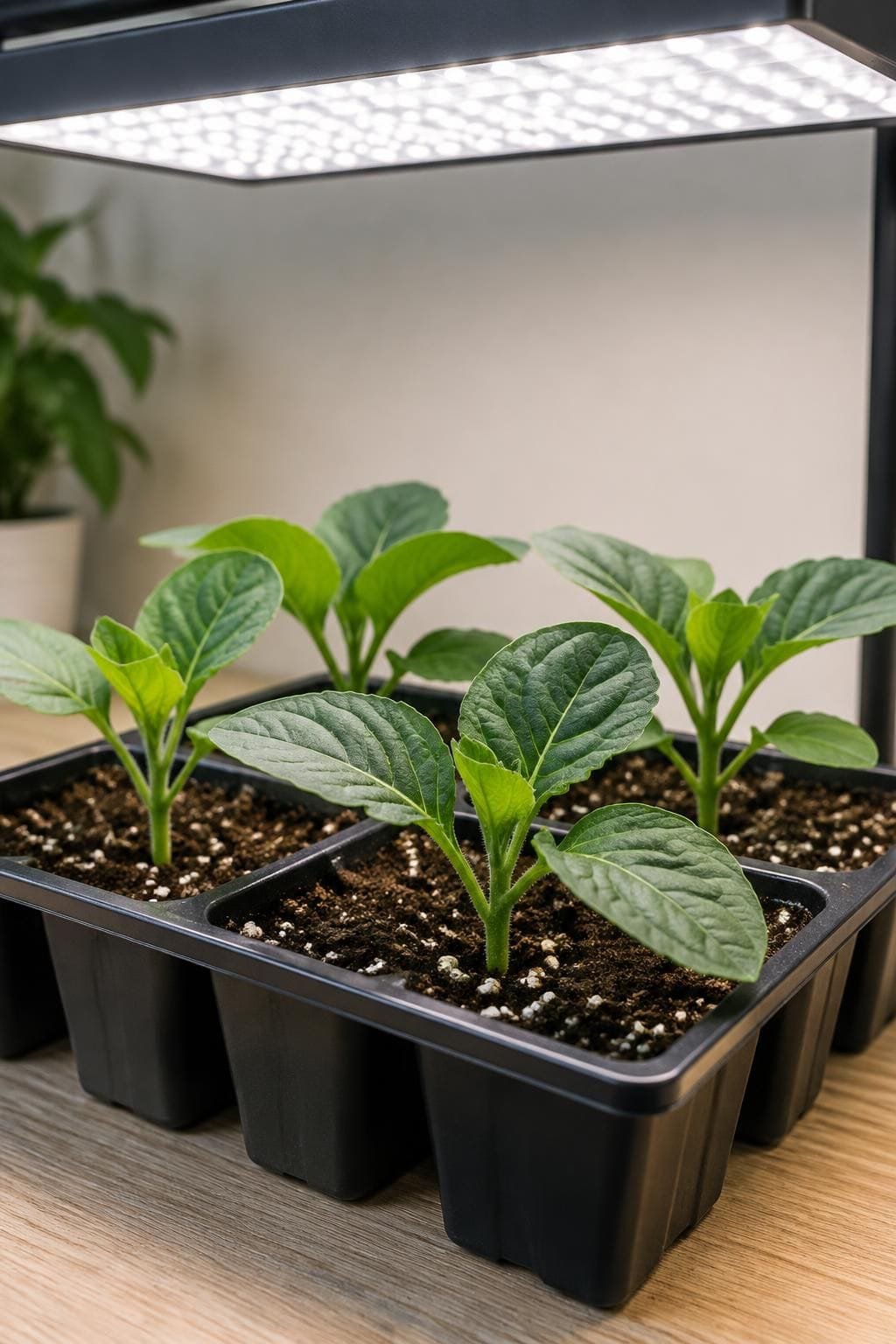
Remove the cover as soon as most cells have sprouted. Seedlings left under a dome stretch toward whatever light they can find, and they come out thin and weak. The Missouri guide sets a target of roughly 1,000 to 1,500 footcandles for seedlings in a controlled setting, which is much brighter than most windowsills deliver. Most home growers don’t own a light meter, so the practical approach is a strong grow light set close above the leaves and adjusted as the plants grow. The footcandle figure is a guide to aim for, not a number your light will show you directly.
The same guide keeps day temperatures around 66 to 72°F and nights around 64 to 66°F for growing seedlings. Those ranges are a good target for a warm room, and the seedlings respond better to steady temperatures than to a sharp swing from day to night.
Stretched stems and pale leaves usually point to too little light, or a light hung too high above the plants. Lower the light, move the tray to the brightest spot you have, and give the seedlings a few days to adjust. How to Grow Eggplant Indoors covers the full indoor setup, including light height and daily routine.
Feeding and watering the seedlings
Seedlings in small cells use up available nutrients quickly, because each cell holds only a little mix. Once the first true leaves appear, a weak, balanced feed every week or two keeps growth steady. Dilute it well below the strength you’d use for mature plants, and follow the product label for mixing and frequency.
Water from below or pour gently at the base of each cell. The surface of the mix should feel barely moist between waterings, and that feel tells you more than a fixed schedule does. Heavy watering from above can wash seed and disturb roots while they are still fragile.
Potting up
When seedlings have several true leaves and the roots begin to fill their cell, move them into larger pots. Seedlings left too long in tight cells become root-bound, which slows growth just when they need it to speed up. How to Repot Eggplant Seedlings explains how to handle the root ball and choose the next pot size.
Hardening off before the garden
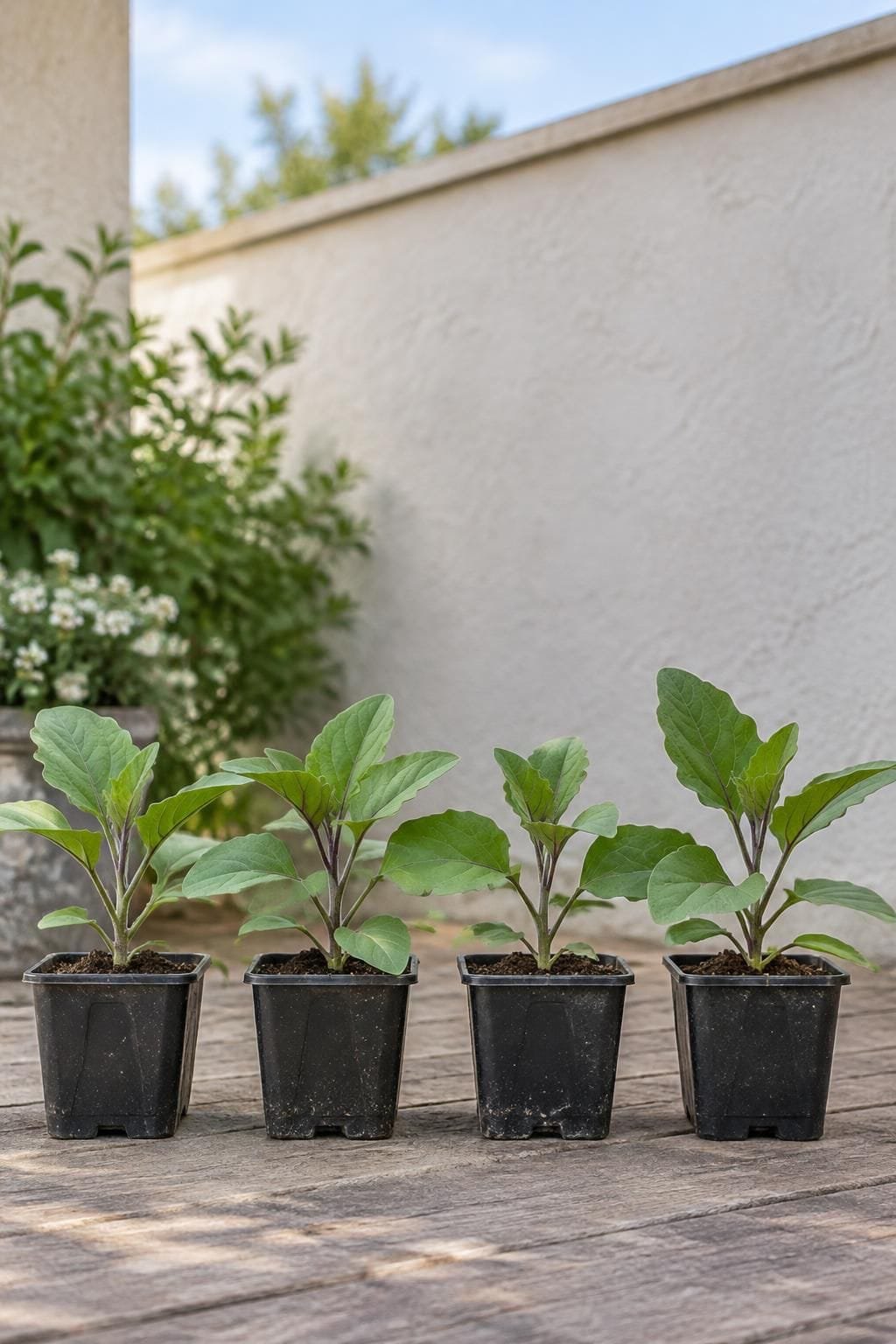
A seedling raised under lights or in a warm room has never felt wind, direct sun on its leaves, or the swing between day and night outdoors. Moving it straight into the garden can scorch the leaves and stall growth for weeks. Hardening off eases it into those conditions over one to two weeks.
Start with an hour or two in a sheltered spot, out of the harshest midday sun. Lengthen the time each day, and introduce more sun and wind gradually. Bring the plants in on cold nights until the air stays warm enough for them outdoors.
This is also the moment to recheck the calendar. Eggplant needs warm nights before it goes into the ground, and When to Plant Eggplant covers those thresholds in more detail.
Problems that start at sowing
Most early setbacks come from cold soil, overwatering, or seed that has aged. Cold slows germination and leaves seed open to rot. Overwatering starves the roots of air. Old seed germinates unevenly, so the tray looks patchy and it’s hard to know why. If that’s where you are, you’re not alone.
If seedlings collapse right at the soil line, you’re looking at a disease problem, and the early signs overlap with other causes. Improve airflow, let the surface dry a little between waterings, and replace the mix if the problem returns. Eggplant diseases need their own diagnosis, and a description alone won’t settle it.
Choosing the variety
Seed is where variety choice matters most. Some types form compact plants, others grow tall and need support, and some produce many small fruit while others give a few large ones. Before you order, read the plant height and days to maturity on the packet, and match them to your bed or pot and your season.
Types of Eggplant: 15+ Varieties to Grow goes through the main groups in more depth, so you can pick seed that fits the space and season you have.
From seedling to garden
Once the seedlings are hardened off and at a good size, they move into their final home. How to Grow Eggplant in Raised Beds covers bed preparation and spacing, and the main growing guide keeps the whole season in view from planting through harvest.
Keep a simple seed log with the sowing date, variety, the day the first sprout appeared, and the day you thinned each cell. Those notes will tell you more next season than any general rule.