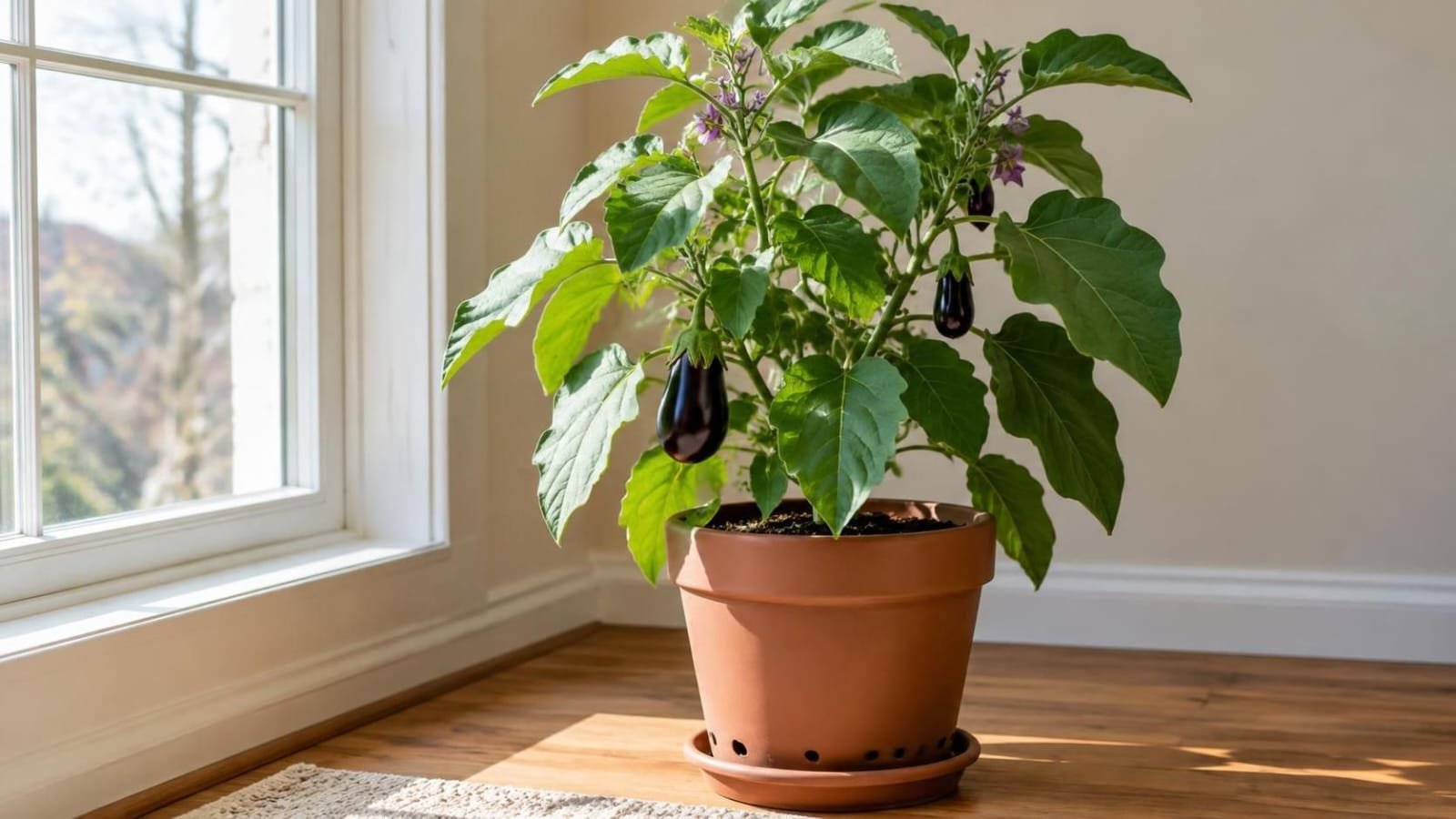
Yes, you can grow eggplant indoors, but it takes more work than growing it outside. Use a container at least 12 inches deep. Give the plant 12 to 16 hours of strong light a day, and keep the room warm. Indoor air is still, so you will need to pollinate the flowers by hand. Expect a smaller harvest than a plant in a garden bed would give.
Indoor eggplant is a good project for a cold spring or a small apartment. It’s also harder than most houseplants. A typical window doesn’t provide enough light, and the flowers won’t get pollinated without your help. This guide covers setup and daily care. For sowing seed, see How to Grow Eggplant From Seed.
Can eggplant really grow indoors?
It can, but most success stories happen outdoors. Gardening Know How’s guide to growing eggplant indoors is blunt: the plant may never set fruit. It still makes a striking houseplant. Think of indoor eggplant as an experiment.
Light and pollination limit indoor plants more than anything else. Almost everything else is routine care you can manage with a regular schedule.
Pick a compact variety
A full-size eggplant can reach several feet, which is a lot for a windowsill. Healthy Houseplants says indoor plants can reach 2 to 4 feet, and that dwarf types suit containers better. Varieties such as ‘Fairy Tale’, ‘Patio Baby’, and ‘Little Fingers’ are often recommended for pots.
Check the expected height on the seed packet or plant tag before you buy. Types of Eggplant: 15+ Varieties to Grow compares the main groups. Use it to match a variety to your space.
Choose a container with room for roots
Eggplant needs a container that holds enough soil to support a large plant. UrbanLeaf’s indoor guide suggests a pot at least 8 inches wide and about one gallon in capacity. Harvest to Table recommends at least 12 inches of depth in a container. For a fruiting plant, that’s the safer target.
Make sure the pot has drainage holes. A self-watering container can keep moisture more even, which helps when the plant dries out between waterings. How to Grow Eggplant in Containers and Pots covers pot choice in more detail.
How much light does eggplant need indoors?
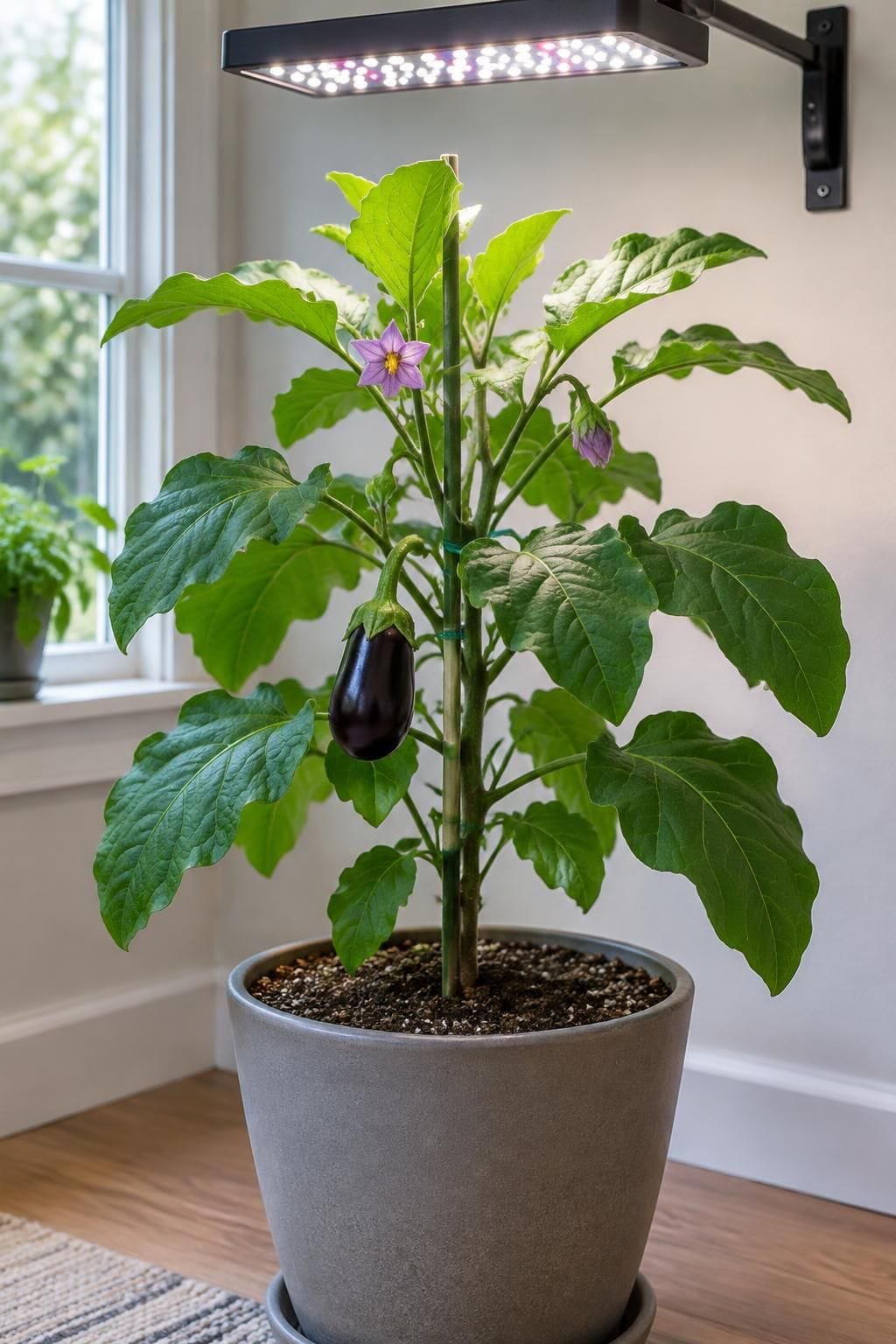
Light is the biggest limit indoors. Most indoor guides call for 12 to 16 hours of strong light each day. A bright south-facing window helps, but a window alone often falls short, especially in winter. Pair it with a full-spectrum grow light on a timer, so the plant gets the same schedule every day.
University of Missouri Extension’s high tunnel guide sets a target of roughly 1,000 to 1,500 footcandles for transplants. Those figures are for seedlings. A plant that’s setting fruit usually needs more. Aim for the brightest setup you can manage.
Keep the light close enough to be effective, and raise it as the plant grows. Scorched or bleached leaves under a light usually mean the light is too close or too strong.
Keep the room warm and steady
Eggplant likes warmth, and cold drafts cause trouble. In winter, keep the plant away from exterior doors and single-pane windows that let in cold air. Heating vents dry out both the air and the soil, so check moisture more often when the heat runs.
The Missouri guide uses 66 to 72°F by day and 64 to 66°F by night for growing seedlings. A fruiting plant does better with more warmth. Territorial Seed’s growing guide lists 80 to 90°F by day and above 70°F at night as the best range. Most homes can’t hit that every night. Warm the room where you can. If the house runs cool, move the pot to a warmer spot after dark.
How do you pollinate eggplant indoors?
Outdoors, wind and insects move pollen from flower to flower. Indoors, nothing does that job for you. The National Gardening Association recommends gently brushing the plants twice a day once blossoms open. A UC Master Gardener in El Dorado County advises pollinating in the morning, when the flowers are fully open.
Use a soft paintbrush, an electric toothbrush, or a cotton swab. Move from flower to flower, and don’t worry when some blossoms drop without setting fruit. That’s common indoors, and the plant will keep flowering if it’s healthy.
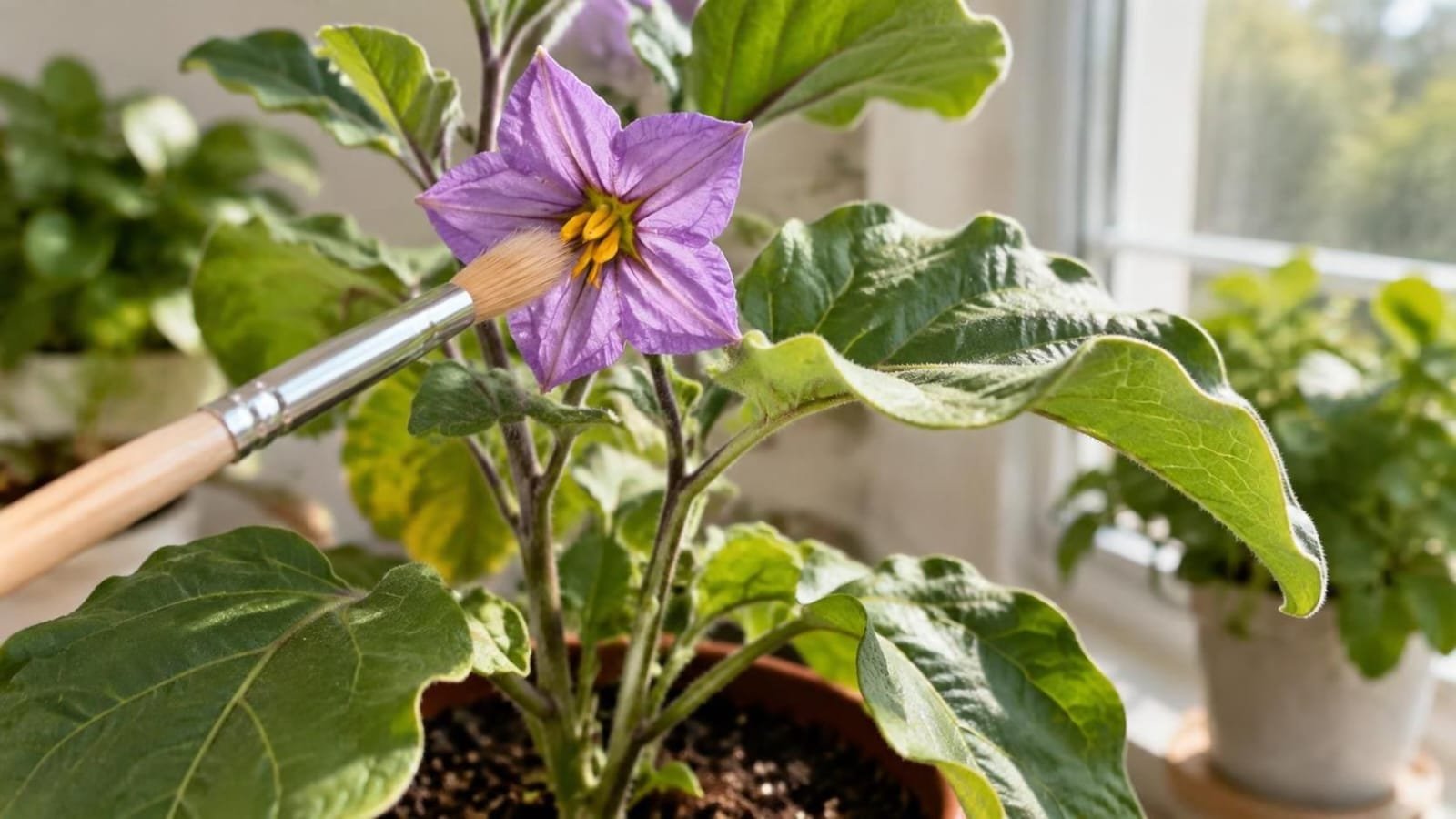
Water and feed on a steady routine
Water when the top inch of mix feels dry. Ora’s indoor growing guide uses the same check. Overwatering is a common problem in containers, so let the pot drain fully and empty any saucer after watering.
Feed with a balanced liquid fertilizer once the plant is established. Follow the product label for strength and frequency. Too much feed can build up in a pot with no way to flush it.
Support the plant as it grows
Stems get heavy once fruit starts to form. Use a stake or small cage. Tie the stems loosely with soft ties so they don’t cut into the bark. Remove weak or crowded lower shoots to open airflow around the plant.
Watch for pests in a warm room
Indoor plants can attract aphids and other sap-feeding insects, especially when the air is dry. Check the undersides of the leaves each week. Keep any new plant apart from your other houseplants for a few days. That keeps pests from spreading between them. Look for clusters of small insects on new growth and sticky residue on the leaves. Wiping the leaves with a damp cloth can clear a light infestation.
Start from seed or buy a young plant
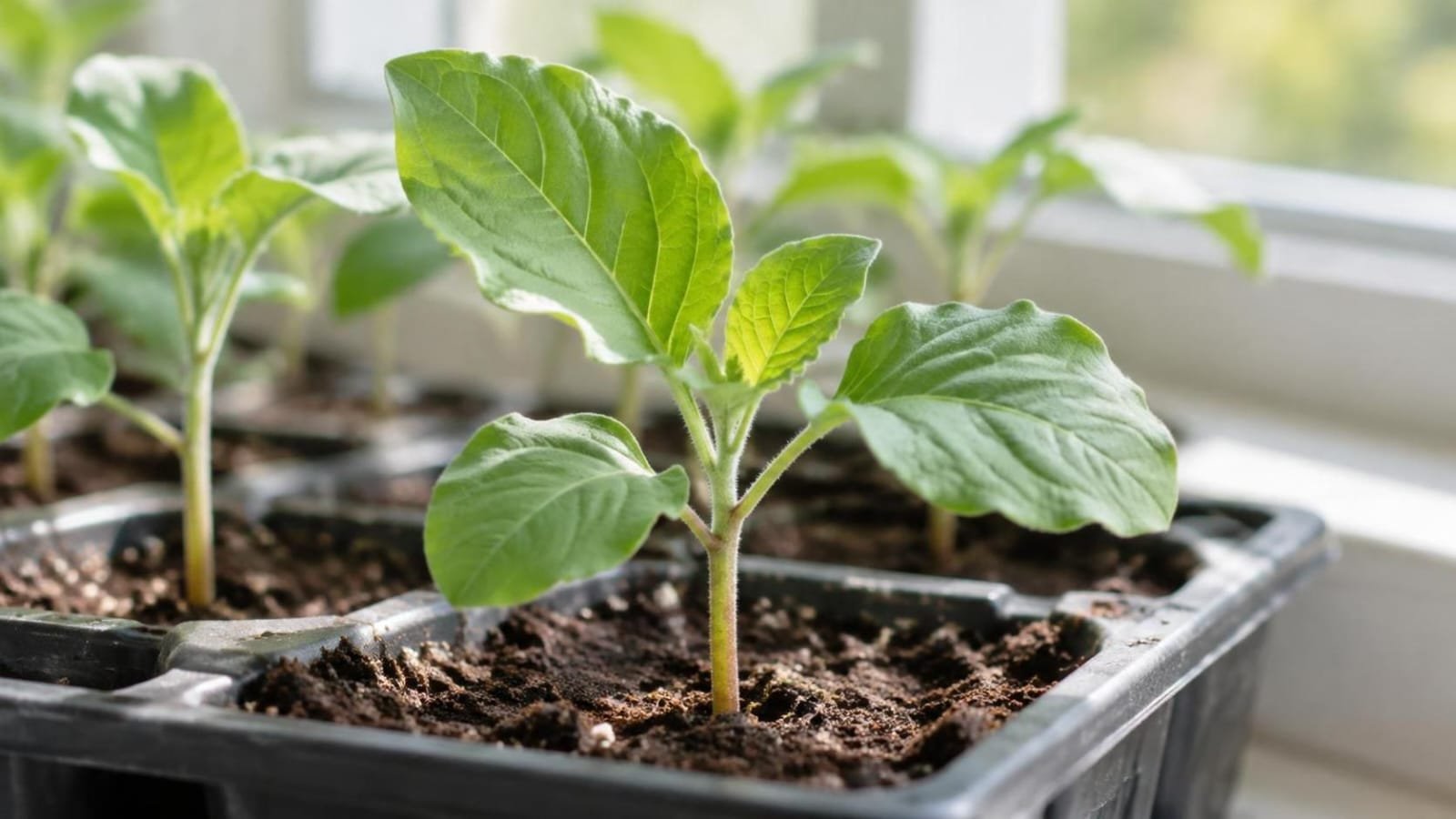
Seed gives you more variety choice and costs less per plant. Nursery transplants save weeks, but check them for pests before you bring them inside. How to Grow Eggplant From Seed covers the indoor sowing steps in order.
Move plants outside at the right time
Indoor plants can move outdoors once nights stay warm. Container plants make this easy. Carry them out in mild weather and bring them in on cold nights. When to Plant Eggplant explains how to pick the date and how to ease plants outside.
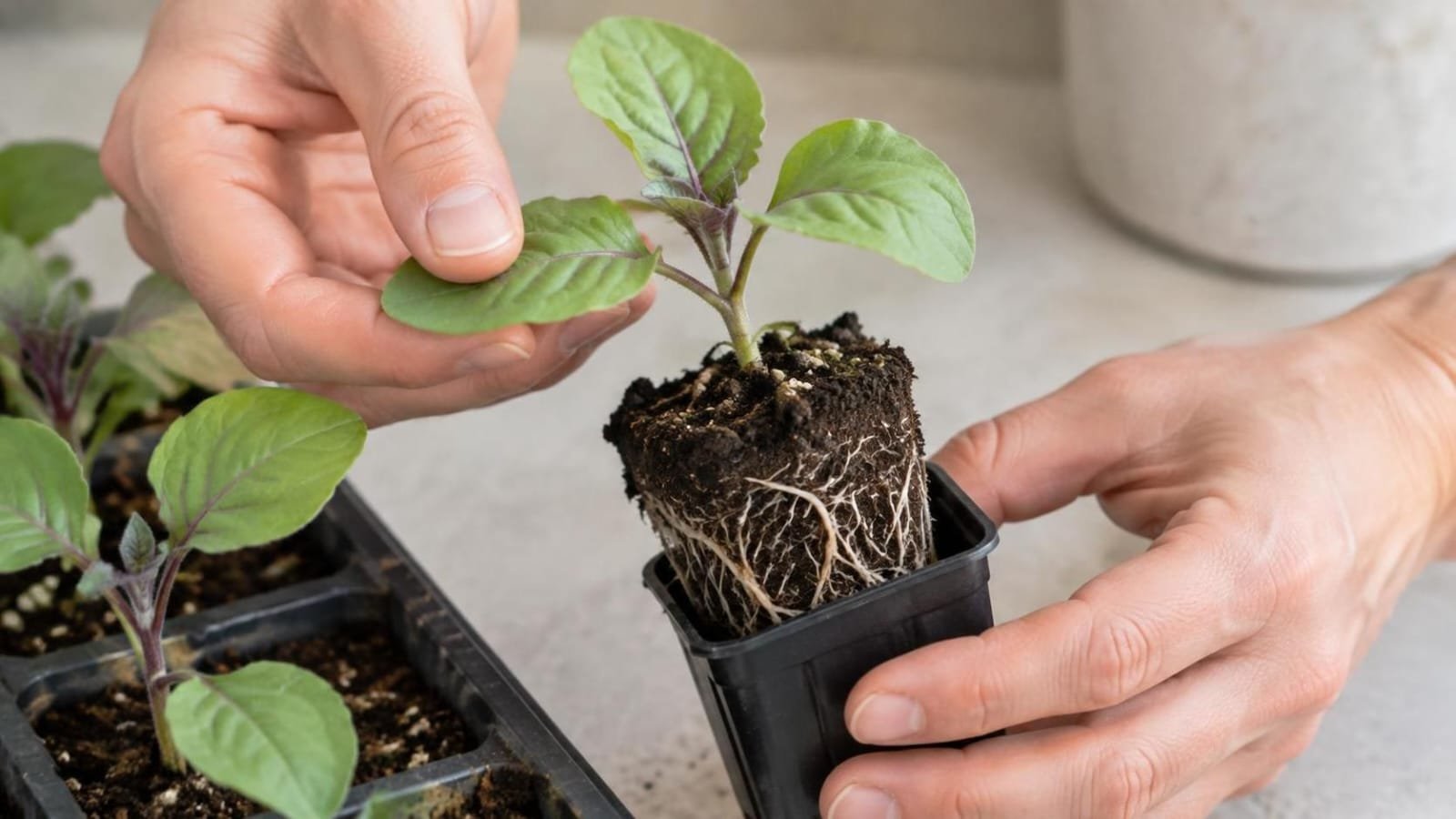
Move the plant to a larger pot only when the roots fill the current one. How to Repot Eggplant Seedlings explains each size change.
Other options when indoor light is limiting
If your home can’t provide enough light, a greenhouse gives the plant much more of it. How to Grow Eggplant in a Greenhouse covers that setup. Soilless growing is another option. How to Grow Eggplant Hydroponically explains how that system works.
What a healthy indoor plant looks like
A healthy plant has glossy, deep green leaves and sturdy stems. New growth should look firm and even. Pale or stretched growth usually points to too little light, and drooping leaves often point to uneven watering. Compare the plant each week rather than each day, so you can see the trend.
Flowers give the clearest sign of progress. Flowers open singly or in small groups as the plant matures. A small swelling at the base of a flower is the first sign that fruit is forming. If flowers form and then drop, look at light and pollination before you change anything else.
Expect a slower season
Tasting Table notes that eggplant has a long window, close to 100 days from seeding to maturity. Indoor plants often fruit more slowly than garden plants. Give the plant time before you judge it.
Plan for the calendar, not just the plant. Count the weeks from seed or transplant to first harvest. Then decide how long the plant stays indoors before the season changes.
Keep the air moving
Still air slows growth and can encourage pests to settle on the plant. A small fan on its lowest setting, pointed so that air moves gently across the plants, helps with airflow. The same airflow can also help move pollen between flowers. Gardening Channel describes a fan as a simple way to support pollination.
Keep the fan gentle. Strong, constant airflow can dry the leaves and the soil faster than you expect.
Keep a simple care log
Write down the date of each watering, feeding, and pollination session, along with notes on light and temperature. A short log makes problems easier to spot. You can see what changed before a leaf yellowed or a flower dropped.
If you only have one bright window
A window that gets only a few hours of direct sun suits leafy herbs better than eggplant. Start with one plant and one compact variety. Two plants in one window compete for the same light, and the weaker one usually suffers. Once you know how your window performs, decide whether you need a second plant or a grow light. Watch the plant for a week or two before you add anything. Many light problems turn out to be watering problems. Change one thing at a time.
For the full season, How to Grow Eggplant: Planting, Growing, and Care ties indoor and outdoor care together. It’s useful if you plan to move the plant outside later.