
Plant eggplant outside after your last spring frost. Nights should stay above about 55 to 60°F. Eggplant handles cold worse than tomatoes. A date that works for tomatoes may be too early for eggplant. The soil should be warm too, ideally at least 60°F. Work backward from your planting date and start seed about six to eight weeks before it.
Eggplant usually goes out later than new gardeners expect, and that’s a common reason first-year plants struggle. The plant comes from warm climates and reacts badly to cold snaps, including ones that never reach freezing. A few extra weeks of patience in spring tends to pay off more than an early start. This article shows you how to find the right date and how to tell when your plants are ready.
Why is eggplant so sensitive to cold?
Eggplant likes heat from the roots up. South Dakota State University Extension notes that eggplant is even more sensitive to cold than tomatoes. The same spring weather can look fine for tomatoes and still stall eggplant. Cold stress can slow plants for weeks, and that setback often shows up later as a lighter harvest.
Temperature also affects flowering. University of Minnesota Extension reports that nights below 60°F or above 70°F can lead to poor flowering. That range is narrow, which is one reason the calendar needs a little attention in both directions.
What night temperature should you wait for?
The most common target is nights that stay above about 60°F. SDSU Extension advises transplanting when night temperatures are consistently above 60°F and the soil is warm. Some seed catalogs list a lower threshold, around 50 to 55°F. Those numbers describe the point where plants stop getting damaged, not the point where they start growing well. If the forecast shows a string of nights in the 50s, it’s usually worth waiting.
Check the forecast for the whole week after your planned transplant date, not only the planting day. One warm afternoon can hide a run of cold nights. The seedlings have to handle those nights right away.
Is the soil warm enough yet?
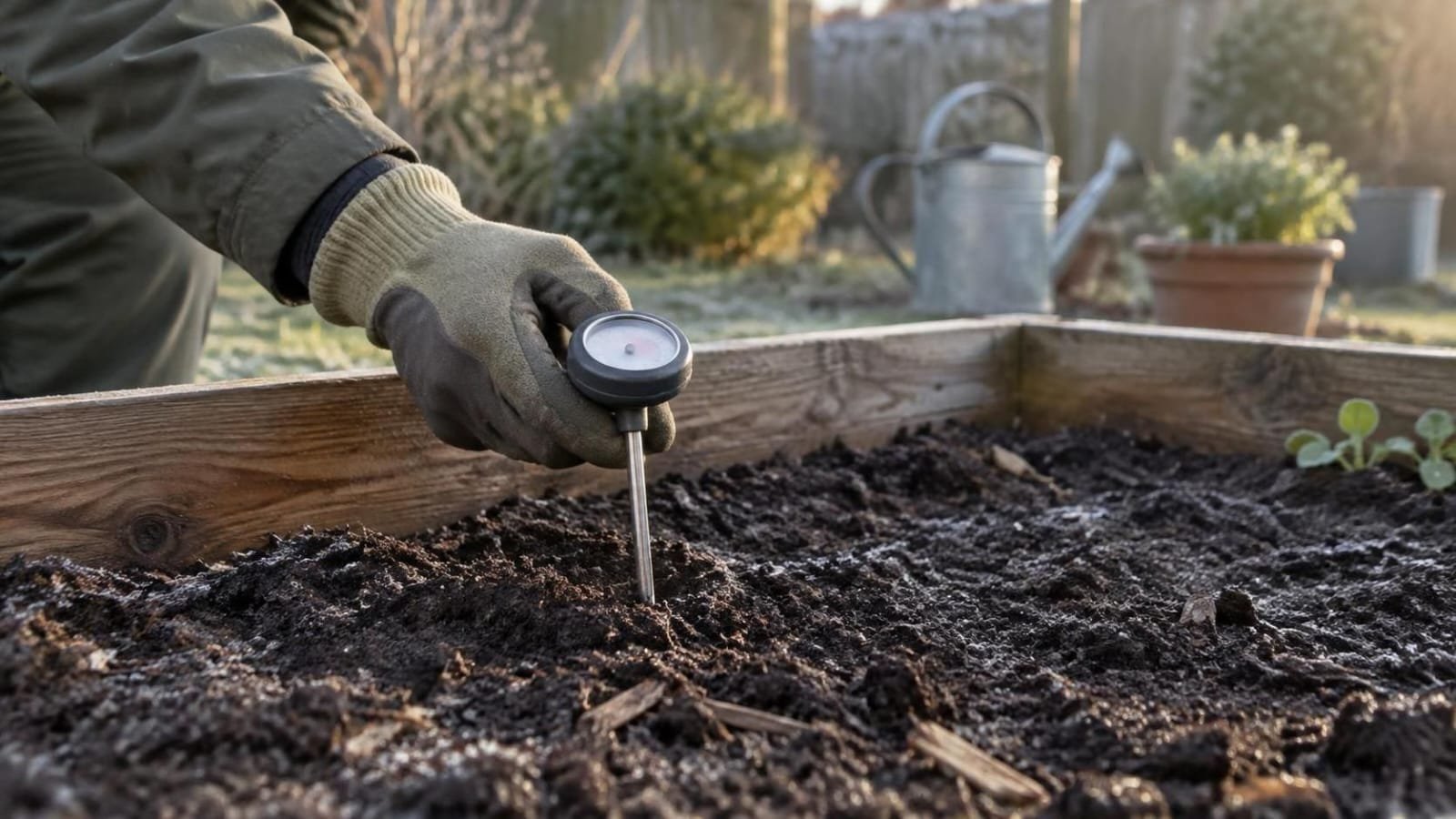
Air temperature gets most of the attention, but soil temperature tells you whether roots can settle in. The University of Delaware Extension vegetable team advises growers with plastic mulch to check soil temperature early in the morning, when it’s coolest. If it’s below 60°F, hold off planting.
A raised bed warms faster than ground soil in spring, which gives eggplant a head start. The morning reading can still run cool. Take the temperature before you plant instead of assuming the bed is ready. Push the probe about 4 inches into the soil, which is roughly where young roots will spend their first weeks. Take readings on several mornings, since one reading tells you less than a trend. How to Grow Eggplant in Raised Beds covers how the bed affects spring warming in more detail.
Why the last frost date is only a starting point
Your local last frost date is the anchor for the whole schedule. It marks the average date when a hard frost becomes unlikely, but it’s an average. Cold snaps still arrive after it, and in some years they arrive late. Montana State University Extension calls starting transplants too early a common mistake. Oversized transplants suffer more shock and tend to yield poorly.
Call your county Extension office or check their frost-date tables to find the average last frost for your area. Many tables list dates at different odds, such as a 50 percent or a 90 percent chance of a later frost. For eggplant, the more cautious date is usually the safer choice. Then watch the forecast for the first two weeks after your planned transplant date. A cold front after planting day can undo careful timing. Keep a frost cloth or row cover nearby for those nights.
Working backward from your transplant date
Choose the transplant date first, then count back. Six to eight weeks is the usual window for seedlings to reach transplant size. How to Grow Eggplant From Seed covers sowing and early care. Sowing too early creates the oversized, root-bound plants Montana warns about. Sowing too late leaves you with small plants waiting for warm weather.
For the full timeline from seed to fruit, Eggplant Growth Stages: Seed to Harvest lays out each stage. Knowing the time from transplant to harvest shows whether your season can handle a late start.
How to tell when seedlings are ready to go out
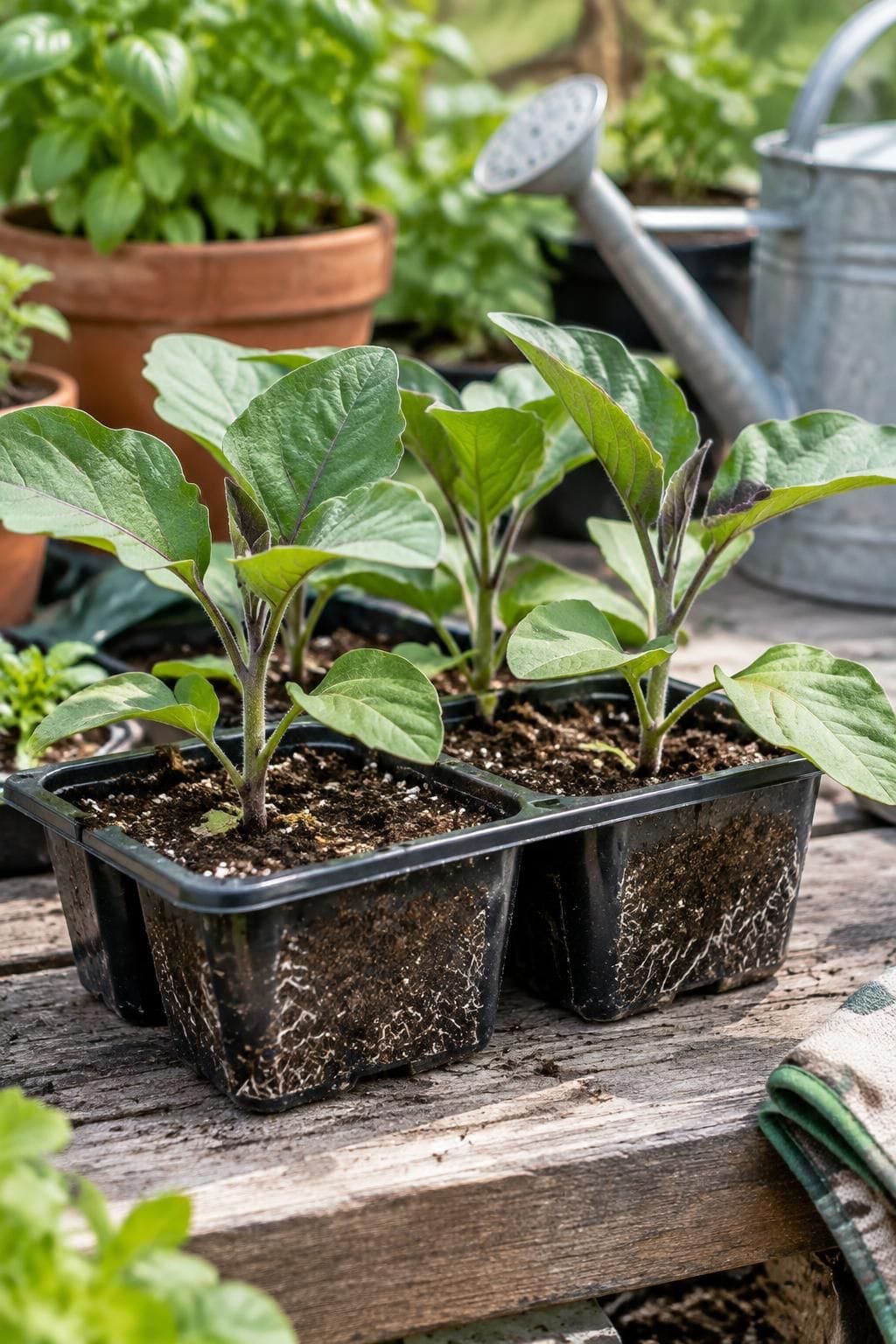
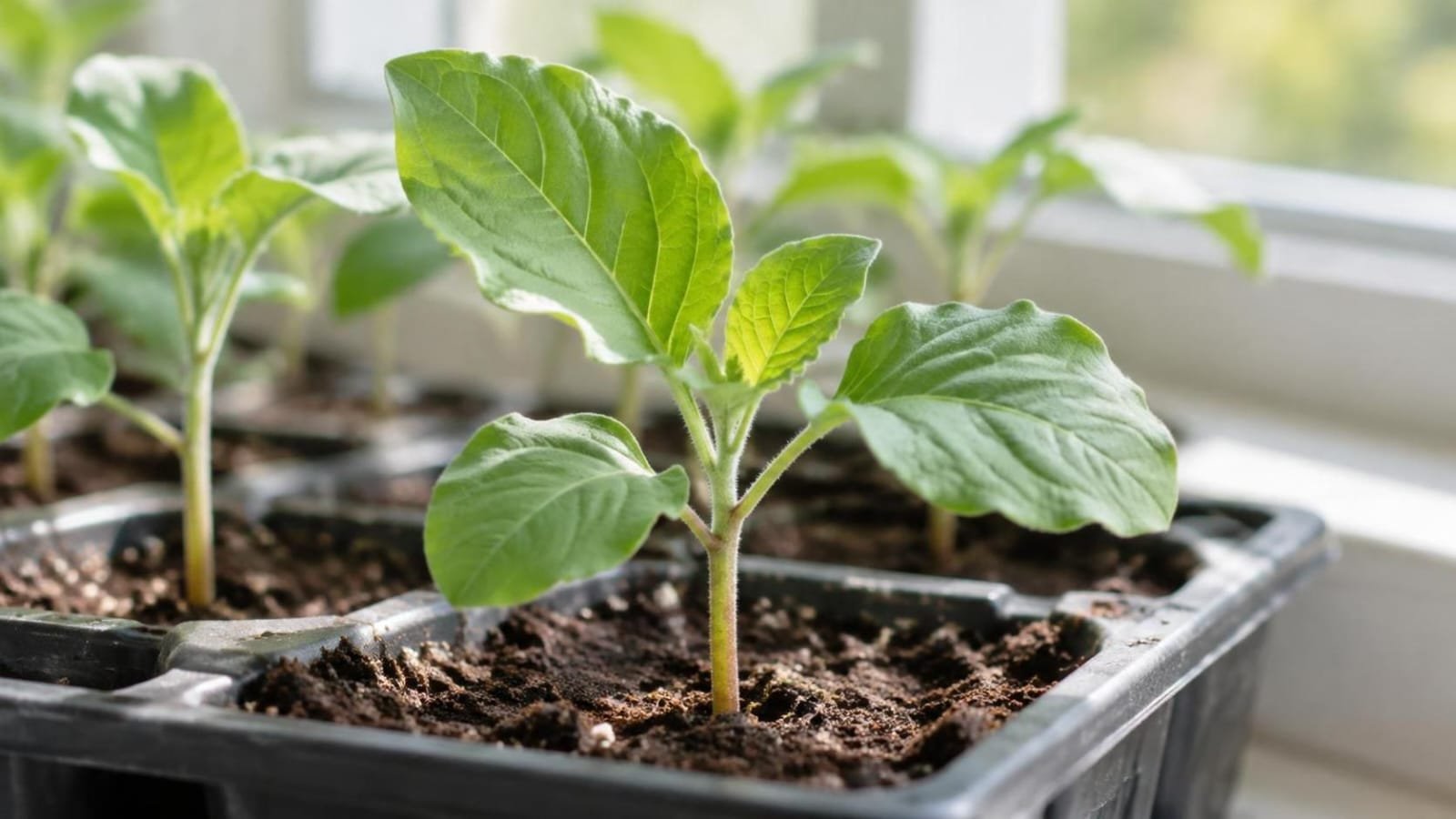
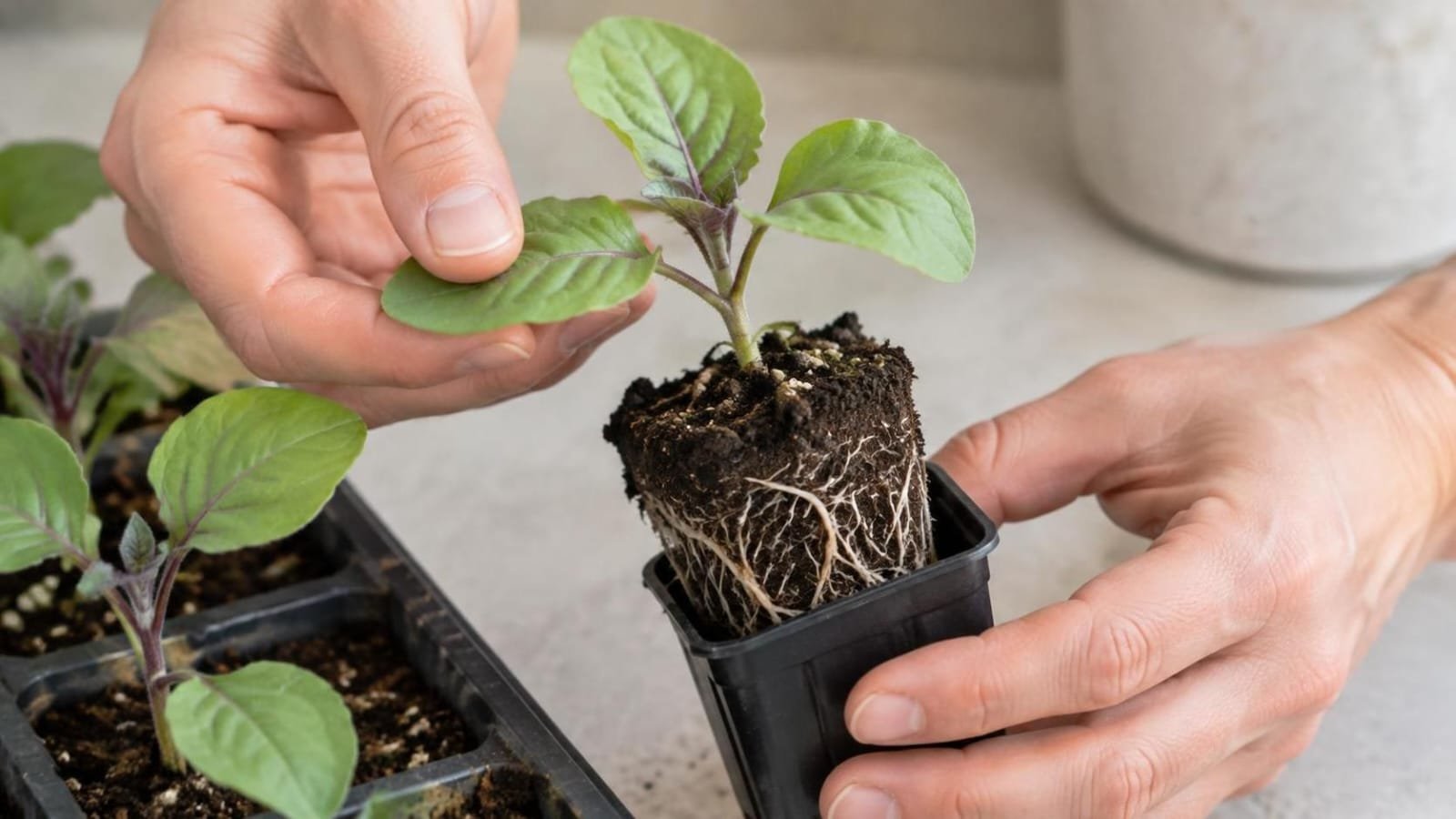
Size matters less than sturdiness. A ready seedling has a thick stem, several true leaves, and healthy green color. Its roots fill the container without circling tightly. A tall, leggy plant with thin stems will struggle, even in good weather. Give it more light and time before it moves outside.
If the seedlings are root-bound, they need a bigger pot before they go outside. How to Repot Eggplant Seedlings walks through that step.
Hardening off in the same window
Before planting, seedlings need a week or two of gradual exposure to outdoor conditions. University of Minnesota Extension suggests raising sun exposure slowly over that period. Bring plants indoors when nights drop below 55°F. The seed guide covers the steps. This section covers timing only: finish hardening off as nights settle into the range where planting makes sense.
What to do when spring stays cold
Some springs run late. When they do, keep seedlings growing indoors or in a greenhouse, where a cold snap can’t set them back. How to Grow Eggplant in a Greenhouse covers that option. Container plants are flexible too. Move them inside on cold nights and back out once the weather settles. How to Grow Eggplant in Containers and Pots explains how to set that up.
In the garden, plastic mulch and row covers help hold heat during the first cold weeks. Both work best when you check the soil and the forecast rather than covering plants on a schedule.
The first week after planting
Timing doesn’t stop when the plant goes into the ground. Transplant shock slows growth for several days, and conditions during that first week matter. University of Minnesota Extension suggests transplanting in late afternoon or on a cloudy, calm day. That spares the seedlings hard midday sun while they settle in.
Water each plant in well, and keep the soil evenly moist for the first week. If a cold night is forecast soon after planting, cover the plants overnight and uncover them in the morning. Feed lightly only if your soil test or the product label calls for it. Skip heavy feeding while the roots recover.
Common timing mistakes
Most timing mistakes come from trusting one signal too much. Some gardeners plant as soon as the first warm week arrives. Then a cold snap hits two nights later. Others go by the calendar alone and ignore soil and night temperatures that still look wrong. The fix is the same either way: read two or three signals together before you commit.
A seed packet’s maturity date is another trap. Most seed catalogs count days to maturity from transplanting, not from the day you sow the seed. If you count from sowing, the plant will seem later than it is. You may then start too late or push too early to compensate.
Borrowed frost dates cause trouble too. A neighbor’s planting date may work a few miles away. A valley, a hill, or a dense city block can still change local temperatures. If you can, track your own garden for a season or two. A simple min-max thermometer will show you how your nights really behave.
Adjusting for your climate
Regions differ enough that one rule won’t fit everyone. In cool northern areas, warm nights come late. A greenhouse or an indoor start often gives eggplant the season it needs. In hot southern areas, the bigger problem is often late-spring heat. Very hot days can also reduce flowering. There, the goal is usually to establish plants before the hottest weeks arrive.
Your county Extension office knows which pattern fits your area. Most can share local frost data and planting calendars. Ask them directly, because a few minutes on the phone can save a whole season of guesswork.
Plan for the season you actually have
Eggplant needs a long, warm stretch to set and ripen fruit. If your spring is short and your autumn cools early, a late transplant can eat into the harvest. Count the weeks from planting to the first fruit, then count back from your first expected frost in autumn. If the numbers don’t fit, consider a shorter-season variety or a longer indoor start.
If you want to keep a plant going over winter, Is Eggplant a Perennial or Annual? explains what’s realistic in your climate.
For the full season, How to Grow Eggplant: Planting, Growing, and Care puts these timing decisions in context. Put two dates on the calendar: your average last frost and the date you’ll start watching the forecast. Then check soil and night temperatures the week before you plant. Those checks will tell you more than any single date on a chart.
One thought on “When to Plant Eggplant”