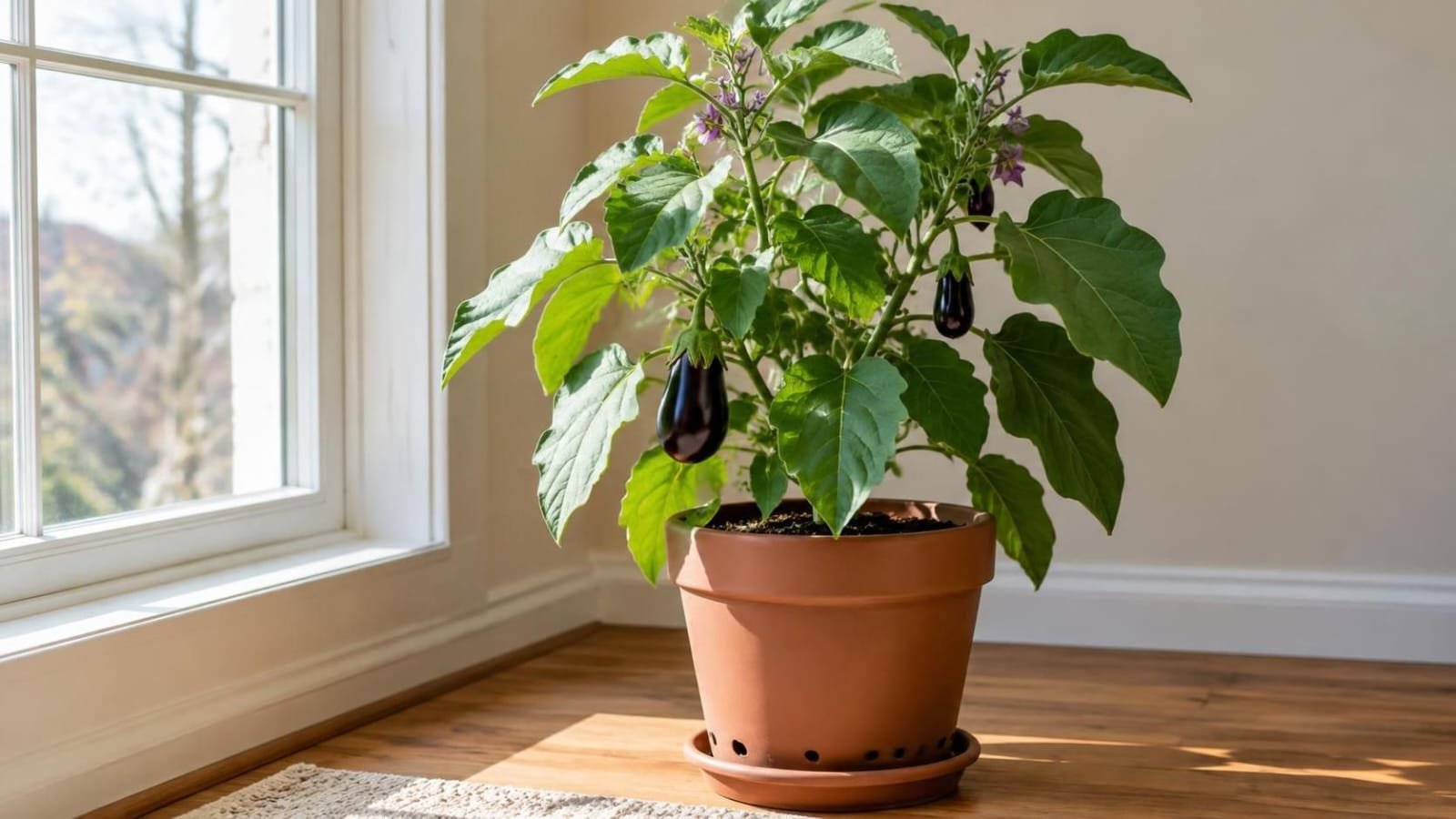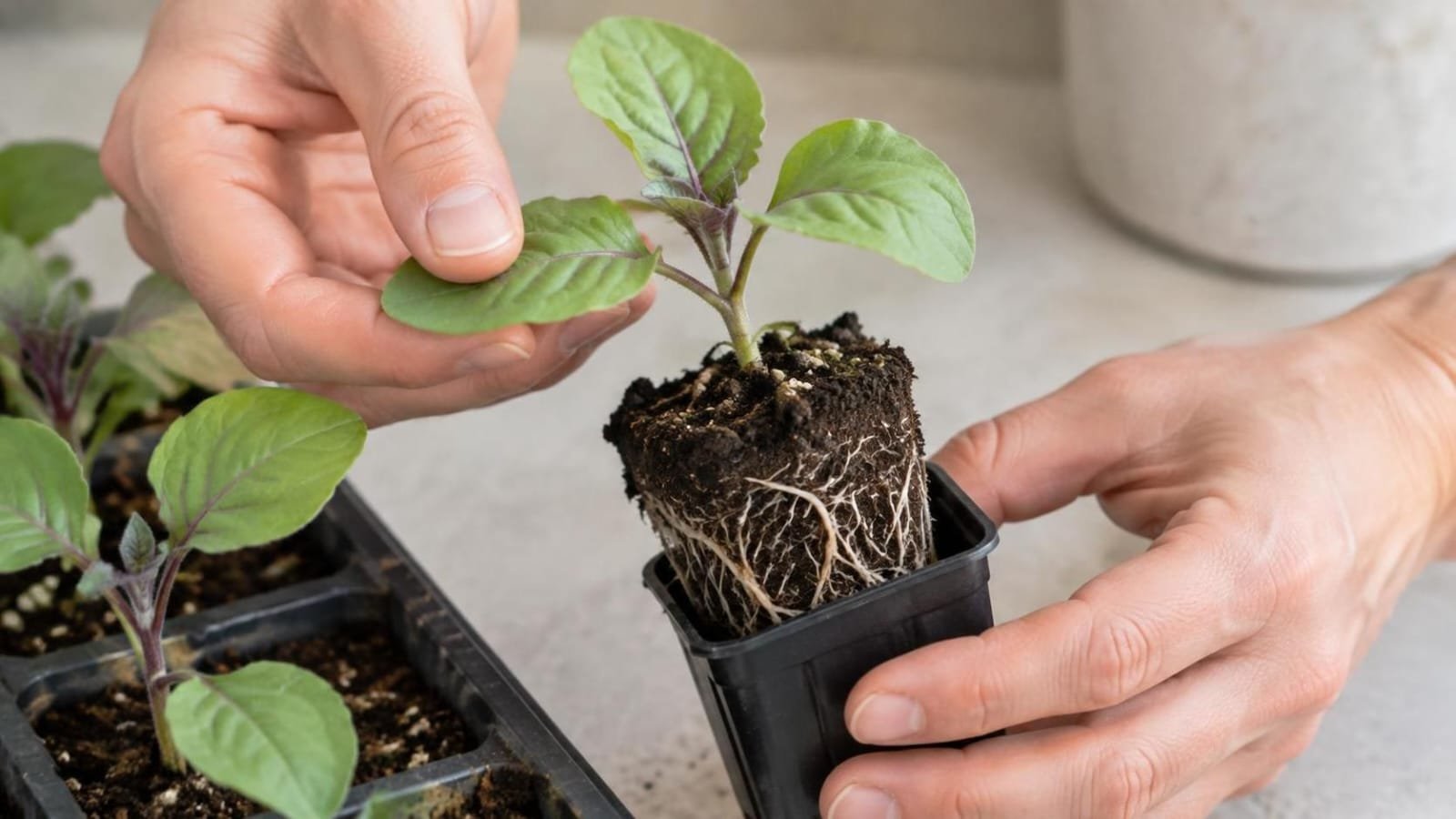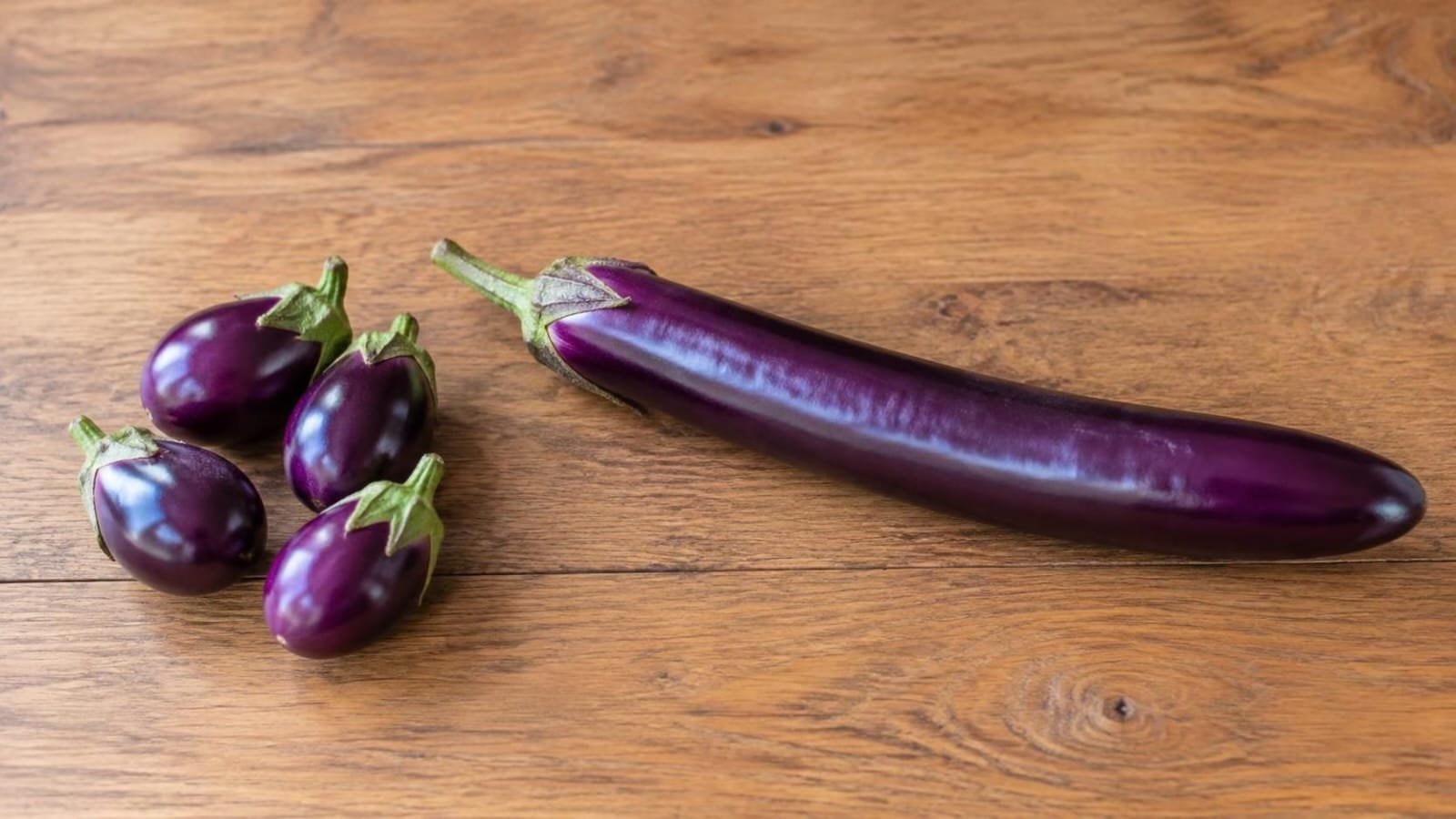
Eggplant growth stages are easy to follow once you know the signs. The plant moves through germination, seedling growth, true leaves, transplant, vegetative growth, flowering, fruit development, and harvest. Expect roughly 65 to 100 days from seed to first harvest, depending on variety and weather.
Knowing the stages helps you act at the right time and spot trouble early. This guide covers what each stage looks like, what the plant needs, and when it’s ready to move on. For the steps of sowing, potting, and transplanting, follow the links to the articles that cover them in full.
How long does each eggplant growth stage take?
The total time depends on the variety and the weather. Epic Gardening gives 65 to 100 days from seed to harvest. It reports cotyledons within 6 to 12 days of sowing. True leaves follow 7 to 14 days later, and flowering usually begins about 60 days after sowing. Fruit takes 7 to 14 days to go from flower to harvest.
Garden Guides counts about 70 days from setting plants in the garden to mature fruit. That number is more useful once you have transplants, because it skips the indoor weeks.
The sources don’t agree on every stage. Wild Yards says seed can take 2 to 3 weeks to sprout and 6 to 10 weeks from germination to maturity. Those figures reflect cooler conditions and slower starts. Use the ranges as a guide, and track your own plants to build a timeline that fits your garden.
What happens during germination?
Germination starts when the seed takes up water and a small root emerges. It happens underground, so you won’t see much at first. The seed coat softens and splits, and the root anchors the seed in the mix. Eggplant germinates best when the mix is warm and evenly moist. For sowing depth and setup, see How to Grow Eggplant From Seed.
What do the cotyledons look like?
Cotyledons are the first two seed leaves. Eggplant cotyledons are usually thin and pointed, and they look nothing like the leaves that follow. Their job is to feed the young seedling until the true leaves take over.
This stage needs bright light. A stretched stem with pale, thin leaves usually means the light is too dim or too far away. Move the tray closer to the light source, and keep the room warm without letting it get hot.
When do the true leaves appear?
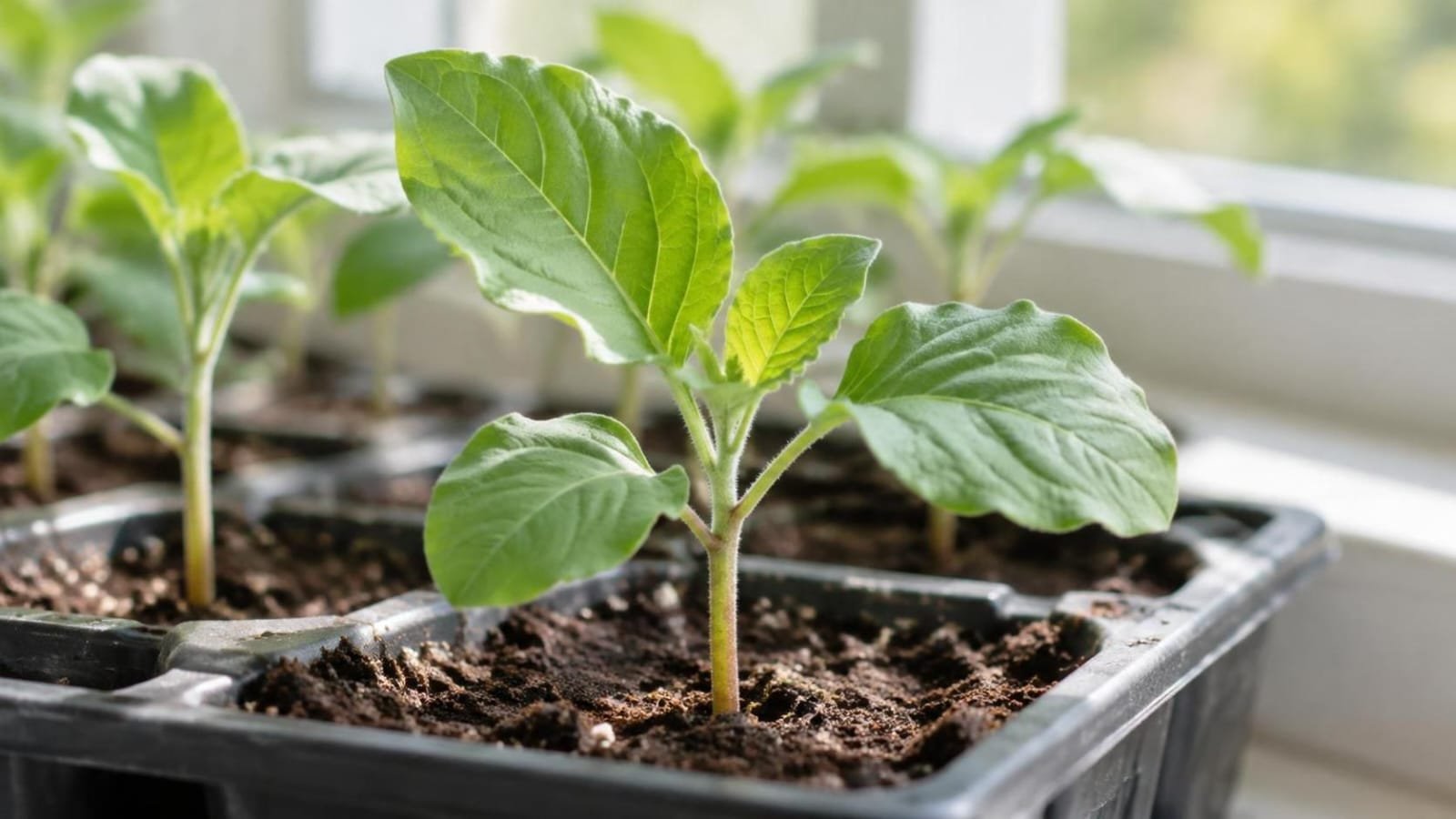
True leaves look like the adult leaves. They’re broad and oval, with wavy edges and a slightly rough surface. Once they appear, growth speeds up. The plant starts building the structure it will carry all season, and its demand for light and nutrients rises.
A seedling at this stage can move into a larger pot when its roots fill the cell. How to Repot Eggplant Seedlings covers that move.
What signals transplant readiness?
Size and sturdiness matter more than the calendar. A transplant-ready plant has a stocky stem, several sets of true leaves, and roots that fill the container without circling. The weather decides when it can go out. When to Plant Eggplant covers the outdoor timing.
What does vegetative growth need?
After transplanting, the plant puts on leaves and stems quickly. This stage builds the framework that will carry the fruit. The plant is sensitive to nutrient and water shortfalls. Pale, stiff, or stalled growth usually points to cold, water stress, or a root problem.
Growth at this stage also attracts pests. Check the new leaves regularly, since they’re the first place insects settle. For the full season, How to Grow Eggplant: Planting, Growing, and Care ties this stage to the rest of the plant’s life.
When does eggplant start to flower?
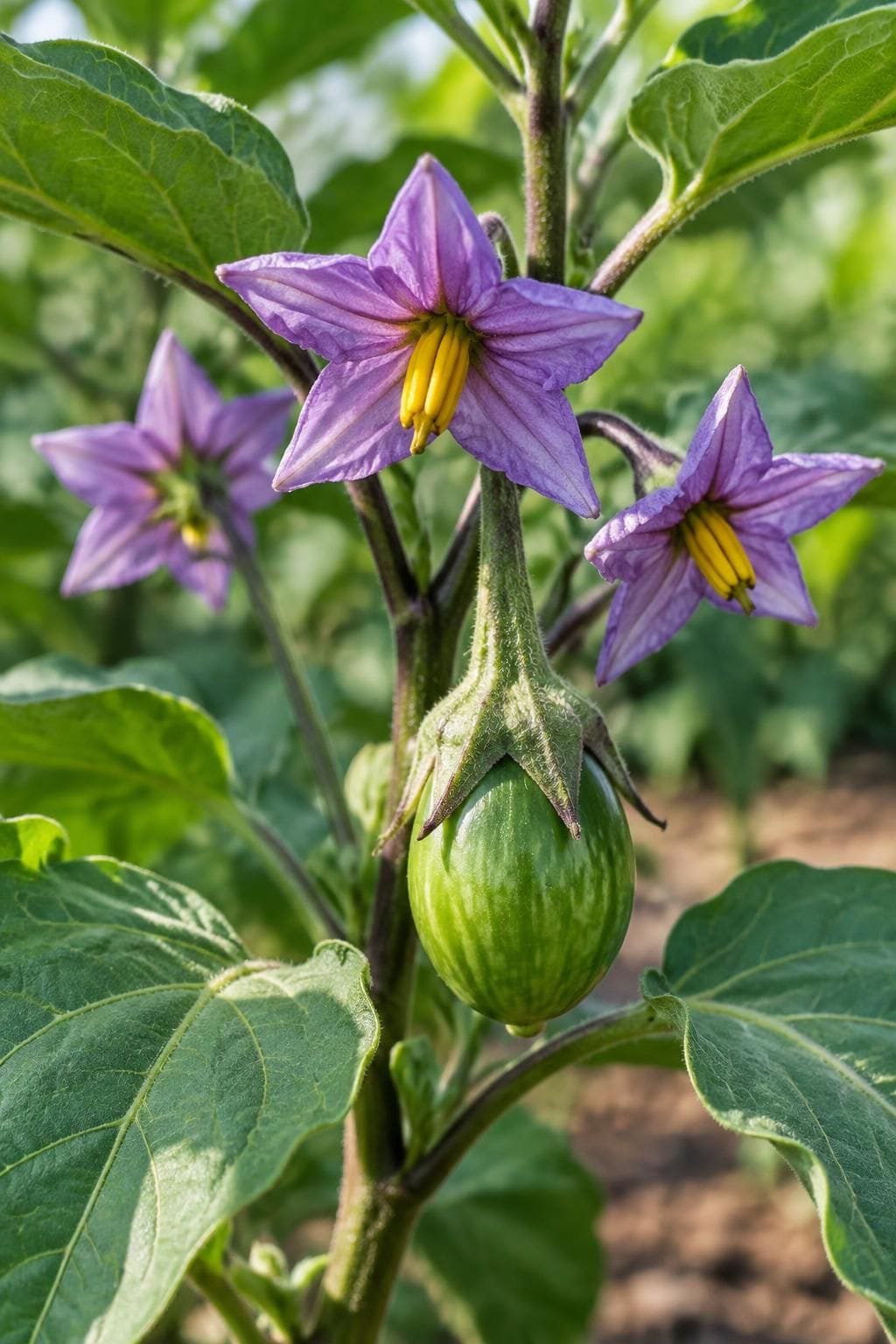
Flowering usually begins about 60 days after sowing. The flowers are pale purple and star-shaped, and they open singly or in small groups. Once flowering starts, the plant keeps producing flowers until frost, as long as conditions stay suitable.
Temperature shapes this stage. Garden Guides lists 70 to 85°F as the best daytime range. It notes that flowers and fruit may not develop properly above 95°F. Indoors or in a greenhouse, you may need to pollinate by hand. How to Grow Eggplant Indoors covers the method.
How does fruit develop after flowering?
Fruit starts as a small swelling at the base of the flower. Over the next one to two weeks, it thickens and fills out. This stage draws heavily on the plant, so steady water and feeding matter. Stress from extreme heat, cold nights, or dry spells can slow fruit set, so check the plant every few days.
What signals that fruit has finished developing?
The fruit reaches harvest when it hits the expected size for its variety and its skin looks glossy and smooth. The flesh should feel firm, with a slight give when pressed. Urban Farmer Seeds describes the same signs, and adds that the flesh should spring back slightly under gentle pressure.
Past that point, the stage ends. Dull skin and a tougher shell mean the fruit has passed its prime. Most growers pick at the glossy stage, since fruit left on the plant too long slows the next flush. For variety-specific timing, Types of Eggplant: 15+ Varieties to Grow shows how variety affects picking time.
How does the season end?
Eggplant is a warm-season plant that doesn’t tolerate frost. Production slows as days shorten and nights cool, and a hard frost ends the plant. In USDA zones 9 to 12, eggplant is perennial, so plants can survive and regrow. Most of the country grows it as an annual. Is Eggplant a Perennial or Annual? explains what’s realistic in your area.
What happens inside the plant during each growth stage?
During germination, the plant runs on stored energy from the seed itself. Once the cotyledons open, the seedling starts making its own food through photosynthesis. It still draws on seed reserves for a short time. The root system grows first, so the plant can reach water and nutrients as its leaves expand.
During the true-leaf stage, the plant builds a larger leaf area. That leaf area drives growth in the stages that follow. After transplanting, the plant shifts its energy toward roots and new leaves, which helps it adjust to the garden. Once flowers form, energy moves toward reproduction, and the fruit becomes the main sink for the plant’s resources.
This shift explains why each stage feels different in the garden. A plant in vegetative growth looks busy and leafy. A plant in fruit development may look quieter above ground. Its energy goes into the fruit.
Which stages need the most support?
Not every stage asks the same things of the plant. Wild Yards notes that nutritional demand rises during some stages, while susceptibility to insects climbs during others. In practice, the heaviest demand usually comes during vegetative growth and fruit development. The plant is building leaves and filling fruit at the same time.
The seedling stage is delicate in a different way. Young plants have little reserve, so cold, soggy mix, or sudden changes in light can set them back for weeks. Gentle, consistent conditions matter more at this point than the amount of feed or water you give.
Why do stage lengths change with the weather?
Warm weather speeds every stage, and cool weather slows them down. A stretch of cold nights can stall a plant that was growing well a week earlier. A warm spell can move it forward quickly. That’s why calendar counts give you a range rather than a fixed date.
Some growers track accumulated warmth instead of calendar days, since growth follows temperature more closely than time. Even without numbers, you can use the same idea. Note how many warm days the plant has had, and expect slower progress after cool stretches.
How can you tell which stage a plant is in?
Use the plant itself rather than the calendar. Cotyledons mean germination is complete. Wavy true leaves mean the seedling is ready for thinning. A stocky stem with several sets of leaves and roots that fill the cell means the plant is close to transplant size.
After transplanting, look for dark green, firm new leaves. Once flowers appear, the plant has entered its productive stage. The next checkpoint is a small fruit at the base of a flower. Keep notes with dates and photos, so you can compare the same plant from week to week.
How do the stages fit your plan?
Work backward from your target harvest. Count the days from transplant to first fruit, then add a buffer for slow weather. If you start from seed, add the indoor weeks in front of that. How to Grow Eggplant in a Greenhouse shows how protected growing changes the timeline.
Choose a variety with the timeline in mind. Early and compact types shorten the calendar, while large globe types need a longer warm season. Your own notes from one season will tell you more than any published range.