
Growing eggplant in a greenhouse works in climates that are too cool or too short outdoors. Keep daytime temperatures around 68 to 72°F and nights around 62 to 66°F or warmer. Give the plants full light, and make sure someone or something moves pollen between the flowers. Sow seed 6 to 8 weeks before transplanting, and set plants in the greenhouse once nights stay warm.
Eggplant is a warm-season crop with a long growing season. Many gardeners in cool or short-summer regions struggle to get a full harvest outdoors. A greenhouse gives the plant the heat and length of season it needs. It also gives you more control over pests and weather. This guide covers the setup, temperatures, light, and pollination you need to get a good crop under glass.
Why grow eggplant in a greenhouse?
Greenhouse Emporium makes the point plainly. Unless you live in a warm climate with a long season, growing eggplant outdoors can be a real challenge. A greenhouse lengthens the season on both ends. The plant starts earlier in spring and keeps producing into fall.
A greenhouse also protects the plant from wind, heavy rain, and some pests. Those benefits matter most for a crop that is slow to start and sensitive to cold. The tradeoff is that a greenhouse needs more daily attention, including temperature checks, watering, and ventilation.
How much space does eggplant need in a greenhouse?
Eggplant needs room. Plants can grow to several feet tall, and they spread outward as they fruit. Growing Spaces notes that plants can grow up to three feet wide. Plan for that spread when you lay out beds or benches.
Leave enough space between plants for air to move. Crowded plants stay humid, and humidity makes leaf diseases more likely. Also confirm the greenhouse has ventilation at the roof or sides, so you can release heat on bright days.
How warm should a greenhouse be for eggplant?
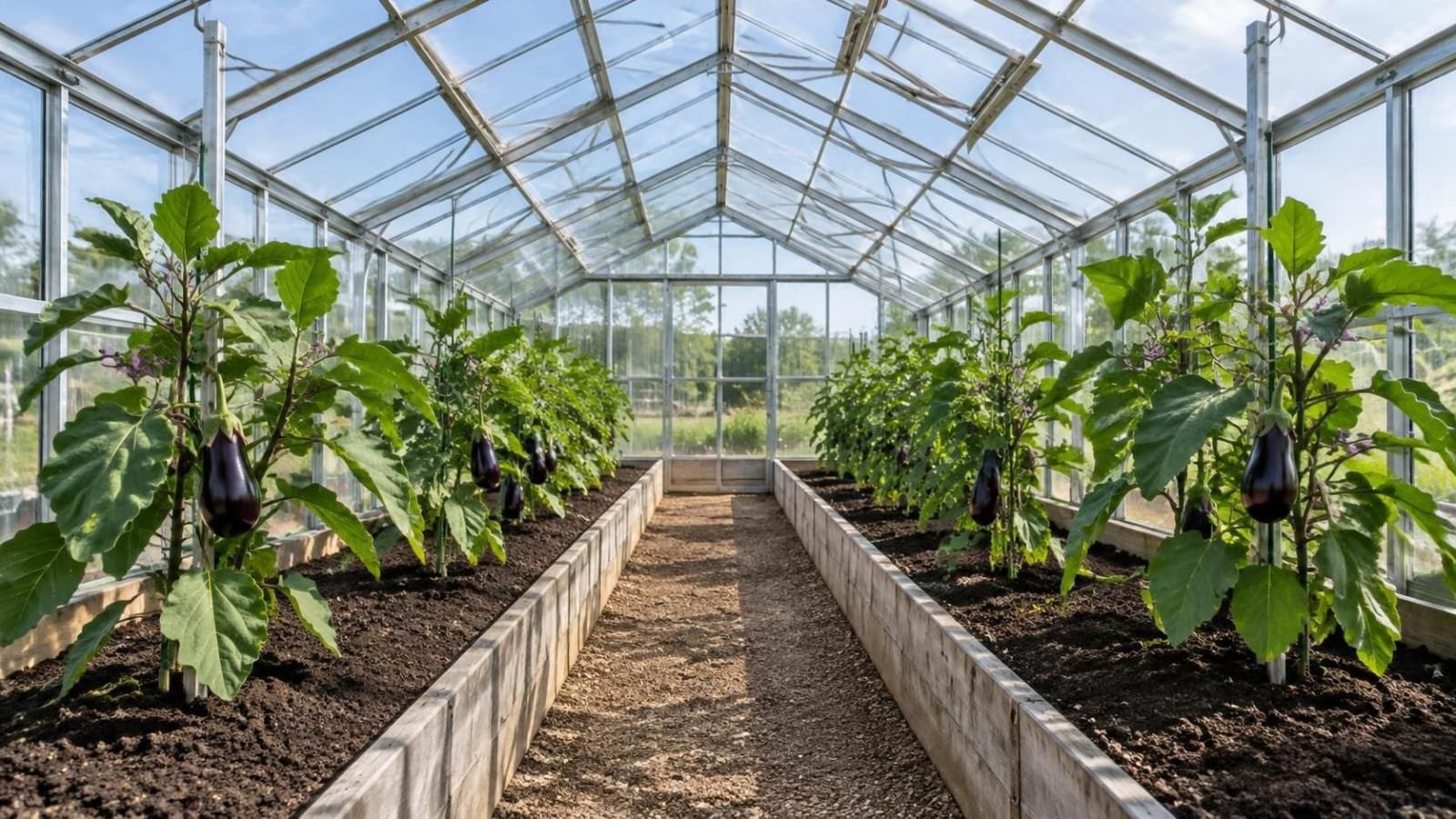
Temperature is the first thing to get right. Johnny’s Seeds, which breeds greenhouse varieties, recommends 68 to 72°F during the day and 62 to 66°F at night. The company lists these as growing targets, so they make a solid reference point.
Greenhouse Emporium takes a stricter line on nights. It advises keeping the greenhouse above 65°F at night, and warns that colder nights stop fruit from developing properly. If your nights often drop below that range, add heat, hang a thermal curtain, or move plants to a warmer spot.
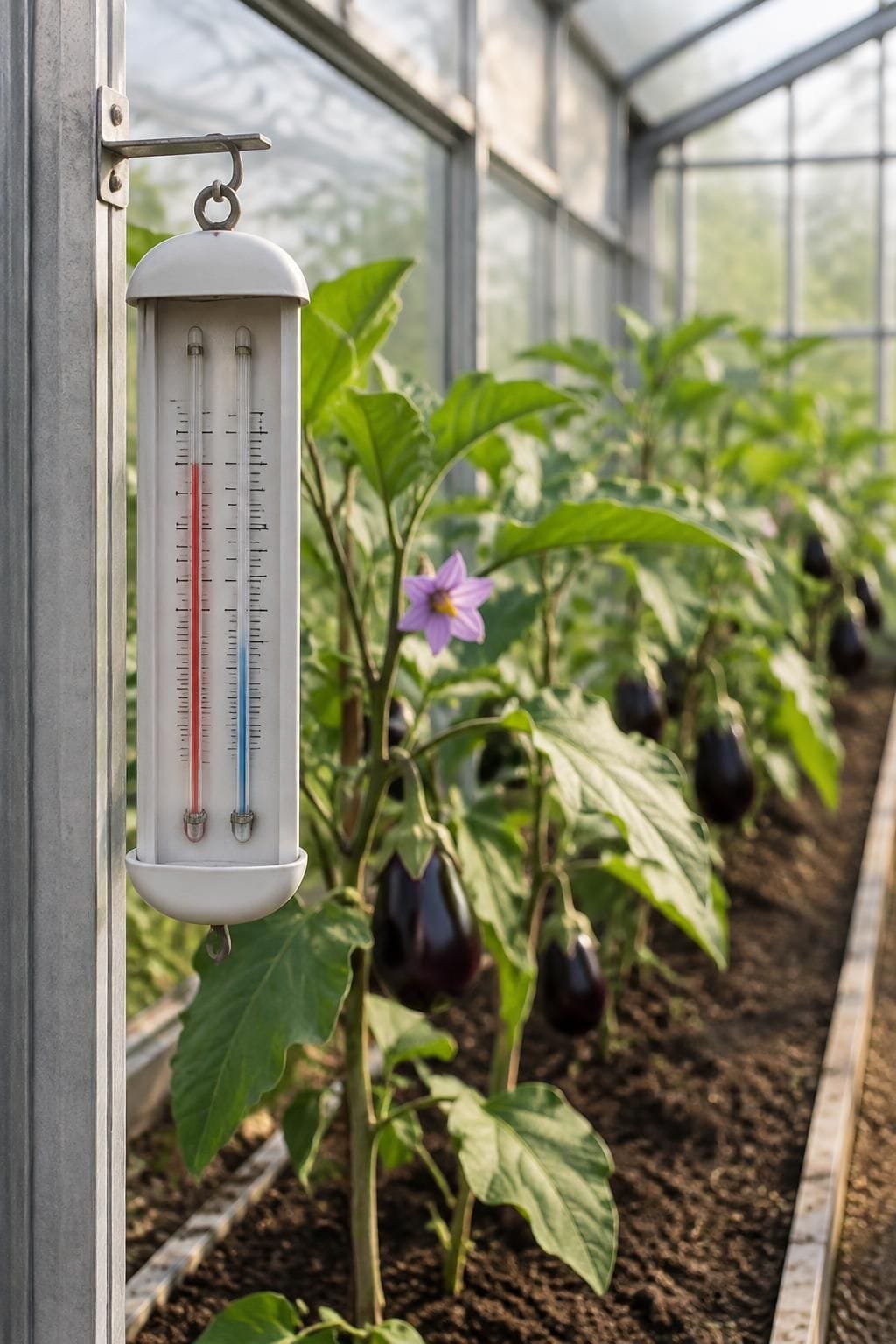
A simple min-max thermometer at plant height will show you what your nights actually do. Check it each morning for a few weeks. You’ll learn your greenhouse faster than any chart can teach you.
Do greenhouse eggplants need extra light?
Eggplant is a full-sun plant. A greenhouse with clean glazing gives plants plenty of light on clear days. Trees, neighboring buildings, and dirty panels can cut light more than you expect, especially in winter. Wash the glazing once or twice a year to keep light levels up.
If shade is a problem, supplement with grow lights on a timer. Greenhouse Emporium suggests grow lights for shaded houses. The same idea works for a room with weak winter sun.
When should you start the seed?
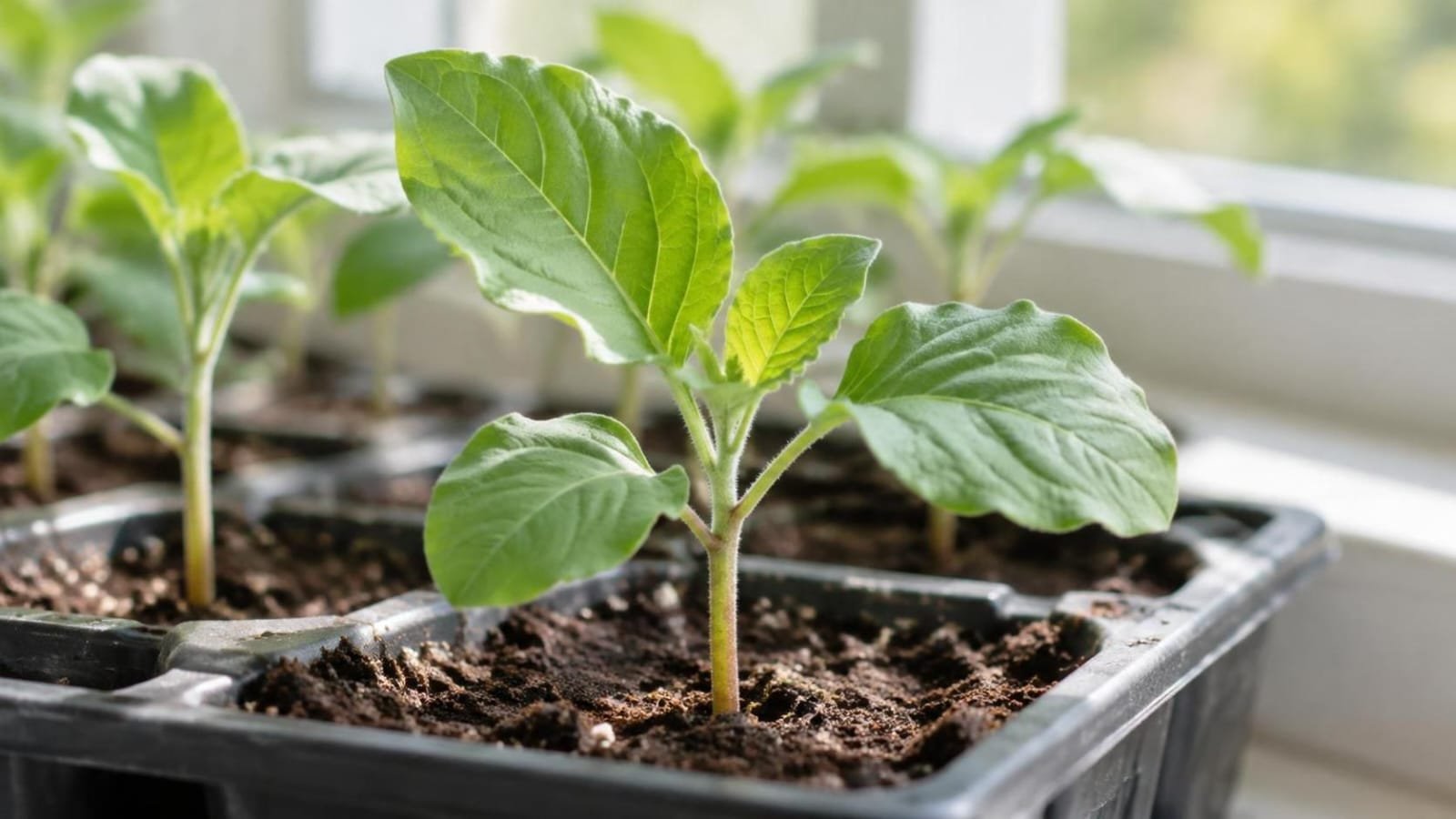
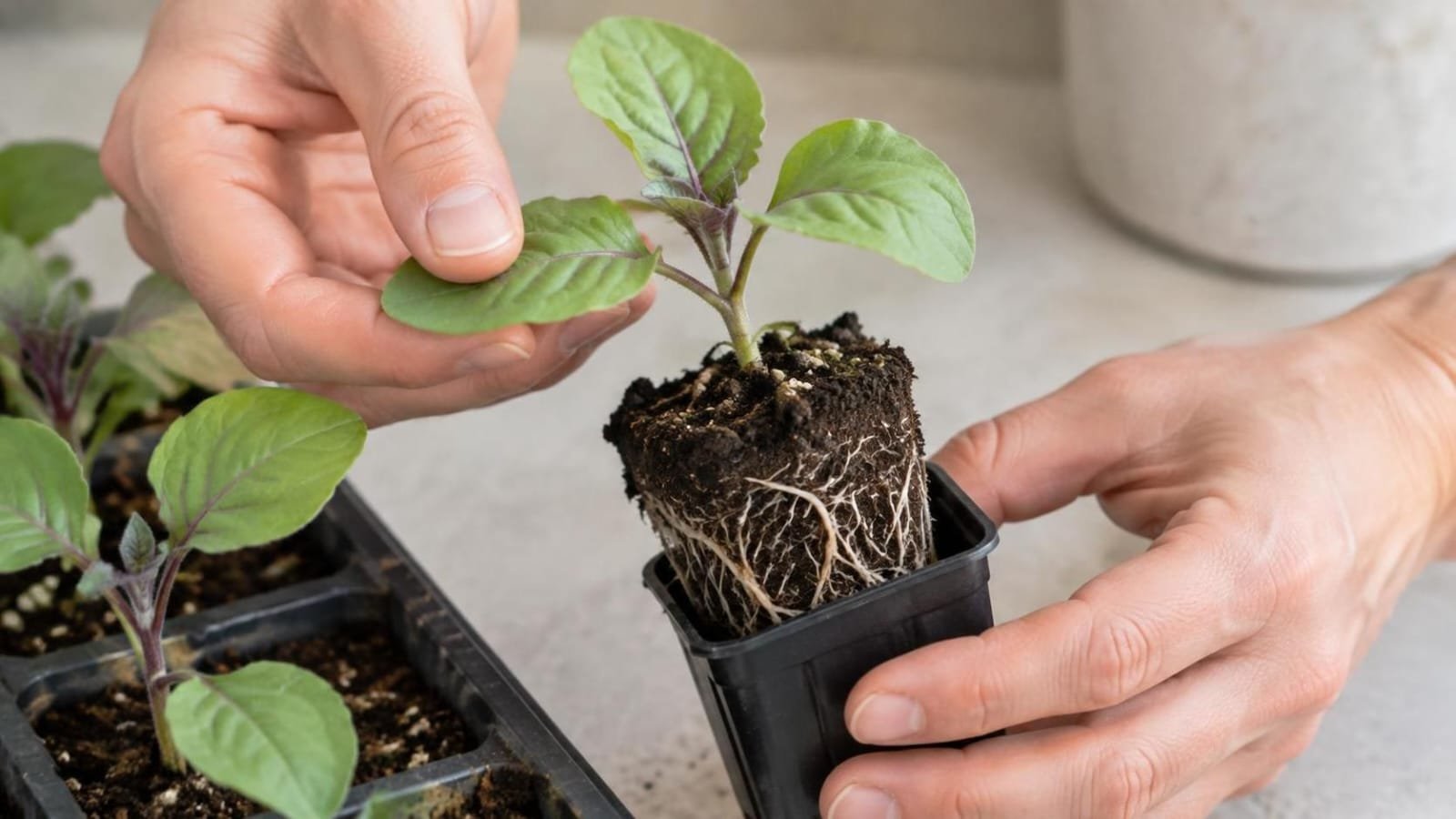
Timing depends on your region and how warm you can keep the house. Johnny’s Seeds recommends sowing in flats or plugs 6 to 8 weeks before transplanting. The seed-starting guide walks through the sowing steps, so this section focuses on the greenhouse timeline.
Research from the Andijan Institute of Agriculture and Agrotechnology in Uzbekistan studied planting dates for an unheated greenhouse. The study recommended planting the Aurora variety in early to mid-February in that setting. Your climate will differ, so use the study as a reference point rather than a fixed date.
For the overall calendar, When to Plant Eggplant shows how to match your transplant date to frost and soil conditions. Greenhouse plants still need warm nights before they go outside, so the calendar matters even under glass.
Choose a growing medium
Utah State University Extension describes eggplant as a plant that prefers rich, well-drained soil. The same rule applies in a greenhouse. Heavy, waterlogged mix causes trouble, especially in containers that can’t drain quickly.
Greenhouse beds, large containers, and grow bags all work. How to Grow Eggplant in Containers and Pots covers pot sizing. How to Grow Eggplant in Raised Beds covers bed preparation. Both work well inside a greenhouse.
Do eggplants in a greenhouse need pollinating?
Pollination can be a surprise in a greenhouse. Cropking notes that bumblebees visit eggplant flowers. When bees are present, the plants need no special pollinating device. Commercial growers often rely on that.
Many home greenhouses have no bees, and that’s where things go wrong. If the flowers drop without setting fruit, hand pollination usually fixes it. The indoor growing guide walks through the method. Work in the morning, while the flowers are fully open.
Manage summer heat
Summer is the other extreme. Greenhouses overheat fast on bright days, and University of Minnesota Extension notes that very hot conditions can reduce flowering. Open the vents early. Add shade cloth on the hottest days, and run a fan if the house climbs above your target range.
Check the greenhouse in the afternoon too. A house that looks fine at 9 a.m. can hit a damaging temperature by 2 p.m. on a sunny day, so a late check is often more useful than an early one.
Water without wetting the leaves
Greenhouse soil can dry out quickly in warm weather, but leaves that stay wet invite disease. Water at the base of each plant early in the day. That way the foliage dries before evening.
Warm, humid greenhouse air can slow water loss from the plant. Vent the house on bright days to keep humidity from building up. Good airflow protects the leaves and helps the plant transpire normally.
Support, prune, and keep the plants tidy
Once fruit forms, stems get heavy. Use stakes or clips to support the main stems, and tie them loosely. Remove dead or yellowing leaves at the base, which keeps airflow open and reduces places for pests to hide.
Many growers train plants to a few main stems. That makes the plant easier to manage and keeps the fruit within reach. Watch the fruit load. A heavy crop at once can slow the rest of the plant.
Watch for pests and disease under glass
Warm, enclosed spaces help pests multiply. Aphids, whiteflies, and spider mites can build up quickly when the greenhouse is closed. Check the undersides of the leaves each week, and remove heavily infested leaves before the problem spreads.
Keep the greenhouse clean. Remove plant debris, clear weeds from the paths, and clean tools between plantings. Reused soil can carry disease from the last crop, so replace it or treat it between seasons. Pest and disease identification needs its own detailed guides, so use them once you’ve spotted a problem.
Check the plants twice a week
Short, regular visits catch problems early. Ten minutes twice a week is enough for a small house. Look at the new growth, the undersides of the leaves, and the soil surface. Write down any change in color, size, or fruit set. You’ll want to compare it on the next visit. A phone photo of a problem leaf helps, both for your records and if you ask an Extension office for help.
Move plants and containers as needed
A greenhouse makes it easy to start early, but plants still need to adapt before they go outside. Harden them off gradually before they go outside, and bring them back in on cold nights. When to Plant Eggplant gives the outdoor timing.
If your plants outgrow their pots, repot them into a larger container. How to Repot Eggplant Seedlings explains the process, and the steps are the same in a greenhouse.
Other growing systems to consider
Some growers use hydroponic systems inside a greenhouse. How to Grow Eggplant Hydroponically explains how those setups work and what they demand. Soil or containers are easier for most home growers, but hydroponics can produce strong yields when managed well.
Varieties also matter under glass. Greenhouse growers often choose varieties bred for protected culture. Types of Eggplant: 15+ Varieties to Grow compares the main groups. Use it to pick a type that suits a greenhouse.
Plan the harvest and season
A greenhouse can stretch the harvest into fall, but plants still age. Eggplant produces fruit over several weeks, and the plant slows as days shorten and light drops. Track the first fruit date, the peak weeks, and the end of production so you can plan next year. Pick fruit when it reaches full size with glossy, smooth skin, as Utah State University Extension advises. Regular picking keeps the plant producing.
For the whole season, How to Grow Eggplant: Planting, Growing, and Care connects the greenhouse steps to the full calendar, from sowing through harvest.
3 thoughts on “How to Grow Eggplant in a Greenhouse”