
You can grow eggplant hydroponically, but the system asks more of you than soil does. Keep the nutrient solution pH between about 5.5 and 6.5, keep the roots well oxygenated, and check the solution often. Provide strong light for 12 to 16 hours a day. Start with transplants 6 to 8 weeks after sowing. From transplant, expect about 65 to 80 days to first harvest.
Hydroponics removes soil from the equation, so water and nutrients go straight to the roots. That gives you tight control, but it also means small mistakes show up fast. A pH drift or a low oxygen level can stunt a plant within days. This guide covers the setup, the numbers that matter, and where the sources disagree.
Is hydroponic eggplant worth the effort?
Some commercial guides promise faster growth and higher yields. The studies reviewed here don’t back up those claims as a general rule. Results depended heavily on nutrient management, oxygen, and salt levels. The method gives you control, and control only helps if you use it.
Hydroponics does have real advantages. It takes up less space, avoids many soil-borne problems, and works indoors or in a greenhouse. The greenhouse guide and the indoor guide cover the environments where hydroponic setups most often live.
How long does it take to harvest?
Timing depends on whether you start from seed or transplants. Hydrobuilder reports 100 to 120 days to maturity from seed and 65 to 80 days from transplant. If you start from seed, plan for the longer range. The seedling stage takes time before the plant reaches the system.
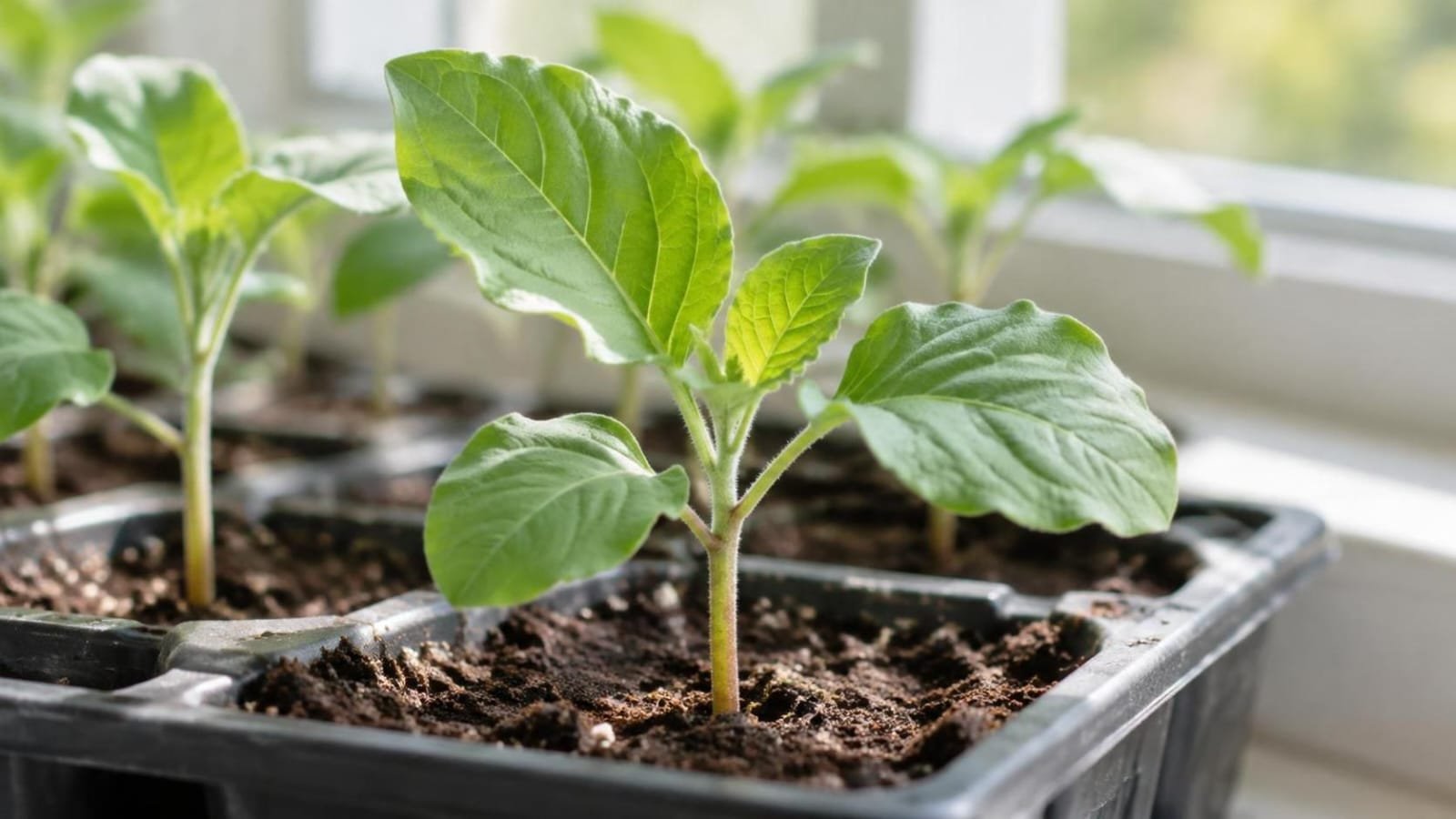
Hydrobuilder also says transplants can go into the setup about six to eight weeks after sowing. How to Grow Eggplant From Seed covers sowing. When to Plant Eggplant explains how to match transplant dates to your season.
Choose a system
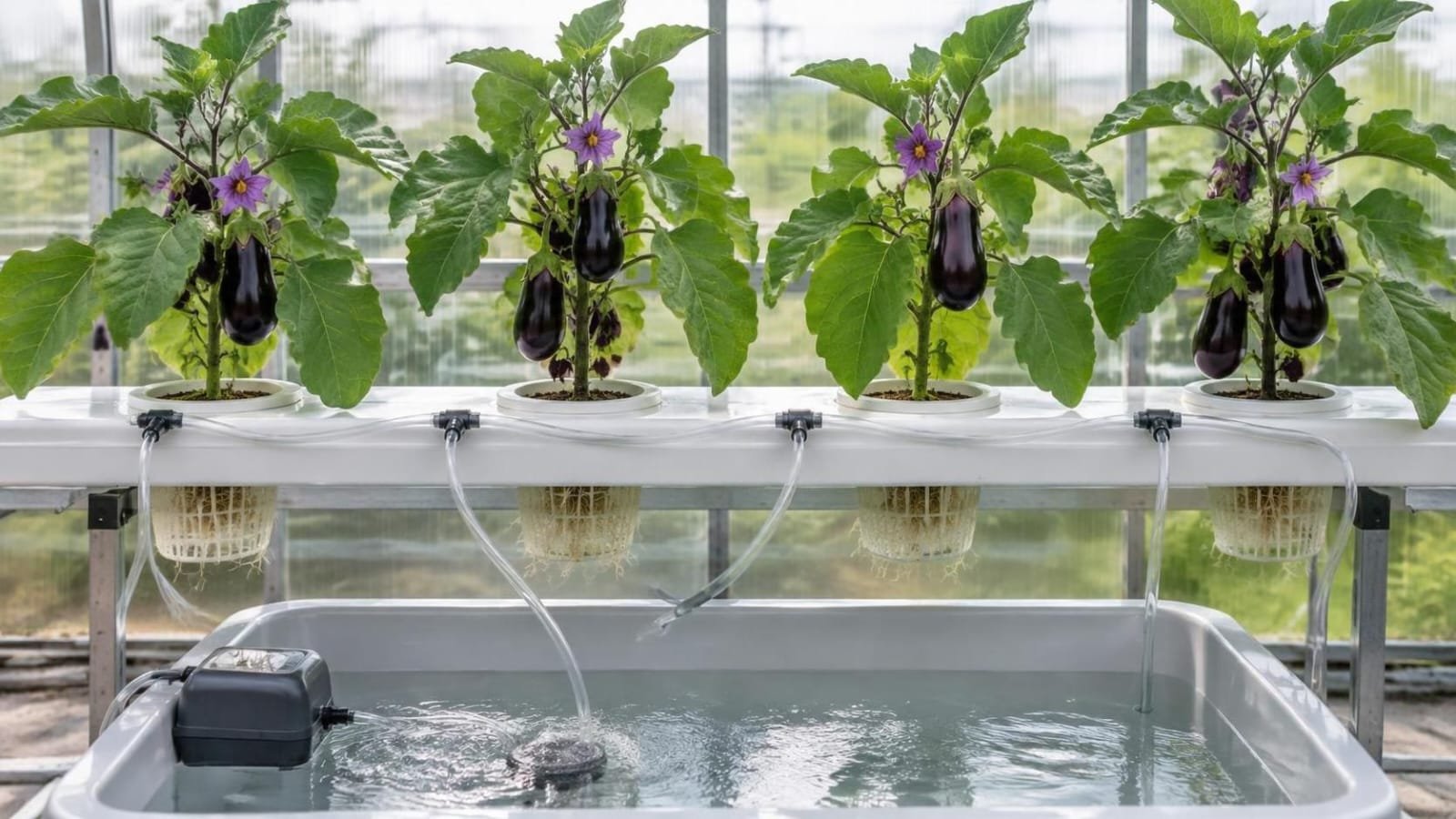
Several systems work for eggplant. Deep water culture, ebb and flow, and drip systems all have supporters. Hydrobuilder calls ebb and flow a basic option. The roots flood with nutrient solution, then the water drains back to a reservoir. Whichever system you choose, the plant needs a steady supply of oxygen at the roots.
A research trial from Oklahoma State University grew eggplant in Dutch bucket systems in a greenhouse. A Penn State team designed sub-irrigated grow beds for vegetables, including eggplant, in temporary or remote settings. Those examples show that eggplant adapts to more than one setup, but each system needs its own management plan.
How much oxygen do hydroponic roots need?
Oxygen is the easiest factor to overlook. A study from Vali-e-Asr University of Rafsanjan in Iran found that eggplant grew better as oxygen levels rose in floating culture. The authors recommend keeping dissolved oxygen at 4 mg per liter (about 4 ppm) or higher. They also found that ammonium-based nitrogen reduced growth, and higher oxygen only partly offset that damage.
In practice, run an air pump and air stone in the reservoir, and keep the water moving where the system allows. Replace or clean air stones that clog. Weak roots and yellowing leaves can mean low oxygen as well as low nutrients. Check the oxygen before you change the feed.
What pH does hydroponic eggplant need?
Most sources agree on this range. Oklahoma State University’s work kept the solution between pH 5.5 and 6.5. Bigger Garden’s guide narrows the target to 5.5 to 6.0, which is a reasonable tighter goal for many growers. Either way, the pH needs to stay in range, because plants absorb nutrients poorly outside it.
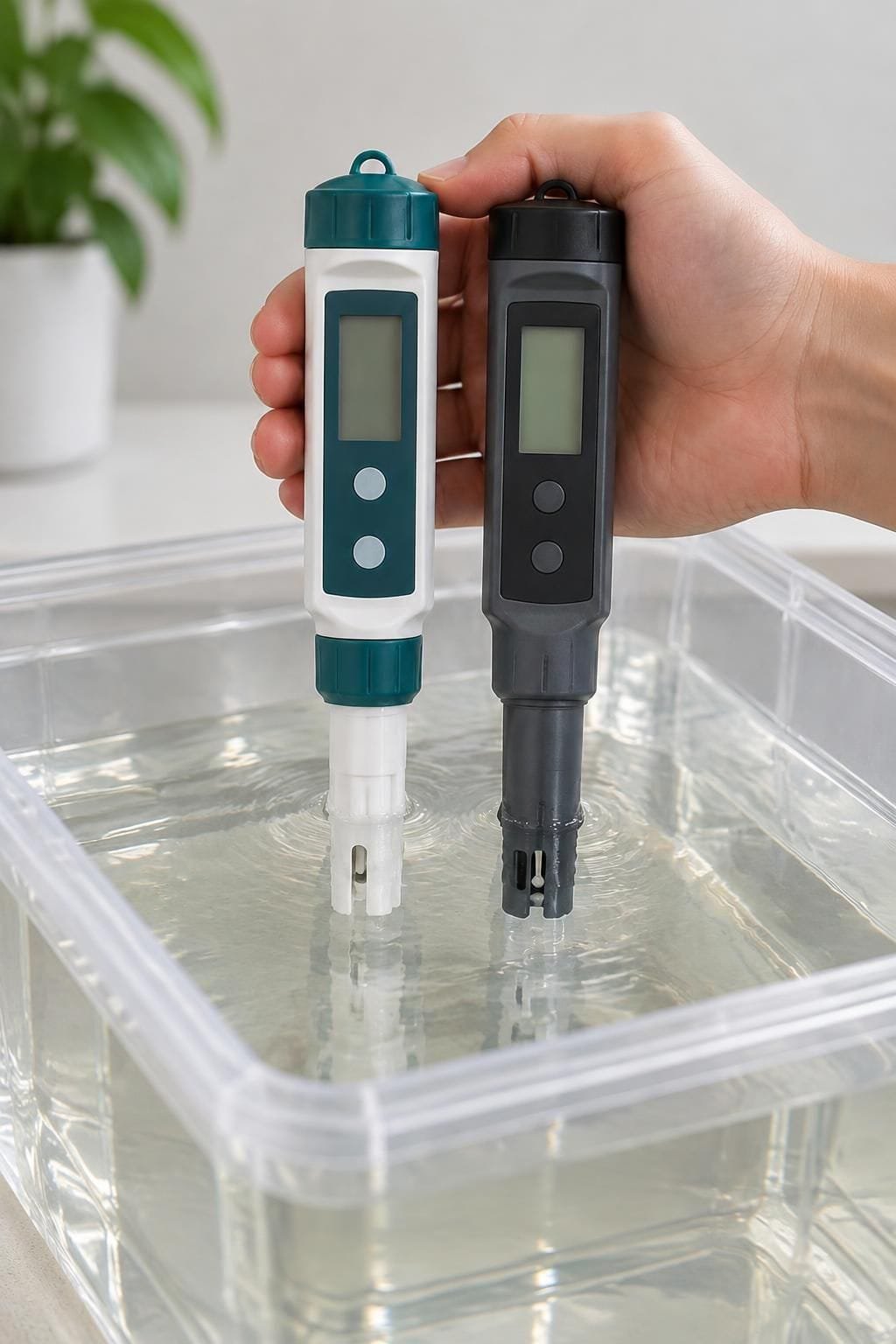
Test the solution at least every day in the first weeks. Use a reliable pH meter, calibrate it on schedule, and adjust with a pH buffer rather than by guesswork. Bigger Garden calls water pH the biggest mistake growers make, and that matches what we see in the research.
How strong should the nutrient solution be?
Oklahoma State kept electrical conductivity between 2.5 and 3.5 mS/cm in its Dutch bucket trial. Another study found that raising the solution to about 4.7 dS/m reduced top-grade fruit. A dS/m reading equals a mS/cm reading, so the two units line up on most meters. More nutrient does not mean better growth. Many US growers read conductivity in ppm, but ppm depends on the meter’s conversion scale, usually 500 or 700. A 2.5 mS/cm reading gives a different ppm number on each scale. Set your meter to match your nutrient maker’s scale.
Micronutrients matter too. A Turkish study grown in deep water culture found that manganese levels changed growth, leaf chlorophyll, and root development. Ask your nutrient supplier for a complete formula, and follow the mixing directions closely.
Nitrogen form matters. The Rafsanjan study found that ammonium reduced growth, so choose a fertilizer with a sensible nitrate-to-ammonium balance. Many commercial fertilizers list their nitrogen forms on the label.
How many hours of light do hydroponic eggplants need?
Sources disagree here. Hydrobuilder recommends 8 to 10 hours a day with LED lights, while Rise Gardens suggests 16 hours. The gap is wide enough that you’ll need to test it. Start near the middle, around 12 hours, and watch for stretching, pale leaves, or poor flowering.
Lighting placement and fixtures are covered in more detail in the indoor growing guide. The same principles apply to a hydroponic setup indoors.
Keep the temperature and humidity in range
Rise Gardens gives a range of 70 to 85°F for hydroponic eggplant. Warm nutrient solution holds less oxygen, which adds to the pressure on the roots. Keep the reservoir cool enough to protect oxygen, and keep the room warm enough for the plants.
For nighttime targets in a greenhouse, see the greenhouse guide. Those numbers apply to the air, so use them to set your room temperature.
Start the plants right
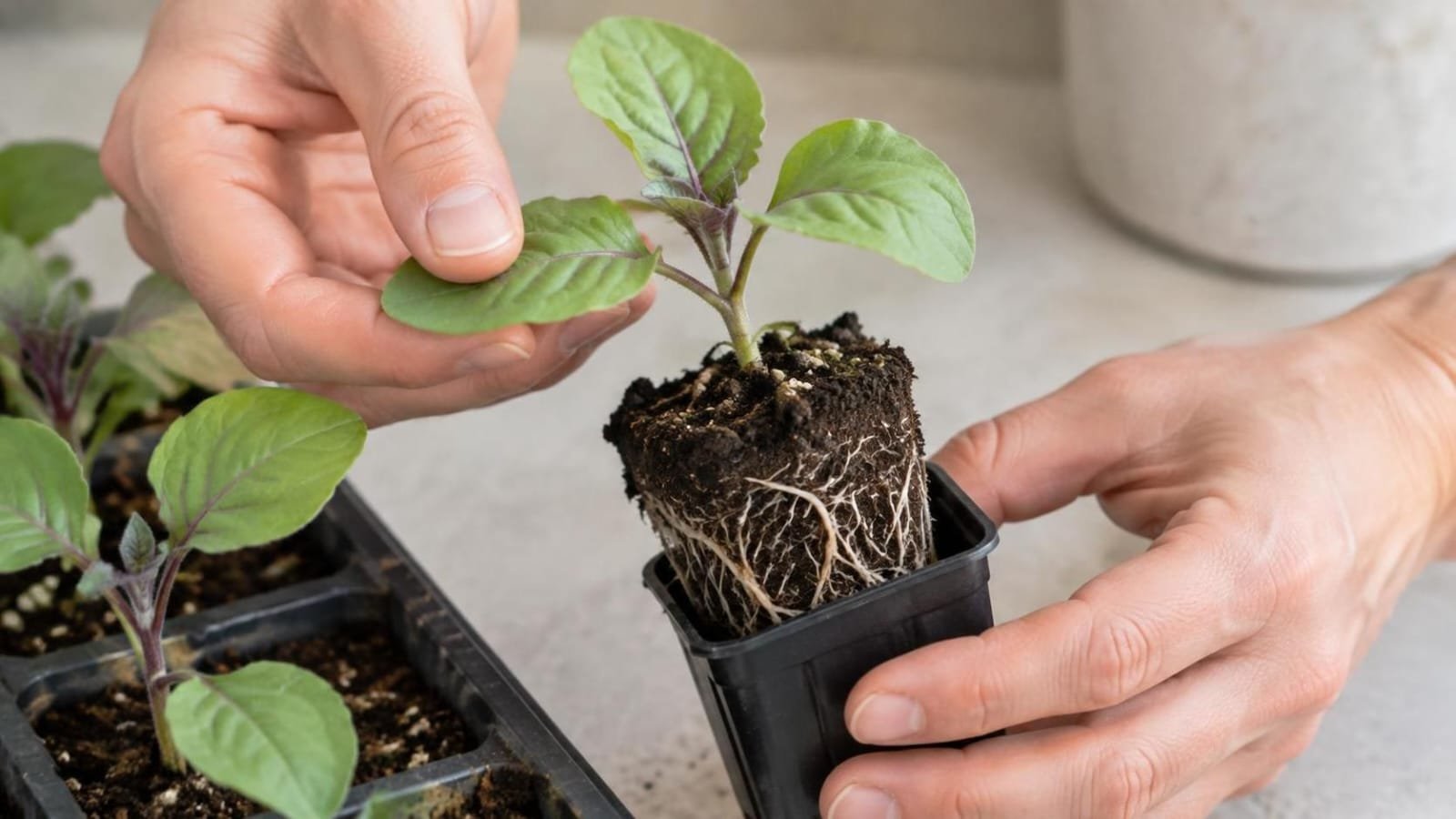
Commercial growers often start seedlings in 4-inch blocks of rockwool or coconut coir before moving them into the system. The block gives the roots a clean, stable start and makes the transfer easier.
Compact types such as ‘Fairy Tale’ and ‘Patio Baby’ are easier to manage in a small home system. Larger varieties such as ‘Black Beauty’ need more root room and firmer support. Match the variety to the system you can build.
Rinse any soil off transplants before setting them in the system. Soil can carry pathogens and clog the lines. If your transplants came from a nursery pot, handle the roots gently so they don’t break apart.
Pollinate the flowers by hand
Hydroponic systems are often indoors or in a greenhouse, where wind and insects can’t do the job. Pollination follows the same steps as in other protected settings. The indoor guide covers hand pollination in detail. The timing is the same: morning, when the flowers are fully open.
Eggplant flowers that drop without setting fruit often point to a nutrient or temperature problem rather than pollination alone. For a small setup, hand pollination takes only a few minutes a day. Check the solution and the room before you assume the cause.
Support the plant and manage the crop
Hydroponic plants can grow tall and heavy with fruit. Use stakes or a trellis from early on, and tie the stems loosely as they grow. Remove weak or crowded shoots so the plant keeps its energy for fruit. Check the ties each week, since they loosen as the stems thicken and load up with fruit.
Watch fruit size as the crop matures. The Oklahoma State trial reported small, yellowing fruit after four months. That can signal overmaturity or a nutrient problem. Harvest fruit at full size with glossy skin, and pick regularly to keep the plant producing.
Avoid common early mistakes
New growers often start with a full-strength nutrient mix, assuming more feed will speed growth. The research points the other way. High salt lowers fruit quality. Mix to the label, and adjust only when the plants and readings call for it.
Another common mistake is ignoring the reservoir temperature. A warm reservoir holds less oxygen and can encourage root problems. Shade the reservoir and insulate it if needed. Watch the water level so the pump doesn’t run dry.
Finally, don’t change several things at once. If the plants look off, check pH first, then oxygen, then electrical conductivity. Change one variable, wait a day or two, and read the plant again before you adjust anything else.
Set up a daily routine
Check the water level, pH, and oxygen each day. Check electrical conductivity several times a week. Top off or replace the solution on a schedule that fits the plants’ growth. Look at the leaves and roots at least once a week.
Write down each reading and each change. A simple log shows trends early, such as a slow pH climb or a drop in conductivity after hot days.
When soil or containers make more sense
Hydroponics is not the only option, and it isn’t always the easiest. Soil and containers forgive more mistakes, and most home growers find them simpler to manage. How to Grow Eggplant in Containers and Pots and How to Grow Eggplant in Raised Beds cover those approaches.
If you choose a system, pick the one you can monitor consistently. A well-run soil bed usually beats a neglected hydroponic setup. For the whole season, How to Grow Eggplant: Planting, Growing, and Care connects these choices to the calendar.
One thought on “How to Grow Eggplant Hydroponically”