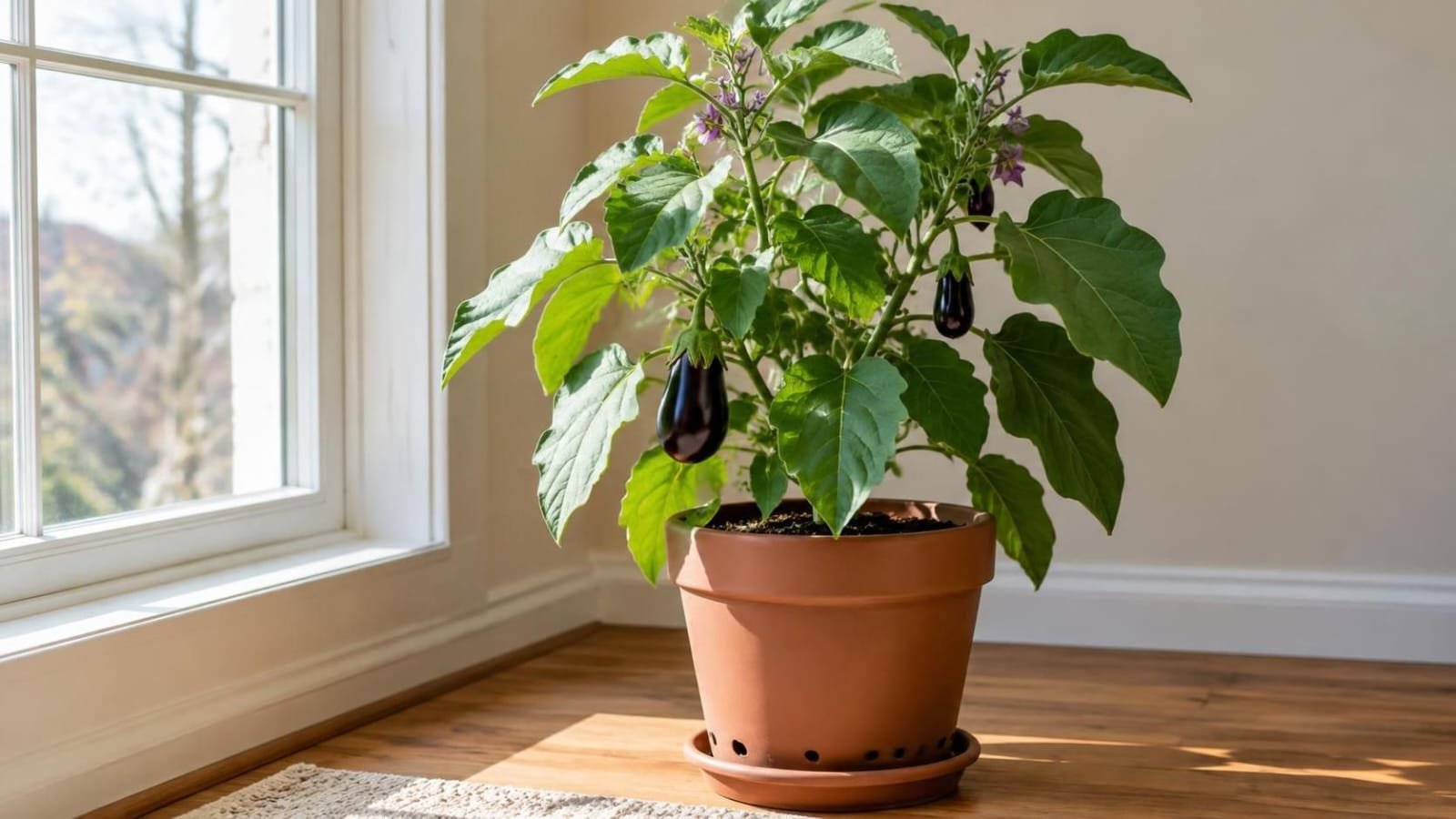
You can sometimes grow eggplant from store-bought fruit, but the odds are lower than with a seed packet. Store eggplants are often picked before their seeds fully mature. Many are also hybrids that won’t grow true to type. If you want to try, pick the most mature fruit you can find. Scoop out the seeds, dry them well, and run a germination test before you plant.
Trying a grocery store eggplant is a fun experiment. It costs almost nothing, and it can teach you a lot about seed saving. It’s also unpredictable, so set your expectations before you start. This guide covers what to look for, how to test seeds, and when a packet is the better bet.
Will seeds from store-bought eggplant grow?
Grocery eggplants are picked for shipping and shelf life, not for seed. A fruit picked young contains seeds that haven’t matured, and those seeds often fail to sprout. Insteading makes the same point directly: the eggplants you buy at the store are not good for saving seed.
The variety is the second problem. Many grocery eggplants are commercial hybrids. Seed from a hybrid won’t reliably grow plants like the fruit you ate. The plant might grow, flower, and set fruit, but the result can differ in size, shape, color, or flavor. That’s why the odds are a gamble.
Even so, the experiment is worth doing if you enjoy it. Treat the first season as a test. If the seeds sprout and the plants produce, you have a free crop. If they don’t, a seed packet is one order away.
How do you choose store-bought eggplant for seed?
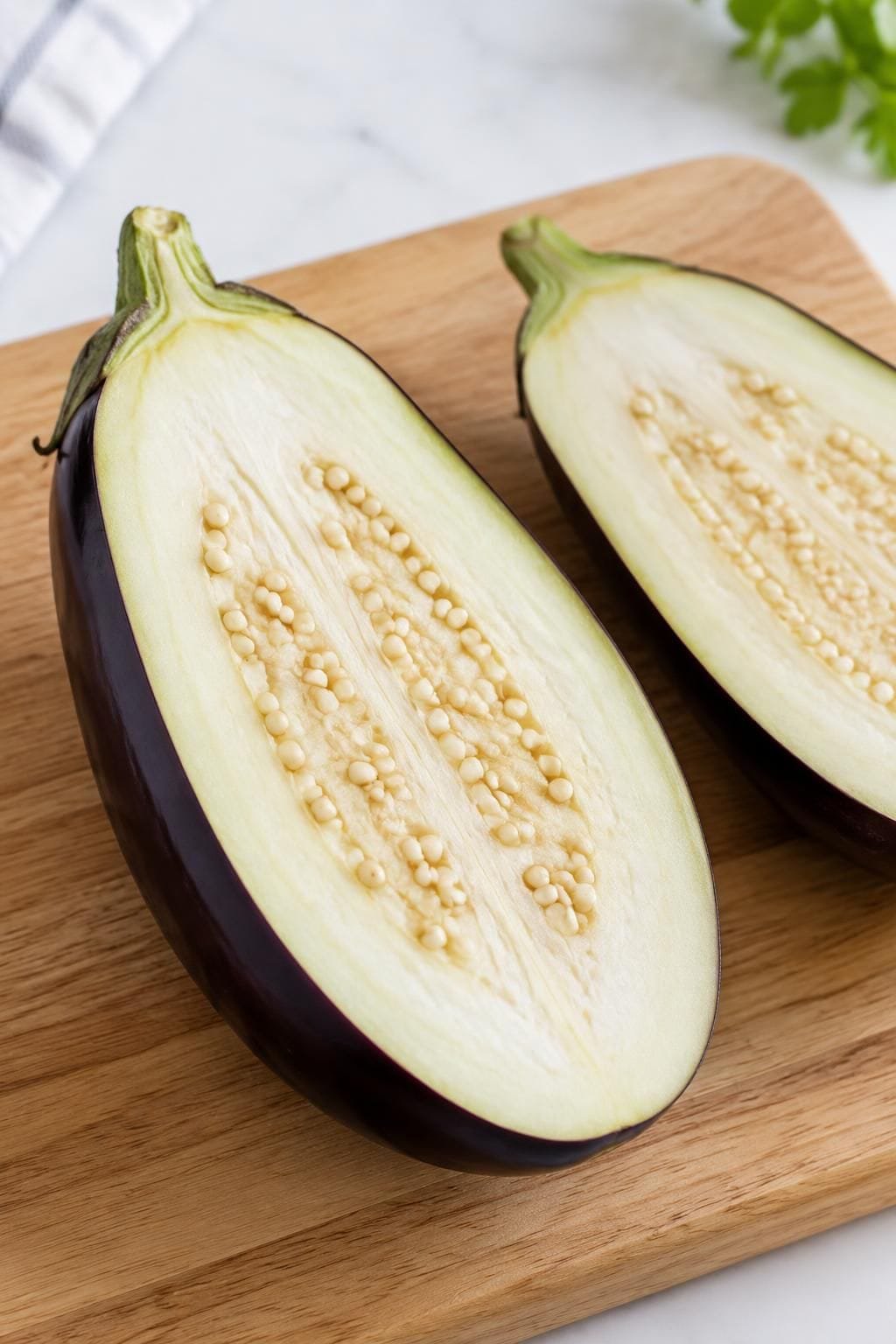
Pick the largest, firmest, most mature-looking eggplant in the bin. The skin should look dull rather than shiny, and the fruit should feel heavy for its size. Avoid soft spots, wrinkles, and mold. A fruit that’s already starting to rot can carry disease and rarely yields seed you can use.
If you can, choose a fruit that’s clearly older than the rest of the display. Some stores carry specialty varieties, such as a striped or white eggplant, and those can be a fun choice. Still, the variety will be hard to confirm, so keep notes on where you bought it.
Do eggplant seeds sink or float when ripe?
Seed maturity is easier to judge than most people expect. Insteading’s seed-saving guide notes that eggplant seeds sink when they’re ripe. Cut the fruit open and scoop the seeds into a bowl of water. Seeds that sink are a better bet. Seeds that float are usually immature or empty, so set them aside.
This test isn’t perfect, but it’s quick. Sinking seeds still need a germination test before you plant them. Use the sinking seeds only, and rinse them well to remove the pulp.
Ask where the fruit came from
Farmers markets often beat grocery stores for seed. A grower at a stand can tell you whether the fruit is an heirloom or a hybrid. They can also tell you whether it ripened on the plant. Ask those questions, and write down the answers with the seed. Note the store or stand name and the purchase date too.
Even a short conversation helps. If the fruit is an open-pollinated heirloom, the seed is more likely to grow a plant like the parent. Hybrid labels usually don’t appear on fruit, so the question is the only way to find out.
How do you dry eggplant seeds?
Rinse the seeds in a fine strainer to remove all the flesh. Pulp that clings to the seed can carry mold, and mold ruins seeds during storage. Spread the seeds on a paper towel or a clean plate, and separate them so they don’t clump together.
Let the seeds dry fully before you store them. Several days in a room with good airflow usually works. Stir them once a day so every seed dries evenly. If the seeds still feel damp, give them more time. Moisture trapped in a sealed bag is a common cause of failed seed.
Why do store-bought eggplant seeds fail to sprout?
Most failures come from a short list of causes. The fruit was picked too early, so the seeds never matured. The fruit was old or bruised, and the seeds began to rot inside. Heat or fast drying can damage the seed. Or the seeds were stored damp, and mold took over.
You can avoid most of these problems with a few simple habits. Choose mature fruit, dry the seeds slowly, and keep them cool and dry. A germination test will show you whether the batch survived the trip. If the test comes back weak, don’t blame the plant yet. Check the seed handling first, then decide whether to try a fresh batch.
How do you test eggplant seed germination?
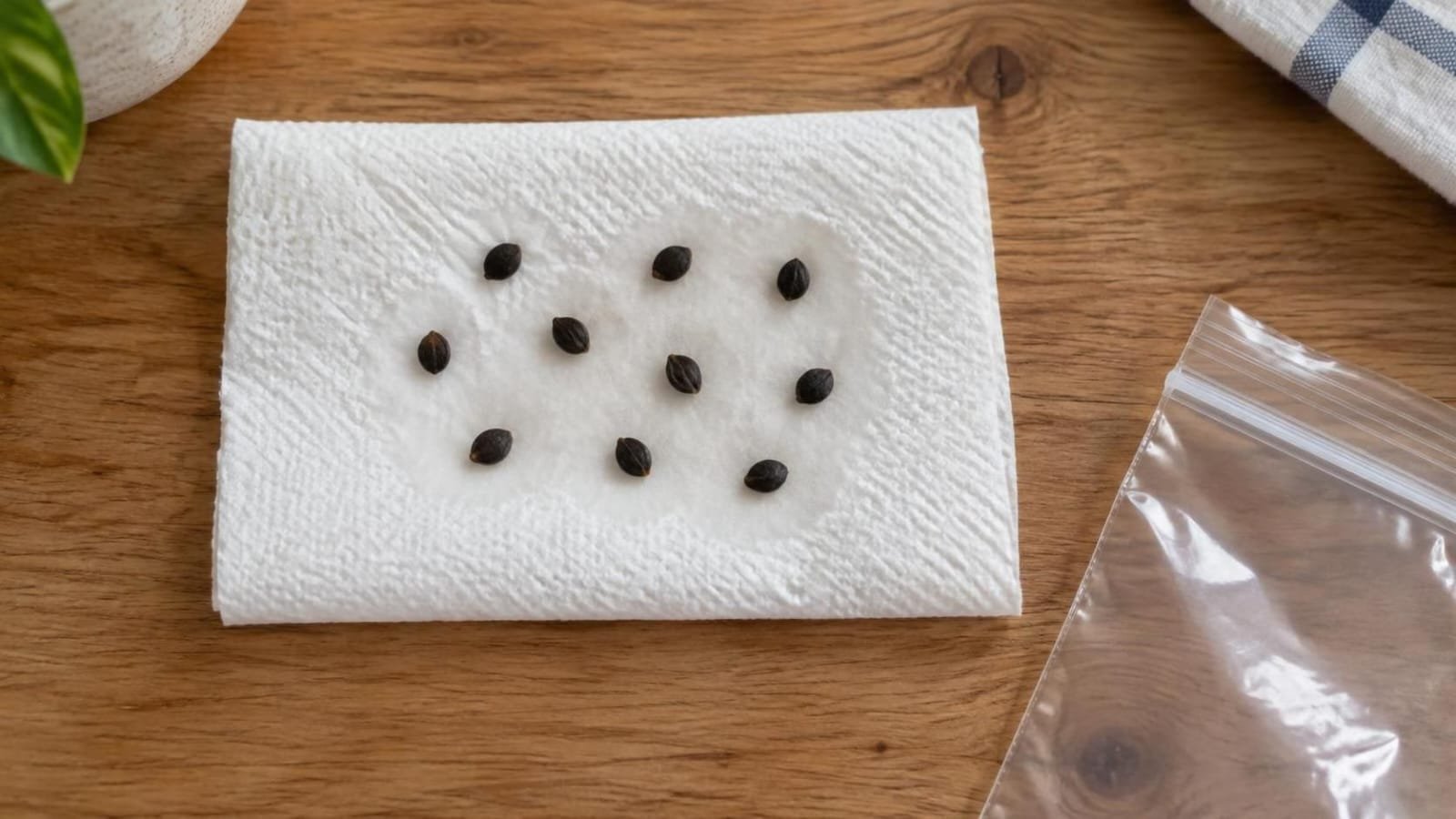
Germination testing shows whether the seeds are worth planting. Place about 10 seeds on a damp paper towel. Fold the towel over them and slip it into a sealed bag. Keep the bag in a warm spot, not in direct sun, and check it every day or two.
Count the sprouts after about a week. As a rule of thumb, 6 or more sprouts out of 10 is a reasonable set to start with. If fewer sprout, sow more seeds than you need, because the rest of the batch may be weak. Discard any seed that smells musty or shows fuzzy mold.
Germination can be slow with eggplant. Be patient. The seed-starting guide covers warmth, sowing depth, and light, which apply to your saved seeds too.
Start the seeds indoors
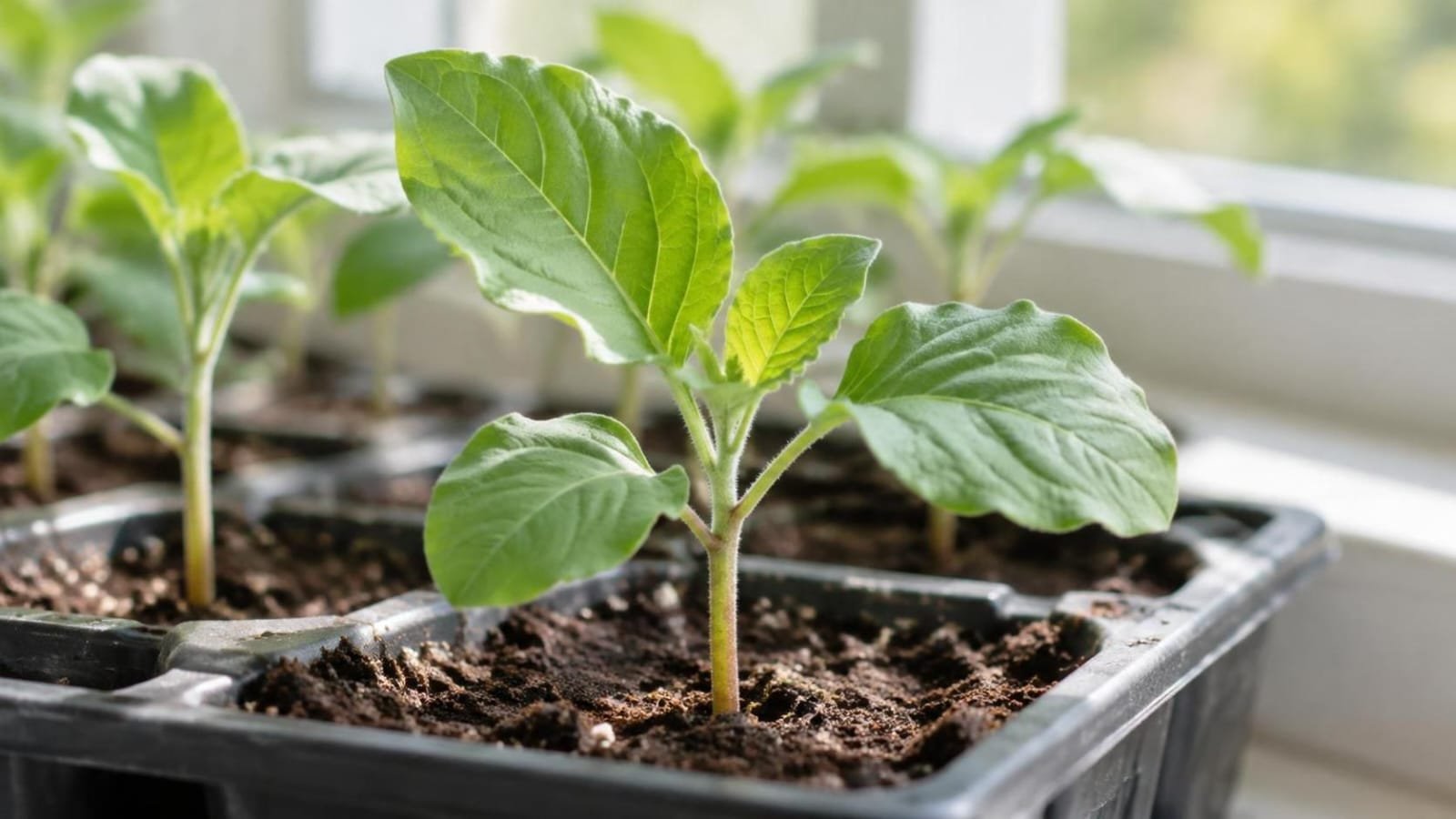
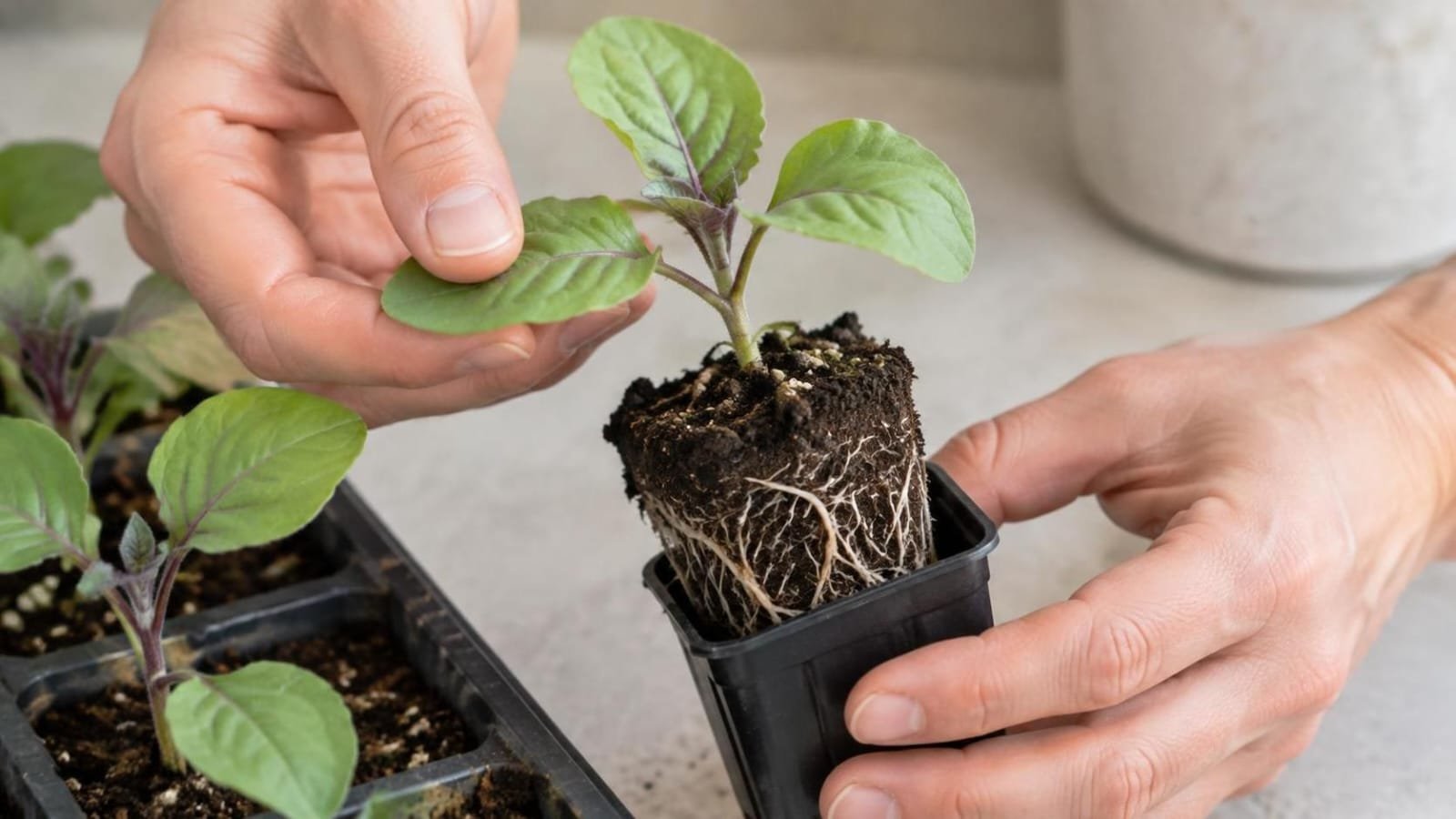
Sow the tested seeds in small cells with a fine seed-starting mix. Eggplant needs steady heat to sprout, so use a heat mat if your room runs cool. Zester Daily recommends sowing at 75 to 80°F. Our seed-starting guide covers the same warmth range in more detail.
Expect a longer timeline than a packet would give you. Eggplant takes 65 to 100 days from seed to harvest, according to Epic Gardening. Start early enough to allow for a slow start and a late transplant. When to Plant Eggplant covers the transplant calendar.
Know what to expect from the plant
A plant grown from store seed can look and perform differently from the fruit you bought. Expect variation in fruit size, shape, and color. Some plants will be vigorous and productive. Others will be weaker or produce smaller fruit. That spread is normal when the parent is a hybrid.
Cross-pollination is another variable. Eggplant flowers are mostly self-pollinating, but bees can carry pollen between nearby varieties. Insteading suggests growing one variety at a time if you want seed that stays true. Keep that in mind before you save seed from a plant near other eggplants.
Keep track of each plant. Note the height, the first flower date, the fruit quality, and any pest or disease trouble. Over time, you’ll see which plants are worth saving seed from.
Pick a container or a bed
Use the same growing space you would use for a packet-grown plant. Growing Organic suggests a pot of three to five gallons, at least 12 inches deep, for compact plants. How to Grow Eggplant in Containers and Pots covers pot choice. How to Grow Eggplant in Raised Beds covers bed preparation.
Container plants need more feeding than ground plants. Plan to add compost or fertilizer through the season. Follow the product label for strength and timing.
How long do saved eggplant seeds last?
Seeds keep best in a cool, dry, dark place. Epic Gardening notes that eggplant seed can stay viable for about 4 to 6 years when stored that way. Viability falls over time, so older seed germinates less reliably even when it looks fine.
Label each packet or envelope with the variety name if you know it, the source, and the date. Store the seeds in a sealed container with a silica packet if you have one. A kitchen drawer away from the stove works well, and a basement shelf works too if it stays cool. Keep a small backup batch in a second envelope, in case the first one fails.
Check the rules for moving seed
Most vegetable seed moves across state lines without trouble, but rules for plant material can change. If you bring seed from another country, check with your national or state agriculture office first. A few minutes of checking can prevent a held shipment.
Decide when to buy a packet instead
Skip the grocery fruit if the seeds fail the germination test. Skip it too if the fruit looks old or moldy, or if you need predictable plants. A seed packet gives you a named variety with known traits. Types of Eggplant: 15+ Varieties to Grow can help you choose one that fits your space and season.
If you enjoy the experiment, keep it going. Save seed from your best plants and grow from those. Over a few seasons, the plants may settle into a line that suits your garden. For the full growing guide, How to Grow Eggplant: Planting, Growing, and Care ties the steps together.