
Why is my eggplant plant wilting? Eggplant often wilts from water stress or heat, and the plant usually recovers overnight. If it wilts in the afternoon, perks up by morning, and the soil is moist, heat is the likely cause. If the wilt keeps coming back, starts on one side, or hits the lower leaves first, check the roots and stem for a soilborne disease. Wilt that stays and turns the whole plant brown needs a closer look.
A wilting eggplant can look like a crisis, but the cause is often simple. If the leaves are also curling, see how to distinguish curling causes before changing the watering routine. The key is timing and pattern. Does the plant recover at night? Is one side affected? Is the soil wet or dry? Answer those questions, and you’ll know whether to adjust watering or look harder at the roots.
Is an afternoon wilt normal?
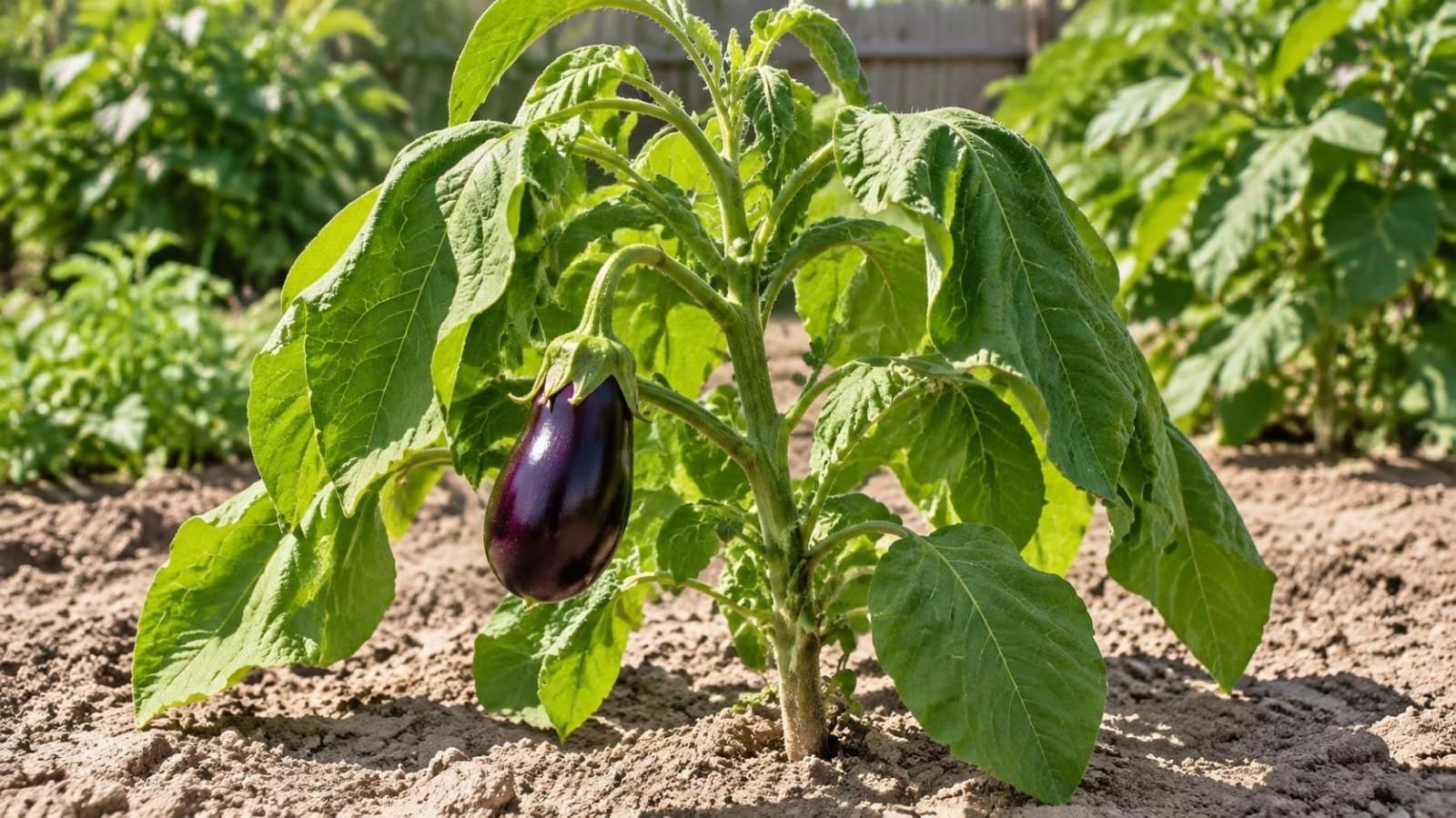
Yes, often. On a hot afternoon, a plant can lose water faster than its roots can supply it, and the leaves droop. When the air cools and the plant has time to rehydrate, the leaves firm up again. A plant that wilts in the afternoon and looks normal the next morning is usually coping with heat.
If the plant doesn’t recover overnight, or if it wilts even in the morning, the cause is more serious. Also watch the pattern over several days. Heat wilt comes and goes with the weather. A wilt disease gets worse each day, and the plant recovers less each night. Check the soil and the roots before you decide. How Much Sun Does Eggplant Need? covers heat and light, which can make afternoon wilting worse.
Could water be the cause?
Yes. Ask Extension lists both overwatering and underwatering as common causes of wilt, along with large temperature swings. Overwatered soil can suffocate the roots, so the plant can’t take up water even though the soil is wet. Underwatered soil simply can’t supply the plant.
Push a finger two inches into the soil. Wet soil with a wilted plant points to overwatering or root trouble. Dry soil points to thirst. How Often Should You Water Eggplant? covers a steady schedule and how to adjust it for heat and soil type.
Could a soilborne wilt disease be the cause?
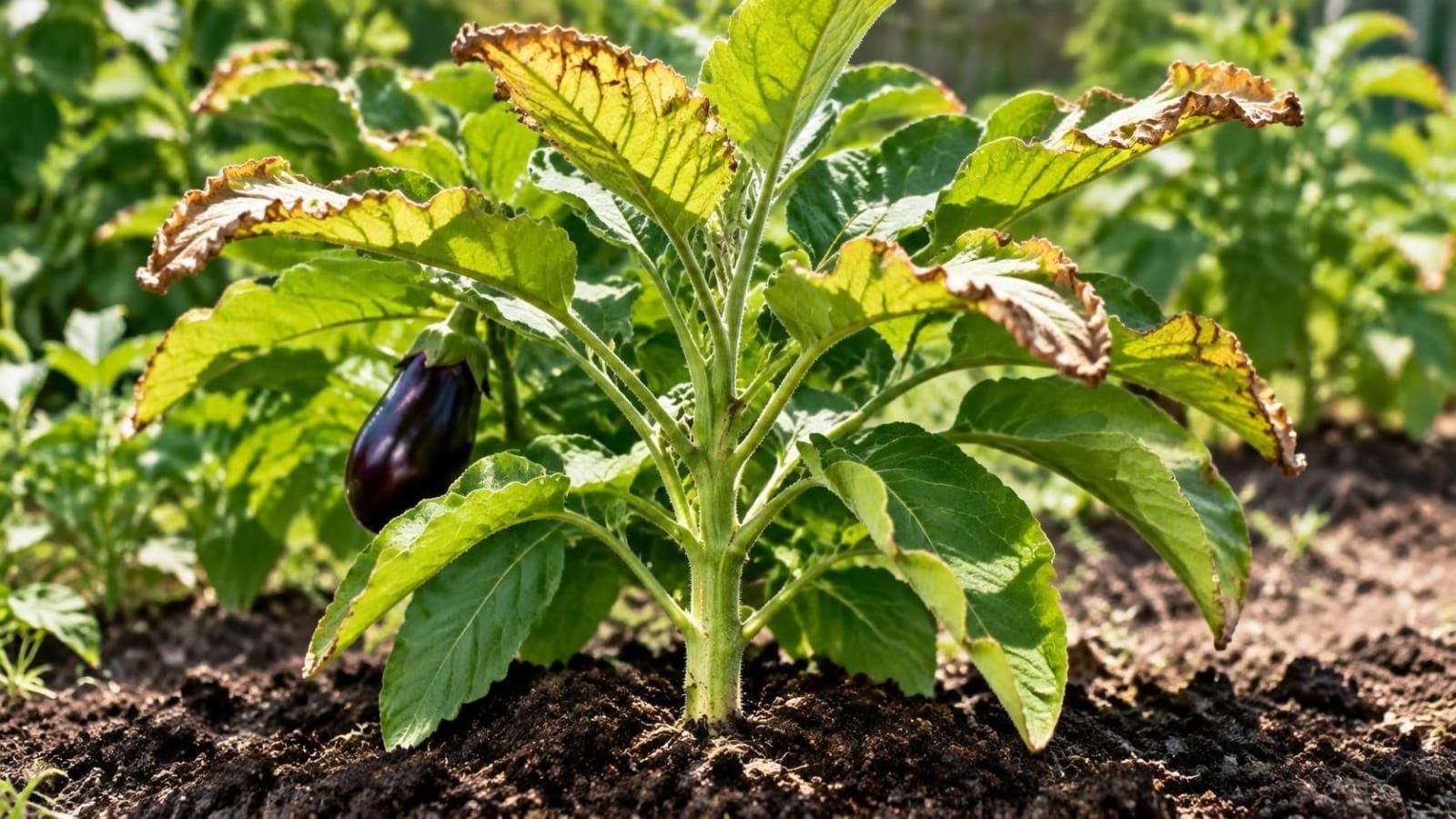
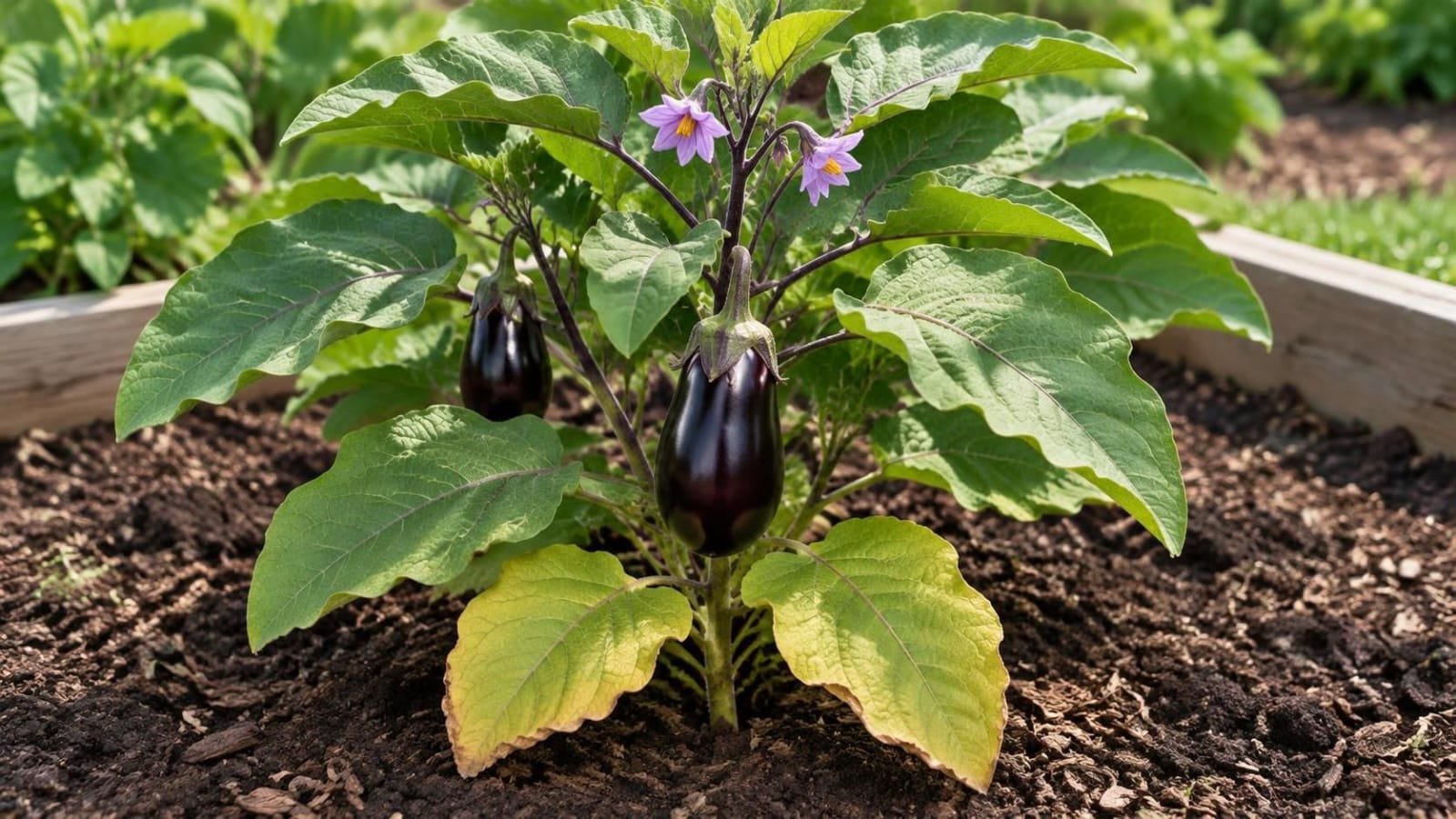
Yes, and this is the case most worth checking. Verticillium wilt starts on lower leaves, often on one side of the plant. The leaf edges and tips turn yellow, then the whole leaf yellows and wilts. The wilt tends to spread up the plant over time. University of Minnesota Extension describes these symptoms in its diagnostic guide.
Fusarium wilt follows a similar path. An Ohio State University Extension fact sheet on Fusarium and Verticillium wilts describes the pattern in eggplant. Wilting moves from the lower leaves to the upper ones. The wilt often shows on sunny days and recovers at night, and the plant finally collapses. Cut stems can show discoloration in the vascular tissue.
Neither disease has a cure once a plant is infected. Remove the plant. Avoid planting eggplant, tomato, or potato in that spot for several years. Choose resistant varieties when you can. Eggplant Diseases: Symptoms, Identification, and Treatment covers the full disease picture.
What if the whole plant wilts and turns brown?
A wilt that spreads to the whole plant and turns it brown can point to Phytophthora. The same diagnostic guide describes Phytophthora as a whole-plant wilt with browning. Water-soaked spots can appear on the fruit and leaves. This disease moves quickly in wet conditions, so act fast if you suspect it.
Brown leaves from other causes are covered in Why Are My Eggplant Leaves Turning Brown?. If the browning follows the wilt across the whole plant, check the stem base and the fruit too.
Could roots be the problem?
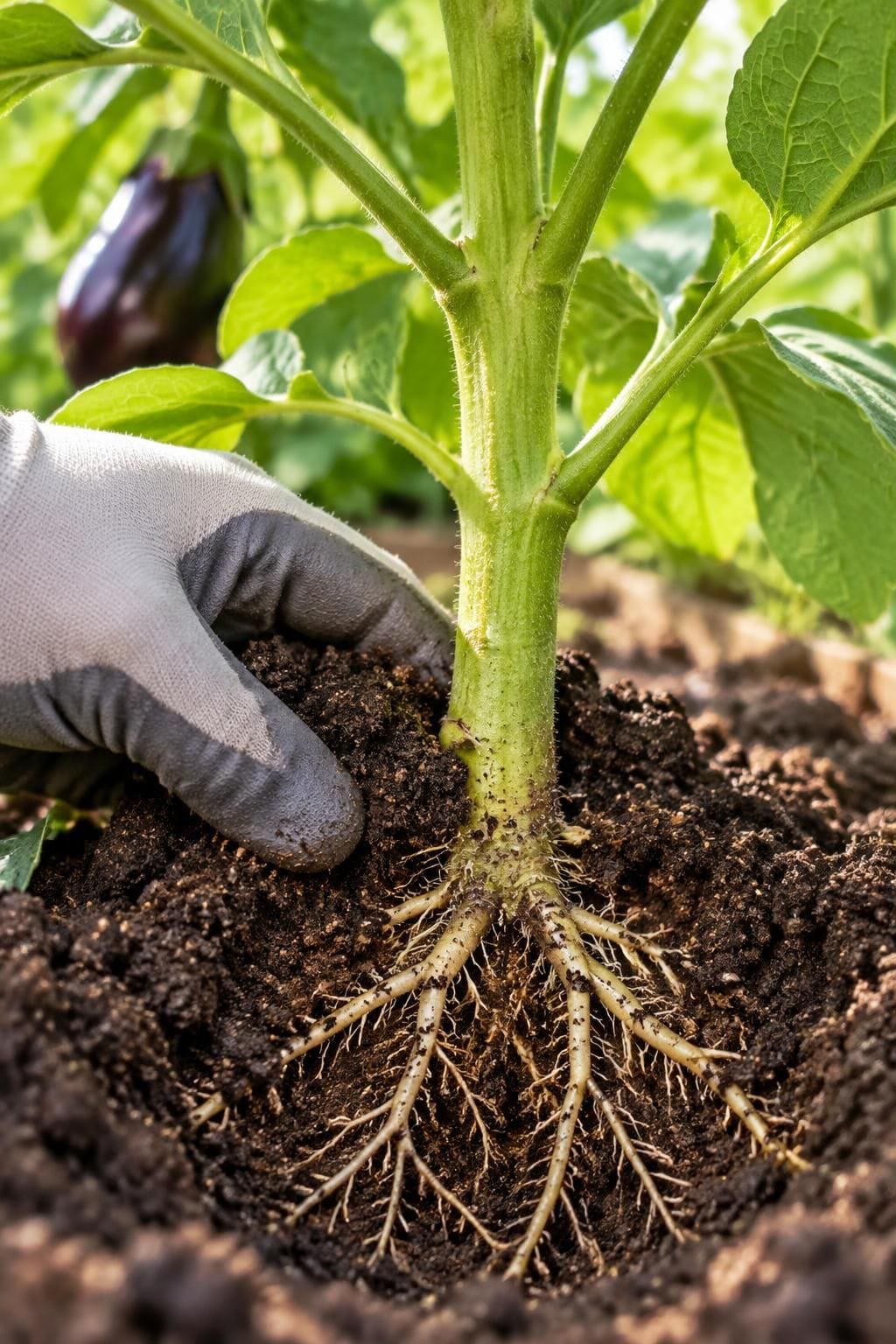
Yes. Root damage from overwatering, poor drainage, or disease can make even a well-watered plant wilt. Roots that are soft, brown, or rotting can’t take up water. Gently dig near the base of the plant to check. Healthy roots are firm and pale, with small fine roots at the tips.
If the soil stays soggy, improve drainage. Best Soil for Eggplant: pH, Mix, and Amendments covers the mix and drainage. Container plants can also wilt from waterlogged or compacted mix, so check the drainage holes first. How to Grow Eggplant in Containers and Pots covers pot choice.
Could insects cause wilting?
Yes, in heavy numbers. University of Minnesota Extension notes that small numbers of aphids rarely cause visible symptoms. Large numbers can cause curling, stunting, and wilting. Check the undersides of the leaves for clusters, and look at the new growth first.
Insect damage to the leaves is covered in Eggplant Leaves: Identification, Problems, and Care. If the wilt seems tied to a pest, start with that guide.
Can transplanting cause wilting?
Yes. A newly moved plant often wilts for a few days while its roots adjust. Keep the soil moist during that time, and shade the plant during the hottest hours. How to Repot Eggplant Seedlings covers gentle handling at the root stage, which reduces this stress.
Cold can also stress young plants. Eggplant is sensitive to cold, and cold nights can damage leaves and slow water uptake, which can look like wilt. Wait for warm nights before you set out seedlings.
Does water stress change how the plant responds to disease?
Yes, the link is real. A 1999 study in the Journal of Phytopathology looked at water stress and Verticillium wilt on eggplant. Researchers had reported both more wilt in wet soil and more wilt in dry soil, so the relationship isn’t simple. The study found that irrigation and infection together reduced early and total yield and lowered fruit quality. Avoiding extremes is a sensible habit, though that study doesn’t prove steady watering prevents disease.
Keep the soil moist, not soggy. Avoid long dry spells followed by heavy watering. Sudden swings stress the plant and make wilting more likely.
What should you check first?
Start with the timing. Does the wilt come only in the afternoon? Then check the soil moisture. If the soil is wet, check the drainage and the roots. If the wilt is on one side, or starts with the lower leaves, look at the stem for discoloration. If the plant collapses quickly, act fast and remove it from the bed.
Change one thing at a time. A plant that recovers after a change in water or shade is telling you what it needs. A plant that keeps wilting after the basics are right needs a closer look at disease.
When is wilting a sign of a bigger problem?
Wilting that spreads, doesn’t recover overnight, or comes with one-sided yellowing and stem discoloration needs prompt attention. Remove plants that are clearly infected to protect the rest of the bed. For the full growing guide, How to Grow Eggplant: Planting, Growing, and Care connects watering, feeding, and planting. Why Are My Eggplant Leaves Turning Yellow? covers the yellow patterns that often appear with wilt.
One thought on “Why Is My Eggplant Plant Wilting?”