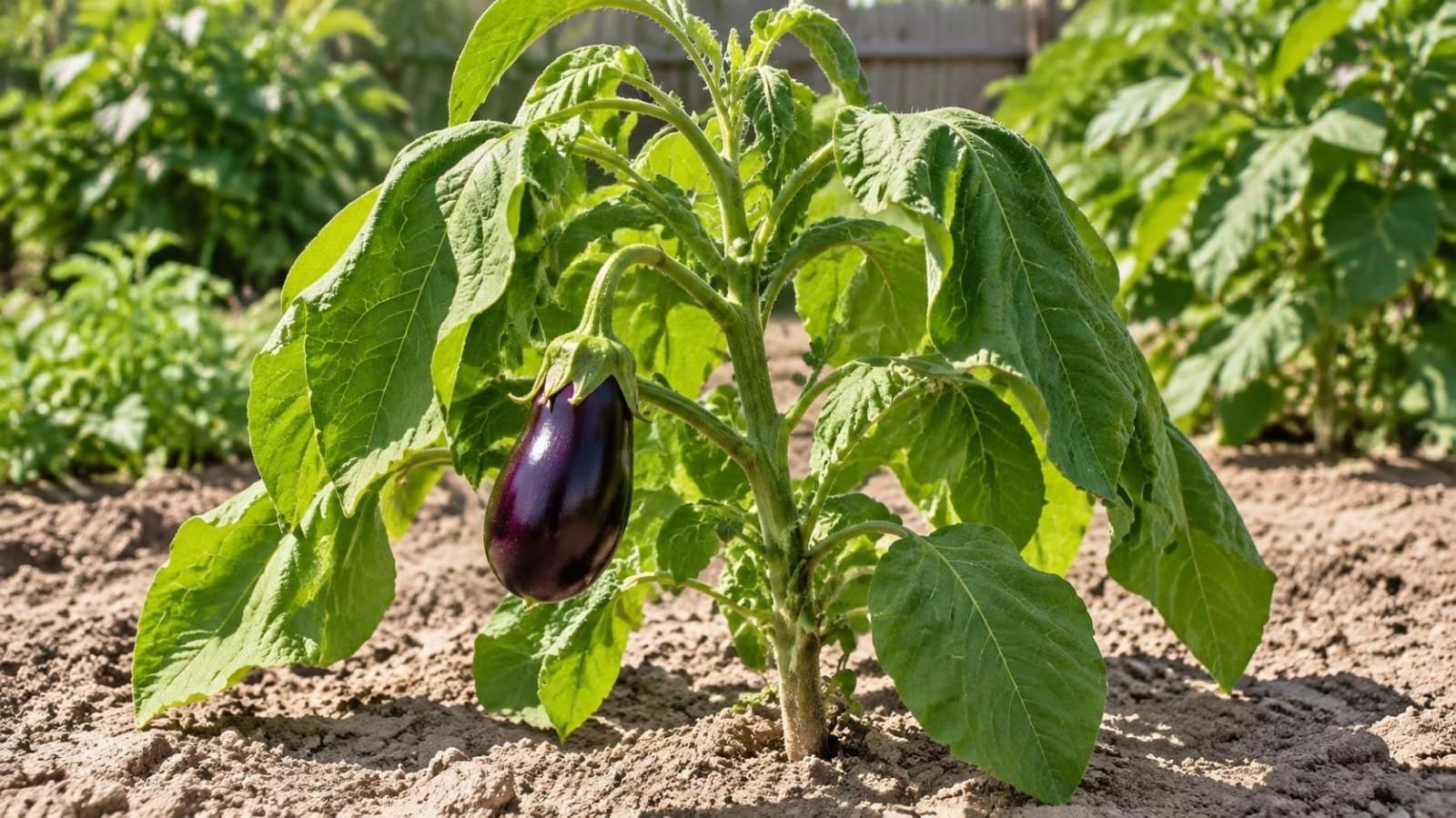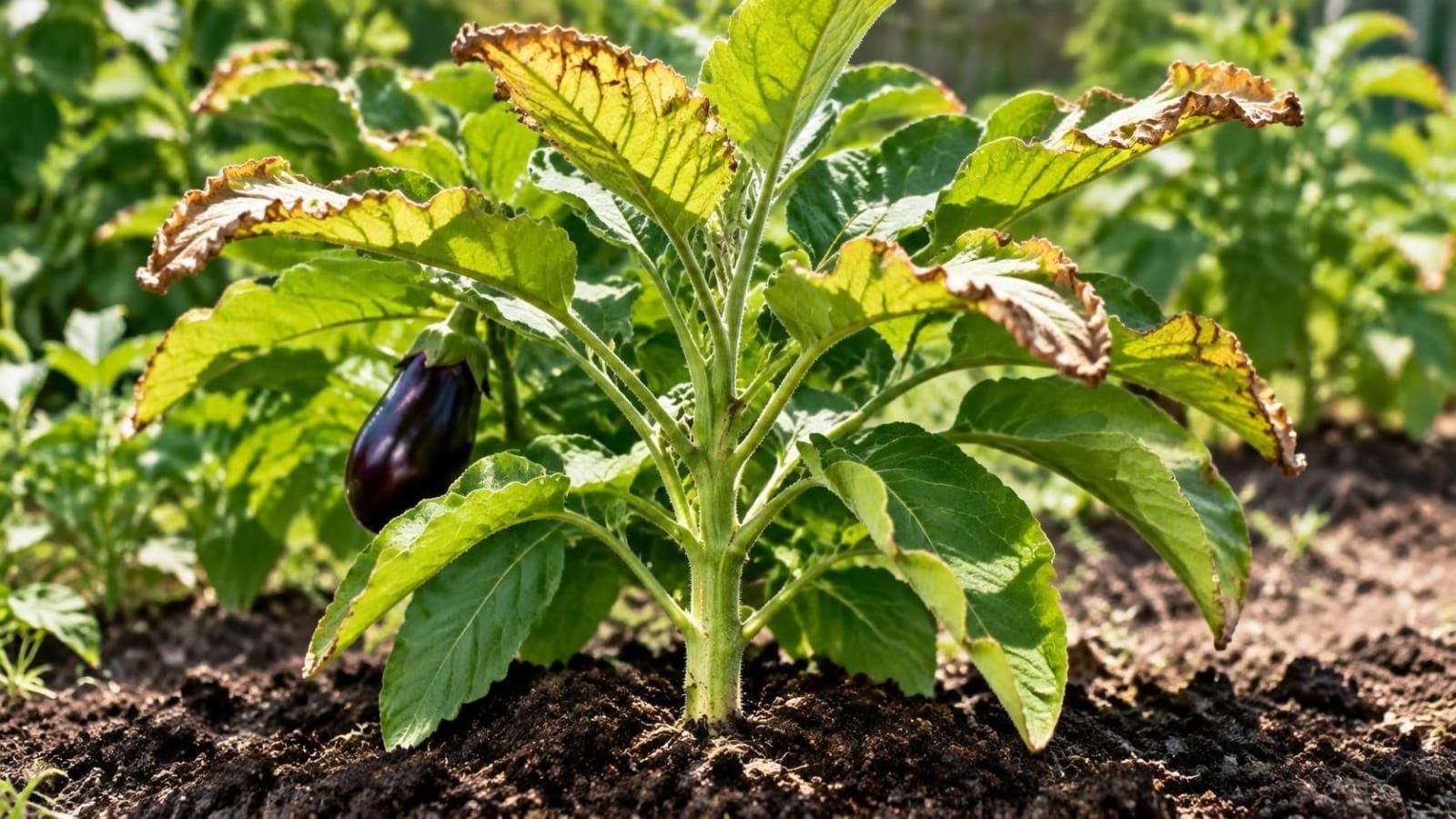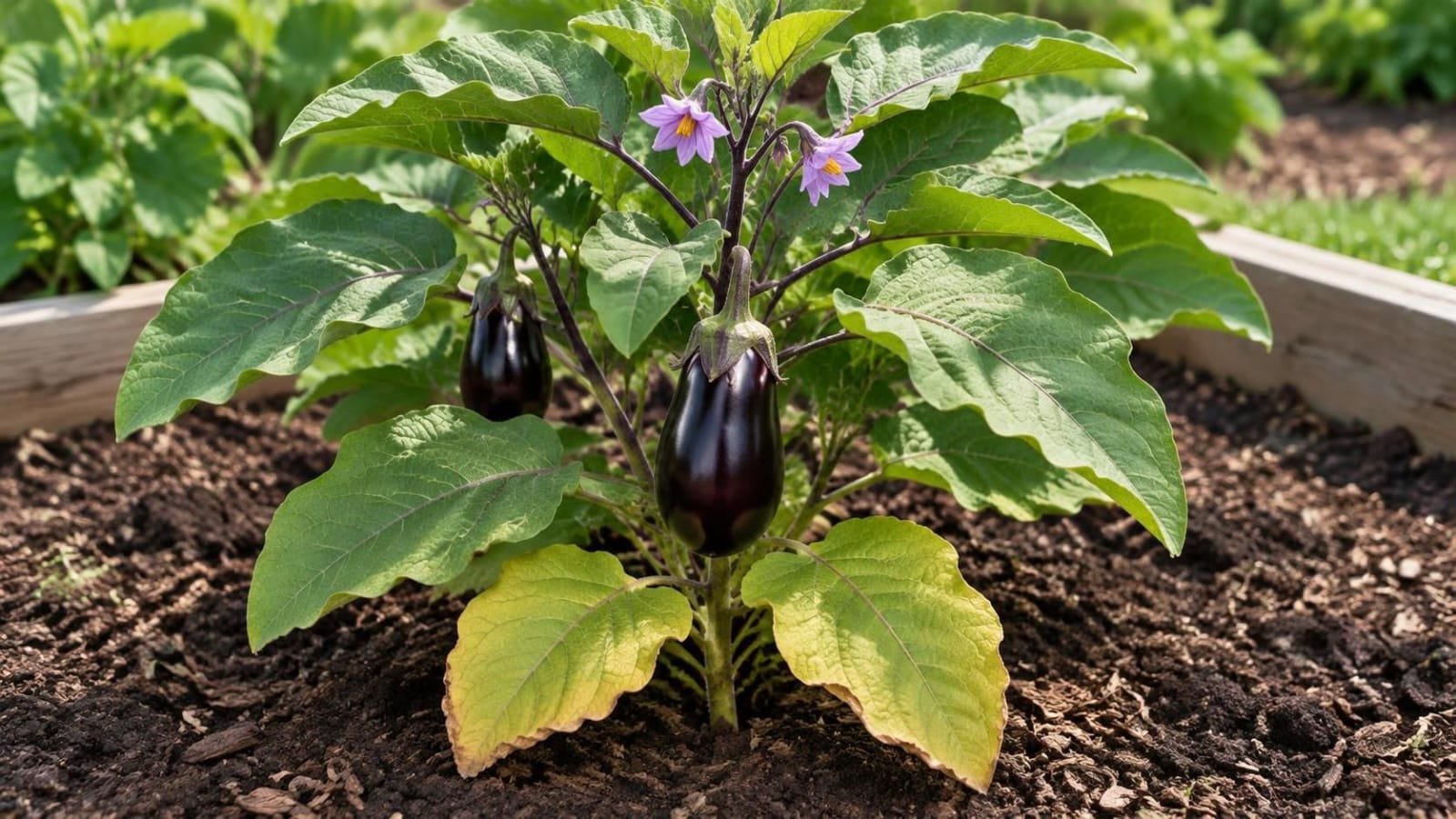
Eggplant leaves often curl from heat and water stress, because curling reduces the surface that loses water. If the curl disappears by morning, heat is the likely cause. If new leaves stay curled, twisted, or misshapen, check for insects under the leaves or a virus. Curling that appears with yellow mottling or shoestring-shaped leaves needs closer attention.
Curled leaves can look alarming, but the cause is often simple. Sometimes the plant is protecting itself from the sun. Sometimes it’s short on water, or a pest or virus is feeding on the new growth. This guide helps you tell those causes apart, starting with the pattern and the timing.
Is curling a normal heat response?
Often, yes. On a hot afternoon, leaves may curl to expose less surface to the sun. Many plants recover by evening. A plant that curls in the afternoon but looks normal in the morning is usually managing heat, not failing.
Heat is worse in containers. Ask Extension notes that containers on paved or hard surfaces reflect heat. That dries the plant faster and can stress it. If you grow in pots, move them to a cooler spot during the hottest hours, or add shade. How to Grow Eggplant in Containers and Pots covers pot placement.
Could water be the problem?
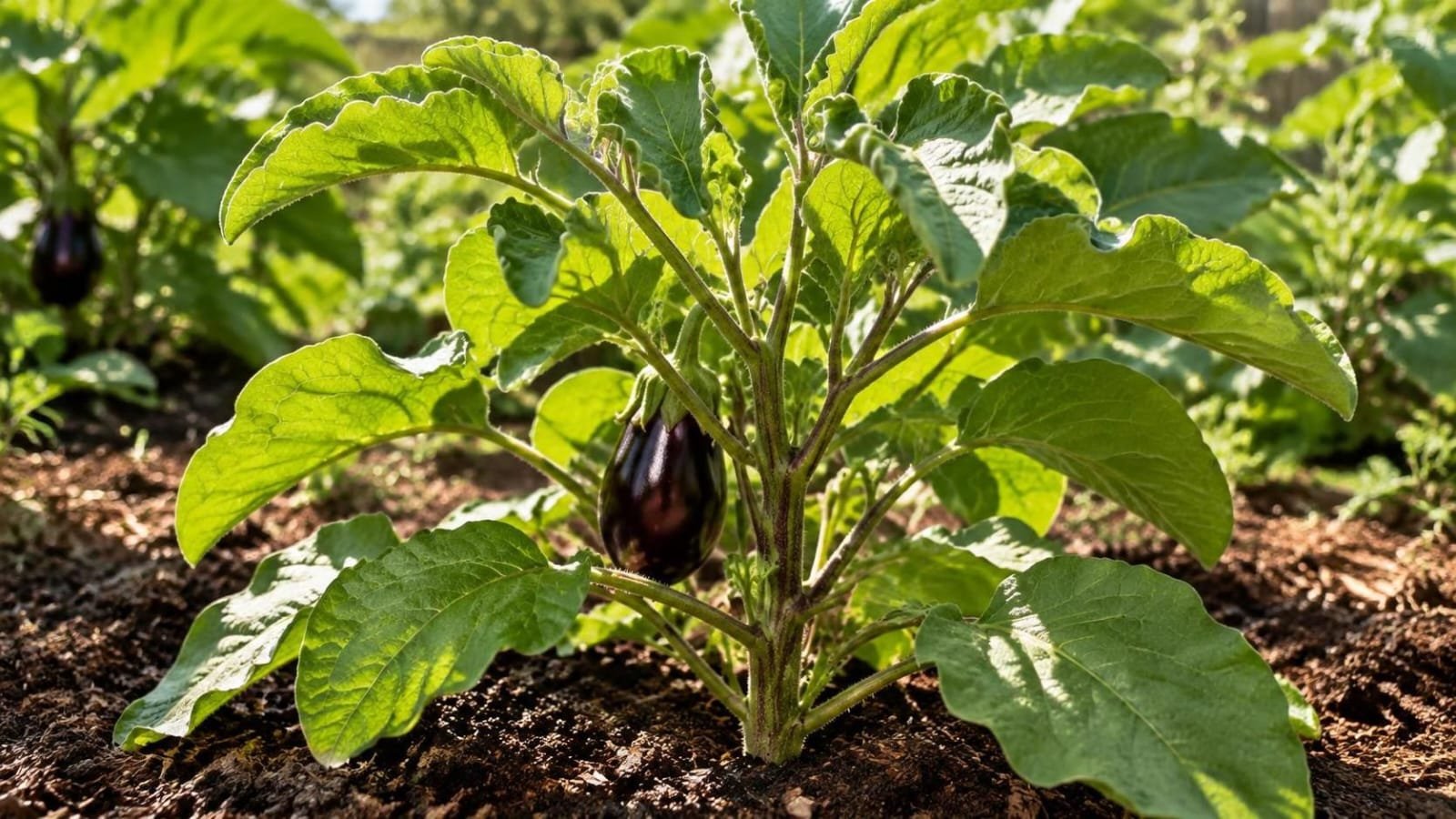
Yes. Curling can come from too little water, which dries the leaf cells and makes them curl inward. It can also come from too much water, which suffocates the roots and reduces their ability to supply water. Both can look alike on the leaves, so check the soil before you change anything.
Push a finger two inches into the soil. Dry soil points to underwatering. Soggy soil points to overwatering. How Often Should You Water Eggplant? covers a steady routine, and How Much Sun Does Eggplant Need? covers how sun exposure changes the watering need.
Could insects be curling the leaves?
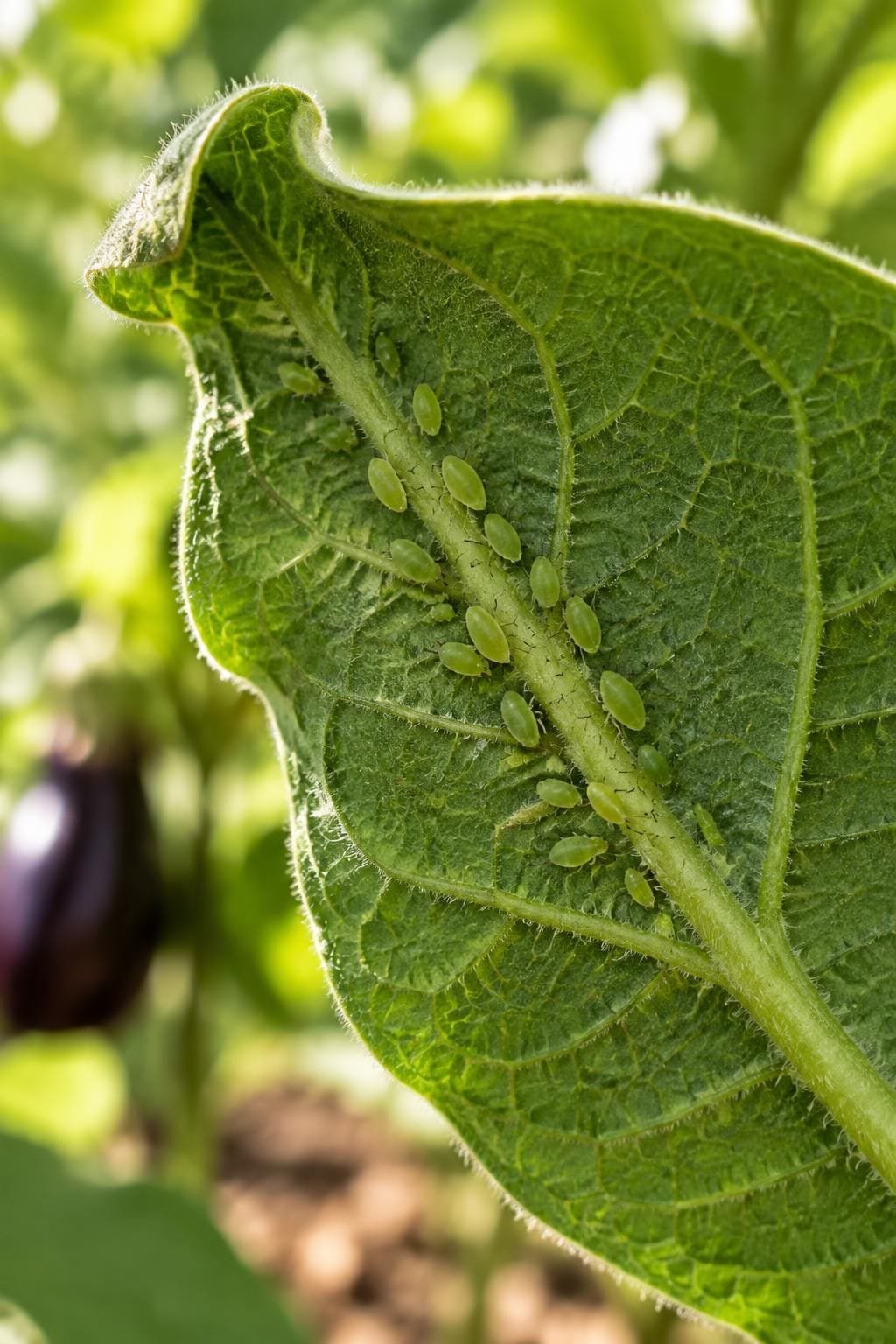
Yes. University of Minnesota Extension describes several insects that distort eggplant leaves. Potato aphids and green peach aphids rarely cause visible damage in small numbers. Large numbers can curl, stunt, and wilt the leaves. Potato leafhoppers make leaves look wrinkled and slightly yellow. Spider mites leave a russet look on the undersides, sometimes with fine webbing.
Turn the leaves over and look for small insects, sticky residue, or webbing. Check the new growth first, since insects often feed there. Eggplant Leaves: Identification, Problems, and Care explains how to read leaf changes in general.
Could a virus cause curled or misshapen leaves?
Yes. In the same diagnostic guide, cucumber mosaic virus shows up as leaves mottled with yellow and light green patches. The leaves may be misshapen, long and thin like a shoestring, or curled and deformed. Fruit may show yellow blotches or brown rings, and the plant may be stunted.
Viruses don’t have a cure once a plant is infected. The best steps are to confirm the diagnosis, remove badly affected plants, and control the insects that spread the virus. Eggplant Diseases: Symptoms, Identification, and Treatment covers disease identification in more detail.
Could herbicide be the cause?
It’s possible. Ask Extension has noted that curling and cupping can come from herbicide residue, heat stress, or both. Residue can enter through compost, manure, or mulch that was contaminated, and it can also drift from a nearby lawn treatment.
If the curling started after a new soil amendment or a nearby spray, test the potting mix or bed soil. Ask the supplier about the amendment. Keep a record of anything you add, since the timing often points to the source.
Does the pattern tell you the cause?
The pattern helps. Curling that affects only the newest leaves often points to insects, a virus, or a sudden stress. Curling that affects the whole plant, usually with dry or crisp leaf edges, often points to water or heat. Curling on one side of the plant may point to a local cause. Examples include spray drift, a pest colony, or a damaged root.
Note the time of day, too. Leaves that curl in the afternoon and open again at night point to heat. Leaves that stay curled all day point to a more persistent cause.
Can nutrients cause curled leaves?
Sometimes, but nutrient problems usually show as color changes first. Yellowing, pale leaves, or purpling often come before curling. Don’t feed a curled plant just because the leaves look wrong. Test the soil, and follow the label or lab recommendation. Best Soil for Eggplant: pH, Mix, and Amendments covers the soil side.
What should you check first?
Start with the weather and the time of day. Then check the soil moisture and look at the undersides of the newest leaves. If you see insects or residue, act on them. If the leaves stay distorted, check the virus pattern and the mottling, and consider the amendments you’ve used.
Change one thing at a time. If you change the water and the feeding together, you can’t tell which one helped. Give the plant a few days, and watch the new leaves.
When is curling a sign of a bigger problem?
Persistent curling that spreads, that comes with stunting, or that appears with fruit damage needs prompt attention. If the leaf edges are also turning brown, compare the symptoms with the eggplant brown-leaf guide. Check the stem and the roots too. A plant that keeps curling after the weather and water are right may have a disease or virus. Use the leaf, stem, and fruit patterns together.
For the wider picture, Why Is My Eggplant Plant Wilting? covers wilting, which often shows up with curling. Why Are My Eggplant Leaves Turning Yellow? covers yellowing. Holes in Eggplant Leaves covers chewing damage. For the full growing guide, How to Grow Eggplant: Planting, Growing, and Care connects these checks to the season.