
To hand pollinate zucchini, take a freshly opened male flower early in the morning, peel back its petals, and touch the pollen-covered anther to the stigma in the middle of a freshly opened female flower. A soft paintbrush works too. It takes about a minute per flower, and you are simply doing what a bee would do. The female is the one with a tiny zucchini swelling behind the petals; the male sits on a plain, slender stem. Timing matters most, because a female flower is receptive for a single day.
Most years the bees take care of this without anyone noticing. Zucchini flowers open early and are finished by evening, and West Virginia University Extension notes that cool, rainy days are when the insects may need your help. The plant keeps blooming anyway. A small fruit swells behind a female flower, then yellows and drops. The leaves look fine. That quiet failure is often just a pollination gap, and a soft brush at first light can close it.
Start with the stem
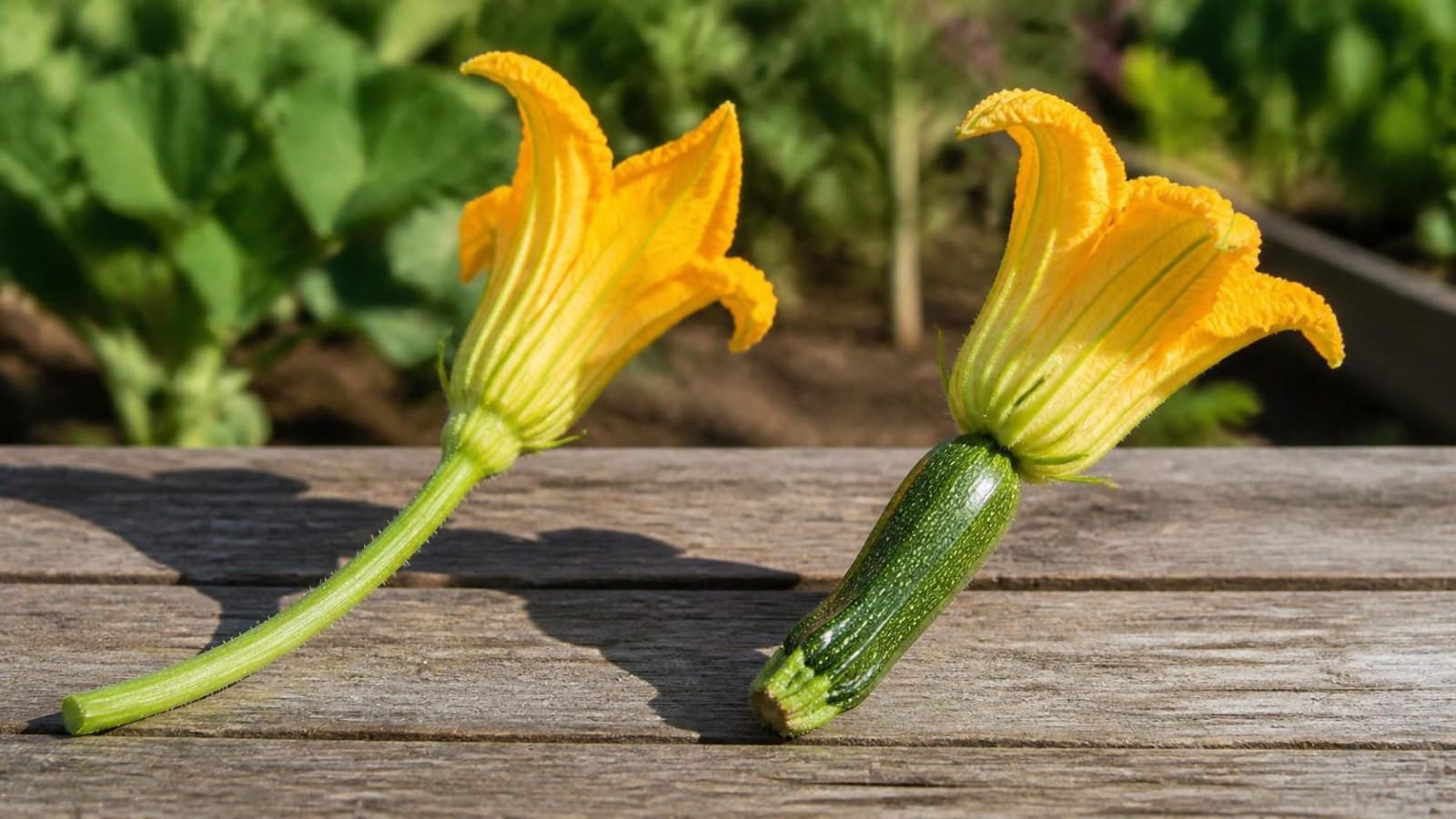
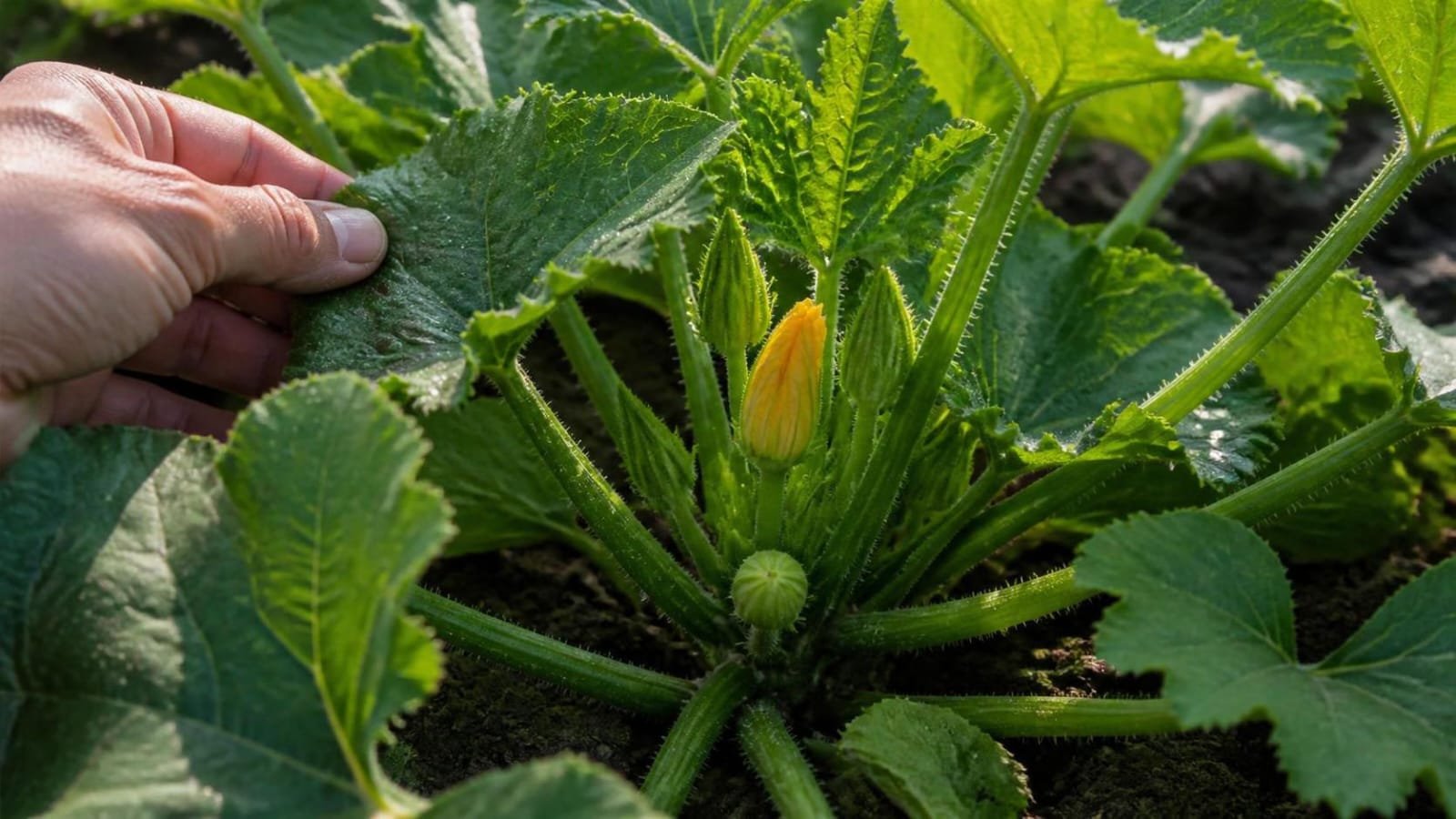
Walk out at first light and look behind the petals. A University of California extension leaflet puts it plainly: the male sits on a long, slender stem, while the female has a very short one with a miniature fruit at its base. If you want the two side by side, our guide to male vs. female zucchini flowers covers it.
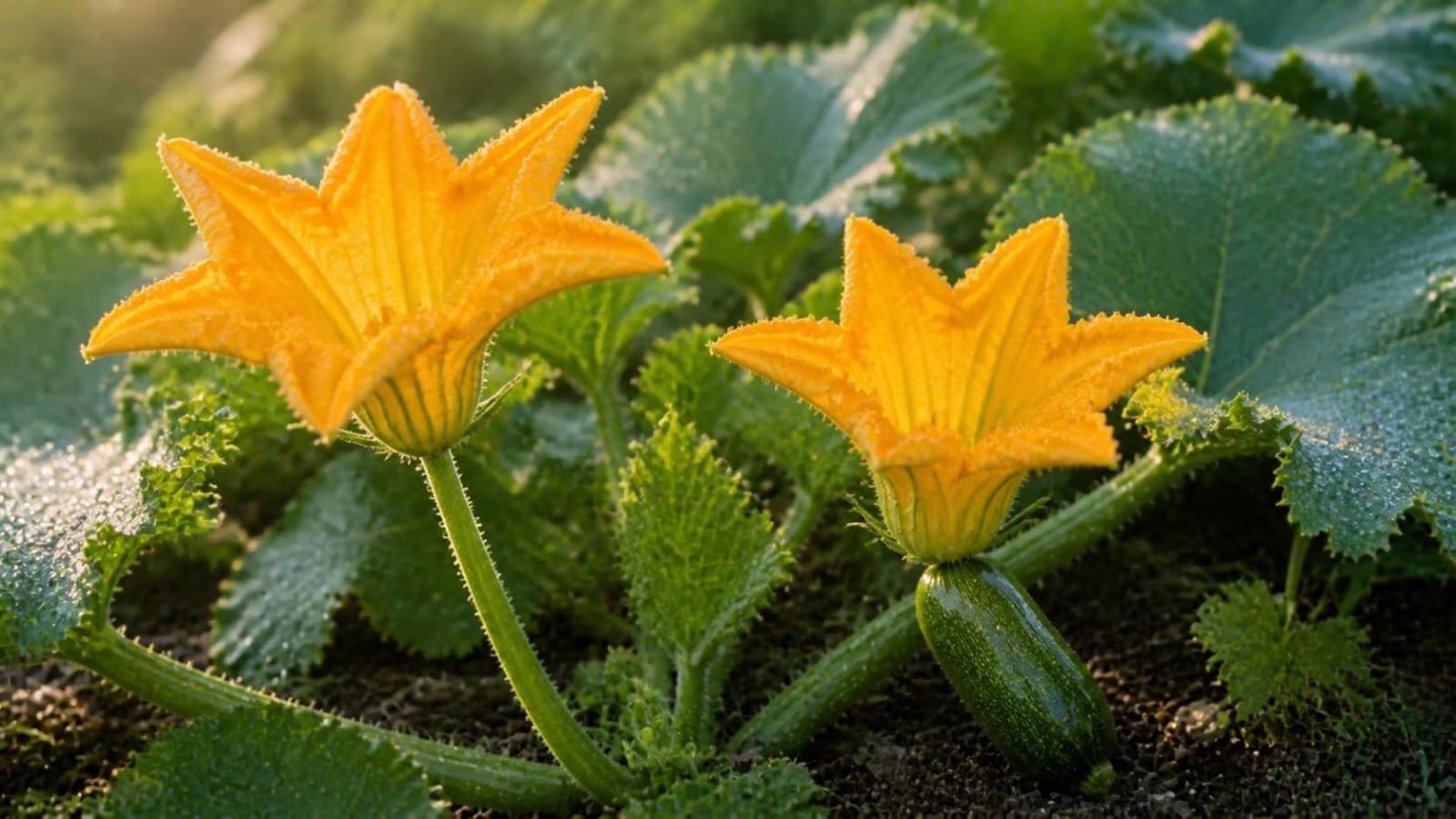
No female yet? Hold off. Plants usually open males first, so a plant with only male blooms is often just early. See zucchini plants with only male flowers for how long to wait. And if there are no flowers at all, start with why a zucchini plant is not flowering.
The method, one flower at a time
Most of us grab whatever flower is closest. Slow down first, because you need one open male and one open female, both from this morning.
- Go early. Both sexes open in the morning and close by evening, so the window is short. UF/IFAS Extension adds that morning humidity helps activate the pollen.
- Strip a male flower. Peel off the petals until the anther shows. Rub it with a finger and orange-yellow pollen comes off. That pollen is sticky and never blows around, so it only travels when something touches it.
- Touch it to the stigma. Dab the anther onto the stigma in the center of the female. A small soft brush works too, and it lets you leave the male on the plant, where the bees can still use it.
- Move to the next female. UC Cooperative Extension in Ventura County says one male usually supplies one female, and two or more once you are practiced.
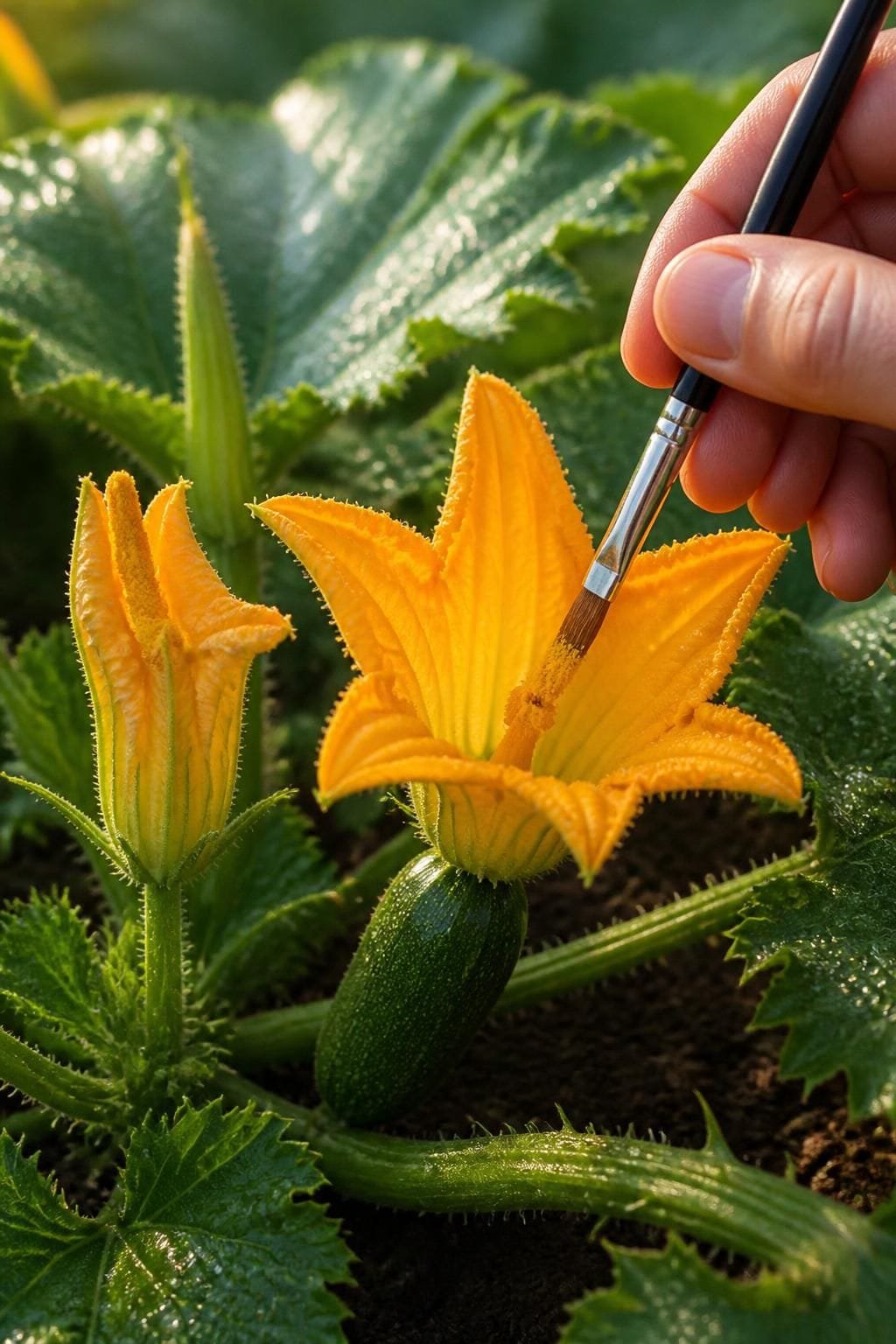
Be gentle. The petals and the baby fruit bruise easily.
When the flowers don’t line up
Here’s the kicker: the male and female you need are often not open on the same morning. Two workarounds, most reliable first.
- Save a male. UF/IFAS says cut male flowers can stand in a vase of water overnight for the next morning, or be kept in a refrigerator for three to four days on a moist paper towel. Remove the petals first, and keep the pollen off the towel.
- Use a closed flower as a last resort. One gardener-run guide says you can gently peel open a flower that opened and closed within the past couple of days. Treat that as a fallback, since extension sources describe the female as receptive for one day.
Why the first fruits often fail anyway
A common situation: your first female flowers open before a single male does. The baby fruit swells a little, then yellows and drops. The WSU Hortsense fact sheet says the earliest female flowers usually go unpollinated, and that unpollinated fruit stay small, may rot from the blossom end, and fall. So an early casualty doesn’t mean a sick plant. Fair enough if it feels discouraging, but the cure is timing.
If the tip turns dark and sunken even after you pollinated, something else is going on. Our guide to zucchini rotting at the blossom end sorts out the causes.
Saving seed? Mind the crossing
For this season’s fruit, any squash can supply the pollen. For saved seed, zucchini crosses with crookneck and acorn squash, and the University of California leaflet warns that seed from a cross won’t match either parent. For seed that comes true, the Old Farmer’s Almanac suggests covering a female bud with muslin before it opens, pollinating it, then covering it again until the flower drops.
How to tell it worked
Give it a few days. According to the Almanac, a successful flower shrivels and falls while the small fruit behind it starts to enlarge. A failed one yellows, stops growing and drops.
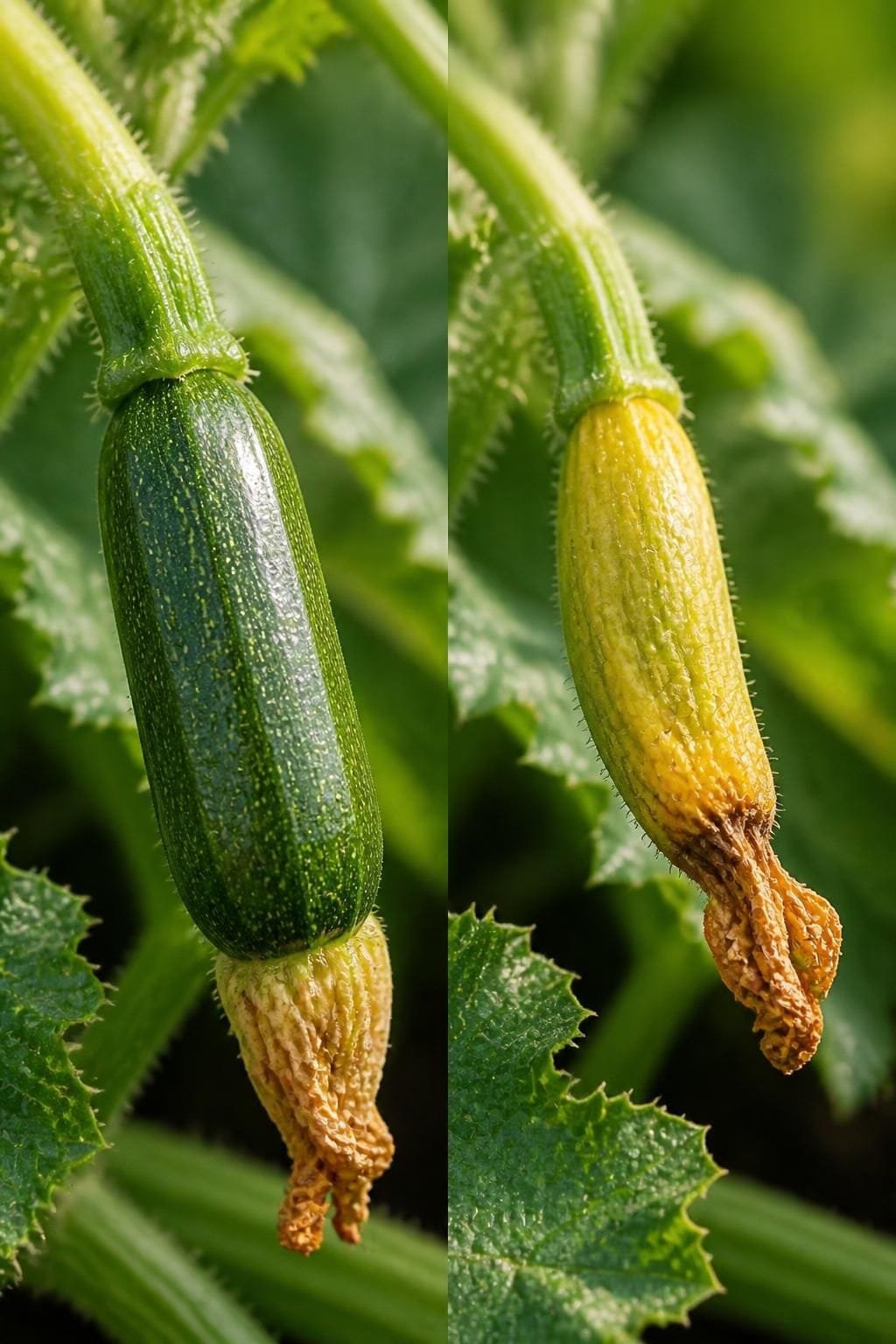
Look again tomorrow morning. New flowers open every day, and each female gets only one chance. For spacing and care that bring both flower types along, see how to grow zucchini.
One thought on “How to Hand Pollinate Zucchini: Step by Step”