
Get down at plant level and lift the big leaves around the center before you decide anything’s wrong. Bush zucchini keep their buds low and tucked in, so a plant with no flowers from standing height often has a few waiting underneath.
Short answer: A zucchini plant that looks healthy but isn’t flowering is usually too young, shaded, overfed with nitrogen, or slowed down by cold, heat or uneven water. As a rough guide, first flowers show up around six to nine weeks after sowing. Check these in that order. The first two take a minute and cost nothing.
That order goes from the quickest check to the slowest. It also keeps you from the usual mistake, which is feeding a plant that was never behind.
Check for hidden flower buds first
Larry Hodgson of the Laidback Gardener blog described the modern zucchini as a bush with a short, rosette-like stem almost completely covered by leaves. That’s why the first buds get missed. Push the leaves aside gently and look down into the crown. Zucchini flowers last just one day, so go out in the morning when they’re open.
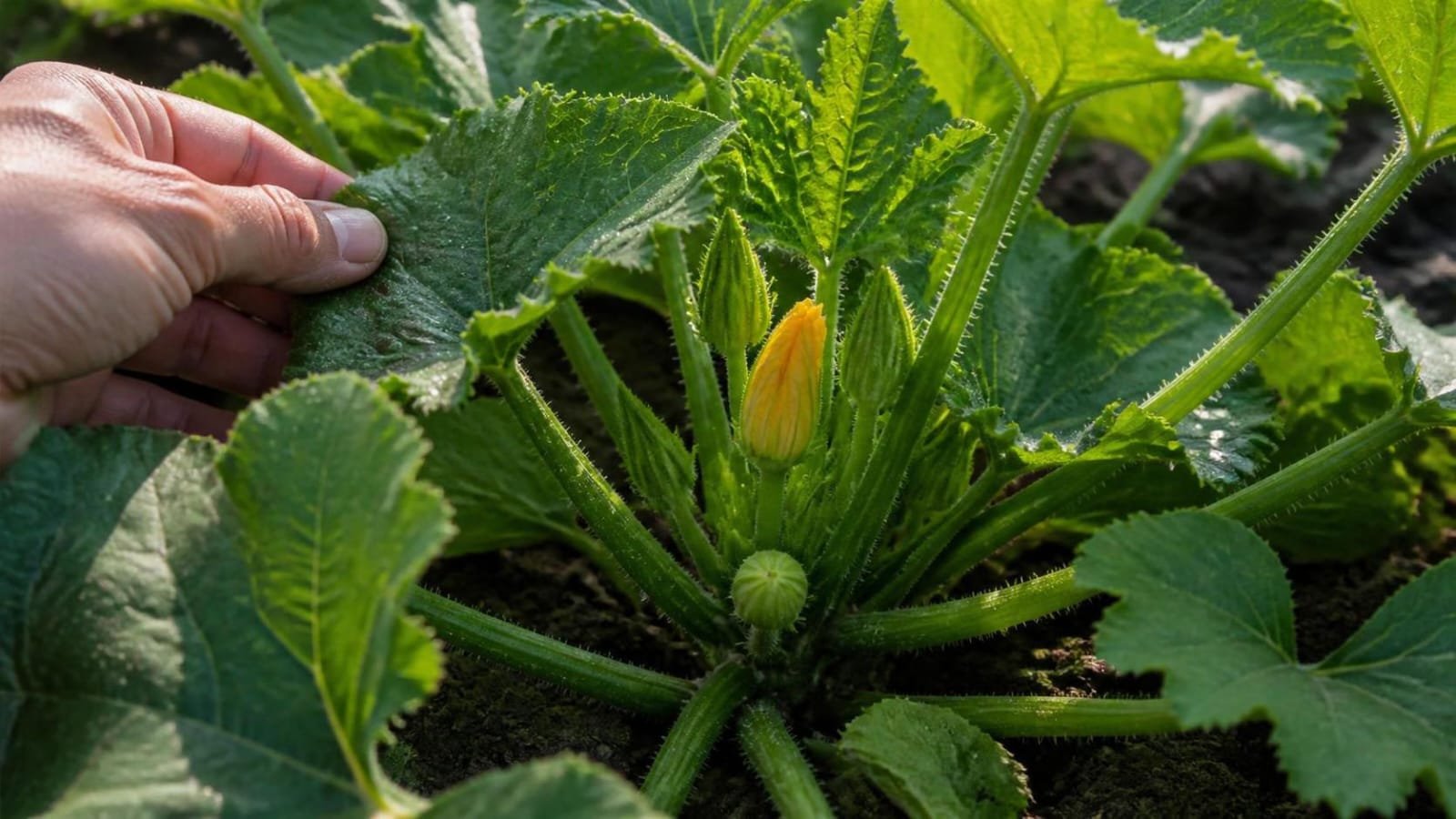
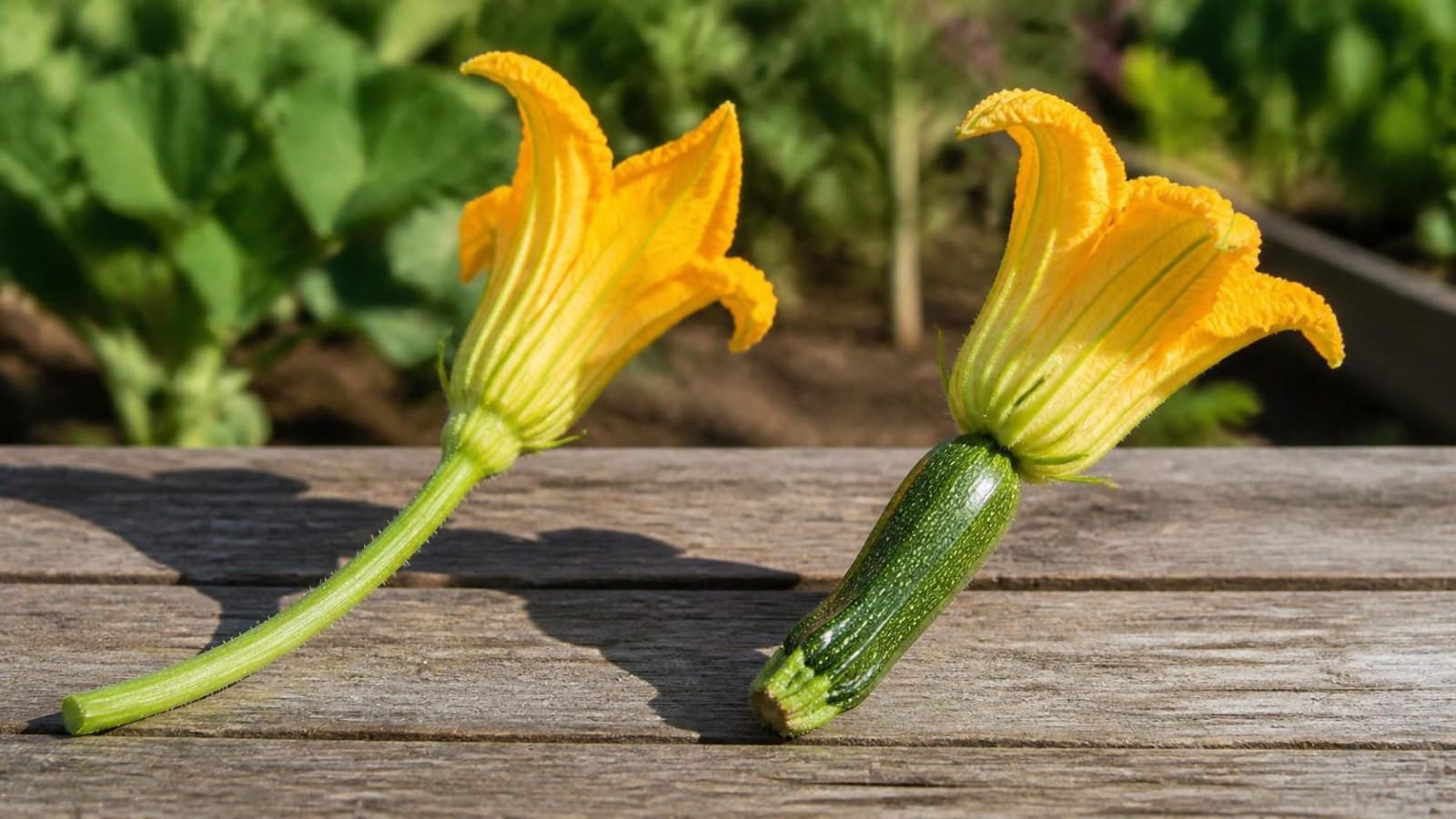
Any bud counts, even a small green one. If you find only flowers on long, thin stalks, that’s a normal early stage, and our guide to zucchini plants with only male flowers explains it. Not sure which flower is which? Telling male and female zucchini flowers apart takes about a minute once you know where to look.
If there’s really nothing, not even a bud, keep reading.
How long does zucchini take to flower?
Count from sowing day, not planting day. The first flowers usually show up roughly six to nine weeks later. If you’re staring at a big plant with no buds, you’re not the only one, but big doesn’t always mean due. Washington State University Extension says summer squash needs 50 to 65 days to first production. The Master Gardeners of Alameda County say fruit is usually ready four to eight days after flowering. Work backward and you land on six to nine weeks. That’s simple arithmetic on two numbers, not a promise, and weather and variety can shift it.
Picture a plant sown five weeks ago in a cool spring. Dinner-plate leaves, no buds. Nothing’s wrong yet. A store-bought seedling has already used up part of that clock, and one set out in cold soil may have stalled. Squash also don’t like their roots disturbed, so a transplant that got torn up at planting can sit still for a good while.
If the plant is still inside that window, leave the fertilizer alone and give it time. Feeding is unlikely to speed things up, and extra nitrogen can push the plant the wrong way, as you’ll see below.
Is your zucchini getting enough sun to flower?
A bed can feel bright at noon and be in shade by mid-afternoon. Kansas State University horticulture expert Matt McKernan, quoted in a Cottonwood Extension column, says too much shade can limit flower production in vegetable plants. Zucchini wants full sun or close to it. For the plant’s general needs, see our guide on how to grow zucchini.
Check the bed at three different times of day and see what’s casting shade: a trellis, tomatoes, corn, a fence, a tree that leafed out after you planted. If you control the shade source, prune it or move it. If the site itself is shady, try a pot in a sunnier spot, or live with a light crop this year and move the bed next season.
Huge, dark leaves and no buds: ease off the nitrogen
Most of us feed a plant that isn’t blooming. With zucchini, that can backfire. The Master Gardeners of Alameda County say squash are heavy feeders, but too much nitrogen gives you green, leafy growth instead of flowers and fruit. They suggest a fertilizer lower in nitrogen and higher in phosphorus and potassium while the plant builds toward fruit, then a balanced one once blossoms appear.
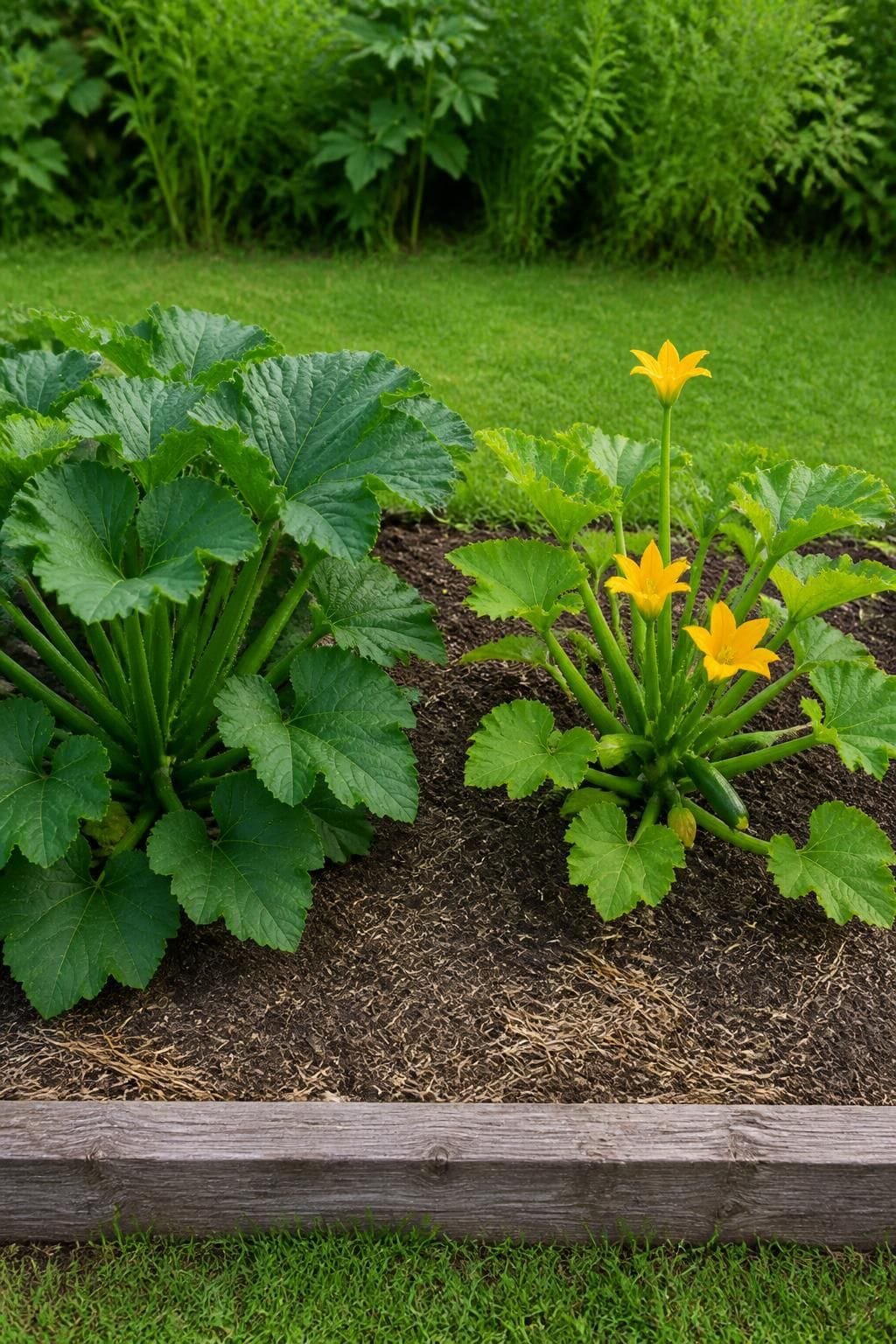
The clue is the plant itself. If it looks almost too healthy, with big, dark leaves and fast growth but no buds, and the soil was richly fed at planting or fertilized since, nitrogen is a fair suspect. On a fertilizer label, nitrogen is the first of the three numbers, so check what you’ve been using. A soil test shows where you really stand. The product label tells you how much to apply.
Stop adding nitrogen and judge the plant by what it produces next, not how it looks tomorrow. The leaves you already have will stay as they are. New growth is what changes.
Can cold or hot weather keep zucchini from blooming?
Yes, both can. Zucchini likes warm weather. Hodgson suggested waiting until the soil is at least 60°F before starting it outdoors, and said the plant doesn’t really get going until the soil hits about 72°F. A plant sown early into cool soil is likely to grow slowly, and flowering usually waits with it.
Hot spells can hold flowers back too, especially the female ones. You can’t change the weather. Steady moisture and a layer of mulch are what you can do, and the rest takes patience.
Does watering affect zucchini flowering?
It can, but the evidence is thinner than it is for sun or nitrogen. McKernan links dry soil to blossom drop. He also says both overwatering and underwatering can damage roots and limit the water the plant takes up for fruit set, and that containers need the closest watching. None of that says water trouble is a common reason for a plant to make no buds at all. So treat water as something that can hold a plant back, and check it after sun and nitrogen.
For the watering itself, Washington State suggests that once the plants cover the soil in warm weather, they may use an inch to an inch and a half of water a week. A deep soaking every five to seven days beats a light sprinkle every day. Wilted leaves first thing in the morning are a distress signal, not just afternoon heat.
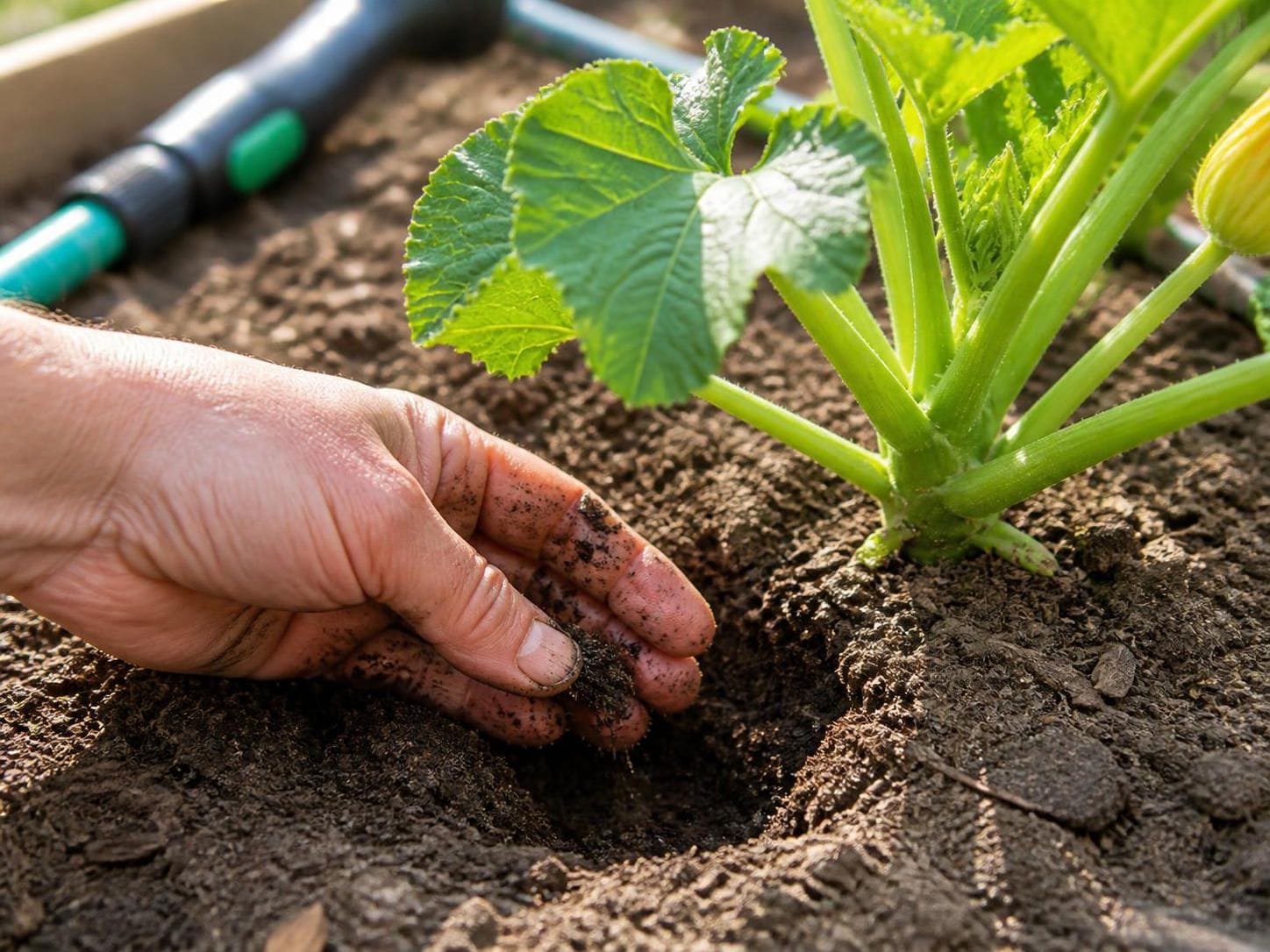
To see which side you’re on, push a finger or small trowel a few inches into the soil near the plant. Soil that’s still wet and heavy days after watering points to poor drainage or too much water. Soil that’s dry and crumbly a little way down means the water isn’t getting below the surface.
Pots tend to dry out and heat up faster than beds, and the roots have less room to find water, so they need closer attention. Container specifics are in our guide on zucchini in containers and pots.
When the plant itself looks unwell
None of this applies if the plant looks sick, with yellowing or distorted leaves, or leaves that are wilted in the morning. Then the missing flowers are a symptom, and the whole plant needs a closer look. A plant can have more than one problem going on, and it’s hard to sort them out from a description alone. A call to your local Extension office is worth it.
What comes after the first buds
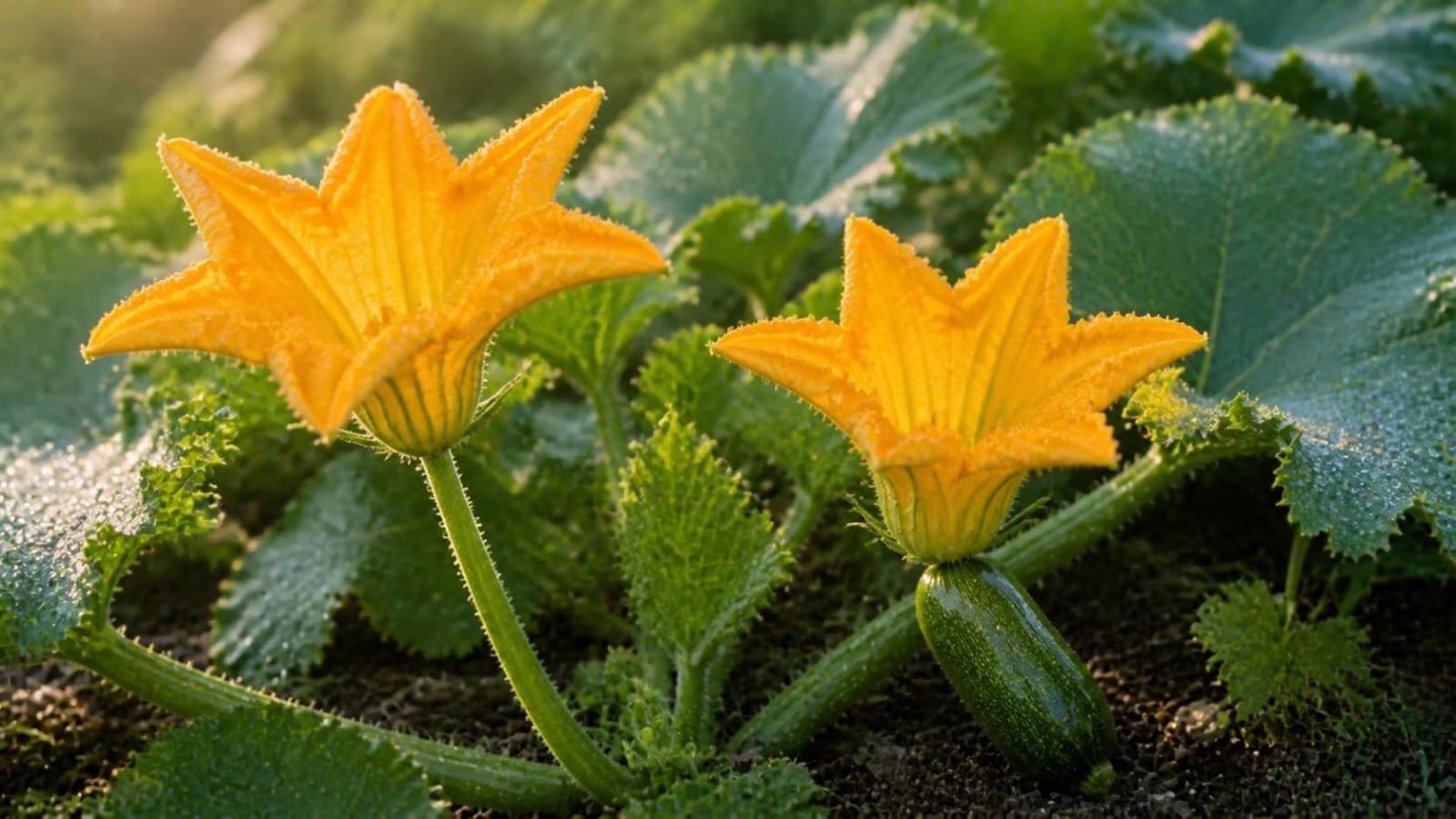
Once buds open, the next question is whether fruit forms. Female flowers have a tiny zucchini behind the petals. If those little fruits turn yellow and shrivel, pollination is the likely culprit, and the fix is to hand pollinate your zucchini. If the fruit is rotting at the tip, that’s a different problem, covered in our guide to zucchini fruits rotting at the blossom end.
If the plant is clearly lagging after you’ve worked through these checks, a second sowing is cheap insurance, and growing zucchini from seed is where to start. Whatever you try, change one thing at a time. That’s the only way to know what worked.
One thought on “Zucchini Plant Not Flowering: Causes and Fixes”