
To grow zucchini successfully, plant after the last frost, once the soil has warmed to roughly 65 to 70°F (18 to 21°C). Pick a spot with at least six hours of sun, work in compost, give each plant 2 to 3 feet, water the soil instead of the leaves, and harvest while the fruit is still small. When plants struggle, common causes include cold soil at planting, uneven watering, and too few pollinators reaching the flowers.
Knowing how to grow zucchini starts with timing, because a lot of trouble is set up in the first week, when the plant goes into ground that is still too cold. After that, it is a forgiving crop. Growing zucchini at home usually means flowers about five to six weeks after planting. From then on, the work is picking often and watching for a few predictable problems.
This guide shows how to grow zucchini squash outdoors, in the ground, the way most gardeners do it. Zucchini and other summer squash share the same needs, so the advice applies to yellow squash and pattypan as well.
When to plant zucchini: wait for the soil, not the calendar
Most of us plant on the first warm weekend, and fair enough, warm air feels like the right signal. But seeds and young roots respond to the soil. The soil trails the air by days, sometimes weeks.
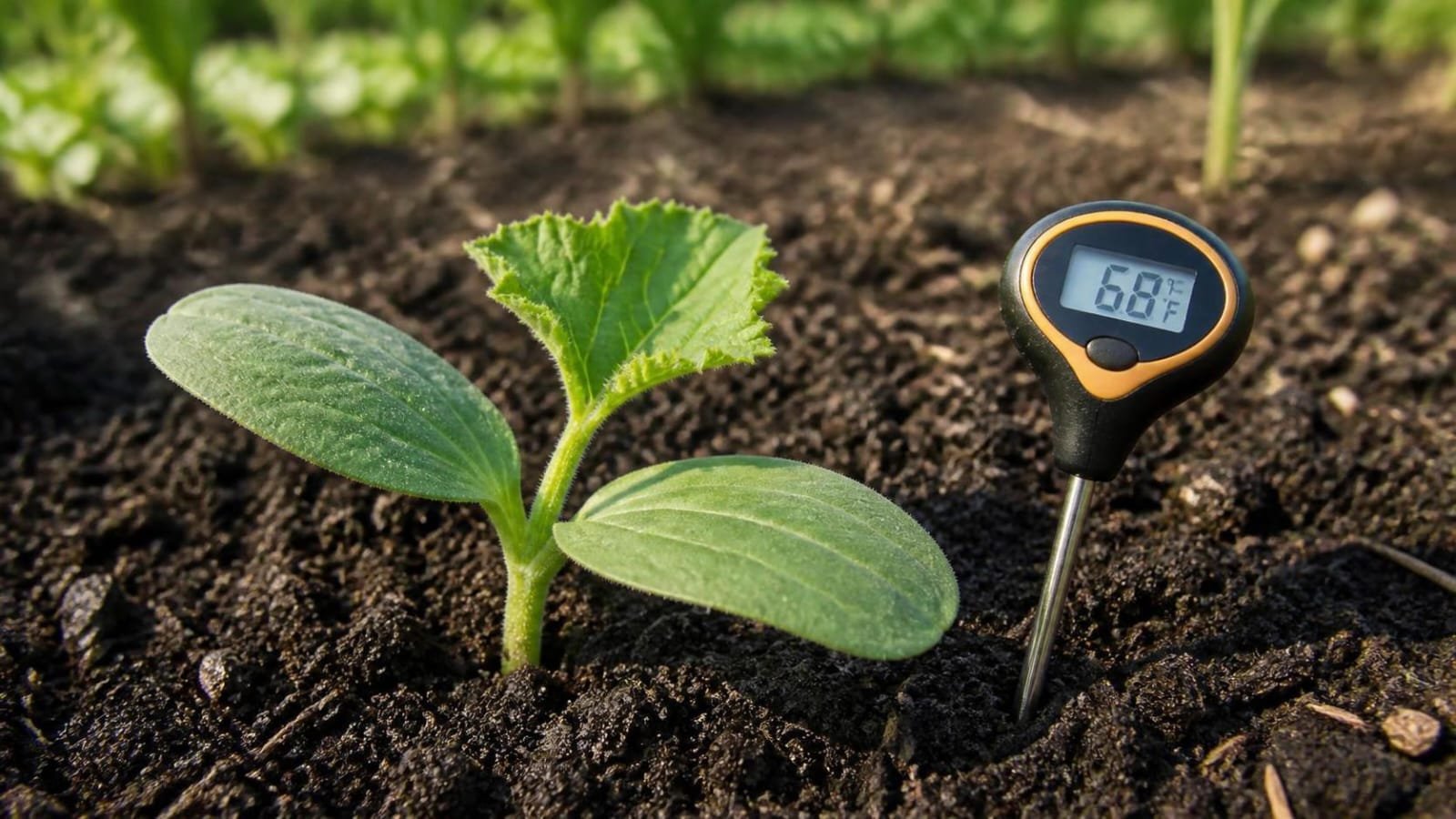
Push a soil thermometer about two inches into the bed in mid-morning. University of Minnesota Extension advises sowing once the soil hits at least 70°F at that depth. It also warns that plants set into cold soil grow poorly. Clemson’s Home & Garden Information Center sets the floor lower: 60°F, measured four inches down. It also says squash grows best when average temperatures run between 65 and 75°F. The two numbers fit together. Treat 60°F as the lowest you should plant into, and 65 to 70°F as the range where growth really takes off.
In a cool spring you can warm the bed in advance. South Dakota State University Extension suggests covering the soil with clear plastic for a few days before planting and removing it before you sow. Black plastic mulch and spun row covers can also let you plant earlier. Just remember that row covers keep out the bees, so they have to come off when flowers open.
Growing zucchini from seeds or seedlings
The tempting move is to buy a tray of big seedlings because they look like progress. Sometimes that’s the right call. Sometimes it costs you a week. Zucchini roots don’t like being disturbed. ScottsMiracle-Gro notes that starter plants get you closer to harvest. Even so, it calls sowing seed directly in the garden the preferred method, since seed sprouts and grows so quickly.
Seedlings make sense in two situations. One is a short season, where every week counts. The other is squash vine borer country, where transplants or a later planting date can help you dodge the pest (more on that below). If you go with growing zucchini from seedlings, choose compact plants with a few true leaves. Plant them at the same depth they grew in the pot, and handle the root ball as little as you can. A few days of shade afterward helps them get over the shock.
Starting your own plants indoors has steps of its own. The guide on growing zucchini from seed covers germination and hardening off, so this article skips them.
Choose the spot and prepare the ground
The usual first move is to reach for fertilizer. A soil test is the better start, because it tells you the pH and what the soil already holds. Extension guidance from several states puts the target pH for squash at about 6.0 to 6.5, which is slightly acidic. Don’t worry if your soil runs neutral or a bit alkaline, though. Squash does fine there too.
When you’re growing zucchini in a garden bed, look for at least six hours of direct sun. Eight is better. Plants will grow in part shade, but the crop is lighter. In very hot climates, some afternoon shade can keep the big leaves from scorching. The soil should be rich, hold moisture, and still drain freely. Work in compost or well-rotted manure before planting. Skip fresh manure, which can carry harmful bacteria and bring a flush of weeds.
If your ground is heavy clay or stays soggy after rain, build low mounds or consider growing zucchini in raised beds, which gives the roots the drainage they need. Also avoid a spot where squash, pumpkins or cucumbers grew in the last couple of years. It gives pests and diseases that overwinter nearby less to work with.
Give each bush-type plant 2 to 3 feet on every side. That looks like far too much in May and not enough by July. Some Extension row plantings are spaced much tighter, but a home plant with a full canopy needs the airflow. Vining types need more room, often five to six feet between hills.
Short on space? Bush varieties tuck into small beds, growing zucchini vertically takes a sturdy trellis, and growing zucchini in containers and pots works on a patio. Those setups have their own rules, so they have their own guides.
Planting zucchini in the ground, step by step
Once the soil passes the thermometer test, planting is quick.
- Loosen the soil and mix compost into each planting spot. If drainage is slow, shape a low mound about a foot across.
- Sow two or three seeds per spot, about ½ to 1 inch deep, with the spots spaced as described above. Guides differ on depth, and either works in warm, loose soil.
- Water gently and keep the soil evenly moist. Seedlings usually appear within one to two weeks, and faster in warm soil.
- When the first true leaves open, keep the strongest seedling in each spot and snip the others at soil level. Pulling them can damage the roots of the one you are keeping.
- If a late cold snap is forecast, cover the young plants overnight.
Part of the planting can wait. Sowing half the bed now and the rest about three weeks later spreads the harvest, which helps when every plant would otherwise peak at once.
How to water, mulch and feed zucchini
Learning how to grow zucchini plants that keep producing mostly comes down to water. The reflex in July is to run a sprinkler over the whole bed. Those big leaves catch water and stay wet, which invites disease.
Water the soil at the base, in the morning, so any splashes dry quickly. Aim for about an inch a week from rain and irrigation. Deliver it slowly enough to soak the soil roughly six inches deep. Frequent light sprinkling teaches roots to stay shallow. A drip line or soaker hose makes this easy. Sandy soils need smaller amounts, more often.
Mulch keeps moisture steady and holds fruit off wet ground, but timing matters. Straw or compost laid too early slows soil warming, so wait until the soil reaches about 75°F.
Moisture swings are also often involved in blossom-end rot, the dark, dry, sunken patch at the blossom end of the fruit. Clemson’s extension team explains it as a calcium shortage in the developing fruit. The soil may be low in calcium, or the plant may struggle to take it up when watering is erratic. The fixes: keep moisture steady, mulch 2 to 3 inches deep, and get a soil test before adding lime. Go easy on nitrogen and potash too, since too much of either cuts calcium uptake. Heavy nitrogen also pushes leafy growth at the expense of fruit. To tell it apart from failed pollination and fuzzy wet rot on small fruit, see zucchini rotting at the blossom end despite normal flowers.
Compost-rich soil often carries zucchini a long way. Some guides suggest a high-potassium tomato-type feed once fruit appears. Given the calcium issue above, base any feeding on a soil test and the product label. Rates vary by product and region, so none are listed here.
Flowers but no fruit? Look at the flower first
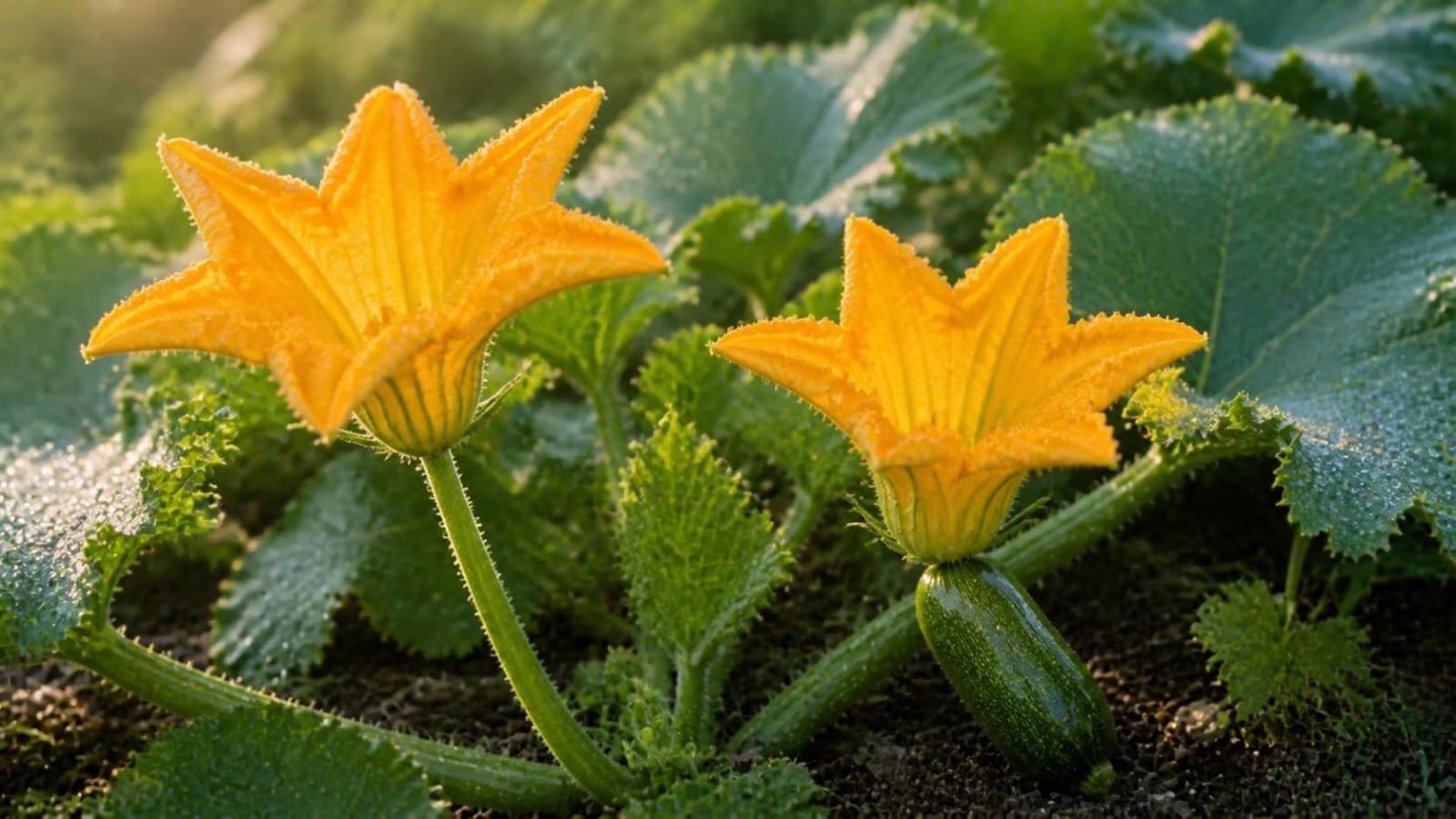
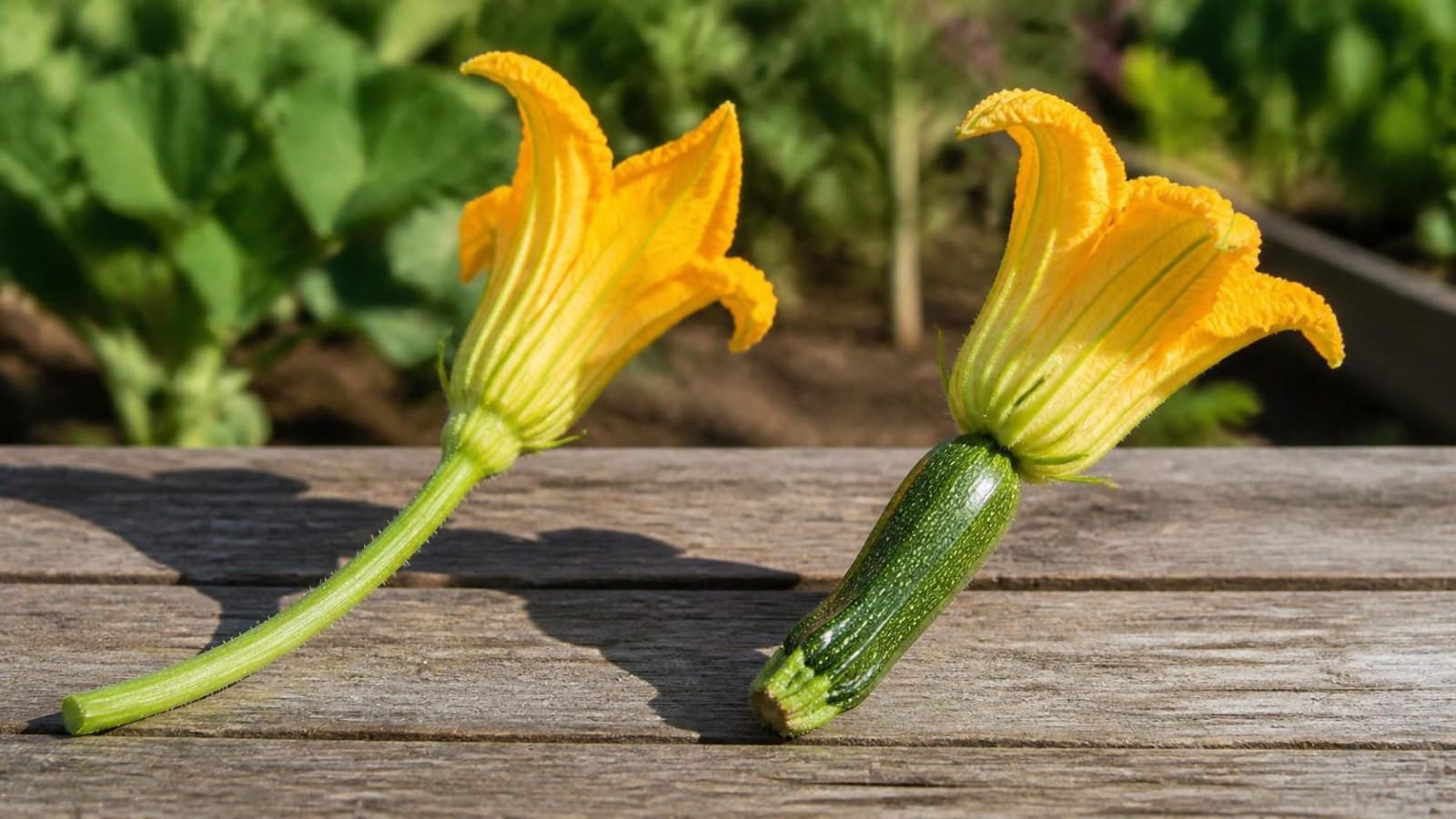
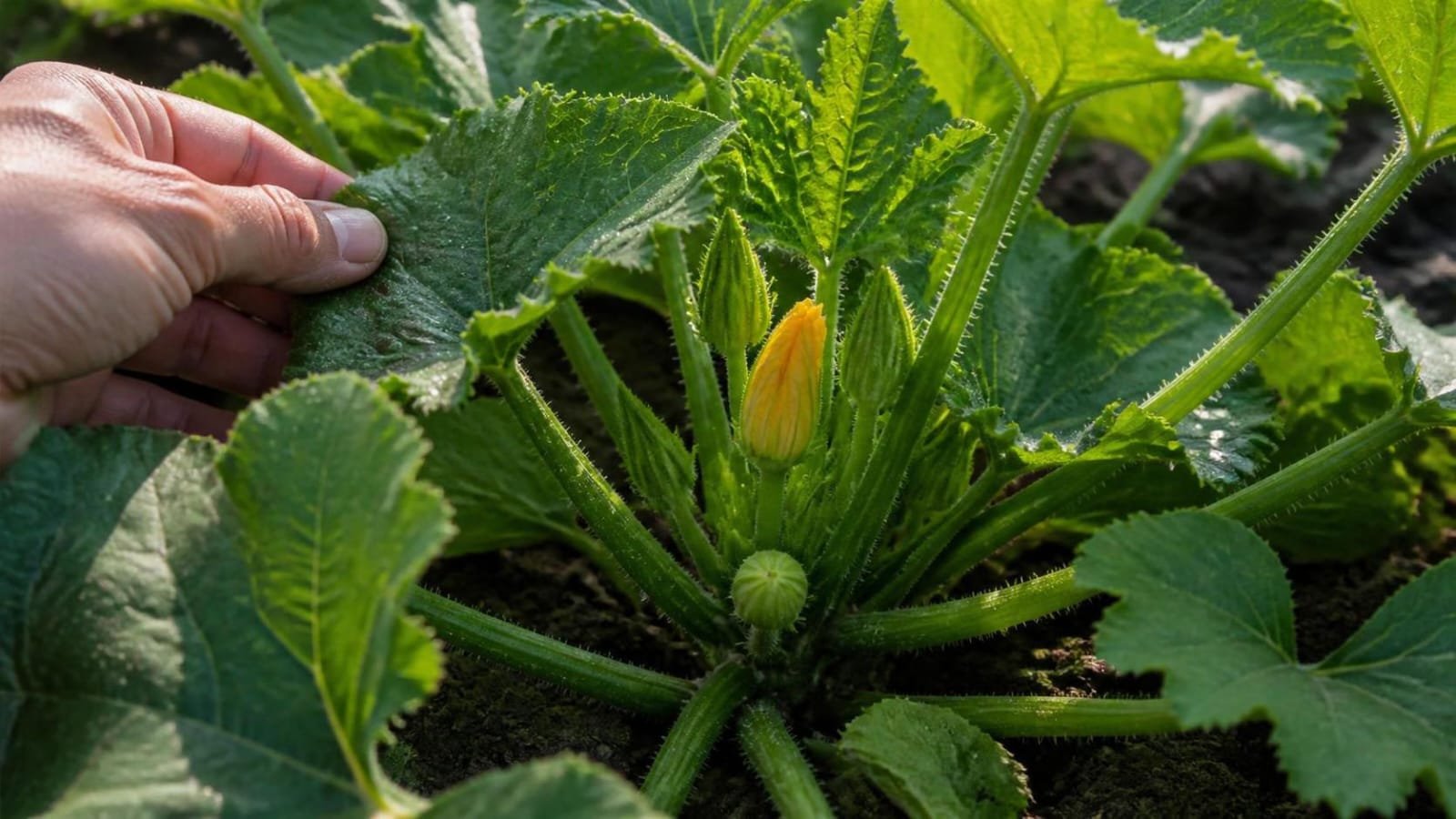
If the plant is covered in blooms and nothing is swelling, the instinct is to feed it. Hold off. Look at the flowers instead. Zucchini carries separate male and female flowers on the same plant. Male flowers sit on thin stems. Female flowers have a small swollen bump, the baby fruit, between the bloom and the stem.
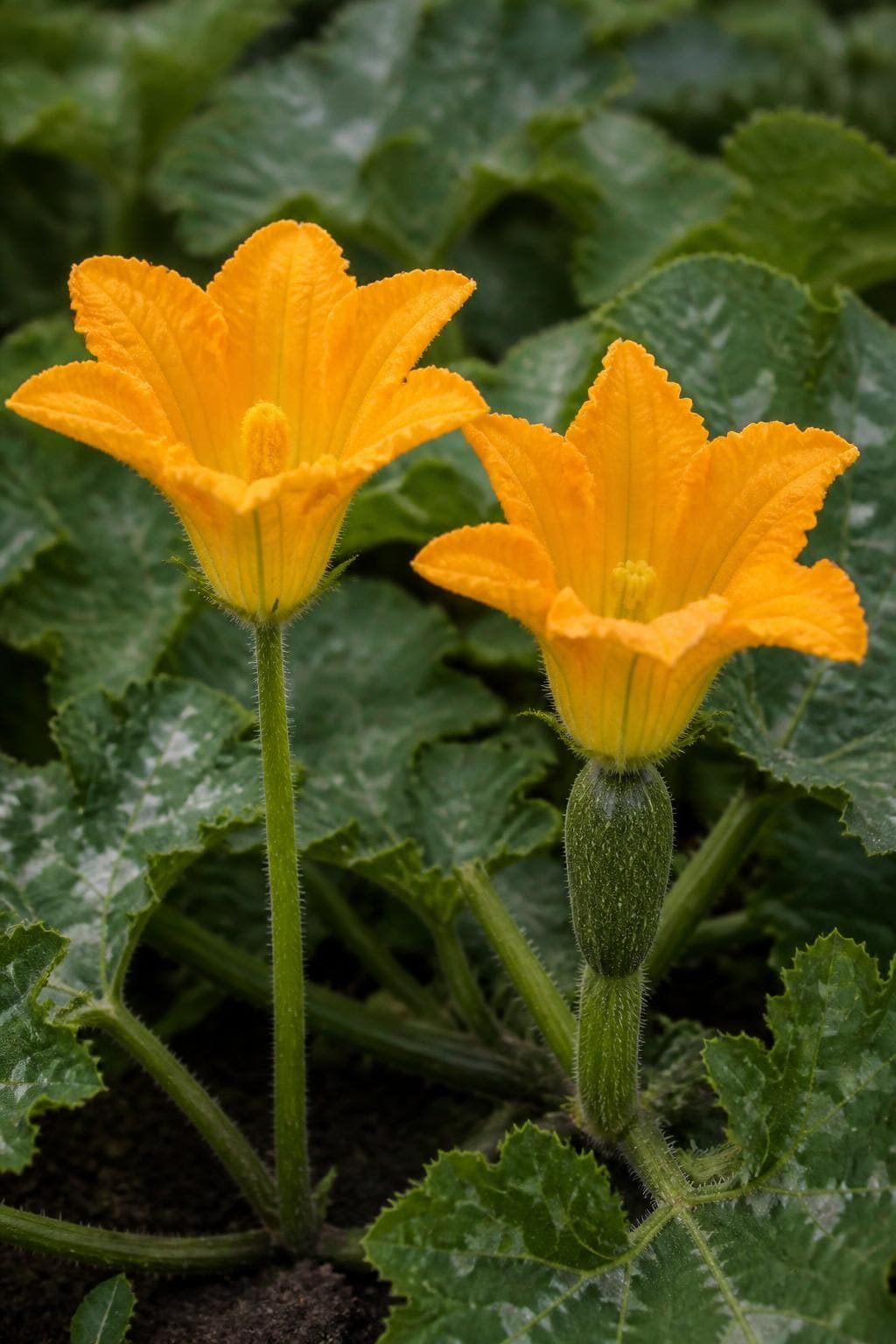
Male flowers open first, so the earliest blooms often drop without setting anything. University of Minnesota Extension describes this as normal. It adds that the first flush of fruit is often poorly pollinated until bees find the planting. If the early flowers keep falling in your first season, you’re not alone, and it is usually harmless. If the plant is still all male after several weeks, the guide to zucchini plants with only male flowers walks through what to check.
Weather matters too. Cold, rainy or cloudy spells reduce pollination, and row covers have to come off once flowering begins. If a small fruit swells and then shrivels, poor pollination is the usual reason. Planting flowers nearby brings in more bees.
When bees are scarce, hand-pollinate in the morning, when the flowers are open (they close by midday). Pick a freshly opened male flower, peel back the petals, and touch the pollen-covered center to the center of a female flower. One male flower can pollinate several females.
One more worry worth settling: pumpkins or gourds nearby will not ruin your zucchini. South Dakota State University Extension calls the idea that neighbors cause abnormal fruit a misconception. Zucchini can cross-pollinate with gourds and some pumpkins, but the effect shows up in plants grown from saved seed, not in this year’s fruit. Cucumbers and melons are different species and do not cross with zucchini.
Common zucchini problems: wilting, white leaves and rot
Several of these problems look alike, and a description or a photo can’t always settle which one you have. The table narrows it down. Your local Extension office or plant clinic can confirm what it can’t.
| What you see | Most likely cause | What to check first |
|---|---|---|
| One runner or the whole plant wilts suddenly | Squash vine borer (squash bugs or bacterial wilt are alternatives) | A hole and sawdust-like droppings (frass) near the base of the stem |
| White powdery patches on leaves and vines | Powdery mildew | Powder on leaf surfaces and stems, especially in crowded, poorly ventilated growth |
| Dark, dry, sunken patch at the blossom end of the fruit | Blossom-end rot (calcium uptake) | How evenly the soil stays moist |
| Twisted or off-color new growth | A cucurbit virus, often spread by aphids | Aphids on young growth; confirm with a local clinic |
| Mushy fruit with fuzzy black growth after wet weather | Choanephora rot, which infects blossoms | Fuzzy growth and softness, unlike the dry, sunken look of blossom-end rot |
Sudden wilting: check the base of the stem
A common situation: a plant that looked fine on Monday has one runner lying flat by Wednesday afternoon, then perks up overnight. A few days later, it doesn’t bounce back. Wilting on a hot afternoon happens to healthy plants too, so wilting alone proves little. The stem base tells you more.
That pattern fits the squash vine borer, a moth whose larvae tunnel inside the stem. University of Maryland Extension describes entry holes near the base, sawdust-like droppings, called frass, pushed out of them, and a mushy feel in the stem around the holes. Squash bugs, aphids, and bacterial wilt carried by striped cucumber beetles can also cause wilting, which is why the holes and frass matter. If they’re missing, look at those other causes.
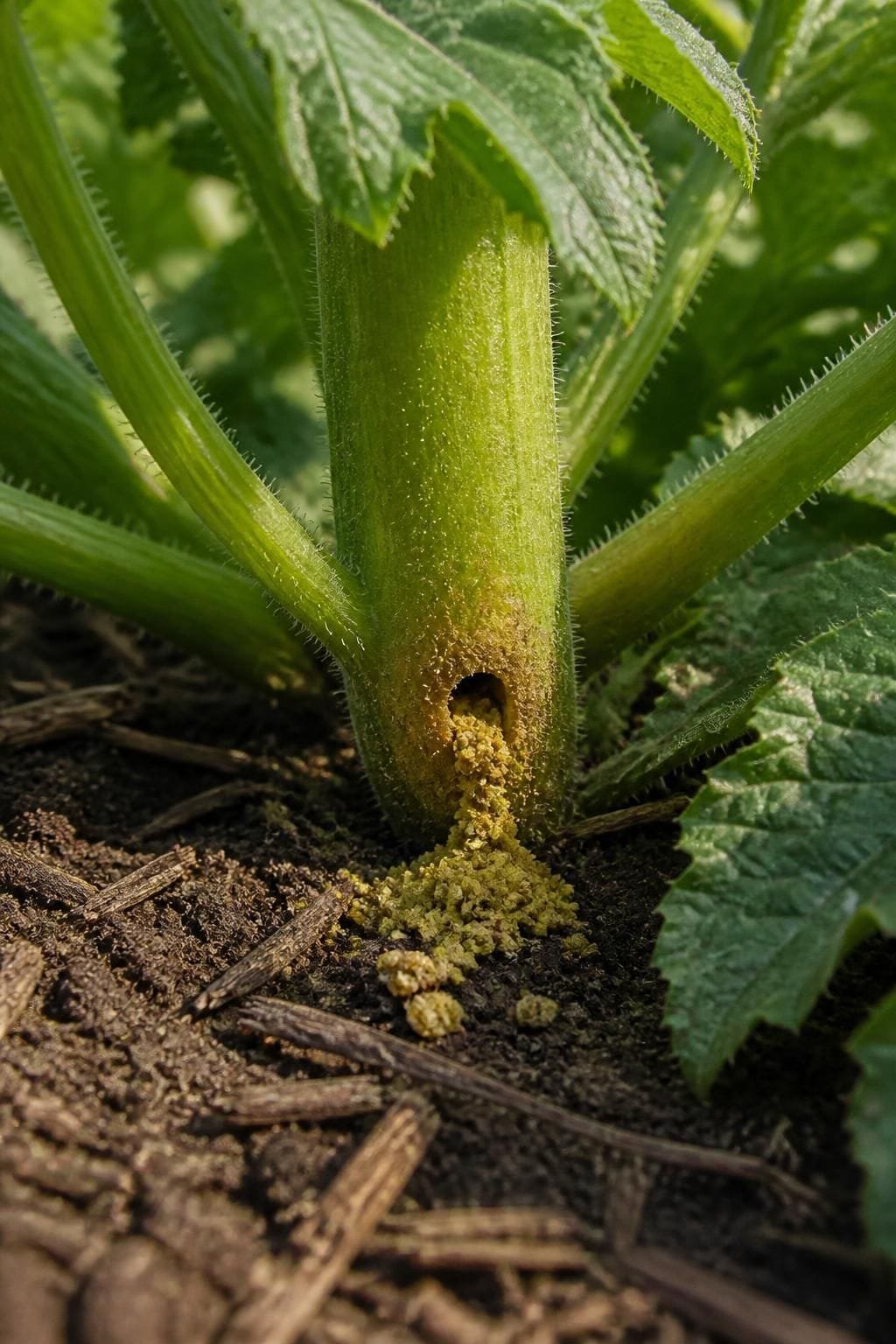
If you catch it early, the plant may be saved. The UConn Home & Garden Education Center advises cutting a slit lengthwise about halfway through the stem near the base and removing any larvae. Roots can form along the stem afterward, so the vine can keep going. Mounding moist soil over the injured section helps those roots along. Spraying won’t help at this stage. As Illinois Extension points out, insecticides don’t work once the larva is inside the stem.
To prevent it, keep the moth from laying eggs on the stem. Maryland Extension suggests wrapping the lower stem in aluminum foil. For its region, it also suggests transplants or seeding around mid-June, since the moths fly earlier in the season. Timing differs by region, so ask your local Extension office when borers are active near you. Variety matters too. Butternut, tromboncino and cushaw resist the borer, and yellow crookneck is less susceptible than zucchini.
White powder on the leaves
White powdery patches on leaves and vines point to powdery mildew, a fungal disease that tends to build up in humid, crowded growth. Water at ground level, space plants generously so air moves through the leaves, and remove badly affected leaves. Mildew-resistant varieties are worth looking for next season. Fungicides exist, but prevention does more of the work. If you do use one, follow the product label and check local rules, since approved products differ by country and region.
Beetles, bugs and aphids
Striped and spotted cucumber beetles feed on leaves, flowers and stems. Squash bugs gather in groups and leave leaves ragged. Hand-picking works when numbers are small, and it’s worth checking the undersides of leaves. Aphids deserve attention because they can spread viruses, which show up as twisted, off-color new growth.
When and how to harvest zucchini
Plants typically begin flowering about 35 to 45 days after planting, depending on temperature and variety. Utah State University Extension says summer squash is generally ready three to five days after the flower opens. That’s a short window, which is why zucchini seems to double overnight.
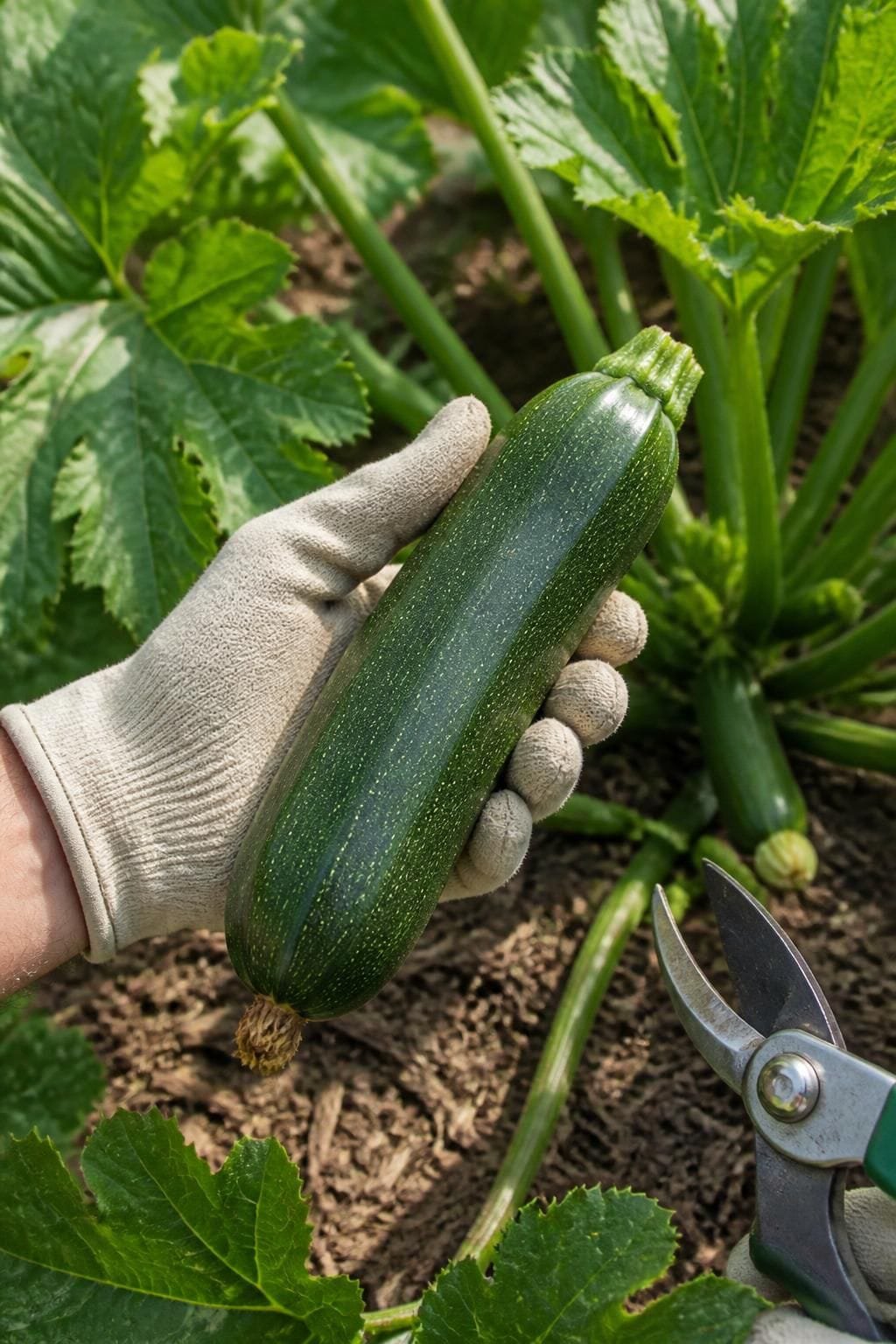
Aim for fruit about 6 to 8 inches long with glossy skin. Smaller fruit is more tender. Oversized fruit turns seedy and watery, and leaving it on the plant slows new fruit. So pick the giants even if you don’t plan to eat them. Cut with a clean, sharp knife and leave a short piece of stem. Don’t pick when the vines are wet, since that can spread disease. Wear long sleeves too, because some varieties have spiny stems. Male flowers are edible, and picking some won’t cut into your crop.
Store zucchini in the refrigerator for about four days to a week. Longer cold storage can leave the skin pitted and the flesh water-soaked.
Quick answers about growing zucchini
How long does zucchini take to grow?
Expect the first fruit roughly 45 to 60 days after planting, depending on variety and warmth. Cool weather stretches that.
How many zucchini plants do I need?
Two to four plants is more than enough for many households. A single healthy plant can keep producing for two to three months if you pick it regularly.
Do you need two plants to get fruit?
No. Each plant carries both male and female flowers. Insects still have to move the pollen between them, which is why hand-pollinating works even with a single plant.
5 thoughts on “How to Grow Zucchini Successfully in Your Garden”