
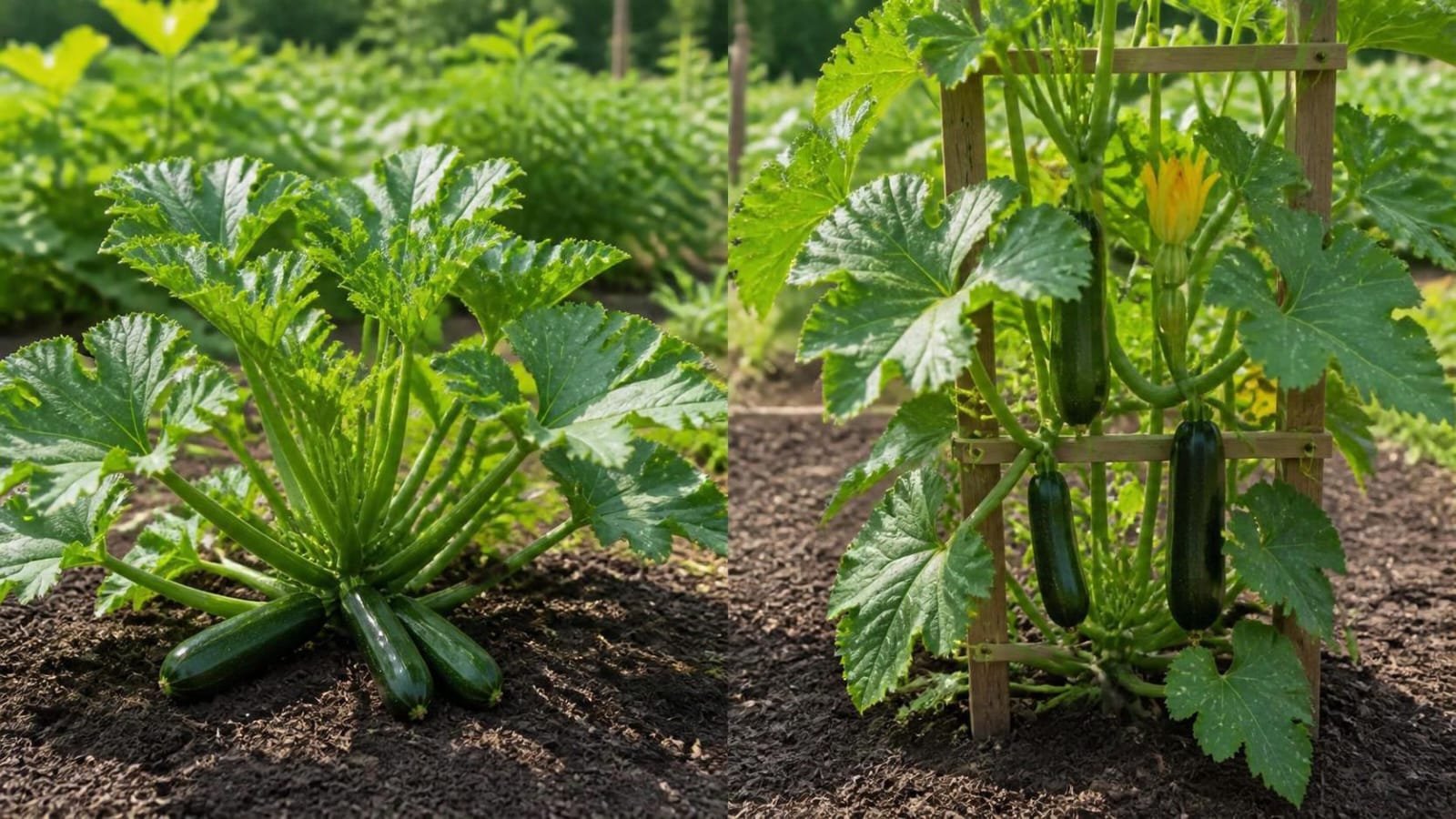
Yes, you can grow zucchini vertically, but the plant will not climb unless you make it. Most zucchini are bush types with thick, upright stems, so they need a sturdy stake, tomato cage or trellis in place at planting and a soft tie every few inches as the stem lengthens. Climbing varieties are the exception. Their stems are longer and more flexible, and they can handle a trellis, arch or fence panel.
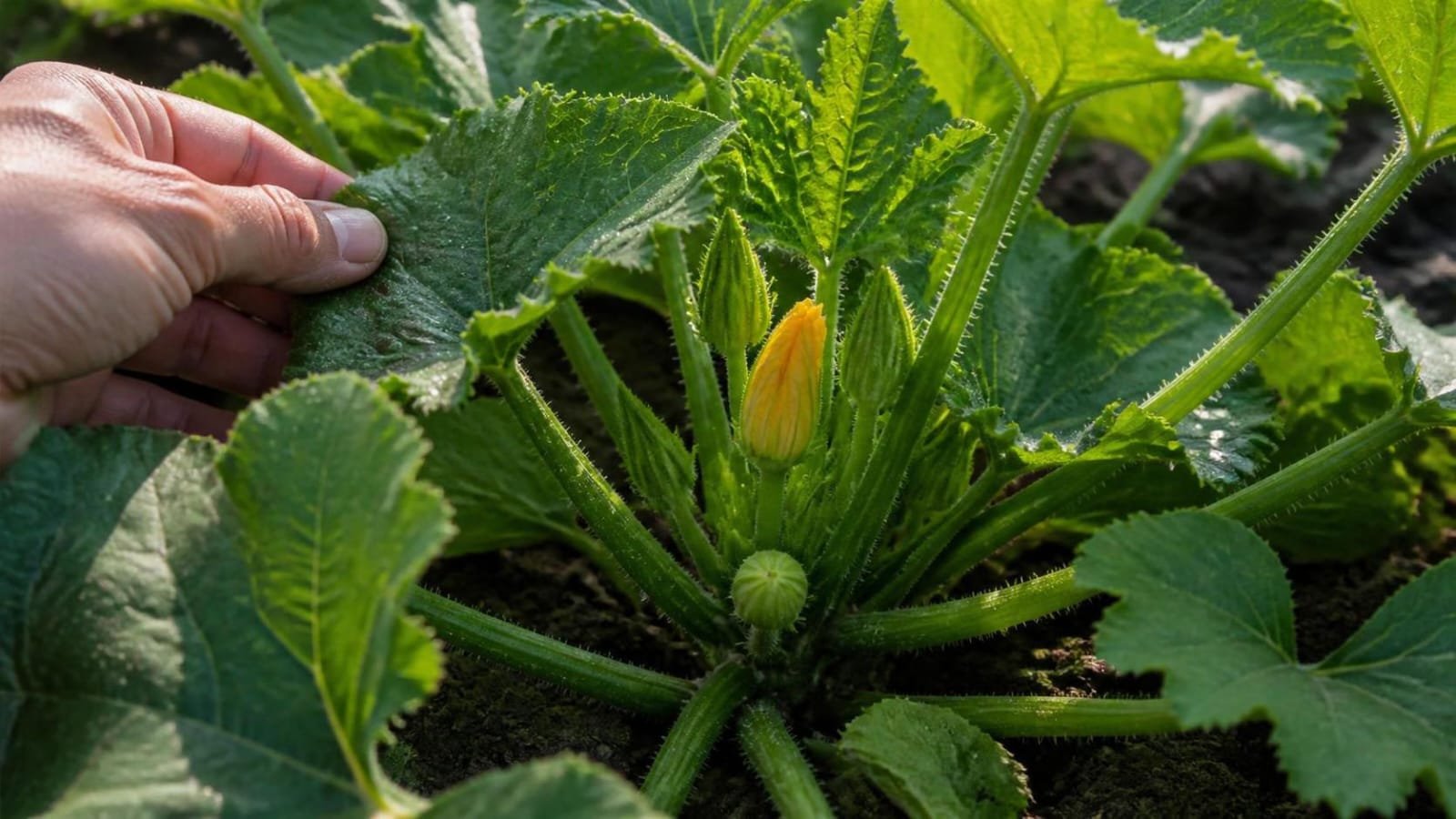
Here’s the kicker: the zucchini on most seed packets is a bush, and a bush will lean on a stake all season without once reaching for it. So look at the plant before you build anything. If every leaf fans out from one central point and the stem is short and stocky, you have a bush type, and you will be doing the climbing for it with twine. If long, bendy stems start running and curly tendrils appear, you have a climber, and it will meet you halfway.
Bush or climber? Read the plant before you buy a trellis
Plenty of advice online treats these as the same plant, and that is where the confusion starts. Some guides say only vining types are worth trellising. Others happily stake a bush and call it done. Both approaches work. What changes is the kind of support and how much tying you are signing up for.
Seed packets are not always clear, and semi-bush types sit somewhere between the two. Give a young plant a few weeks. One that begins to sprawl is telling you what it is. Here is how the three kinds you are likely to meet compare, using the varieties growers mention most (see Epic Gardening’s variety notes).
| Type | What you see | Support that works | Varieties growers mention |
|---|---|---|---|
| Bush zucchini | Leaves fan out from one center; stems stay short and thick | A single stake or a tomato cage, with the main stem tied | ‘Black Beauty’, ‘Emerald Delight’ (both listed at about 2 ft) |
| Climbing zucchini | Long, flexible stems with tendrils that grab thin supports | Trellis, A-frame, tripod, arch or fence panel | ‘Incredible Escalator’ (about 6 to 7 ft) |
| Climbing squash eaten as zucchini | Very long, vigorous vines; fruit picked young | A big trellis or arch with room to run | ‘Tromboncino’ (vines up to about 15 ft; botanically a winter squash) |
How tall will it get? A bush type tied to a stake usually tops out around three to four feet, according to growers quoted by Homes & Gardens. Climbers keep going as far as you give them room. If you want to grow zucchini on a trellis, a climbing type is the easier match, because its tendrils reach for the lattice, although it still needs a tie now and then.
‘Tromboncino’ deserves a second look if squash vine borers wreck your plants every year. It belongs to a different species, Cucurbita moschata, which Epic Gardening describes as resisting the borer. Resistant does not mean immune, but it improves your odds. More on that borer below.
It’s planting day and all you have is one stake
Most of us plant first and sort out support when the leaves get heavy. Can’t blame anyone for that, since a young transplant looks like it needs nothing. The catch is that driving a stake through an established root system later does real damage, so put the support in the day the plant goes in the ground. If you are starting from seed, our guide to growing zucchini from seed covers when a seedling is ready to go out.
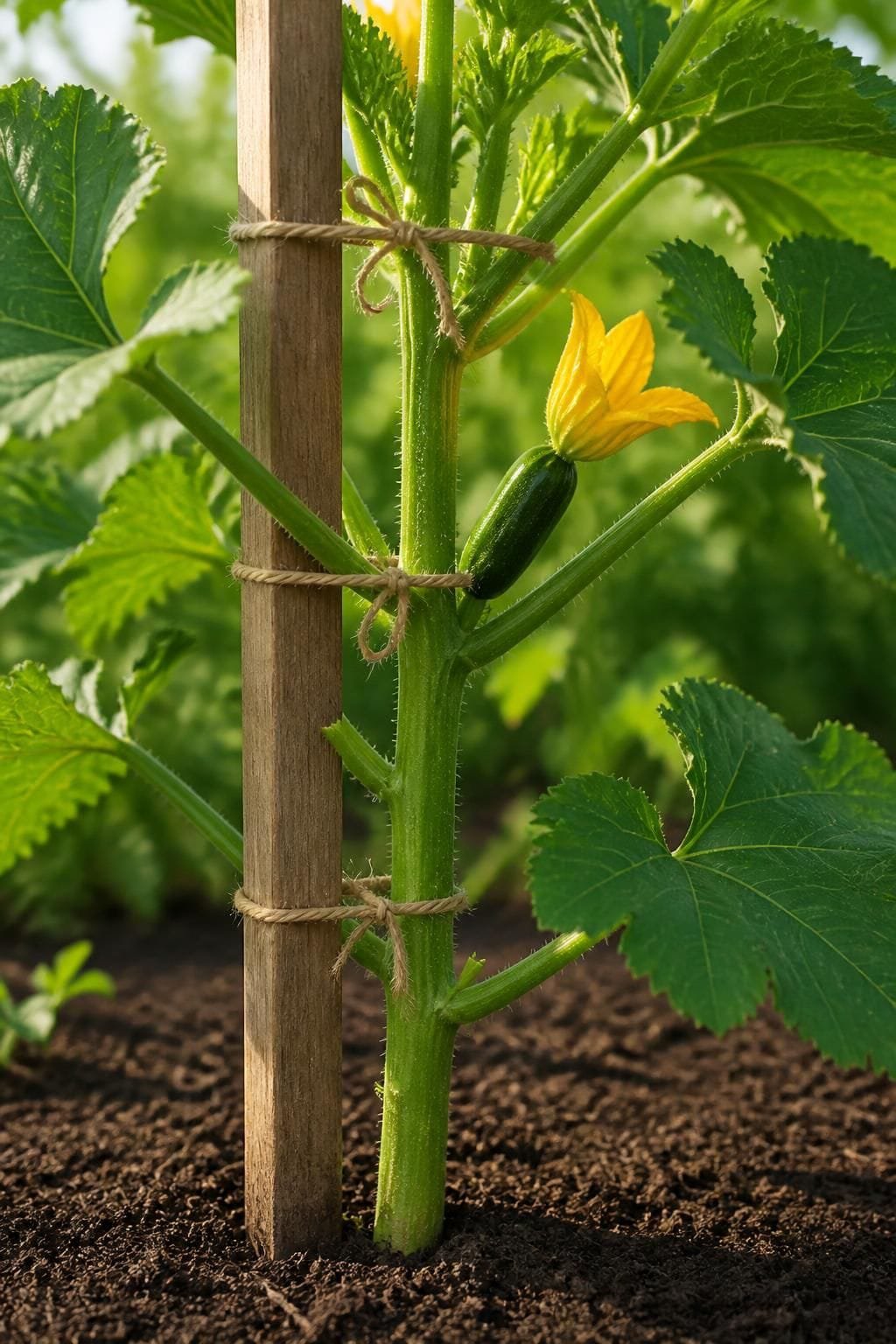
Pick a stake or pole sturdy enough to carry a loaded plant. For a bush type, about four feet of stake above the soil is plenty. One grower quoted by Homes & Gardens uses a six-foot wooden stake sunk about two feet and sets the plant roughly three inches away on the sunny side. Thick bamboo, electrical conduit or a fence post all do the job. A thin garden cane will not hold a plant carrying a week’s worth of fruit.
Soil, feeding and watering do not change once the plant goes upright, so keep our main guide to how to grow zucchini open alongside this one. What changes when you train zucchini upwards is the tying, and that is where most stems get hurt.
- Wait until the main stem has about six to eight inches of upright growth. There is no point tying a seedling that is still finding its direction.
- Use something soft, such as jute, strips of old cotton or stretchy plant tape. Wire, thin plastic and twist ties cut into the stem as it thickens.
- Make a loose loop with slack in it, just below a leaf stalk, so the stem can swell and sway. Keep it clear of flowers and baby fruit.
- Retie every four to six inches of new growth. Zucchini moves fast in warm weather, and a stem that has leaned away from its stake for a week is hard to bring back without a crack.
- Check the top of the plant whenever you water. That is where the next tie belongs.
Happens to the best of us: you are away for a long weekend, come back, and the stem has flopped sideways. Don’t haul it upright in one go. Lift the top first, tie it loosely, then work downward. If the stem resists, stop and finish a day or two later.
A tomato cage works too. Drop it over a seedling and weave the leaves through the rings while they are still small enough to bend.
A balcony, a big pot or a fence line: growing zucchini in a small space
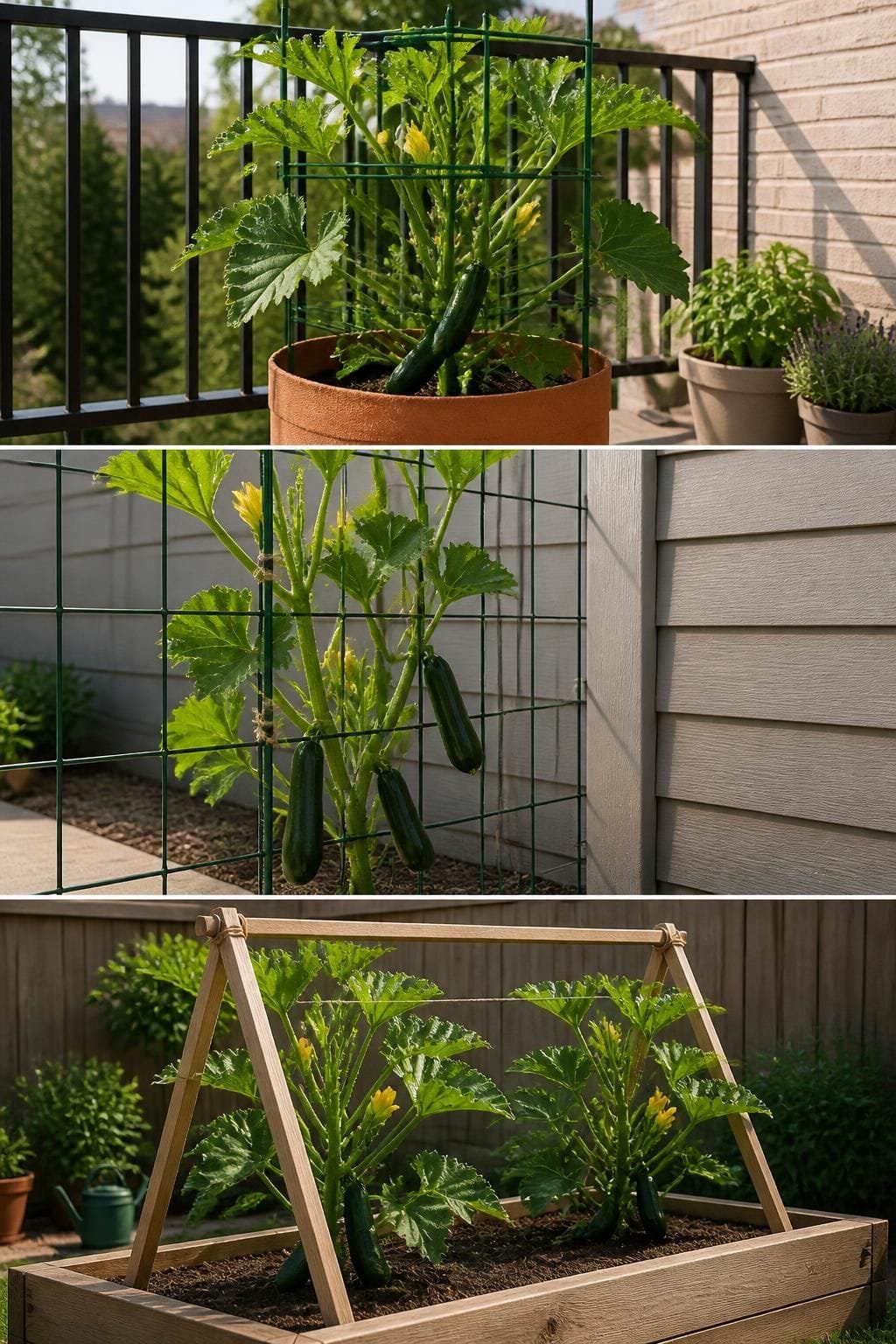
Going upright is what makes zucchini possible in a small space, but the pot matters as much as the stake. Container advice runs from a five-gallon minimum to twenty gallons or more, and the bigger end is the safer bet. A loaded plant drinks fast, and a small pot with a tall stake tips over in the first strong wind. Our guide to growing zucchini in containers and pots covers mixes and watering.
If you grow zucchini squash vertically in the ground or in a bed, plan on two to three feet between plants even when they are tied up. The leaves go up, but the roots still need their share of soil. Our piece on growing zucchini in raised beds goes further on layout.
Against a wall or fence, a panel about three to four feet wide and four to five feet tall suits a bush type. Leave a gap between plant and wall so air can move through. In a bed, put tall structures at the north end (in the Northern Hemisphere) so they don’t shade their neighbors, and plant on the sunny side of the support.
The stem looks bare and the fruit is suddenly in full sun
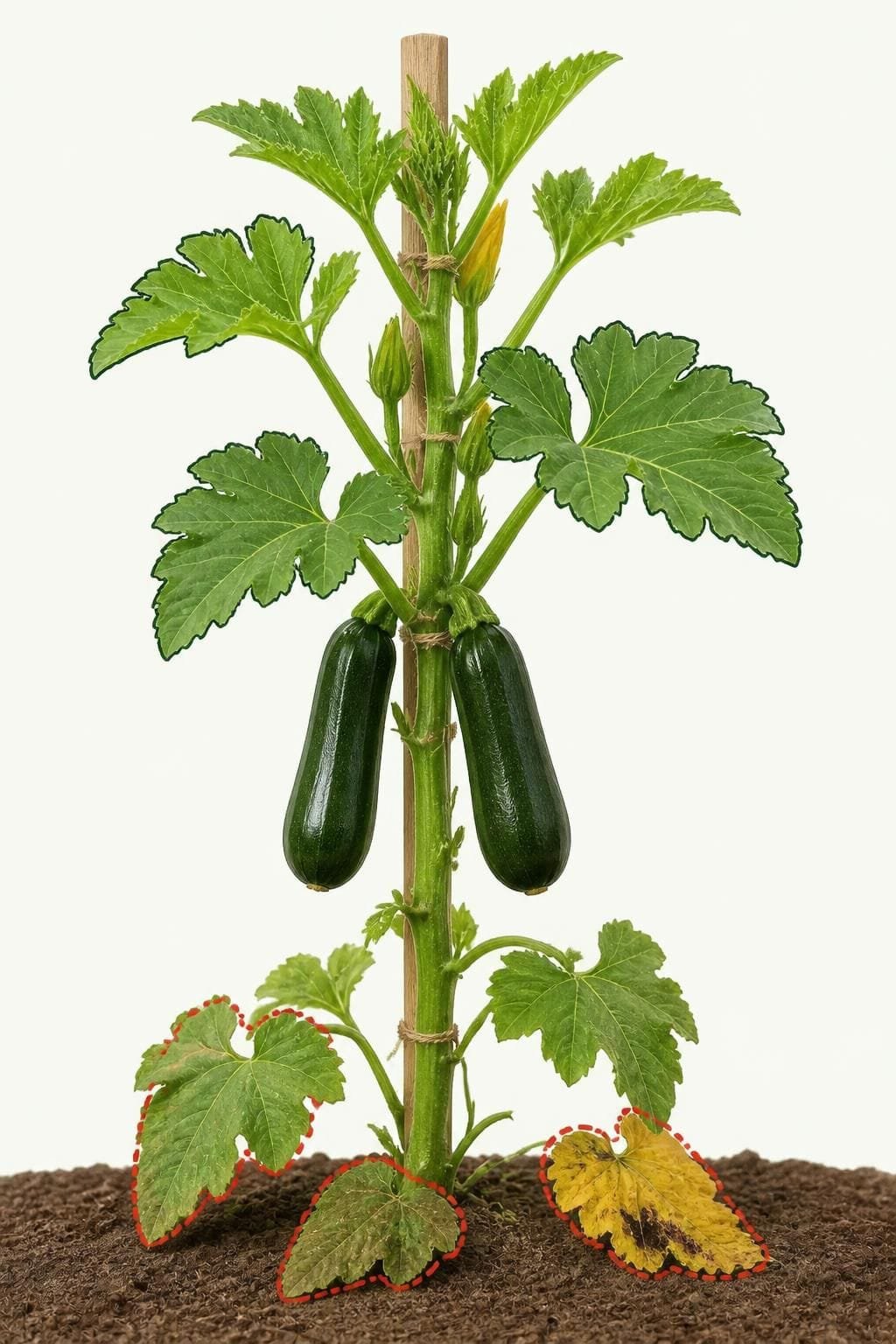
The standard advice is to strip the lower leaves, and part of it is right. Leaves that lie on the soil or crowd each other stay damp, and that is where mildew gets going. Opening the plant up lets air through, which is the main reason vertical growing is said to help with mildew. It helps. It does not guarantee anything.
The risk sits on the other side. South Dakota State University (SDSU) Extension describes photooxidative sunscald as what happens when fruit that grew in shade is suddenly exposed: large, bleached, sunken patches that can wrinkle and rot. The example it shows is acorn squash whose vines were shredded by wind, leaving the fruit bare. A zucchini you have just stripped of its leaf umbrella is in a similar spot.
Okay, so what do you actually cut? Take the leaves lying on the soil, the ones that are yellow, spotted or dead, and the ones crossed so tightly that nothing dries. Leave the leaves standing directly above and beside the fruit. Remove a few per visit, not a whole plant’s worth in one sitting. If you want a number, one widely read pruning guide says never to take more than 30 to 50 percent of the leaves, and in a hot climate it makes sense to stay at the cautious end. The same SDSU guide adds that the type of scald that kills fruit tissue shows up when temperatures pass 100°F, and it recommends steady watering and mulch so the plant stays leafy enough to shade its own fruit.
One honest limit: pale or bleached patches can have other causes. If the damage sits on the side of the fruit that faced the sun, sunscald is the likely culprit. If it shows up elsewhere, your local Extension office can help narrow it down.
The plant wilted overnight and the soil is damp
Watering is the first move, and when the soil is already wet it is the wrong one. A plant that collapses fast while the soil is moist deserves a look at the base of the stem. Illinois Extension names the squash vine borer as a classic cause. The adult moth lays eggs at the base of the plant or on leaf stalks, the larva tunnels into the stem, and the damaged tissue can no longer carry water. A trail of waste near the entry point gives it away, and the problem is worse during dry spells in early summer.
Vertical growing cuts both ways here. A plant sprawling on the ground can root where its stems touch the soil, and University of Maryland Extension notes that this helps it ride out borer damage to the main stem. A plant tied to a stake gives up that backup. What it gains is visibility, because eggs and entry holes are easier to spot on an upright stem. Long story short, going vertical swaps a safety net for earlier warning.
If borers come back every year where you live, that argues for a resistant climber such as ‘Tromboncino’ over a tied-up bush type, or at least for checking the stem base once a week. Wilting has other causes too, bacterial wilt among them, and a description cannot settle which one you have. If the base looks clean, your Extension office or a plant clinic can examine a sample.
Flowers are open but nothing is setting fruit
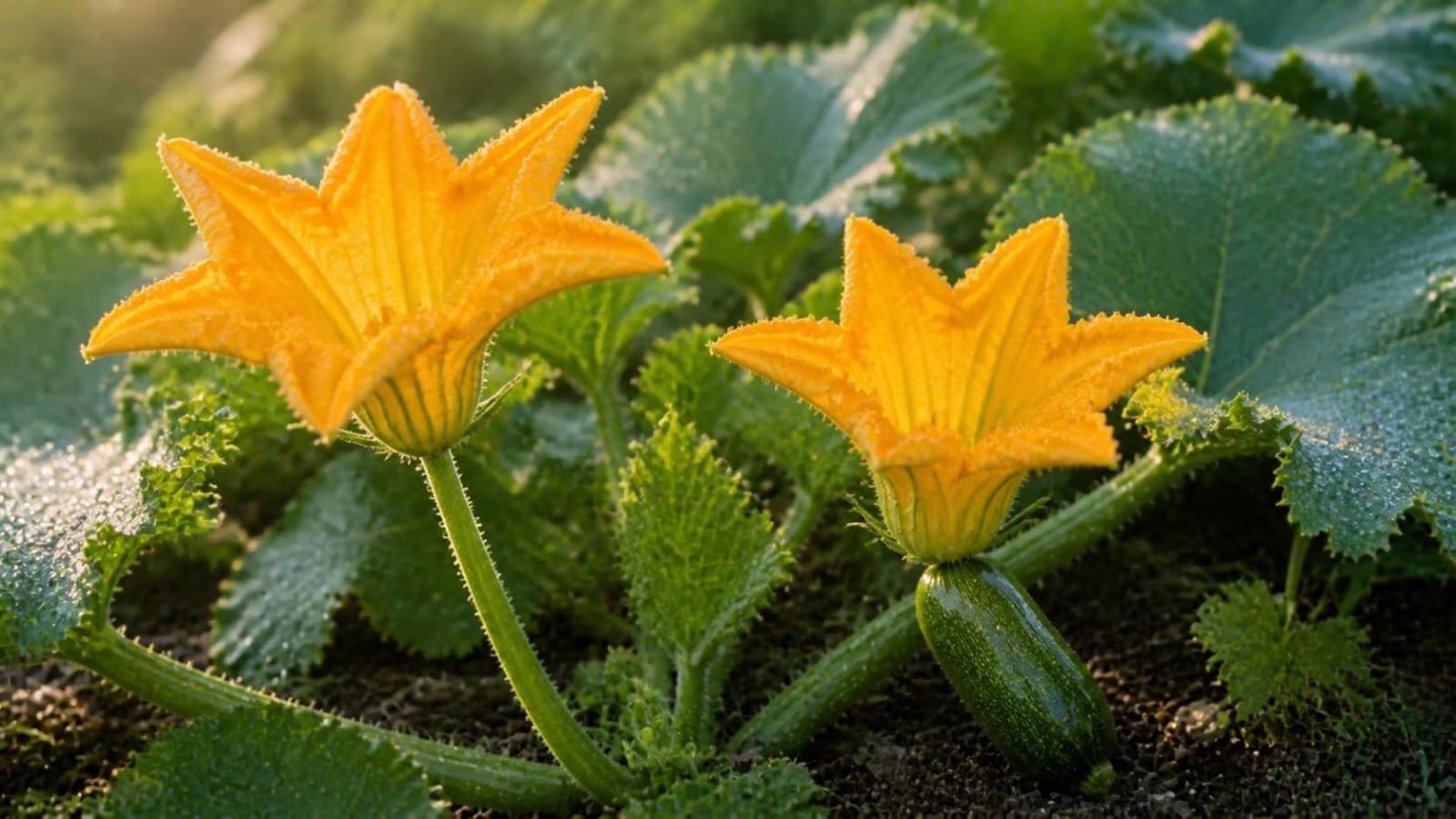
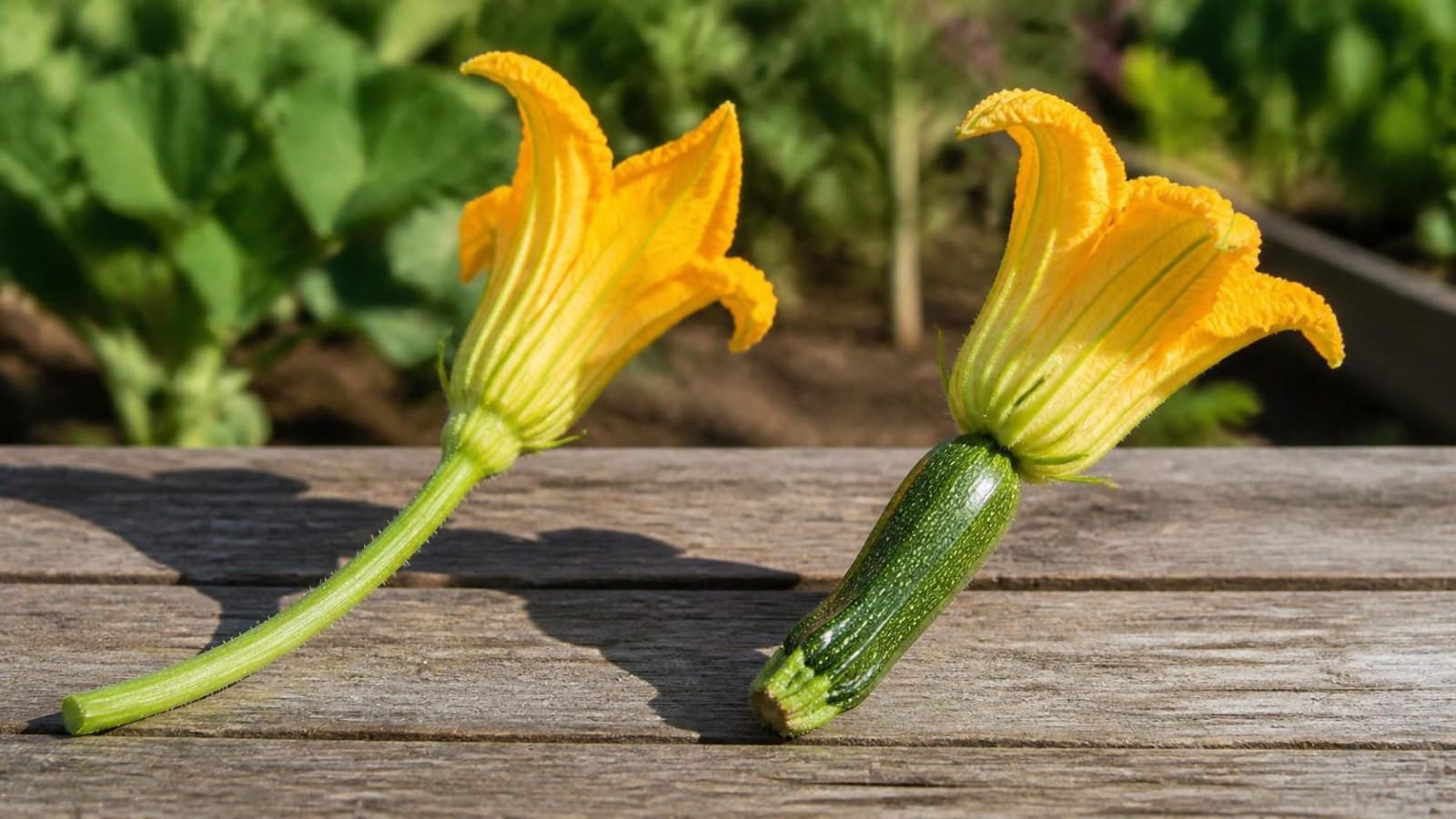
Reaching for fertilizer is the usual first move, and it rarely fixes this. Squash plants carry male and female flowers, and only the females, recognizable by a thick stem and a tiny fruit behind the petals, can become zucchini. University of Maryland Extension points out that males appear one to two weeks before females, that fruit set is poor in rainy weather when bees stay home, and that spraying pesticides during bloom puts pollinators at risk. If all you see is male flowers, give it time. Our article on zucchini plants with only male flowers explains when to worry.
Growing upright helps a little. The flowers sit at eye level, so you can tell the sexes apart and move pollen from a male flower to a female one on mornings when both are open. Some varieties are bred to set fruit without pollination, which suits a balcony where bees are scarce.
Small fruit that yellow and rot from the flower end are a separate problem. Our guide to zucchini fruits rotting at the blossom end sorts out the causes.
Once fruit is hanging, pick every day or two while it is six to eight inches long. Illinois Extension notes that zucchini is usually ready within four to eight days of flowering, and that oversized fruit drains strength the plant could spend on new ones. A heavy fruit also drags on a tied stem. Cut it with a knife or pruners instead of twisting it off, and retie the top while you are there.
2 thoughts on “How to Grow Zucchini Vertically Without Snapping the Stem”