
Where the damage sits tells you most of what you need to know. A vine that collapses with sawdust-like droppings at its base points to squash vine borer grubs. Wilting that comes back every afternoon in moist soil, with striped or spotted beetles nearby, suggests bacterial wilt. White dust on top of the leaves is powdery mildew. Yellow angular patches with dark fuzz underneath are downy mildew. Puckered, blistered leaves mean a virus. And a dark, sunken fruit tip is often blossom end rot, a moisture-related disorder and not an infection, though poorly pollinated baby fruit can look similar.
Those are the usual suspects among zucchini pests and diseases, and plenty of them look alike from a few feet away. So the photo comparisons below focus on the differences that matter. The guide also follows the order you would really check a zucchini plant: base and stems first, then leaves, then fruit. If you’re looking at chewed leaves or holes instead, What’s Eating My Zucchini Plant? Identify Pests and Leaf Damage covers that side in more detail.
If two or three of these look the same to you, you’re not alone. Several problems produce the same droop or the same yellow patch, and no article can name your exact problem from a description. Where a call is close, we say so.
Wilting Zucchini Plant? Check the Base Before You Reach for the Hose
Most of us grab the hose first, and fair enough. It’s a sensible first move. A thirsty zucchini sags in afternoon heat and stands back up by evening, so a deep soak at the base answers the question within a few hours. If the plant stays limp after a good drink, or one vine collapses while its neighbors look fine, thirst isn’t the story.
Here’s the kicker: some wilting diseases also droop by day and look better at dawn, so evening recovery proves less than you’d hope. Look at the crown first, where the stem meets the soil. Extension specialists at the University of Minnesota list the crown check as the way to rule out squash vine borer. Their page also notes that bacterial wilt often starts on one vine or one plant, perks up overnight, then wilts again the next day.
Squash Vine Borer: Sawdust at the Base
The adult is a day-flying moth that looks more like a wasp. The eggs are laid singly on stems and leaf stalks, and the newly hatched larva bores straight into the stem. The University of Kentucky puts egg hatch at seven to ten days, followed by two to four weeks of feeding inside the stem. That’s how a plant can look fine on Sunday and be flat by the weekend.
The evidence is at the stem. Look for a hole near the base with yellowish-green, sawdust-like droppings (frass) pushed out. Then grab a sharp knife and split the stem lengthwise, because that’s the only way to be sure. You’re looking for a cream-colored grub with a brown head, up to about an inch long.
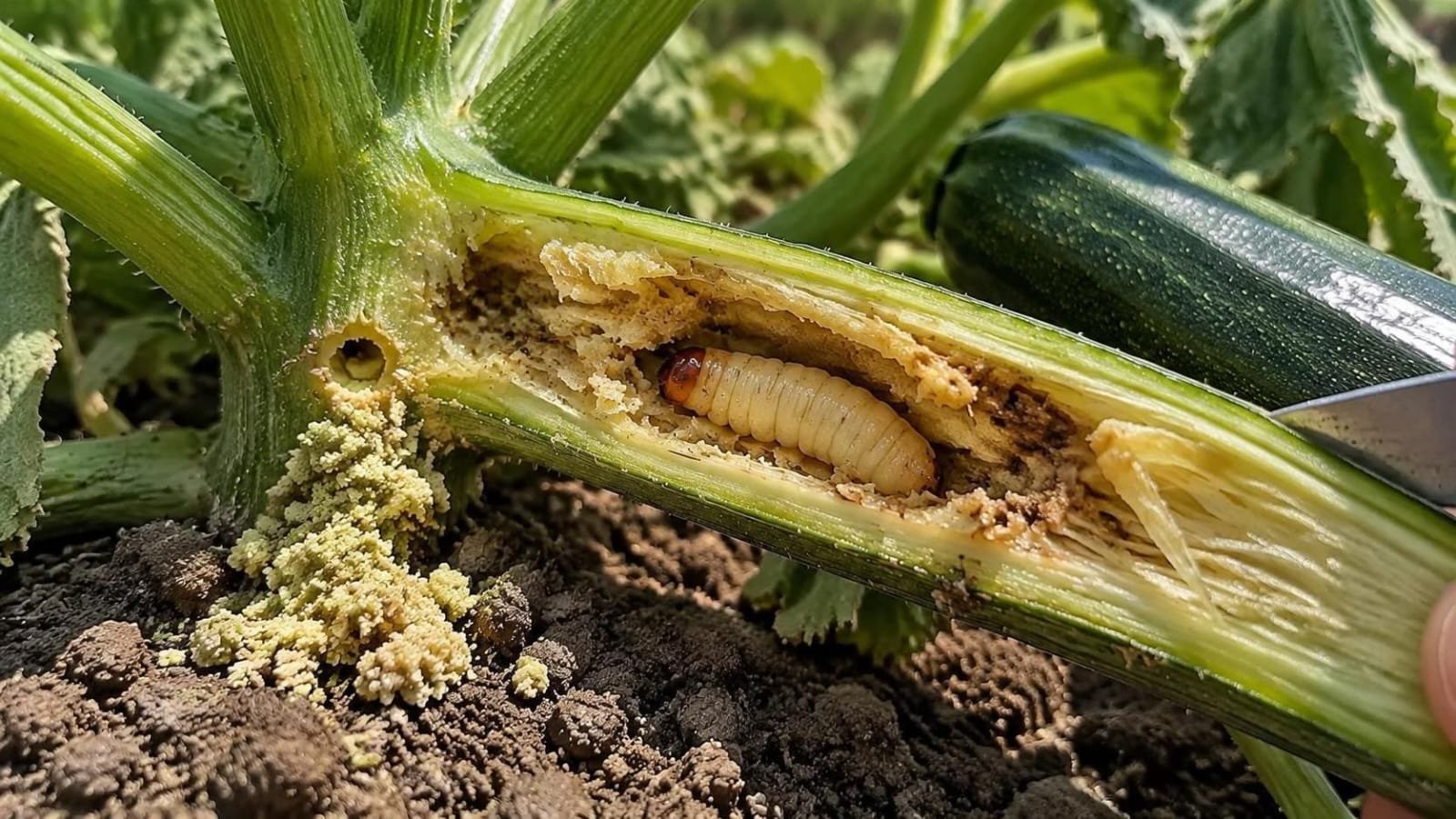
Where the larva settles changes the outcome. A borer in a main stem can kill the whole plant, while one in a side runner usually kills only that runner, according to University of Wisconsin Extension. The same guidance describes the home-garden rescue. Open the stem, lift out the larva, then mound moist soil over the wounded section so it can root.
Treatment comes down to timing. Once the larva is inside, sprays no longer reach it, so any product has to meet it before it bores in. Which products are approved, and how often you can apply them, differs by country and region, so follow the label and your local rules. Picture the typical borer story: a plant covered in flowers one week, one limp runner the next, and nothing wrong on the leaves. The only clue is a small hole under the canopy, and it’s easy to miss.
Zucchini Grubs: What They Usually Are
The grubs gardeners find around zucchini plants are usually one of three things, and the location matters:
- A fat white grub with a brown head inside a split stem. This is the squash vine borer larva described above, and it’s the most likely answer.
- Small larvae among the roots of a stunted or wilting seedling. Cucumber beetle larvae feed on roots and can tunnel into young stems, as the University of Illinois Extension notes in its cucurbit pest sheet.
- C-shaped white grubs in the soil. These are usually scarab beetle larvae, which Rutgers Cooperative Extension describes as root feeders on many vegetables. A grub in the soil beside a wilting plant proves less than one found inside the stem, so split the stem before you blame it.
Bacterial Wilt and Fusarium Crown Rot
Striped and spotted cucumber beetles spread bacterial wilt. The bacteria ride in their guts and droppings, enter through feeding wounds, then plug the plant’s water-carrying tissue. Here’s a simple test: cut a vine near the crown, press the two cut ends together, and pull them slowly apart. Thread-like strands of ooze mean bacterial wilt is likely. Minnesota Extension warns that not seeing strands doesn’t rule it out. And since no pesticide cures an infected plant, controlling the beetles is what protects the rest of the patch.
Worth knowing: the same page says bacterial wilt is harder on cucumbers and melons than on squash, and that infected summer squash may keep producing for several weeks. So it’s not always the death sentence some pages make it out to be. Still, pull a plant that’s clearly declining, so the beetles stop carrying the bacteria around.
Fusarium crown and foot rot looks different once you reach the base. The whole plant goes limp over a few days. The crown shows dead tissue, or white or pink fuzzy growth at or just below the soil line, as Gardener’s Path describes it. Fungicides rarely help, so remove the plant and keep squash-family crops out of that spot for about three years.
Which Wilt Is It?
| Cause | First clue | Look closer | What to do |
|---|---|---|---|
| Thirst or heat | Droops in the afternoon, recovers by evening | Soil dry a few inches down; plant perks up after a deep soak | Water at the base on a steady schedule and recheck in a few hours |
| Squash vine borer | One runner or the whole plant collapses suddenly | Hole near the base with yellowish-green frass; grub inside the split stem | Remove the larva, mound moist soil over the stem, and plan earlier prevention next season |
| Bacterial wilt | Wilts every day despite moist soil, often starting on one vine | Cucumber beetles present; sticky threads when a cut stem is pulled apart | Remove the plant and control beetles on the rest |
| Fusarium crown rot | Whole plant goes limp over a few days | Dark, soft base; white or pink growth at the crown | Pull the plant and rest the spot from squash-family crops |
| Squash bugs | Leaves wilt and collapse | Bronze egg clusters under leaves; gray nymphs and brown adults near the base | Remove eggs and nymphs early (see the insect section below) |
Zucchini Leaf Problems: White Powder, Yellow Patches and Twisted Growth
The usual first move with leaf trouble is a spray bottle, and it often fails. The product that suits powdery mildew may do little against downy mildew. Penn State Extension points out that the two are different organisms, and that prevention matters more than cure once either one is established. So name the problem first.
Powdery Mildew vs Downy Mildew on Zucchini
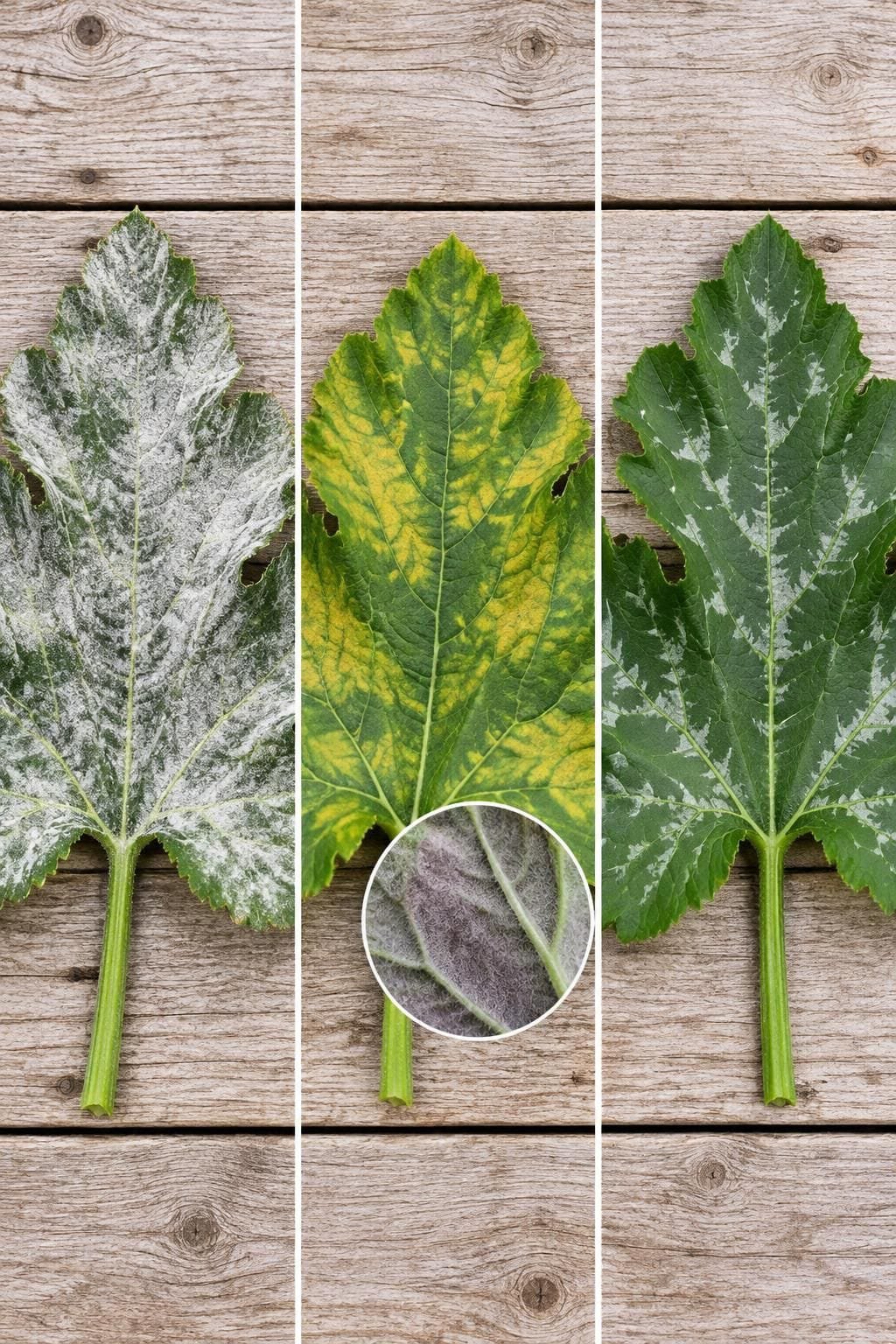
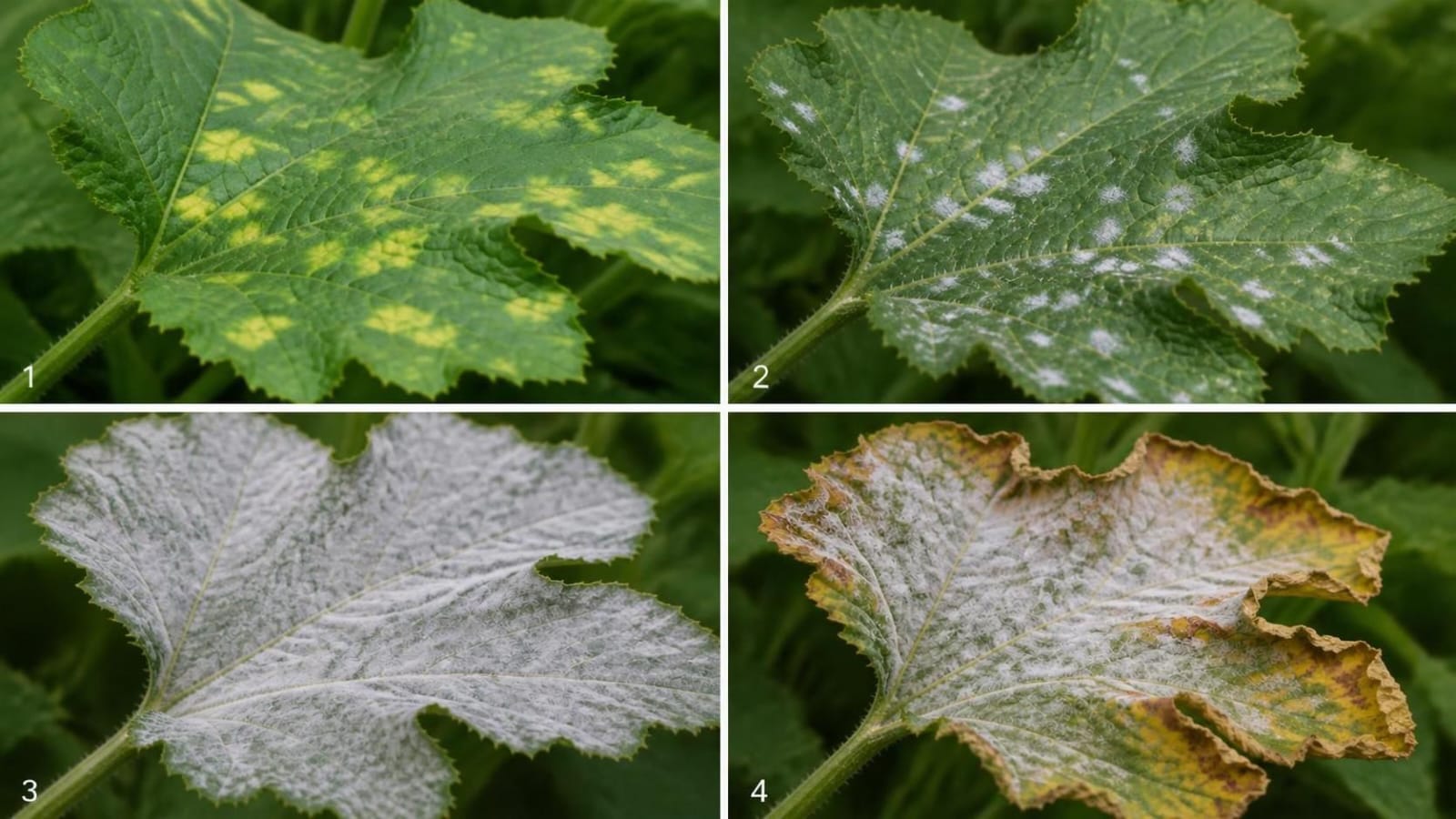
Powdery mildew is a white, flour-like coating that can sit on both leaf surfaces. Downy mildew starts as yellow-to-tan, angular patches on the upper surface, with darker purplish fuzz on the underside. That underside detail is what Penn State specialists use to tell the two apart. Turn the leaf over before you decide.
Weather gives you a second clue. LSU AgCenter says powdery mildew tends to dominate in dry, warm-to-hot spells, while downy mildew prefers cool, wet periods. The same source adds that heavy fertilizing can invite both, so feeding more is rarely the fix.
There’s also a harmless look-alike. Some zucchini varieties carry silvery or white patterning on the upper side of every leaf. Epic Gardening notes that natural variegation repeats in a consistent pattern and never looks fuzzy or irregular like mildew.
Spots With Halos, Tan Centers or Tiny Speckles
Leaf spots are where diagnosis gets honestly hard. Alternaria blight shows small angular yellow or brown spots with a halo, starting on older leaves. Septoria spots are beige or white and round, with a dark margin. Bacterial leaf spot makes tiny speckles with yellow edges, and from a distance it can pass for a nutrient problem. Anthracnose adds sunken black spots on the fruit. Epic Gardening describes all four, and telling them apart by eye is unreliable.
The practical response is the same for all of them. Cut off the worst leaves, keep the foliage dry, and clear the debris at season’s end. Copper-based products are often suggested for several of these spots. They only suit certain crops and regions, though, so check the label and local advice.
Puckered, Blistered or Mottled Leaves: Mosaic Virus
Leaves that are distorted and smaller than they should be, with dark green blisters and serrated edges, point to zucchini yellow mosaic virus. Plants stay stunted and the fruit can twist. UMass Extension lists seed, aphids and contaminated tools as the ways it spreads. It also says there’s no cure, insecticides don’t control it, and affected plants should be destroyed.
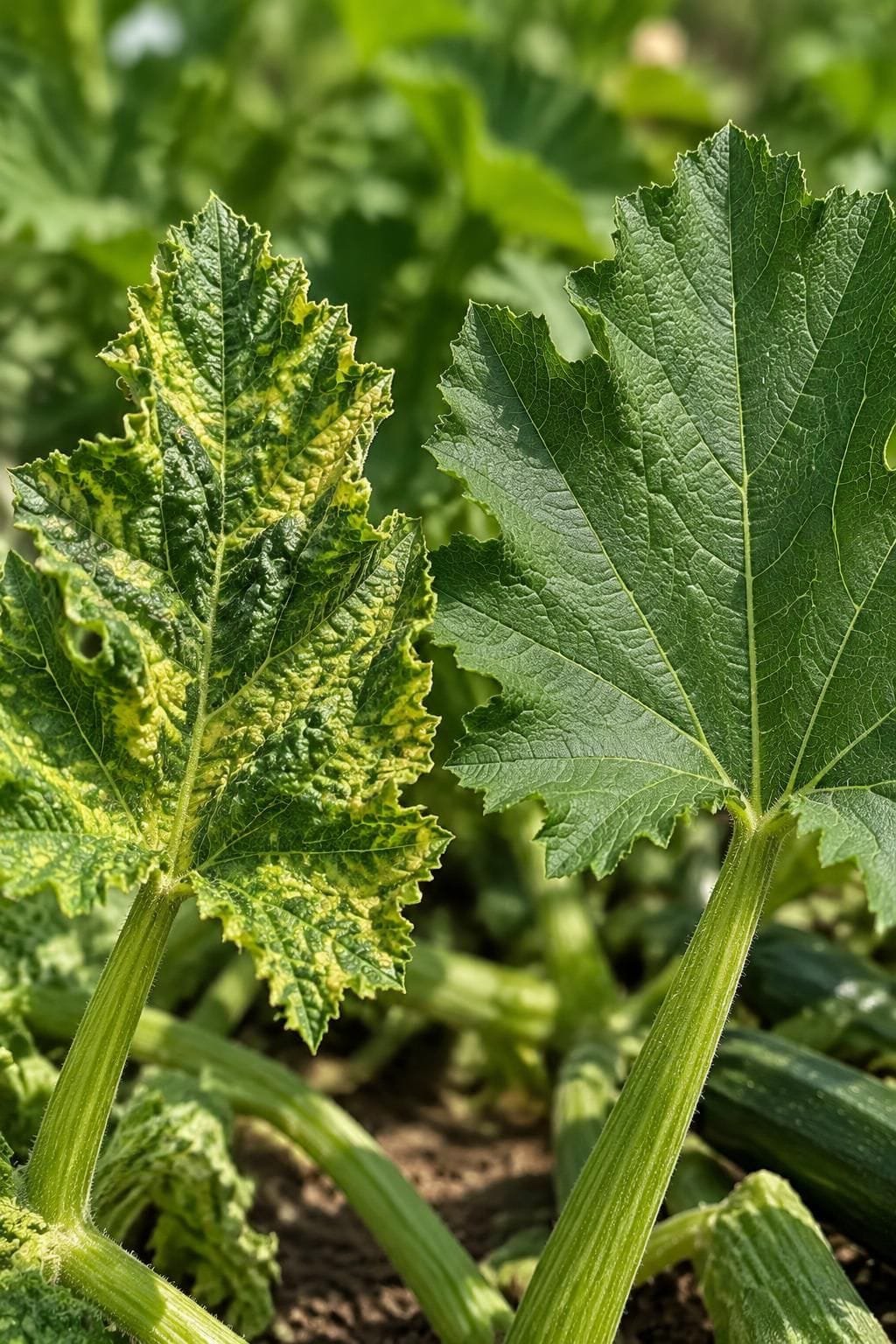
Zucchini yellow mosaic and its relatives look much alike, and University of Florida plant pathologists say field symptoms alone make it difficult to separate several of them. Fortunately the action doesn’t change. Remove the plant, wash your tools, and look for resistant varieties and clean seed next time.
Zucchini Fruit Problems: Dark Tips, Soft Spots and Small Fruit That Stall
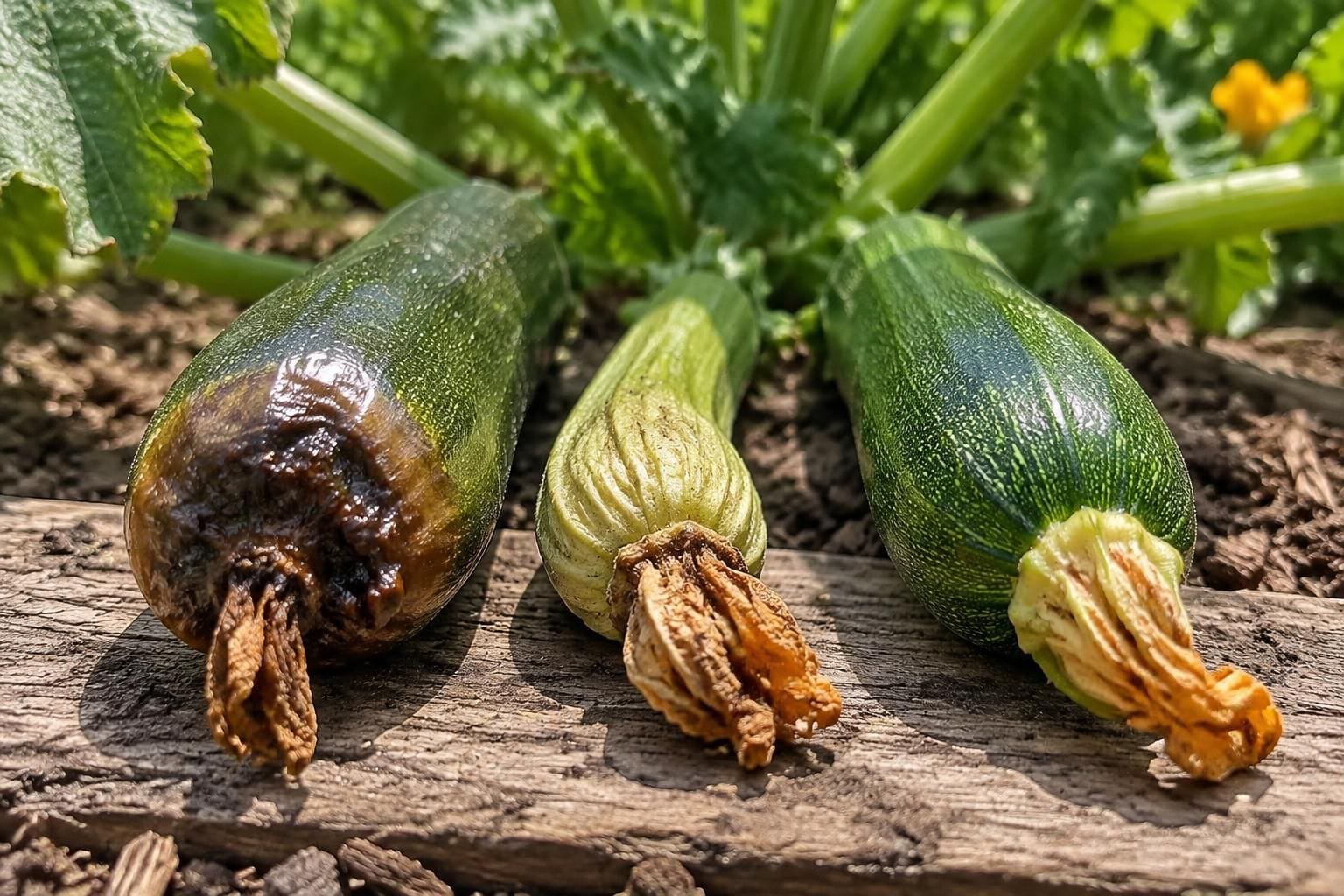
Not every rotting fruit is a disease. A blackened, water-soaked tip on the blossom end is classic blossom end rot. It’s a physiological disorder: too little calcium reaches the fruit when soil moisture swings up and down. Gardener’s Path stresses that adding calcium after the rot appears won’t rescue that fruit, because calcium travels in water. Pick off the damaged fruit and keep the moisture steady. Our guide to zucchini fruits rotting at the blossom end goes deeper.
The catch is that blossom end rot has a look-alike. Iowa State Extension lists poor pollination as the other common reason small zucchini shrivel, brown and die, and links it to rainy weather that keeps bees away. If the female flowers never got pollinated, extra water or calcium changes nothing. So check what the plant has been flowering, and whether bees have been visiting. Our guides to male and female zucchini flowers, why a plant makes only male flowers and a zucchini plant not flowering help you work out which situation you’re in. From a description alone the two can be hard to separate, so go by the flower history and the weather.
Common Zucchini Pests You Can Actually See
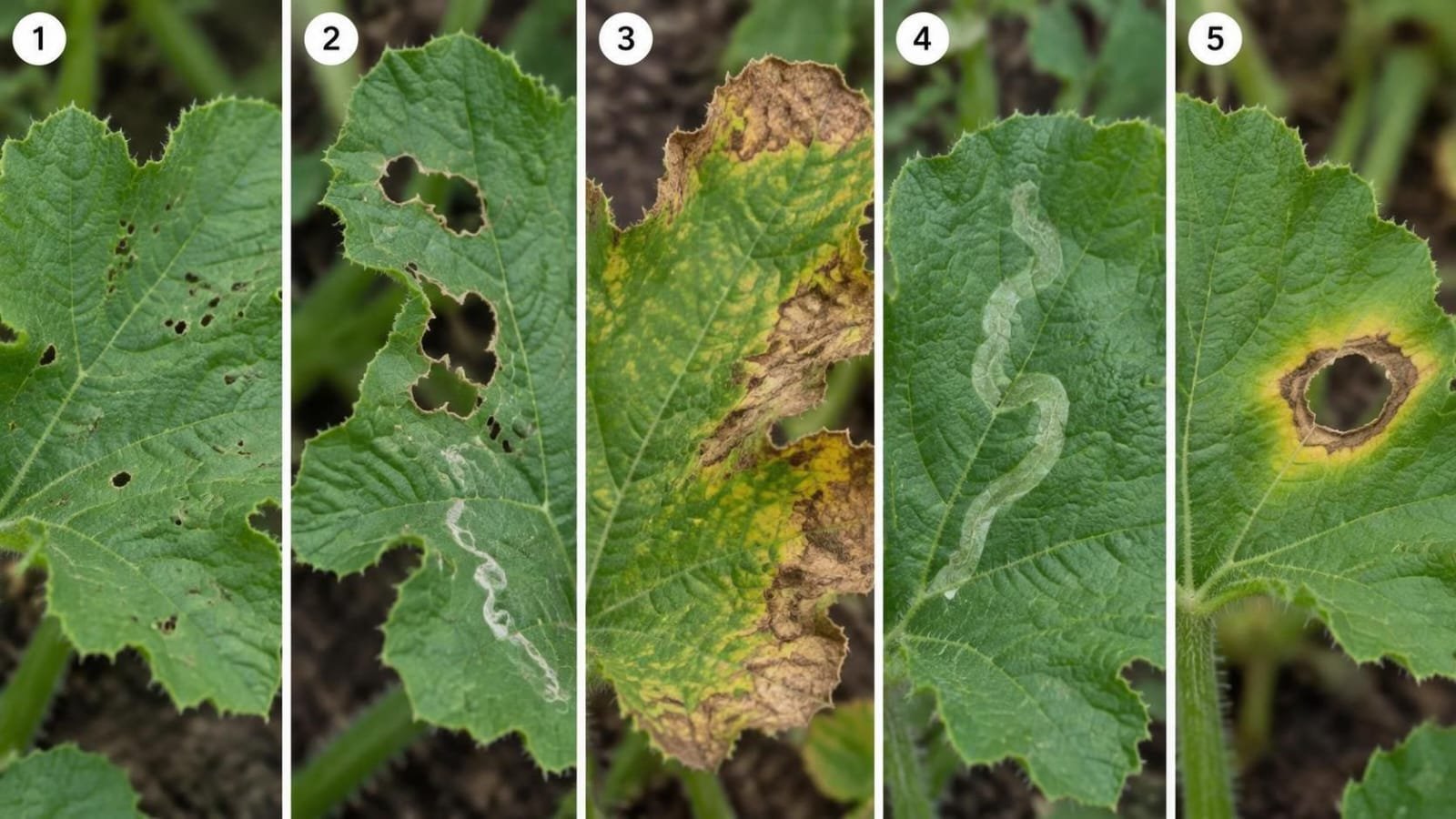
These are the visible pests behind much of the wilting and spread described above. They are identified and managed in detail, with photos, in our guide to what is eating your zucchini plant, so here is only how each one connects to the diseases. Keep in mind that pest lists change by region. A 2021 to 2022 polyhouse study in Assam, India, reported in the Indian Journal of Entomology, recorded five main insect pests on zucchini, plus ladybird beetles feeding on them. So local extension advice carries real weight.
- Squash bugs. Heavy feeding makes leaves wilt and collapse, so they can pass for bacterial wilt. Check leaf undersides for bronze egg clusters and the base of the plant for gray nymphs and brown adults, and scrape off eggs early.
- Cucumber beetles. Striped and spotted beetles carry the bacterial wilt described earlier, although not every beetle is infected, so keeping their numbers down protects the rest of the patch.
- Aphids. Look for tiny clusters on leaf undersides, sticky honeydew and ants walking the stems. They also spread mosaic virus, which is why watching them matters.
What to Do Now, and What to Leave Alone
- Water deeply at the base and recheck wilting in a few hours.
- Check the crown and split a suspect stem.
- Turn leaves over and check both surfaces, along with the soil near the base.
- Write down when symptoms began and which plants were affected first.
- Remove what can’t be saved, and bag it rather than composting it in a home pile, since many sources advise against composting diseased plants.
- Don’t spray the first product you find. Mildew sprays, beetle sprays and virus management aren’t interchangeable, and no spray cures a plant infected with bacterial wilt or a virus. Avoid spraying insecticides while flowers are open, since Nebraska Extension notes that applying them during bloom can contribute to poor pollination.
- Don’t pile calcium or eggshells onto a plant that already has blossom end rot. Steady watering helps the next fruit.
- Don’t water the leaves. Wet foliage helps spread several of the diseases above.
- Don’t save seed from a diseased plant. Mosaic virus and several leaf diseases can travel on seed.
Product names, rates and spray intervals depend on where you live and what’s approved locally, which is why this guide doesn’t give numbers. Follow the label, observe harvest waiting times, and check local rules for organic products as well.
How to Prevent Zucchini Diseases and Pests
Most prevention is the same across diseases. Water at the base, give plants room, and clean up at season’s end so pathogens have fewer places to survive the winter. Steady moisture and spacing are covered in How to Grow Zucchini Successfully in Your Garden. Growing upward may also help airflow, as long as you tie the stem safely, as shown in How to Grow Zucchini Vertically Without Snapping the Stem.
Rotation is the harder part in small spaces. Sources suggest keeping squash-family crops off the same ground for one to three years, and that’s tough in a compact bed or pot. If that’s you, the guides to growing zucchini in raised beds and growing zucchini in containers and pots cover layouts that make it easier. Sanitation matters even more in those setups.
Start with clean seed and healthy seedlings. Seedlings that fall over at the soil line in the first weeks are often damping-off, covered in How to Grow Zucchini From Seed, but cutworms cause the same collapse, so dig around the stump for a curled caterpillar before you decide (our guide to what’s eating your zucchini shows how). Floating row covers can keep beetles and borer moths off young plants, but take them off once flowers open so bees can pollinate, or hand-pollinate; the timing is explained here. And check seed catalogs for resistance to powdery mildew or other diseases that hit your area. Local extension lists beat an old variety list.
If a plant keeps declining and nothing above fits, cut a stem section and a few leaves, bag them, and send them to your local extension office or plant diagnostic lab. A lab can settle what a description can’t.

One thought on “Zucchini Diseases and Pests: Identification Guide With Photos”