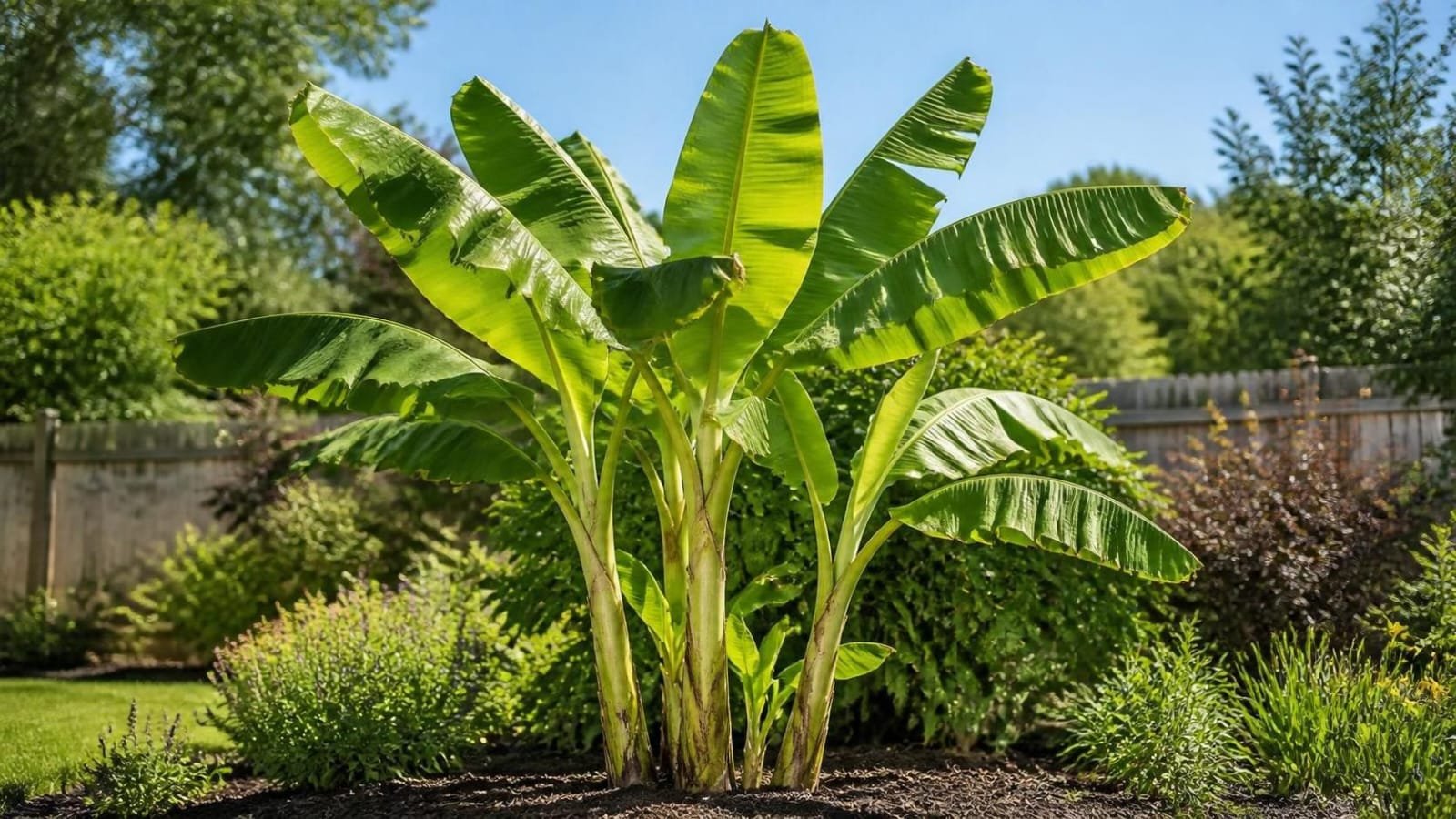
No. A banana plant is not a true tree. It is a giant herbaceous perennial in the genus Musa, and the thick “trunk” is a pseudostem, a tight bundle of leaf bases with no wood in it. The quickest clue is what happens after fruiting. That stem dies, and the underground corm sends up a replacement.
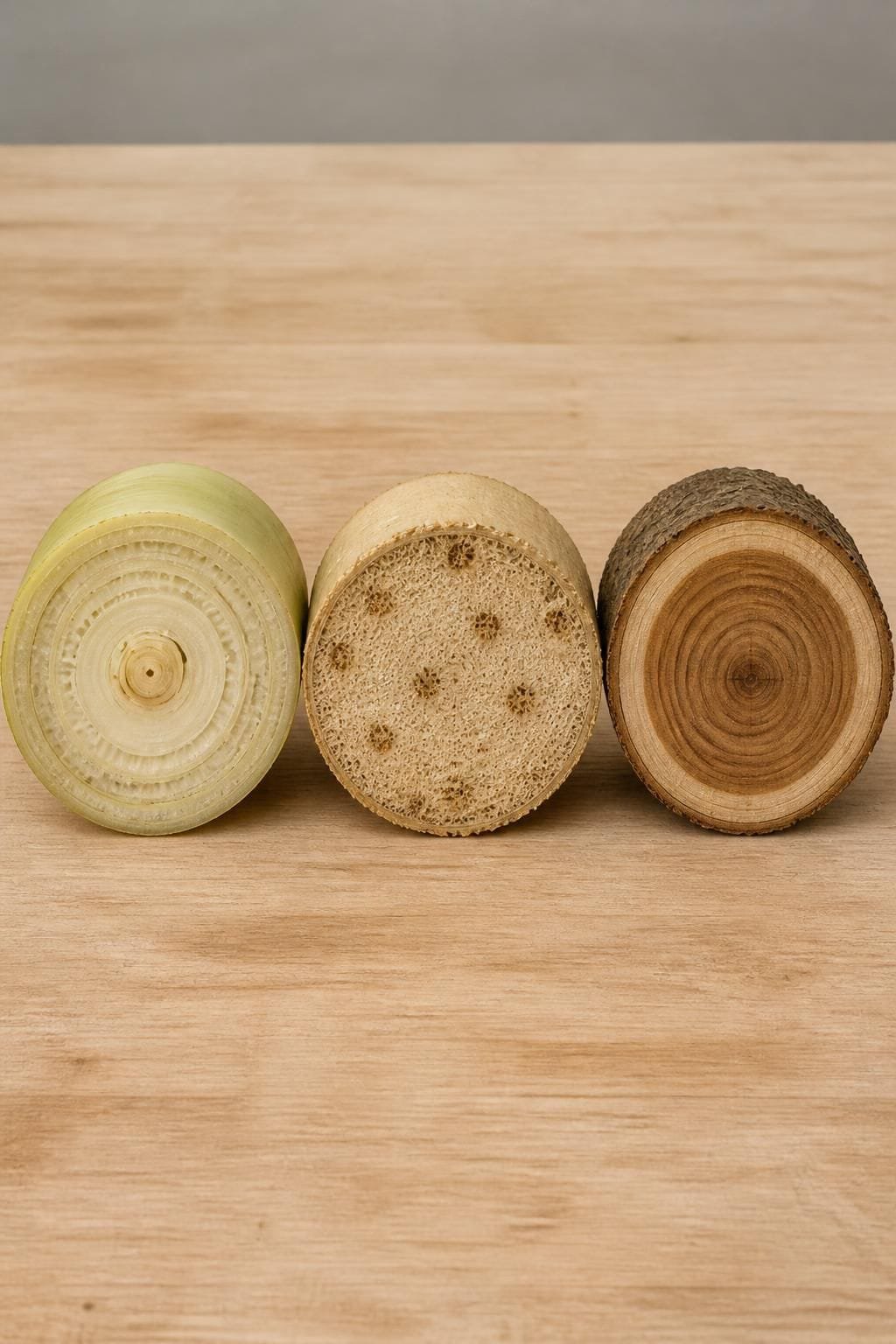
If you ever get the chance, cut into a banana stem. You’ll find layer after layer of wet, fibrous leaf sheaths wrapped around each other. You won’t find growth rings. Below, we’ll cover what you’re looking at, why palms make the “no wood” argument shaky, which Latin name goes on the label, and what the herb label means once you grow one yourself.
What the banana “trunk” is really made of
Most of us see a thick, upright stem with a crown of big leaves and think “tree.” Fair enough. The shape fools nearly everyone.
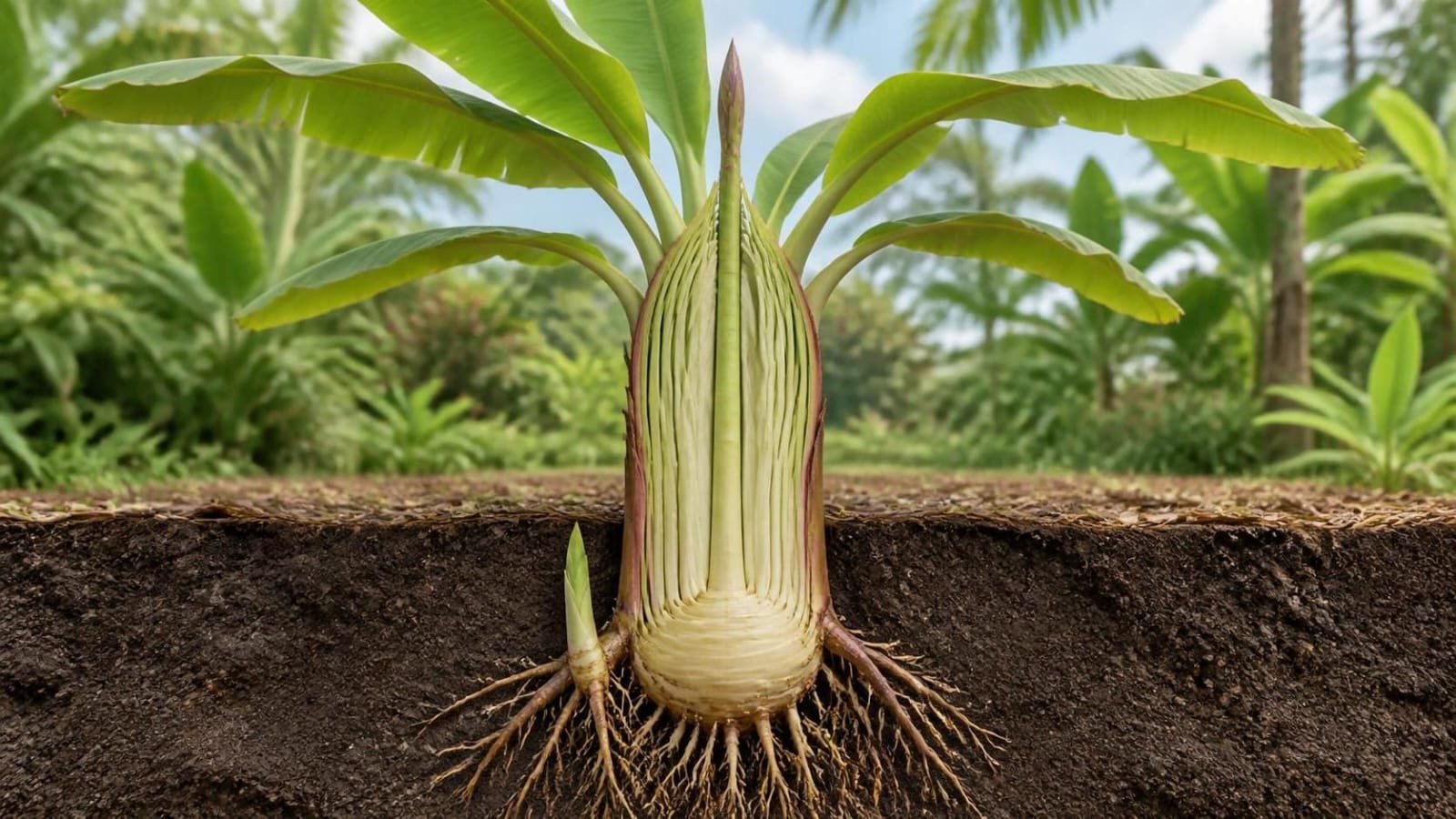
The stem you see is called a pseudostem, which just means false stem. Each leaf has a base that widens into a sheath. Packed tightly together, those sheaths make up the pseudostem. The real stem is the corm underground, and that’s where the roots come from, too. When the plant is ready to flower, a true flowering stem grows up through the middle of the pseudostem and comes out the top. The University of Arizona Arboretum describes this in its plant record.
That’s why the stalk feels the way it does. It’s succulent, full of water, and soft enough to slice with a knife. Wind can bend or snap it much more easily than a woody trunk.
Each pseudostem normally produces one flower cluster, then dies. By then, offshoots called suckers have usually formed at the base. So the plant as a whole keeps going, which is why it’s called a perennial. The banana entry on Wikipedia lays out the same sequence.
Palms have no true wood either, so why are they trees?
You’ll hear the shortcut answer everywhere: “no wood, so no tree.” Don’t lean on it too hard. It falls apart the minute someone brings up a palm.
Britannica defines a tree, in general terms, as a perennial woody plant with a single main trunk that reaches at least 15 feet (4.5 meters) at maturity. Here’s the kicker: true wood is secondary xylem, laid down ring by ring by a cambium layer. Palms are monocots, and they don’t make it the way an oak or maple does. A palm thickens its young trunk a little and then stops, according to atree-education write-up from Our City Forest. Even so, one published forest-survey definition counts palms and bamboos as trees when they meet its height and diameter limits.
So the dividing line is narrower than “wood.” A palm’s stem is tough and, in most species, stays standing for years. A banana’s pseudostem is a stack of leaf bases, and it’s done after one fruiting. Some looser, everyday definitions stretch to include tall palms, tree ferns, bananas and bamboos. So yes, you’ll find sources calling a banana a tree. That’s about common usage. “Tree” is more of a growth-habit word than a strict taxonomic one, and where you draw the line depends on who’s asking.
| Feature | Banana plant | Palm | Oak or maple |
|---|---|---|---|
| What the stem is made of | Tightly packed leaf bases | A tough, woody stem | Wood laid down by a cambium layer |
| Thickens year after year? | No true secondary growth | Only limited thickening early in life | Yes, adds growth rings |
| Above-ground stem after fruiting | Dies, replaced by suckers | Usually stays standing | Stays standing |
| Usual label | Giant herb | Usually treated as a tree | Tree |
If it’s not a tree, what kind of plant is a banana?
“Herb” makes most people think of parsley or basil, so it sounds like a joke for a plant three times your height. In botany, it just means a plant without a persistent woody stem above ground. Stephen Boatwright, an associate professor of biodiversity and conservation biology at the University of the Western Cape, told Africa Check that the banana is “not a true tree, but a large herbaceous plant.” Agricultural training material from IITA says the same. It calls plantains and bananas giant perennial herbs, and it names the corm as the real stem.
So what is a banana plant? As a type of plant, it’s a giant herbaceous perennial that renews itself from an underground corm. The family is Musaceae, and the order is Zingiberales, which also includes ginger. It’s also a monocot, in the same big group as grasses, palms and orchids. Most monocots don’t form wood through a ring-making cambium.
A practical point: most cultivated bananas are triploid and sterile, so they’re multiplied from suckers or corm pieces, not seed. That’s why the banana from your fruit bowl won’t give you a plant. We cover that in Can You Grow a Banana Tree From a Banana?
The banana tree’s Latin name
The Latin name of a banana plant depends on what you’re holding. The genus is Musa, a name Linnaeus chose in 1753. Below that, it gets tangled. The Musa genus entry on Wikipedia says plainly that naming complex hybrids as if they were simple species caused endless confusion.
- Family and genus: Musaceae, genus Musa. “Musa spp.” is honest shorthand when you don’t know the exact variety.
- Wild ancestors of most edible bananas: Musa acuminata and Musa balbisiana.
- Hybrid cultivars: Musa × paradisiaca is commonly given as the accepted name for the hybrid, though many specialists name cultivars by genome group and cultivar name instead. Linnaeus’s old name Musa sapientum is now treated as a synonym of it.
- Ornamental and hardy types: Musa basjoo, the Japanese fiber banana, is the usual cold-hardy choice.
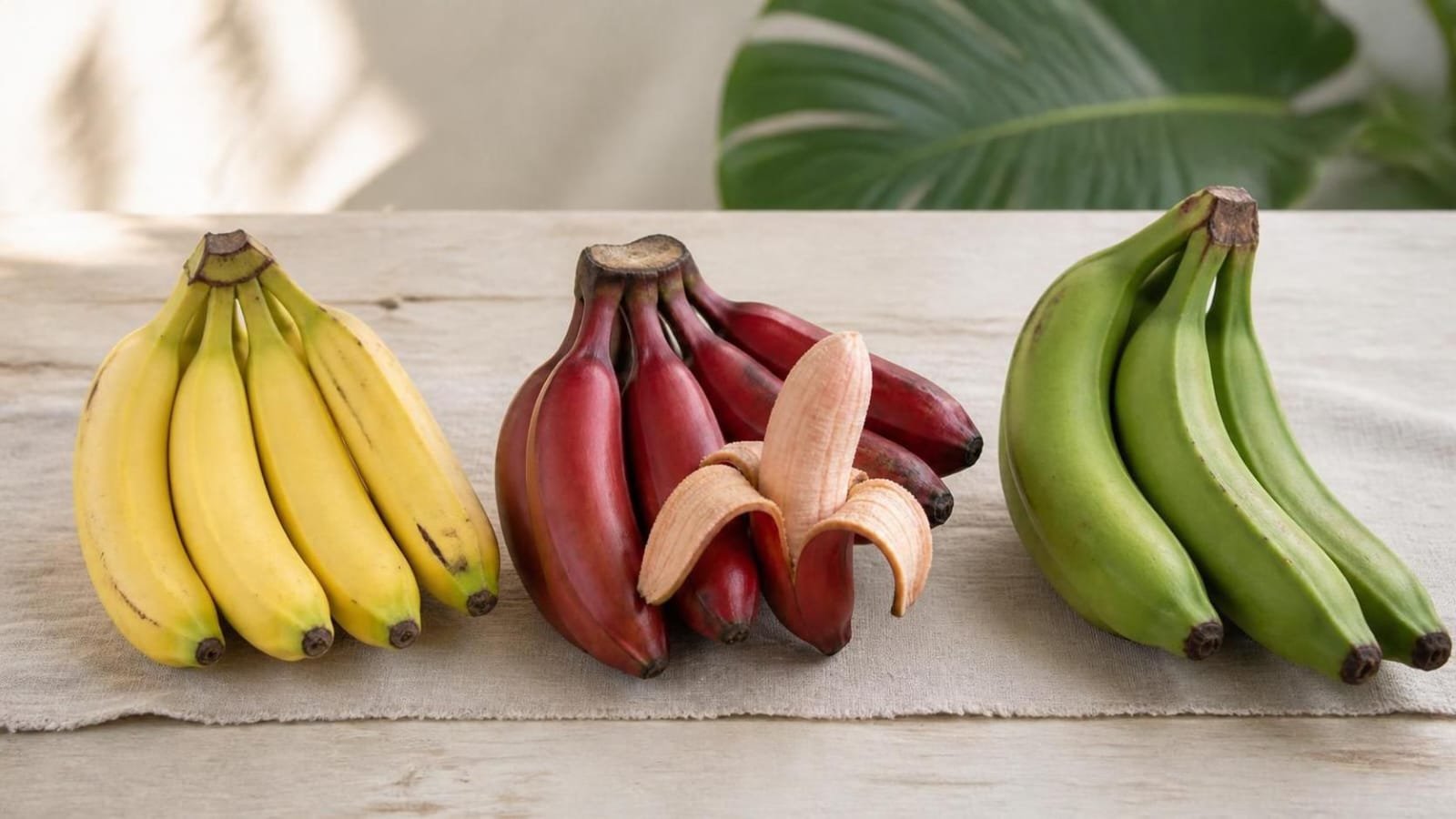
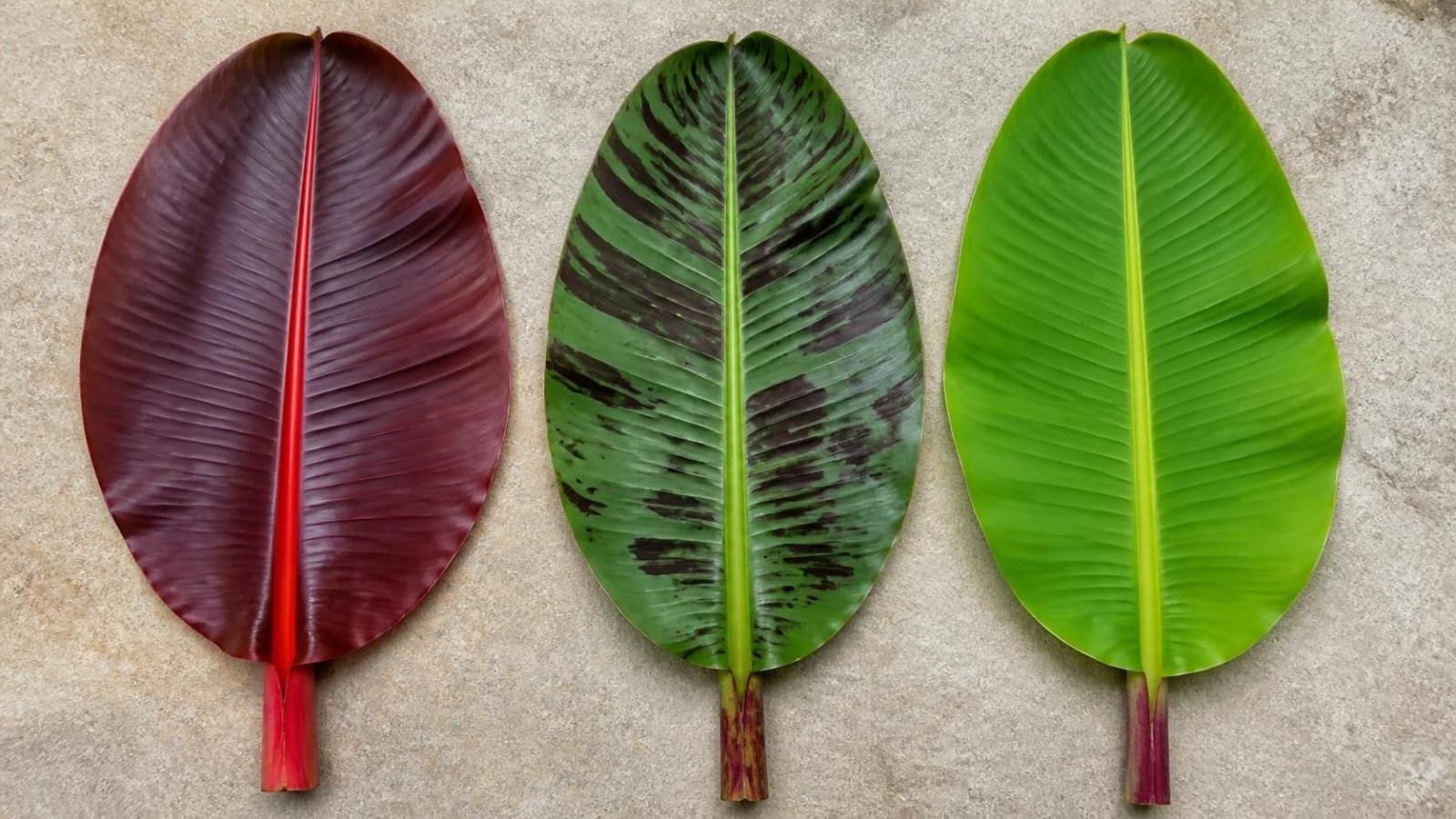
Cultivars are also sorted into genome groups, such as AAA (all from M. acuminata) and AAB (a mix with M. balbisiana). That’s why two bananas with the same genus name can differ so much. Cavendish types are commonly listed under Musa acuminata, though nurseries and databases don’t always agree. Don’t be surprised to see two names for the same plant. Red-skinned and ornamental forms still sit inside Musa. We cover them in Red Banana Tree and Banana Tree Types and Varieties.
How tall can an herb get?
You’d think a plant that tall has to be woody. It isn’t. Cultivated bananas are usually described as roughly 7 to 30 feet (2 to 9 meters) tall. The wild giant highland banana, Musa ingens, is one of two contenders for largest herb in the Guinness World Records entry, which also mentions unratified reports of 98 feet (30 meters). Published heights vary by source, so treat any single number as approximate.
Nothing holds that height up except the tightly overlapped sheaths. There’s no wood to fall back on, which is also why wind is the enemy. For numbers on specific varieties, see Banana Tree Height and Size.
What the herb label changes in your garden
Plenty of gardeners treat a spent banana stalk like a dead limb on a tree and leave it standing. With a banana, that stalk has done its job. The Arizona Arboretum record advises cutting the pseudostem down and removing it after harvest. It also says a stalk carrying fruit will likely need propping. The plant puts its next effort into the suckers. Wondering why each stem fruits only once? Do Banana Trees Only Fruit Once? explains it.
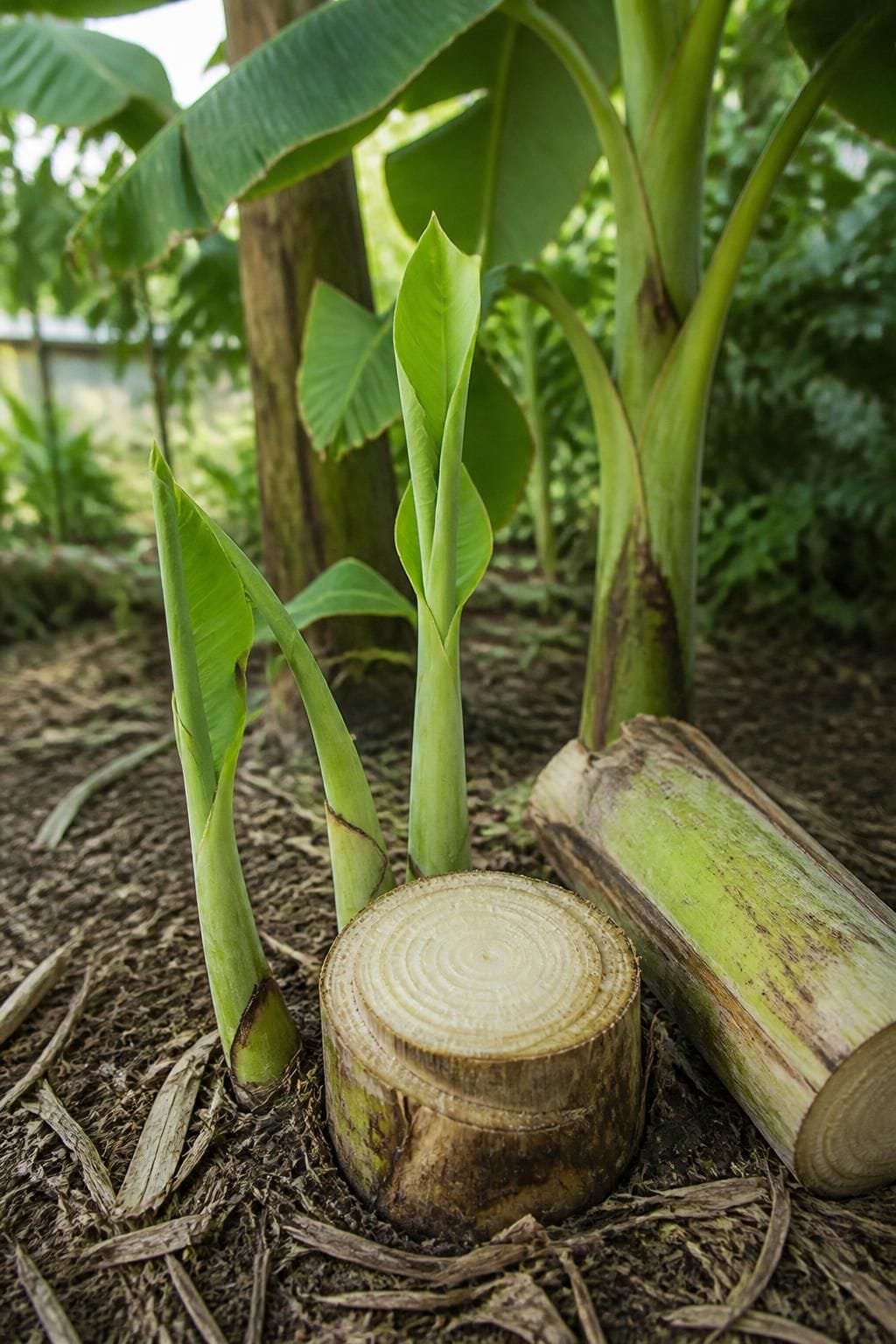
Winter works the same way. That same record says a Cavendish-type Musa acuminata tolerates about 28°F (-2°C) for short periods. Longer freezing kills the leaves and pseudostem down to the ground. Temperatures below 22°F (-6°C) can kill the corm. That gap between a killed stem and a killed corm is the herb advantage. Protect the base, and the plant can start over.
A 2014 post from the New York Botanical Garden shows what this looks like with the hardy species. It reports that Musa basjoo has proven hardy from Massachusetts and Connecticut down to Pennsylvania. It’s hardy to zone 6b without winter protection, and it needs heavy mulch or wrapping in colder zones. “Hardy” here means the corm survives. In cold climates, the leaves and stem typically still die back each winter. The same post notes that a banana cut to the ground will typically grow back to half its mature size in a single season. That’s what you’d expect from a plant that renews itself from the base. Hardiness ratings for basjoo vary by source, so check them against your own winters and mulch the crown generously. Our guide to the Hardy Banana Plant picks up from here.
Common banana tree questions
Is a banana plant a tree, a shrub, or an herb?
An herb. A shrub is woody with several stems, and a banana has no woody stems at all.
Is the banana fruit a berry?
Yes, botanically. Boatwright told Africa Check that the fruit forms from a single ovary and holds several seeds. That puts it alongside grapes and tomatoes. The sterile bananas we eat are effectively seedless, but they still develop from that same single ovary. Strawberries and raspberries are aggregate fruits, so they fall outside the berry group.
Can I still call it a banana tree?
In everyday garden talk, sure. Even the University of Florida’s extension fact sheet for Musa spp. sits in a tree series and calls the plant a tree. Just manage it as the herb it is.