Brown spots on zucchini leaves usually mean a leaf disease, and downy mildew is the first one to rule in or out. But hot, hazy weather and spray burn leave nearly identical marks, so look before you treat. Turn a spotted leaf over. Gray-purple fuzz beneath a yellow-brown patch points to downy mildew. A clean underside with dry flecks, or a scorched edge that appeared after you sprayed or fed, points away from disease and toward weather or chemicals.
Most of us reach for a fungicide the moment brown shows up. Give it ten minutes first. A spot caused by disease creeps from plant to plant, while a spot caused by last week’s spray will never spread at all, and each one calls for a different response. Treat the wrong one and you either waste a spray or add to the damage.
Three checks that sort most brown spots
Do these in order, with a leaf in your hand.
- Note which leaves are marked. Only the oldest, lowest leaves? One side of the plant? Every leaf at once? Marks that creep outward from one plant over several days behave like a disease. Marks that appear everywhere after one hot spell or one spray behave like weather or chemistry. If the leaf is mostly yellow with only a few brown patches, begin with our guide to why zucchini leaves turn yellow.
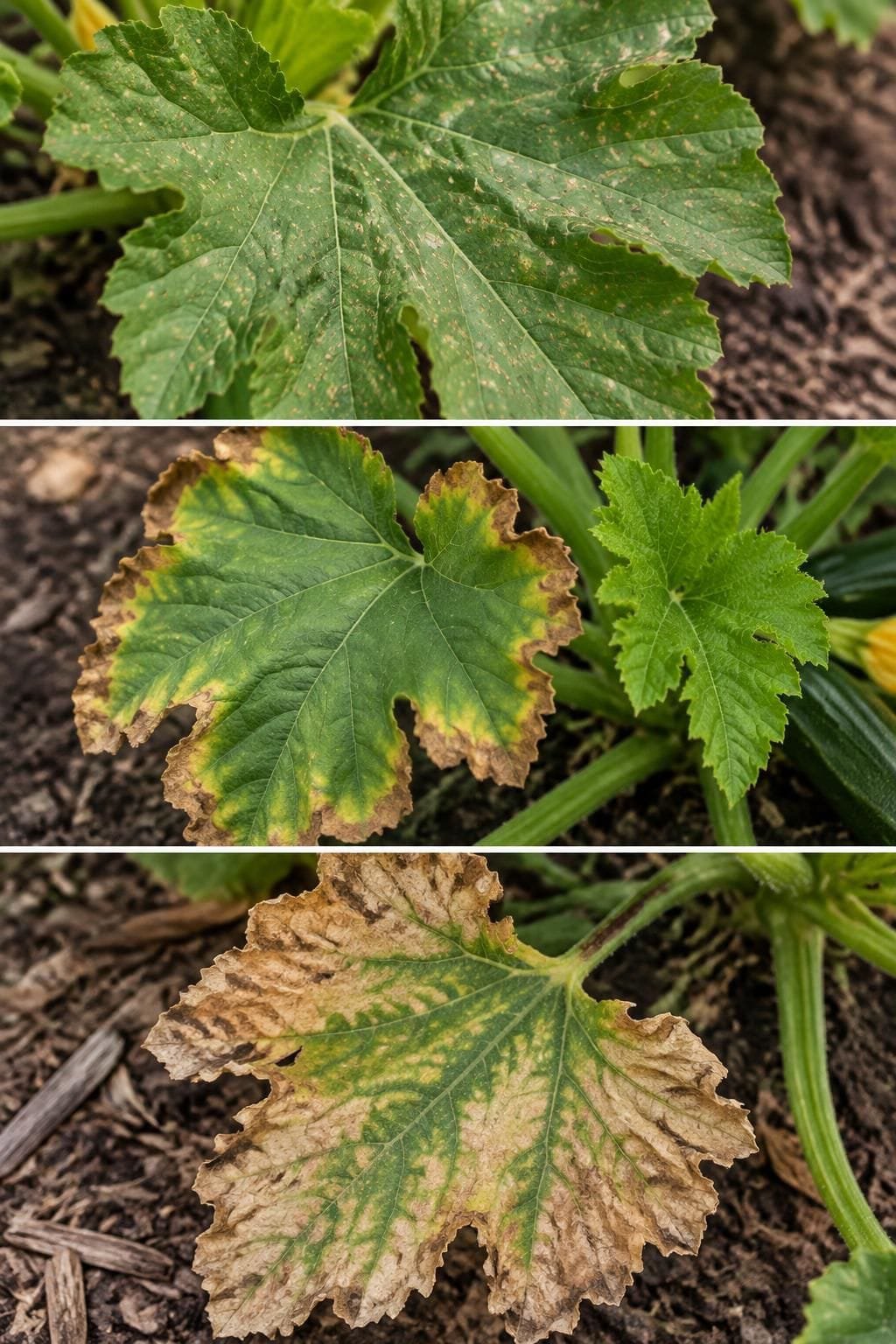
- Study one spot up close. Is it ringed, angular with straight sides, a dry fleck, or a hole where the center fell out? The table below matches each shape to its usual cause.
- Flip the leaf. The underside settles more arguments than the top. Fuzz, ooze, eggs or nothing at all each tell you something different.
Add one more fact to the pile: what the weather has been doing, and whether anything went on the plant recently, such as a spray, a feed or drift from weed killer. That context breaks most ties.
Match the spot to the likely cause
| What you see | Most likely cause | How to confirm |
|---|---|---|
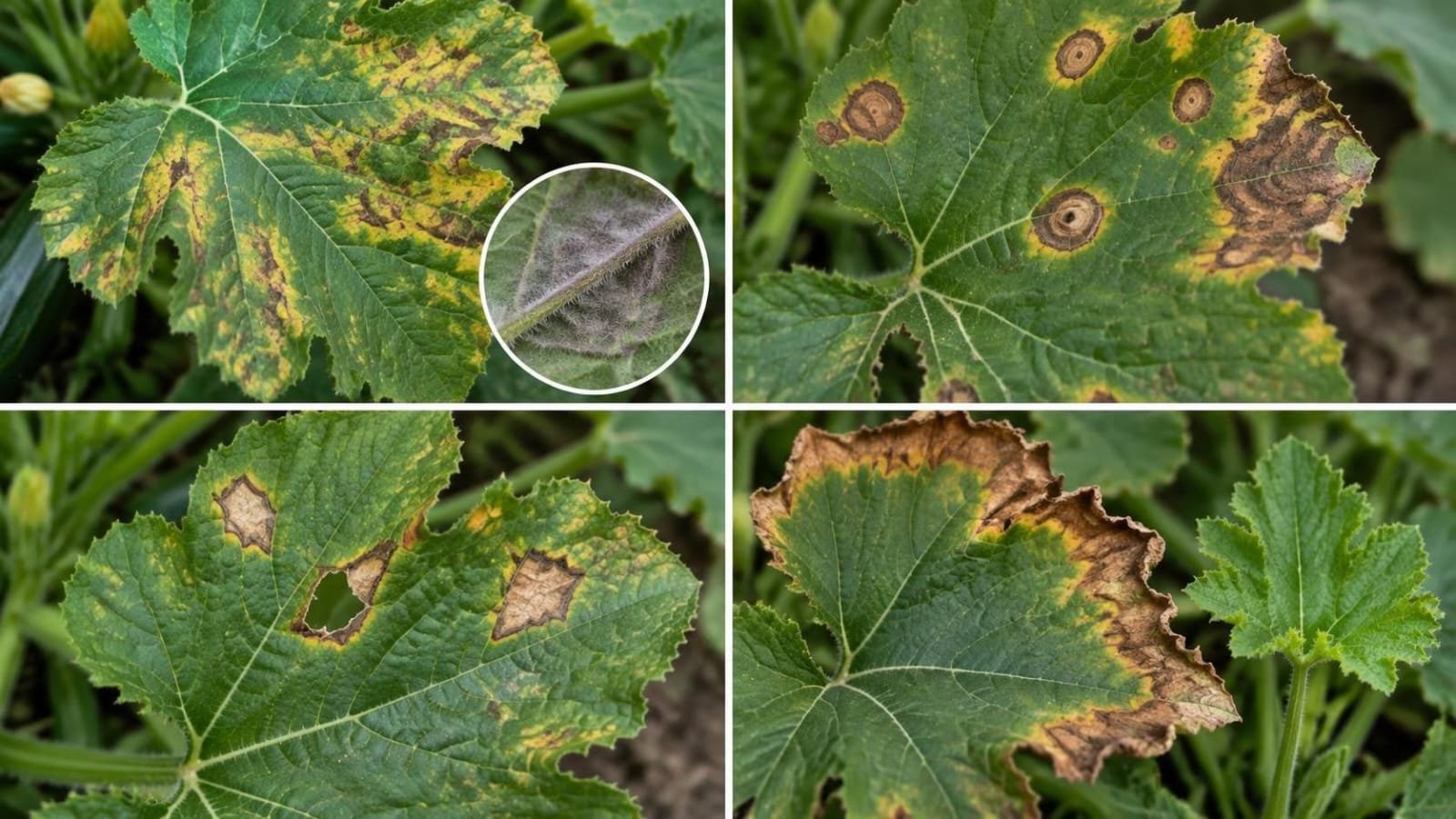
| Yellow patches that turn brown, sometimes bounded by the veins | Downy mildew | Gray-purple fuzz on the underside, right below each patch |
| Round tan to brown spots with rings and a yellow halo, mostly on older leaves | Alternaria leaf spot | Concentric rings in the larger spots; spots merge into dead areas |
| Small water-soaked spots that turn tan with dark edges; centers tear out | Angular leaf spot (bacterial) | In warm, humid weather, milky ooze on the underside that dries to a whitish crust |
| Tiny dry flecks between veins, dark brown to tan or white, on top of older leaves | Ozone injury | Clean underside, no fuzz, no ooze; often many plants at once after hot, hazy, still weather |
| Brown or scorched edges and blotches that appeared after a spray or feeding | Spray or fertilizer burn | Timing: days after the application, with the newest leaves still clean |
| Crisp brown margins, curling, plant droops by afternoon | Drought or heat stress | Soil dry a few inches down; leaves perk up after a deep soak |
| Yellow specks merging into brown patches | Squash bugs or spider mites | Bronze egg clusters or tiny moving dots on the underside |
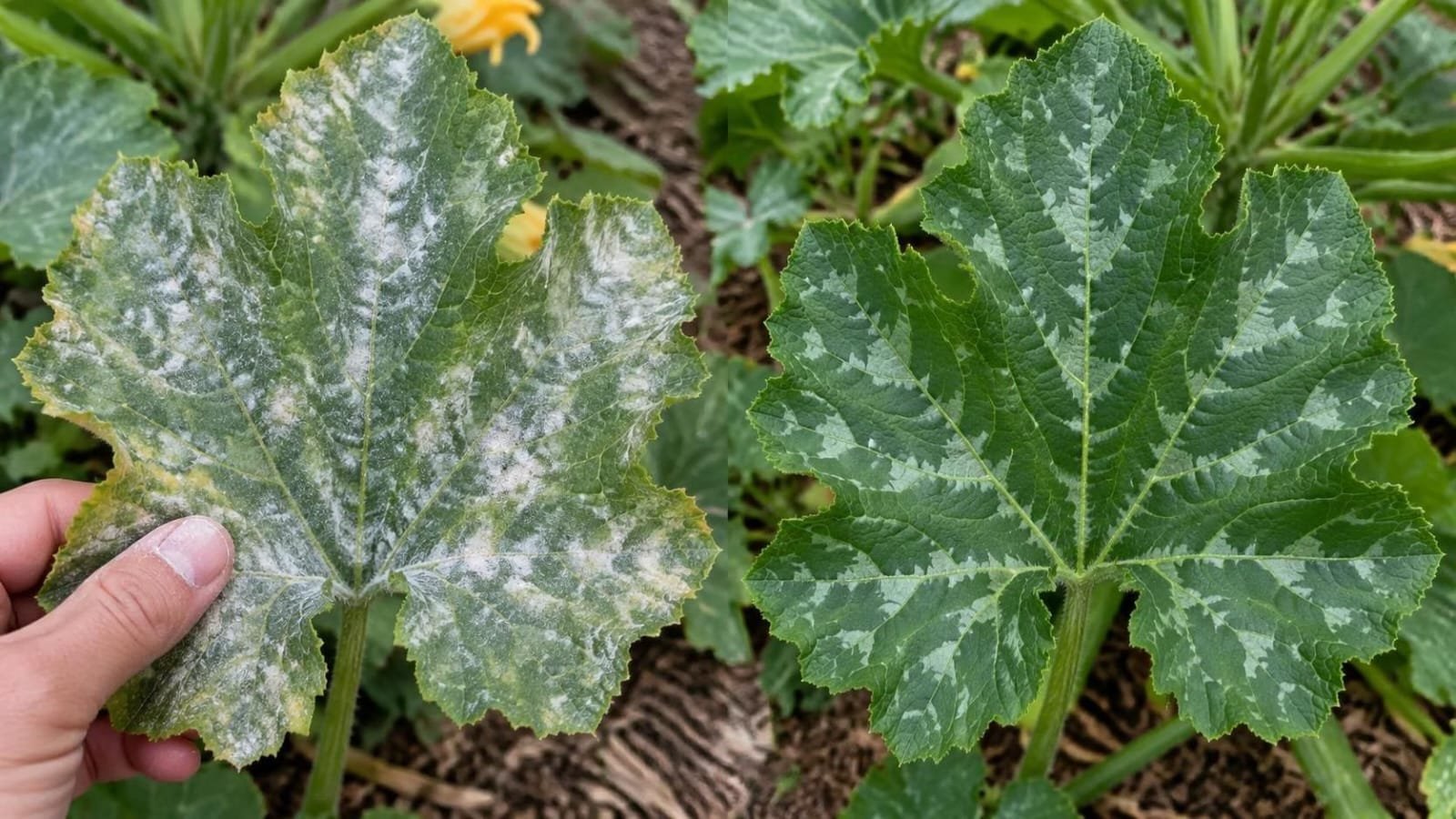
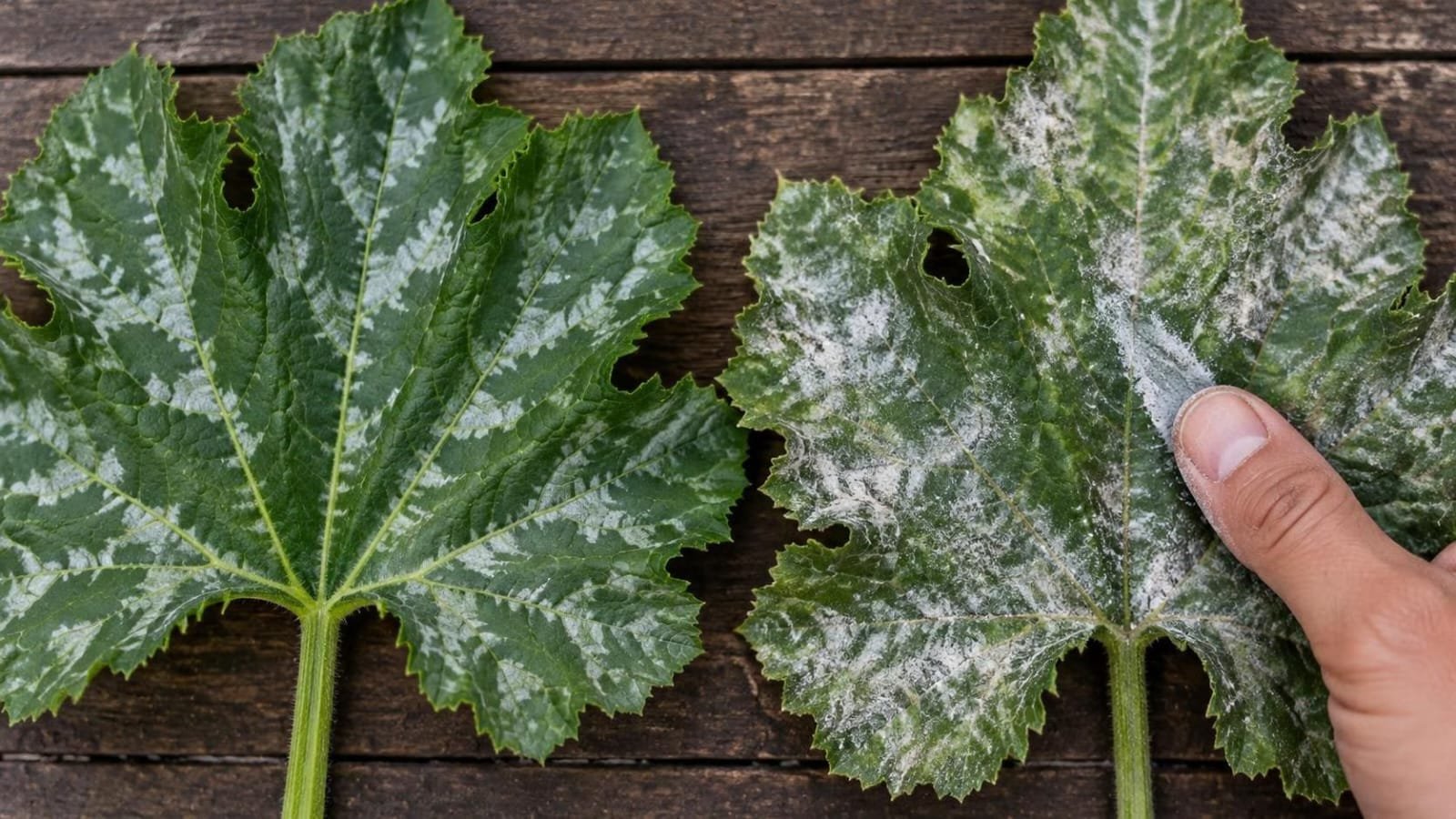
| White powder first, brown dead patches later | Powdery mildew, late stage | Powder on top of the leaf that rubs off on a finger |
Two of those rows lead out of this article. If powder came first and brown came later, powdery mildew on zucchini is the page to read, and plain white patches have their own explanation in white spots on zucchini leaves. If the brown arrives with yellow speckling and bronze eggs, the answer is in what is eating your zucchini plant.
Flip the leaf: downy mildew and its fuzzy tell
Most of us look at the top of the leaf, and the top is where downy mildew is least convincing. Early on it is only a pale to bright yellow patch, easy to blame on watering. Mississippi State University Extension describes the lesions as yellow on the upper surface, staying yellow or turning brown, and spreading until the whole leaf dies. Under humid conditions the pathogen also produces gray to purple growth on the lower surface, directly beneath the yellow patch. On squash the margins are often irregular rather than neatly angular, so don’t hold out for perfect geometry.
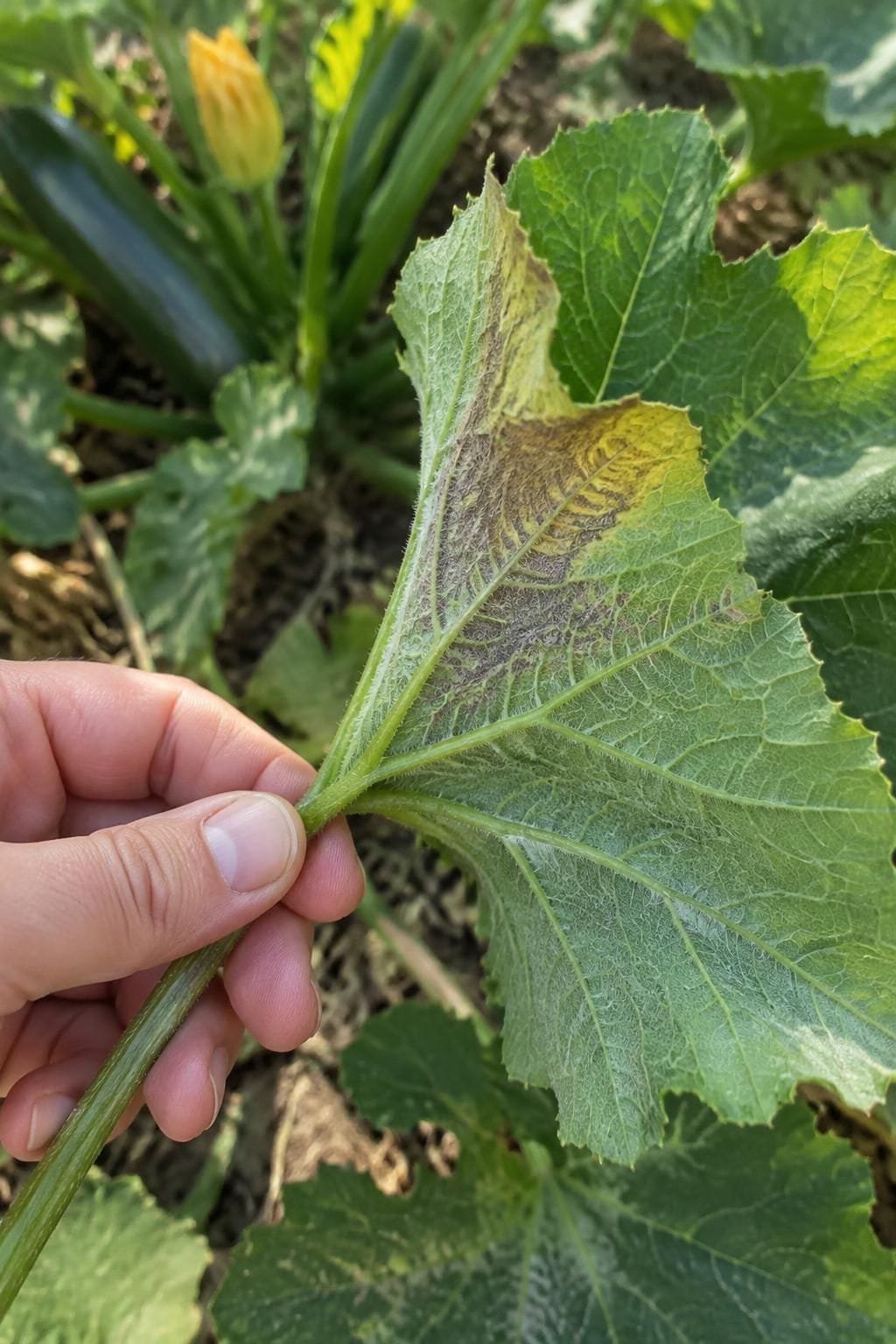
Notice the condition attached to that fuzz: it forms when the weather is favorable to the pathogen. A dry week can leave the underside bare, so a clean underside does not by itself rule out a yellow-brown patch. Downy mildew is a water mold, not a true fungus, and it needs moisture on the leaf. In regions with freezing winters its spores blow in each year from warmer areas, which is why timing changes from season to season. Symptoms appear 3 to 12 days after infection, so it can look as though it arrived overnight.
Pull the worst leaves and keep water off the foliage. Then decide early about a fungicide, because the same Mississippi publication stresses that products work best when applied before disease develops, and that organic options do little once pressure is high. Which products are approved for home gardens differs by country and region, so read the label for zucchini or squash and for downy mildew before you buy, and follow it. One caution: copper products can burn leaves when applied near or above 90°F, or ahead of several overcast, rainy days. In the US, the cucurbit downy mildew ipmPIPE website still logs confirmed outbreaks and can send alerts, even though its forecasts were suspended in 2023.
Rings, halos and shot holes: the leaf-spot diseases
When the underside is clean and the spots have a clear shape, many gardeners call it blight and start spraying. The shapes are worth a closer look, because they separate a fungus from a bacterium, and the two are handled differently.
Alternaria leaf spot starts as small water-soaked spots, mostly on older leaves. They enlarge into light to dark brown spots with a yellow halo, larger ones often show concentric rings, and as spots merge the leaf curls, dies and drops, according to University of Kentucky plant pathologists. The fungus survives one to two years on decaying debris in the soil and spreads on splashing water, so a bed with last year’s squash vines left lying in it is a good setup for a repeat. It is mainly a melon disease, though squash can catch it, which makes ringed spots on zucchini plausible but not guaranteed.
Angular leaf spot is bacterial. Spots start small and water-soaked, turn tan with dark brown margins and a yellow halo, and the dead center often tears or falls out, leaving a shot hole. University of Delaware Extension notes that it can travel on seed, that the first flush of young leaves may be heavily marked, and that it spreads by splashing rain and by hands and tools touching wet leaves. Here’s the kicker: a plant that keeps growing may outgrow the symptoms if conditions stop favoring spread, although small tan lesions can show up on the fruit.
Rarer cousins turn up now and then. Anthracnose mostly hits cucumbers, melons and watermelons and is less common on squash. Septoria makes small, almost white spots in cool summers or late fall, and scab, which can scar the fruit, produces pale leaf spots that drop out as shot holes. UMass Extension is candid that these leaf spots can be hard to tell apart in the field, and a diagnosis from a plant clinic is the best answer when it matters.
Fortunately the response is the same whichever one you have: stop wetting the leaves, remove the worst of them, and clean up debris at season end. Treatment is where they differ. The Kentucky fact sheet points to fixed copper for the bacterial disease and a labeled fungicide for Alternaria, both applied before the problem is widespread. Photographs of each of these are in our zucchini diseases and pests identification guide.
No fuzz, no rings, no bugs: check the weather, the sprays and the leaf’s age
When the underside is clean, the next guess is often a nutrient deficiency. Deficiencies usually show as yellowing between the veins or on older leaves, not as scattered dry brown marks. Check the simpler explanations first.
Ozone injury is easy to miss on squash. University of Maryland Extension describes small, irregular flecks between the veins on the upper surface of older leaves, most likely in hot, humid, still weather. Damaged tissue can then pick up infections such as Alternaria, so a plant can end up with both problems. You can’t control the air, but you can avoid adding other stress.
The reflex that causes the most trouble is spraying a browning plant with something gentle. Pesticide burn looks like spots, blotches, or scorched leaf tips, and it is often mistaken for disease, as the same Maryland service explains. Insecticidal soaps and horticultural oils can burn stressed plants, and the risk rises in hot, humid weather. Fertilizer salts can burn leaf edges in hot, dry soil. UC IPM notes that some squash and cucurbit varieties are sensitive to sulfur. Follow the label every time.
Copper needs its own caution. In a trial run by NC State University plant pathologists, several fixed-copper sprays applied weekly on summer squash, zucchini, and cucumber caused edge yellowing and death on fully expanded leaves after three applications. Zucchini was hit lightly compared with summer squash. It was a single early-season trial, so read it as a pattern: weekly repeats, leaf edges, and mature leaves first.
The clue is timing. Edge browning that appears days after a spray or a feeding, while the newest leaves stay clean, points to the sprayer or the fertilizer before it points to a pathogen. Stop the product, water deeply, and watch the next few leaves.
The reflex is to water more, and sometimes that’s right. In severe drought and heat, leaves can brown and curl, and the plant usually recovers with deep, steady watering. Waterlogged or compacted soil can cause the same droop, because roots that can’t get air can’t deliver water. Push a finger a few inches into the soil before you reach for the hose. Containers dry out fastest, so growing zucchini in containers and pots covers the watering rhythm. If one runner wilts while the soil is moist, see squash vines wilting with frass at the stem base.
Not every brown leaf is an emergency. University of Delaware Extension describes large discolored areas on the oldest crown leaves of squash, which turn brittle, as a common sign of leaf aging. If the lowest leaves are browning but new growth is clean and the browning isn’t climbing the plant, cut those leaves and keep watching. Not sure what a normal leaf looks like on your variety? See what zucchini leaves look like.
What to do now
The first move most of us make is to strip every spotted leaf and spray what is left. Slow down. The order below is gentler and works whichever cause you found.
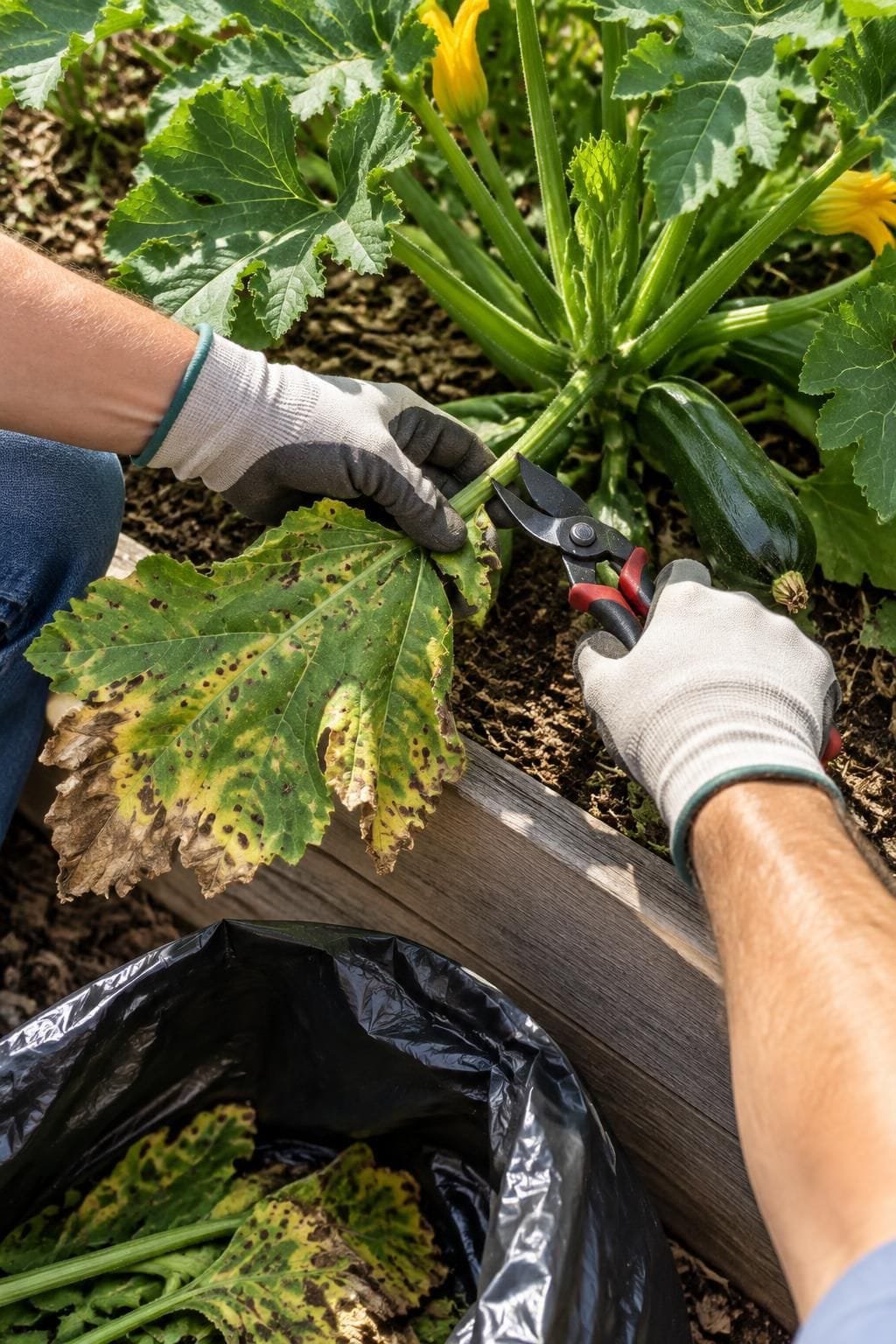
- Cut off only what is mostly dead or heavily spotted. Use clean pruners and cut the stalk close to the main stem. An Ask Extension answer about a spotted squash plant says to prune diseased leaves as long as it isn’t too much of the plant. Leaves feed the fruit, and a stripped plant leaves fruit open to sunscald. If you would be left with a bare plant, take the worst and look again in a week.
- Bag what you cut. Put leaves in the trash, not the compost, and don’t drop them on the soil beside the plant. Several of these pathogens survive on plant debris.
- Wipe your pruners and wash your hands after handling a spotted plant, and stay out of the bed while the foliage is wet. Bacteria and spores travel on wet leaves, hands and tools.
- Change how you water. Water the soil, not the leaves, and do it earlier in the day so any splash dries quickly. A layer of mulch keeps soil from splashing up onto the lower leaves.
- Treat only a confirmed disease, and read the label first. Choose a product that lists squash or zucchini and the disease you have named, apply it before the problem is widespread, and skip any spray in midday heat or over wet leaves. Doses and approved products vary by country, so follow the label and your local rules. If you can’t name the problem, your local extension office or a plant clinic can often confirm it from a clear photo or a sample.
What not to do
- Spraying soap, oil, sulfur or copper in hot weather because the product is sold as gentle.
- Feeding the plant to “fix” brown leaves before you know the cause. Salt burn is worse in hot, dry weather.
- Judging recovery by the leaves that are already spotted. They won’t turn green again.
- Pulling the whole plant on first sight, unless it is wilting with a stem problem or most of the canopy is gone.
What recovery looks like
A brown spot is dead tissue, so the damaged leaf is finished. What you are judging is the next leaves. If new growth over the following week or two comes in clean, the cause is behind you or under control. If new leaves show spots within days, the pressure is still on, and you need to deal with the cause rather than the marks. A plant with heavy downy mildew late in the season is usually better removed and bagged, which also protects its neighbors.
Look at the fruit too. Sunken, water-soaked or tan lesions on the skin come with several of these diseases and change what you do with that fruit. Fruit that is simply turning yellow is a different puzzle, covered in why zucchini turns yellow.
Keeping the next leaves clean
Prevention comes down to keeping leaves dry and giving pathogens nowhere to winter. Give plants room so air moves through the canopy, and consider growing them up a support. Spacing, trellising and dropping overhead irrigation all shorten the time leaves stay wet, although extension plant pathologists are frank that these steps may not be enough alone when the weather favors the disease. Layouts for both are in growing zucchini in raised beds and growing zucchini vertically.
Rotate cucurbits so squash, cucumbers, melons and pumpkins stay out of a bed for two to three years; extension fact sheets differ on the exact number. Clear plant debris at the end of the season. Buy certified disease-free seed, since angular leaf spot can arrive on seed, and choose resistant varieties where seed catalogs list them. A clean start is covered in how to grow zucchini from seed, and our main growing guide handles watering, feeding and spacing basics.
Then keep walking the bed. Flip a few leaves each week. It takes a minute, and it is where every clue in this article sits.
Quick answers
Will brown spots spread to my other plants?
Disease spots usually do, over days, mostly through splashing water, wet hands and tools. Spray burn, ozone injury and leaf aging do not spread, which is why the pattern is a clue. If every plant in the row picked up marks within a day or two of the same hot spell or the same spray, think weather or chemistry. If it creeps from one plant to the next, think disease. That is a rule of thumb, not proof.
Can I still eat zucchini from a plant with brown leaves?
A leaf disease doesn’t automatically mean the fruit is spoiled, but some of these diseases can mark the fruit, so inspect each one. Firm fruit with clean skin is a normal harvest. Cut away or discard fruit with sunken, oozing or moldy-looking lesions. If you have sprayed, follow the label’s waiting period before harvest. The leaves are a separate question, covered in can you eat zucchini leaves.
How do I tell downy mildew from powdery mildew?
Powdery mildew is a white to gray powder, usually on top of the leaf, that rubs off on a finger. Downy mildew is yellow to brown patches with gray-purple fuzz underneath. Downy mildew tends to be worse in cool, wet weather, while powdery mildew is generally more damaging in hot, dry weather, and both can sit on one leaf at the same time.
Why do brown spots show up after rain?
Wet weather is what most of these diseases wait for. Leaf-spot fungi and downy mildew need moisture on the leaf, and bacteria move in splashing rain and runoff. Downy mildew symptoms appear 3 to 12 days after infection, so spots often show up a week after the storm that caused them. After heavy rain, flip a few leaves within the week.