Most white spots on zucchini leaves are either natural silvery markings or powdery mildew. Rub a spot with your thumb. If it smears like flour, it’s mildew. If it stays put, it’s in the leaf itself: natural silvering or, less happily, whitefly damage. Downy mildew and viruses can also pale or mottle leaves, and they show up in different places.
Many gardeners think of mildew first. Zucchini leaves are easy to misread, and a plant covered in silver is often healthy. Before you reach for a spray, check whether the white rubs off, which side of the leaf it’s on, and whether the newest growth looks normal.
Are white spots on zucchini leaves normal? Start with your thumb
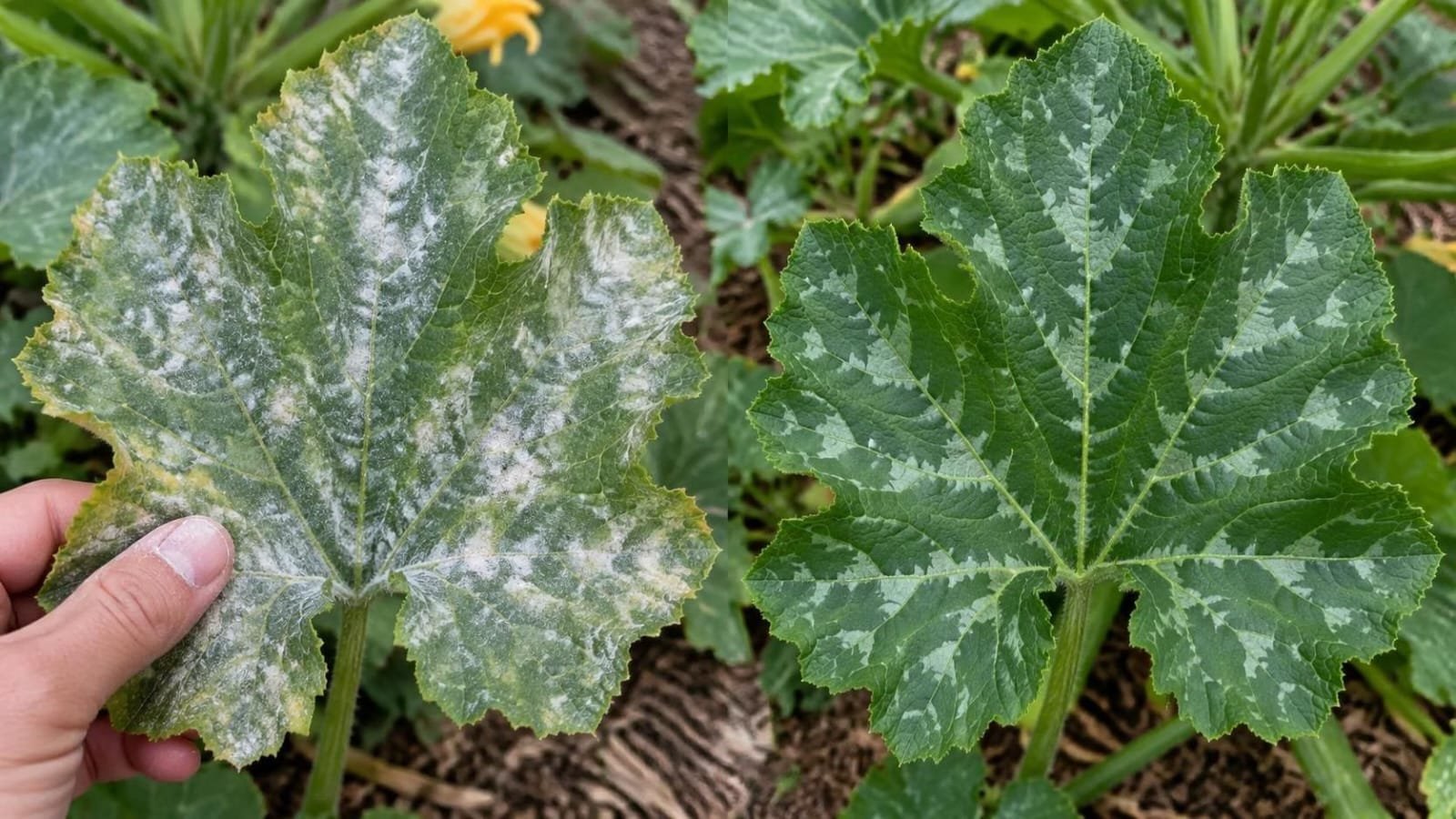
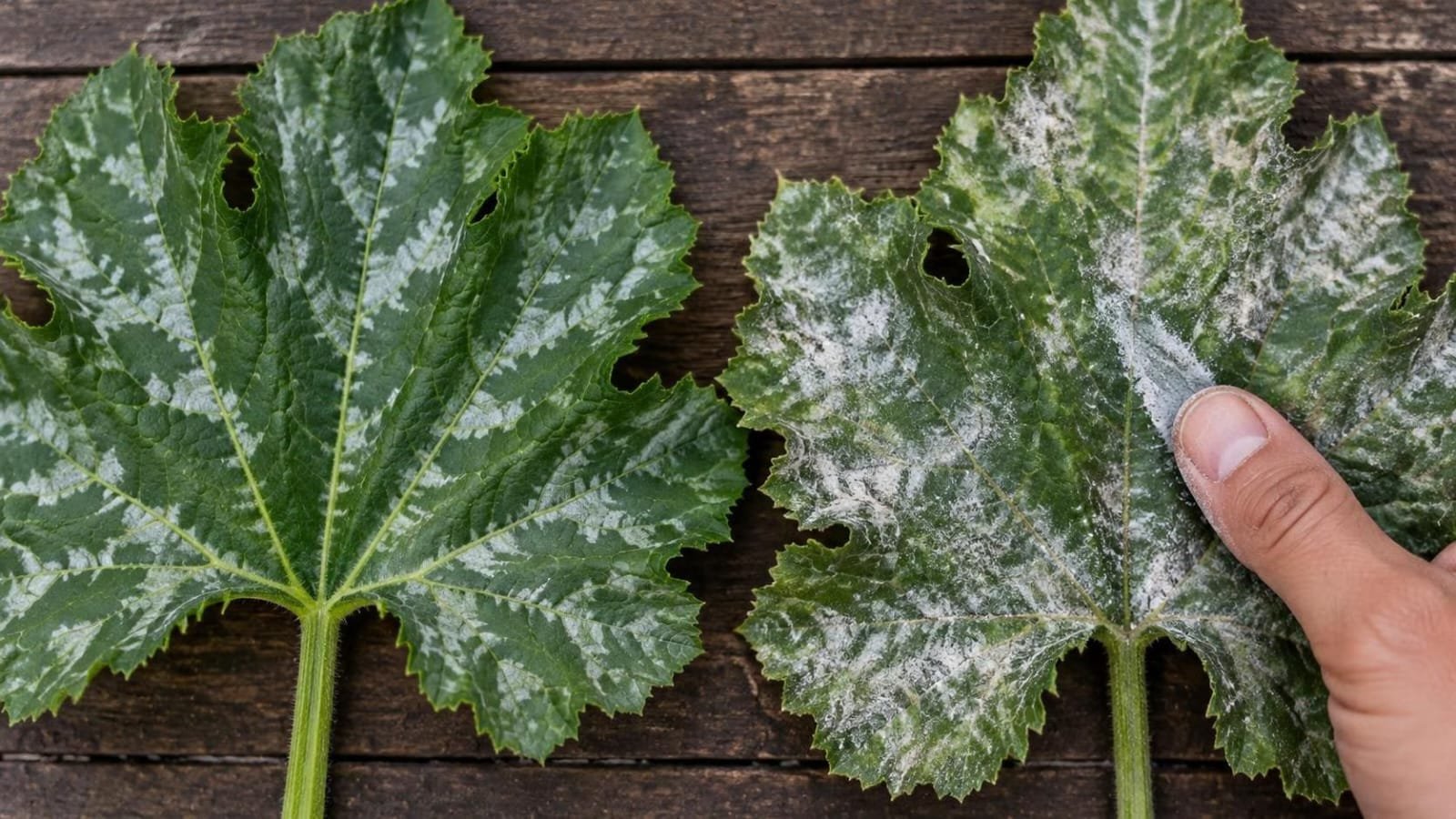
Rub one spot firmly. In a New Mexico State University extension Q&A, a gardener described large white patches that looked like grains of sand, heavier underneath. The specialist’s answer: the blotches were part of the leaf and would not rub off. Mildew looks more like a dusting of flour.
Natural silvering, or variegation, keeps a pattern. It sits on the upper surface, follows the veins and repeats from leaf to leaf, though not every variety shows it. Mildew is patchy, heavy on one leaf and absent on the next. Not sure what a healthy leaf looks like? Our guide to what zucchini leaves look like will help.
One catch: the rub test only catches mildew. Whitefly silvering doesn’t rub off either, so read on before you decide the plant is fine.
Five causes of white spots, side by side
| Cause | Where it shows | Telltale clue | Action |
|---|---|---|---|
| Natural silvering | Upper surface, along veins | Same pattern on every leaf; won’t rub off | None |
| Powdery mildew | Both leaf sides, stems, oldest leaves first | Powder that smears; pale yellow spots first | Scout weekly, treat early |
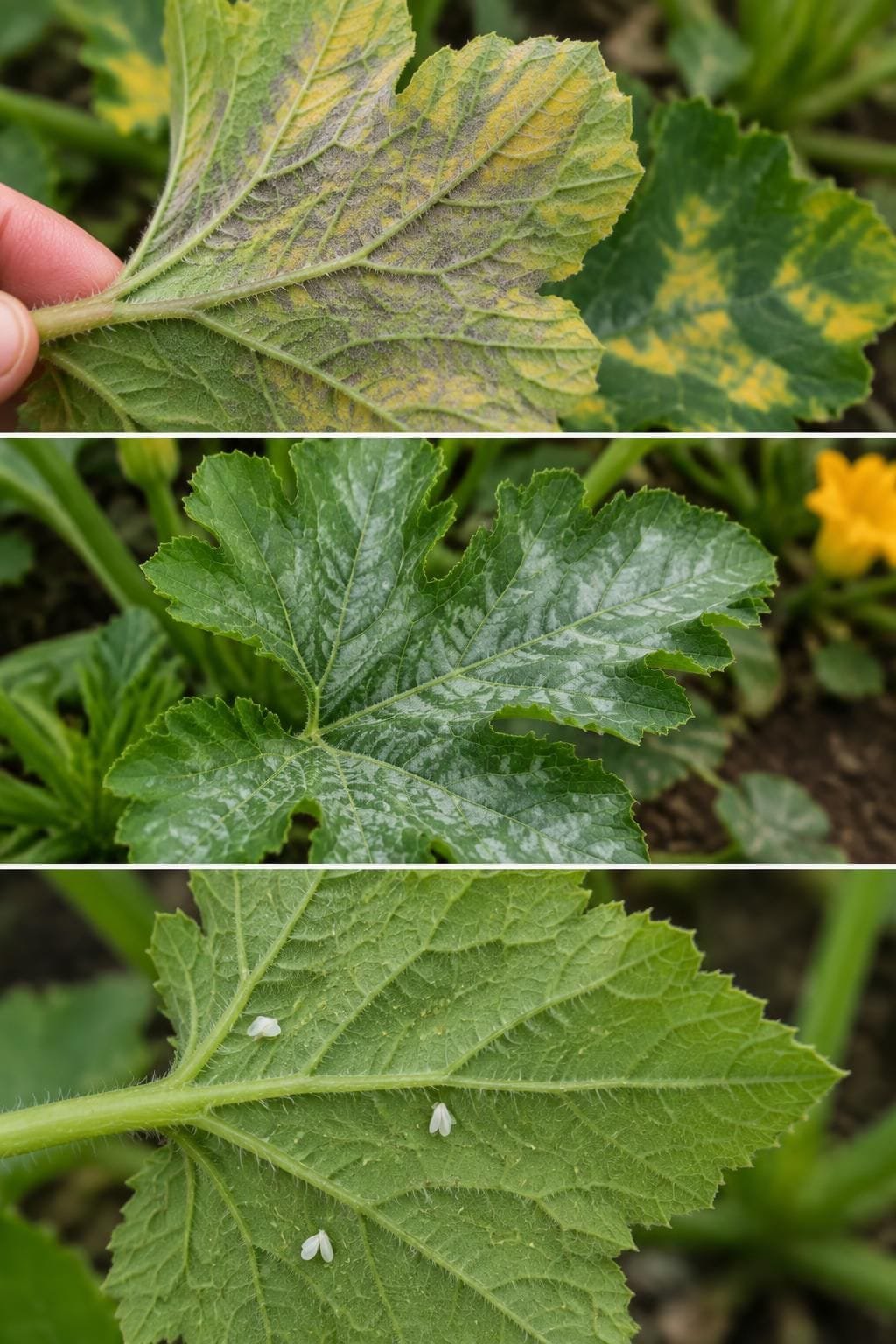
| Downy mildew | Yellow, blocky or irregular patches on top | Patches limited by veins; gray-purple fuzz beneath | Confirm locally; label-listed product |
| Silverleaf whitefly | Whole leaves, from the veins out | Silvering on top; whiteflies and nymphs underneath | Control the whiteflies |
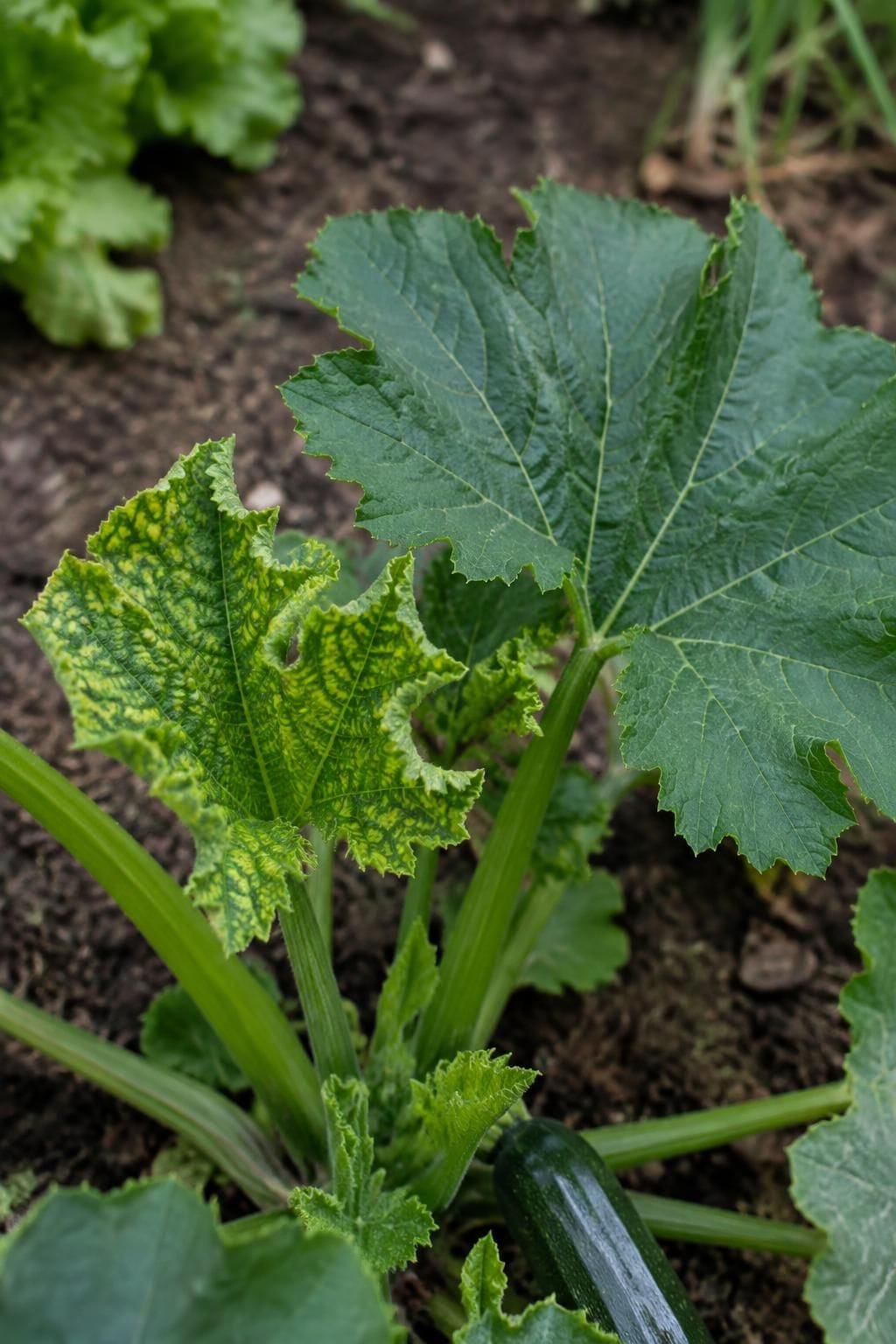
| Virus | New growth | Yellow-green mottling, puckered or twisted leaves | Pull early cases; control aphids |
Natural silvering on healthy leaves is covered in What Do Zucchini Leaves Look Like.
Powdery mildew: act early
Powdery mildew is the most common cause of white powder on zucchini. Check the plants weekly, and act while the patches are small, since established colonies keep shedding spores.
For identification and treatment options, see Powdery Mildew on Zucchini: Identification and Treatment.
No powder? Flip the leaf
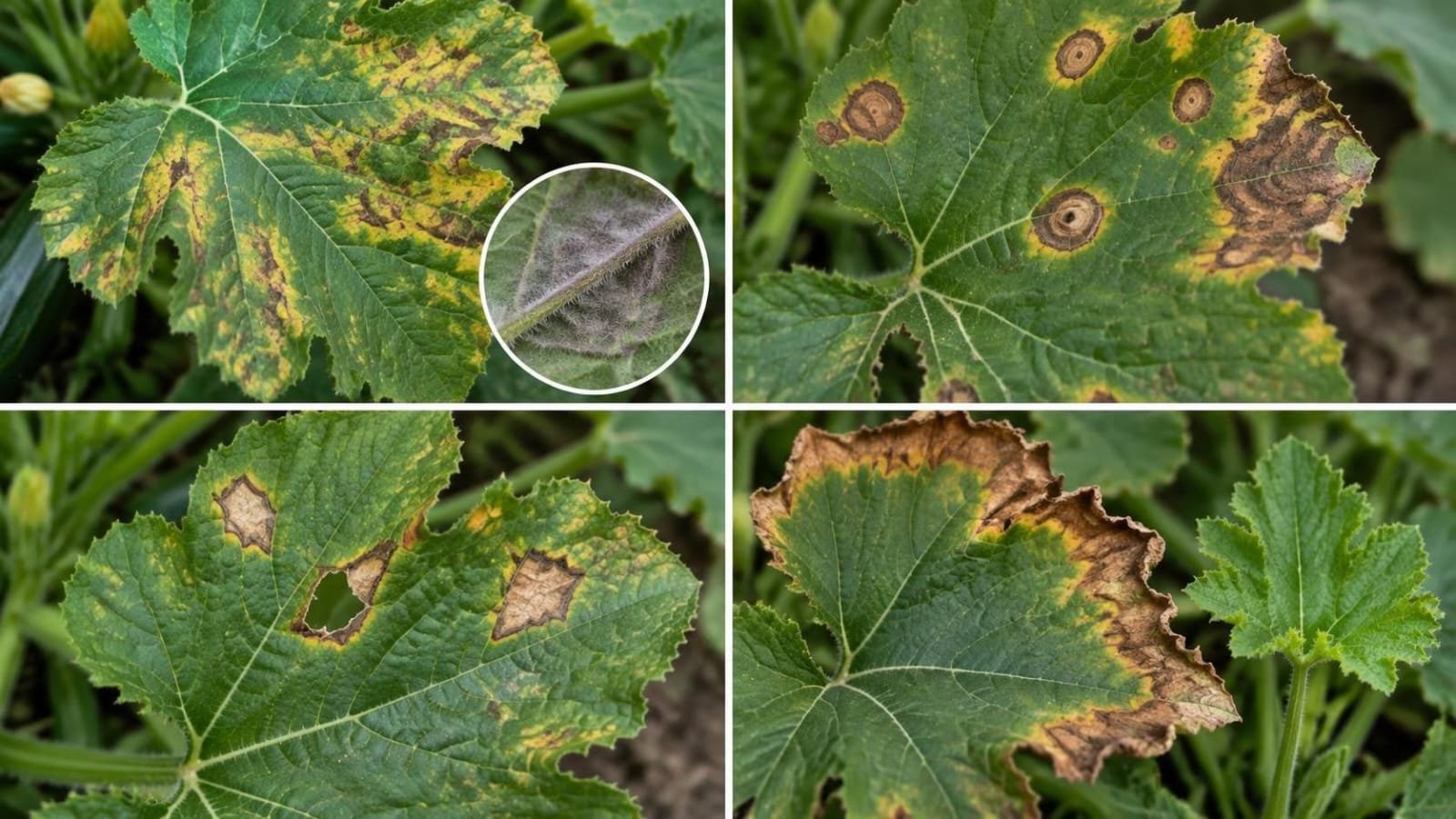
If you don’t see powder, turn the leaf over. Downy mildew shows gray-purple growth beneath yellow patches. For the full diagnosis, see Brown Spots on Zucchini Leaves: Causes and Fixes.
When the leaves are mottled, not white
Mottled, puckered leaves point to a virus or insect feeding rather than a surface powder. Our guide on why zucchini leaves turn yellow covers those causes.
What not to do
- Don’t spray silvering that won’t rub off until you’ve checked for whiteflies.
- Don’t strip every marked leaf. A bare plant can’t feed its fruit.
- Don’t leave mildewed debris in the bed or in a cool compost pile. Utah State University Extension advises removing infected plant material or plowing it under after harvest.
For more, see our zucchini diseases and pests guide and how to grow zucchini.