
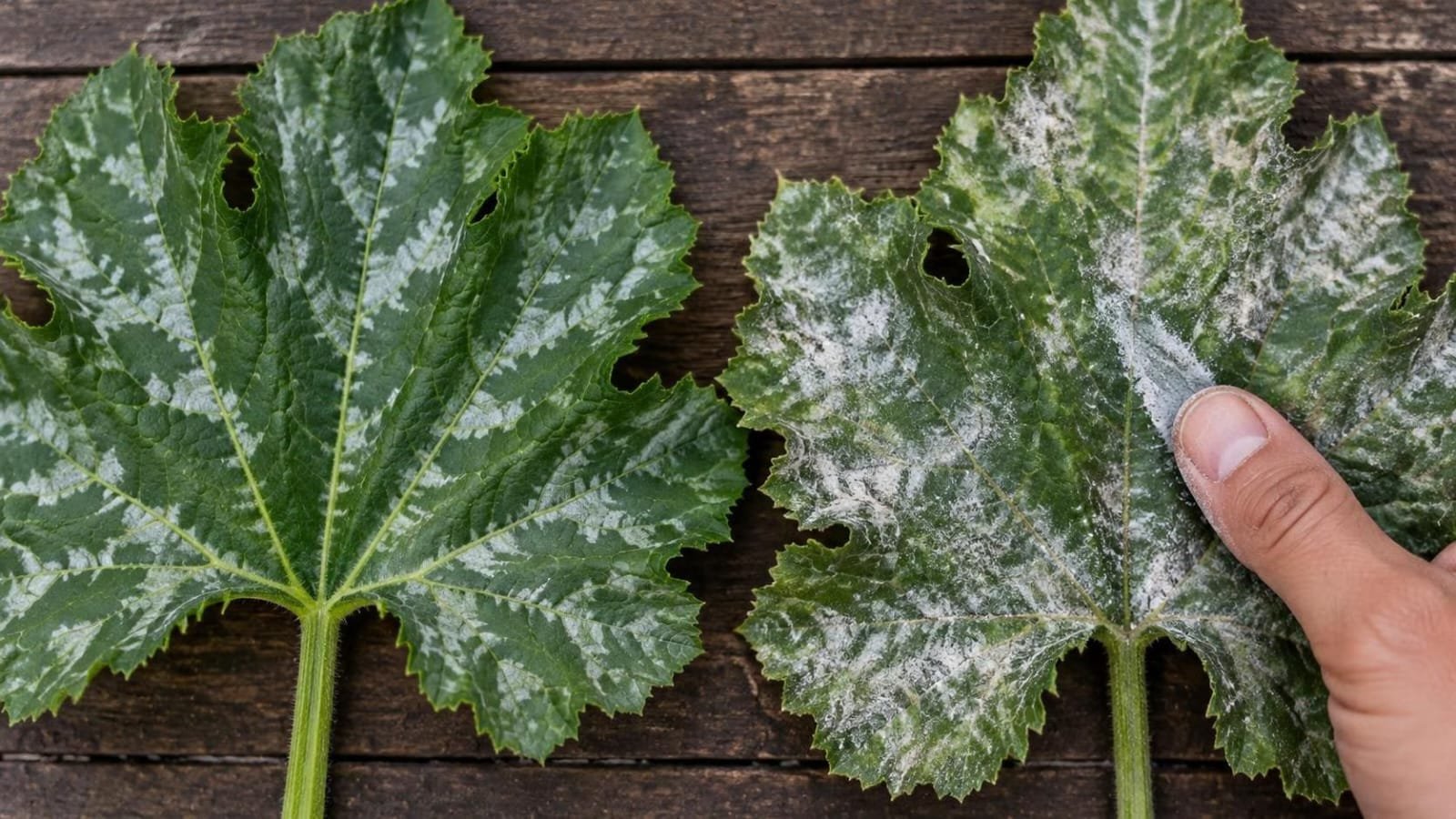
White, talc-like patches on zucchini leaves, usually from midsummer onward in temperate climates, are most likely powdery mildew. It usually begins on the oldest, shadiest leaves, often on the undersides, and the first sign can be a pale yellow spot with no white at all. Rub a patch with your thumb. Mildew smears like flour, while the silvery patterning some zucchini varieties are born with stays exactly where it is. Treatment can’t restore a leaf that is already damaged, so the job is protecting the leaves you still need, and that works best when you start at the first patch.
Before spraying anything, spend two minutes on the leaf itself. Gardeners treat harmless variegation for weeks, and just as often treat mildew when the real trouble is something else. If you’re still unsure what you are looking at, our guide to white spots on zucchini leaves walks through the wider list of causes, and a look at what powdery mildew looks like on different plants shows how much the disease varies from crop to crop.
How to identify powdery mildew on zucchini (and rule out look-alikes)
Most of us reach for the spray bottle the moment something turns white. It’s an understandable reflex, and it’s how a perfectly healthy leaf pattern ends up soaked in neem oil.
Start with the plant’s own markings. Some zucchini varieties carry white or silvery variegation, and Epic Gardening notes that these markings are regular and symmetrical and don’t rub off. If you want a baseline for an ordinary healthy leaf, what zucchini leaves look like is a useful reference.
Then do the rub test. Wipe a patch with your thumb or a damp paper towel. Mildew comes away as a pale dust. Next, turn the leaf over. Cornell’s cucurbit powdery mildew guide describes white growth on both leaf surfaces, the leaf stems (petioles) and the vines, usually showing first on older crown leaves, on shaded lower leaves and on the undersides, with a yellow spot sometimes forming on top of the leaf directly opposite a colony below. That yellow spot is easy to blame on something else, so if you find one, flip the leaf before you decide.
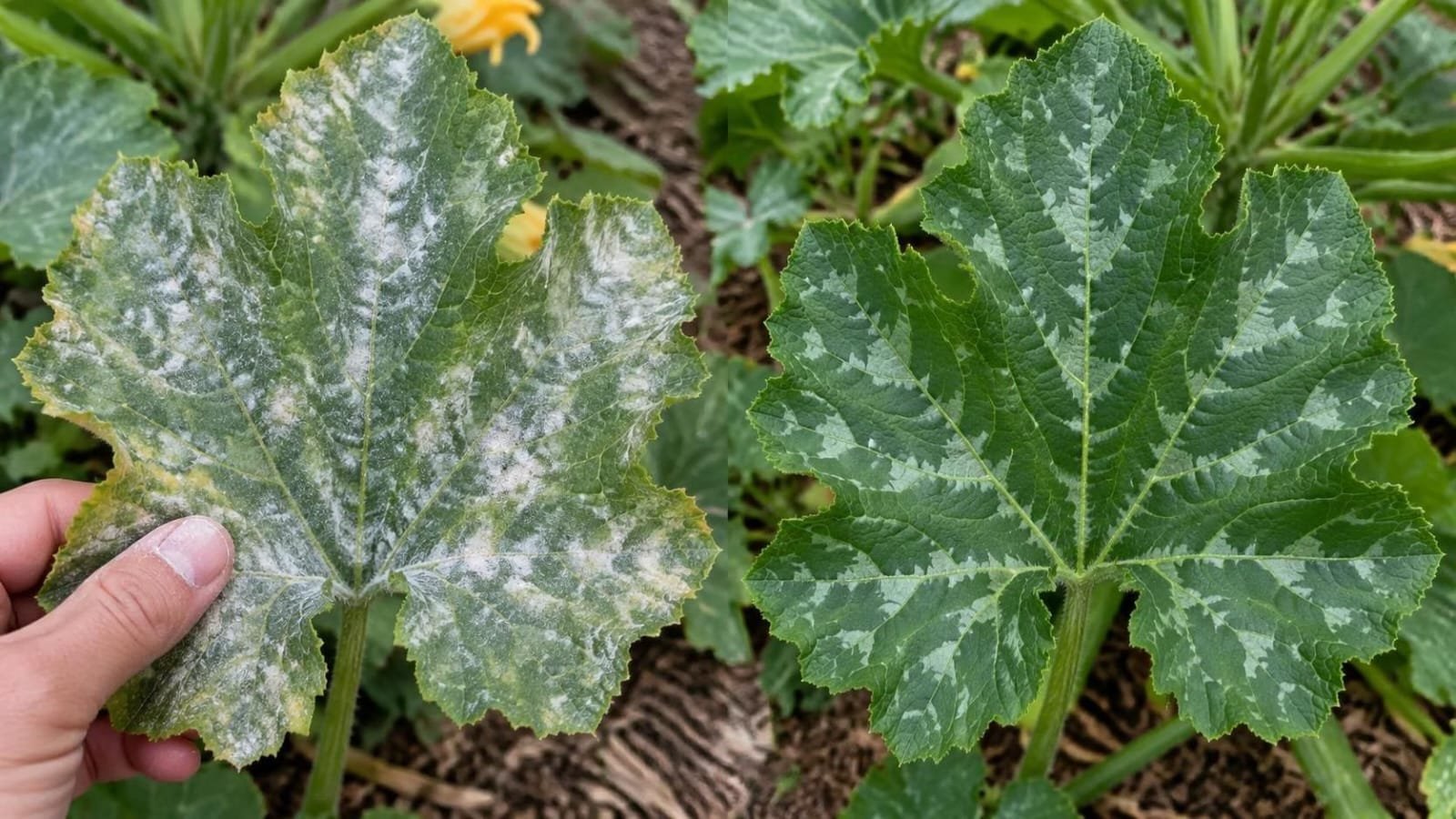
Four other problems can mimic mildew or sit alongside it. The table sorts them by the clue that separates them fastest.
| Cause | What you see | Quick test | Other clue |
|---|---|---|---|
| Powdery mildew | White, talc-like patches that merge into blotches; early on, pale yellow spots | Smears off as dust. Check both sides of the leaf. | Older and shaded leaves first, undersides especially |
| Natural silvering | Regular, symmetrical white or silvery markings | Does not rub off | Stays regular and symmetrical rather than growing into blotches |
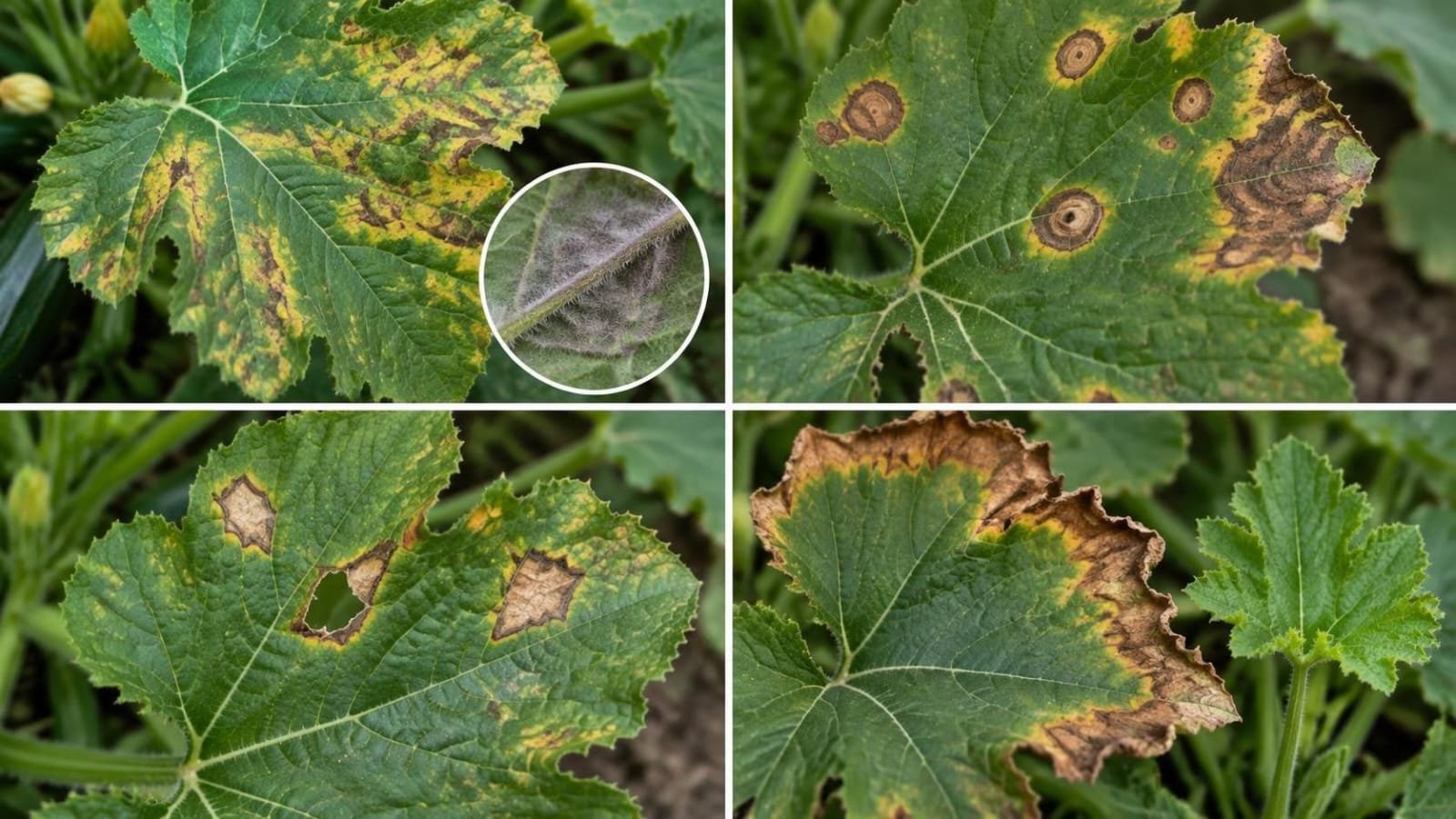
| Downy mildew | Angular yellow to tan spots between the veins; gray to purplish mold underneath in wet weather | Check the underside for mold and the top for angular yellow spots | Starts on leaves at the center of the plant and can kill leaves fast in warm, wet weather |
| Sap-feeding pests | Pale green or white scars and speckles | Look under the leaf for thrips, aphids, mites or whiteflies. Nothing wipes off. | Usually minor unless the infestation is heavy |
| Mosaic virus | Mottled leaves, often with bumpy or misshapen fruit | Does not wipe off | Spread by aphids, infected seed and tools; no cure |
The downy mildew row deserves a pause, because the two diseases get confused and are managed differently. University of Maryland Extension describes downy mildew as angular yellow lesions with fuzzy mold on the underside. Powdery mildew leaves dry white powder on the leaf surface, on top as well as underneath.
If you’re still unsure after the table, you’re not alone. Several of these look alike in a photo, and the University of Wisconsin’s horticulture extension cautions that very few plant diseases can be diagnosed accurately by eye. A sample sent to an extension diagnostic clinic can settle it, and that is worth doing if the pattern matches nothing above or the plant is declining quickly.
And if the leaves are yellowing with no white growth on either side, mildew is probably not your problem. Why zucchini leaves turn yellow covers that branch, and brown spots on zucchini leaves covers the dry, dead-looking ones. Holes, speckling or tunnels point toward pests, which what’s eating your zucchini plant helps sort out, while mottling with bumpy fruit belongs with zucchini diseases and pests.
When it shows up, and what it does to the plant
Here’s the kicker: the weather that favors this disease isn’t what most gardeners expect. Powdery mildew doesn’t need wet leaves. UC IPM notes that powdery mildew species can germinate and infect without water on the leaf surface. Moderate temperatures and shade suit the fungus best, and the spores are sensitive to extreme heat and direct sunlight. University of Maine Extension adds that free water on the leaf actually inhibits spore germination on cucurbits.
Watering at the base of the plant is still good practice against several diseases, but it won’t stop mildew on its own. A crowded, shaded zucchini with dry leaves can still get it.
Timing follows the plant’s own life. University of Minnesota Extension reports that older leaves are infected before younger ones, and that in Minnesota symptoms first appear in mid to late summer. The fungus doesn’t infect squash fruit directly, so the zucchini hanging on a mildewed plant aren’t the concern. Heavy infections weaken the plant that feeds the fruit. If it is the fruit itself that is changing color, that is a different question, covered in why zucchini fruit turns yellow.
For a look at what lost leaves cost the harvest, consider field plots of melon, a close cucurbit relative. In the plots Cornell photographed, untreated plants had their leaves killed by mildew before the fruit matured, while plants sprayed weekly kept healthy foliage and produced melons with good flavor and sweetness. The same guide also notes that infected plants become more prone to other diseases, gummy stem blight in particular. Melon isn’t zucchini, but the mechanism is the one extension sources describe for squash: lose the leaves early, and you lose fruit size and quality.
How bad is it? Match the response to the stage
A common pattern goes like this. The plants look fine through the first weeks of fruiting, then one big leaf near the base shows a pale yellow patch, and a week later half a dozen leaves carry white blotches. Mildew moves quickly when conditions suit it, which is why the stage matters more than the calendar.
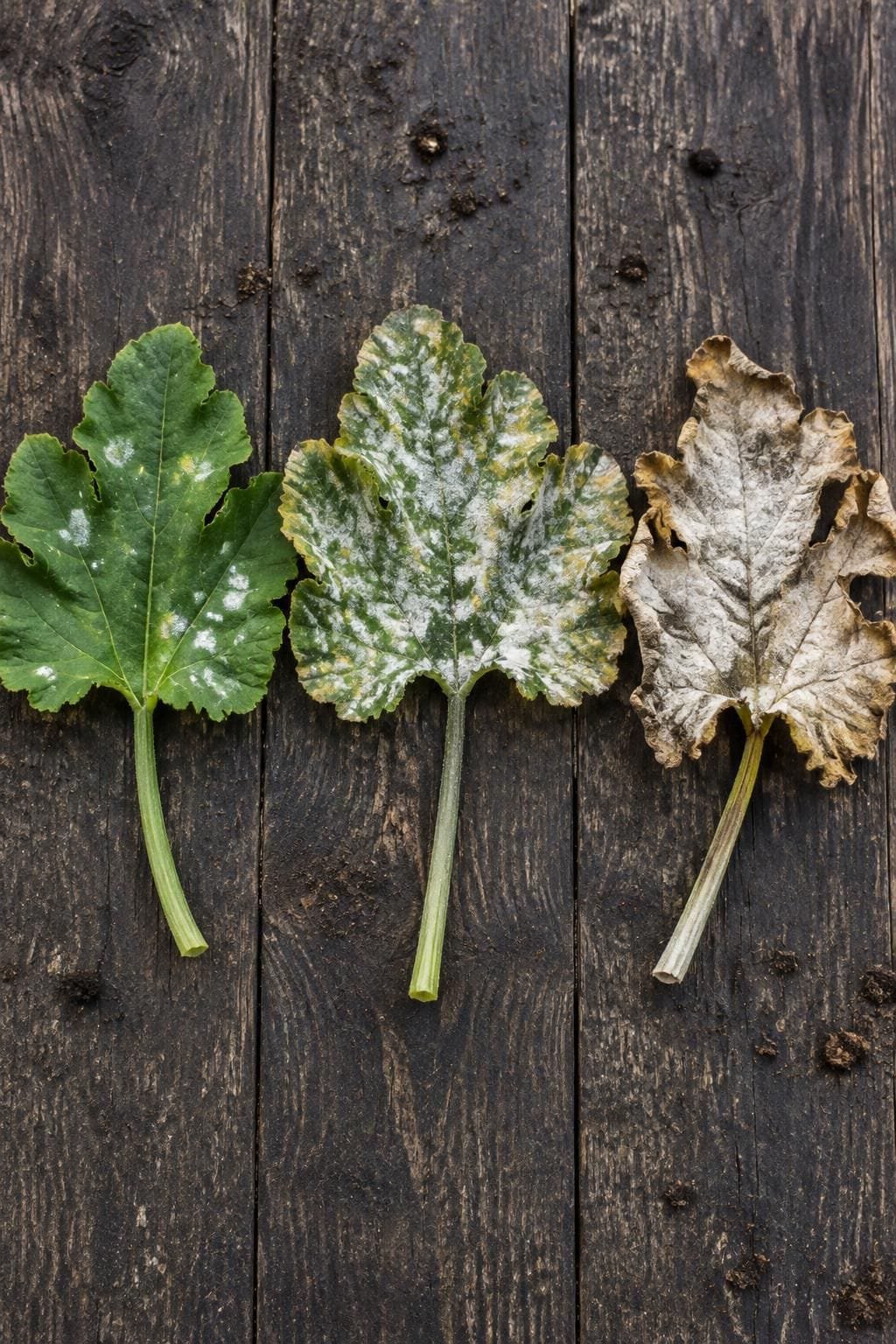
Stage 1: a few spots on the oldest leaves
This is the window where you have real control. You see pale yellow spots or a handful of white patches on older leaves, and the young leaves are still clean. Extension scouting guidance for commercial growers starts spraying when roughly one leaf in fifty shows mildew, and the gap between that and “I can see it from across the bed” is where most of the damage gets decided. Once mildew is easy to spot without hunting for it, rescue treatments lose much of their power. For a few plants in a home garden, the rule translates simply: begin on the day you find the first patch, not the day it starts to bother you.
Stage 2: white on many leaves, newest growth still clean
Treatment still pays here, but the goal changes. You’re no longer trying to rescue old leaves. You’re trying to keep new growth, and the lower leaves that feed the fruit, from joining them. Expect the most heavily coated leaves to keep declining whatever you spray. Their yellowing and browning is damage that has already happened.
Stage 3: most leaves coated, browning and papery
Spraying now buys very little. What helps is keeping the remaining leaves between the fruit and the sun, picking regularly, and asking honestly whether this plant has more to give. Late in the season, a plant that is already winding down rarely justifies a long spray program. Your effort is better spent on the next planting, and where you put it matters more than anything you apply to the old plant.
How to treat powdery mildew on zucchini: what the evidence supports
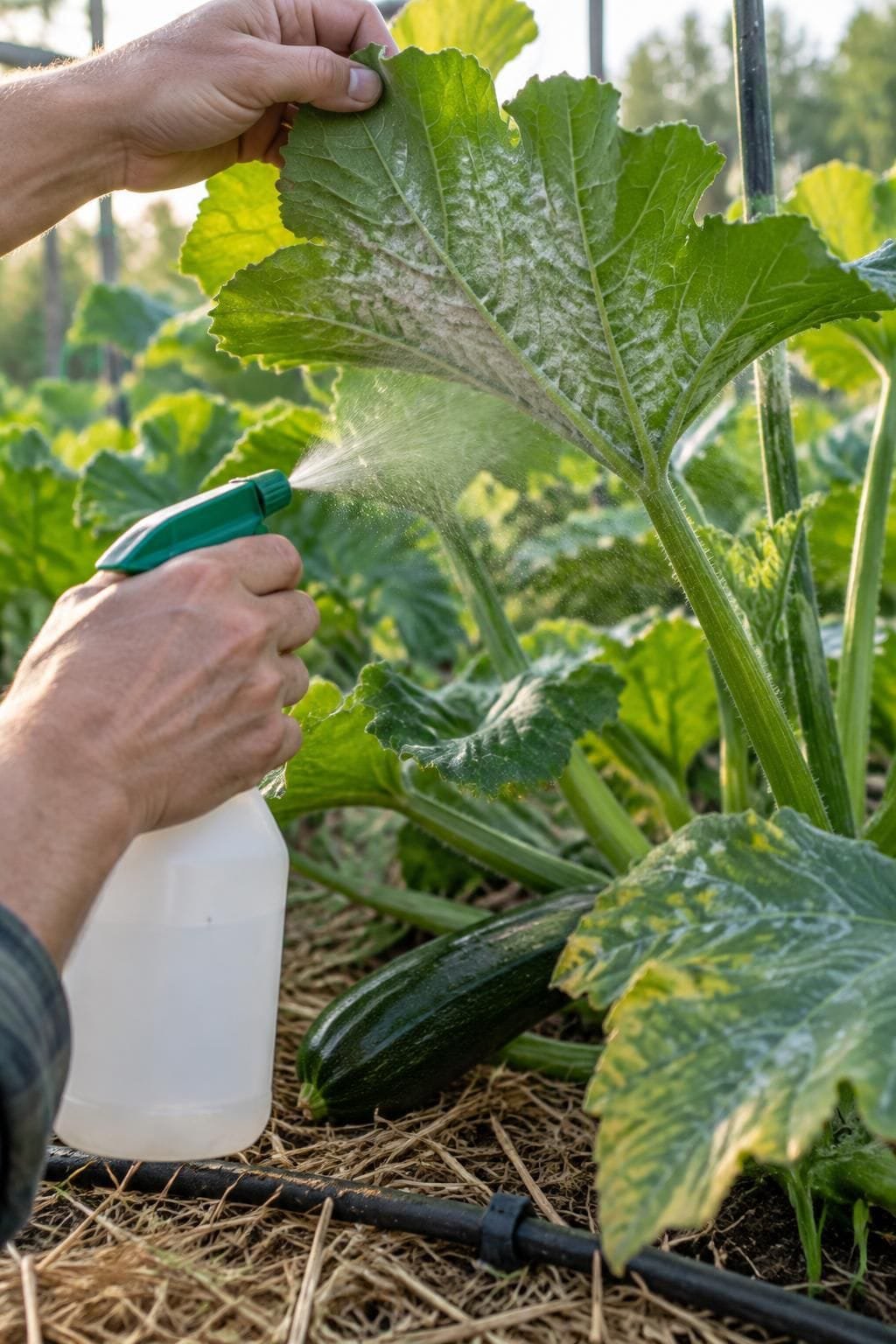
Start with the options that match how far the infection has spread. University of Maine Extension lists potassium salts of fatty acids and sulfur as registered for powdery mildew, and recommends starting them when the first symptoms appear. For sulfur, coverage is the critical factor.
Sulfur has limits. UC IPM notes that some cucurbit varieties are sensitive to sulfur, and Utah State University Extension advises against applying sulfur products above 90°F, because they can burn foliage.
Baking soda shows up in many home recipes. University of Wisconsin Extension lists a mix of 1.5 tablespoons baking soda and 3 tablespoons light-weight horticultural oil per gallon of water as shown to be effective. Test it on a few leaves first, and follow the label on any oil you use.
Follow the label for concentration and spray interval, and treat early rather than late. Products labeled for squash that name powdery mildew are the ones to trust.
Prevention that changes the odds
You can’t keep the spores out. They travel on the wind from other gardens and fields, so the realistic goal is making your plants harder to infect and slower to decline.
Choose resistant or tolerant varieties when you can. The PNW Plant Disease Management Handbook lists squash cultivars with tolerance to powdery mildew, and seed catalogs usually note resistance. Availability varies by region, so check current catalogs.
Give plants sun and room. Minnesota’s extension guide says mildew is more likely on densely planted vines, on plants crowded by weeds or sitting in shade, and on over-fertilized plants. A zucchini’s canopy sprawls further than the seed packet suggests, so err on the generous side with spacing. Apply fertilizer based on a soil test rather than habit, and keep the bed weeded so air can move through it.
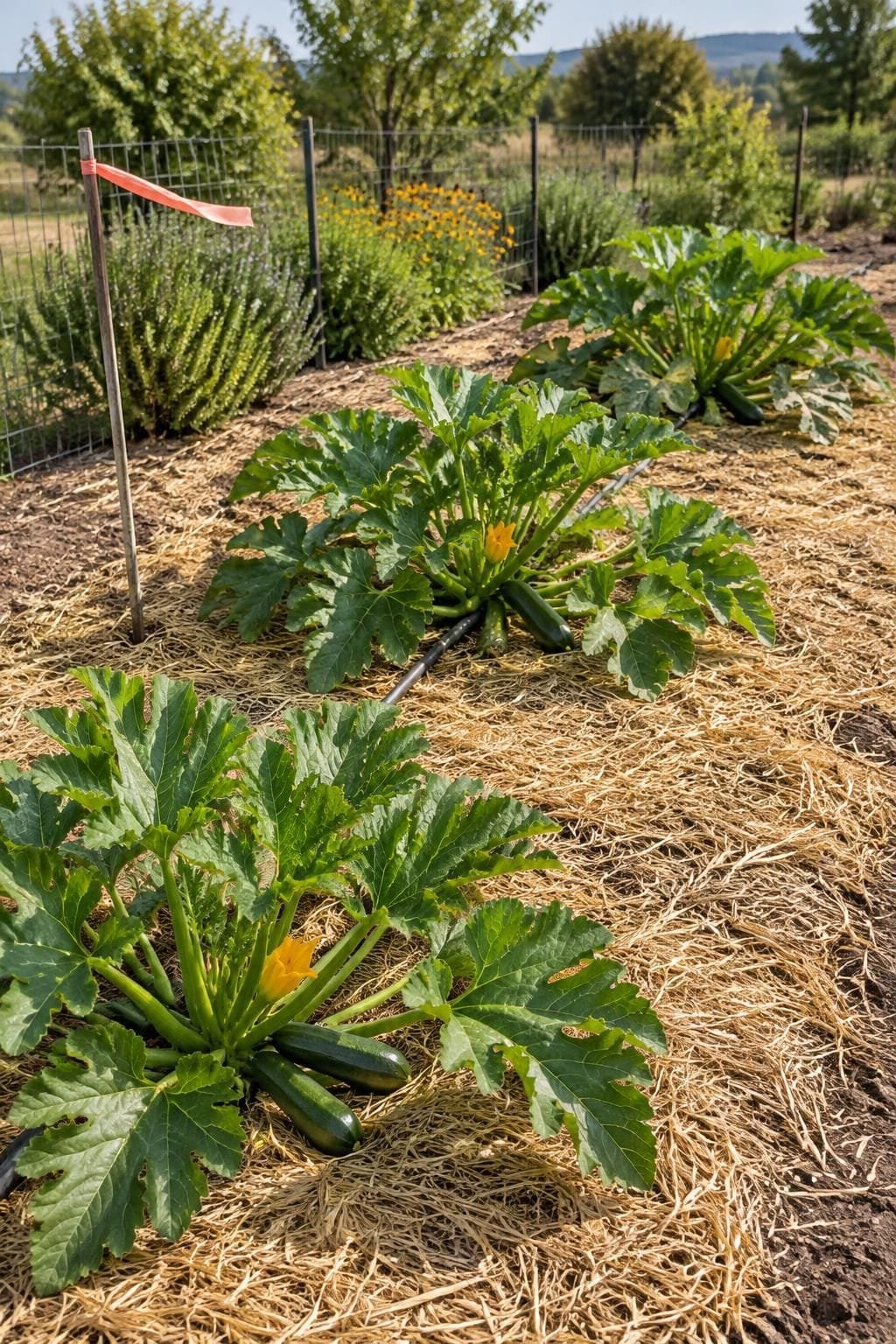
If you sow zucchini in succession, put each new planting upwind of the older one, or well away from it. Older plants can serve as a source of spores for younger ones, and the old plant is usually the first to show mildew.
Make the underside check a weekly habit once the first fruit starts to swell. Lift a handful of the oldest leaves, turn them over, and look for the pale yellow spot on top and the white patch below. At the end of the season, clear the debris and bag it or hot-compost it, since the cucurbit mildew fungus can survive winter as resting spores on plant material.
Quick answers
Will powdery mildew kill my zucchini plant?
Usually it strips leaves rather than killing the plant outright. A plant that has lost most of its foliage produces fewer, smaller fruit and is more vulnerable to other diseases, so the harm is real even when the plant is still standing.
Can affected leaves turn green again?
In practice, no. Sprays protect healthy tissue and can slow or stop the colonies, but a leaf that has yellowed or browned stays that way. That is why the early window matters so much.
Can it spread from other plants in my garden?
Mostly not. These fungi are largely host-specific, so the mildew on a lilac or rose isn’t the one on your zucchini. Cucurbits, though, share the same disease, which means your squash, cucumbers and pumpkins can pass it around. Powdery mildew on squash and cucumbers covers that overlap, and the broader picture across garden plants is in our general guide to powdery mildew.
Is zucchini safe to eat if the plant has powdery mildew?
Extension sources say the fungus doesn’t infect squash fruit directly, so the fruit is generally considered fine to eat after a normal wash. Keep picking on schedule, since fruit left to oversize drains a plant that is already short of leaves. If you were wondering about the leaves as a vegetable, can you eat zucchini leaves covers safety, taste and recipes.
Will powdery mildew come back next year?
Probably, in some form. Spores blow in every season, and resting spores can overwinter on plant debris. Resistant varieties, generous spacing and early checks make it milder and later, but none of them guarantees a clean plant.
Tomorrow morning, lift the three oldest leaves on each plant, turn them over, and wipe one patch with your thumb. What you find there decides everything else on this page.
One thought on “Powdery Mildew on Zucchini: Identification and Treatment”