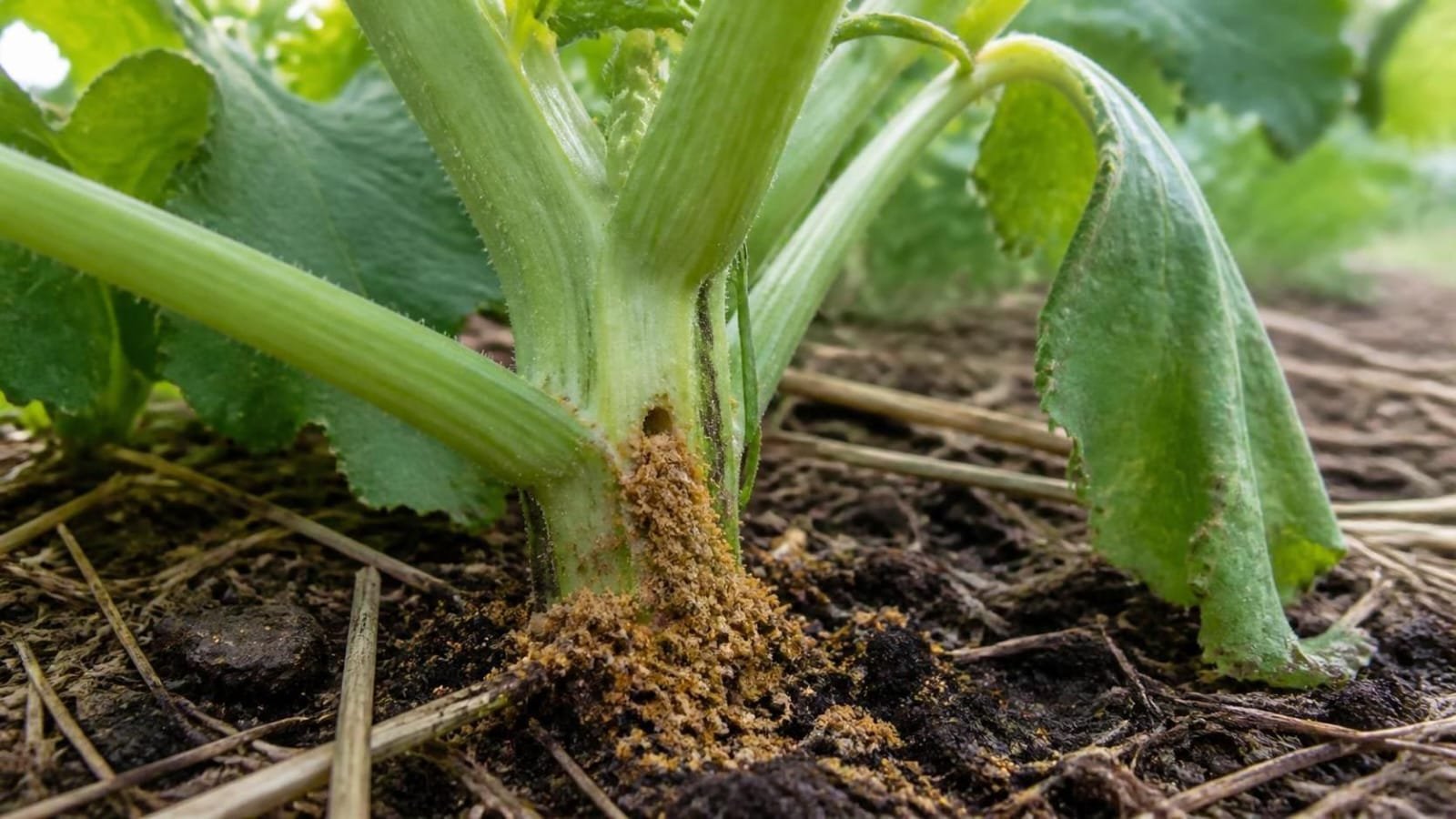
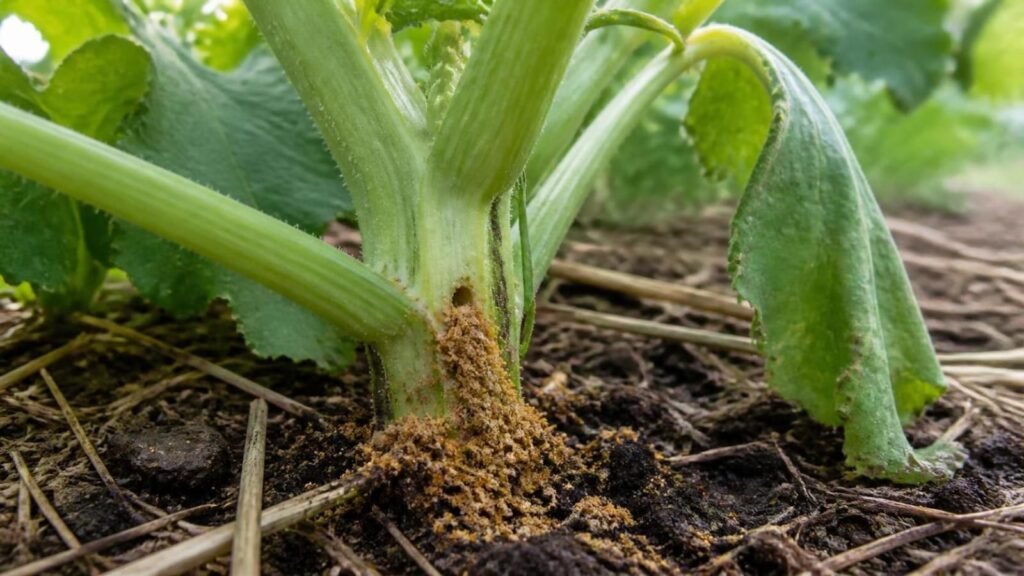
A vine that wilts fast, with a small hole near the base of the stem and sawdust-like frass piled beside it, almost always has a squash vine borer larva tunneling inside. Slit the stem lengthwise to confirm, lift out the larva, and bury the cut section under moist soil so the vine can root. Sprays will not reach a borer that is already inside, and extra water will not revive a hollowed stem.
The frass is what sets this apart from nearly every other cause of wilting. It is the larva’s waste, pushed out through the entry hole, and it looks like fine sawdust in shades running from yellow to orange to greenish tan. If you can see it, the diagnosis is close to settled. If you can’t, the table further down helps you sort out what else could be wrong. A vine caught early can sometimes be saved, so it is worth going out and looking today rather than waiting to see whether it perks up.
Look at the stem before you water again
Most of us reach for the watering can first. It is the right instinct for a thirsty plant and the wrong one here. The larva severs the tissue that carries water and nutrients up the vine, so a borer-damaged runner is short of water no matter how wet the soil is.
Kneel down and push the leaves aside until you can see the first foot or so of stem above the soil. You are looking for a small entry hole with a pile of moist, sawdust-like frass beside it. UConn’s Home Garden Education Office adds a detail that explains why this problem catches people off guard: in the early stage the wilting can disappear at night, when the plant loses less water, and then return on the next warm day. As the tunnel grows, the vine stops bouncing back and stops responding to watering.
Keep in mind that the pile of frass marks where the larva got in, not necessarily where it is now. It feeds along the inside of the stem, so the caterpillar may be a few inches above the hole by the time you find it.
Confirm it by opening the stem
Hold off on any treatment until you have seen the larva, or at least the hole and the frass together. Wilting alone has too many possible explanations.
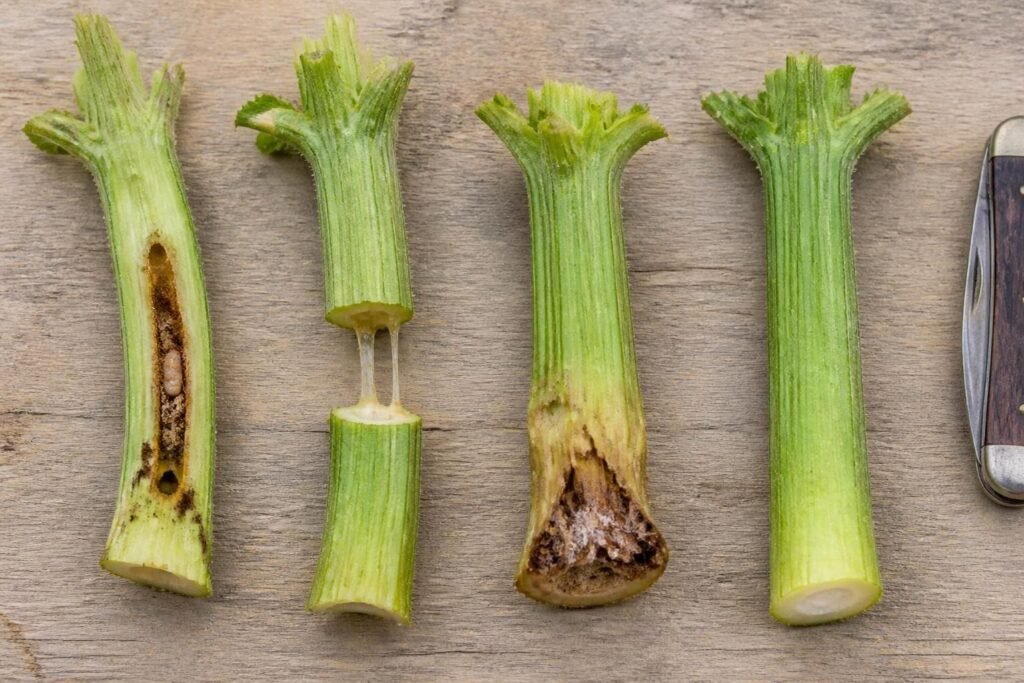
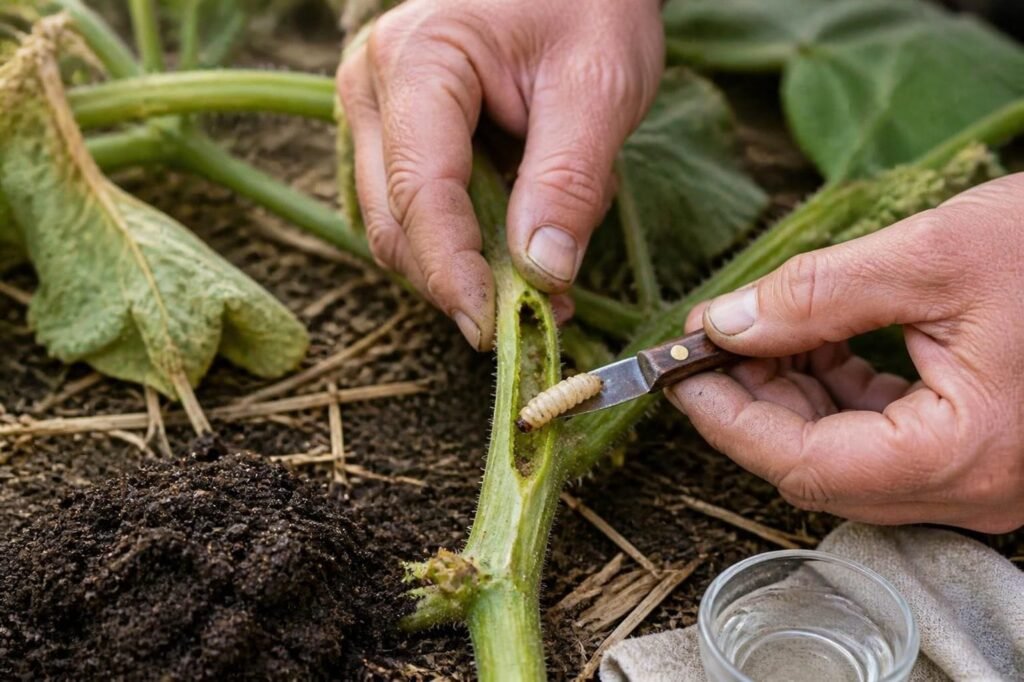
Take a sharp knife and split the stem lengthwise, starting at the hole. A vine borer larva is white to cream with a brown head, and it grows to roughly an inch long. More than one can share a stem, so keep following the tunnel until you reach its end.
Here is how easily this gets muddied. Specialists at Purdue Extension, looking at wilted butternut, acorn, and kabocha squash, cut open a stem expecting a borer and found sap beetles feeding inside it instead. The stem base was brown, stringy, and decayed, and spores seen under the microscope led them toward Fusarium crown rot as the likely cause, with a lab sample suggested to be certain. They also allowed that a borer might simply have come and gone, with the beetles moving in afterward as opportunists. The takeaway for a home garden is practical. A hole with frass is strong evidence. A hollow stem with no larva in it is not an all-clear. And rot at the base of the stem points somewhere else entirely.
When there is no frass: what else wilts squash
If the stem is clean, work through these. The checks take a few minutes, and they decide whether cutting into the vine is even worth doing.
| Cause | First clue | Quick check | What to do |
|---|---|---|---|
| Squash vine borer | Small hole near the base with sawdust-like frass | Split the stem lengthwise and look for a white larva with a brown head | Remove the larvae, then bury the cut stem under moist soil |
| Bacterial wilt | Leaves or whole runners wilt, spread by striped and spotted cucumber beetles | Cut a wilted, not yet dead, vine near the crown, touch the cut ends together, and pull them apart slowly. Sticky threads suggest bacterial wilt, though the test is less reliable on squash and pumpkin | Remove and destroy infected plants and deal with the beetles. Bactericides are not recommended |
| Fusarium crown rot | Wilted, stunted plants that pull up easily | Stem breaks off at ground level, leaving a brown, stringy, decayed base, sometimes with whitish or pinkish mold and no frass | Little chance of a cure. Send a sample to your extension diagnostic lab to be certain |
| Drought or heat stress | Leaves droop in the hottest hours, dry soil, no hole or frass | Water deeply at the base. A thirsty plant perks up, while a borer-damaged vine does not respond | Water at the base and recheck the plant the next morning |
Squash bugs and aphids can also wilt vines, so turn a few leaves over before you rule them out. And be honest about the limits of a diagnosis made from a description. Two problems can sit on one plant, and the bacterial ooze test is the weakest on exactly the crop you are growing. When the picture stays unclear, your local extension office can look at a sample.
One more look-alike turns up on the same plants at the same time of year. Powdery mildew coats the leaves in white powder, and affected leaves may wilt in afternoon heat. If you see that pattern with a clean stem base, you are dealing with a leaf disease, and the guide to powdery mildew on squash and cucumbers covers it. Check the stem anyway. The two can happen on the same vine.
The rescue: slit, lift out, mound
Cutting into a living vine feels wrong, and fair enough. But on a plant that is already failing, a short cut costs very little. Extension guidance is consistent on the method.
- Start at the entry hole and slit the stem lengthwise, following the tunnel toward the growing tip. Cut about halfway through the stem and keep the cut as short as you can while still finding every larva.
- Pull out and kill each larva. Check past the first one, since several can share a stem.
- Clean the blade before you cut another plant. The Missouri Botanical Garden suggests dipping the knife in a 10 percent bleach solution between cuts so you do not carry wilt or rot organisms from one vine to the next.
- Lay the slit stem back together and bury that section under moist soil. Buried stem tissue can form new roots, which gives the vine a second way to take up water if the base fails.
- Water at the base over the next few days and look at the stem again. Fresh frass means a larva was missed.
There are gentler options for people who would rather not use a knife. Beneficial nematodes sold for stem borers (Steinernema carpocapsae) can be injected into the vine following the package instructions, and the same garden describes injecting a Bacillus thuringiensis (Bt) solution into the stem with a disposable syringe, using an organic-approved product if that matters to you. Bt sprayed on the outside is a different story. As University of Minnesota Extension points out, available Bt formulations are not effective against this pest when applied that way, because the sprays cannot reach the inside of the stem where the larvae feed.
What not to do
- Don’t keep soaking a wilted vine. A hollowed stem cannot carry the water, and vines in this state do not respond to it.
- Don’t spray the frass hole and walk away. Insecticides work only on newly hatched larvae before they bore in. Once the larva is inside the stem, chemical controls fail.
- Don’t leave dead vines lying in the bed. Mature larvae leave the stem and burrow into the soil to overwinter, so a dead vine can still be seeding next year’s problem.
- Don’t go from plant to plant with the same dirty knife. Wilt and rot organisms travel on blades.
When most of a vine is hollowed out, or several runners are gone, rescue stops being realistic. The same Missouri source advises pulling plants that borers have killed, sealing them in a large clear plastic bag, and leaving the bag in the sun for a week or so to kill any larvae still in the vines. In fall, early tilling or disking brings the cocoons up from 1 to 6 inches deep, where birds and cold can reach them.
Next season: get to the stem base before the larva does
Prevention here is mostly about the calendar. The adult is a clear-winged, day-flying moth with an orange, black-spotted abdomen that is often mistaken for a wasp. According to UConn, adults emerge from the soil in mid to late June in the northeastern United States and lay flat, reddish-brown eggs one at a time near the base of the vine. The eggs hatch in 7 to 10 days, and the larvae then feed inside the stem for 4 to 6 weeks. Dates shift with climate, and warmer southern regions can see two generations a year, so watch your own garden rather than a date on a page.
- Pick the less susceptible squash. Butternut shows higher resistance than Hubbard and acorn squash, which are highly susceptible, and summer squash and zucchini are among the most attractive hosts.
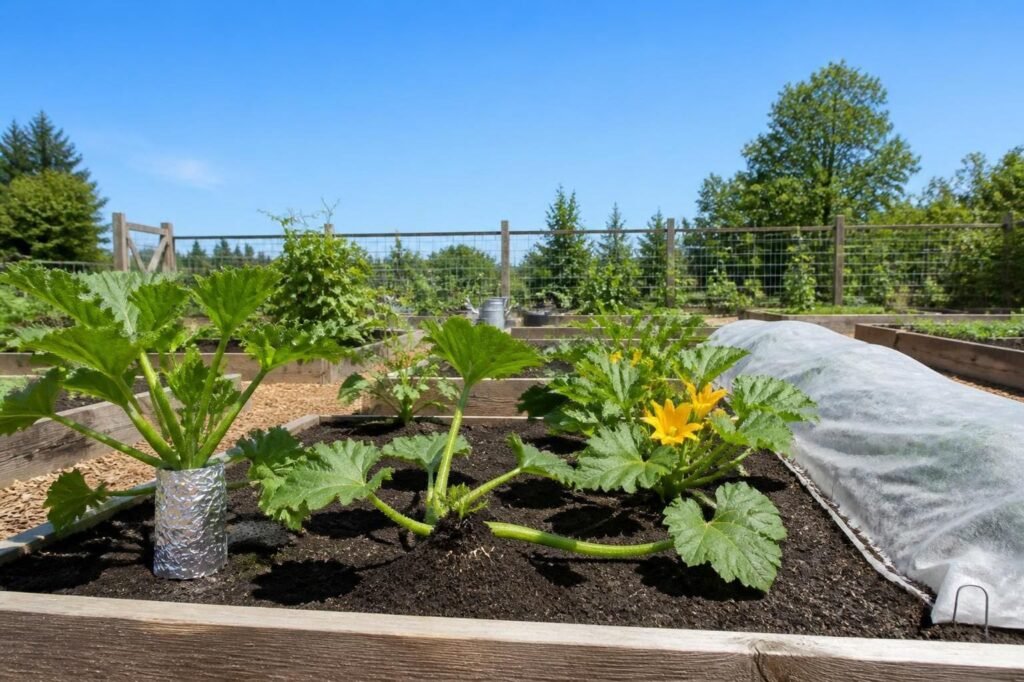
- Cover early, then uncover. Floating row covers stop the moths from laying eggs. Anchor every edge firmly or the moths will crawl under, and remove the cover when flowers open so pollinators can work. Pair covers with crop rotation, because the moth overwinters in the soil near last year’s plants.
- Collar the stem base. In a small garden, a wrap of aluminum foil or nylon hose material around the base of the vine discourages egg laying there.
- Mound soil over a few nodes on vining types. Roots form where the stem is buried, so a borer at the base cannot cut off the whole vine.
- Plant a late crop. A second planting in early July can miss the peak of egg laying in cooler regions.
If you decide to use an insecticide, timing is everything. It has to be on the base of the stem when the eggs hatch, and extension sources describe one or two applications a few days apart, with the gap varying from source to source. Read the product label, make sure it is approved for squash vine borer where you live, and check local regulations, since approved products and rules differ by country and region. Because many of these products can harm bees, avoid spraying while the plants are flowering.
Can the vine recover?
Sometimes. If the damage is not too severe, extension guidance says the vine or plant may be saved. A runner that has rooted where it touches the soil, or where you mounded it, can keep growing from that point even if the base fails. Where the main stem and roots are badly injured, though, pulling the plant is the more honest call, and the leaves that have already wilted will not come back. Judge the vine by whether new growth appears and whether any fresh frass shows up.
Questions that come up
Do I have to cut every wilted vine open?
No. A hole with frass is strong evidence on its own. Splitting the stem is for confirming the diagnosis and for reaching the larva, so do it where you see the frass, not on every plant in the bed.
Can vine borers attack cucumbers and melons?
They can, since all cucurbits are possible hosts, but squash and pumpkins are the most susceptible and cucumbers and melons are attacked less often. When a cucumber vine wilts, bacterial wilt carried by cucumber beetles is a more likely suspect, so use the stem checks above before deciding.
My vine looks healthy, but the baby zucchini are rotting at the tip. Is that the borer?
Check the stem base first, since that is where a borer shows itself. If it is clean and the vine is growing normally, the fruit problem has other usual suspects, namely poor pollination, uneven watering, or a fuzzy wet rot after humid weather. The guide to zucchini rotting at the blossom end despite normal flowers shows how to tell them apart by looking at the rotted tip.