The most common eggplant pests in the United States are flea beetles, Colorado potato beetle, aphids, whiteflies, spider mites, and lace bugs. North Carolina State Extension notes that flea beetles and lace bugs are common, but two-spotted spider mites can be more damaging. Identify the pest by its damage and where it feeds. Then scout regularly, and start with cultural and physical controls.
Pests show up in most eggplant gardens. Most can be managed without heavy intervention if you catch them early. This guide is the overview for the pest cluster. It shows how to recognize the main pests, what damage each one causes, and which steps to take first. The individual pest articles go deeper on each one.
How do you identify a pest on eggplant?
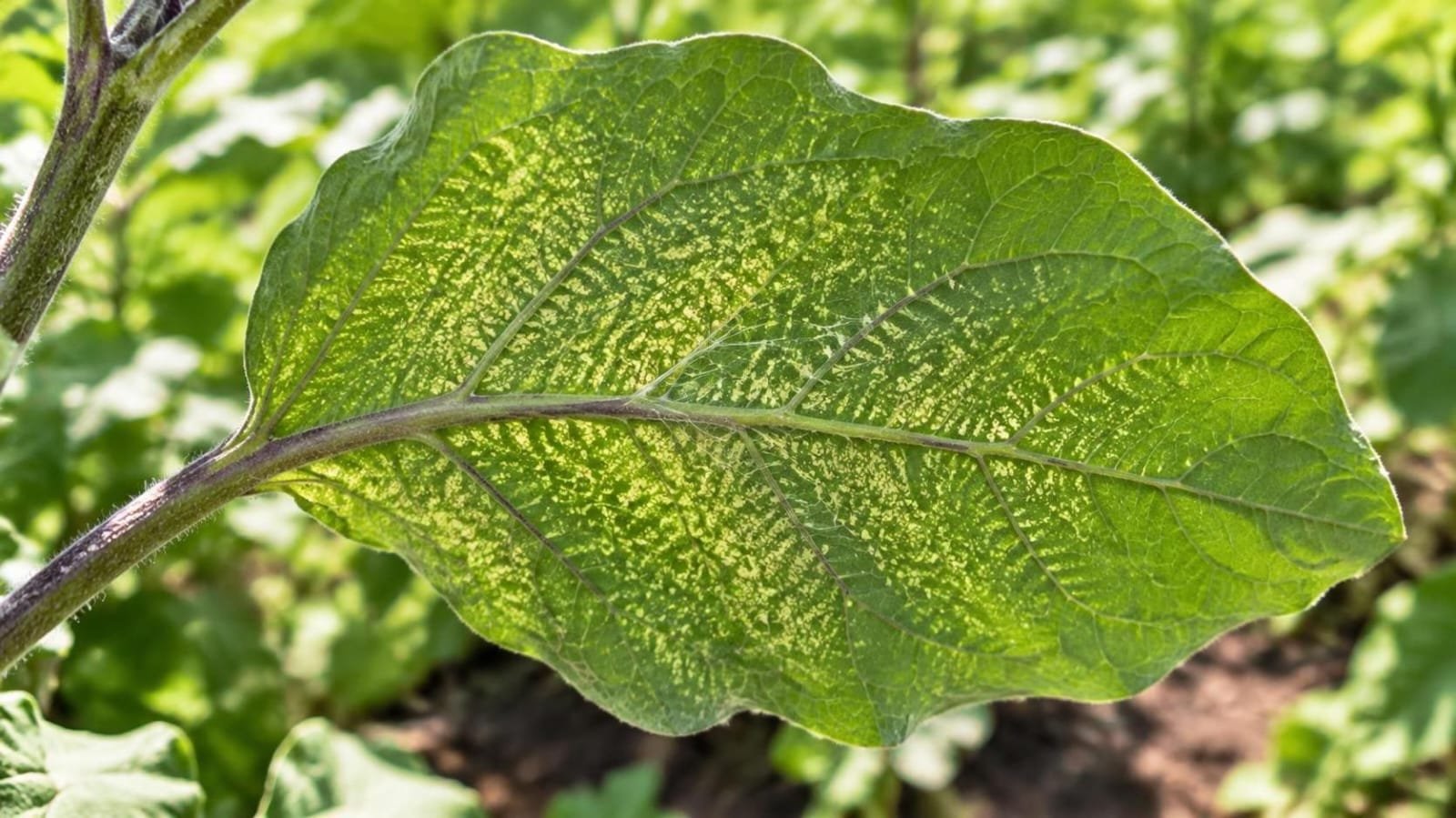
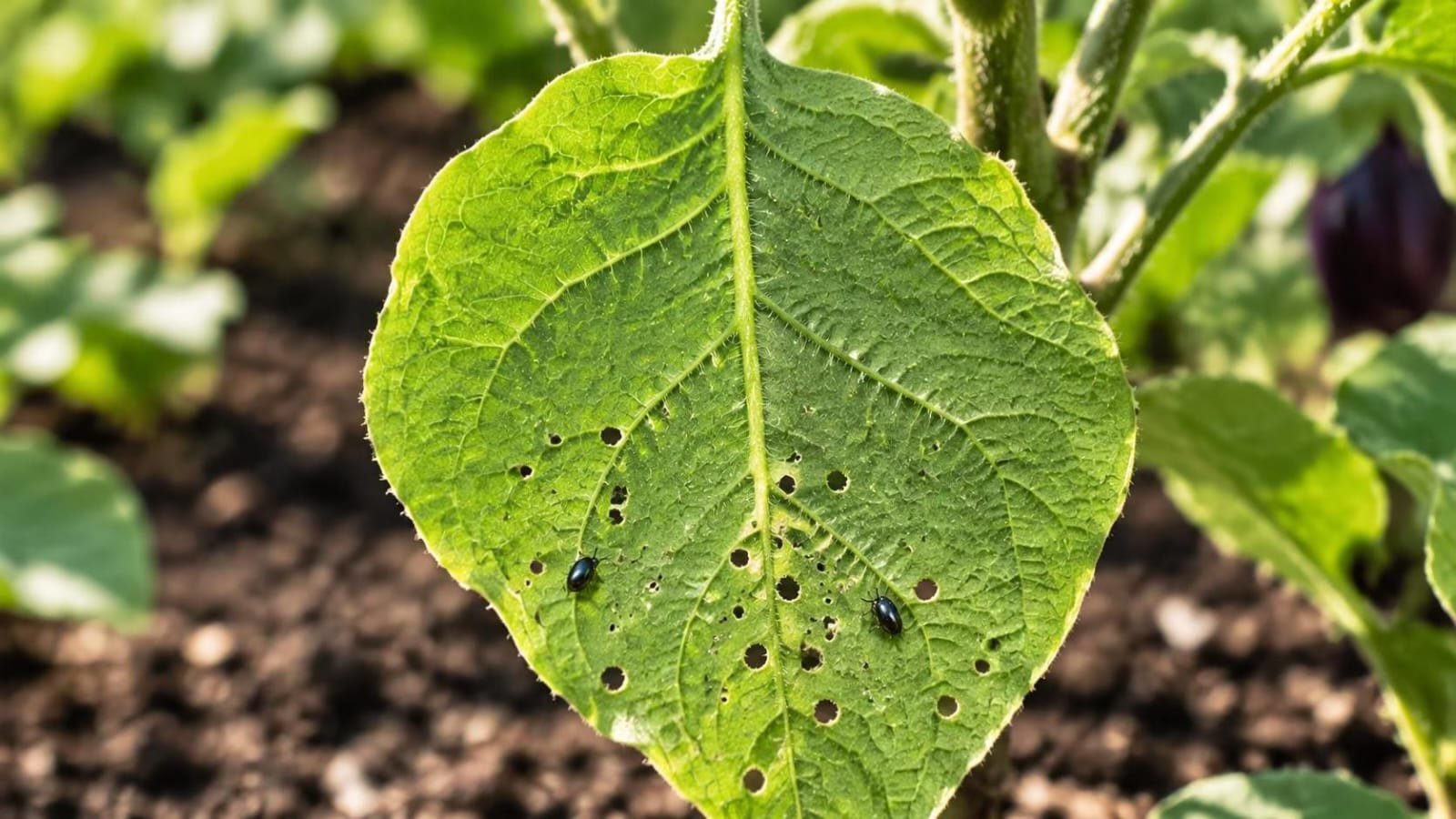
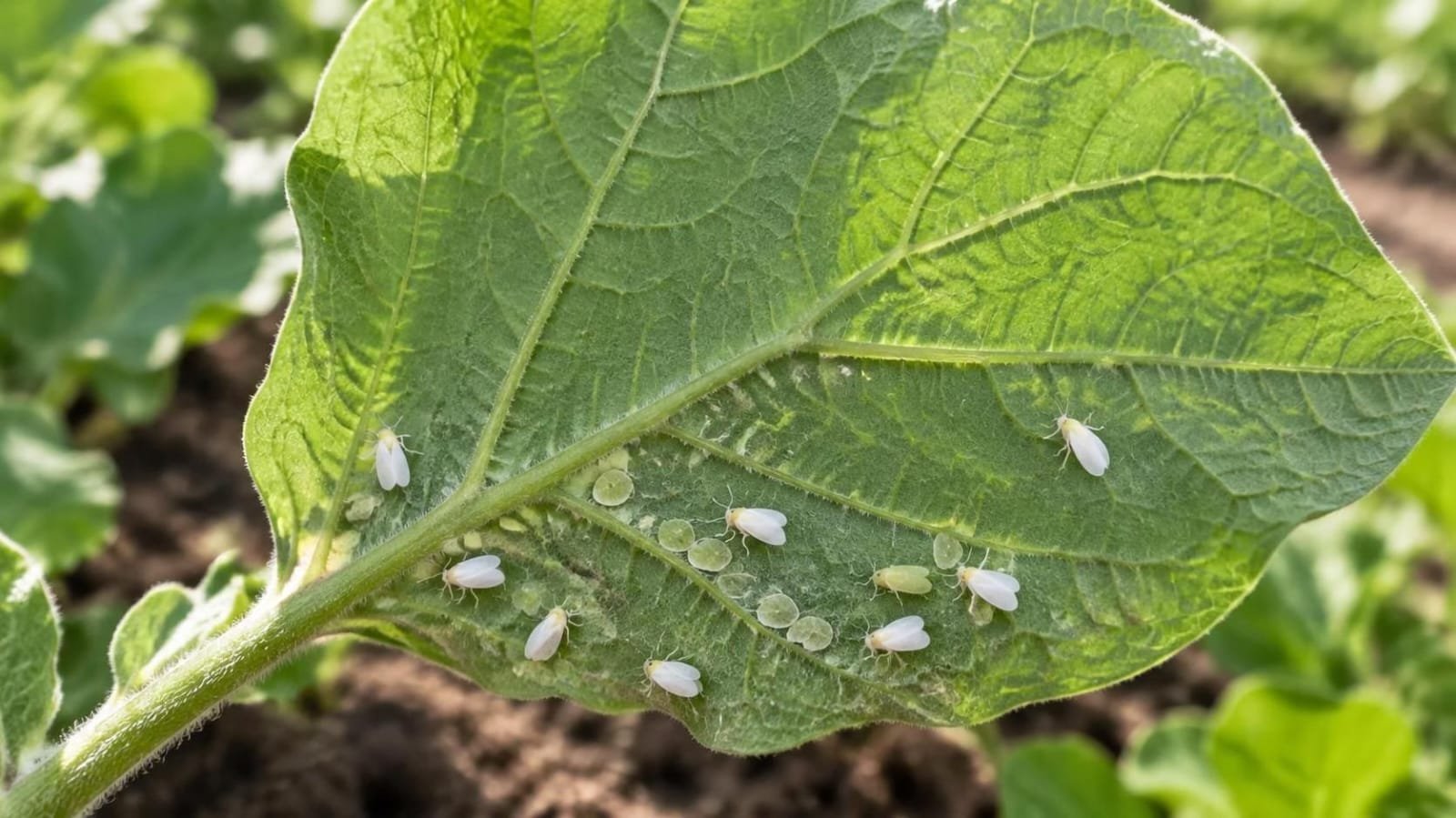
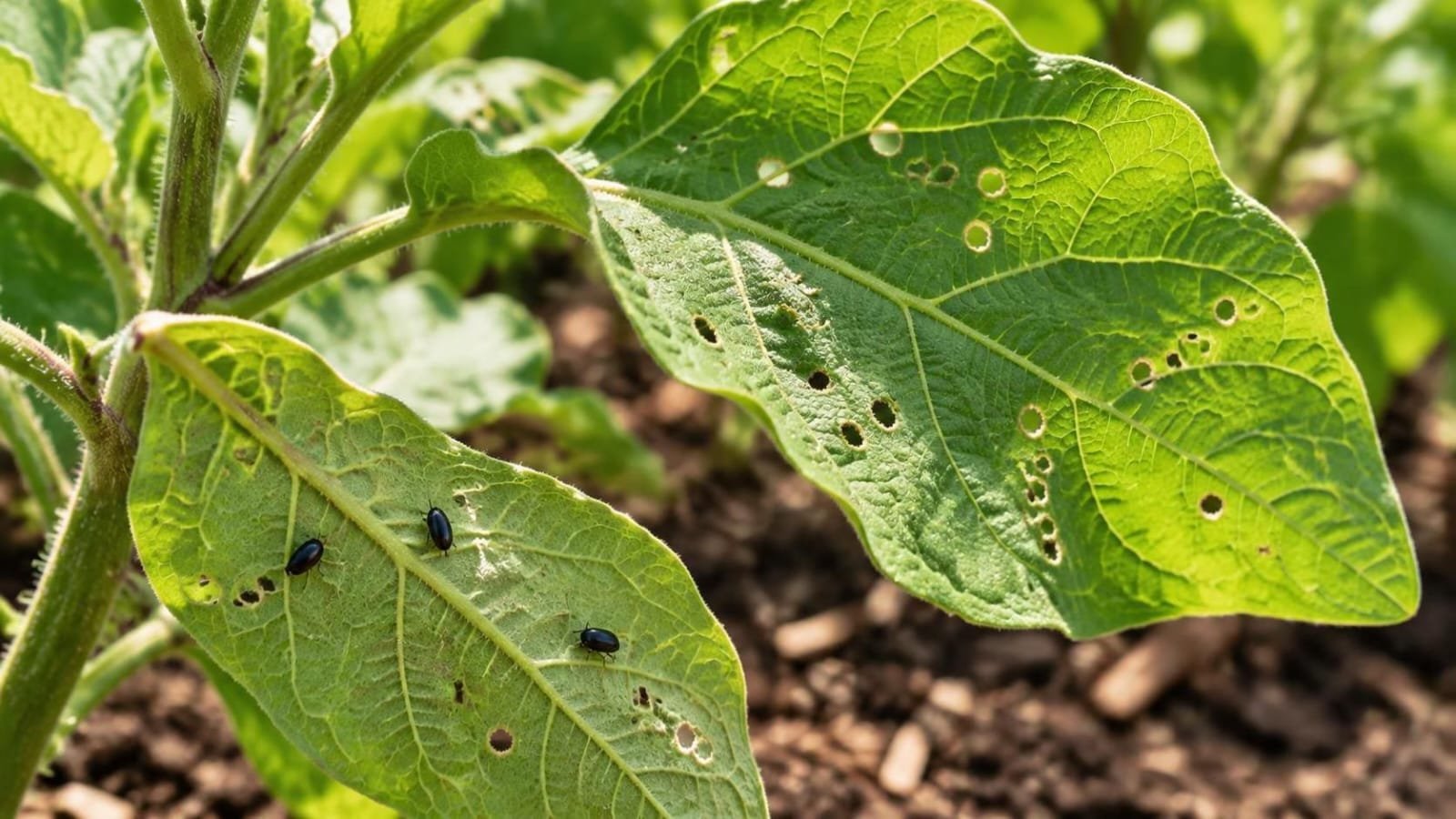
Start with the damage, then find the insect. Shot holes point to flea beetles. Stripped leaves and beetles on the plant point to Colorado potato beetle. Clusters of soft insects on new growth and sticky honeydew point to aphids. Pale stippling and fine webbing on the undersides point to spider mites. Tiny white insects that flutter up when you brush the plant point to whiteflies.
The table below gives a quick comparison. For the hole patterns in more detail, Holes in Eggplant Leaves: What’s Eating Them? covers the chewing pests, and each pest below has its own article.
| Pest | Typical damage | Where to look first |
|---|---|---|
| Flea beetles | Small round shot holes in leaves | Upper and lower leaves; the insect jumps when disturbed |
| Colorado potato beetle | Large ragged holes; can strip leaves | Leaves and buds; adults and larvae |
| Aphids | Curled, stunted new growth; honeydew | Clusters on new growth and undersides |
| Whiteflies | Pale speckling; sticky residue | Undersides of leaves; flutter when disturbed |
| Spider mites | Stippling, bronzing, fine webbing | Undersides of leaves, especially in hot, dry weather |
| Lace bugs | Pale, stippled upper leaves | Undersides, with dark spots of droppings |
Swipe sideways to see every column.
What should you do first about eggplant pests?
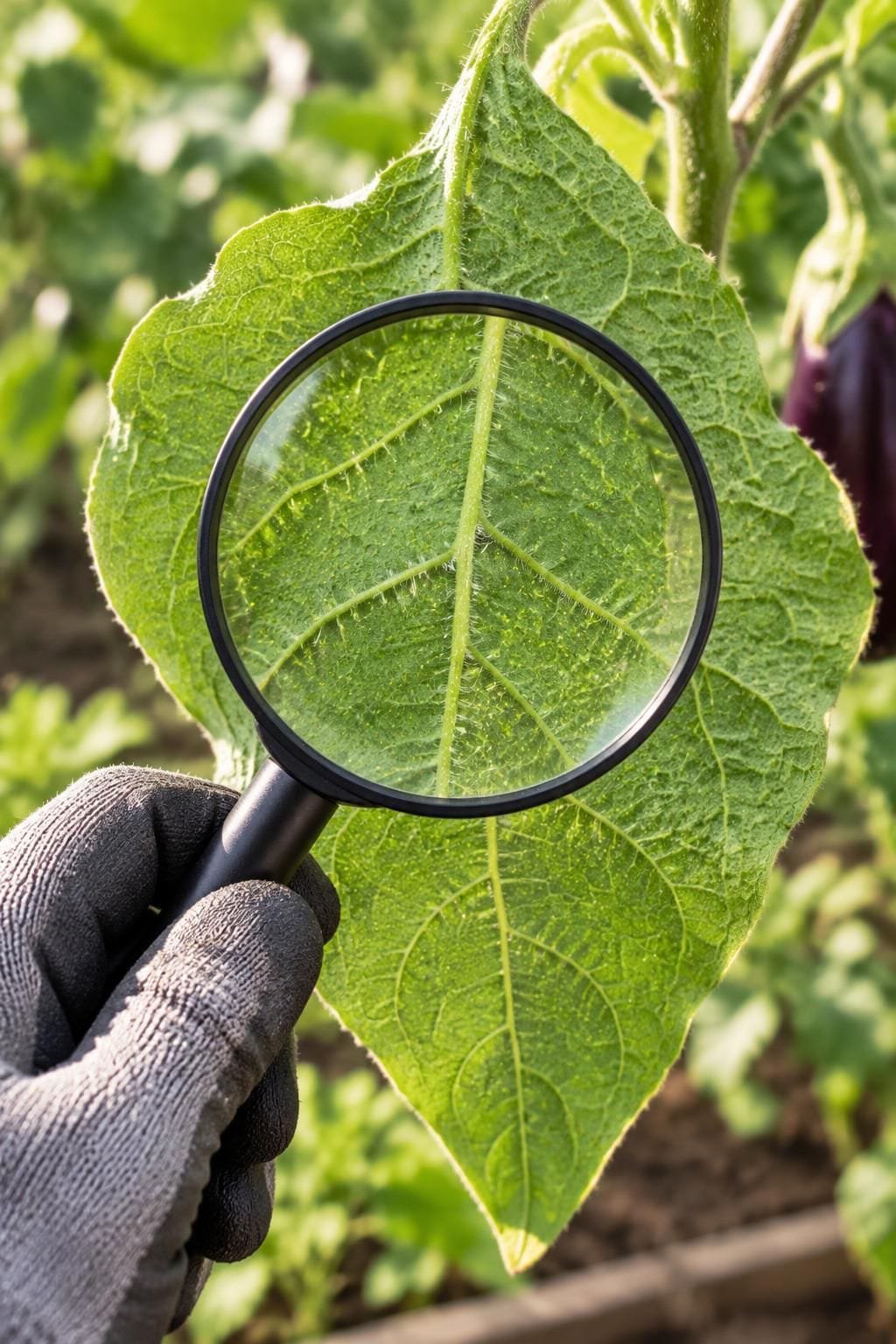
Scout the plants at least once a week, and check the undersides of leaves. Note what you see, where it is, and how much. Early detection makes most pests easier to manage. Keep records by date, so you can see whether a pest is rising or falling.
Next, reduce what attracts pests. Remove weeds around the bed, since many pests overwinter or shelter in them. Clean up plant debris at the end of the season. These steps cost little and make the whole bed harder for pests to use.
Which physical controls work best for eggplant pests?
Kansas State University Research and Extension lists handpicking as an effective control for beetles and caterpillars. Drop them into a container of soapy water. Rubber or leather gloves help you work quickly. A strong spray of water on the undersides of leaves also dislodges soft-bodied aphids and spider mites.
Row covers can keep some beetles off young plants. They work best when sealed at the edges. Remove them when the plants flower, so pollinators can reach the blooms. Plan the timing before you cover.
How do the main eggplant pests differ?
Each pest has its own life cycle, so the control timing changes. Flea beetles can cause damage throughout the season, and adults jump when disturbed. Colorado potato beetle is active through the summer, with adults and larvae both feeding. Aphids can build up quickly on new growth. Whiteflies and spider mites do best in warm, dry conditions.
Learn the individual pest before you act. Flea Beetles on Eggplant covers flea beetles in detail, Aphids on Eggplant covers aphids, Whiteflies on Eggplant covers whiteflies, and Spider Mites on Eggplant covers spider mites.
When should you use a pest control product on eggplant?
Use a product only when scouting shows real damage, and when physical and cultural controls aren’t enough. Confirm that any product is labeled for eggplant before you buy it. Read the label before you apply it. Follow the directions for the crop, the pest, the rate, and the timing.
Spraying can also harm beneficial insects that help control pests. Use targeted application where possible, and avoid spraying flowers when bees are active.
Can pests and diseases look alike?
Yes. Some insect damage looks like disease, and some disease looks like insect damage. Eggplant Diseases: Symptoms, Identification, and Treatment covers the disease side, and Eggplant Leaves: Identification, Problems, and Care covers the general leaf patterns.
Where should you go next?
Start with the pest that matches your damage. Use the table to narrow the list, then open the article for that pest. For the full growing cycle, How to Grow Eggplant: Planting, Growing, and Care connects pest scouting to planting, watering, and harvest.