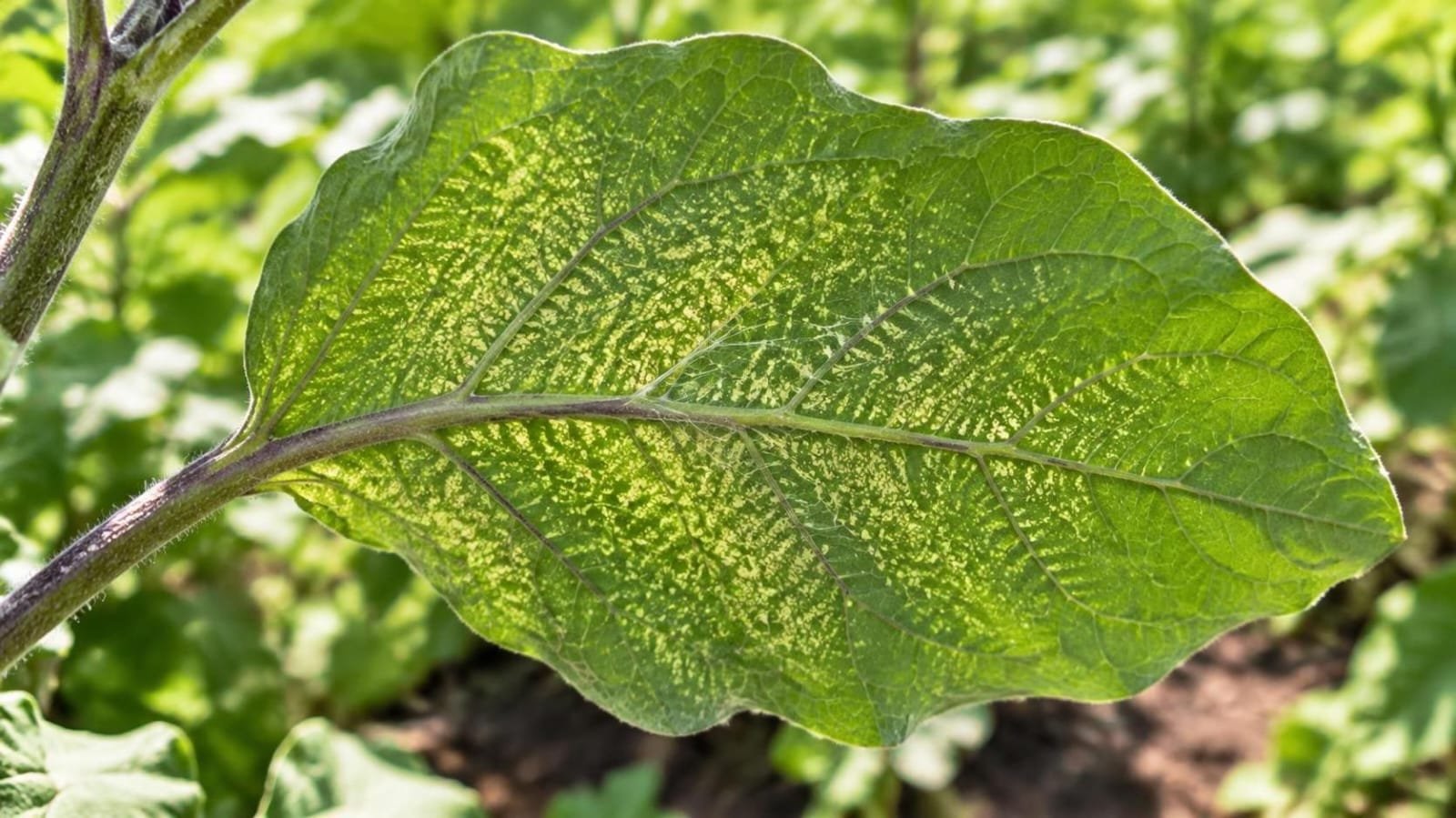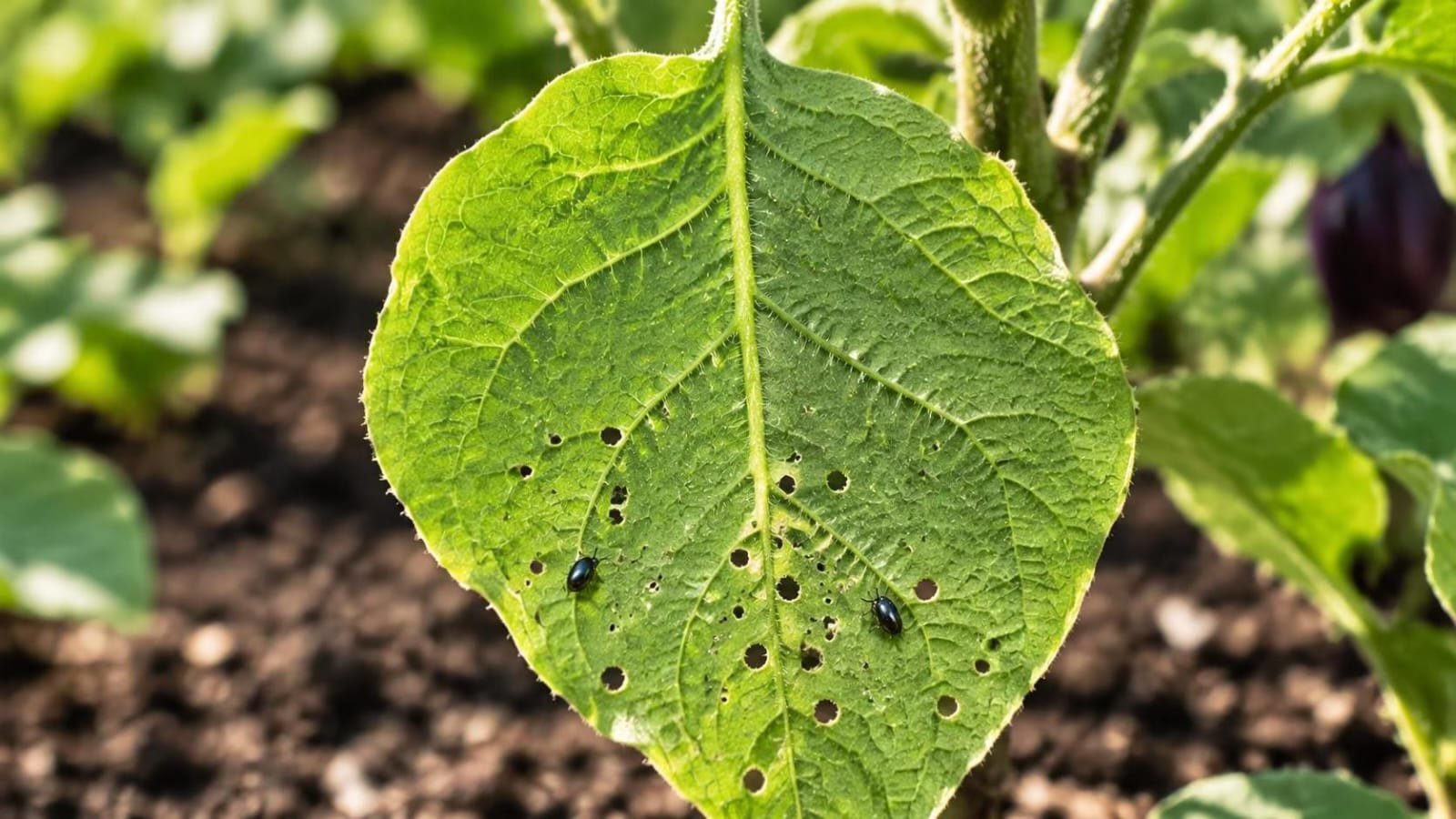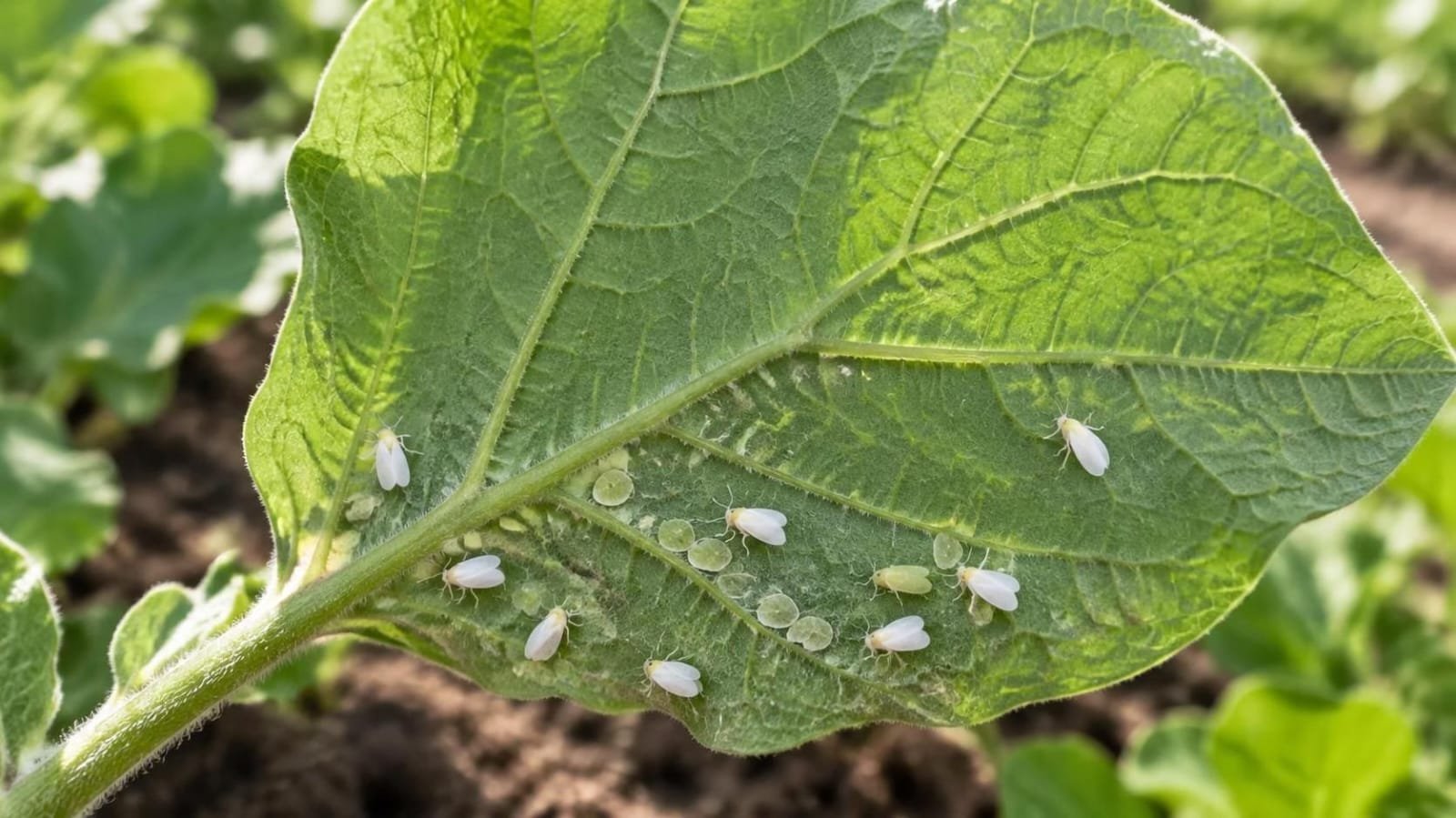
Aphids on eggplant are small, soft-bodied sap feeders that cluster on new growth and the undersides of leaves. Look for sticky honeydew, sooty mold, and white shed skins. Heavy infestations stunt plants, distort leaves, and reduce fruit set. Scout weekly, wash small colonies off with a strong stream of water, and protect the natural enemies.
Aphids are one of the most common pests in eggplant gardens. They multiply quickly, and a small colony can become a large one in a short time. This guide covers how to recognize them, the damage they cause, and the first control steps. For the other common pests, the pest overview gives the big picture.
How do you recognize aphids on eggplant?
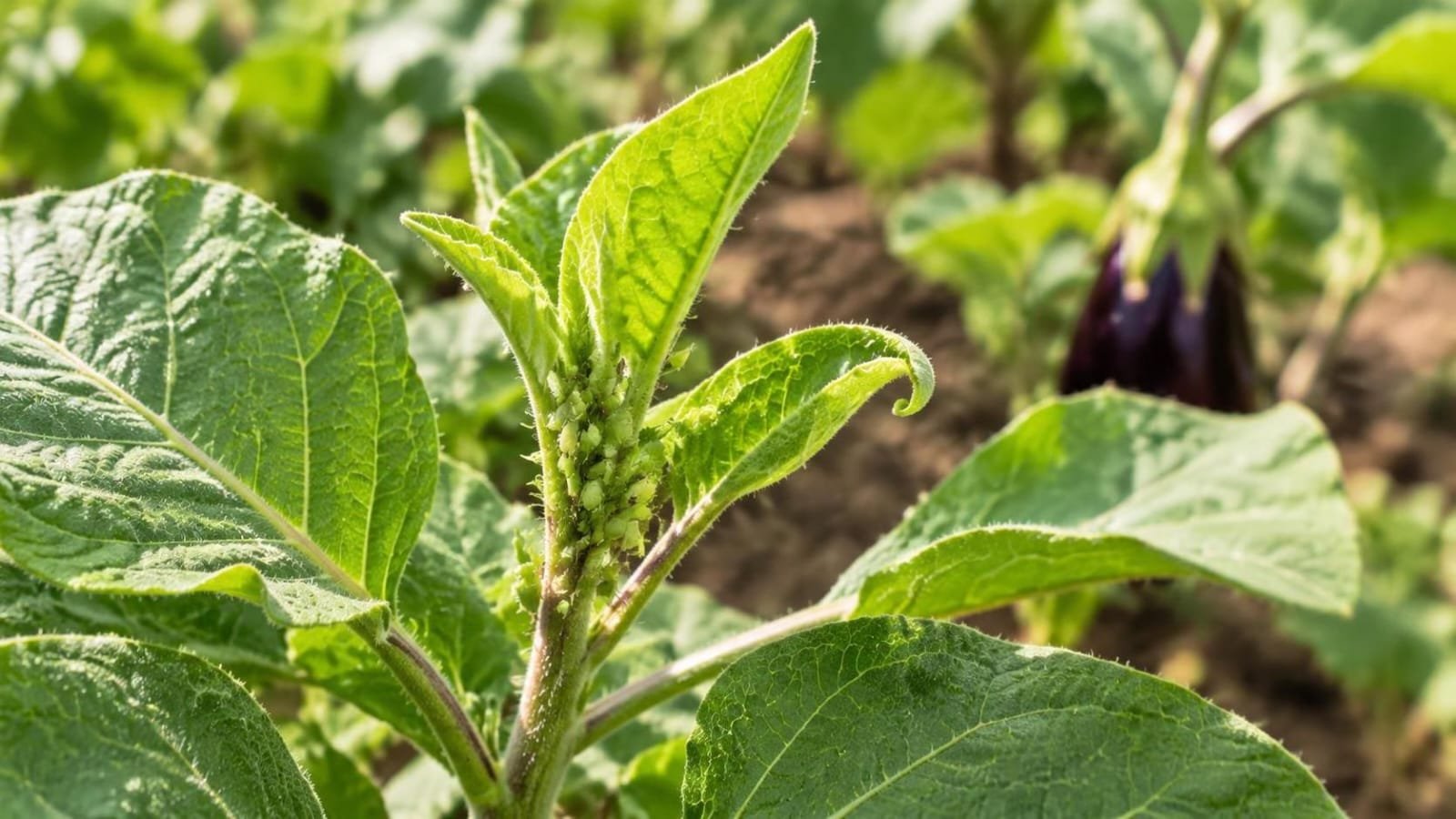
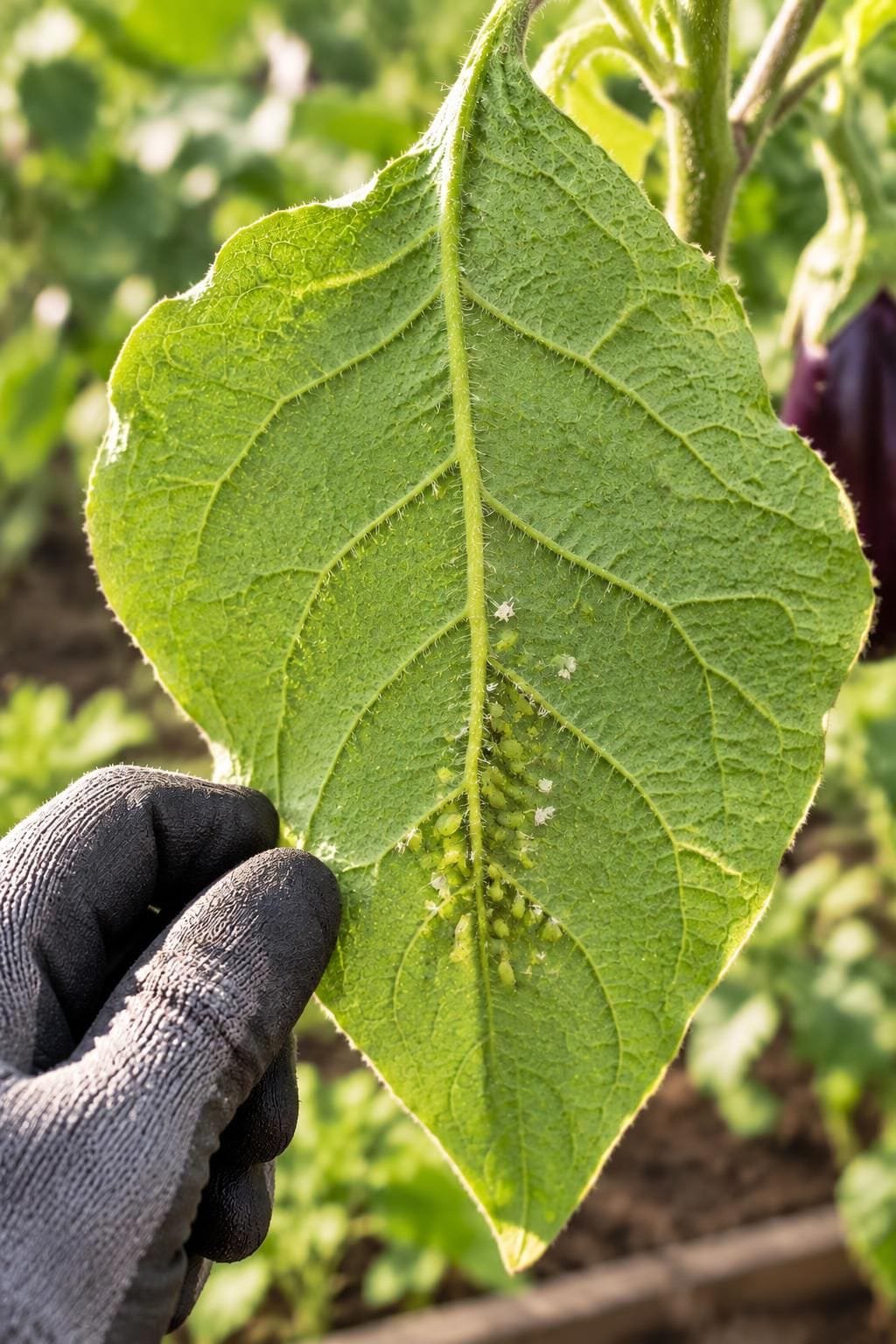
Aphids are pear-shaped insects that range from 1/16 to 1/8 inch long. Color varies with the host plant. Aphids can be green, yellow, pink, black, or brown, so color alone isn’t a reliable clue. Look for them in clusters on new shoots, flower buds, and the undersides of leaves. University of Illinois Extension describes them as slow moving.
The signs are easy to spot once you know them. Shed white skins look like tiny cast-off cases on the leaves. Honeydew makes the leaves shiny and sticky. Sooty mold grows on the honeydew and turns leaves and stems black.
Which aphids attack eggplant?
UConn Extension notes that aphids can occur on eggplant, along with peppers, cole crops, and leafy greens. In greenhouses, the green peach, melon, and foxglove aphids are among the most common species. The potato aphid is less common, but it can still occur. University of Wisconsin Extension lists the potato aphid among the species that attack eggplant.
Species matters if you plan to use parasitic wasps, since many are host specific. For general control, you don’t need the species name. A clear identification helps, though, when you choose a biological control.
How much damage do aphids cause on eggplant?
University of Florida IFAS Extension reports that heavy infestations can stunt plants and distort leaves. Feeding on blossoms reduces fruit set, and sooty mold on the honeydew blocks some light from the leaves.
Aphids also transmit plant viruses when they feed. A few aphids can cause little visible harm, but they can still spread a virus. That’s a reason to keep numbers low, and to check the plant for virus symptoms if the damage looks unusual. Why Are My Eggplant Leaves Curling? covers the curling patterns that heavy aphid feeding can cause.
How do you scout for aphids on eggplant?
Check the plants at least once a week. Focus on new growth, flower buds, and the undersides of leaves, since wingless nymphs often hide there. Look along the stems too. A hand lens helps you see the nymphs and their cast skins.
Early detection makes control much easier. A small colony that you find on Monday can often be removed by hand or with water. A large colony that has spread to the whole plant needs more work, and the damage may already be done.
What should you do when you find aphids on eggplant?
University of Illinois Extension recommends washing aphids off with a steady stream of water. Water can dislodge them and knock down a colony without any product. Repeat the washing as needed, and check the plant the next day.
Avoid heavy nitrogen feeding while aphids are active. Excess nitrogen produces soft, succulent growth that aphids prefer. How and When to Fertilize Eggplant covers feeding timing. Natural enemies also help. Lady beetles, green lacewing larvae, syrphid fly larvae, and aphid parasitic wasps all feed on aphids. Avoid broad-spectrum sprays that kill them.
If the aphids keep coming back, check the wider picture in Common Eggplant Pests: Identification and Control. Chemical controls, when needed, should follow the product label and the advice of your local extension office. Systemic products can be less effective when the goal is to control virus spread. Ask an extension agent before you choose one.
When should you worry about aphids?
Worry when the new growth is distorted, when fruit set drops, or when wilting appears alongside the aphids. Why Is My Eggplant Plant Wilting? covers the causes of wilting, which may be a separate problem. For the full growing cycle, How to Grow Eggplant: Planting, Growing, and Care connects pest scouting to planting, watering, and harvest.