
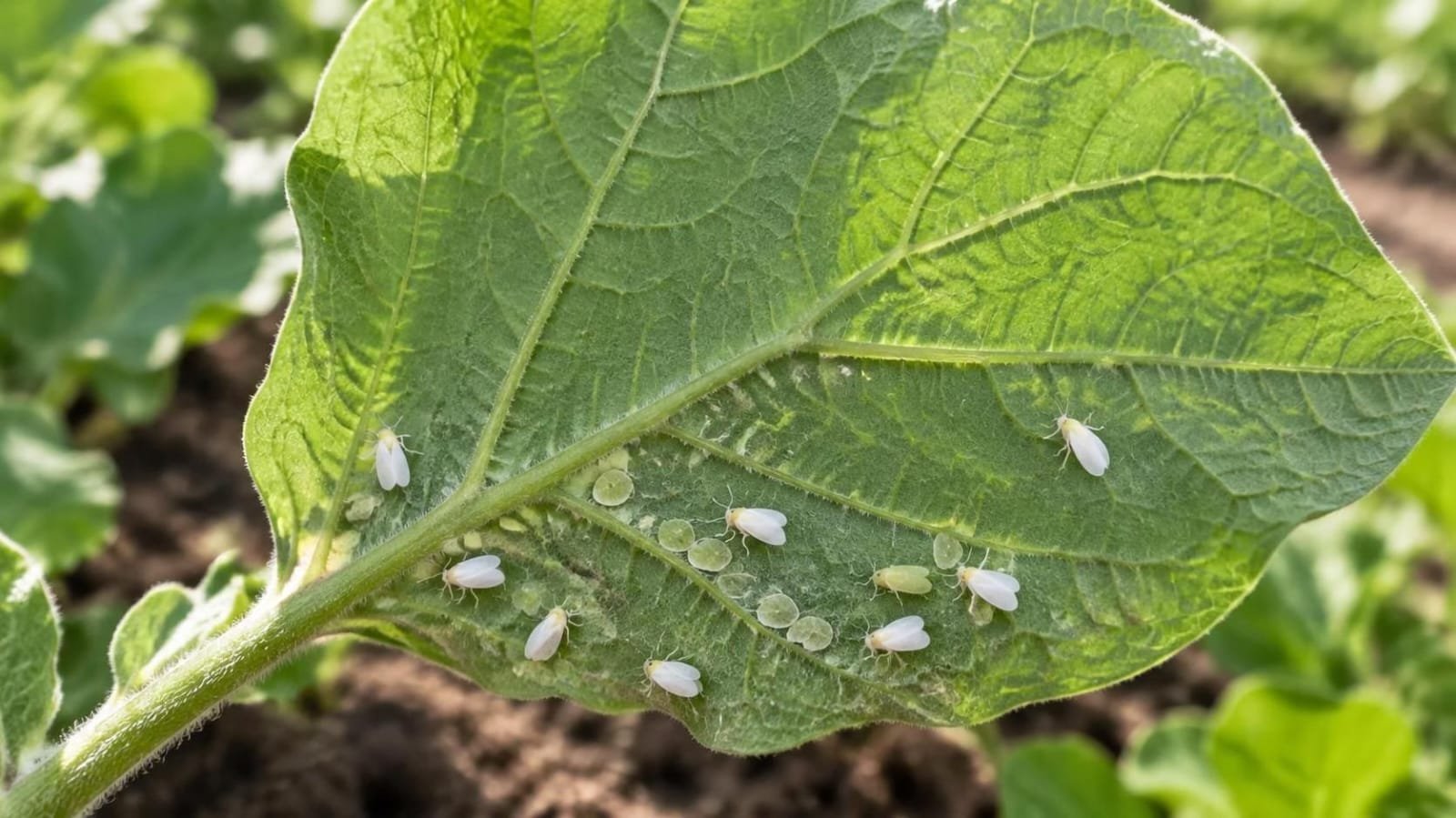
Whiteflies are tiny, sap-feeding insects that look like small white moths. They gather on the undersides of eggplant leaves, and adults flutter up when you disturb the plant. Their nymphs are flat, scale-like, and stay put. Look for pale speckling, sticky honeydew, and sooty mold. Monitor with yellow sticky traps placed just above the canopy. Reduce excess fertilizer and irrigation. Use parasitic wasps or products only when monitoring shows a need.
Whiteflies are a common problem in greenhouses and in warm gardens. They reproduce quickly, and a few adults can become a large population in a few weeks. This guide covers how to recognize whiteflies, how to tell their damage from other pests, and how to monitor and manage them.
What do whiteflies look like?
University of Wisconsin Extension describes whitefly adults as tiny, covered with a whitish powder, and resembling small moths. The nymphs are flat and scale-like, and they settle on the leaf and feed there.
UConn Extension notes that the sweetpotato whitefly is slightly smaller and paler than the greenhouse whitefly. It holds its wings at a steeper angle. The difference matters for control, since the species respond to different methods. Use a hand lens to look at the undersides of leaves.
Which whiteflies attack eggplant?
The University of Wisconsin guide lists eggplant among the vegetable hosts of whiteflies, along with cucumbers and tomatoes. The most common species in greenhouses are the greenhouse whitefly and the sweetpotato whitefly. The bandwing whitefly can enter greenhouses from outdoors in the fall. UConn Extension notes that it is rarely a serious pest.
Most of the research and extension advice on whiteflies comes from greenhouses, so apply it to garden beds with care. Check the undersides of leaves, and watch for adults flying up when the plants are disturbed.
How do you tell whitefly damage from other pests?
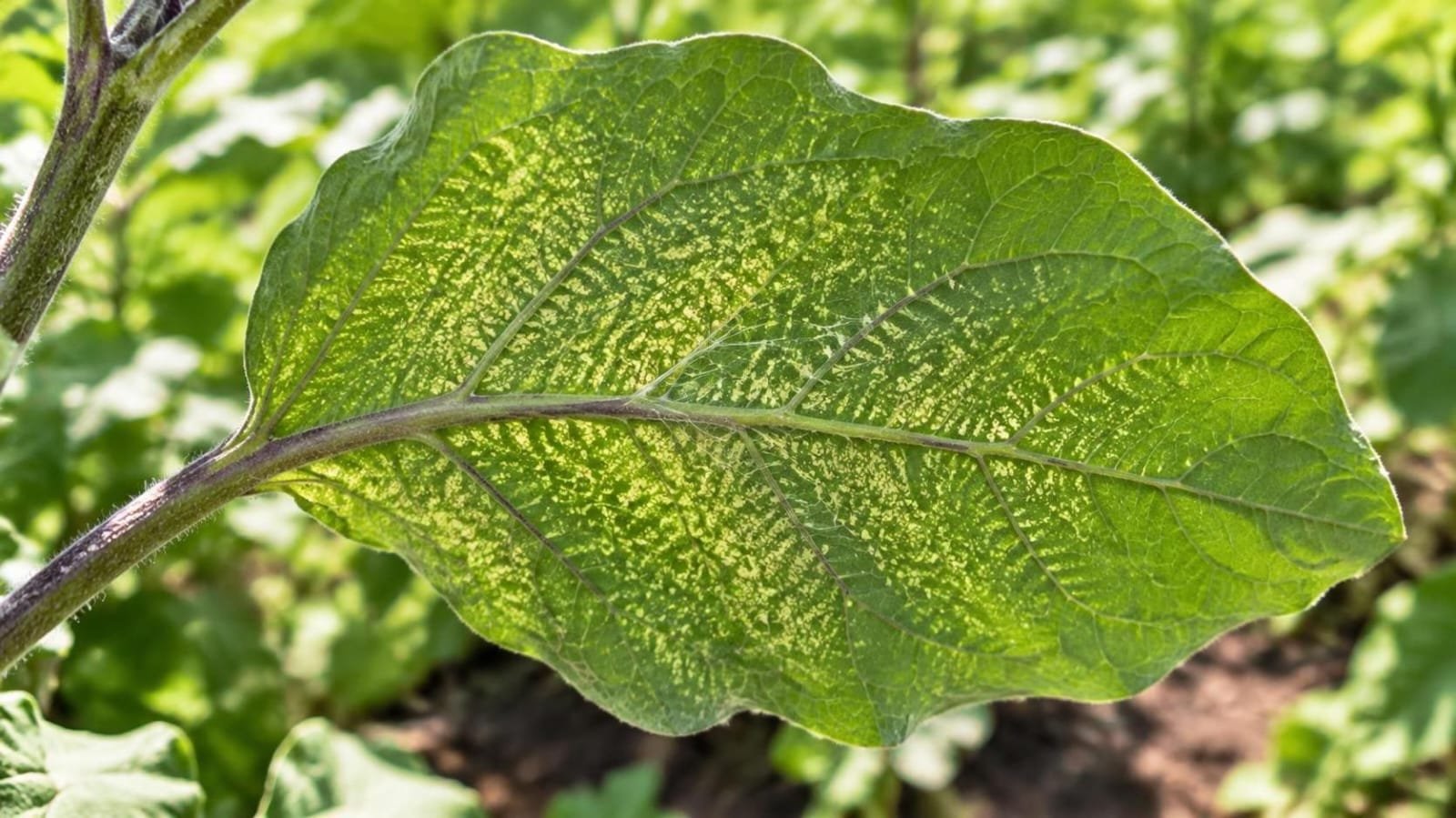
Whiteflies feed on sap, which causes pale speckling on the leaves. They also produce honeydew, a sticky residue that makes leaves and fruit shiny. Sooty mold grows on the honeydew and turns the surface black. Honeydew and sooty mold also appear with aphids, so look for the insects themselves before deciding which pest is responsible. Aphids on Eggplant covers the aphid patterns.
Whitefly nymphs are easy to miss because they look like small scales. Turn the leaf over and look for flat, pale, oval shapes. If you see adults flying when you brush the plant, whiteflies are likely the cause.
How do you monitor whiteflies on eggplant?
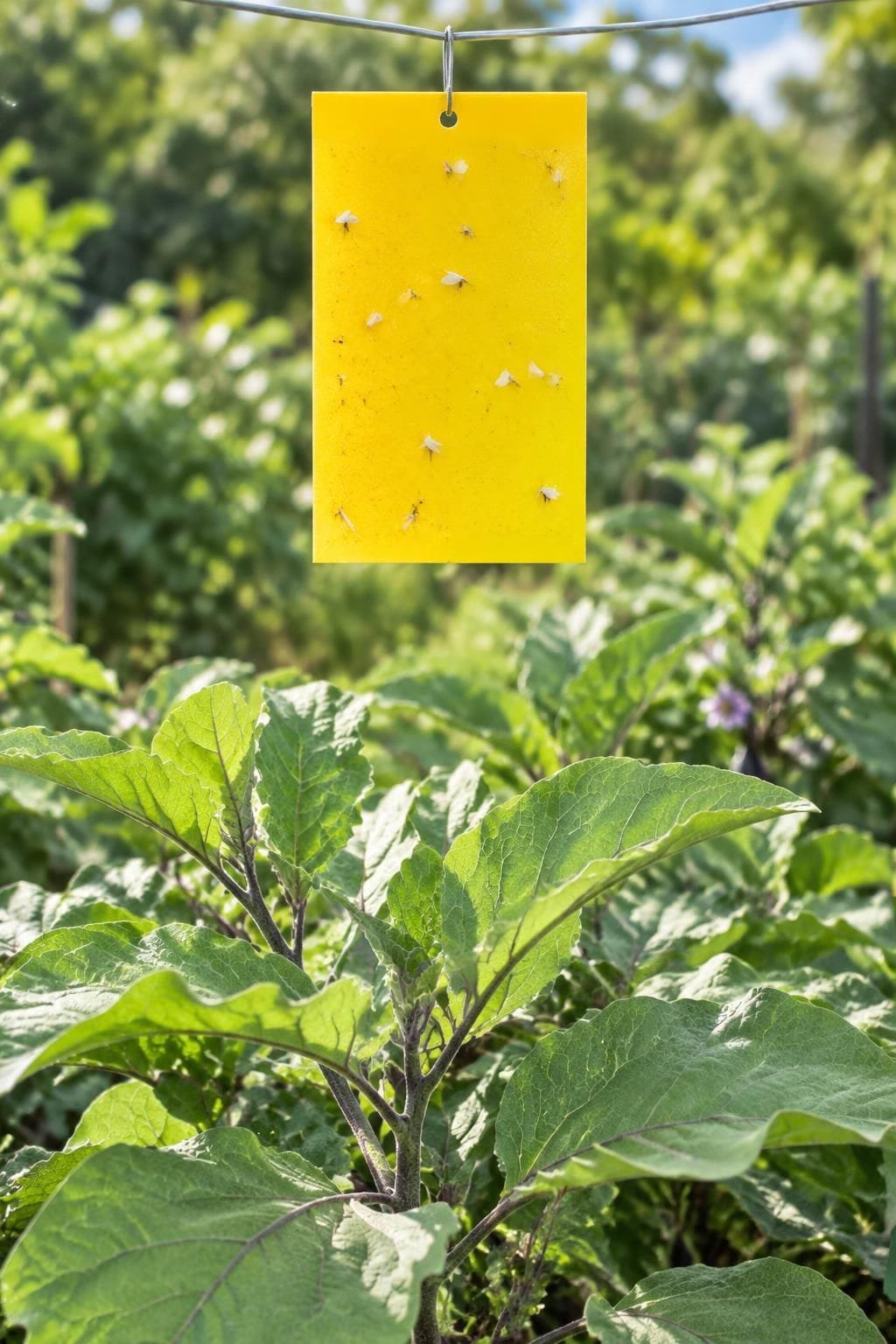
Yellow sticky traps are the standard monitoring tool. The University of Wisconsin guide recommends placing them just above the crop canopy. Shake the foliage gently to count the adults that fly up. A closer inspection of the leaves is needed to find the nymphs.
UConn Extension recommends placing one yellow sticky card per 1,000 square feet in a greenhouse, with extra cards near doors and vents, and changing them weekly. Outdoors, a few traps placed around the bed and checked at the same time each week can give you a rough population trend. The density guidance above is for greenhouses.
Do yellow sticky traps control whiteflies?
They can, but the results depend on where you use them. A study published in the Journal of Insect Science tested yellow sticky traps on eggplant. They significantly suppressed sweetpotato whitefly populations in a greenhouse. In the field, the traps did not produce the same effect. The researchers concluded they work best for monitoring and as one part of a larger program. Lu, Bei, and Zhang, 2012 reports the full results.
What cultural steps help control whiteflies on eggplant?
The Wisconsin guide recommends avoiding excessive fertilization and irrigation. Soft, succulent growth from heavy feeding is more attractive to whiteflies, and wet conditions can increase the problem. Screen vents in greenhouses to keep bandwing whiteflies out in the fall.
UConn Extension describes an integrated program built on sanitation, cultural practices, biological control, and chemical control. Clean up weeds and debris that can shelter whiteflies, and remove heavily infested plants when the damage is severe. Eggplant Leaves: Identification, Problems, and Care covers leaf changes that can look similar.
Are there natural enemies that control whiteflies on eggplant?
Yes. Several parasitic wasps attack whiteflies. UConn Extension notes that host-specific wasps, predatory mites, and beetles are commercially available for greenhouse use. Wasps are most useful when they are released early, before whitefly populations grow large.
Avoid broad-spectrum products when you use natural enemies, because they can kill the wasps as well as the whiteflies.
When do you need a whitefly product on eggplant?
Use a product only when monitoring shows that whiteflies are increasing, and when cultural steps and natural enemies are not enough. The Wisconsin guide warns that resistance can develop, so watch for poor control after a product is used. Follow the label on rotating product classes.
Follow the label for the crop, rate, timing, and safety. Ask your local extension office which options are labeled for eggplant in your state.
Where should you go next?
Start with monitoring and sanitation, then add other steps as needed. For the wider pest picture, Common Eggplant Pests: Identification and Control gives an overview of the common pests. For spider mites, which share similar conditions, Spider Mites on Eggplant covers identification and control. How to Grow Eggplant: Planting, Growing, and Care connects pest management to the full growing cycle.
One thought on “Whiteflies on Eggplant”