Aphids Keep Coming Back After Treatment? What the Return Pattern Tells You
You spray, the shoots look clean, and you feel the small relief of a job done. Then a week later the same tips are crowded again, or the colony has quietly moved to the plant next door. It is easy to conclude that the product failed or that the aphids are somehow immune.
Usually neither is true. Aphids come back because of how they breed, where they hide, and what is going on around the plant. The good news is that the way they return is a useful clue. Once you know when and where they reappear, you can usually work out why, and change the one thing that matters.
Aphids return because a treatment only removes the aphids it actually reaches. It does not remove the newborns still developing, the survivors tucked into curled leaves, the winged individuals arriving from elsewhere, the ants guarding them, or the soft, fast growth that suits them. Check how soon they came back and where, then match that to the cause below. Fixing that cause, and repeating treatment on a sensible schedule, is what finally breaks the cycle.
Why a single treatment rarely finishes the job
In warm weather, female aphids do not need to mate. As Wikifarmer explains, they give birth to live young that are copies of the mother, and those young begin producing their own within days. A colony is therefore a moving production line, not a fixed number of insects.
Most of what gardeners reach for works on contact. The University of California Statewide IPM Program notes that soaps, neem oil and horticultural oil kill only the aphids present on the day they are sprayed, so applications may need to be repeated. Anything that was shielded by a curled leaf, or was not yet born, carries on. The same page cautions that repeated use of these materials may lead to resistance, which is one more reason to rely on more than one method.
Heat speeds everything up. A Michigan State University extension note for greenhouse growers points out that aphids reproduce much faster above 75°F, and that if you wait five to seven days between sprays, newly hatched aphids will appear in the gaps. That advice is aimed at greenhouses, but the principle applies to any warm garden.
Read the return pattern
Before you spray again, take a moment to note how long it took for the aphids to return and where you found them. The table below pairs the most common patterns with their usual causes.
| How they return | Most likely reason | How to check | What to do |
|---|---|---|---|
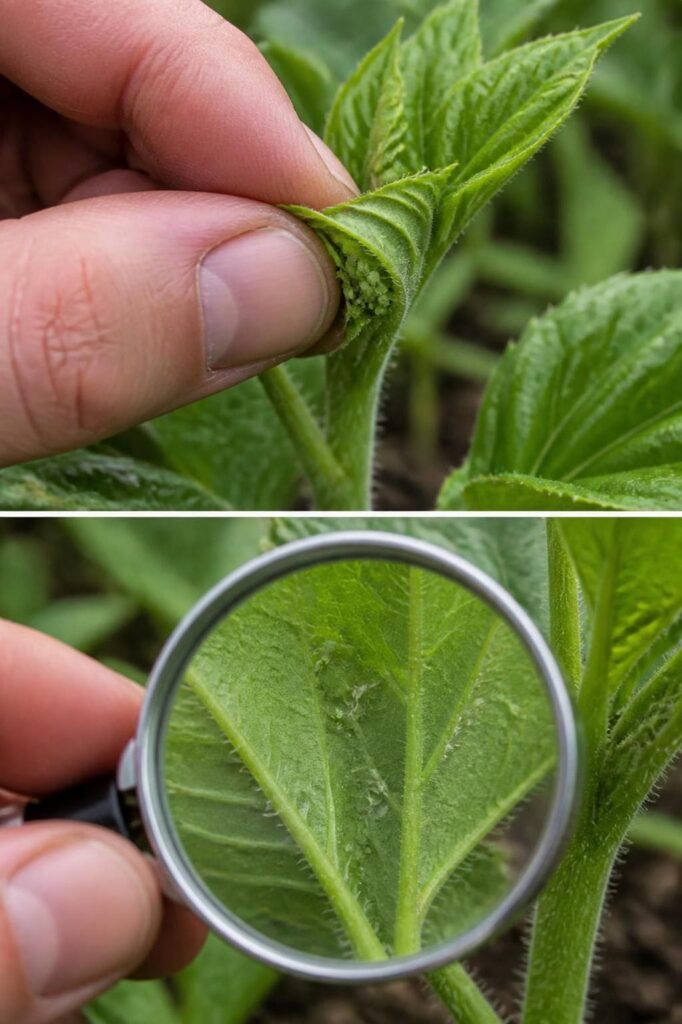
| Back within 2 to 5 days, same plant, same shoots | Survivors in hidden spots, plus newborns | Uncurl a leaf and check the undersides and the very tip of each shoot. A hand lens helps. | Retreat soon, with thorough coverage. Cut off badly curled tips and bag them. |
| Back after a week or two, after one treatment only | The next generation you never reached | Ask yourself honestly how many treatments you made. | Repeat on a short schedule until two checks in a row come up clean. |
| A neighbouring plant is now infested | Winged aphids, or walkers moving on from the crowded plant | Look for winged adults and check plants close by, including weeds. | Inspect everything nearby and treat early. Keep new plants apart for a week or two. |
| Worse after spraying, with ants on the stems | Ants guarding the colony, and natural enemies knocked back | Look for ant trails, sticky honeydew, and an absence of larvae or mummies. | Block the ants and stop using broad-spectrum sprays. |
| Back every spring on the same shrub or tree | Overwintering eggs on that host | Check the first fresh growth in early spring for tiny colonies. | Inspect early each year and wash off the first colonies before numbers build. |
| Treatment seems to work less each time | Poor coverage, wrong dilution, or reduced effect from repeated use | Check the label, your dilution and whether you reach the undersides. | Change the method, such as water, soap, oil or natural enemies, and follow the label. |
| Colonies appear soon after you fed the plant | A flush of soft growth from nitrogen | Note the date of the last feed against the date of the new growth. | Pause nitrogen and use balanced feeding. |
A routine that matches how aphids breed
Think of it as a short campaign rather than a single event. This sequence works for most garden plants.
- Inspect first. Check the shoot tips, the undersides of young leaves and any leaves that are curling. Uncurl one or two, since the aphids often sit inside.
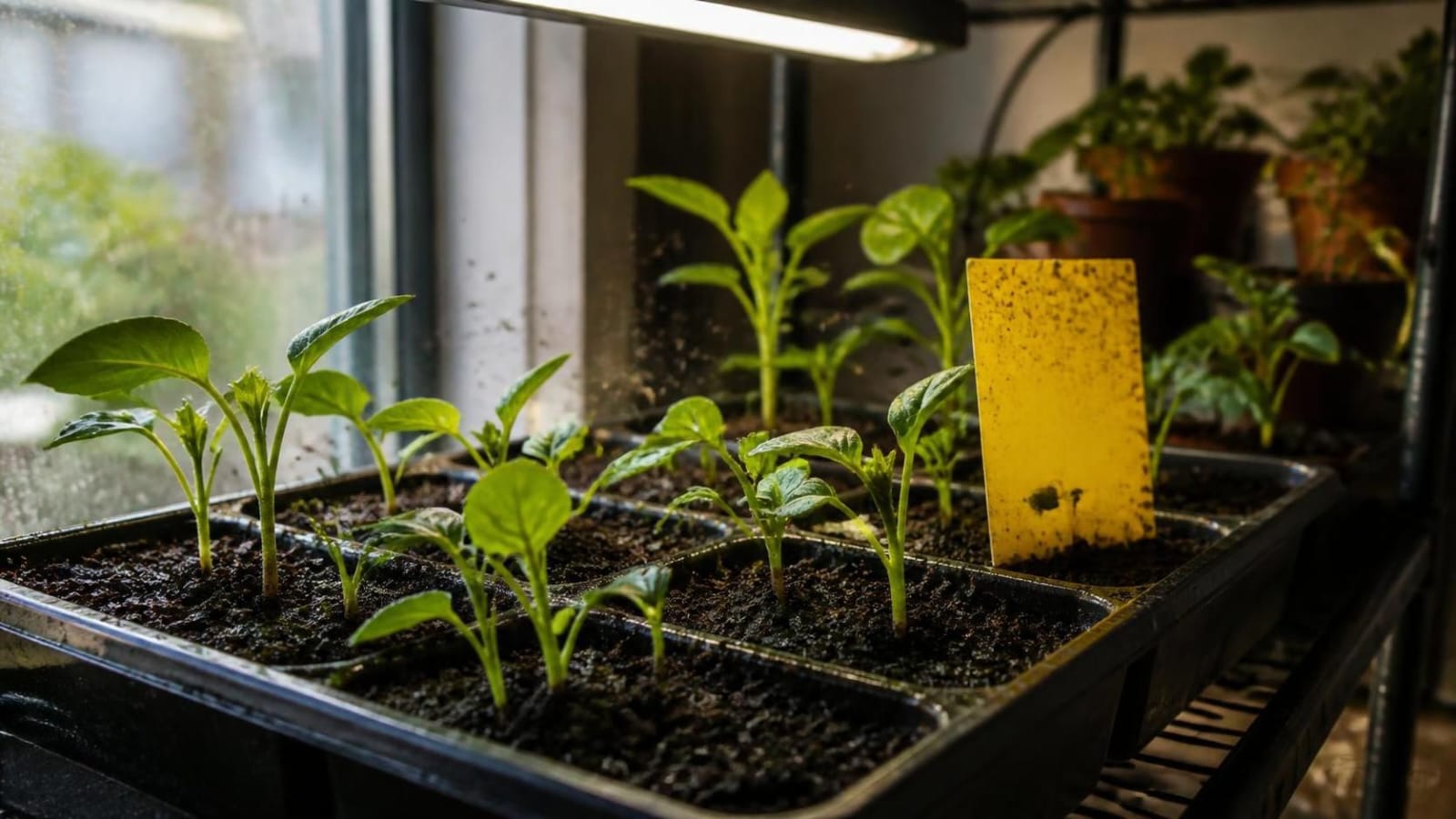
- Start with water on sturdy plants. UC IPM recommends knocking aphids off with a strong stream of water. Aim it at the undersides. Plants that cannot take pressure, such as seedlings, should be washed more gently or treated another way.
- Use soap or oil on dense colonies. These products work by smothering, so coverage is everything. Spray thoroughly and early or late in the day. UC IPM guidance passed on by San Diego Master Gardeners advises against applying them to drought-stressed plants or in very hot weather, and some plants are sensitive, so test a small area first.
- Prune what you can. Cutting off a heavily infested, distorted tip removes hundreds of aphids at once and costs the plant very little.
- Repeat before the next generation matures. See the note on timing below.
- Re-check twice. Do not stop after the first clean look. Check again a few days later and again a week after that.
How often to repeat
Advice differs, and it helps to know why. Some garden suppliers suggest water blasts or soap every 2 to 3 days, as Lawn Love does. Product labels often give longer intervals, and the Michigan State note above warns that five to seven days can leave room for new aphids to appear. A sensible middle path is to use water as often as every 2 to 3 days, to follow the label for the minimum interval for any product you apply, and to inspect the plant halfway through the interval so that you catch a rebound early.
Ants: the quiet reason treatment does not hold
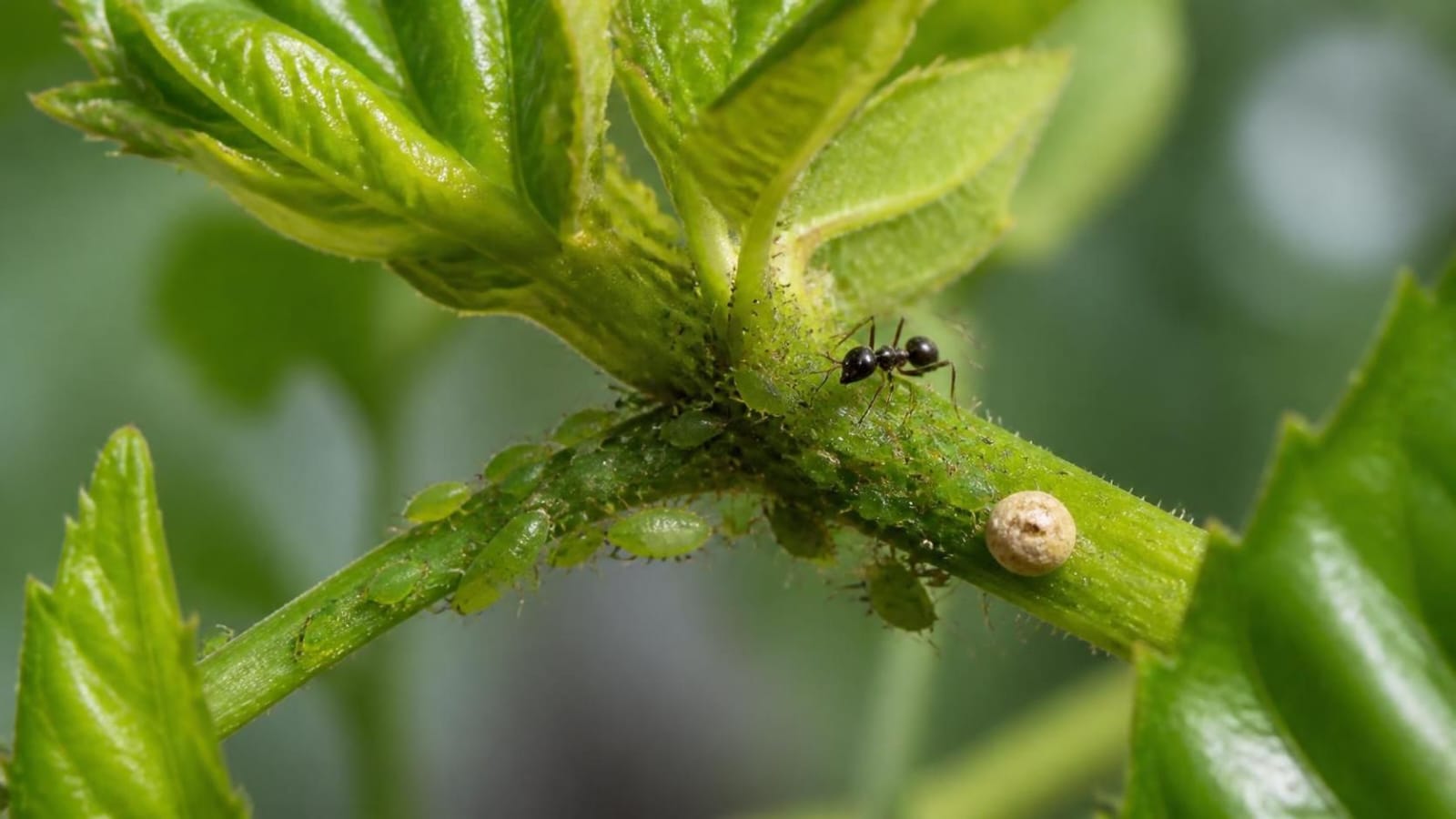
If ants keep running up and down the stems, they are probably part of the problem. They feed on the honeydew aphids produce, and in return they protect the aphids from their enemies. UC IPM notes that outbreaks of aphids and scales frequently occur when ants tend them, because the ants shield them from natural enemies.
That is why aphids often seem to bounce back faster after you spray: the insects that would have helped you are held off, while the ants keep farming. The Wikifarmer guide suggests a sticky band around the trunk to stop ants reaching the foliage of trees and shrubs, or finding and treating the nest. Prune away branches or ties that let ants bridge onto the plant another way, and wash off sticky honeydew when you can.
Let the natural enemies work, and do not spray them away
Aphids have many natural enemies. UC IPM lists lady beetles, lacewings, syrphid fly larvae, soldier beetles and tiny parasitic wasps. The larvae of several of these do most of the eating, so what looks like an odd grub on a leaf may be your best ally. The wasps leave behind crusty, tan or bronze shells known as mummies.
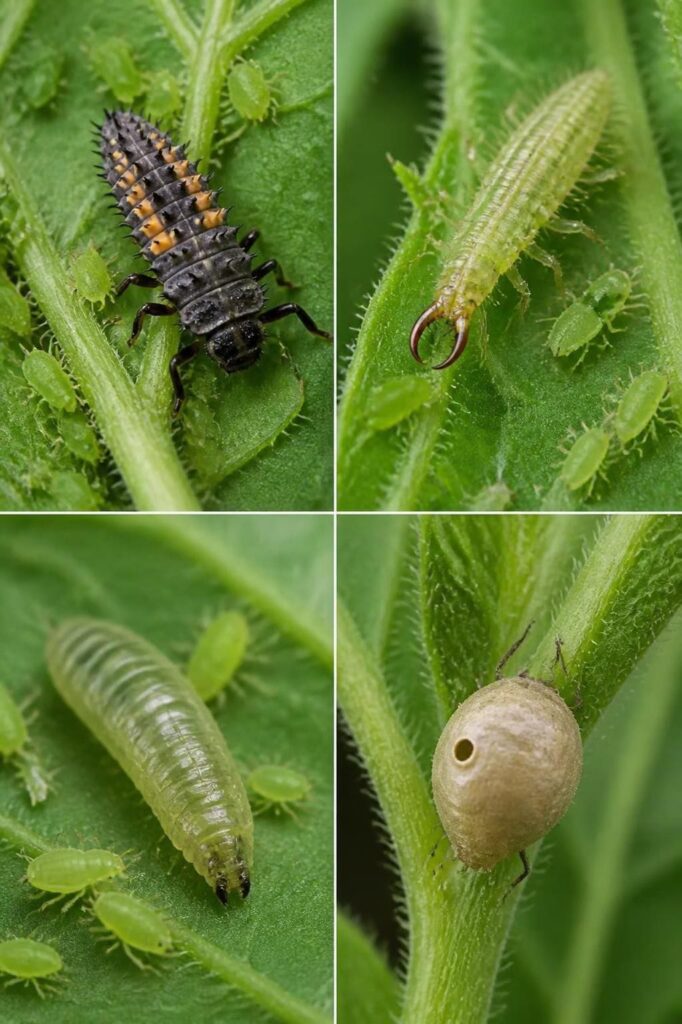
When you see mummies, hold back. The San Diego Master Gardeners summary of UC guidance says you will likely see a substantial reduction in aphids within a week or two once mummies appear. UC IPM also warns that broad-spectrum insecticides such as organophosphates, carbamates and pyrethroids kill natural enemies along with pests, and that soaps and oils are the gentler option if a spray is needed. Flowers that provide nectar and pollen, such as yarrow, dill and fennel, help keep the helpers around.
Buying ladybirds is rarely the shortcut it seems. Released adults tend to disperse, and the ones sold may not be native to your region. Encouraging the insects that are already there is more reliable.
Take away what aphids like
Aphids feed on soft, new growth. Heavy nitrogen feeding produces exactly that. Lawn Love quotes University of Maine pest specialist James Dill on a common trap: when plants yellow because aphids are feeding, gardeners add fertiliser, which grows more tender shoots for the aphids. Use balanced or slow-release feeding, and resist the urge to fertilise a plant that is under attack.
Stress matters too. Water plants steadily rather than letting them wilt and recover. Look around for reservoirs as well, such as weeds, neglected ornamentals nearby, and new plants brought home. Keep any new arrival apart from your collection for a week or two and inspect it closely. The same goes for houseplants that spent the summer outdoors.
You will see long lists of herbs and flowers said to repel aphids. I have not found strong evidence from university extension sources that planting them alone stops an infestation, so treat them as a pleasant extra rather than a plan.
When to leave them alone, and when to worry
A moderate number of aphids on a healthy, established plant rarely does lasting harm, especially if predators are arriving. It makes sense to be more watchful with seedlings, young transplants, and crops that are susceptible to viruses. Wikifarmer notes that aphids can pass on viruses within seconds of feeding and that this happens as they move around, so a spray cannot always catch it in time. For plants that matter a great deal, early detection and prevention are worth more than any treatment.
What not to do
- Do not spray in strong sun or heat. Soaps and oils can scorch leaves under those conditions.
- Do not use household dish detergent in place of insecticidal soap. Ordinary detergents can damage foliage. Use a product made for the purpose and follow its label.
- Do not reach for broad-spectrum insecticides as a first response. They remove the predators that would hold the aphids down, and the aphids often return faster than the predators do.
- Do not stop after one clean-looking day. New aphids may be hours from appearing.
- Do not fertilise a plant to help it recover. New soft growth will be the next thing the aphids colonise.
Quick answers
Can I get rid of aphids for good?
Rarely. Winged aphids can arrive from elsewhere at any time. The realistic goal is to keep numbers low enough that they cause no real damage, by catching colonies early, protecting natural enemies and controlling ants.
How long should I keep treating?
Until two or three consecutive checks over a couple of weeks come up clean, and longer in hot weather. Follow the product label for the minimum interval and the number of applications allowed.
Why do aphids return even after soap or neem?
Because these products kill only the aphids they touch. Anything missed, or born afterwards, carries on. Better coverage, a repeat visit and fewer reasons for them to thrive are the remedies.
Do I need to worry about the ants?
If ants are climbing the plant, yes. While ants guard the colony, natural enemies struggle to reach it and the aphids keep returning.
Will ladybirds solve the problem?
They help, but larvae of lacewings and hoverflies and tiny parasitic wasps do much of the work. Avoid sprays that harm them and give them flowers to feed on.