
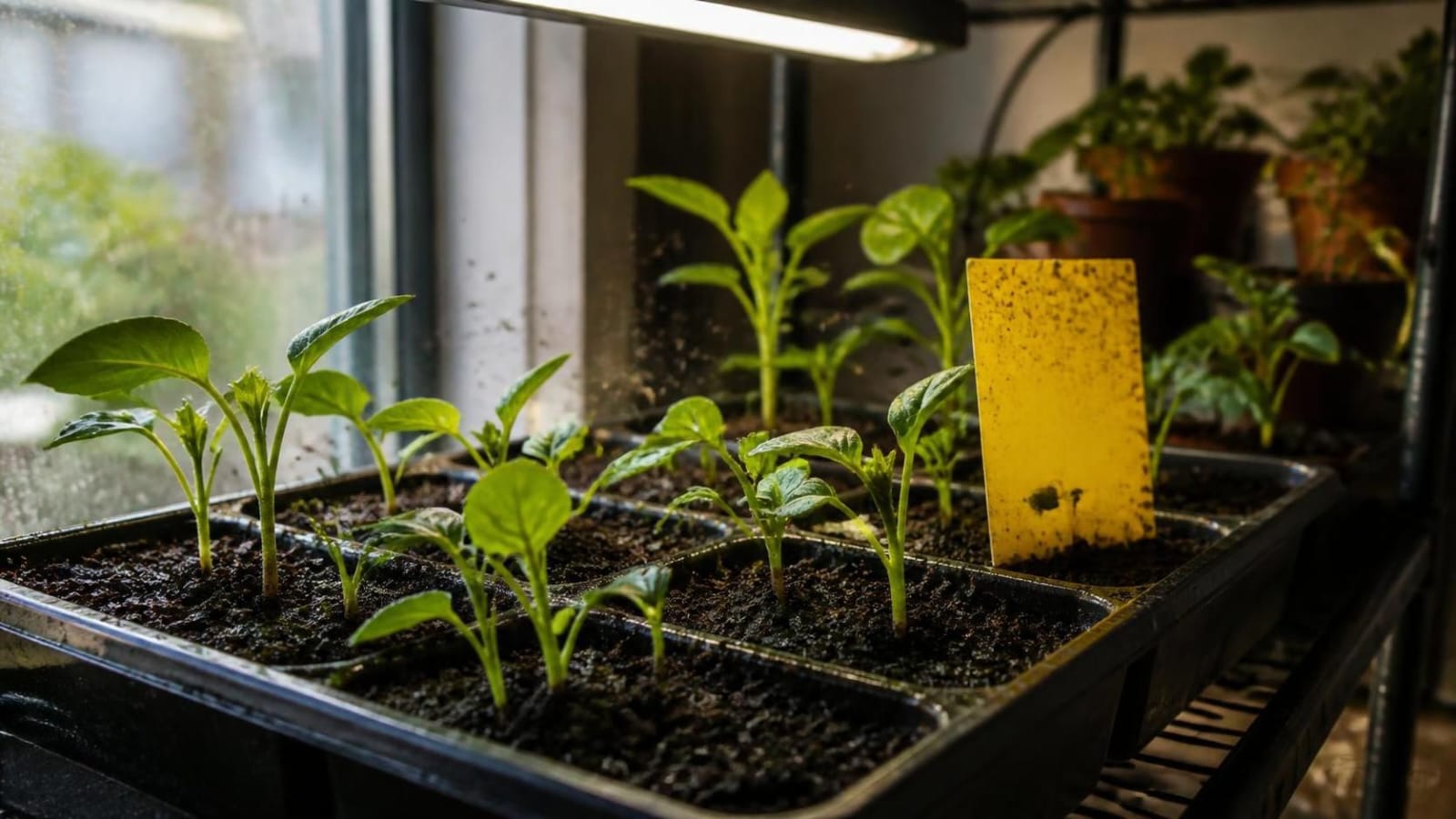
-
Fungus Gnats in Seed Starting Mix: Why They Keep Coming Back
You clear the tray, the flies disappear for a few days, and then another small cloud lifts off the soil as if nothing had happened. That pattern doesn’t mean your treatment was wrong. It means it was aimed at the part of the population you can see. Fungus gnats spend most of their lives hidden in the growing medium as eggs, larvae and pupae, and a seed tray kept warm, damp and under lights is close to an ideal nursery for them.
Short answer: gnats keep returning for three main reasons. Only the adults were treated, the surface of the mix never dried enough to interrupt breeding, or something keeps supplying new eggs, such as the mix itself, compost-type additives or another infested pot nearby. The fix is to dry the surface as far as your seedlings allow, use sticky cards to monitor the adults, treat the larvae repeatedly for about one full life cycle, and remove whatever is reseeding the tray.
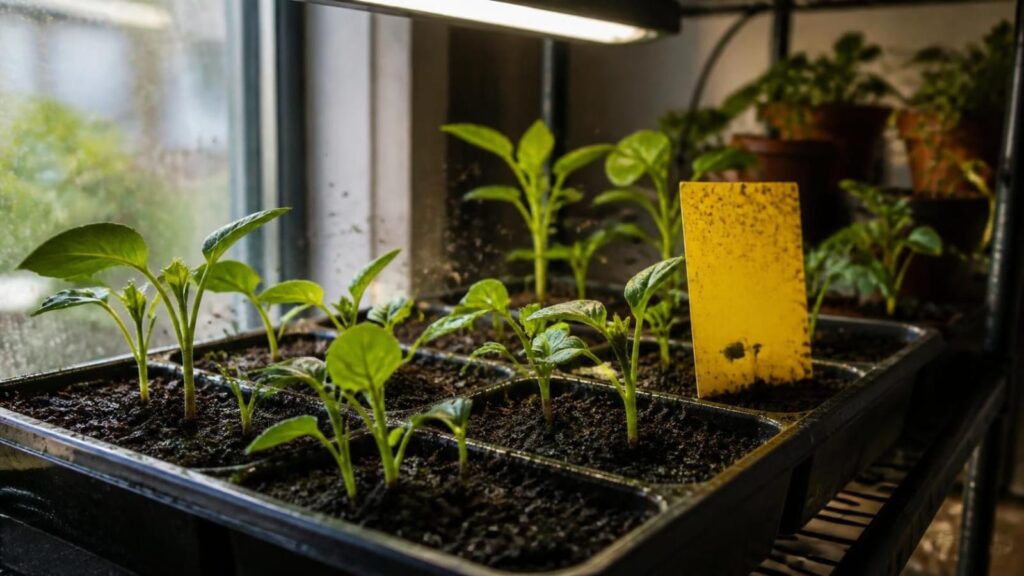
Why one round of treatment never finishes the job
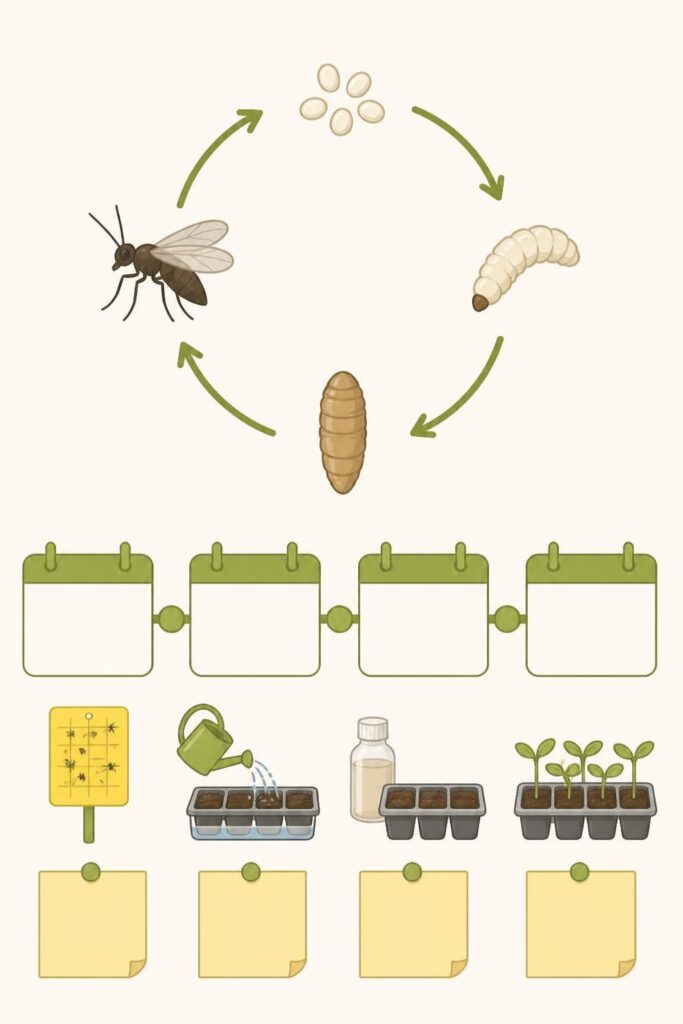
At 75°F (about 24°C), UC IPM describes the timeline like this: eggs hatch in roughly three days, larvae feed for about ten days, pupae wait around four more, and then adults emerge. One generation, from female to female, takes about 17 days, and it runs faster in a warmer room. Connecticut extension gives a slightly longer range of 21 to 28 days from egg to adult, depending on temperature, and points out that the generations overlap continuously.
That overlap is the heart of the problem. On any given day your tray holds eggs, larvae, pupae and adults at the same time. Bti, the biological larvicide most home growers use, only affects larvae that eat it. It does not touch eggs or pupae. A single drench clears the larvae present that day, while the eggs and pupae carry on in the soil and adults emerge days later. The adults live only a week to ten days, but that is long enough to lay the next batch.
So the useful question is rarely “what is the strongest product?” It is “have I kept the pressure on for a whole generation?”
Before you treat: are they really fungus gnats?
Most small flies hovering over a seed tray are fungus gnats, but two look-alikes are worth ruling out, because they point to different causes.
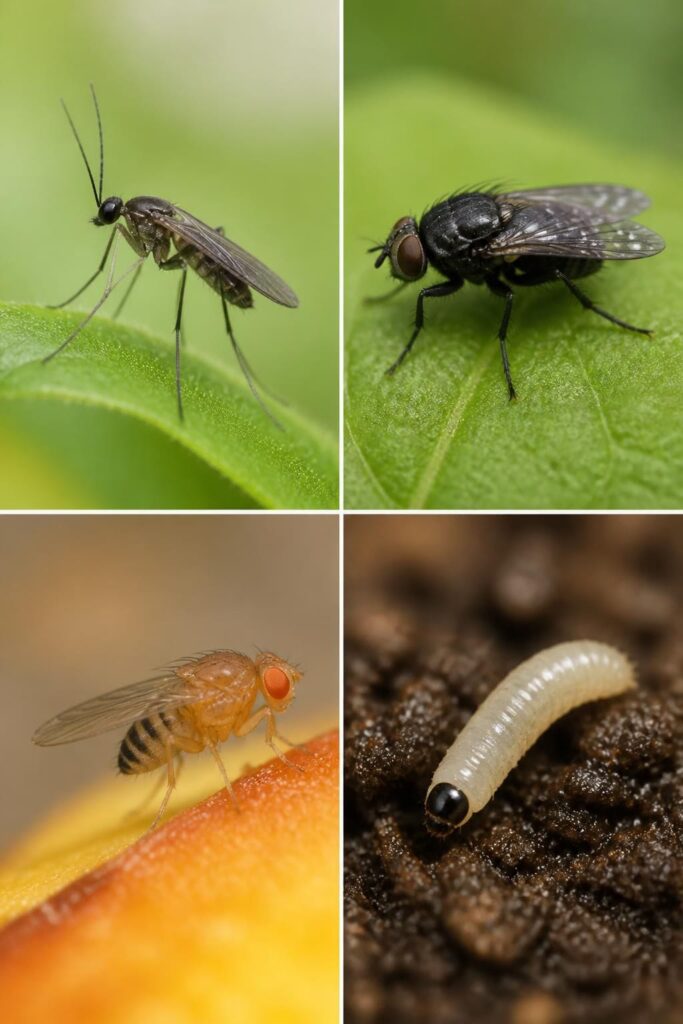
- Fungus gnats are dark, delicate and mosquito-like, with long legs and antennae longer than the head. They fly weakly, often in a zigzag, and stay close to the pots, frequently walking across the soil surface.
- Shore flies are sturdier, with short, bristle-like antennae. They are associated with algae and wet, decaying matter, so a green film on the tray or pooled water is a clue.
- Fruit flies gather around ripe fruit and kitchen waste rather than the soil.
The larvae settle it. They are slender, translucent white and legless, with a shiny black head. When conditions are very wet they can leave glistening trails across the surface that look like tiny slug tracks.
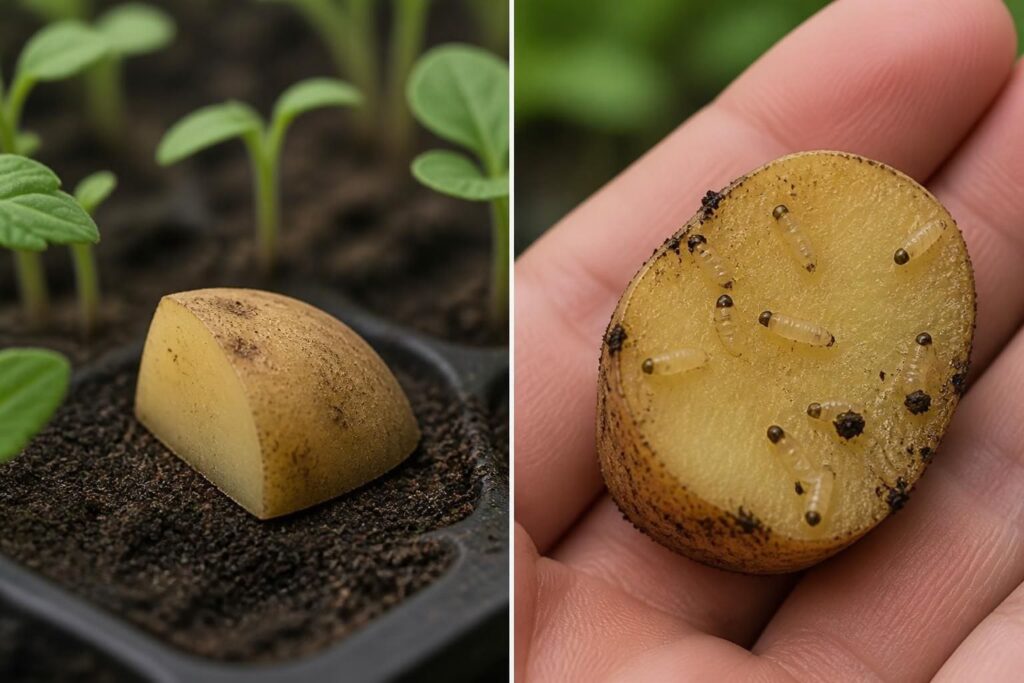
If you can’t see any larvae, scout for them. UC IPM describes a simple trick: press a chunk of raw potato, cut side down, onto the surface of the mix. Larvae are attracted to it. Lift it after a few days, and if pale larvae with dark heads are clinging to the cut face, you know they are in the mix. Throw that piece away and set a fresh one. The same extension note says this also draws some larvae away from the roots.
Where the next wave keeps coming from
When gnats return after treatment, the cause is usually one of five things. The table links what you are seeing to the most likely explanation, and a few of the less obvious ones are explained below it.
| What you notice | Likely cause | How to confirm | What to change |
|---|---|---|---|
| Adults drop on the cards, then rebound within one to three weeks | Larvae and pupae still in the mix because treatment stopped early or missed them | A potato chunk collects larvae; shiny trails on the surface | Keep the surface drier and repeat larval treatment across a full generation |
| Gnats appear in fresh trays within a few weeks, even trays kept away from other plants | Eggs or larvae arrived in the mix, or gnats reached an open or damaged bag | Sow a small test tray from a different, sealed bag and compare | Use pasteurized mix and store it dry and closed |
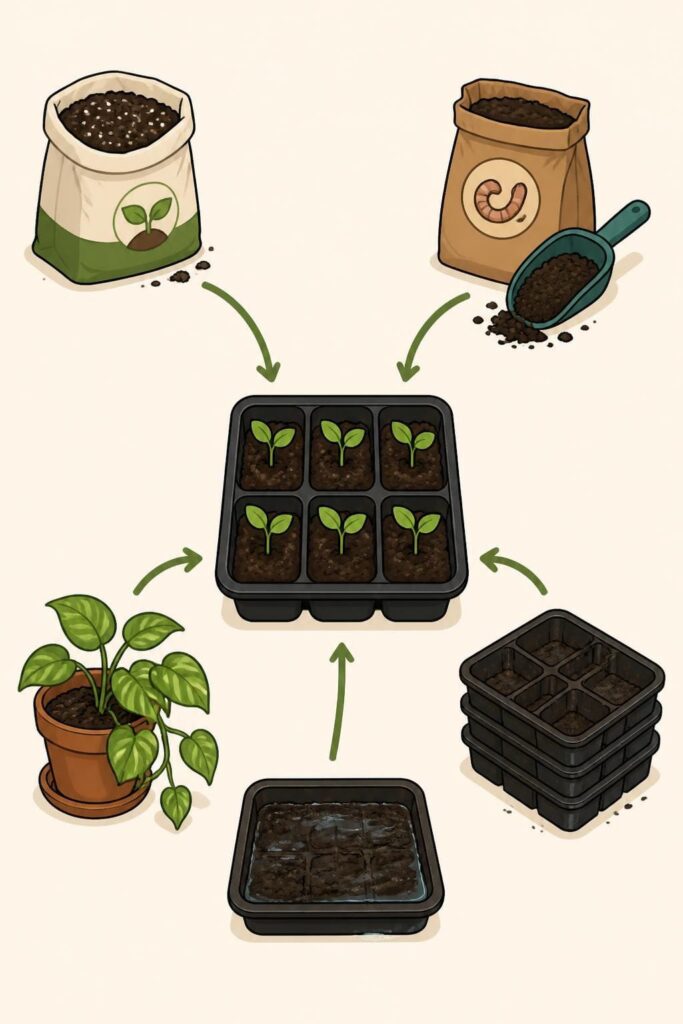
| Worse in trays containing compost, worm castings, kelp, blood meal or organic fertilizer | Organic additions feed larvae and attract egg-laying adults | Compare a plain-mix tray with an amended one | Keep seed starting mix plain and feed later |
| Surface is always dark, the dome stays on, water pools in the tray | Constant surface moisture | Is the top layer still wet several days after watering? | Vent or remove the dome once seeds sprout; water from below and drain |
| Gnats return after you clean up, and houseplants sit nearby | A second breeding site: other pots, old trays or spilled mix | Inspect houseplant pots, reused trays and the floor for damp mix and adults | Treat or isolate those sources; move the seed shelf if you can |
The mix itself may be the source
UC IPM advises buying only pasteurized container mix and warns that incompletely composted organic matter is often already infested. Connecticut extension is blunter: no potting mix is immune. Gnats can also enter a bag later if it is stored damp or has a tear. That matters because the flies may not be “coming back” at all. A fresh tray sown from the same mix can simply produce its own generation.
Organic additions work like bait
Connecticut extension reports that adults are especially attracted to microbially active media containing compost, vermicompost, blood meal or kelp, and that two to five times as many adults may emerge from such media. UC IPM likewise lists compost, organic fertilizers and mulches among their favorite breeding spots. Seedlings in their first weeks don’t need any of these in the tray.
Do fungus gnats actually damage seedlings?
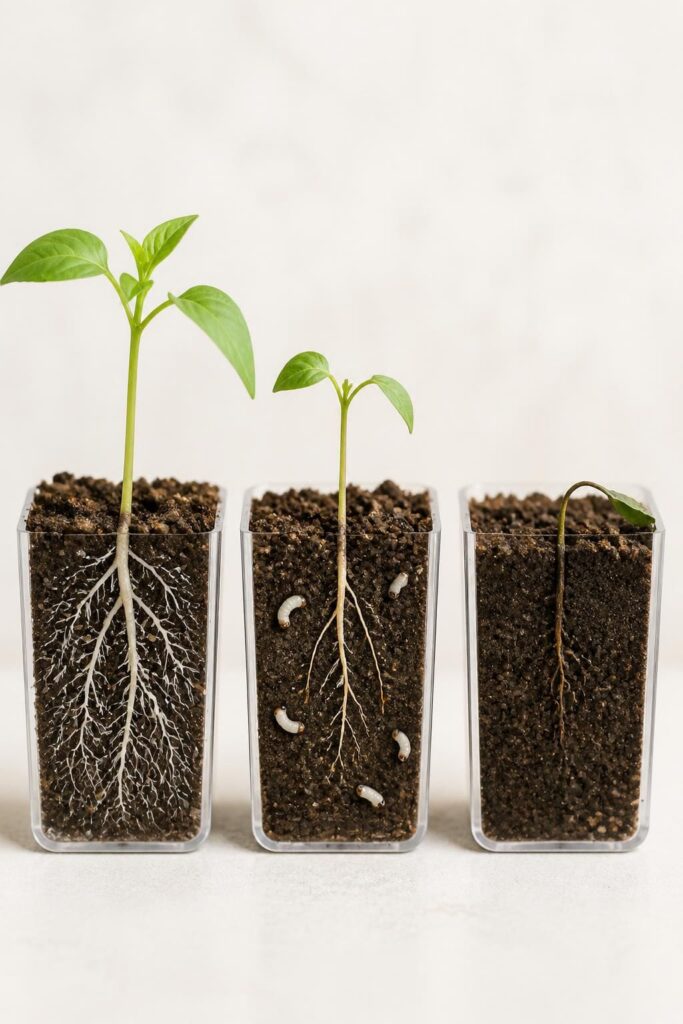
Adults don’t bite people and don’t harm plants. The larvae are the concern. They mostly feed on fungi and decaying organic matter, but they also chew roots, and UC IPM notes that large numbers can stunt growth, particularly in seedlings and young plants. Connecticut extension names young seedlings grown in plugs as the most vulnerable. In laboratory studies, adult gnats also carried spores of disease fungi such as Botrytis, Fusarium, Verticillium and Thielaviopsis, although how much this matters in real growing conditions is unclear.
Keep it in proportion, though. UC IPM also cautions that a wilting plant is far more often suffering from overwatering, poor drainage or root rot than from gnat larvae. Think of the gnats as a sign that the tray is too wet, and don’t automatically blame them for every failing seedling. A rough way to read the situation:
- A few adults over sturdy seedlings: low urgency for the plants, but fix the watering now, before numbers build.
- Seedlings that stall or wilt while the mix is wet, with thin or chewed roots and larvae visible: treat promptly.
- Seedlings that topple at the soil line, with a thin, water-soaked stem: this looks more like damping off, a soil-borne disease favored by the same damp conditions. Treating gnats alone won’t solve it.
A treatment plan built around the life cycle
Four parts work together. None is a miracle on its own, but combined they cover every stage over the roughly month it takes to break the cycle.
Dry the surface as far as the seedlings allow
UC IPM puts this first: let the surface of container soil dry between waterings. Eggs and larvae need moist media, so a drier top layer makes egg-laying harder and shortens survival.
Seeds, of course, need steady moisture to germinate, and that is exactly what gnats like. You don’t have to choose one or the other. Keep the mix evenly moist until the seedlings are up, then change the routine. Vent or remove the humidity dome, water thoroughly but less often, let the top layer lose its sheen between waterings, and never leave water standing in the tray. Bottom watering keeps the surface drier and is a useful helper, though not a cure. It suits plants that tolerate some drying better than those that need uniformly moist soil. Gentle air movement across the trays also helps the surface dry, and it is useful against damping off too.
Put yellow sticky cards at soil level
Connecticut extension recommends laying yellow cards horizontally at the soil surface and changing them weekly. Cards catch adults and may trim egg-laying a little, but their real value is as a counter. A falling number from week to week is the clearest sign the larval treatment is working. They don’t affect larvae, so don’t judge anything by the cards on day two.
Treat the larvae, and keep treating
Bti (Bacillus thuringiensis subspecies israelensis) is the most convenient option for home growers. It is sold at garden centers under names such as Gnatrol or as mosquito bits. It must be eaten by larvae to work, and it is toxic only to fly larvae. It is not the same product as the Bt sold for caterpillars, which does not work on fly larvae. Bti doesn’t reproduce or persist indoors, so UC IPM says infestations may need repeat applications at about five-day intervals. Follow the label of the product you buy, because rates differ and products and rules vary by country. If you grow vegetables or herbs, check that the label allows use around edible plants.
Beneficial nematodes (Steinernema feltiae) are the other biological option. They hunt larvae in moist mix at roughly 60 to 90°F, and UC IPM notes they can give longer-term control and may become self-sustaining after several applications. They are live and perishable, usually mail-ordered, and need to go on promptly. They also need moist media, so don’t combine them with aggressive drying for the first few days. If gnats return in your seed trays every spring, nematodes may be worth the extra effort.
Add a thin barrier, if you like
Some growers top the mix with a thin layer of coarse sand or fine grit to make egg-laying harder and help the surface dry faster. Evidence for this in seed trays is thin, so treat it as an optional extra. Apply it after sowing, keep it thin, and skip it for tiny seeds that need light to germinate.
What to leave out
Sprays and fogs aimed at flying adults are not worth the effort. UC IPM advises against fogging indoors or spraying adults in flight, and says insecticides are rarely warranted around the home. Homemade peroxide or soap drenches are popular online, but extension support for them is lacking and seedling roots are delicate. If a product is used at all, it needs to be labeled for your plants and for edibles if relevant.
What about cinnamon and hydrogen peroxide? Cinnamon is often suggested because it may slow the surface fungi that larvae feed on, but it is not known to kill larvae, and an MSU Extension answer warned that cinnamon would almost certainly harm beneficial nematodes if you plan to use them. Hydrogen peroxide drenches fizz on contact and are popular online, but the recipes differ widely, which is why no ratio is given here. That same MSU Extension answer advises against both cinnamon and peroxide for fungus gnats, noting that high doses can damage plants, and seedling roots are delicate. Bti is more targeted and predictable for tender seedlings.
What the month looks like
- First week: set out the cards, vent the dome, water less often and apply the first larval treatment.
- Weeks two and three: repeat the larval treatment at the interval on the label. Adults may still appear, because pupae already in the mix keep emerging.
- Week four onward: if the cards stay nearly empty and fresh potato chunks turn up no larvae, stop treating. Leave the cards up for a few more weeks in case something was missed.
If a tray is already badly infested and the seedlings are declining, starting again may be faster than rescuing it. Sow into fresh mix from a sealed bag in a cleaned tray. UC IPM accepts that severely infested plants are sometimes best thrown out, and advises against moving infested pots to new areas, where the adults can emerge and spread.
Stopping the cycle before the next sowing
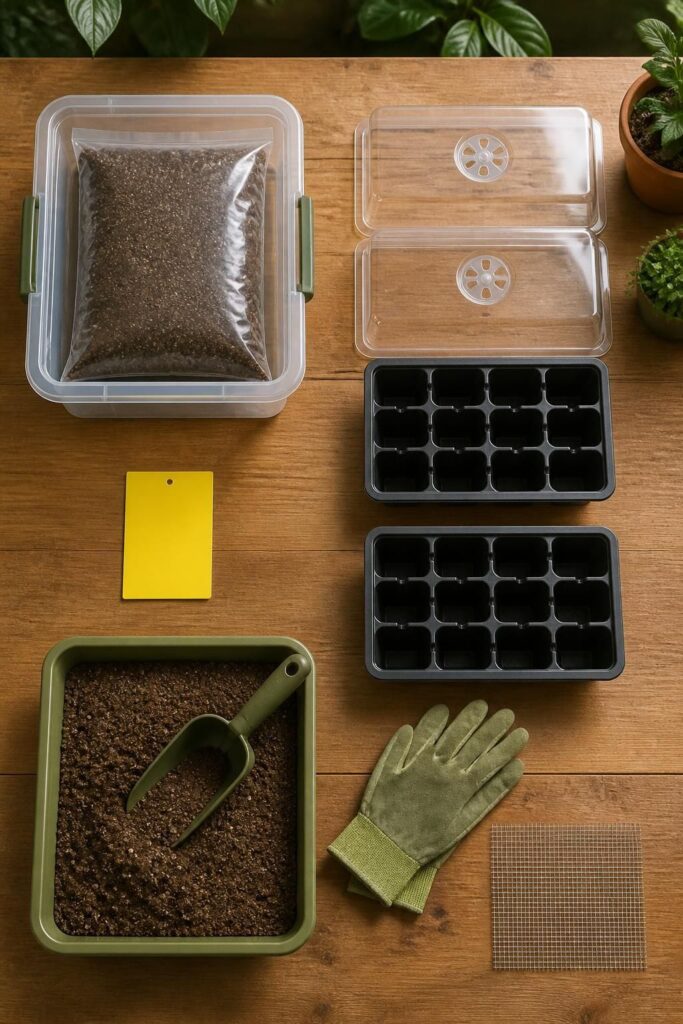
- Start with pasteurized mix and keep it that way. Store it dry, in a closed container, off the floor. If you doubt a mix, UC IPM describes home solarizing: moisten it, bag it in clear or black plastic in a pile no deeper than about 8 inches, and leave it in a sunny spot for roughly four to six weeks. That is slow, so plan ahead. Some growers soak mix in boiling water before sowing. Reports of how well it works are anecdotal, it also kills beneficial microbes, and hot water is a burn risk, so treat it as a grower’s trick rather than a proven standard. Heat does kill the small organisms it reaches, but soaking a peat-based mix this way leaves it very wet and hot, so it needs time to cool and drain to a workable moisture before you sow.
- Keep seed starting mix plain. Leave compost, worm castings, kelp and blood meal out of the tray, and feed seedlings later once they are established, following the fertilizer label.
- Clean the equipment. Wash and dry trays, domes and cell packs, and remove old mix, roots and plant debris before reuse.
- Watch for outside sources. Keep the seed shelf away from houseplants, hold new plants apart for about two weeks, and check plants that spent the summer outdoors before bringing them in.
- Monitor from day one. Put the cards down when you sow, not after the first fly.
- Close the gaps. Screens on windows and doors keep outdoor gnats from finding your trays.
Common questions
Will fungus gnats go away on their own?
Rarely, as long as the top of the mix stays damp and there is organic matter to feed on. Because generations overlap, the population keeps replacing itself. A drier surface plus one full cycle of larval control is what ends it.
Are sticky cards enough?
They catch adults and show progress, but the larvae in the mix keep producing new adults. UC IPM points out that the most effective methods target the immature stages, since most of the gnat’s life is spent as larva and pupa.
Does bottom watering get rid of fungus gnats?
It helps by keeping the surface drier, but on its own it won’t clear an established infestation. Use it alongside the rest of the plan.
Can I reuse mix that had gnats in it?
Used mix can carry larvae and pupae into the next tray. Discard it, or solarize it if you can wait four to six weeks.
Are fungus gnats harmful to people or pets?
No. Adults don’t bite and aren’t considered harmful to people. They are mainly a nuisance.
How do I know the treatment has worked?
Look for cards that stay nearly empty for two or three weeks in a row, fresh potato chunks with no larvae on them, no shiny trails on the surface, and seedlings that have resumed growth.