
Powdery Mildew: Causes, Symptoms, Treatment & Prevention
Most fungal diseases want wet leaves. Powdery mildew is the odd one out. According to the University of California’s Statewide IPM Program, every powdery mildew species can germinate and infect without free water, and the disease is often favored by warm, dry days followed by cool, damp nights. That surprises many gardeners, and it explains why the common advice to keep the foliage dry does little to stop it.
This guide covers what causes powdery mildew on plants, how to recognize it, and how to treat it stage by stage, with the evidence behind each option. It also covers what to avoid and how to keep the disease from coming back next season.
Quick answer: To get rid of powdery mildew, cut off the worst-affected growth, open the plant up to sun and airflow, and act early. Horticultural and plant oils can reduce mild to moderate infections, while sulfur and most other products only protect leaves that are still clean. Treatment limits the spread, but it does not reliably restore leaves that are already badly damaged.
What Is Powdery Mildew?
Powdery mildew is not a single disease but a family of related fungi, and each species attacks only certain plants. The Royal Horticultural Society points out, for example, that the fungus on peas is a different species from the one on apples. All of them need living plant tissue to grow. Most form a thin layer on the outside of the plant and produce chains of spores that wind carries to new hosts. The white powder you see is largely those spores.
The host-specific habit works in your favor. Mildew on a rose is not usually going to move onto your squash, although it spreads readily among related plants.
Powdery Mildew on Plants: The Signs to Look For
Symptoms vary a little by plant, but these are the common ones.
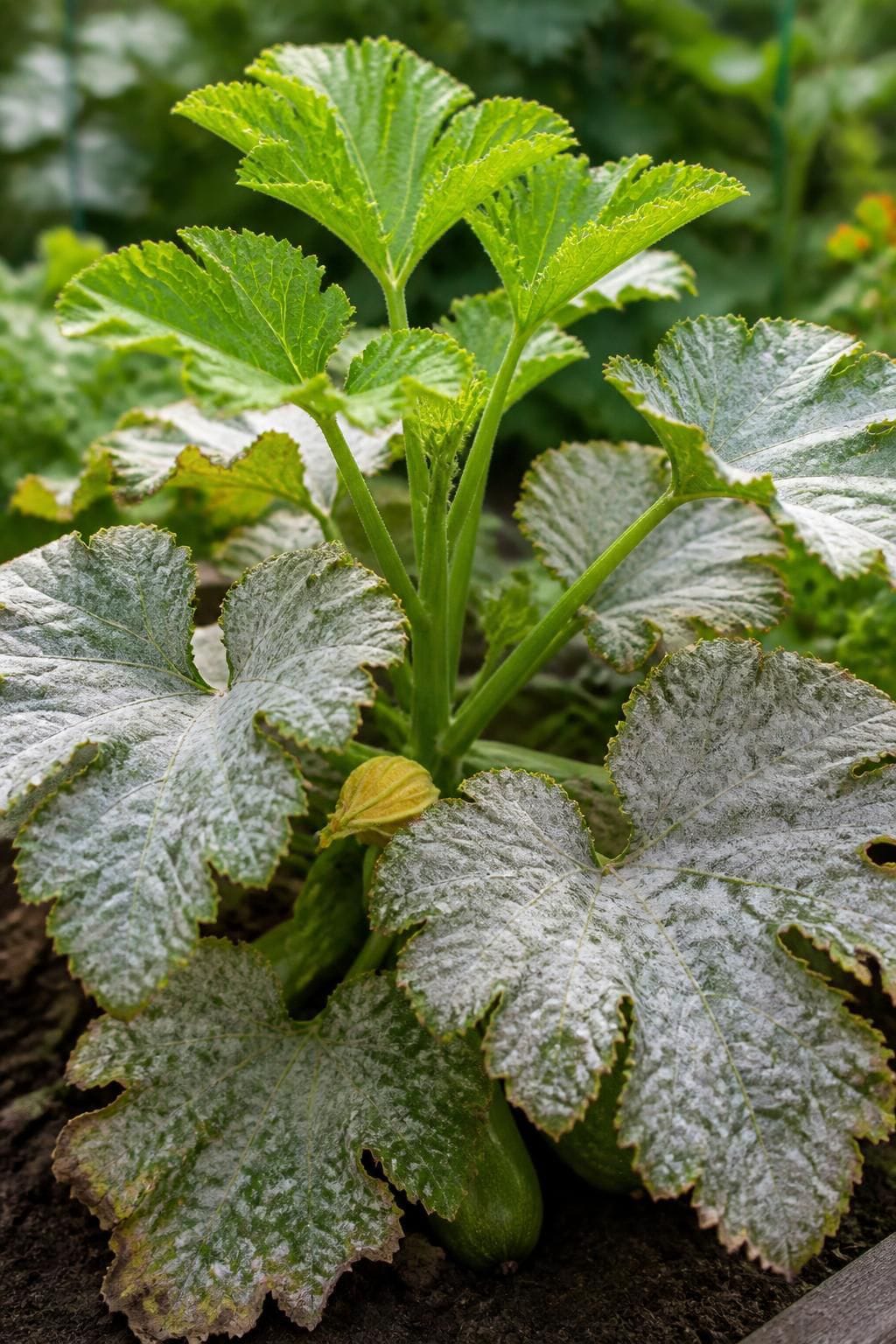
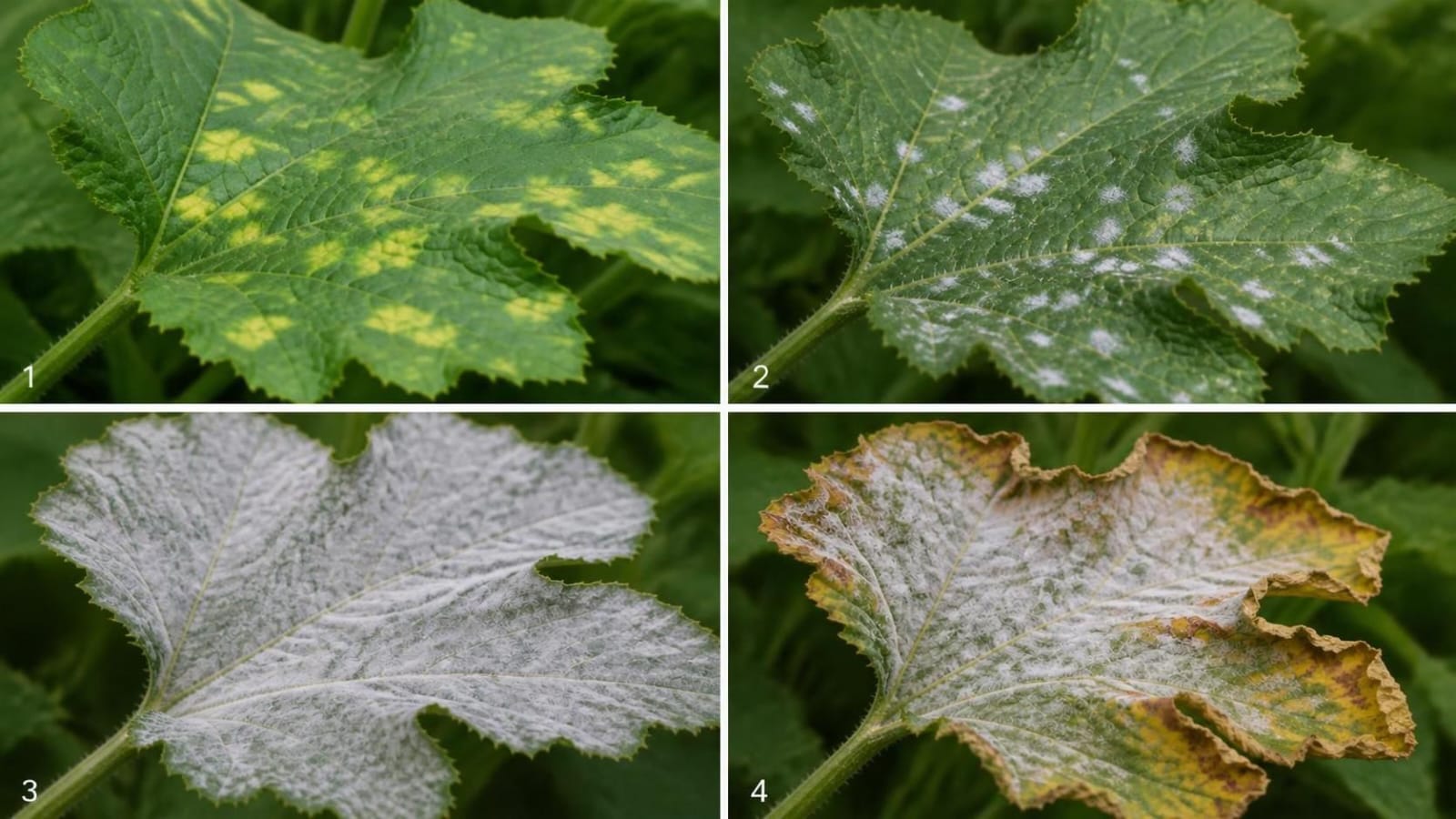
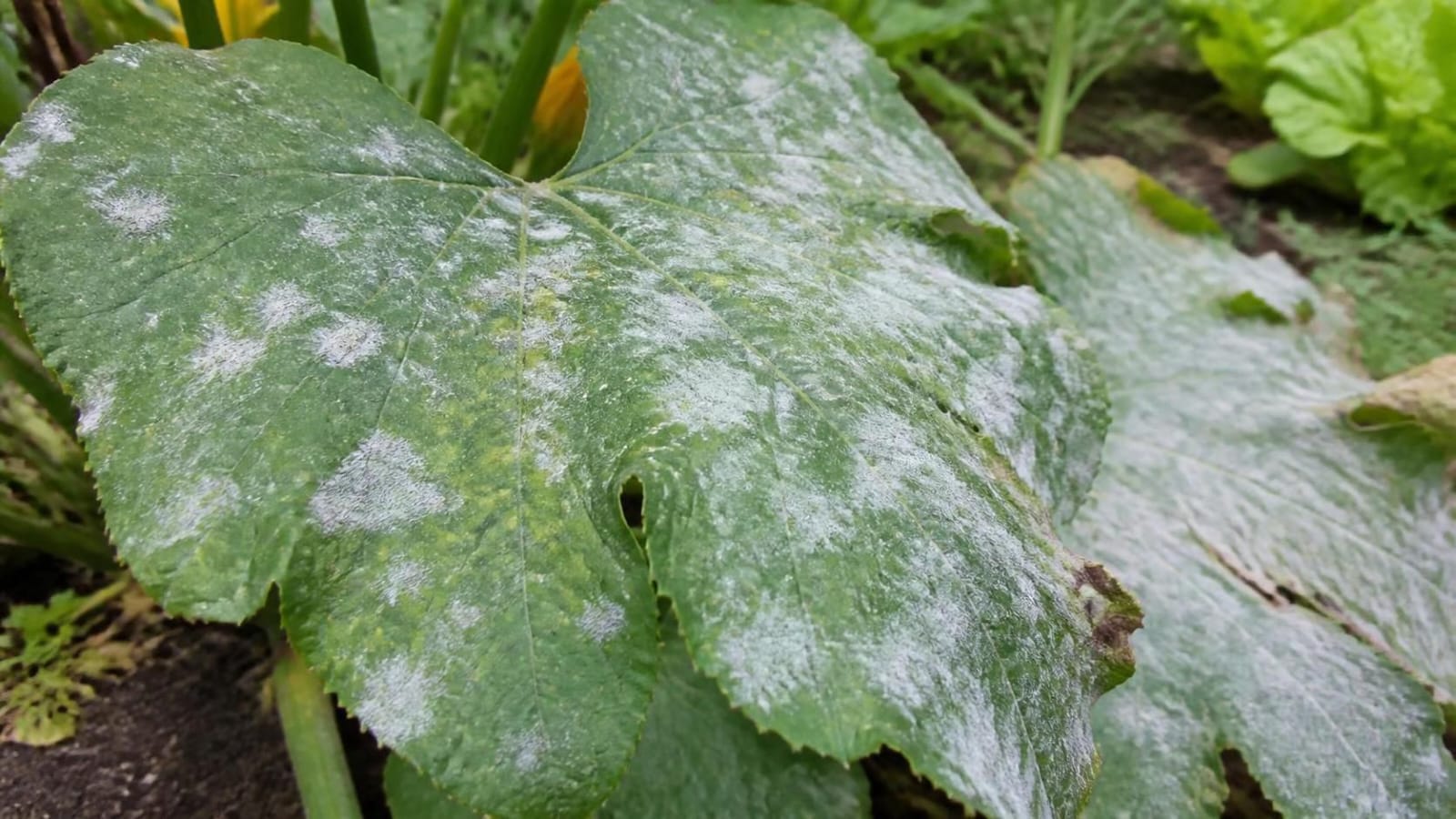
- White to gray powdery spots, usually round at first, on leaves, stems, buds and sometimes flowers or fruit.
- Spots on both leaf surfaces that widen and merge as the infection grows.
- Yellow or purplish patches, which can appear before any powder is visible.
- Leaves that twist, distort, yellow, brown and drop early, which can leave fruit exposed to sunburn.
- Tiny black specks in the white growth late in the season on some plants.
These points draw on UC IPM and the Connecticut Agricultural Experiment Station. A few other problems leave white marks too. Our guide to what powdery mildew looks like walks through each stage and compares it with downy mildew and other look-alikes, so check it if you are not sure what you have.
What Causes Powdery Mildew?
Spores are almost always in the air. Whether they become a problem depends on the conditions on and around the plant. These are the factors that matter most.
| Factor | Effect | What you can do |
|---|---|---|
| Warm days, cool nights | Suits spore spread | UC IPM says moderate temperatures between 60 and 80°F favor the fungus. You cannot change the weather, so start prevention early, before symptoms show. |
| Shade and crowding | Raises infection risk | University of Minnesota Extension lists dense vines, weeds and shaded sites among the risk factors. Prune, thin, stake and weed. |
| Lush, heavily fertilized growth | Adds shade and soft tissue | UC IPM notes that too much nitrogen produces lush foliage and shade. Fertilize according to need, and consider a slow-release product. |
| Susceptible varieties | Much heavier disease | Resistant or less susceptible varieties exist for many crops and ornamentals. Choose them when you can. |
| Leftover spores and nearby hosts | Restarts the cycle each year | Some species overwinter as resting structures on fallen leaves or as dormant infections in buds, and weeds can act as hosts. Clean up and prune. |
Notice what is missing from that list: wet leaves. UC IPM explains that spores of some powdery mildew fungi are actually killed, and germination is held back, when water stays on the plant surface for extended periods. Extreme heat above 90°F and direct sunlight also slow the fungus down. The RHS adds that powdery mildew often gets worse in dry summers, and that rose mildew survives the winter as fungal growth on the stems or inside buds.
Plants Where It Matters Most
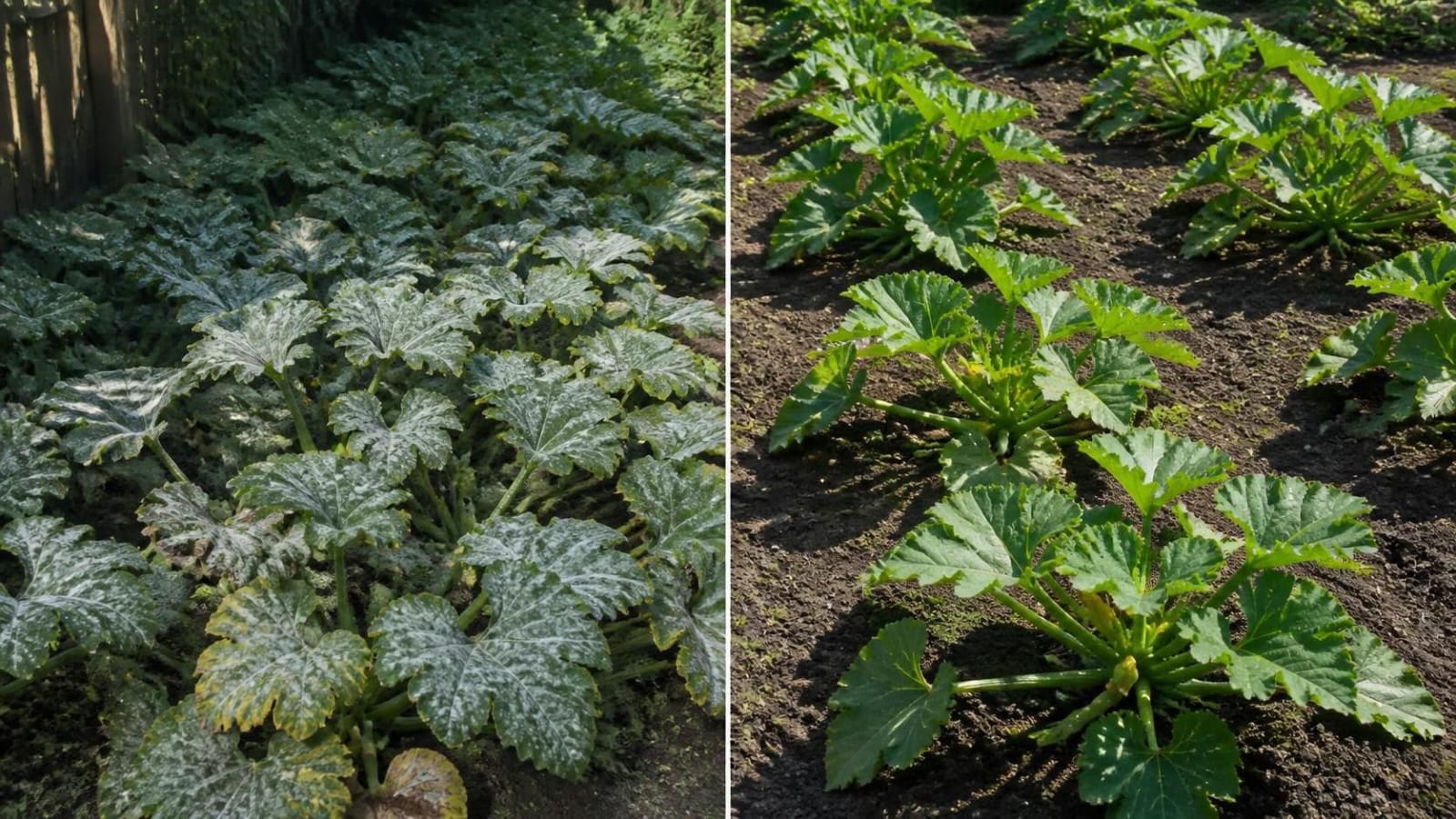
Many ornamentals and vegetables tolerate a bit of mildew. Others lose real yield or vigor. UC IPM says very susceptible vegetables such as cucumbers, melons, squash and pumpkins may need fungicide treatment, and University of Minnesota Extension reports that infected cucurbits ripen fruit early and produce fewer, smaller fruit. If those are your crops, see our guide to powdery mildew on squash and cucumbers.
Roses are the other classic case. The RHS says repeated heavy infection reduces their vigor, and the fungus overwinters on the plant itself, so timing and pruning matter. Our guide to powdery mildew on roses covers that in detail.
How to Treat Powdery Mildew, Step by Step
Knowing how to treat powdery mildew is mostly a matter of doing the cheap things first. The later steps only matter if the earlier ones are not enough.
Step 1: Confirm what you have
A silvery pattern on squash leaves, a mineral film from hard water or insect residue can all pass for mildew, and none of them needs a fungicide. Rub gently, look at both leaf surfaces, and compare against our identification guide before you treat anything.
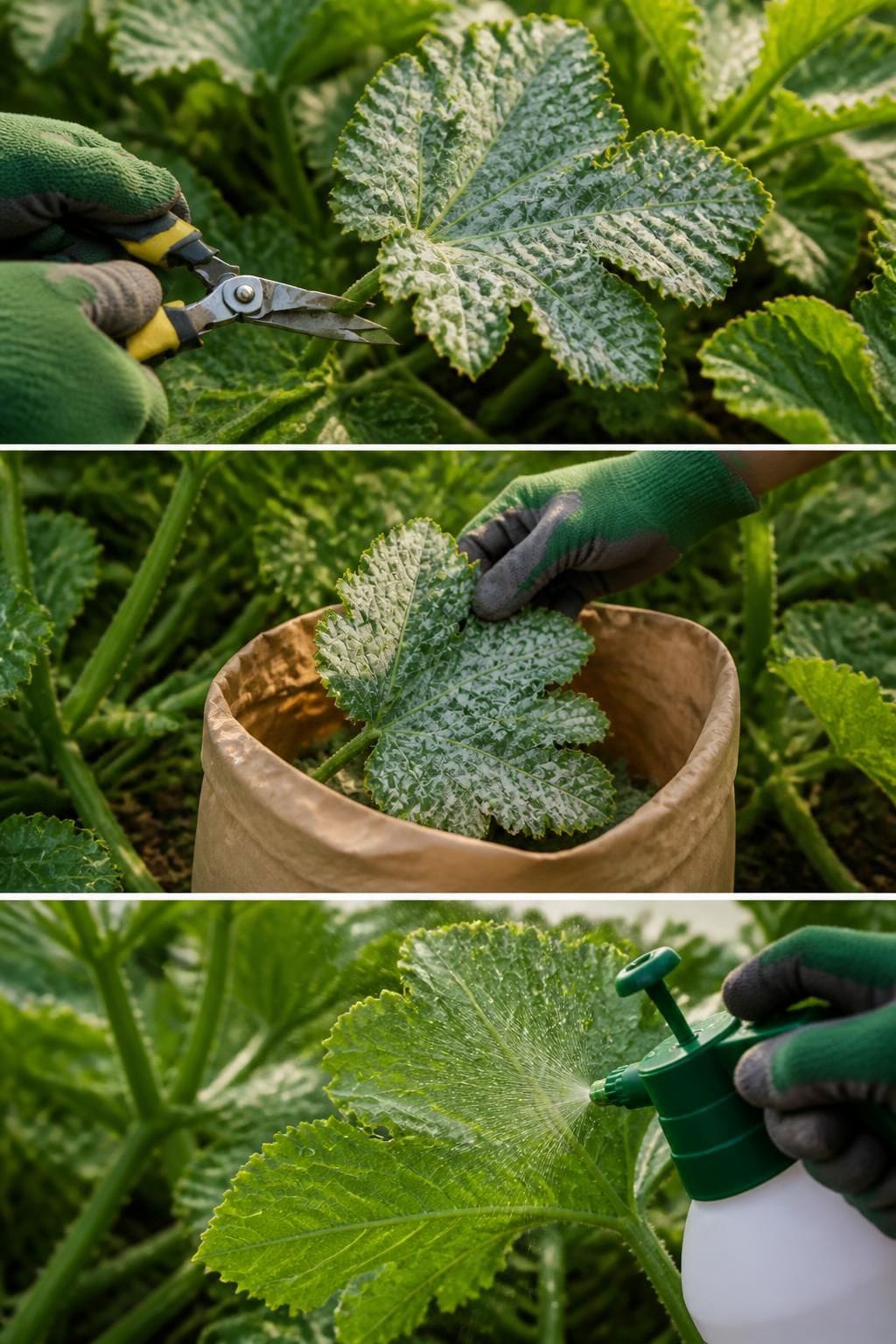
Step 2: Remove the worst growth
Where the infection is small, UC IPM advises pruning out the affected leaves and shoots and disposing of them. On roses, the RHS recommends cutting out badly affected shoots as soon as symptoms show. Advice on composting the clippings is not uniform. UC IPM says a properly maintained compost pile should kill the spores, while many gardeners prefer to bag the material instead. If your pile does not get hot, bagging is the safer choice.
Step 3: Change the conditions
Open up the canopy so sunlight and air reach the leaves, thin crowded stems, pull weeds, and hold back on nitrogen. Water is a more complicated tool. UC IPM says overhead sprinkling can wash spores off, and it suggests doing it in mid-morning so the leaves dry quickly. It also cautions that overhead sprinklers are not usually recommended for vegetables because they can contribute to other pest problems. The RHS gives similar mid-morning advice for dry weather but warns that leaves that stay wet for long may favor other diseases.
Step 4: Match any spray to the stage
The key idea from UC IPM is the difference between two kinds of fungicide. Protectants prevent new infections and need to be on the leaf before the disease arrives. Eradicants can kill an existing infection and work best at the first signs. Once mildew growth is extensive, UC notes that control with any fungicide becomes harder. Choosing the wrong type for your stage is the most common reason a spray seems to fail.
Powdery Mildew Treatment Options Compared
Here is how the main powdery mildew treatment options stack up according to extension and research sources.
| Option | Best for | What the sources say |
|---|---|---|
| Horticultural and plant oils, including neem oil | Mild to moderate infections | UC IPM says oils work best as eradicants. It warns against applying them within two weeks of a sulfur spray, above 90°F, or to drought-stressed plants. |
| Sulfur | Prevention, before symptoms | UC IPM calls it effective only when applied before symptoms appear. It can damage some squash and melon varieties and should not be used near 90°F. |
| Potassium bicarbonate | Prevention and early infections | In greenhouse trials by Swiss researchers it matched sulfur on most crops, but it reached only 74 percent efficacy on melon where mildew was already present before the first spray. |
| Baking soda (sodium bicarbonate) | Light, occasional use | Washington State University Extension reviewed the research and found results vary with disease pressure and conditions, and that it works better paired with an oil. |
| Biological fungicides (Bacillus subtilis) | Gentle prevention | UC IPM describes them as nontoxic to people, pets and beneficial insects, but not as effective as oils or sulfur. |
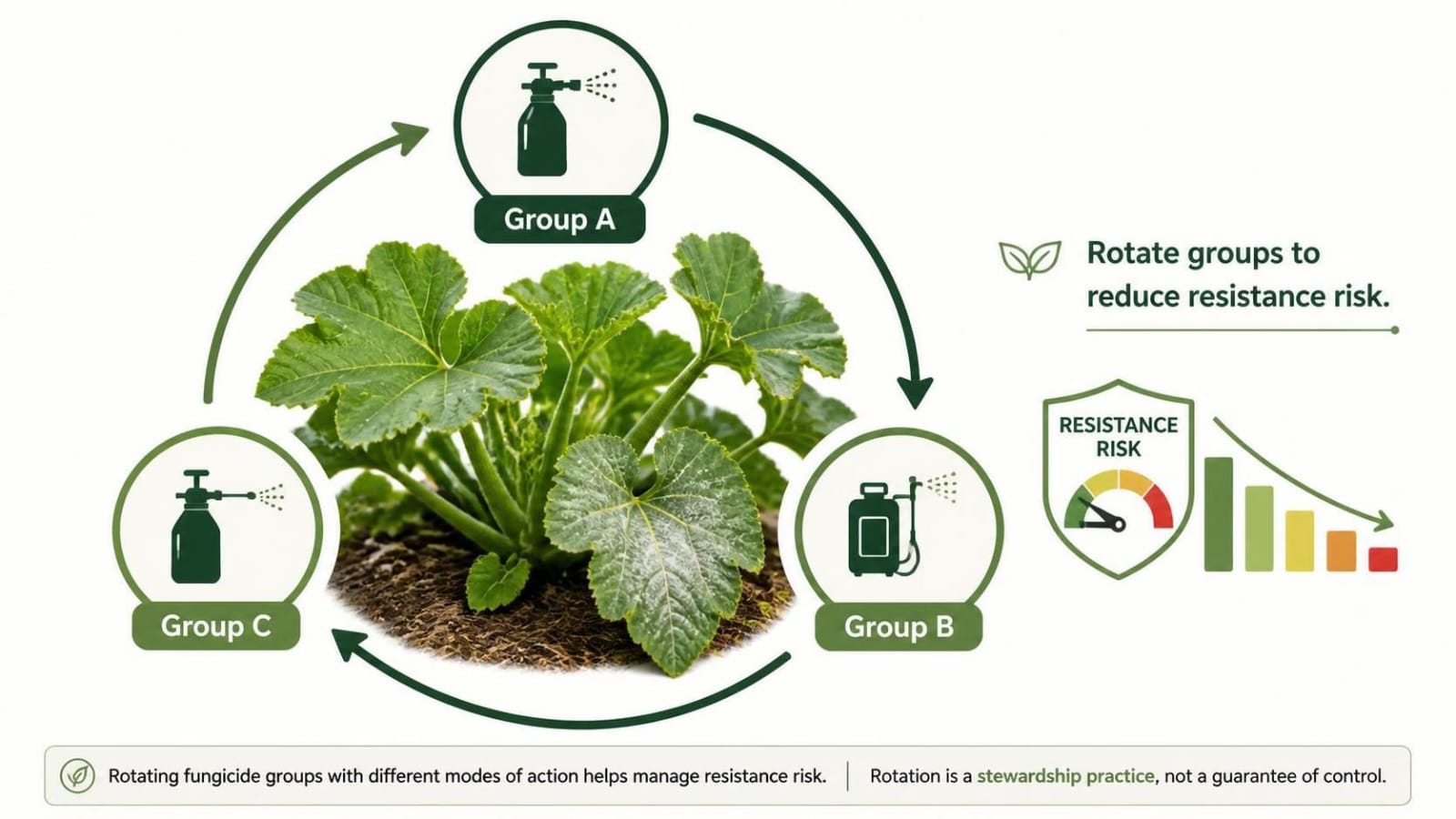
| Other organic and conventional fungicides | Severe or repeated problems | University of Minnesota Extension notes that powdery mildew keeps developing resistance, so recommendations should be reviewed each season. Many products must go on before the first sign of disease. |
The table draws on the University of California’s Pest Note on vegetables, a greenhouse study on potassium bicarbonate, a Washington State University review of baking soda, and University of Minnesota Extension. For a closer look at the home remedy, see our article on whether a baking soda spray really works.
Mixing ratios, application rates and spray intervals differ between products and countries, so follow the label on whatever you buy and check local regulations, since approved products vary by region. The University of Wisconsin’s horticulture team adds that for vegetables you should choose a product labeled for edible plants. The RHS goes further and advises home gardeners not to use fungicides at all, relying on good cultivation and resistant plants instead.
What Not to Do
- Do not wait until the plant is coated. UC IPM warns that control gets harder once mildew growth is extensive.
- Do not combine sulfur and oil sprays, or spray oils in hot weather or on drought-stressed plants. UC IPM lists plant injury as the risk.
- Do not rely on a kitchen remedy alone for a plant you cannot afford to lose. The evidence for baking soda is inconsistent.
- Do not feed with a nitrogen-heavy fertilizer to help the plant recover. It encourages the lush, shaded growth the fungus favors.
- Do not rinse leaves late in the day. UC IPM recommends mid-morning, so moisture dries quickly and other diseases are not encouraged.
Will the Plant Recover?
Usually, but not every leaf. UC IPM notes that heavily infected leaves may turn yellow, die and fall, and that the fruit beneath them can be sunburned. Treatment protects what is still clean and the growth that follows. It does not reliably bring badly damaged leaves back.
How much that matters depends on the plant. UC IPM says mildew on lettuce rarely becomes serious enough to need treatment, and a Purdue Extension publication on landscape plant diseases says it seldom does serious harm to its host. Cucurbits are the exception, since heavy leaf loss cuts yield.
How to Prevent Powdery Mildew Coming Back
- Choose resistant varieties. UC IPM lists less susceptible options for crape myrtle, rose, zinnia, apple, raspberry, melon, pumpkin, squash, cucumber, bean and pea, among others. Cornell keeps a list of disease-resistant vegetable varieties.
- Plant in sun, with room. Sun and airflow are the cheapest protection, and proper spacing and staking also help.
- Feed moderately. Fertilize according to soil test results rather than guesswork, as University of Minnesota Extension advises for cucurbits.
- Clean up in autumn. The RHS says destroying fallen infected leaves reduces spores the following spring, and UC IPM advises removing infected buds during the dormant season.
- Check weekly and act early. A quick look at older leaves, both sides, catches the first spots. For very susceptible plants, UC IPM says protectants should go on before the disease appears.
- Watch the weeds. UC IPM notes that year-round crop or weed hosts help some powdery mildew fungi survive between seasons.
Common Questions
What kills powdery mildew instantly?
Nothing reliably does. Wiping removes the visible dust but not the infection, and the products that act on an existing infection, mainly oils, reduce it over time rather than instantly. Pruning out affected growth is the fastest way to cut the amount of fungus on the plant.
Will powdery mildew spread to my other plants?
Among related plants, yes, because wind carries the spores. Across unrelated plants, usually not, since most species are limited to a small group of hosts. Mildew on your squash is a risk to your cucumbers and melons, but generally not to your roses.
Can powdery mildew survive winter?
Yes. According to the RHS, it either spends the winter as dormant infection on green tissue or as resting structures on fallen leaves, which release spores in spring. That is why autumn cleanup and dormant-season pruning are worth the effort.
Does watering the leaves stop powdery mildew?
It can help a little, but it is not a cure. Water washes spores off and, left on the plant for long, can inhibit them, yet it can also encourage other diseases. If you try it, do it in mid-morning so the leaves dry quickly, and skip it on vegetables prone to other problems.
One thought on “Powdery Mildew: Causes, Symptoms, Treatment & Prevention”